Important context for 2026 readers: Fisker Inc. filed for bankruptcy in mid-2024, and the Fisker Ocean is no longer in production. However, thousands of used Ocean SUVs remain on the road and in the secondary market. This guide covers the Ocean's real-world range, charging behavior, and the home and public charging infrastructure you'll need to own one confidently today.
If you're evaluating a used Fisker Ocean — or comparing its charging profile against a new EV — understanding its range delivery, charge curve, and connector ecosystem is essential. The Ocean's 113 kWh usable battery (on Extreme and Ultra trims) is one of the largest ever fitted to a consumer SUV, which means charging logistics differ meaningfully from smaller-battery EVs.
Fisker Ocean Range: EPA Sticker vs. Real-World Delivery
The Fisker Ocean was sold in three primary trims, each with a different battery and drivetrain configuration. Range varies significantly across them:
| Trim | Battery (Usable kWh) | Chemistry | Drivetrain | EPA Range | Real-World Estimate |
|---|---|---|---|---|---|
| Ocean Sport (FWD) | 113 kWh | NMC | Single Motor FWD | 250 mi | 210–230 mi |
| Ocean Ultra (AWD) | 113 kWh | NMC | Dual Motor AWD | 360 mi | 290–320 mi |
| Ocean Extreme (AWD) | 113 kWh | NMC | Dual Motor AWD | 360 mi | 290–320 mi |
Real-world range reality: The Ocean Ultra/Extreme's EPA 360-mile rating was impressive on paper, but independent testing consistently showed 290–320 miles in mixed highway driving. In cold weather (below 32°F / 0°C), expect a further 15–25% reduction — putting real winter range closer to 230–270 miles. The Ocean Sport's single-motor efficiency was lower than expected for a FWD configuration, partly due to the vehicle's 5,700+ lb curb weight and aerodynamic drag.
According to fueleconomy.gov, the Ocean Ultra achieves 88 MPGe combined. Efficiency matters because it directly dictates your charging cost per mile — and with a 113 kWh battery, filling it from empty is an energy-intensive event.
Charging Levels Explained: How Fast Each Adds Range
Before we get into Ocean-specific charging, let's clarify the three charging levels and the critical difference between kW (power — the rate of energy delivery, like water flow from a hose) and kWh (energy — the total amount stored, like gallons in a tank). The Ocean's 113 kWh battery is its capacity; the kW rating of your charger determines how quickly that capacity refills.
| Level | Voltage | Power (kW) | Miles of Range Added per Hour | Best Use Case |
|---|---|---|---|---|
| Level 1 | 120V AC | 1.0–1.4 kW | 3–5 mi/hr | Overnight trickle; emergency top-ups |
| Level 2 | 240V AC | 3.3–19.2 kW | 12–65 mi/hr | Home daily charging; workplace |
| DC Fast Charge | 400–800V DC | 50–350 kW | 150–400+ mi/hr (peak) | Road trips; rapid top-ups |
For the Ocean's large 113 kWh battery, Level 1 charging is impractical as a daily strategy — adding just 4 miles per hour means a full charge would take over 28 hours. Level 2 at home is the realistic baseline.
Fisker Ocean Charging Speeds: Level 2 and DC Fast Charge Times
The Ocean supports the following maximum charge rates:
- Level 2 AC onboard charger: 10.5 kW (single-phase, 48A)
- DC fast charging peak: 250 kW (CCS1 connector, 400V architecture)
Here's what that translates to in real charging sessions:
| Charging Method | Power | 10–80% Time | Full 0–100% Time |
|---|---|---|---|
| Level 1 (120V / 12A) | 1.4 kW | ~57 hours | ~81 hours |
| Level 2 (240V / 48A) | 10.5 kW | ~7.5 hours | ~10.8 hours |
| DC Fast (peak) | Up to 250 kW | ~35–40 minutes | N/A (not recommended to 100%) |
Charge curve reality: The Ocean's 250 kW peak rate is only sustained at low state of charge (roughly 10–30% SoC). As the battery fills, the charge rate tapers significantly — dropping to ~100 kW around 50% SoC and below 50 kW past 80%. This is standard for NMC lithium-ion chemistry, which the Ocean uses. A 10–80% session takes roughly 35–40 minutes at a capable 250 kW CCS station, but plan for the full session time including taper.
Home Charger Installation: Electrical Requirements & Costs
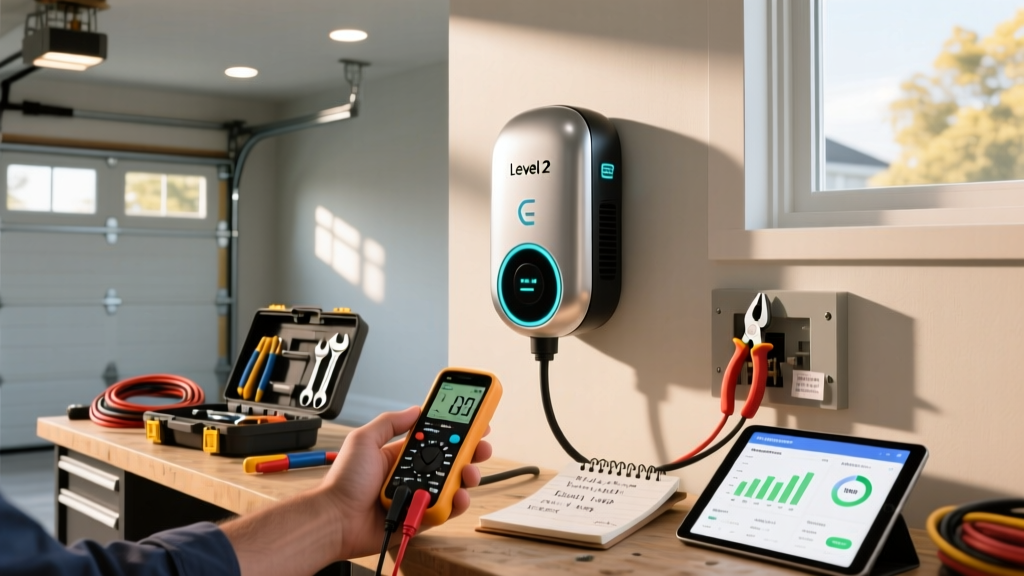
To charge the Ocean at its full 10.5 kW Level 2 rate, you need a 240V circuit rated for at least 60 amps (EV chargers are considered continuous loads under the National Electrical Code, meaning the circuit must be rated at 125% of the charger's draw — a 48A charger requires a 60A breaker).
Electrical Requirements
- Voltage: 240V (split-phase residential)
- Circuit breaker: 60A dedicated
- Wire gauge: 6 AWG copper (THHN in conduit) or 4 AWG aluminum
- Outlet option: NEMA 14-60 receptacle (if using a plug-in charger) or hardwired connection
- Panel capacity: Your main electrical panel must have sufficient spare capacity — typically 200A service is adequate, but older 100A panels may require an upgrade
Installation Cost Breakdown
| Component | Low Estimate | High Estimate | Notes |
|---|---|---|---|
| Level 2 Charger (Equipment) | $350 | $750 | 48A smart charger; see recommendations below |
| Electrician Labor | $400 | $1,500 | Depends on run length, wall type, conduit needs |
| Permit & Inspection | $50 | $300 | Varies by municipality |
| Electrical Panel Upgrade (if needed) | $1,500 | $4,000 | Required if panel is 100A or lacks spare breaker slots |
| Total (no panel upgrade) | $800 | $2,550 | Typical for modern homes with 200A service |
| Total (with panel upgrade) | $2,300 | $6,550 | Older homes, 100A panels, or long wire runs |
Always hire a licensed electrician and pull a permit. The NEC requires GFCI protection for outdoor receptacles, and many jurisdictions now require it for indoor EV circuits as well. If your charger is installed outdoors, ensure it carries a NEMA 4 or IP65 weather rating.
What Electrical Upgrades Might I Need?
The most common surprise cost is a panel upgrade. If your home has 100A service (common in homes built before 1990) or your panel is near capacity with existing loads (HVAC, electric range, dryer, water heater), adding a 60A EV circuit may exceed your panel's rated capacity. A load calculation performed by your electrician will determine this. Alternatives include:
- Lower-amperage charger: A 32A charger (7.7 kW) only needs a 40A circuit — slower but viable for overnight charging of the Ocean (~10.5 hours for 10–80%)
- Smart panel load management: Devices like the Emporia Smart Load Center or Span panel can dynamically share capacity between circuits
- Utility service upgrade: Upgrading from 100A to 200A service — the $1,500–$4,000 item in the table above
Connector Compatibility: CCS1, NACS, and Adapter Realities
The Fisker Ocean was built with a CCS1 (Combo) charge port — the standard for most non-Tesla EVs sold in North America through 2024. However, the industry has shifted decisively toward NACS (North American Charging Standard), the Tesla-originated connector now adopted by Ford, GM, Rivian, Hyundai, and most major automakers for 2025+ models.
| Connector Type | Ocean Native Support? | Adapter Required? | Availability |
|---|---|---|---|
| CCS1 (Combo) | Yes — native port | No | Electrify America, EVgo, most non-Tesla networks |
| NACS (Tesla) | No | CCS-to-NACS adapter (if available) | Tesla Supercharger network (20,000+ stalls) |
| CHAdeMO | No | Not practical (no reliable adapter) | Largely deprecated in North America |
| J1772 (Level 2 AC) | Yes — CCS includes J1772 | No | All public Level 2 stations |
Adapter situation for 2026: Because Fisker ceased operations in 2024, there is no official Fisker-branded CCS-to-NACS adapter. Third-party adapters from companies like Lectron and A2Z exist (typically $150–$250), but verify compatibility specifically with the Ocean before purchasing. Tesla's official CCS-to-NACS adapter was designed for Tesla vehicles accepting CCS, not the reverse. Access to the Supercharger network in a Fisker Ocean remains limited and unreliable — plan your road trips around CCS-compatible networks like Electrify America and EVgo.
Cost to Charge: Fisker Ocean Cost Per Mile vs. Gas
With a 113 kWh battery, the Ocean's charging costs scale with electricity rates. Here's what different scenarios look like:
| Scenario | Rate ($/kWh) | Cost for Full Charge | Cost Per Mile |
|---|---|---|---|
| Home Off-Peak (utility time-of-use) | $0.08 | $9.04 | $0.030 |
| Home Standard Rate (national avg) | $0.16 | $18.08 | $0.060 |
| Public Level 2 (network pricing) | $0.30 | $33.90 | $0.113 |
| DC Fast Charge (Electrify America) | $0.48 | $54.24 | $0.181 |
| Gas SUV Baseline (25 MPG, $3.50/gal) | — | $42.00 | $0.140 |
At home off-peak rates, the Ocean costs roughly 3 cents per mile — less than a quarter of the gas equivalent. Even at DC fast-charge public rates, it's competitive with a 25 MPG gas SUV. The key economic advantage of EV ownership is home charging; relying exclusively on public DC fast charging erodes most of the savings.
For the latest electricity rates by state, check the U.S. Energy Information Administration state-level data.
Recommended Home Level 2 Chargers for the Fisker Ocean
Since the Ocean's onboard charger maxes out at 10.5 kW (48A), you want a charger that delivers at least 48A to capture its full charging speed. Here are three proven options:
ChargePoint Home Flex
- Power Output: Up to 12 kW (50A) — configurable down to 16A
- Connector: J1772 (compatible with Ocean's CCS port for AC charging)
- Cable Length: 23 feet
- Smart Features: Wi-Fi, app scheduling, Alexa integration, energy tracking
- Price: ~$550
- Installation: Hardwired or NEMA 14-50 plug
Why it works for the Ocean: The Flex's adjustable amperage lets you dial it to 48A to match the Ocean's onboard charger, or lower it if your panel can't support a 60A circuit.
Emporia Level 2 EV Charger
- Power Output: Up to 11.5 kW (48A)
- Connector: J1772
- Cable Length: 24 feet
- Smart Features: Wi-Fi, real-time energy monitoring, solar integration, load management with Emporia Vue panel monitor
- Price: ~$400
- Installation: Hardwired or NEMA 14-50 plug
Why it works for the Ocean: Best value option with genuine load-management capability — critical if your panel is near capacity. The Vue integration can prevent breaker trips by dynamically adjusting charge rate.
Grizzl-E Smart
- Power Output: Up to 10 kW (40A)
- Connector: J1772
- Cable Length: 24 feet
- Smart Features: Wi-Fi, OCPP protocol, app control
- Price: ~$450
- Installation: Hardwired or NEMA 14-50 plug
Why it works for the Ocean: Built in Canada with a -40°F operating rating — ideal for cold-climate owners. The 40A output means you'll charge slightly slower (9.6 kW vs 10.5 kW) but only need a 50A circuit, reducing install cost.
Safety, Code, and Post-Bankruptcy Ownership Considerations
Beyond electrical code compliance, Fisker Ocean owners in 2026 face unique considerations:
- Dedicated circuit: Never share your EV charger circuit with other appliances. NEC Article 625 requires a dedicated branch circuit for EV supply equipment.
- GFCI protection: Required for all outdoor receptacles (NEC 2023+). Hardwired chargers avoid this requirement, which is one reason electricians often prefer hardwired installs.
- Outdoor rating: If mounting outdoors, the charger must be rated NEMA 4 (weatherproof). All three recommendations above carry this rating.
- Software and connectivity: With Fisker's servers offline, the Ocean's app-based features (remote preconditioning, charge scheduling via the vehicle) may be partially or fully non-functional. Set charge schedules on your Level 2 charger instead of relying on the vehicle's built-in scheduler.
- Battery health monitoring: Without Fisker's OTA updates, battery management system (BMS) optimization is frozen. Periodically check for any independent diagnostic tools and consider an annual battery health scan at a qualified EV service center.
Frequently Asked Questions
How much does it cost to install a home EV charger for the Fisker Ocean?
For a typical home with 200A electrical service, expect $800–$2,550 total (charger + electrician + permit). If your home needs a panel upgrade from 100A to 200A, add $1,500–$4,000. Always get a load calculation from a licensed electrician before committing.
How fast will each charging level add range to the Fisker Ocean?
Level 1 (120V): approximately 3–5 miles per hour. Level 2 (240V / 48A): approximately 35 miles per hour at the Ocean's 10.5 kW max rate. DC fast charging at peak 250 kW: up to 180+ miles in 30 minutes, but the charge curve tapers significantly after 50% SoC.
Which connector and charger is compatible with my Fisker Ocean?
The Ocean uses CCS1 natively for DC fast charging and J1772 for Level 2 AC charging. It is not natively compatible with NACS (Tesla) or CHAdeMO. Third-party CCS-to-NACS adapters exist but are not officially supported by Fisker (now defunct). For home charging, any J1772 Level 2 charger will work.
How much does charging the Fisker Ocean cost per mile vs. gas?
At home off-peak rates ($0.08/kWh), the Ocean costs about $0.03/mile. At standard residential rates ($0.16/kWh), it's $0.06/mile. A comparable gas SUV at 25 MPG and $3.50/gallon costs $0.14/mile. DC fast charging at $0.48/kWh brings the cost to $0.18/mile — more than gas, which is why home charging is essential for EV economics.
What electrical upgrades might I need for the Fisker Ocean's large battery?
The Ocean's 10.5 kW onboard charger requires a 60A dedicated 240V circuit for maximum speed. If your panel is 100A or near capacity, you may need a service upgrade ($1,500–$4,000). Alternatively, a 32A charger on a 40A circuit delivers 7.7 kW — slower but sufficient for overnight charging and far less demanding on your electrical system.
Can I still get the Ocean's battery serviced or replaced?
With Fisker's bankruptcy, the official service network has dissolved. Independent EV service centers and some former Fisker-authorized partners may offer battery diagnostics. The 113 kWh NMC battery pack is proprietary, making replacement parts scarce. This is a significant ownership risk to factor into any used Ocean purchase. Check the NHTSA database for any open recalls before buying.
Does the Fisker Ocean qualify for any tax credits in 2026?
The federal §30D new EV tax credit no longer applies since the Ocean is out of production. However, if you purchase a used Ocean from a dealer for $25,000 or less, you may qualify for the used clean vehicle credit — up to $4,000 or 30% of the sale price (whichever is less), subject to income caps ($75,000 single / $150,000 joint). Consult a tax professional for your specific eligibility.