Fiat 500e Electric Range: What the EPA Number Means in Practice
The 2024–2026 Fiat 500e carries a 42 kWh usable battery pack (NMC chemistry) and an EPA-estimated range of 149 miles. For a city-oriented commuter EV with a starting MSRP around $32,500, that figure is competitive against rivals like the Mini Cooper SE (114 miles EPA) but falls well short of the Chevrolet Bolt EV's 259 miles.
EPA sticker: 149 miles. Expect approximately 120–135 miles in mixed highway driving at 70 mph, and as low as 95–110 miles in freezing temperatures with cabin heat running. The 500e's compact battery and lack of a standard heat pump on all trims make cold-weather range loss a genuine factor for northern-climate owners. In mild weather city driving with regenerative braking set to max, some owners report exceeding the EPA figure, reaching 155–160 miles.
The 500e's efficiency rating sits at approximately 116 MPGe combined (29 kWh/100mi) according to fueleconomy.gov. That efficiency number directly affects how fast each charging level replenishes range and what you'll pay per mile.
| Spec | Value |
|---|---|
| EPA Range | 149 miles |
| Battery (usable) | 42 kWh, NMC |
| Efficiency | 116 MPGe / 29 kWh/100mi |
| Max DC Fast Charge | 85 kW (CCS1) |
| 10–80% DC Time | ~35 minutes |
| Level 2 AC Acceptance | 11 kW (48A) |
| Motor Output | 118 hp / 162 lb-ft torque |
| 0–60 mph | ~8.6 seconds |
| Base MSRP | ~$32,500 |
| Battery Warranty | 8 years / 100,000 miles |
Charging Levels Explained: Speed, kW, and Miles Per Hour
Before plugging in, understand the distinction that trips up many new EV owners: kW (kilowatts) measures power — how fast energy flows into the battery. kWh (kilowatt-hours) measures energy — the total capacity stored. Think of kW as the flow rate of a hose and kWh as the size of the tank. The Fiat 500e's 42 kWh battery is the tank; the charger's kW rating determines how quickly you fill it.
| Level | Voltage / Amps | Power (kW) | Miles of Range Added Per Hour | Use Case |
|---|---|---|---|---|
| Level 1 | 120V / 12A | ~1.4 kW | ~3–4 mi/hr | Overnight trickle; emergency top-up |
| Level 2 (Home) | 240V / 32A | ~7.7 kW | ~22–26 mi/hr | Daily home charging sweet spot |
| Level 2 (Max) | 240V / 48A | ~11 kW | ~32–37 mi/hr | Full onboard charger utilization |
| DC Fast | 400V+ DC | Up to 85 kW peak | ~150+ mi/hr (at peak) | Road trips; rapid replenishment |
At Level 1 (a standard household outlet), the 500e gains roughly 3–4 miles of range per hour. A full 0–100% charge takes over 30 hours — fine if your daily commute is under 30 miles round-trip, but inadequate for most owners. This is why Level 2 home charging is the practical baseline.
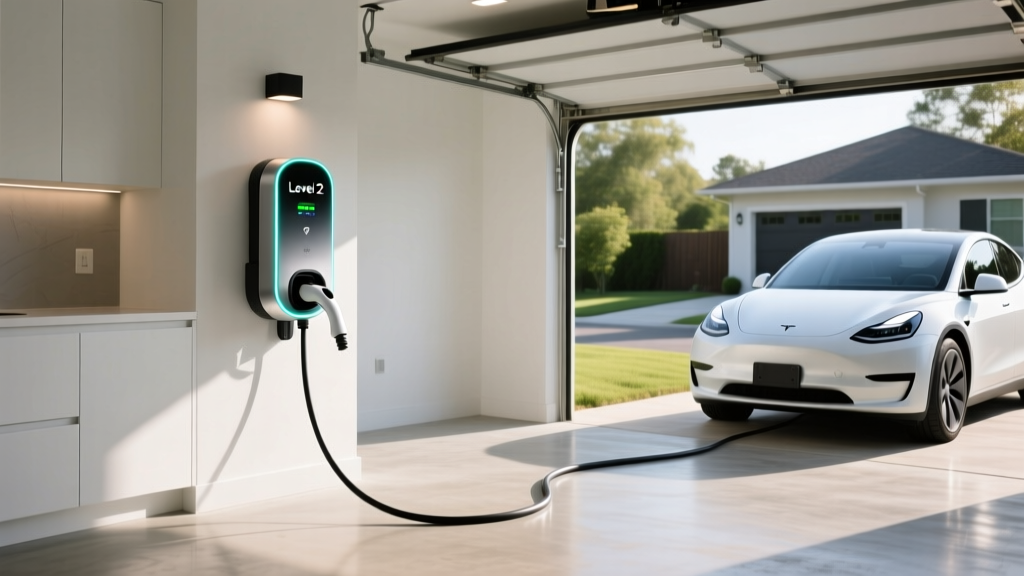
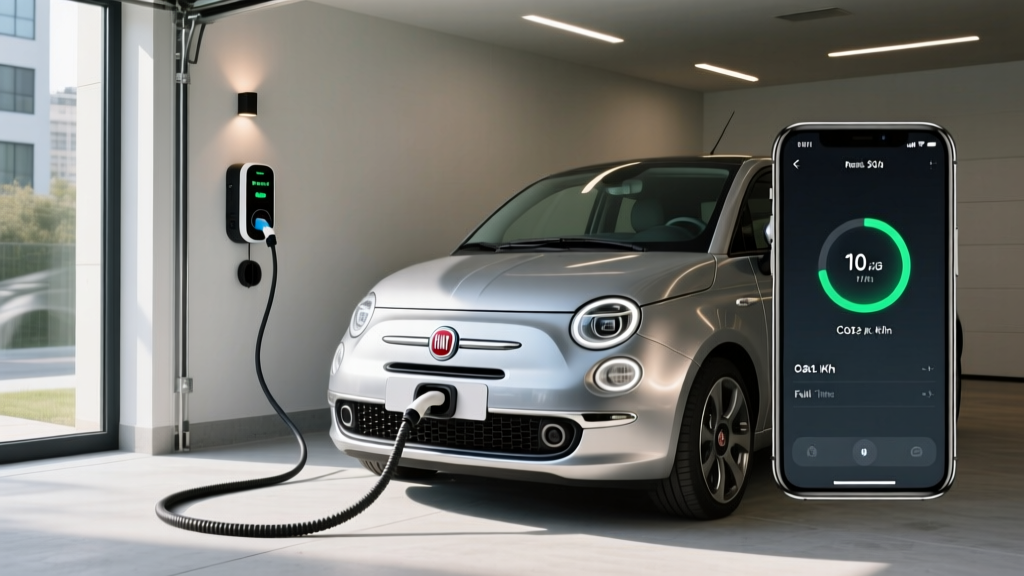
At Level 2 with a 32-amp circuit (7.7 kW), the 500e adds about 25 miles of range per hour. A 10–80% charge takes roughly 3.5 to 4 hours — ideal for overnight replenishment. If you install a 48-amp charger on a 60-amp circuit, you can push the 500e's 11 kW onboard charger to its maximum, cutting that to about 2.5–3 hours for 10–80%.
On DC fast charging, the 500e peaks at 85 kW. The charge curve is not flat: it sustains near-peak power from roughly 10% to 50% state of charge, then tapers progressively. Expect 10–80% in approximately 35 minutes under ideal thermal conditions. Above 80%, charging slows dramatically to protect the NMC cells — a 10–100% session can take 55 minutes or more.
Home Charger Installation: Electrical Requirements and Costs
Installing a Level 2 charger at home for the Fiat 500e requires a dedicated 240-volt circuit. The amperage depends on your charger:
- 32-amp charger: Requires a 40-amp dedicated circuit (NEC code mandates a 125% safety margin — circuit rating must be 25% above continuous load).
- 48-amp charger: Requires a 60-amp dedicated circuit.
Most modern homes with 200-amp electrical panels can accommodate a 40-amp EV circuit without issue. Older homes with 100-amp panels or significant existing loads (electric range, dryer, HVAC) may need a panel upgrade — a $1,500–$3,000 expense that catches many buyers off guard.
| Component | Cost Range | Notes |
|---|---|---|
| Level 2 Charger (Equipment) | $300–$700 | Smart Wi-Fi chargers; 32A–48A |
| Electrician Labor | $500–$1,500 | Depends on run length, wall type, conduit |
| Electrical Permit | $50–$200 | Required in most jurisdictions |
| Panel Upgrade (if needed) | $1,500–$3,000 | 100A→200A service upgrade |
| Outlet vs. Hardwired | $0–$150 | NEMA 14-50 outlet adds flexibility; hardwired avoids GFCI nuisance trips |
| Total (no panel upgrade) | $850–$2,400 | Typical scenario for most homeowners |
| Total (with panel upgrade) | $2,350–$5,400 | Older homes with 100A panels |
Key installation considerations:
- Dedicated circuit: The EV charger must have its own breaker — never share with other appliances.
- GFCI protection: NEC 2020+ requires GFCI breakers for receptacle-installed chargers. Some EV owners report nuisance tripping; hardwiring the charger avoids this.
- Outdoor rating: If your parking spot is outside, ensure the charger carries a NEMA 4 (weatherproof) rating.
- Permit and inspection: Skipping the permit risks insurance denial in the event of an electrical fire. Budget for it.
Connector Compatibility: CCS1, NACS, and Adapters
The Fiat 500e sold in North America uses the CCS1 (Combo) connector for DC fast charging and a J1772 inlet for Level 1 and Level 2 AC charging. As Tesla's NACS (North American Charging Standard) connector becomes the industry default through 2025–2026, connector compatibility matters more than ever.
| Connector Type | Native Fit? | Adapter Needed? | Notes |
|---|---|---|---|
| J1772 (Level 1/2 AC) | Yes | No | Standard for home and public AC charging |
| CCS1 (DC Fast) | Yes | No | Electrify America, EVgo, ChargePoint DC stations |
| NACS / Tesla Supercharger | No | Yes — CCS-to-NACS adapter | Required for Tesla Supercharger access; ~$200–$400 for adapter |
| CHAdeMO | No | Not practical | Legacy standard; adapters rare and expensive |
For Fiat 500e owners, a CCS-to-NACS adapter unlocks the Tesla Supercharger network — the most reliable DC fast-charging infrastructure in the US. Brands like Lectron and A2Z offer CCS-to-NACS adapters rated for up to 250 kW (though the 500e caps at 85 kW regardless). Confirm adapter compatibility with your model year before purchasing, as firmware updates from Fiat may affect handshake protocols.
Cost to Charge: Home vs. Public vs. Gas Comparison
The Fiat 500e's 29 kWh/100mi efficiency figure makes it one of the more affordable EVs to charge. Here's how costs break down across scenarios:
| Scenario | Rate | Cost to Add 100 Miles | Cost Per Mile |
|---|---|---|---|
| Home (off-peak utility rate) | $0.10/kWh | $2.90 | $0.029 |
| Home (national avg. residential) | $0.16/kWh | $4.64 | $0.046 |
| Public Level 2 (ChargePoint, etc.) | $0.25–$0.40/kWh | $7.25–$11.60 | $0.073–$0.116 |
| DC Fast Charging (EA, EVgo) | $0.35–$0.55/kWh | $10.15–$15.95 | $0.10–$0.16 |
| Gasoline car (30 MPG, $3.40/gal) | — | $11.33 | $0.113 |
Charging at home on an off-peak rate delivers fuel costs roughly one-quarter of an equivalent gasoline car. Even public DC fast charging at $0.45/kWh — the expensive option — is roughly comparable to or cheaper than gasoline on a per-mile basis for the 500e, thanks to its strong efficiency.
For a 500e owner driving 12,000 miles per year and charging 80% at home ($0.14/kWh average) and 20% on public DC fast chargers ($0.45/kWh), annual fuel cost is approximately $620. A comparable 30 MPG gas car at $3.40/gallon spends about $1,360 — a savings of roughly $740/year for the EV.
Recommended Level 2 Chargers for the Fiat 500e
The 500e's 11 kW onboard charger means you benefit from a 48-amp home charger, but a 32-amp unit still delivers solid overnight performance. Here are three units we recommend based on reliability, smart features, and value:
Emporia Vue + Level 2 Charger
- Power Output: 48 amps / 11.5 kW (hardwired) or 40 amps / 9.6 kW (plug-in)
- Connector: J1772 (CCS-compatible for AC)
- Cable Length: 24 feet
- Smart Features: Wi-Fi, energy monitoring via Emporia Vue panel integration, scheduled charging, solar-aware charging
- Price: ~$400–$500
- Best For: 500e owners with solar panels or who want granular energy data
ChargePoint Home Flex
- Power Output: Configurable 16–50 amps (up to 12 kW hardwired)
- Connector: J1772
- Cable Length: 23 feet
- Smart Features: Wi-Fi, Alexa integration, ChargePoint app scheduling, works with ChargePoint public network account
- Price: ~$550–$700
- Best For: Owners who want a proven brand with flexible amperage settings
Grizzl-E Smart
- Power Output: 40 amps / 9.6 kW
- Connector: J1772
- Cable Length: 24 feet
- Smart Features: Wi-Fi, OCPP protocol, adjustable amperage, extreme-temperature rated (-40°F to +122°F)
- Price: ~$400–$550
- Best For: Cold-climate owners; built in Canada with rugged outdoor rating
Any of these chargers will replenish the 500e's 42 kWh battery from 10–80% overnight in roughly 3–4 hours. The Grizzl-E's cold-weather rating makes it a standout for owners in Minnesota, Michigan, or New England, where winter charging sessions happen in sub-zero garages or driveways.
Fiat 500e Tax Credit and Ownership Considerations
The Fiat 500e's eligibility for the federal §30D EV tax credit (up to $7,500) depends on battery sourcing, critical minerals requirements, and buyer income caps. As of 2026, the credit can be transferred to the dealer at point of sale, effectively reducing the purchase price. However, the 500e's battery components and critical mineral sourcing may not fully qualify under current IRS rules — check the latest eligibility list at fueleconomy.gov and consult a tax professional.
- MSRP cap: $55,000 for sedans/hatchbacks (500e qualifies).
- Income cap: $150,000 single / $300,000 joint AGI.
- Battery sourcing: Must meet escalating domestic-content thresholds for full credit.
Insurance for the 500e tends to run 10–20% higher than a comparable gas-powered Fiat 500, reflecting EV repair costs and battery replacement risk. Budget approximately $1,400–$1,800/year depending on your state and driving record.
Frequently Asked Questions
How much does it cost to install a home EV charger for the Fiat 500e?
Expect $850–$2,400 total for a standard Level 2 installation (equipment, electrician labor, and permit) if your electrical panel has sufficient capacity. If a panel upgrade from 100A to 200A is needed, add $1,500–$3,000, bringing the total to $2,350–$5,400. Always get a licensed electrician's assessment before purchasing equipment.
How fast will each charging level add range to the Fiat 500e?
Level 1 (120V) adds roughly 3–4 miles per hour. Level 2 at 32 amps adds about 22–26 miles per hour. Level 2 at 48 amps (the 500e's onboard charger maximum) adds about 32–37 miles per hour. DC fast charging at peak 85 kW can add 80+ miles in 15 minutes, though the charge curve tapers significantly above 50% state of charge.
Which connector is compatible with the Fiat 500e?
The 500e uses J1772 for AC charging (Level 1 and 2) and CCS1 for DC fast charging natively. To access Tesla Superchargers, you'll need a CCS-to-NACS adapter ($200–$400). CHAdeMO is not compatible and adapters are not practical.
How much does charging the Fiat 500e cost per mile vs. gas?
At the national average residential electricity rate of ~$0.16/kWh, the 500e costs about $0.046 per mile to charge at home — roughly 40% of the per-mile cost of a 30 MPG gasoline car at $3.40/gallon ($0.113/mile). Public DC fast charging at $0.45/kWh brings the cost to ~$0.13/mile, still competitive with gasoline.
What electrical upgrades might I need for a home charger?
If your home has a 200-amp electrical panel with available breaker slots, you likely need only a dedicated 40-amp (for 32A charger) or 60-amp (for 48A charger) circuit. Homes with 100-amp panels, maxed-out breaker boxes, or long wire runs from panel to garage may need a panel upgrade ($1,500–$3,000), a sub-panel installation, or upgraded wiring. A licensed electrician can assess your specific situation — never skip this step.
Does the Fiat 500e support fast enough charging for road trips?
With an 85 kW peak DC fast-charge rate and 10–80% in ~35 minutes, the 500e is adequate for occasional road trips but not ideal. The 149-mile EPA range means you'll stop every 90–120 highway miles in real-world conditions, and each stop takes roughly 30–40 minutes. If road trips are frequent, a longer-range EV (Bolt EV, Model 3, Ioniq 5) is a better fit. For a daily commuter with rare highway trips, the 500e's charging profile is perfectly manageable.