Buying a home EV charger is the single highest-leverage upgrade you can make as an electric-vehicle owner — and the IRS may foot up to 30% of the bill. The federal tax credit for electric vehicle charging stations (officially the Alternative Fuel Vehicle Refueling Property Credit, IRC §30C) was revived and reshaped by the Inflation Reduction Act, but the rules for 2026 are location- and income-dependent in ways that surprise most buyers. This guide walks through exactly what the credit covers, what a real home Level 2 install costs in 2026, which electrical upgrades you may need, and how to pick equipment that actually matches your EV's onboard charger.
How the Federal Tax Credit for Electric Vehicle Charging Stations Works in 2026
Under IRC §30C, the credit equals 30% of the combined cost of qualified charging equipment and its installation, capped at $1,000 per tax year for residential property. That means a $2,500 total project (charger + electrician + permit) nets a $750 nonrefundable credit; a $3,334+ project maxes out the $1,000 cap. The credit applies to Level 2 AC chargers (240V) wired to your home, including the panel work, conduit, wiring, and labor needed to energize the circuit — not just the hardware box. DC fast chargers do not qualify for the residential credit.
Post-2022 rules added a geographic gate: the equipment must be placed in service in a census tract that is either non-urban or classified as a low-income community. The IRS maintains a mapping tool at irs.gov where you can verify your address before committing to a purchase. If your tract doesn't qualify, the credit is $0 regardless of income or equipment cost.
- Credit rate: 30% of equipment + installation
- Residential cap: $1,000 per tax year
- Eligible property: Level 2 (240V) home chargers, wiring, panel upgrades, permits, electrician labor
- Geographic requirement: Non-urban or low-income census tract
- Form: IRS Form 8911 filed with your return (not point-of-sale)
- Nonrefundable: Cannot exceed your total tax liability for the year
Note this is separate from the §30D new-EV purchase credit (up to $7,500) and the used-EV credit (up to $4,000). You can claim §30C for the charger in the same tax year you claim §30D for the vehicle, provided both sets of rules are satisfied.
Charging Levels Explained: kW, Miles Per Hour, and 10–80% Times
The most common EV-literacy error is confusing kW (power — the rate energy flows) with kWh (energy — the size of the battery). A 19.2 kW charger delivers 19.2 kilowatts continuously; a 75 kWh battery holds 75 kilowatt-hours of energy. Dividing battery size by charge power gives you approximate hours from empty to full, minus taper at the top of the state-of-charge curve.
| Level | Voltage / Phase | Typical kW | Miles of range added per hour | Example 10–80% time (75 kWh pack) | Where you'll find it |
|---|---|---|---|---|---|
| Level 1 | 120V / 1φ | 1.2–1.9 kW | 3–5 mi/hr | ~44 hours | Standard household outlet |
| Level 2 (24A) | 240V / 1φ | 5.8 kW | 18–22 mi/hr | ~9 hours | Dryer-style circuit, budget chargers |
| Level 2 (40A) | 240V / 1φ | 9.6 kW | 28–36 mi/hr | ~5.5 hours | Most home installs |
| Level 2 (48A) | 240V / 1φ | 11.5 kW | 34–44 mi/hr | ~4.5 hours | 60A dedicated circuit |
| Level 2 (80A) | 240V / 1φ | 19.2 kW | 52–66 mi/hr | ~2.8 hours | 100A circuit, Hummer EV, some trucks |
| DC Fast (CCS/NACS) | 400–800V DC | 50–350 kW | 180–1,200 mi/hr (peak) | 18–35 min (tapers above 80%) | Public networks: Tesla Supercharger, Electrify America, EVgo |
Two practical notes. First, your EV's onboard charger caps Level 2 speed regardless of how big a circuit you install — a Tesla Model Y accepts 11.5 kW, a base Hyundai Ioniq 5 accepts 10.9 kW, and a Ford F-150 Lightning Extended Range accepts 19.2 kW. Second, DC fast charging peaks at the advertised kW only in a narrow state-of-charge window (typically 10–45%); above 80% the curve tapers sharply, which is why most road-trip advice stops at 80%.
Home Installation Cost Breakdown: Equipment, Electrician, Permits, and the Panel-Upgrade Wildcard
A "cheap" home EV charger install is only cheap if your electrical panel has headroom. For a 2026 installation, here is what the line items actually look like across three common scenarios.
| Line item | Simple install (panel adjacent) | Mid-run install (40–60 ft) | Heavy install (panel upgrade + long run) |
|---|---|---|---|
| Level 2 charger (40–48A, hardwired) | $450–$700 | $450–$700 | $450–$700 |
| Electrician labor (2–8 hrs @ $95–$160/hr) | $285–$480 | $570–$960 | $950–$1,600 |
| Wiring, conduit, breaker, misc materials | $100–$250 | $350–$700 | $600–$1,200 |
| Permit + inspection | $75–$250 | $100–$300 | $150–$400 |
| Panel upgrade (100A → 200A) if needed | $0 | $0 | $1,800–$4,000 |
| Total before credit | $910–$1,680 | $1,470–$2,660 | $3,950–$7,900 |
| §30C credit (30%, capped at $1,000) | $273–$504 | $441–$798 | $1,000 |
| Net cost after credit | $637–$1,176 | $1,029–$1,862 | $2,950–$6,900 |
Three things consistently surprise first-time EV owners:
- Panel capacity is the gatekeeper. A 48A Level 2 charger requires a 60A breaker (NEC 125% continuous-load rule), which consumes 60A of your panel's rated capacity. On a 100A panel already serving electric heat, a dryer, and a range, there may be no headroom — forcing a $2,000–$4,000 service upgrade. Ask for a free load calculation before signing a quote.
- Hardwired beats plug-in for higher amperage. NEMA 14-50 receptacles are fine at 40A (50A breaker), but 48A+ chargers should be hardwired to avoid nuisance trips and to satisfy many local inspectors who flag high-draw receptacles in garages.
- Permits are not optional. Skipping the permit voids the §30C credit (the IRS expects documentation) and can invalidate home-insurance coverage if a fault occurs. Most jurisdictions issue EV-charger permits in 1–3 business days.
Connector Compatibility: NACS, CCS1, CHAdeMO, and the 2026 Adapter Reality
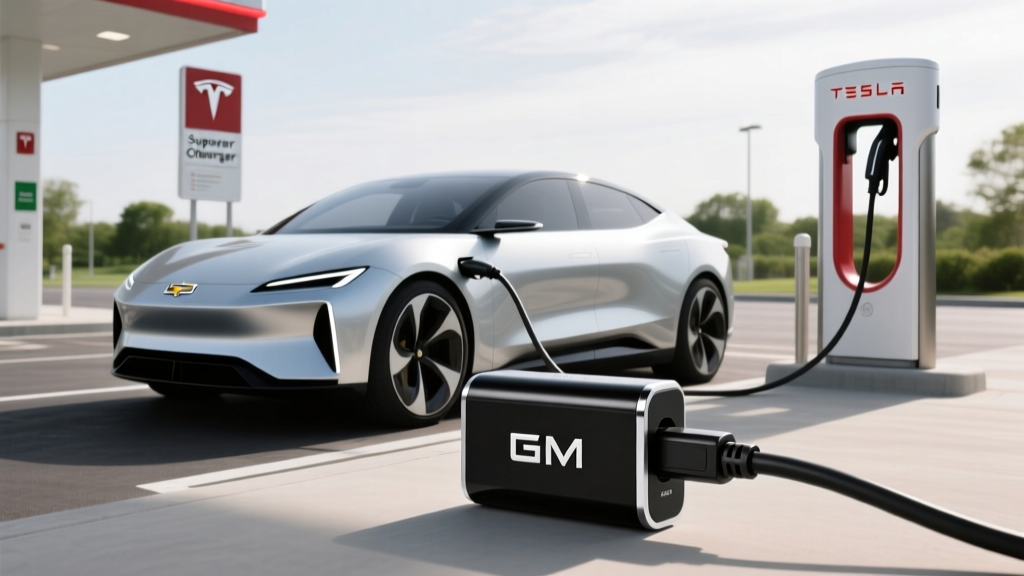
For 2026 model-year vehicles, the North American Charging Standard (NACS, the former Tesla connector) has won the passenger-EV connector war. Nearly every major automaker — Ford, GM, Rivian, Volvo, Polestar, Hyundai, Kia, BMW — has adopted NACS on new vehicles. CCS1 remains on 2023–2025 models and most public non-Tesla DC fast chargers. CHAdeMO is effectively legacy, limited to the Nissan Leaf and Mitsubishi Outlander PHEV.
| Connector | Used on | Level 2 home charging | DC fast charging access |
|---|---|---|---|
| NACS (Tesla-style) | Tesla (all years); Ford, GM, Rivian, Hyundai, Kia, BMW 2025+ models | Native NACS or J1772→NACS adapter | Tesla Supercharger + NACS-equipped public stations |
| J1772 | All non-Tesla North American EVs (Level 2 only) | Universal Level 2 standard | Not used for DC fast charging |
| CCS1 | Most 2019–2024 non-Tesla EVs | J1772 upper portion | Electrify America, EVgo, Ionity; declining on new cars |
| CHAdeMO | Nissan Leaf, Mitsubishi Outlander PHEV (legacy) | J1772 with separate CHAdeMO inlet | Shrinking public network |
For home Level 2 charging, J1772 remains the universal plug regardless of whether your car uses NACS or CCS1 for DC fast charging — because every NACS-equipped vehicle ships with (or supports) a J1772-to-NACS adapter, and CCS1 vehicles have a J1772 inlet built into the CCS1 combo port. When buying a home charger in 2026, a J1772-terminated unit is the safest long-term choice; you can swap adapters on the vehicle side as the market evolves.
Equipment Picks: 2026 Level 2 Chargers Worth Installing
These units are widely available, UL-listed or ETL-listed, and cover the amperage range that matches most 2026 EVs' onboard chargers.
Emporia Level 2 Smart Charger (48A)
- Power output: 11.5 kW at 48A (requires 60A breaker)
- Connector: J1772 (NACS adapter-compatible)
- Cable length: 24 ft
- Smart features: Wi-Fi, app scheduling, solar integration, utility demand-response, energy metering
- Price: ~$399 (hardwired); ~$449 (plug-in)
- Best for: Budget buyers with solar or time-of-use rates
ChargePoint Home Flex (up to 50A)
- Power output: Up to 12 kW at 50A (dip-switch selectable 16–50A)
- Connector: J1772
- Cable length: 23 ft
- Smart features: Wi-Fi, Alexa, scheduling, charge-session logs, flexible amperage to match panel
- Price: ~$649
- Best for: Homes with limited panel headroom (set to 32A/40A as needed)
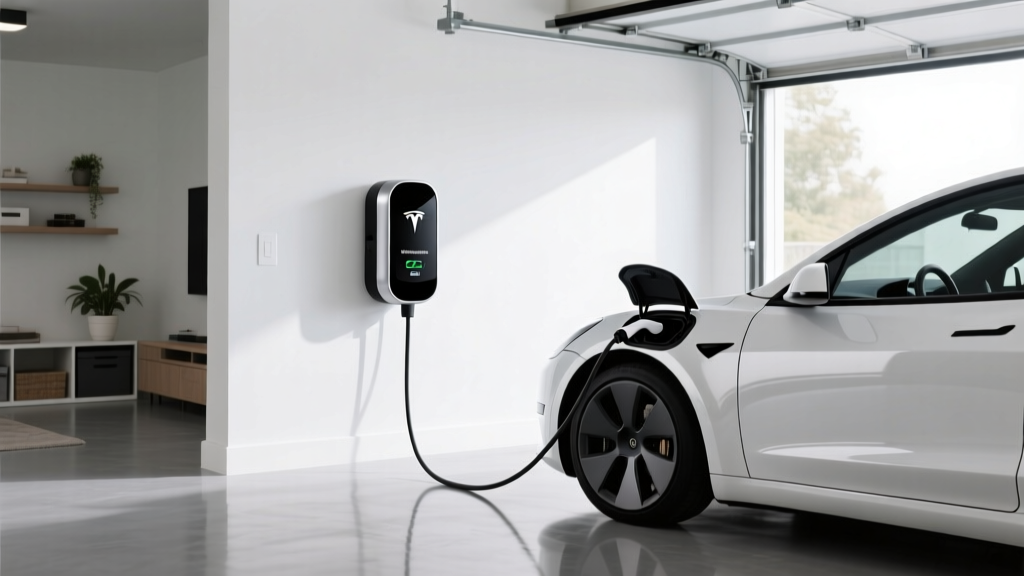
Tesla Wall Connector (48A)
- Power output: 11.5 kW at 48A (60A breaker)
- Connector: Native NACS; includes J1772 adapter for non-Tesla EVs on newer revisions
- Cable length: 24 ft
- Smart features: Wi-Fi, OTA updates, power sharing across multiple units, load management
- Price: ~$475
- Best for: Tesla or NACS-adopted households; multi-EV garages
Grizzl-E Smart (40A)
- Power output: 9.6 kW at 40A (50A breaker)
- Connector: J1772
- Cable length: 24 ft
- Smart features: OCPP-compatible, app control, ruggedized aluminum case, -40°F rated
- Price: ~$549
- Best for: Cold-climate outdoor installs, unheated garages
Match the charger's max amperage to your EV's onboard charger, not the other way around. Installing a 48A unit for a car that only accepts 7.2 kW wastes copper and breaker capacity — a 32A/7.7 kW unit on a 40A breaker would serve the same vehicle identically.
Cost to Charge Per Mile: Home vs. Public vs. Gas
Electricity pricing varies enormously by utility and time-of-use schedule, but the per-mile math almost always favors home charging. The table below uses a 3.0 mi/kWh efficiency typical of a 2026 midsize crossover EV (EPA combined ~100 MPGe) and compares it against a 28-MPG gas counterpart at $3.45/gallon.
| Scenario | $/kWh | Cost per mile @ 3.0 mi/kWh | vs. 28-MPG gas @ $3.45/gal |
|---|---|---|---|
| Home, off-peak TOU rate | $0.11 | $0.037 | 70% cheaper |
| Home, blended residential average | $0.17 | $0.057 | 54% cheaper |
| Public Level 2 (ChargePoint, EVgo L2) | $0.30–$0.45 | $0.10–$0.15 | Comparable to gas |
| DC fast charging (Electrify America, Tesla Supercharger) | $0.38–$0.55 | $0.13–$0.18 | Comparable or 30% cheaper |
| Gasoline (28 MPG combined) | — | $0.123 | Baseline |
The implication for ownership economics is blunt: if you cannot charge at home or at work, an EV's cost advantage erodes substantially. DC fast charging on road trips is fine as a supplement, but relying on it as your primary fuel source puts EV per-mile cost in the same band as a fuel-efficient hybrid. This is why the §30C credit for a home station is strategically important — it's the unlock that makes EV ownership meaningfully cheaper than gas over a 5-year horizon.
Safety, Code, and the Details Inspectors Actually Check
NEC Article 625 governs EV charging equipment, and a few requirements come up on nearly every inspection:
- Dedicated circuit. The EVSE must be on its own breaker — no shared circuits with lighting, outlets, or appliances.
- 125% continuous-load rule. A 48A charger requires a 60A breaker and 60A-rated wire (typically #6 copper THHN or #4 aluminum); a 40A charger requires a 50A breaker.
- GFCI protection. 2020 NEC and later require GFCI on 14-50 receptacles used for EV charging in garages; hardwired units have GFCI built into the EVSE itself and typically do not require a GFCI breaker.
- Outdoor rating. Any outdoor install must be NEMA 3R or 4 rated; cord-and-plug outdoor units need an in-use weatherproof cover.
- Cable management. The NEC prohibits the charging cable from running across a floor where it becomes a trip hazard — wall-mounted holsters or retractors are strongly recommended and sometimes required.
- Utility notification. Many utilities require you to notify them before energizing a 60A+ load; some offer separate EV metering or TOU rates that slash charging cost.
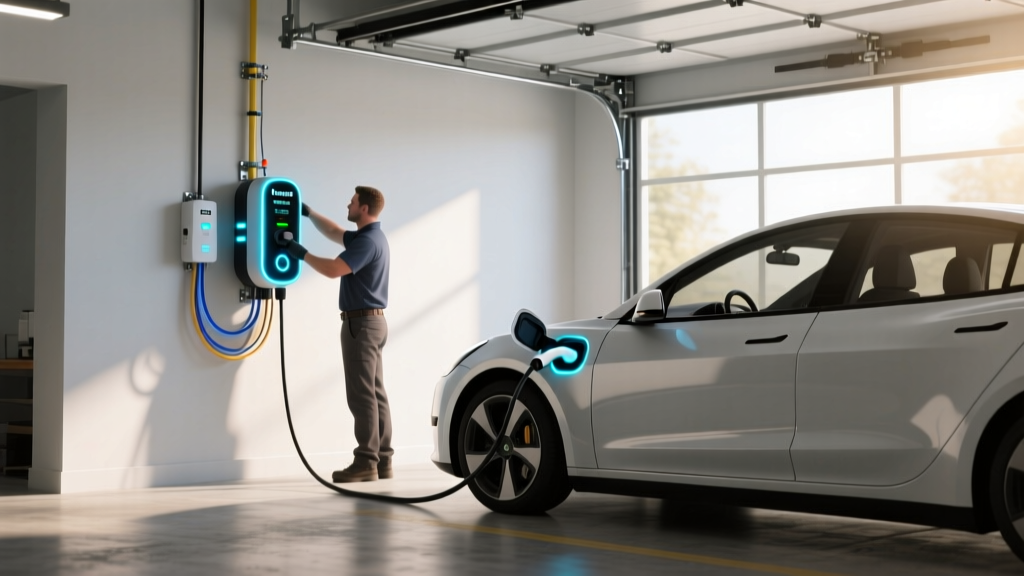
Working with a licensed electrician who files the permit protects the §30C credit, your homeowner's insurance, and the resale value of the home — unpermitted EV-charger work is a frequent inspection-flag item.
FAQ: Federal Tax Credit for Electric Vehicle Charging Stations
How much does it cost to install a home EV charger in 2026?
A straightforward hardwired 48A Level 2 install next to the panel typically runs $900–$1,700 all-in. Longer wire runs push it to $1,500–$2,700. If your panel needs a 100A-to-200A service upgrade, add $1,800–$4,000. After the 30% / $1,000-cap §30C credit, most qualifying homeowners net between $600 and $2,000 for a complete install.
How fast will each charging level add range?
Level 1 (120V) adds 3–5 miles per hour — overnight top-up only. Level 2 at 40A/9.6 kW adds roughly 30 miles per hour, enough to refill most EVs overnight. DC fast charging at 150+ kW adds 180–600 miles per hour at peak but tapers sharply above 80% state of charge.
Which connector and charger are compatible with my EV?
For home Level 2 charging, every non-Tesla EV accepts J1772 natively, and every 2025+ NACS-equipped EV accepts J1772 via a small adapter included with the vehicle. Pick a J1772-terminated home charger for maximum compatibility. For DC fast charging, check your vehicle's port: NACS on new Teslas and 2025+ adopters, CCS1 on most 2019–2024 non-Teslas, CHAdeMO only on Nissan Leaf.
How much does charging cost per mile vs. gas?
Home charging at $0.17/kWh costs about $0.057/mile in a typical EV — roughly 54% cheaper than a 28-MPG gas car at $3.45/gallon. Public DC fast charging at $0.45/kWh rises to about $0.15/mile, close to gas parity. Home charging is where the EV economics work.
What electrical upgrades might I need before installing?
The most common upgrade is a panel service increase from 100A to 200A ($1,800–$4,000), required when a load calculation shows no headroom for the 60A breaker a 48A charger needs. Older homes may also need a new grounding electrode, upgraded meter socket, or conduit replacement. Ask your electrician for a written NEC Article 220 load calculation before committing.
Can I claim the §30C credit if I rent my home?
No. The residential §30C credit applies only to equipment installed at your principal residence that you own. Renters can ask landlords to install a charger, but the credit belongs to the property owner. Businesses claiming §30C on commercial property face a different cap ($100,000 per item) and separate rules.
Does the §30C credit stack with utility rebates?
Yes. Many utilities offer $250–$750 rebates on Energy Star-certified Level 2 chargers, and those rebates reduce your out-of-pocket cost without reducing the federal credit — §30C is calculated on your net cost after non-taxable rebates. Check your utility's EV program page before purchasing.
Bottom line: the federal tax credit for electric vehicle charging stations meaningfully offsets a home Level 2 install in 2026, but only for taxpayers in qualifying census tracts and only up to the $1,000 annual cap. Pair it with a utility rebate, a right-sized 40–48A charger matched to your EV's onboard charger, and a permitted install by a licensed electrician — and you'll unlock the lowest per-mile cost any passenger vehicle can offer today.