The 30% Federal Tax Credit for Home EV Chargers Explained
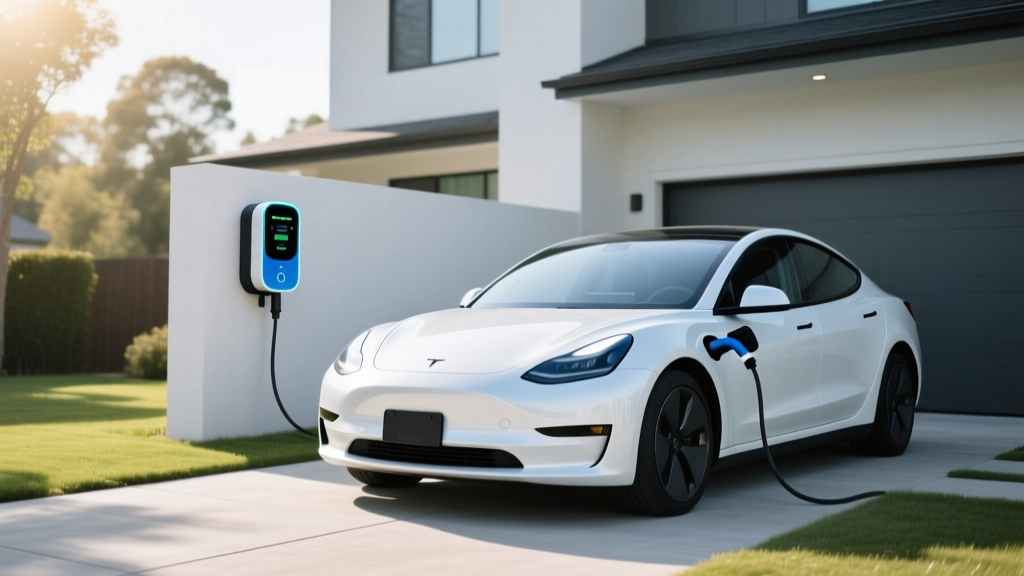
If you're installing a home EV charger in 2026, the federal government will pick up part of the tab — but the rules are specific, the caps are firm, and most buyers misunderstand what qualifies. The Alternative Fuel Vehicle Refueling Property Credit (IRS Form 8911) covers up to 30% of the combined cost of the charger hardware and installation labor, capped at $1,000 per tax year for residential installations. That means a $2,500 total install job nets you $750 back; a $3,334+ install maxes out the $1,000 credit.
There's a geographic catch that trips up many buyers: the credit is only available if you install the charger in a qualified census tract — areas designated as low-income or non-urban under federal guidelines. The IRS maintains a lookup tool, and your tax professional can confirm eligibility. Income caps do not apply to the residential charging credit the way they do for the §30D vehicle credit, but the census-tract requirement effectively limits availability for many suburban and urban homeowners.
§8911 Residential Charging Credit Checklist:
- 30% of equipment + installation cost, up to $1,000 max
- Equipment must be new, UL-listed (or equivalent), and permanently installed
- Property must be in a qualified low-income or non-urban census tract
- Claimed via IRS Form 8911 with your annual tax return
- Does not stack with utility rebates (but utility rebates reduce your cost basis)
- Consult a tax professional — rules and tract designations update periodically
Source: IRS Form 8911
Charging Levels: What Speed You Actually Get
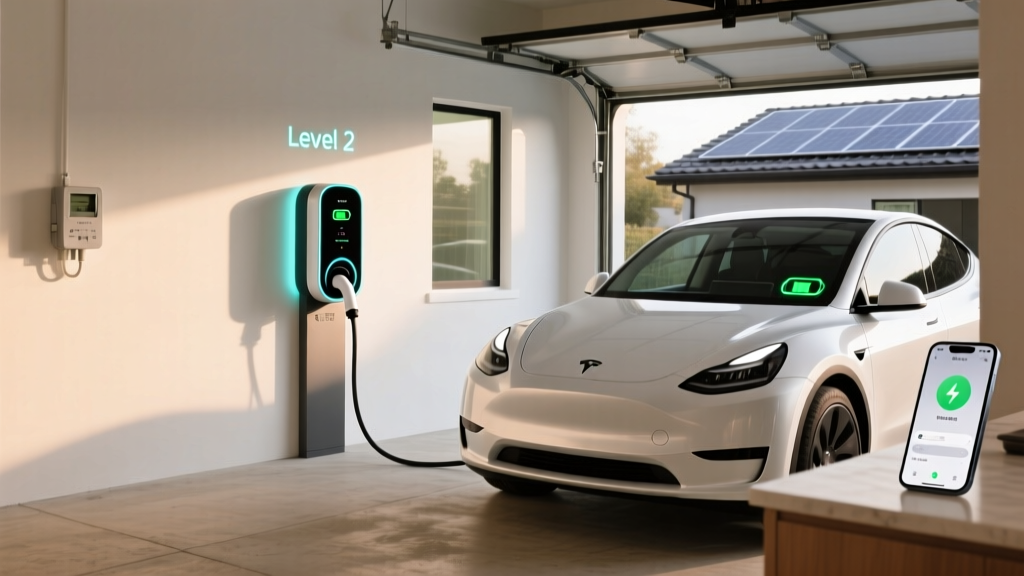
Before you buy equipment, understand what each charging level delivers in real-world terms. The distinction between kW (power, the rate of energy flow) and kWh (energy, what your battery stores) is the single most important concept in EV charging. A 48-amp Level 2 charger delivers roughly 11.5 kW of power; if you charge for one hour, you add about 11.5 kWh of energy to your battery.
| Level | Voltage | Max Power (kW) | Miles of Range Added/Hour | Best For |
|---|---|---|---|---|
| Level 1 | 120V AC | 1.2–1.9 kW | 3–5 mi/hr | Overnight top-offs, PHEVs, low-mileage drivers |
| Level 2 | 240V AC | 3.3–19.2 kW | 12–70 mi/hr | Daily home charging, most EV owners |
| DC Fast Charge | 400–800V DC | 50–350 kW | 150–1,200+ mi/hr (equivalent) | Road trips, rapid top-ups on public networks |
For most EV owners, Level 2 at home is the sweet spot. A 77 kWh battery (Ford Mustang Mach-E Extended Range) charging at 11.5 kW (48A/240V) will go from 10% to 80% in roughly 5 hours — easily done overnight. A Level 1 outlet on a standard 120V/15A circuit would take over 40 hours for the same session.
Home Charger Installation: Electrical Requirements and Real Costs
This is where most EV buyers get sticker shock. The charger itself is often the cheapest part of the equation. A proper Level 2 installation requires a dedicated 240V circuit — typically 40A to 60A — run from your main electrical panel to the charging location. Here's what drives cost:
| Cost Component | Typical Range | Notes |
|---|---|---|
| Level 2 Charger Hardware | $350–$750 | 32A–48A smart chargers; Tesla Wall Connector ~$420 |
| Electrician Labor | $600–$2,500 | Depends on panel proximity, wall/foundation penetration, conduit run |
| Electrical Permit | $50–$300 | Required in most jurisdictions; inspection included |
| Panel Upgrade (if needed) | $1,500–$4,000 | 100A → 200A service; common in pre-1990 homes |
| Total (no panel upgrade) | $1,000–$3,550 | Most homes with modern 200A panels |
| Total (with panel upgrade) | $2,500–$7,550 | Older homes or those near panel capacity |
Panel upgrade reality check: If your home has a 100-amp electrical service (common in homes built before 1990), adding a 40A–60A dedicated EV circuit may push you over safe capacity. An electrician will perform a load calculation per NEC Article 220 to determine whether your panel can handle the additional draw. If not, a service upgrade to 200A is required — and that's the single biggest line item.
Code and safety requirements you should expect your electrician to address:
- Dedicated circuit: EV chargers must have their own breaker — no sharing with dryers or ranges.
- GFCI protection: NEC 2020+ requires GFCI breakers for outdoor receptacles and many jurisdictions extend this to indoor garage EV circuits.
- NEMA 14-50 vs. hardwired: A NEMA 14-50 outlet offers portability but requires a GFCI breaker (~$100–$150 extra). Hardwired chargers skip the outlet and GFCI requirement in many jurisdictions and are often more reliable.
- Outdoor rating: If your charger lives outside, it must carry a NEMA 4 or IP65+ weatherproof rating.
- Wire gauge: 6 AWG copper for 48A circuits; 4 AWG for 60A circuits — your electrician will spec this based on run length.
Connector Compatibility: NACS, CCS, and CHAdeMO
The connector landscape has consolidated significantly. As of 2026, the North American Charging Standard (NACS) — originally developed by Tesla — has become the dominant connector for new EVs sold in North America. Most legacy CCS1 vehicles can access Tesla Superchargers via a CCS-to-NACS adapter (often provided free by the automaker for a promotional period). CHAdeMO is effectively discontinued on new vehicles (the Nissan Leaf ended US sales after 2024).
| Connector | Brands Using It (2026 Models) | Adapter Needed? |
|---|---|---|
| NACS (Tesla) | Tesla, Ford, GM, Rivian, Volvo, Polestar, BMW, Hyundai, Kia (2025+), Toyota, Subaru | None for native NACS; CCS→NACS adapter for legacy CCS vehicles at Superchargers |
| CCS1 | Legacy models: VW ID.4 (pre-2025), older Hyundai/Kia, older Ford/GM | NACS→CCS adapter to use Superchargers; native CCS at Electrify America, EVgo |
| CHAdeMO | Discontinued (Nissan Leaf no longer sold new in US) | N/A — limited network support |
Home charger connector choice: If you own a NACS vehicle (or plan to buy one), purchase a charger with a native NACS plug. If you own a CCS vehicle, buy a CCS (J1772-Combo) charger. Many chargers now ship with interchangeable pigtails or include adapters in-box. Tesla's Wall Connector ships with NACS and includes a J1772 adapter tip for non-Tesla vehicles.
Cost to Charge: Home vs. Public vs. Gas
The financial case for home charging rests on electricity rates — specifically, your ability to charge during off-peak hours (typically 11 PM–6 AM) when utilities offer their lowest rates. Here's a realistic cost breakdown using national averages for 2026:
| Scenario | Rate ($/kWh) | Cost for 70 kWh Fill | Cost/Mile (3.5 mi/kWh) |
|---|---|---|---|
| Home Off-Peak (national avg) | $0.09 | $6.30 | $0.026 |
| Home Peak (national avg) | $0.17 | $11.90 | $0.048 |
| Public Level 2 (ChargePoint, etc.) | $0.28 | $19.60 | $0.080 |
| DC Fast Charge (Electrify America) | $0.48 | $33.60 | $0.137 |
| DC Fast Charge (Tesla Supercharger avg) | $0.32 | $22.40 | $0.091 |
| Gas Car (28 MPG, $3.40/gal) | — | $8.50 (equivalent energy) | $0.121 |
Home off-peak charging costs roughly 80% less per mile than gasoline. Even public DC fast charging at premium rates is often cheaper than gas on a per-mile basis. The catch: if you rely exclusively on public DC fast charging, your cost advantage narrows significantly, and you'll accelerate battery degradation from repeated high-power sessions.
Charging time examples for common battery sizes (Level 2, 48A / 11.5 kW):
- Tesla Model 3 (60 kWh usable): 10–80% in ~3.6 hours
- Hyundai Ioniq 5 (77.4 kWh usable): 10–80% in ~4.7 hours
- Ford F-150 Lightning Extended Range (131 kWh usable): 10–80% in ~8 hours (requires overnight session)
- Chevrolet Equinox EV (85 kWh usable): 10–80% in ~5.2 hours
Best Home EV Chargers for 2026: Our Picks
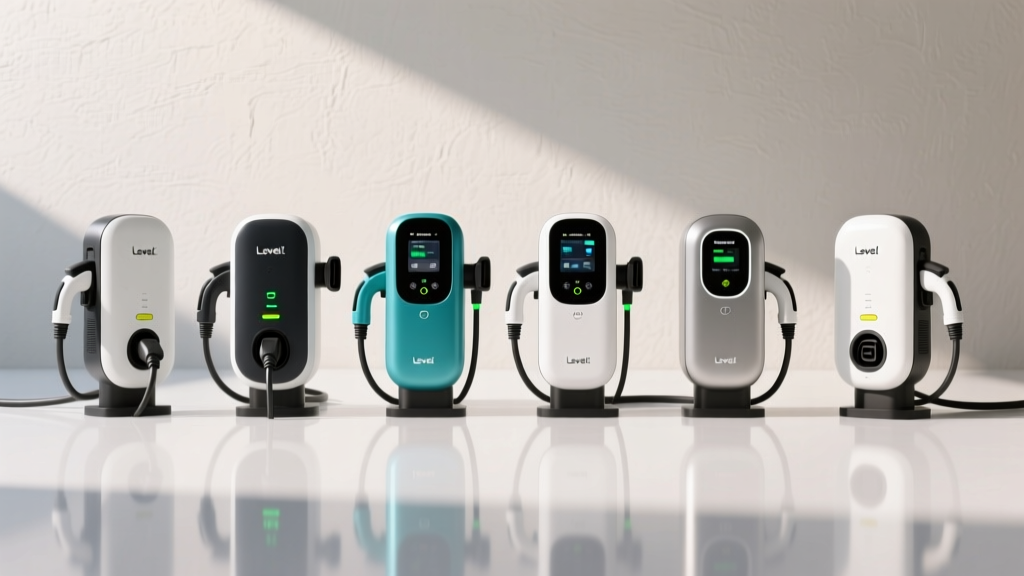
Every charger below is UL-listed (or ETL-listed to equivalent standards), supports scheduled/managed charging via app, and carries at least a 3-year warranty. We've selected based on real-world reliability, smart features, and value.
Tesla Wall Connector (Gen 4)
- Power: 48A / 11.5 kW (hardwired, 240V/60A circuit)
- Connector: Native NACS + J1772 adapter tip included
- Cable: 24 ft
- Smart features: Wi-Fi, OTA updates, load sharing (pair two units on one circuit), access control
- Price: ~$420
- Best for: Tesla owners and NACS-native vehicles; excellent value
Emporia Level 2 EV Charger
- Power: 48A / 11.5 kW (hardwired or NEMA 14-50 plug)
- Connector: J1772 (NACS adapter available separately)
- Cable: 24 ft
- Smart features: Wi-Fi, solar integration, time-of-use scheduling, energy monitoring via Emporia app
- Price: ~$400
- Best for: Solar-panel owners wanting to charge on excess production; budget-conscious buyers
ChargePoint Home Flex
- Power: Up to 50A / 12 kW (adjustable 16A–50A via dip switch)
- Connector: J1772 (NACS adapter sold separately)
- Cable: 23 ft
- Smart features: Wi-Fi, Alexa/Google Home, scheduling, amperage adjustment to match panel capacity
- Price: ~$550–$650
- Best for: Homes with limited panel headroom — the adjustable amperage lets you dial back to 32A or 40A without swapping hardware
Grizzl-E Smart
- Power: 40A / 9.6 kW (NEMA 14-50 plug or hardwired)
- Connector: J1772
- Cable: 24 ft
- Smart features: Wi-Fi, OCPP-compatible, scheduling
- Price: ~$450
- Best for: Extreme cold climates — rated to -40°F; built in Canada with a rugged aluminum enclosure
Utility Rebates and State Incentives That Stack With the Federal Credit
The federal §8911 credit is only one layer of available savings. Many investor-owned utilities offer rebates of $250–$1,500 for installing a smart Level 2 charger — often with the condition that you enroll in a managed-charging or time-of-use rate program. Examples in 2026:
- PG&E (California): Up to $1,000 rebate for residential EV charger install with enrollment in EV2-A time-of-use rate
- Con Edison (New York): Up to $500 rebate plus discounted off-peak rates
- Xcel Energy (Colorado/Minnesota): Up to $1,200 rebate with smart-charger enrollment
These utility rebates reduce your cost basis before the federal credit is calculated. Example: a $3,000 install with a $500 utility rebate = $2,500 net cost × 30% = $750 federal credit. Your effective total out-of-pocket: $1,750.
Some states also offer their own credits or rebates (California's CVRP, Colorado's EV charging tax credit, etc.), but these vary widely and change frequently. Check your state energy office and utility provider for current programs. Source: Alternative Fuels Data Center
Frequently Asked Questions
How much does it cost to install a home EV charger?
Expect $1,000–$3,550 for a typical Level 2 installation in a home with a modern 200A panel, including the charger ($350–$750), electrician labor ($600–$2,500), and permit ($50–$300). If your home needs a panel upgrade from 100A to 200A service, add $1,500–$4,000. The federal tax credit can return up to $1,000 (30% of total cost) if you're in a qualifying census tract.
How fast will each charging level add range?
Level 1 (120V) adds 3–5 miles per hour — fine for PHEVs with 30–40 miles of electric range but inadequate for daily BEV use. Level 2 (240V, 48A) adds 30–45 miles per hour for most EVs, fully replenishing a typical 250–300 mile battery overnight. DC fast charging at 150+ kW can add 150–250 miles in 20–30 minutes, though charge speed tapers significantly above 80% state of charge.
Which connector and charger is compatible with my EV?
Check your vehicle's charge port. If it's NACS (Tesla-style, smaller oval), buy a NACS charger like the Tesla Wall Connector. If it's CCS1 (larger, round with two DC pins below), buy a J1772/CCS charger like the ChargePoint Home Flex. Most 2025–2026 models from Ford, GM, Rivian, Hyundai, and Kia now ship with NACS. Older CCS vehicles can use adapters at Superchargers but should use native CCS chargers at home.
How much does charging cost per mile vs. gas?
Home off-peak charging averages $0.026/mile; home peak is ~$0.048/mile. A comparable gas car at 28 MPG and $3.40/gallon costs $0.121/mile. That's a 78% savings per mile with home off-peak charging. Public DC fast charging at $0.32–$0.48/kWh costs $0.09–$0.14/mile — still competitive with gas, but the savings narrow considerably.
What electrical upgrades might I need?
Homes with 100A service (common in pre-1990 construction) often need a panel upgrade to 200A to support a 40A–60A dedicated EV circuit — this costs $1,500–$4,000. Even in 200A homes, if your existing loads (electric range, dryer, HVAC, water heater) consume most of your panel's capacity, an electrician's load calculation may require either a panel upgrade or a lower-amperage charger (32A instead of 48A) to stay within safe limits. Smart chargers like the ChargePoint Home Flex let you adjust amperage via a dip switch without replacing hardware.
Can I claim the federal tax credit if I rent my home?
No. The §8911 residential credit applies only to charging equipment installed at your primary or secondary residence that you own. Renters may benefit from landlord-installed chargers (the landlord can claim the commercial version of the credit, capped at $100,000 per location) or from workplace and public charging infrastructure.
Disclaimer: Tax credit eligibility depends on your specific circumstances, property location, and current IRS guidance. Consult a qualified tax professional before claiming. Installation costs vary by region, electrician, and home configuration — always get a detailed quote from a licensed electrician before committing.