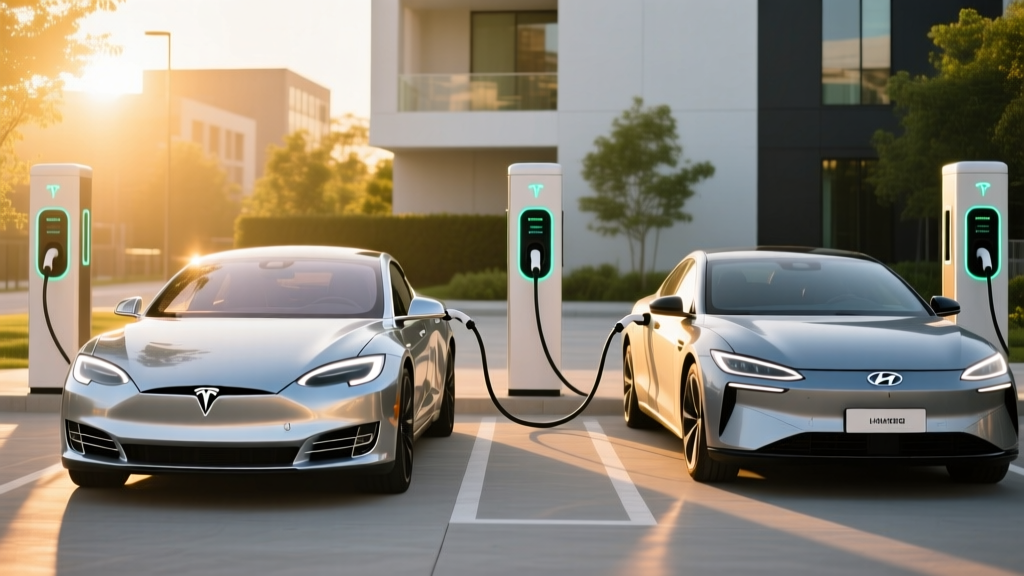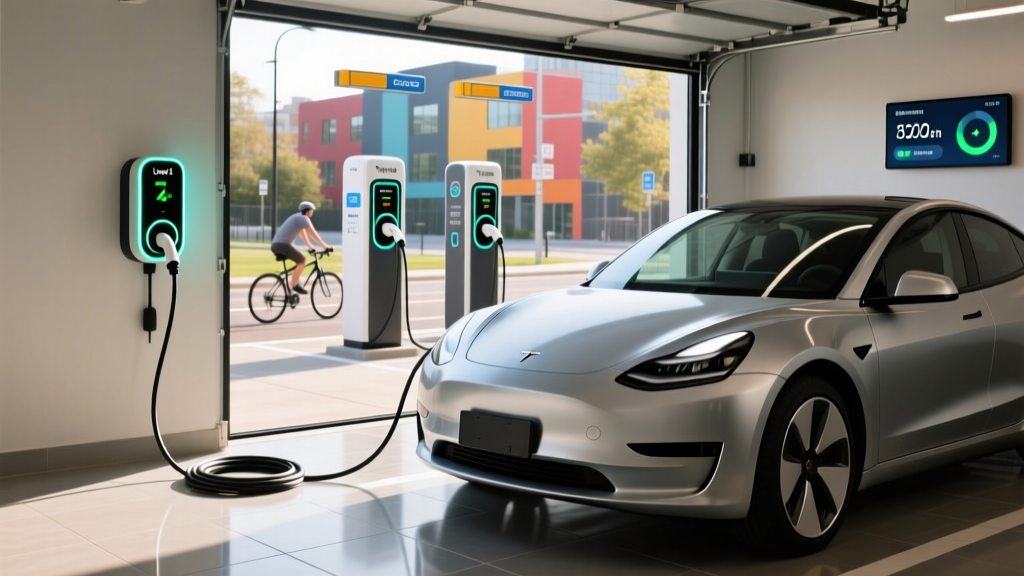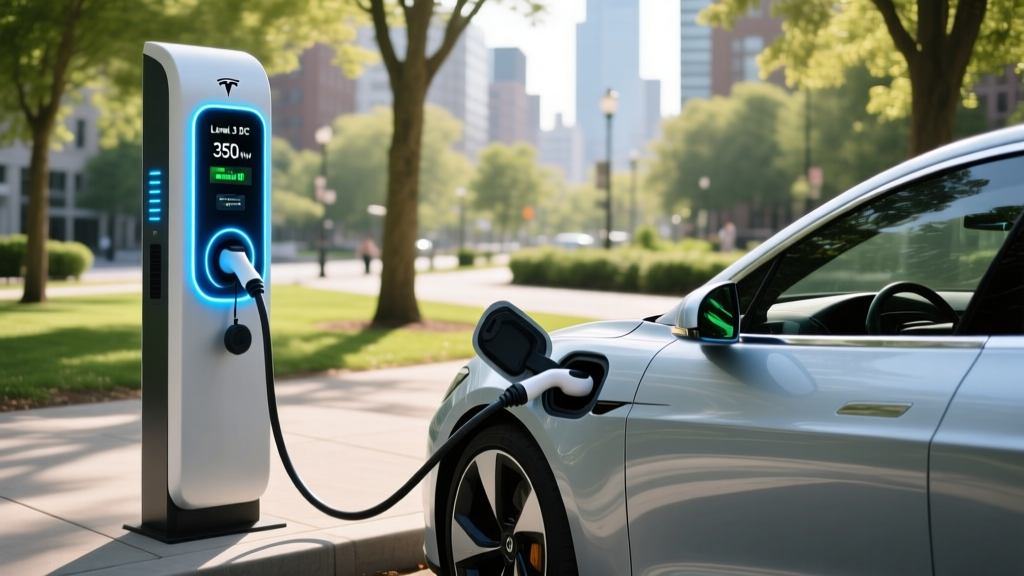
The Race to the Fastest EV Charging Station in 2026
If you've driven an electric vehicle on a road trip, you've likely stared at a charger's screen wondering: is this actually fast, or just fast-sounding? The EV charging landscape in 2026 spans everything from a standard 120V wall outlet trickling 3 miles of range per hour to 500 kW DC fast chargers that can add 200+ miles in under 15 minutes. The gap between "fast" and "fastest" is enormous—and understanding it is the difference between a 20-minute pit stop and a 90-minute lunch break.
This guide breaks down every charging tier with exact kilowatt (kW) figures, real-world charging times, home installation costs, connector compatibility, and specific equipment picks. Whether you're shopping for the fastest EV charging station for your garage or planning cross-country routes, the numbers below will tell you exactly what to expect.
Charging Levels Explained: Speeds in kW and Miles Per Hour
Every EV charge falls into one of three levels. The table below shows exact power ranges and real-world miles of range added per hour of charging, based on an average EV efficiency of 3.0 miles per kWh.
| Level | Voltage | Power (kW) | Miles of Range / Hour | Typical Use Case |
|---|---|---|---|---|
| Level 1 | 120V AC | 1.0–1.9 kW | 3–6 mi/hr | Overnight top-up, PHEVs, emergencies |
| Level 2 | 240V AC | 3.3–19.2 kW | 10–60 mi/hr | Daily home charging, workplace, hotels |
| DC Fast Charge (DCFC) | 400–900V DC | 50–500 kW | 150–1,200+ mi/hr (peak) | Road trips, highway corridors, fleet depots |
Level 1 uses a standard household outlet. It's included with every EV but painfully slow—expect 40+ hours to fill a large battery. It's fine for plug-in hybrids with small batteries (15–40 miles of electric range) but impractical as a primary charging method for most BEVs.
Level 2 is the workhorse of EV ownership. A 48-amp (11.5 kW) home charger adds roughly 34 miles of range per hour—enough to fully replenish most EVs overnight in 6–10 hours. This is what 80%+ of EV owners rely on daily.
DC Fast Charging bypasses the car's onboard charger and feeds DC current directly to the battery. Speeds vary wildly: a 50 kW charger might add 150 miles per hour at peak, while a 350 kW Electrify America stall or a 500 kW Ionity unit can theoretically add over 1,000 miles per hour. But peak speed isn't sustained speed—more on charge curves below.
Real-World Charging Times: 10–80% for Common Battery Sizes
EV manufacturers and charging networks quote peak kW, but batteries don't accept power linearly. Charging follows a curve: power ramps up quickly from a low state of charge (SoC), holds near peak through the mid-range, then tapers sharply above 80% to protect the battery cells. This is why the industry standard metric is 10–80% charge time.
| Battery (usable kWh) | Example Vehicles | 50 kW DCFC | 150 kW DCFC | 250 kW DCFC | 350 kW DCFC* |
|---|---|---|---|---|---|
| 60 kWh | Chevrolet Equinox EV, base Tesla Model 3 | ~55 min | ~28 min | ~20 min | ~18 min |
| 77 kWh | Ford Mustang Mach-E, Tesla Model Y LR | ~70 min | ~35 min | ~25 min | ~20 min |
| 84–100 kWh | Hyundai Ioniq 5, Rivian R1S, Lucid Air | ~85 min | ~42 min | ~28 min | ~18 min** |
*Vehicle must support 350 kW+ charge rates (e.g., Hyundai Ioniq 5 at 240 kW, Porsche Taycan at 270 kW, Lucid Air at 300+ kW). A 350 kW charger won't charge a car faster than the car's maximum acceptance rate.
**800V-architecture vehicles (Ioniq 5/6, Kia EV6, Porsche Taycan) benefit most from 350 kW chargers. Standard 400V vehicles peak around 150–250 kW regardless of charger capacity.
Home Level 2 Installation: Electrical Requirements, Costs, and Panel Upgrades
Installing a Level 2 charger at home is the single most impactful upgrade for EV ownership. Here's what the electrical work actually involves and what it costs.
Electrical Requirements
- Circuit: A dedicated 240V circuit, typically 40A, 50A, or 60A depending on charger amperage
- Breaker sizing: NEC code requires the breaker to be rated at 125% of continuous load. A 48A charger needs a 60A breaker; a 40A charger needs a 50A breaker
- Wire gauge: 6 AWG copper for 50A circuits; 4 AWG for 60A circuits (varies by run length and local code)
- Outlet vs. hardwired: A NEMA 14-50 outlet offers portability; hardwired installations support higher amperage (up to 80A/19.2 kW) and avoid GFCI nuisance-tripping issues common with 14-50 receptacles
- GFCI protection: NEC 2020+ requires GFCI for outdoor receptacles; hardwired units handle ground-fault protection internally
Panel Capacity and Upgrades
Before installing, an electrician will perform a load calculation on your electrical panel. A 200-amp panel is standard in modern homes and usually accommodates a 60A EV circuit. However, older homes with 100A or 150A panels may need an upgrade—especially if you already run electric HVAC, a dryer, and an electric range.
| Component | Typical Cost Range | Notes |
|---|---|---|
| Level 2 Charger (Equipment) | $350–$750 | Smart Wi-Fi chargers, 40A–48A, 25-ft cable |
| Electrician Labor | $600–$2,000 | Depends on panel proximity, wall/floor penetration, conduit run length |
| Permit & Inspection | $50–$300 | Required by most jurisdictions; varies by municipality |
| Panel Upgrade (if needed) | $1,500–$4,000 | 100A → 200A service upgrade; not needed in most modern homes |
| Total (no panel upgrade) | $1,000–$3,050 | Average: ~$1,800 for a standard garage install near the panel |
| Total (with panel upgrade) | $2,500–$7,050 | Older homes or high-load households |
Federal incentive: The IRS §30C Alternative Fuel Vehicle Refueling Property Credit covers up to 30% of home charging equipment and installation costs, capped at $1,000. Eligibility depends on census-tract income and rural-area requirements. Consult a tax professional for your specific situation.
Connector Compatibility: NACS, CCS, and CHAdeMO in 2026
The connector landscape has consolidated dramatically. Here's where things stand in 2026:
| Connector | Standard On | DC Fast Charging? | Notes |
|---|---|---|---|
| NACS (J3400) | Tesla (all models), Ford, GM, Rivian, Volvo, Polestar, Hyundai/Kia (2025+) | Yes — up to 500+ kW at V4 Superchargers | Now the dominant North American standard. Compact, lightweight connector |
| CCS1 | VW ID.4, BMW iX, older Hyundai/Kia, legacy models | Yes — up to 350 kW | Still widely available at Electrify America, EVgo; adapters to NACS available |
| CHAdeMO | Nissan Leaf (legacy only) | Yes — up to 100 kW | Effectively discontinued for new vehicles; existing infrastructure remains operational |
| J1772 | All non-Tesla EVs (Level 2 AC) | No — AC only | Standard for Level 2 AC charging; Tesla uses NACS for AC as well |
Adapter reality: If you drive a CCS-equipped vehicle, a CCS-to-NACS adapter ($150–$250) unlocks Tesla's Supercharger network—over 25,000 stalls in North America. Ford and GM provide these adapters to owners. Conversely, Tesla owners rarely need an adapter since most public networks now offer NACS connectors or provide Tesla-compatible stalls.
Equipment Recommendations: Best Home Level 2 Chargers
These are the chargers we recommend based on power output, cable quality, smart features, and real-world reliability across multiple installations.
ChargePoint Home Flex
- Power: Up to 12 kW (50A) on a 60A circuit
- Connector: J1772 (NACS adapter included for newer units)
- Cable: 23 ft, flexible in cold weather
- Smart features: Wi-Fi, scheduling, Alexa integration, energy tracking
- Price: ~$550
- Best for: Flexible amperage adjustment (dip-switch configurable from 16A to 50A) makes it ideal for homes with limited panel capacity
Tesla Wall Connector
- Power: Up to 11.5 kW (48A) on a 60A circuit
- Connector: NACS native (J1772 adapter available separately)
- Cable: 24 ft, lightweight
- Smart features: Wi-Fi, over-the-air updates, power sharing between two units on one circuit
- Price: ~$450
- Best for: Tesla and NACS-equipped vehicle owners; best value-to-performance ratio
Emporia Level 2 EV Charger
- Power: Up to 11.5 kW (48A) on a 60A circuit
- Connector: J1772 (NACS version available)
- Cable: 24 ft
- Smart features: Wi-Fi, real-time energy monitoring, solar integration, load management
- Price: ~$400
- Best for: Budget-conscious buyers with solar panels; excellent app-based energy tracking
Grizzl-E Smart
- Power: Up to 10 kW (40A) on a 50A circuit
- Connector: J1772 or NACS
- Cable: 24 ft, rated to -40°F
- Smart features: Wi-Fi, OCPP compatibility, adjustable amperage
- Price: ~$500
- Best for: Extreme cold climates; built in Canada with rugged outdoor housing
Cost to Charge: Home vs. Public vs. Gas — The Per-Mile Breakdown
Charging cost depends on electricity rates, which vary by location, time of day, and charging tier. Below is a realistic comparison using national averages.
| Scenario | Rate ($/kWh) | Cost to Add 200 Miles* | Cost Per Mile |
|---|---|---|---|
| Home (off-peak utility rate) | $0.10–$0.14 | $6.00–$8.40 | $0.03–$0.04 |
| Home (average blended rate) | $0.15–$0.18 | $9.00–$10.80 | $0.045–$0.054 |
| Public Level 2 (ChargePoint, etc.) | $0.25–$0.40 | $15.00–$24.00 | $0.075–$0.12 |
| DC Fast Charge (Electrify America, EVgo) | $0.35–$0.55 | $21.00–$33.00 | $0.105–$0.165 |
| Tesla Supercharger (average) | $0.28–$0.40 | $16.80–$24.00 | $0.084–$0.12 |
| Gasoline (28 MPG avg, $3.40/gal) | — | $24.28 | $0.121 |
*Based on an EV consuming 30 kWh per 100 miles (3.33 mi/kWh), typical of midsize crossovers like the Tesla Model Y or Hyundai Ioniq 5.
The takeaway: home charging is 3–4x cheaper per mile than gasoline. Even the most expensive DC fast chargers are cost-competitive with gas, and many are cheaper. The savings compound—over 15,000 miles per year, a home-charged EV saves roughly $1,200–$1,500 versus a 28 MPG gas car at $3.40/gallon.
The Fastest Public DC Charging Networks in 2026
If you're searching for the fastest EV charging station on the road, here's what the major networks offer at their top tier:
- Tesla Supercharger V4: Up to 500 kW for compatible vehicles (currently Cybertruck and future models); most existing stalls deliver 250 kW. Over 25,000 stalls in North America. Open to NACS-equipped non-Tesla vehicles via the Tesla app.
- Electrify America: Up to 350 kW at select stations. CCS1 native; NACS connectors being rolled out. Coverage along major interstate corridors. Pricing averages $0.43/kWh; Pass+ subscription reduces to $0.36/kWh.
- EVgo: Up to 350 kW at newer "eXtend" stations. CCS1 and NACS connectors available. Partnership with GM for urban fast-charging hubs.
- Ionity (Europe): Up to 400 kW using CCS2. Relevant for US travelers renting EVs in Europe.
- Ionna (US highway network): A joint venture of seven automakers (BMW, GM, Honda, Hyundai, Kia, Mercedes, Stellantis) deploying 30,000+ chargers at up to 350 kW along US highways, with rollout accelerating through 2026–2028.
Practical tip: Use PlugShare or the U.S. Department of Energy's Alternative Fuels Data Center to locate chargers by connector type and power rating along your route. Filter for 150+ kW stalls to minimize stop times.
Safety, Electrical Code, and Installation Best Practices
EV charging involves sustained high-current draw—more similar to running an electric furnace than plugging in a phone. Follow these safety and code guidelines:
- Dedicated circuit: Your EV charger must have its own dedicated breaker. Never share a circuit with other high-draw appliances.
- Outdoor rating: If installing outside, ensure the charger is rated NEMA 4 (weather-resistant). All recommended chargers above carry outdoor ratings.
- Hardwired vs. outlet: For 48A+ chargers, hardwiring is preferred. NEMA 14-50 outlets can experience thermal fatigue from sustained 40A draws and may trip GFCI breakers unnecessarily. Hardwired connections are more reliable for daily use.
- Cable management: Use a wall-mounted holster or retractable cable system to prevent tripping hazards and protect the cable from abrasion.
- Permit and inspection: Most jurisdictions require an electrical permit for new 240V circuits. The inspection verifies wire gauge, breaker sizing, and grounding. Skipping the permit risks insurance claim denials in the event of an electrical fire.
- Load management: If your panel is near capacity, consider a smart charger with built-in load management (e.g., Emporia or ChargePoint with CT clamps) that dynamically reduces charge current when other appliances draw power.
Frequently Asked Questions
How much does it cost to install a home EV charger?
A typical Level 2 home installation costs $1,000–$3,050 including equipment, electrician labor, and permits—assuming your electrical panel has sufficient capacity. If a panel upgrade from 100A to 200A is needed, add $1,500–$4,000. The federal §30C credit may cover up to $1,000 (30%) of the cost if you meet census-tract eligibility requirements.
How fast will each charging level add range?
Level 1 (120V) adds 3–6 miles per hour. Level 2 (240V, 48A) adds roughly 34 miles per hour. DC fast charging at 150 kW adds approximately 450 miles per hour at peak, while 350 kW chargers can theoretically add 1,000+ miles per hour—though the charge curve taper means actual session times are longer than peak rates suggest.
Which connector is compatible with my EV?
In 2026, most new EVs sold in North America use the NACS (J3400) connector, including Tesla, Ford, GM, Rivian, Hyundai, and Kia models. Older or legacy models (VW ID.4 pre-2026, Nissan Leaf) use CCS1 or CHAdeMO. Check your vehicle's charge port or consult the manufacturer. CCS-to-NACS adapters ($150–$250) bridge the gap for accessing Tesla Superchargers with CCS vehicles.
How much does charging cost per mile vs. gas?
Home charging at off-peak rates costs $0.03–$0.04 per mile—about 3–4x cheaper than gasoline at $3.40/gallon in a 28 MPG vehicle ($0.12/mile). Even public DC fast charging at $0.48/kWh averages $0.14/mile, still competitive with or cheaper than gas. Over 15,000 annual miles, home charging saves $1,200–$1,500 versus gasoline.
What electrical upgrades might I need?
The most common upgrade is a panel capacity increase from 100A to 200A, needed in older homes or those with multiple high-draw appliances. Your electrician will perform a NEC-compliant load calculation. If your panel is already 200A and your existing loads leave 60A+ of headroom, no upgrade is needed. Some homes may also need a new conduit run if the garage is far from the panel, adding $500–$1,500 in labor.
What is the fastest EV charging station available to the public?
As of 2026, Tesla's V4 Supercharger cabinets support up to 500 kW, though most vehicles currently max out at 250–350 kW acceptance. Electrify America and EVgo operate 350 kW stalls in select metro and highway locations. The limiting factor is usually the vehicle's charge acceptance rate, not the charger—a Hyundai Ioniq 5 peaks at ~240 kW regardless of whether it's plugged into a 250 kW or 500 kW station.