The Charger-Fastest Cars of 2026: Peak kW vs. Real-World Charging Speed
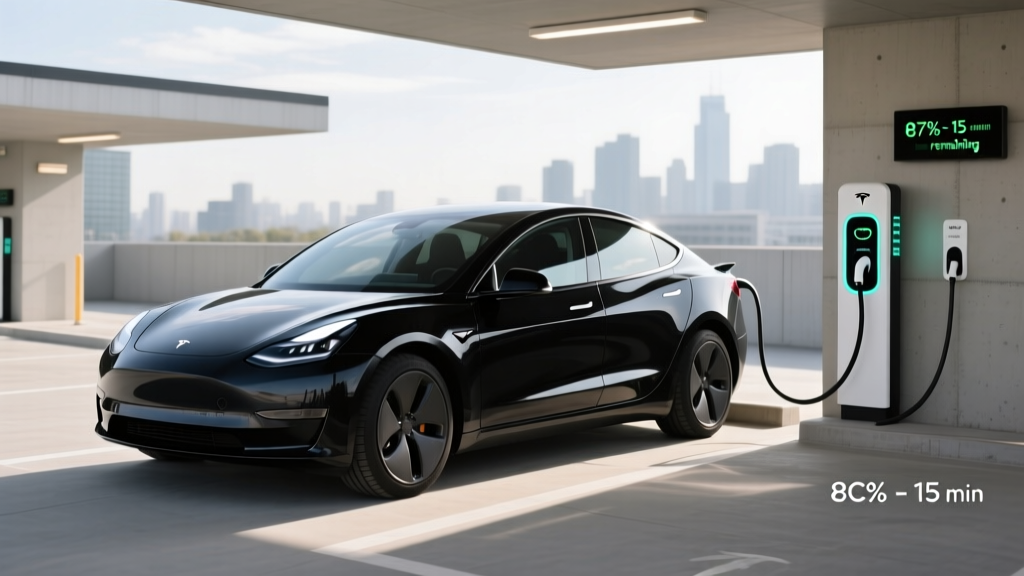
Searching for the charger fastest car isn't just about peak kilowatt numbers printed on a spec sheet. A vehicle that claims 350 kW peak charging may only sustain that rate for 2-3 minutes before tapering, while another rated at 250 kW might hold near-peak power from 10% to 60% State of Charge (SoC). The real metric that matters is 10-80% charge time — the practical window EV owners use on road trips — and the average sustained kW across that window.
Below, we break down which 2026 EVs actually charge the fastest at public DC fast chargers, how charging levels work (including the critical difference between kW and kWh), what home installation costs, and how to match the right equipment to your vehicle.
DC Fast Charging Speeds Ranked: 2026 EV Models
The following table ranks current-production EVs by their real-world 10-80% DC fast charging performance. Peak kW matters less than sustained power delivery across the charging curve. Most EVs taper charge rate significantly above 80% SoC to protect battery health, which is why road-trip charging strategies target the 10-80% window.
| EV Model (2026) | Battery (kWh usable) | Peak DC kW | 10-80% Time | Avg Sustained kW | Connector |
|---|---|---|---|---|---|
| Hyundai Ioniq 5 (Long Range) | 77.4 kWh (NMC) | 240 kW | ~18 min | ~190 kW | NACS |
| Kia EV6 (GT-Line AWD) | 77.4 kWh (NMC) | 240 kW | ~18 min | ~185 kW | NACS |
| Lucid Air Grand Touring | 112 kWh (NMC) | 300+ kW | ~20 min | ~225 kW | NACS |
| Porsche Taycan (Performance Plus) | 83.7 kWh (NMC) | 320 kW | ~19 min | ~210 kW | NACS |
| Tesla Model 3 Long Range | 75 kWh (NMC) | 250 kW | ~22 min | ~175 kW | NACS |
| Tesla Model Y Long Range | 75 kWh (NMC) | 250 kW | ~25 min | ~165 kW | NACS |
| Chevrolet Silverado EV 4WT | 200 kWh (NMC) | 350 kW | ~35 min | ~240 kW | NACS |
| Rivian R1T (Max Pack) | 141 kWh (NMC) | 220 kW | ~38 min | ~170 kW | NACS |
| Ford F-150 Lightning (Extended) | 131 kWh (NMC) | 150 kW | ~41 min | ~130 kW | NACS |
Key takeaway: The Hyundai Ioniq 5 and Kia EV6 remain the charger fastest cars in the mainstream market for 2026, achieving 10-80% in roughly 18 minutes thanks to their 800-volt architecture. Porsche's updated Taycan and Lucid's Air Grand Touring leverage similar high-voltage platforms. Tesla's Supercharger network delivers reliable real-world speeds, though peak kW is lower than 800V competitors. Larger-battery trucks like the Silverado EV and R1T take longer in absolute time despite higher peak rates because they're filling a much larger battery.
Charging Levels Explained: How Fast Will Each Level Add Range?
Understanding the three charging levels is essential for matching your driving habits to the right equipment. Miles-per-hour figures assume a mid-size EV averaging 3-4 miles per kWh.
| Level | Power (kW) | Voltage / Amps | Miles Added per Hour | Typical Use Case |
|---|---|---|---|---|
| Level 1 | 1.2-1.9 kW | 120V / 12-16A | 3-5 mi/hr | Overnight top-up, PHEVs, low daily mileage |
| Level 2 | 3.3-19.2 kW | 240V / 16-80A | 12-60 mi/hr | Daily home charging, workplace, destinations |
| DC Fast Charge | 50-350+ kW | 400-800V DC | 150-1,000+ mi/hr | Road trips, quick top-ups, commercial fleets |
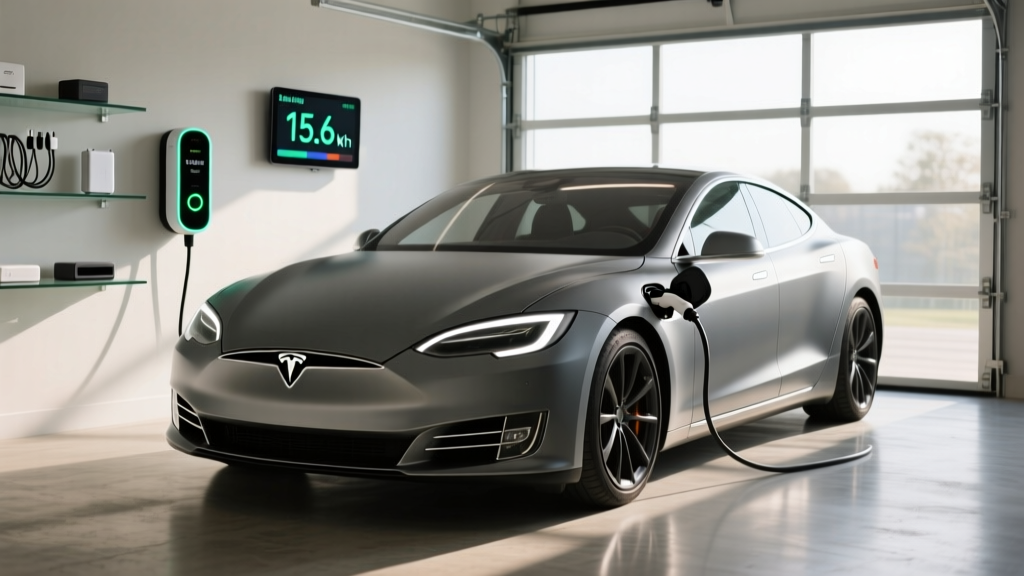
For most EV owners, Level 2 home charging is the primary method. A 48-amp (11.5 kW) Level 2 charger adds roughly 35-45 miles per hour of charging — enough to fully replenish a 75 kWh battery overnight in 7-8 hours. DC fast charging is reserved for road trips and situations where you need to add 150+ miles in 20-30 minutes.
Home EV Charger Installation: Costs, Electrical Requirements & Panel Upgrades
Installing a Level 2 home charger is the single highest-impact upgrade an EV owner can make. Here's what the electrical work actually involves and what it costs in 2026.
Electrical Requirements
Most Level 2 home chargers require a 240-volt dedicated circuit, similar to an electric dryer or oven. The most common configurations:
- 40A circuit / 32A continuous charge: Minimum for practical EV charging (~7.7 kW). Suitable for PHEVs and smaller BEVs.
- 50A circuit / 40A continuous charge: The sweet spot for most EVs (~9.6 kW). Recommended default.
- 60A circuit / 48A continuous charge: Ideal for larger batteries (~11.5 kW). Fills a 100 kWh battery in ~9 hours.
- 80A circuit / 64A continuous charge: Maximum for hardwired units (~15.3 kW). Requires a 200A+ electrical panel with spare capacity.
Panel Upgrade Considerations
Many older homes (pre-2000) have 100A or 150A main panels. Adding a 50-60A EV circuit to an already-loaded panel may require a panel upgrade to 200A, which costs $1,500-$3,500 on average. Signs you may need an upgrade:
- Main panel rated below 200A
- Few or no spare breaker slots
- Existing high-draw appliances (electric range, heat pump, hot tub) already consuming significant capacity
- Aluminum wiring or outdated breaker panel brands (e.g., Federal Pacific, Zinsco)
Some homeowners opt for a smart load management system (e.g., Emporia or Span panel integration) that dynamically shares capacity between the EV charger and other appliances, avoiding a full panel upgrade. Always consult a licensed electrician for final specifications.
| Cost Component | Low Range | High Range | Notes |
|---|---|---|---|
| Level 2 Charger (Equipment) | $250 | $700 | Wi-Fi-enabled smart chargers cost more |
| Electrician Labor | $300 | $1,500 | Depends on run distance, conduit, drywall work |
| Electrical Permit | $50 | $250 | Varies by municipality |
| Panel Upgrade (if needed) | $1,500 | $3,500 | 100A→200A service upgrade |
| Total (no panel upgrade) | $600 | $2,450 | Most common scenario |
| Total (with panel upgrade) | $2,100 | $5,950 | Older homes with 100A service |
Federal incentive: The residential clean energy credit (IRC §25C) covers 30% of home EV charger equipment and installation costs, up to $1,000, for equipment placed in service through 2032. Eligibility depends on your tax liability and census tract requirements. Consult a tax professional for your specific situation.
Connector Compatibility: NACS, CCS1, CHAdeMO & Adapter Requirements
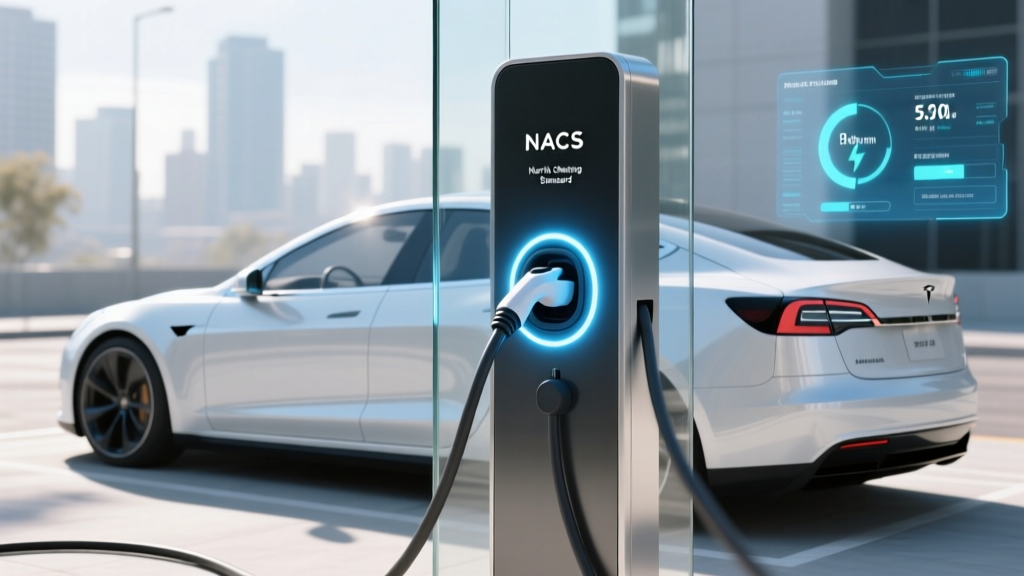
The North American charging connector landscape has consolidated heavily around NACS (North American Charging Standard), originally Tesla's proprietary connector and now adopted by nearly every major automaker for 2025+ models. Here's the current state of compatibility:
| Connector | Native Vehicles (2026) | Max DC kW | Adapter Needed? |
|---|---|---|---|
| NACS (J3400) | Tesla (all), Ford, GM, Rivian, Hyundai/Kia (2025+), Volvo/Polestar, BMW, Mercedes, Nissan (2026+) | 350+ kW | None — native on most new EVs |
| CCS1 | Legacy models (2022-2024 Hyundai/Kia, VW ID.4, BMW iX pre-2025, older Stellantis) | 350 kW | CCS1-to-NACS adapter ($150-$250) for Tesla Superchargers |
| CHAdeMO | Nissan Leaf (legacy only — discontinued 2025), Mitsubishi Outlander PHEV (older) | 100 kW | CHAdeMO-to-NACS adapter ($300-$450); limited DCFC availability |
For 2026 EV buyers: If you're purchasing a new vehicle, NACS is the default connector on nearly every brand. If you own an older CCS1-equipped EV, a manufacturer-approved CCS1-to-NACS adapter (available from Tesla, Ford, GM, and third parties like Lectron) grants access to the Tesla Supercharger network, which now has 30,000+ stalls open to non-Tesla vehicles.
Cost to Charge: $/kWh Scenarios and Cost Per Mile vs. Gas
One of the strongest economic arguments for EVs is lower per-mile energy cost — but the savings depend heavily on where and when you charge.
| Charging Scenario | Avg $/kWh | Cost per Mile (3.5 mi/kWh EV) | Annual Cost (12,000 mi) |
|---|---|---|---|
| Home — Off-Peak TOU Rate | $0.08-$0.12 | $0.023-$0.034 | $275-$410 |
| Home — Standard Residential Rate | $0.14-$0.18 | $0.040-$0.051 | $480-$615 |
| Public Level 2 (ChargePoint, etc.) | $0.20-$0.35 | $0.057-$0.100 | $685-$1,200 |
| DC Fast Charge (Electrify America, EVgo) | $0.35-$0.55 | $0.100-$0.157 | $1,200-$1,885 |
| Gas Baseline (28 MPG, $3.40/gal) | $3.40/gal | $0.121 | $1,455 |
Home off-peak charging delivers the lowest cost per mile — roughly 75-80% cheaper than gas. Even standard residential rates save 50-65% versus gasoline. However, exclusive reliance on DC fast charging narrows the savings gap significantly, and in some markets with peak-rate pricing ($0.55+/kWh), DCFC can actually exceed the cost of gas per mile. This is why home Level 2 charging is the economic foundation of EV ownership.
For the most accurate local utility rates and time-of-use (TOU) plans, check fueleconomy.gov's EV cost calculator, which factors in regional electricity prices.
Best Home EV Chargers for 2026: Equipment Recommendations
These are the Level 2 home chargers we recommend based on power output, build quality, smart features, connector compatibility, and value. All units listed below support NACS natively (or with an included NACS plug option) and are UL-listed for safety.
ChargePoint Home Flex
- Power: Up to 11.5 kW (48A) on 60A circuit; configurable down to 16A
- Connector: NACS (native); J1772 version also available
- Cable length: 23 feet
- Smart features: Wi-Fi, scheduling, energy tracking, Alexa integration
- Indoor/Outdoor: Rated for both (NEMA 4)
- Price: ~$550-$650
- Best for: Most EV owners wanting a reliable, app-connected charger
Tesla Wall Connector
- Power: Up to 11.5 kW (48A) on 60A circuit
- Connector: NACS (native); includes J1772 adapter
- Cable length: 24 feet
- Smart features: Wi-Fi, OTA updates, power sharing (link up to 6 units), Tesla app integration
- Indoor/Outdoor: Rated for both
- Price: ~$420-$475
- Best for: Tesla owners and those wanting the best value-to-power ratio
Emporia Vue EV Charger
- Power: Up to 11.5 kW (48A) on 60A circuit
- Connector: NACS and J1772 options
- Cable length: 24 feet
- Smart features: Whole-home energy monitoring integration, solar-aware scheduling, load management
- Indoor/Outdoor: NEMA 4 outdoor rated
- Price: ~$400-$500
- Best for: Solar owners and those wanting granular energy data
Grizzl-E Smart
- Power: Up to 9.6 kW (40A) on 50A circuit
- Connector: NACS and J1772 options
- Cable length: 24 feet
- Smart features: Wi-Fi, OCPP protocol, adjustable amperage via DIP switches
- Indoor/Outdoor: NEMA 4X (extreme weather rated, -40°F to +122°F)
- Price: ~$395-$450
- Best for: Cold-climate owners, garages with limited electrical capacity
Wallbox Pulsar Plus
- Power: Up to 11.5 kW (48A) on 60A circuit
- Connector: NACS and J1772 options
- Cable length: 20 feet
- Smart features: Wi-Fi + Bluetooth, Eco-Smart solar integration, Power Sharing, compact design
- Indoor/Outdoor: NEMA 4
- Price: ~$500-$600
- Best for: Tight garage spaces, multi-EV households with Power Sharing
Safety, Electrical Code & Installation Best Practices
EV charging equipment involves sustained high-current draw — more similar to running a welder than plugging in a phone. Safety and code compliance are non-negotiable:
- Dedicated circuit: Your EV charger must be on its own dedicated breaker — never shared with other outlets or appliances. NEC Article 625 governs EV charging equipment.
- GFCI protection: Outdoor installations require Ground Fault Circuit Interrupter (GFCI) protection, either built into the breaker or the charger unit itself. Most modern smart chargers include integrated GFCI.
- Outdoor rating: If your charger is mounted outside or in an open carport, it must carry a minimum NEMA 4 rating (weatherproof). NEMA 4X adds corrosion resistance for coastal or high-humidity areas.
- Hardwired vs. plug-in: Chargers above 40A (9.6 kW) typically require hardwiring directly to the breaker panel — NEMA 14-50 receptacles are rated for 50A but continuous EV loads should not exceed 40A on a plug-in connection per NEC 80% continuous-load rule. Hardwired connections are also more reliable and eliminate receptacle wear.
- Permit and inspection: Most jurisdictions require an electrical permit and post-installation inspection for EV charger circuits. Skipping this can void home insurance coverage and create liability issues.
- Cable management: Use a wall-mounted cable holster or retraction system to prevent tripping hazards and cable damage. Never run charging cables across walkways or driveways.
Frequently Asked Questions
How much does it cost to install a home EV charger?
A typical Level 2 home charger installation costs $600-$2,450 when no panel upgrade is needed, covering equipment ($250-$700), electrician labor ($300-$1,500), and permit fees ($50-$250). If your home requires a panel upgrade from 100A to 200A service, add $1,500-$3,500, bringing the total to $2,100-$5,950. The federal §25C residential energy credit covers 30% of installation costs up to $1,000.
How fast will each charging level add range?
Level 1 (120V) adds 3-5 miles per hour — suitable only for PHEVs or very low daily mileage. Level 2 (240V, 48A) adds 35-45 miles per hour, fully replenishing most EVs overnight in 7-9 hours. DC fast charging adds 150-1,000+ miles per hour at peak rate, enabling 10-80% charges in 18-40 minutes depending on the vehicle's battery size and charge acceptance rate.
Which connector or charger is compatible with my EV?
For 2026 models, nearly all new EVs use the NACS connector natively — including Tesla, Ford, GM, Hyundai, Kia, Rivian, BMW, Mercedes, and Volvo. Older CCS1 vehicles (2022-2024 model years) can use a CCS1-to-NACS adapter ($150-$250) to access Tesla Superchargers. CHAdeMO is effectively discontinued for new vehicles. For home Level 2 charging, most smart chargers now ship with a NACS plug as standard.
How much does charging cost per mile compared to gas?
Home off-peak charging costs $0.02-$0.03 per mile — roughly 75-80% less than gasoline at $3.40/gallon and 28 MPG ($0.12/mile). Standard residential rates ($0.14-$0.18/kWh) cost $0.04-$0.05/mile, saving 55-65%. However, exclusive DC fast charging at $0.35-$0.55/kWh costs $0.10-$0.16/mile, narrowing or eliminating savings versus gas. The economics strongly favor home charging.
What electrical upgrades might I need for an EV charger?
The most common upgrade is a panel capacity increase from 100A or 150A to 200A service ($1,500-$3,500), necessary when your existing panel lacks capacity for a new 50-60A dedicated circuit. Other potential upgrades include: adding a sub-panel closer to the garage ($500-$1,200), replacing outdated wiring (aluminum to copper), upgrading the meter base, or installing a smart load management system to avoid a panel upgrade. A licensed electrician can perform a load calculation to determine your exact needs.
Does the charger fastest car on paper charge the fastest in real life?
Not always. Peak kW ratings are achieved only under ideal conditions: battery preconditioned to optimal temperature (typically 85-105°F), SoC between 10-30%, and a charger capable of delivering the vehicle's maximum acceptance rate. In cold weather without preconditioning, a 350 kW-capable vehicle may only accept 80-120 kW initially. The Hyundai Ioniq 5's 800V architecture delivers more consistent real-world speeds because it sustains higher power across a wider SoC window than many 400V competitors, even though its peak kW (240) is lower than some rivals.