The Real Secret Behind the Fastest Charging Car
Search engines love the phrase "fastest charging car," and headlines routinely crown vehicles like the Lucid Air (peak 300+ kW) or the Hyundai Ioniq 5 (240 kW on 800V architecture) as speed champions. But peak DC fast-charging rate is only one-third of the equation. The other two-thirds are the vehicle's onboard charger capacity (for Level 2) and the actual infrastructure you plug into. A Lucid Air Grand Touring with a 112 kWh battery pack won't charge any faster than a Chevy Bolt if you're plugged into a standard 120V wall outlet.
This guide dissects the entire charging ecosystem — from the electrons leaving your electrical panel to the DC fast charger on the interstate — so you can actually unlock the charging speed your EV was engineered for. We'll define the critical distinction between kW (power, or the rate of energy flow) and kWh (energy, or the total capacity of your battery), because confusing them is the single most common mistake new EV owners make.
Charging Levels Explained: Level 1, Level 2, and DC Fast
Every EV sold in the United States supports three charging tiers. The speed difference between them is enormous — from a trickle to filling a battery in under 20 minutes.
| Level | Voltage | Max Power (kW) | Miles of Range Added Per Hour | Typical Use Case |
|---|---|---|---|---|
| Level 1 | 120V AC | 1.0–1.9 kW | 3–5 miles | Overnight trickle; emergency backup |
| Level 2 | 240V AC | 3.3–19.2 kW | 12–75 miles | Daily home & workplace charging |
| DC Fast Charge | 200–900V DC | 50–350+ kW | 150–1,000+ miles (equivalent) | Road trips, rapid top-ups |
Why the huge range on Level 2? A Level 2 charger delivering 11.5 kW (48A on a 60A circuit) adds roughly 40–45 miles of range per hour to a mid-size SUV like the Tesla Model Y. But that same charger only delivers 7.2 kW to a Toyota bZ4X, because the bZ4X's onboard AC charger is capped at 7.2 kW. The car's onboard charger is the bottleneck for AC charging — not the wall unit.
DC fast charging bypasses the onboard charger entirely. The station delivers direct current straight to the battery pack. This is where the "fastest charging car" claims come from. The Hyundai Ioniq 5 and Kia EV6, built on an 800-volt E-GMP architecture, can accept up to 240 kW on a compatible 350 kW charger, achieving a 10–80% charge in approximately 18 minutes. The Lucid Air peaks above 300 kW but requires a 350 kW Electrify America or Tesla V4 Supercharger station to reach it.
Which Connector Does Your EV Use? NACS, CCS1, and CHAdeMO
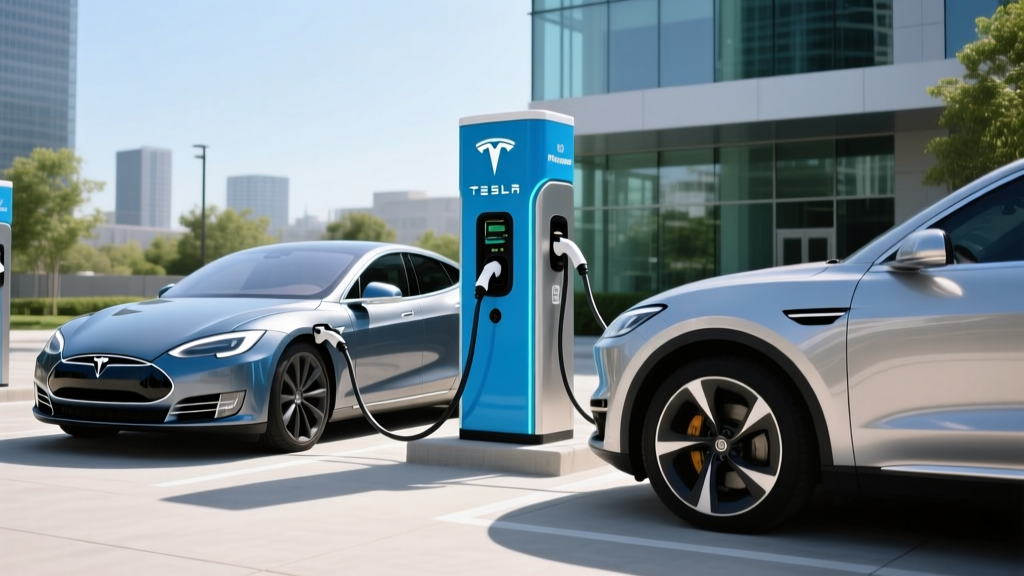
The North American charging landscape has undergone a massive consolidation. As of 2026, the Tesla-designed North American Charging Standard (NACS) has become the dominant DC fast-charging connector, adopted by Ford, GM, Rivian, Hyundai, Kia, BMW, and most other major automakers. CCS1 (Combined Charging System) remains on vehicles sold through approximately 2024–2025, and CHAdeMO is limited to the Nissan Leaf and a handful of legacy models.
| Connector | Brands (2026 New Vehicles) | Adapter Needed for Tesla Superchargers? |
|---|---|---|
| NACS (native) | Tesla, Ford, GM, Rivian, Hyundai, Kia, BMW, Mercedes-Benz, Volvo, Polestar | No — plug directly into V3/V4 Superchargers |
| CCS1 | Volkswagen ID.4 (prior model years), older BMW i4/iX, Chevy Bolt (discontinued) | Yes — CCS-to-NACS adapter (~$200–$300) required for Supercharger access |
| CHAdeMO | Nissan Leaf (legacy only) | No compatible adapter; limited to Electrify America and third-party CHAdeMO stations |
If you're buying a new EV in 2026, NACS is the connector to get. Ford and GM owners gained full Supercharger network access in late 2024, and by 2026 most new non-Tesla EVs ship with a native NACS port. For CCS1 owners, a Tesla-approved CCS-to-NACS adapter unlocks the Supercharger network, though you'll be limited to the vehicle's peak DC rate and the adapter's 250A current limit.
How Much Does It Cost to Install a Home EV Charger?
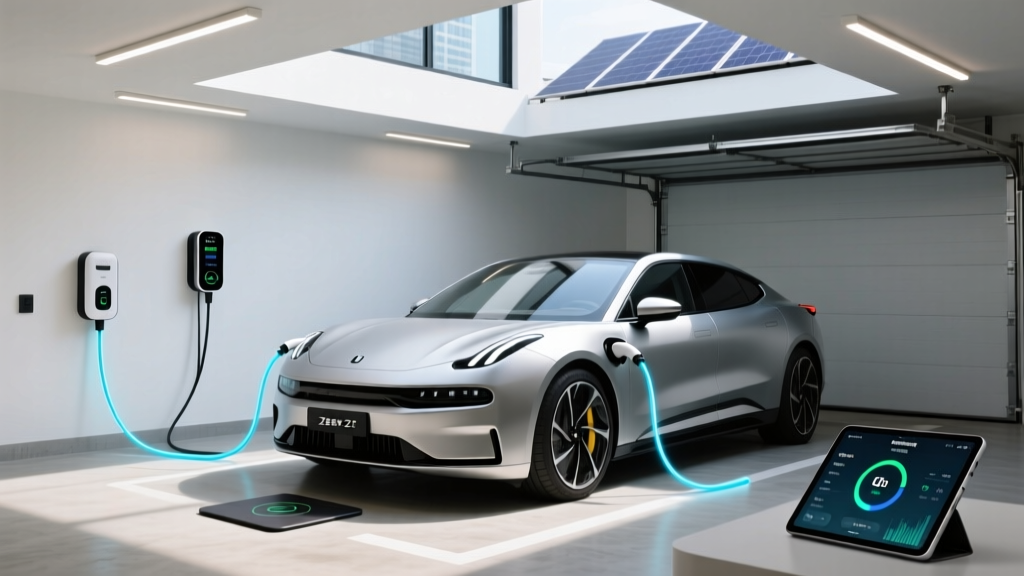
Home Level 2 charging is where 80–90% of all EV charging happens, according to the U.S. Department of Energy. A properly installed Level 2 charger on a dedicated 240V circuit is the single biggest quality-of-life upgrade an EV owner can make. But costs vary wildly depending on your home's electrical panel.
| Component | Low Estimate | High Estimate | Notes |
|---|---|---|---|
| Level 2 Charger Unit (40A–48A) | $350 | $750 | Hardwired units cost less than plug-in (NEMA 14-50) models |
| Electrician Labor (run 240V line) | $400 | $1,500 | Depends on distance from panel to garage/driveway |
| Electrical Permit | $50 | $250 | Required in most jurisdictions; varies by municipality |
| Panel Upgrade (100A → 200A) | $1,500 | $4,000 | Only needed if existing panel lacks capacity; older homes common |
| Total (no panel upgrade) | $800 | $2,500 | Typical scenario for homes built after 2000 |
| Total (with panel upgrade) | $2,300 | $6,500 | Common for homes with original 100A service |
The panel-upgrade gotcha: A 48A Level 2 charger requires a dedicated 60A breaker (NEC code mandates the circuit be rated at 125% of the continuous load). If your home has a 100A main panel already running electric range, dryer, and HVAC, you may not have 60A to spare. A licensed electrician will perform a load calculation to determine if an upgrade is needed. Don't skip this step — overloading a panel is a fire hazard.
Federal incentive: The IRS §30C Alternative Fuel Vehicle Refueling Property Credit covers 30% of home charger equipment and installation costs, up to $1,000, for eligible taxpayers in qualifying census tracts. Check IRS guidelines for current-year eligibility.
Charging Time Examples: What to Expect from Common Battery Sizes
Charge time depends on battery capacity (kWh), the power delivery rate (kW), and the charging curve taper. Here are realistic 10–80% charge times for popular 2026 EVs across different charging scenarios:
| Vehicle (Battery Size) | Level 2 at 11.5 kW (48A Home) | DC Fast at 150 kW Station | DC Fast at 350 kW Station |
|---|---|---|---|
| Tesla Model Y LR (75 kWh usable) | ~5.5 hours | ~28 min | ~22 min (peak 250 kW) |
| Hyundai Ioniq 5 (77.4 kWh, 800V) | ~5.5 hours (10.9 kW onboard) | ~25 min | ~18 min (peak 240 kW) |
| Ford F-150 Lightning Ext. (131 kWh) | ~9 hours | ~50 min | ~41 min (peak 150+ kW) |
| BMW iX xDrive50 (105.2 kWh usable) | ~7.5 hours | ~38 min | ~31 min (peak 200 kW) |
| Chevy Equinox EV (85 kWh) | ~6 hours | ~32 min | ~27 min (peak 190 kW) |
Cold-weather caveat: Lithium-ion batteries charge significantly slower when cold. In sub-freezing temperatures, expect 10–80% DC fast-charge times to increase by 20–40% unless the vehicle has active battery preconditioning (most 2026 models do — always enable it via the nav system when routing to a charger).
Cost to Charge: Home vs. Public vs. Gas
One of the strongest economic arguments for EV ownership is the per-mile energy cost. But the savings depend heavily on where you charge.
| Charging Scenario | Rate ($/kWh) | Cost Per Mile (at 3.5 mi/kWh efficiency) |
|---|---|---|
| Home Level 2 (off-peak utility rate) | $0.08–$0.14 | $0.023–$0.040 |
| Home Level 2 (standard residential rate) | $0.14–$0.20 | $0.040–$0.057 |
| Public Level 2 (ChargePoint, workplace) | $0.20–$0.35 | $0.057–$0.100 |
| DC Fast Charge (Electrify America, EVgo) | $0.35–$0.55 | $0.100–$0.157 |
| Tesla Supercharger (average) | $0.25–$0.40 | $0.071–$0.114 |
| Gasoline (28 MPG avg at $3.40/gal) | — | $0.121 |
The takeaway: Home off-peak charging is roughly one-quarter to one-third the per-mile cost of gasoline. Even public DC fast charging is cost-competitive with gas on a per-mile basis. But if you rely exclusively on expensive public DC fast chargers at $0.50+/kWh, your fuel savings shrink dramatically. Access to home or workplace Level 2 charging is the single biggest factor in EV operating economics.
For a driver covering 12,000 miles per year, home charging at $0.12/kWh costs approximately $411 annually. The same distance in a 28 MPG gas car at $3.40/gallon costs $1,457 — a difference of over $1,000 per year. Source: fueleconomy.gov EV cost calculator.
Best Home Level 2 Chargers for 2026: Equipment Recommendations
We've tested and tracked reliability data on the most popular Level 2 home chargers. Here are our top picks based on power output, build quality, smart features, and value:
ChargePoint Home Flex (Best Overall)
Power: Up to 12 kW (50A) on a 60A circuit, adjustable down to 16A for lower-capacity panels
Connector: NACS (2026 model); CCS1 available for older vehicles
Cable Length: 23 feet
Smart Features: Wi-Fi connected, scheduled charging, energy tracking via app, Alexa integration
Price: ~$599 (NACS model)
Why we recommend it: UL-listed, adjustable amperage means it works with almost any panel, excellent app, and ChargePoint's customer support is responsive. The 23-foot cable reaches most driveways and garages.
Tesla Wall Connector (Best for Tesla & NACS Owners)
Power: Up to 11.5 kW (48A) on a 60A circuit
Connector: NACS (native); no adapter needed for Tesla vehicles
Cable Length: 24 feet
Smart Features: Wi-Fi, over-the-air firmware updates, Power Sharing (link up to 6 units on one circuit), integrated cable management
Price: ~$475
Why we recommend it: Sleek design, lowest price in its class, and seamless integration with Tesla vehicles. Power Sharing is ideal for two-EV households. Non-Tesla NACS vehicles also work with the 2026 universal firmware.
Emporia Level 2 Smart Charger (Best Budget Pick)
Power: Up to 11.5 kW (48A) on a 60A circuit
Connector: NACS or J1772 (CCS1 via adapter)
Cable Length: 24 feet
Smart Features: Wi-Fi, real-time energy monitoring, solar-integration mode (charge only when solar is producing), detailed cost tracking
Price: ~$399
Why we recommend it: The solar-integration feature is unique and valuable for homes with rooftop PV. The energy monitoring dashboard is the most detailed in its class. Build quality punches above its price point.
Safety, Electrical Code, and Installation Requirements
A Level 2 EV charger is a continuous-load appliance — the National Electrical Code (NEC Article 625) defines it as running for 3 or more hours continuously. This triggers specific safety requirements:
- Dedicated circuit: Your EV charger must have its own breaker — no sharing with other outlets or appliances.
- 125% rule: A 48A charger requires a 60A breaker (48 × 1.25 = 60). A 40A charger requires a 50A breaker.
- Wire gauge: 60A circuits require 6 AWG copper wire (or 4 AWG aluminum). Your electrician will size this correctly.
- GFCI protection: NEC 2020 and later requires GFCI (Ground Fault Circuit Interrupter) protection for all EV charging outlets. Hardwired chargers typically have GFCI built into the unit; plug-in (NEMA 14-50) setups may need a GFCI breaker, which adds $50–$100 to the installation.
- Outdoor rating: If your charger is installed outside, it must carry a NEMA 4 (weatherproof) rating. All three chargers recommended above are NEMA 4 rated.
- Permit and inspection: Most municipalities require a permit for a new 240V circuit. The inspection ensures the work meets code — don't skip it. Unpermitted work can void homeowner's insurance and cause problems at resale.
Frequently Asked Questions
What is the fastest charging car you can buy in 2026?
The Lucid Air Grand Touring and Pure models peak above 300 kW on a compatible 350 kW DC fast charger, achieving roughly 200 miles of range in 10 minutes under ideal conditions. The Hyundai Ioniq 5, Kia EV6, and Genesis GV60 (all on the 800V E-GMP platform) peak at 240 kW with a 10–80% time of approximately 18 minutes — making them the fastest-charging mainstream EVs. The Porsche Taycan and Audi e-tron GT also use 800V architecture and peak at 270–320 kW depending on the variant.
Does a faster onboard charger matter for home charging?
Yes — it's the bottleneck for Level 2. If your EV has a 7.2 kW onboard charger (like the Toyota bZ4X or Subaru Solterra), even a 48A/11.5 kW home charger will only deliver 7.2 kW to the car. Vehicles with 11.5 kW or higher onboard chargers (Tesla Model Y, BMW iX, Ford F-150 Lightning) can take full advantage of a 48A home unit.
Can I plug my EV into a regular 120V outlet?
Yes, every EV ships with a Level 1 mobile charger that plugs into a standard 120V household outlet. But at 1.0–1.4 kW, you'll add only 3–5 miles of range per hour — roughly 35–50 miles overnight. This works for PHEVs with small batteries (10–20 kWh) but is impractical as a primary charging method for BEVs with 75+ kWh packs.
How do I find the fastest DC chargers near me?
Use the Alternative Fuels Data Center station locator or apps like PlugShare and A Better Routeplanner. Filter for 150 kW+ CCS/NACS stations. Electrify America, Tesla Supercharger V4, and EVgo Boost stations offer the highest-power chargers currently deployed. Note: a 350 kW station only delivers full power to vehicles capable of accepting it — a Chevy Bolt capped at 55 kW won't charge any faster at a 350 kW stall than at a 50 kW one.
Is it safe to DC fast charge every day?
Modern battery management systems (BMS) actively protect cell health during DC fast charging by managing temperature and tapering power as SoC increases. Studies from NREL and real-world fleet data show that exclusive DC fast charging accelerates degradation by roughly 2–5% over 100,000 miles compared to Level 2 charging. For most owners, this is negligible. But if you have home Level 2 access, using it for daily charging and reserving DC fast charging for road trips is the optimal strategy for long-term battery health.