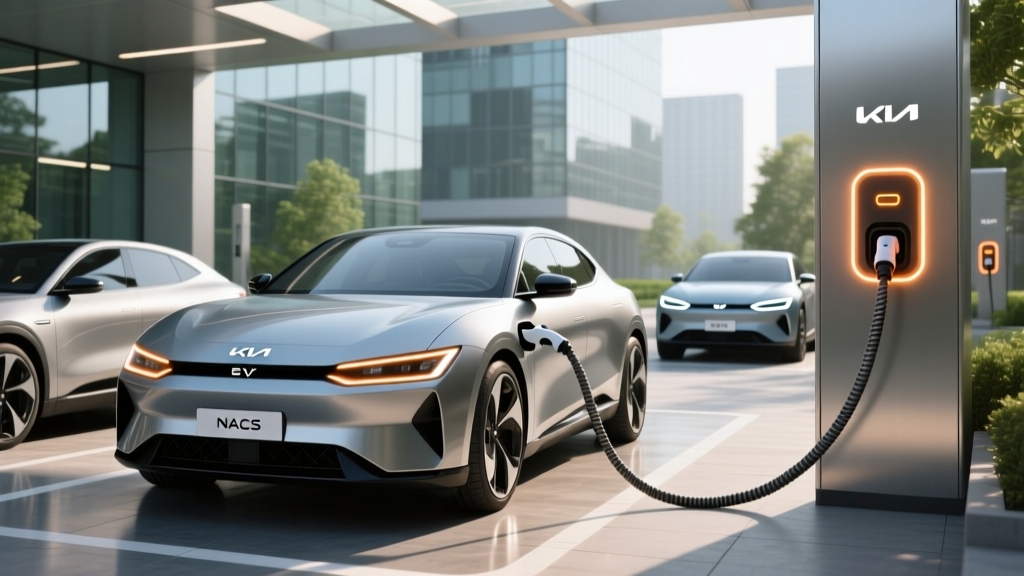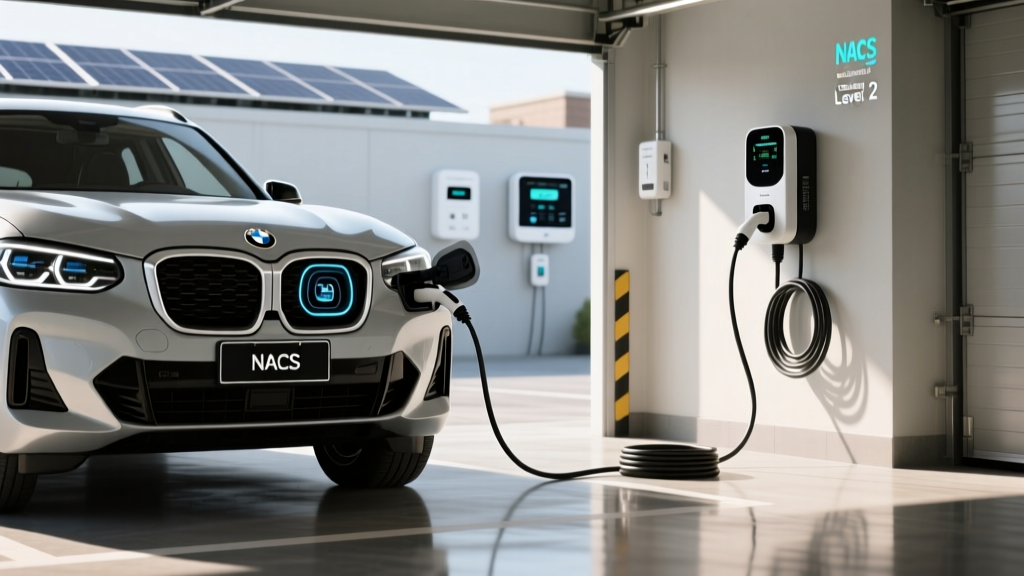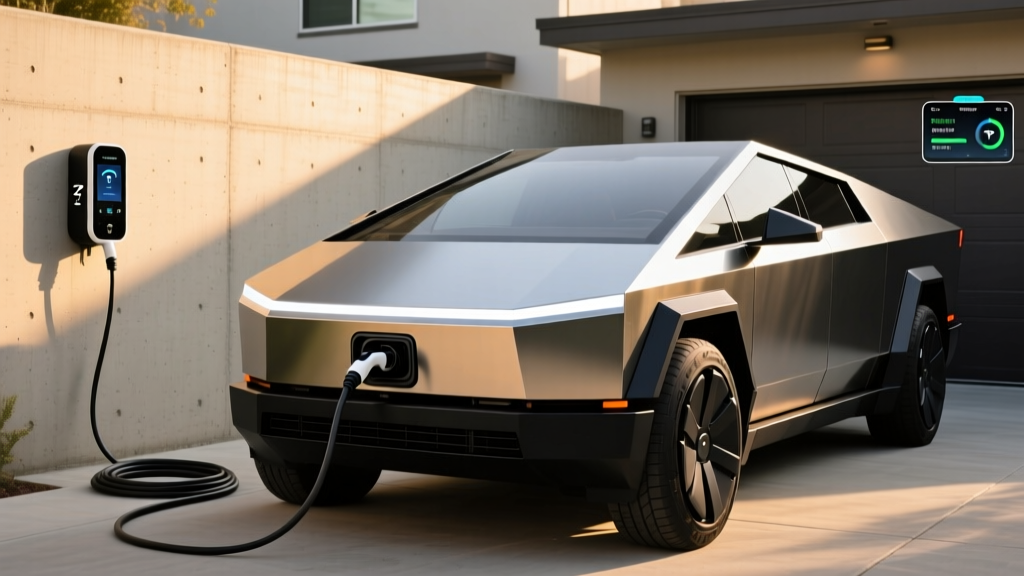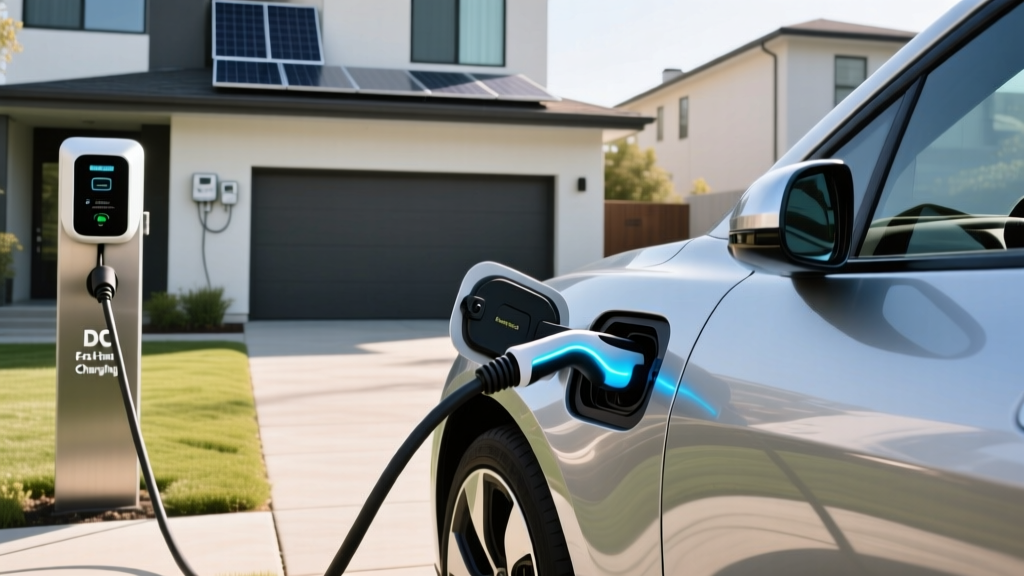
If you've searched for a "fast furious charger" for your electric vehicle, you're likely chasing one thing: maximum charging speed with minimum hassle. Whether you're planning a home Level 2 installation, mapping out DC fast-charging road trips, or trying to figure out why your EV isn't charging as quickly as advertised, this guide gives you the exact numbers—kW rates, miles added per hour, installation costs, and connector compatibility—for every charging scenario you'll face in 2026.
Before we get into the data, let's clear up the single most common EV confusion: kW (kilowatts) measures power—how fast energy flows into your battery, like water pressure from a hose. kWh (kilowatt-hours) measures energy—the total amount stored in your battery, like gallons in a tank. A 150 kW charger delivers energy faster than a 50 kW charger, but the total energy your battery holds is measured in kWh (e.g., 75 kWh usable). Keeping these straight is essential for understanding everything below.
Charging Levels Explained: Speeds in kW and Miles Per Hour
Every EV charging scenario falls into one of three categories. Here's exactly what each delivers in real-world conditions.
| Level | Voltage | Power (kW) | Miles of Range Per Hour | Typical Use Case |
|---|---|---|---|---|
| Level 1 | 120V AC | 1.0–1.4 kW | 3–5 mi/hr | Overnight top-up, PHEVs, emergencies |
| Level 2 | 240V AC | 3.3–19.2 kW | 12–75 mi/hr | Home daily charging, workplace, destinations |
| DC Fast (Level 3) | 400–800V DC | 50–350 kW | 150–1,000+ mi/hr (peak) | Road trips, highway corridors, quick top-ups |
A few real-world caveats: those "miles per hour" figures for DC fast charging represent peak rates that only apply between roughly 10–50% state of charge (SoC). Above 80%, charging speed tapers dramatically to protect the battery—this is the charge curve. A 350 kW charger might peak at that rate for only a few minutes before dropping to 150 kW, then 75 kW, then slower. That's why we measure DC fast charging in 10–80% time, not peak kW alone.
Real Charging Time Examples
For a typical 75 kWh battery (e.g., Tesla Model Y, Hyundai Ioniq 5):
- Level 1 (1.4 kW): 10–80% in approximately 37 hours
- Level 2 at 11.5 kW (48A circuit): 10–80% in roughly 4.5 hours
- Level 2 at 7.7 kW (32A circuit): 10–80% in roughly 6.8 hours
- DC Fast at 250 kW peak (e.g., Tesla V3 Supercharger): 10–80% in ~18–22 minutes
- DC Fast at 350 kW peak (e.g., Electrify America 350): 10–80% in ~15–18 minutes (with 800V architecture like Ioniq 5 or Porsche Taycan)
Home Charger Installation: Electrical Requirements and Costs
The most impactful upgrade for any EV owner is a hardwired Level 2 home charger. Here's what's involved electrically and financially.
Electrical Requirements
A typical high-power Level 2 charger requires a 240V dedicated circuit with a breaker rated 125% above the charger's continuous draw (per NEC Article 625). For example:
- 48-amp charger (11.5 kW): Requires a 60-amp breaker and 6 AWG copper wire
- 40-amp charger (9.6 kW): Requires a 50-amp breaker and 6 AWG copper wire
- 32-amp charger (7.7 kW): Requires a 40-amp breaker and 8 AWG copper wire
Your main electrical panel must have enough spare capacity. Most homes need at least 200-amp service to support a 60-amp EV circuit alongside existing loads (HVAC, electric range, dryer). Older homes with 100-amp panels almost always require a panel upgrade to 200 amps before adding a Level 2 charger—a significant added cost.
Installation Cost Breakdown
| Component | Cost Range | Notes |
|---|---|---|
| Level 2 Charger (Equipment) | $300–$700 | Hardwired or NEMA 14-50 plug; smart vs. basic models |
| Electrician Labor | $500–$2,000 | Depends on run length from panel to garage/driveway |
| Permit & Inspection | $50–$250 | Required in most jurisdictions; varies by municipality |
| Electrical Panel Upgrade (if needed) | $1,500–$3,500 | 100A → 200A service upgrade; not always required |
| Total (no panel upgrade) | $850–$2,950 | Most common scenario for newer homes |
| Total (with panel upgrade) | $2,350–$6,450 | Common for pre-1990 homes with 100A service |
Many utilities offer rebates of $200–$500 for Level 2 charger installation, and the federal Residential Clean Energy Credit (IRS Form 5695) may cover 30% of charger equipment and installation costs up to $1,000 through 2032—check current-year eligibility with a tax professional.
Connector Compatibility: NACS, CCS1, and CHAdeMO
The connector landscape has shifted dramatically. As of 2026, the North American Charging Standard (NACS)—originally Tesla's proprietary plug—is now the dominant standard. Here's where things stand.
| Connector | Brands Using It (2026 Models) | DC Fast Availability | Adapter Needed? |
|---|---|---|---|
| NACS (J3400) | Tesla, Ford, GM, Rivian, Volvo, Polestar, Hyundai/Kia (2025+), BMW, Mercedes | Tesla Supercharger network + growing NACS stations | CCS→NACS adapters available for legacy CCS vehicles (~$200–$300) |
| CCS1 | Legacy models (pre-2025 VW ID.4, older Bolt, etc.) | Electrify America, EVgo, ChargePoint DC stations | NACS→CCS1 adapter needed for Supercharger access |
| CHAdeMO | Nissan Leaf (discontinued), Mitsubishi Outlander PHEV (legacy) | Limited; stations being phased out or retrofitted | No practical adapter; use CHAdeMO stations while available |
If you're buying a new EV in 2026, it almost certainly uses NACS. The critical practical point: confirm your vehicle's connector before ordering a home charger. Most Level 2 home chargers now ship with a NACS plug by default, but CCS-terminated models are still available from major brands.
Cost to Charge: Per-Mile Comparison vs. Gas
Charging cost depends entirely on where and when you charge. Electricity rates vary enormously, so let's run the numbers for a realistic scenario: a 30 kWh/100 mi EV (close to a Tesla Model Y or Hyundai Ioniq 6).
| Scenario | Rate ($/kWh) | Cost per 100 Miles | Cost per Mile |
|---|---|---|---|
| Home off-peak (utility time-of-use) | $0.08–$0.12 | $2.40–$3.60 | $0.024–$0.036 |
| Home standard residential rate | $0.14–$0.18 | $4.20–$5.40 | $0.042–$0.054 |
| Public Level 2 (ChargePoint, etc.) | $0.25–$0.49 | $7.50–$14.70 | $0.075–$0.147 |
| DC Fast (Tesla Supercharger avg.) | $0.28–$0.36 | $8.40–$10.80 | $0.084–$0.108 |
| DC Fast (Electrify America/peak) | $0.40–$0.56 | $12.00–$16.80 | $0.120–$0.168 |
Compare this to a 28 MPG gasoline car at $3.30/gallon: that's $11.79 per 100 miles, or $0.118/mile. Home-charged EVs cost roughly one-quarter to one-half as much per mile. Even DC fast charging on the road is often competitive with or cheaper than gas, especially in states with higher fuel prices.
Per data from fueleconomy.gov, most 2026 EVs achieve 100–140 MPGe combined, translating to 25–34 kWh/100 mi. Your actual cost per mile scales directly with your vehicle's efficiency and local electricity rates.
Equipment Recommendations: Best Home Chargers for Every Budget
Here are specific Level 2 home chargers we recommend based on reliability, power output, smart features, and value. All prices reflect current 2026 retail.
Emporia Vue Level 2 EV Charger
- Power: 48A / 11.5 kW (hardwired, 240V)
- Connector: NACS (J3400)
- Cable Length: 24 ft
- Smart Features: Wi-Fi scheduling, solar integration, energy monitoring via Emporia app, load management
- Price: ~$399
- Best For: Budget-conscious buyers who want smart scheduling and solar pairing without paying premium prices
ChargePoint Home Flex
- Power: Up to 50A / 12 kW (adjustable via DIP switch for 16A–50A)
- Connector: NACS or CCS1 (configurable)
- Cable Length: 23 ft
- Smart Features: Wi-Fi, Alexa/Google Home integration, ChargePoint app scheduling, works with utility demand-response programs
- Price: ~$549
- Best For: Flexibility—adjustable amperage lets you match your circuit capacity without buying a new unit
Wall Connector (Tesla, Gen 4)
- Power: 48A / 11.5 kW (hardwired, 240V)
- Connector: NACS native; includes J1772 adapter for non-Tesla EVs
- Cable Length: 24 ft
- Smart Features: Wi-Fi updates, power sharing between two Wall Connectors on one circuit, Tesla app integration
- Price: ~$475
- Best For: Tesla owners or multi-Tesla households; power sharing is a unique advantage when you have two EVs and limited panel capacity
Grizzl-E Smart
- Power: 40A / 9.6 kW (NEMA 14-50 plug or hardwired)
- Connector: NACS or J1772
- Cable Length: 24 ft
- Smart Features: OCPP-compatible, app scheduling, OTA updates, extreme cold rated (-40°F)
- Price: ~$449
- Best For: Cold-climate owners who need rugged, outdoor-rated equipment with plug-in flexibility
Safety, Code, and Installation Best Practices
A Level 2 charger draws significant continuous current for hours. Safety isn't optional—it's code-mandated and protects your home.
- Dedicated circuit: NEC Article 625 requires EV chargers to have their own dedicated circuit—no sharing with other appliances or outlets.
- GFCI protection: 2023 NEC update requires GFCI protection for all receptacles used for EV charging (NEMA 14-50 outlets). Hardwired installations are exempt from the GFCI requirement but still must meet grounding and bonding rules. Many chargers now include built-in GFCI detection.
- Outdoor rating: If your charger is mounted outside or in an unsealed garage, verify it carries a NEMA 4 or IP65 rating for weather resistance.
- Permit and inspection: Most jurisdictions require an electrical permit and final inspection for EV charger installations. Skipping this can void home insurance coverage for electrical fires and cause problems at resale.
- Wire gauge: Your electrician must size wire correctly for the breaker and run length. Longer runs (over 50 ft from panel) may require upsizing wire to prevent voltage drop.
Always hire a licensed electrician experienced with EV charger installations. The National Electrical Code (NEC) is updated every three years, and EV-specific requirements have expanded significantly. An electrician who installed your dryer outlet 15 years ago may not be current on Article 625.
DC Fast Charging on the Road: What to Expect in 2026
Public DC fast charging has matured considerably. Here's what the major networks offer:
- Tesla Supercharger: V3 stalls deliver 250 kW peak; V4 stalls (rolling out at highway locations) support up to 350 kW with NACS connectors. Open to non-Tesla EVs at select locations via the Magic Dock adapter or native NACS plug. Reliability remains the industry benchmark—typically 97%+ uptime per Tesla's reports.
- Electrify America: Offers 150 kW and 350 kW CCS1/NACS stalls. 350 kW stalls deliver peak speeds only to vehicles with 800V battery architecture (Hyundai Ioniq 5, Kia EV6, Porsche Taycan). Expect 150 kW on 400V vehicles like the Ford Mustang Mach-E or VW ID.4.
- EVgo: Expanding 350 kW "Power Boost" stalls at urban and highway locations, primarily NACS and CCS1. Partnership with GM provides convenient urban fast-charging access.
- ChargePoint: Primarily Level 2 destination charging but expanding DC fast corridors with 175–400 kW capability.
Remember: your vehicle's maximum charge acceptance rate caps your speed. A Tesla Model 3 that accepts 250 kW won't charge faster at a 350 kW stall. Conversely, a Hyundai Ioniq 5 that can accept 240 kW will charge noticeably faster at a 350 kW stall than at a 150 kW stall.
FAQ: Fast Furious Charger Questions Answered
How much does it cost to install a home EV charger?
For most homes with 200-amp electrical service, a Level 2 charger installation costs between $850 and $2,950 total, including equipment ($300–$700), electrician labor ($500–$2,000), and permit ($50–$250). If your home has an older 100-amp panel that needs upgrading to 200 amps, add $1,500–$3,500 for a total of $2,350–$6,450. Utility rebates and the federal alternative fuel vehicle refueling property credit (30% up to $1,000, per IRS guidelines) can offset some of these costs.
How fast will each charging level add range?
Level 1 (120V) adds 3–5 miles of range per hour—enough for PHEVs but impractical for BEVs with large batteries. Level 2 (240V) adds 12–75 miles per hour depending on amperage (16A to 80A), making it ideal for overnight charging. DC fast charging adds 150–1,000+ miles per hour at peak rates, but only between 10–80% SoC; above 80%, speed drops sharply to protect battery health.
Which connector/charger is compatible with my EV?
Check your vehicle's charge port. Most 2025–2026 EVs from Tesla, Ford, GM, Rivian, Hyundai, Kia, BMW, and others use NACS (J3400). Older models from VW, pre-2025 Hyundai/Kia, and some others still use CCS1. The Nissan Leaf used CHAdeMO, which is being phased out. Match your home charger's connector to your vehicle's port. If you own a CCS1 vehicle and want Supercharger access, a CCS-to-NACS adapter (~$200–$300) from an authorized supplier is required.
How much does charging cost per mile vs. gas?
Home charging on an off-peak rate ($0.10/kWh) costs roughly $0.03/mile for a typical EV. Standard residential rates ($0.16/kWh) push that to about $0.05/mile. DC fast charging on the road averages $0.09–$0.14/mile. A comparable gas car at 28 MPG and $3.30/gallon costs about $0.12/mile. Home charging delivers the largest savings—often 60–75% less per mile than gasoline.
What electrical upgrades might I need?
The most common upgrade is a panel capacity increase from 100A to 200A service ($1,500–$3,500). You may also need a new dedicated circuit run from your panel to the charger location, which involves running conduit and appropriately sized wire (6 AWG for 48A chargers). If your panel is full with no spare breaker slots, a sub-panel or tandem breaker reconfiguration may be necessary. Your electrician will perform a load calculation per NEC Article 220 to determine whether your existing service can support an EV circuit.