If you've spent any time researching electric vehicles, you've encountered the term fast DC EV charger — and likely a wave of confusion about what it actually means for your daily driving. DC fast charging is the technology that makes road trips viable, adding 150+ miles of range in 20 minutes at a public station. But for most EV owners, the real charging story happens at home, where Level 2 AC charging quietly refills the battery overnight.
This guide breaks down every charging tier with exact numbers — kilowatt (kW) power ratings, miles added per hour, real installation costs, and connector compatibility — so you can make an informed decision about home equipment and understand what to expect from public DC fast chargers in 2026.
The Critical Distinction: kW vs. kWh
Before diving into charger types, nail this down: kW (kilowatts) measures power — how fast electricity flows into your battery. kWh (kilowatt-hours) measures energy — the total capacity of your battery. Think of kW as the diameter of a hose and kWh as the size of the bucket. A 150 kW DC fast charger fills your 80 kWh battery far faster than a 7.7 kW Level 2 unit, but the total energy (kWh) your battery holds doesn't change.
This distinction matters because charger marketing often highlights peak kW without explaining that charging speed tapers as the battery fills. A charger rated at 250 kW might only sustain that rate between 10–30% state of charge (SoC), dropping to 100 kW or lower above 60% SoC. The charge curve — not the peak number — determines your actual charging time.
Charging Levels Explained: Speed, Power, and Use Cases
| Level | Voltage / Amps | Power (kW) | Miles of Range Added per Hour | 10–80% Time (75 kWh Battery) | Best For |
|---|---|---|---|---|---|
| Level 1 | 120V / 12A | 1.4 kW | 3–5 mi/hr | ~36 hours | PHEVs, overnight trickle |
| Level 2 (Home/Public AC) | 240V / 32–48A | 7.7–11.5 kW | 25–44 mi/hr | ~7–9 hours | Daily home charging |
| DC Fast (50–150 kW) | 400–800V DC | 50–150 kW | 150–400 mi/hr | ~30–55 min | Road trips, quick top-ups |
| DC Ultra-Fast (150–350+ kW) | 800V DC | 150–350 kW | 400–900+ mi/hr | ~15–25 min | 800V-architecture vehicles |
A few things to note from these numbers. First, Level 1 charging at 1.4 kW is essentially a maintenance trickle — fine for plug-in hybrids with 30–40 miles of electric range, but impractical for a full BEV with a 75–100 kWh battery. Second, Level 2 at 11.5 kW (48A on a 60A circuit) is the sweet spot for home charging: a 75 kWh battery refills from 10–80% overnight in roughly 7 hours. Third, the jump from 50 kW to 350 kW DC fast charging is enormous, but your vehicle's onboard charge acceptance rate determines whether you can actually use those ultra-fast speeds. A Hyundai Ioniq 5 with 800V architecture can accept up to 240 kW and charge 10–80% in about 18 minutes; a Chevy Equinox EV maxes out around 150 kW and needs closer to 30 minutes for the same session.
Home Charger Installation: Electrical Requirements and Costs
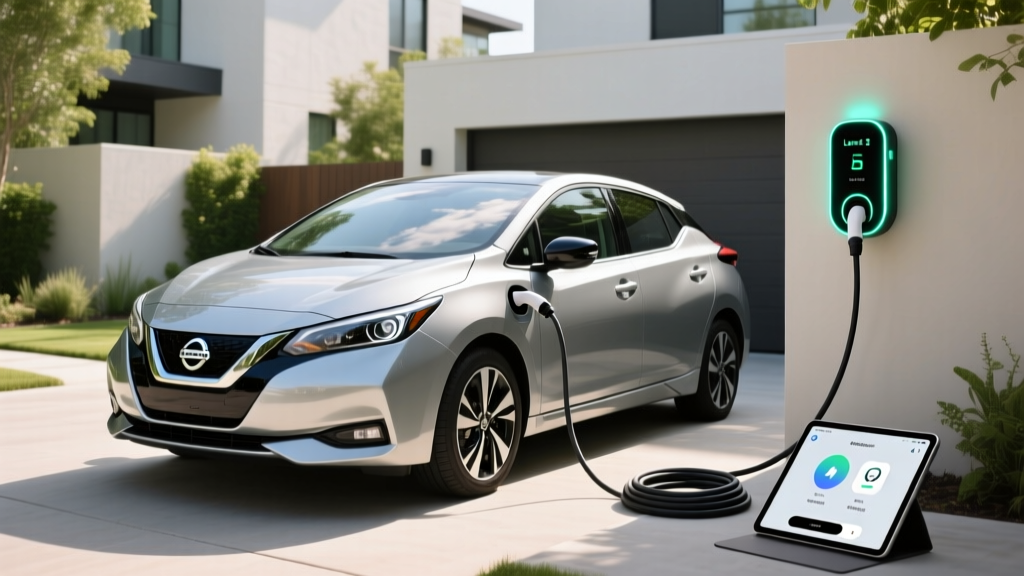
Most EV owners install a Level 2 home charger — a 240V unit on a dedicated circuit. Here's what that actually involves and what it costs.
Electrical Requirements
A standard Level 2 home charger requires a 240-volt dedicated circuit, typically rated at 40A, 50A, or 60A. The National Electrical Code (NEC) requires that continuous loads (like EV charging) not exceed 80% of the circuit rating, so a 48A charger needs a 60A circuit, a 40A charger needs a 50A circuit, and a 32A charger needs a 40A circuit.
Your home's electrical panel is the limiting factor. Most modern homes have 200A service with available breaker slots — sufficient for a 60A EV circuit. Older homes with 100A or 150A panels may lack both the capacity and the physical slots, requiring a panel upgrade.
Panel Upgrade: The Hidden Cost
If your panel is maxed out — common in homes built before 2000 with 100A or 150A service — an electrician may recommend upgrading to 200A service. This involves replacing the panel, upgrading the service drop from the utility, and pulling new permits. Costs typically range from $2,000 to $5,000+ depending on your local utility's requirements, the distance from the meter to the panel, and whether underground trenching is needed.
Some utilities and municipalities now offer panel-upgrade rebates specifically to support EV adoption. Check with your local electric utility before committing to the work. An alternative for panel-constrained homes: smart panels like the Span smart panel can manage circuit-level loads and may defer a full upgrade, though the panel itself costs $3,500–$5,000 installed.
Installation Cost Breakdown
| Component | Low-End | Typical | High-End |
|---|---|---|---|
| Level 2 Charger Equipment (32–48A) | $350 | $550 | $800 |
| Electrician Labor (2–6 hours) | $400 | $800 | $1,500 |
| Materials (conduit, wire, breaker) | $100 | $300 | $600 |
| Permit & Inspection | $50 | $150 | $400 |
| Panel Upgrade (if needed) | $2,000 | $3,000 | $5,000+ |
| Total (No Panel Upgrade) | $900 | $1,800 | $3,300 |
| Total (With Panel Upgrade) | $2,900 | $4,800 | $8,300+ |
The wide range reflects real variables: a short conduit run from a 200A panel to an adjacent garage might cost $900 total, while a 60-foot underground trench to a detached garage with a panel upgrade easily exceeds $5,000. Always get at least three quotes from licensed electricians who have specific EV charger installation experience.
Connector Compatibility: NACS, CCS1, and CHAdeMO in 2026
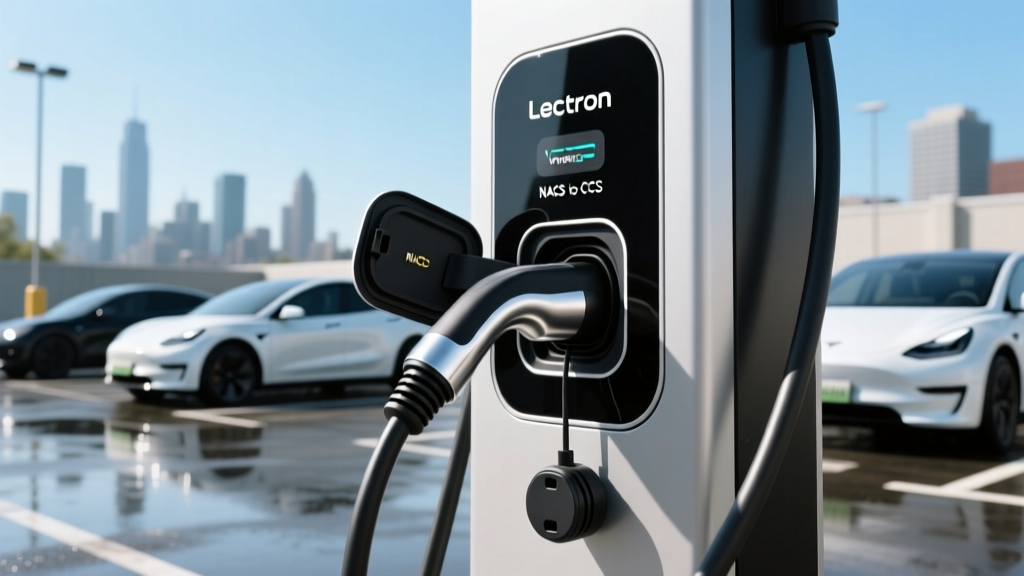
The connector landscape has consolidated dramatically. Tesla's North American Charging Standard (NACS) has become the dominant connector for new EVs, with Ford, GM, Rivian, Volvo, Polestar, Hyundai, and most major automakers adopting it for 2025–2026 models. CCS1 (Combined Charging System) remains on many vehicles sold through 2024, and CHAdeMO is effectively legacy — limited to older Nissan Leaf and Mitsubishi models.
| Connector | AC Charging | DC Fast Charging | Vehicle Examples (2025–2026) | Adapter Needed? |
|---|---|---|---|---|
| NACS (Tesla / SAE J3400) | Yes | Yes | Tesla Model 3/Y/S/X, Ford F-150 Lightning (2025+), GM Ultium vehicles (2025+), Hyundai Ioniq 5 (2025+) | CCS-to-NACS adapter for older CCS stations |
| CCS1 (Combined Charging System) | Yes (via J1772) | Yes | VW ID.4 (pre-2025), BMW i4 (pre-2025), Kia EV6 (pre-2025), Chevy Bolt (all years) | NACS-to-CCS adapter for Tesla Superchargers |
| CHAdeMO | J1772 (separate) | Yes | Nissan Leaf (2011–2025), Mitsubishi Outlander PHEV (older) | Limited; adapters rare |
Key takeaway for home charger buyers: If you're buying a 2025–2026 EV, it almost certainly uses NACS. Buy a NACS-connector home charger. If you own a 2022–2024 CCS vehicle, buy a CCS/J1772 charger — or buy a NACS charger with a CCS-to-NACS adapter (many automakers now include these with vehicle purchase). The Tesla Wall Connector ships with a NACS plug and includes a J1772 adapter for non-Tesla vehicles, making it one of the most versatile options.
Level 2 Home Charger Recommendations (2026)
These are the units we recommend based on power output, build quality, smart features, cable management, and price — drawn from hands-on experience and long-term reliability data.
Tesla Wall Connector (Gen 4)
- Power: Up to 11.5 kW (48A on 60A circuit)
- Connector: NACS (J1772 adapter included)
- Cable length: 24 ft
- Smart features: Wi-Fi, OTA updates, load sharing (pair multiple units on one circuit), access control via Tesla app
- Outdoor rated: Yes (NEMA 3R)
- Price: ~$475
- Best for: Tesla and NACS-vehicle owners who want a reliable, no-fuss unit
ChargePoint Home Flex (Gen 2)
- Power: Adjustable 16A–50A (up to 12 kW on 50A/60A circuit)
- Connector: NACS or J1772 (select at purchase)
- Cable length: 23 ft
- Smart features: Wi-Fi, scheduling, energy tracking, Alexa integration, flexible amperage lets you match your circuit
- Outdoor rated: Yes (NEMA 4)
- Price: ~$550–$650
- Best for: Non-Tesla EV owners, homes with limited circuit capacity (dial down amperage)
Emporia Vue Level 2 Charger
- Power: Up to 11.5 kW (48A on 60A circuit)
- Connector: J1772 (NACS adapter available)
- Cable length: 24 ft
- Smart features: Integrates with Emporia Vue whole-home energy monitor, solar-aware charging, time-of-use scheduling
- Outdoor rated: Yes (NEMA 4)
- Price: ~$400
- Best for: Solar owners and budget-conscious buyers wanting energy monitoring
Grizzl-E Smart
- Power: Up to 10 kW (40A on 50A circuit)
- Connector: J1772 (NACS adapter available)
- Cable length: 24 ft
- Smart features: Wi-Fi, OCPP-compatible, adjustable amperage
- Outdoor rated: Yes (IP65 — fully sealed, extreme cold rated to -40°F)
- Price: ~$450
- Best for: Cold-climate owners, outdoor installs, Canadian/extreme-weather markets
A note on portable chargers: most EVs now ship with a mobile connector that handles Level 1 (120V) and, with the right adapter, Level 2 (240V) charging at 24–32A. For a dedicated daily driver, a hardwired wall unit is more reliable, charges faster, and avoids the wear of daily plug/unplug cycles. Use the mobile connector for travel and backup.
Public DC Fast Charging: Networks, Speeds, and Costs
When you need a fast DC EV charger on the road, you're relying on public networks. The major US networks in 2026:
- Tesla Supercharger: ~30,000+ stalls globally, V4 cabinets delivering up to 250 kW (some 350 kW sites). Now open to non-Tesla NACS vehicles via the Tesla app. Pricing averages $0.25–$0.35/kWh.
- Electrify America: ~5,000+ stalls, 150–350 kW chargers. CCS and NACS connectors at newer stations. Pricing: $0.31–$0.48/kWh depending on plan.
- EVgo: ~4,000+ stalls, 100–350 kW. Strong urban coverage. Pricing: $0.30–$0.43/kWh.
- ChargePoint (DC): Variable; many 62.5–400 kW stalls at retail and fleet locations.
Expect to pay $0.25–$0.50/kWh at public DC fast chargers, depending on the network, location, and time of day. In California and other high-cost electricity markets, some urban DC chargers push $0.55/kWh or more during peak hours. At $0.40/kWh, charging a 75 kWh battery from 10–80% (~52.5 kWh) costs about $21 — comparable to filling a gas tank for a compact SUV at $3.50/gallon.
The economics shift dramatically when you charge at home. At a national average residential rate of $0.17/kWh (per the U.S. Energy Information Administration), that same 52.5 kWh session costs $8.93. With time-of-use (TOU) plans offering off-peak rates of $0.08–$0.12/kWh in many states, the cost drops to $4.20–$6.30.
Charging Cost Per Mile: EV vs. Gas
| Scenario | Energy Cost | Vehicle Efficiency | Cost Per Mile |
|---|---|---|---|
| Home charging (off-peak TOU) | $0.10/kWh | 3.5 mi/kWh (120 MPGe) | $0.029 |
| Home charging (standard rate) | $0.17/kWh | 3.5 mi/kWh (120 MPGe) | $0.049 |
| Public DC fast (average) | $0.38/kWh | 3.5 mi/kWh (120 MPGe) | $0.109 |
| Public DC fast (peak pricing) | $0.50/kWh | 3.5 mi/kWh (120 MPGe) | $0.143 |
| Gas vehicle (compact SUV) | $3.40/gallon | 28 MPG combined | $0.121 |
| Gas vehicle (midsize sedan) | $3.40/gallon | 32 MPG combined | $0.106 |
The data makes the case clear: home-charged EVs cost 2–5 cents per mile, roughly one-quarter to one-half the cost of gasoline. Public DC fast charging narrows the gap — at peak pricing, it can actually exceed the cost of a fuel-efficient gas car. This is why home charging access is the single most important economic factor in EV ownership. If you can't charge at home, the financial case weakens considerably, and a plug-in hybrid may be a better fit.
Safety, Electrical Code, and Best Practices
EV charger installations must comply with the National Electrical Code (NEC) Article 625, which governs electric vehicle charging systems. Key requirements:
- Dedicated circuit: Your Level 2 charger must be on its own dedicated breaker — no shared circuits with other appliances.
- GFCI protection: NEC 2020 and later requires Ground Fault Circuit Interrupter (GFCI) protection for all EV charging outlets rated 150V to ground or less and 60A or less. Hardwired installations may not require a GFCI breaker (the charger itself typically includes ground-fault protection), but receptacle installations do.
- Outdoor rating: Outdoor installations require equipment rated NEMA 3R (rain-resistant) or NEMA 4 (watertight). The charger and connector must be rated for wet locations.
- Wire gauge: A 60A circuit requires 6 AWG copper wire (THHN in conduit) or 4 AWG aluminum. Your electrician will size wire based on the run length and local code.
- Permit and inspection: Virtually all jurisdictions require an electrical permit and final inspection for EV charger installations. Skipping this step can void homeowner's insurance coverage for electrical fires and creates a hazard.
One practical tip: install a NEMA 14-50 receptacle rather than hardwiring the charger if your setup allows it. A receptacle gives you flexibility to upgrade or replace the charger without rewiring, and it makes the charger portable if you move. However, hardwired installations avoid the GFCI breaker requirement in many jurisdictions and eliminate one failure point (receptacle contacts can degrade over years of high-current use).
Frequently Asked Questions
How much does it cost to install a home EV charger?
A typical Level 2 home charger installation costs $900–$3,300 without a panel upgrade, and $2,900–$8,300+ if your electrical panel needs upgrading from 100A/150A to 200A service. The equipment itself runs $350–$800; the rest is electrician labor, materials (conduit, wire, breaker), and permits. Short runs from a modern 200A panel are at the low end; long conduit runs, underground trenching, or detached garages push costs higher.
How fast will each charging level add range?
Level 1 (120V, 1.4 kW) adds 3–5 miles per hour. Level 2 (240V, 7.7–11.5 kW) adds 25–44 miles per hour — enough to fully refill most EVs overnight. DC fast charging (50–350 kW) adds 150–900+ miles per hour at peak rates, but real-world sustained rates are lower due to charge-curve tapering. A 150 kW DC session typically adds 100–150 miles in 20 minutes for a mid-size EV battery.
Which connector and charger is compatible with my EV?
Check your vehicle's charge port. 2025–2026 models from Tesla, Ford, GM, Hyundai, Kia, Rivian, and Volvo/Polestar use NACS. Older 2022–2024 models from VW, BMW, Kia, and Hyundai use CCS1. Nissan Leaf uses CHAdeMO for DC and J1772 for AC. For home chargers, match the connector to your vehicle — or buy a unit with adapter capability. The Tesla Wall Connector (NACS) includes a J1772 adapter for non-Tesla vehicles.
How much does charging cost per mile vs. gas?
Home-charged EVs cost $0.03–$0.05 per mile depending on your electricity rate. Gas vehicles cost $0.10–$0.12 per mile at $3.40/gallon and 28–32 MPG. Public DC fast charging at $0.35–$0.50/kWh costs $0.10–$0.14 per mile — comparable to or slightly above gas. The savings case for EVs depends heavily on home charging access and off-peak electricity rates.
What electrical upgrades might I need?
The most common upgrade is a panel upgrade from 100A or 150A to 200A service, costing $2,000–$5,000+. You may also need additional breaker slots (a subpanel can solve this for ~$300–$600), a new conduit run from the panel to the charger location, or a utility service drop upgrade. Homes built after 2010 with 200A service typically need no panel upgrade. Always have a licensed electrician perform a load calculation before committing to a charger size.
Can I install a DC fast charger at home?
Technically possible, but impractical for nearly all homeowners. Residential DC fast chargers (like the Wallbox Quasar 2) cost $5,000–$10,000+ for the equipment alone, require 480V three-phase power (unavailable in most homes), and deliver minimal benefit over Level 2 for overnight charging. Level 2 at 11.5 kW refills a 75 kWh battery in ~7 hours — perfectly adequate for daily use. Reserve DC fast charging for road trips.
The bottom line: invest in a quality Level 2 home charger matched to your vehicle's connector and your panel's capacity, and use public fast DC EV chargers for road trips and emergencies. The combination delivers the lowest cost per mile, the most convenience, and the least battery stress over the life of your EV.