If you own or are shopping for an electric vehicle, understanding fast DC charging is the single most practical thing you can learn. It determines whether a road trip takes four hours or eight, whether your daily commute costs $1.50 or $6.00, and whether you need a $200 electrical panel upgrade before plugging in at home. This guide breaks down every charging level with exact numbers — power in kilowatts (kW), energy in kilowatt-hours (kWh), time to charge, and dollars per mile — so you can plan your setup and your budget with confidence.
The Three Charging Levels: Speeds and Range Added Per Hour
EV charging falls into three categories, each defined by its maximum power delivery. The critical distinction: kW (kilowatts) measures power — how fast energy flows into your battery. kWh (kilowatt-hours) measures energy — the total capacity of your battery. Think of kW as the width of a hose and kWh as the size of the bucket. A wider hose fills the bucket faster, but the bucket size stays the same.
| Level | Voltage | Max Power (kW) | Miles of Range Added Per Hour | Typical Use Case |
|---|---|---|---|---|
| Level 1 | 120V AC | 1.4 kW | 3–5 mi/hr | Overnight trickle, PHEVs, emergencies |
| Level 2 | 240V AC | 7.2–19.2 kW | 20–60 mi/hr | Daily home charging, workplace, destination |
| DC Fast | 400–800V DC | 50–350 kW | 150–1,200+ mi/hr | Road trips, quick top-ups, fleet depots |
Level 1 uses a standard household outlet. It adds roughly 4 miles of range per hour — enough for a plug-in hybrid with 30 miles of electric range, but painfully slow for a 300-mile BEV (it would take over 60 hours for a full charge from empty).
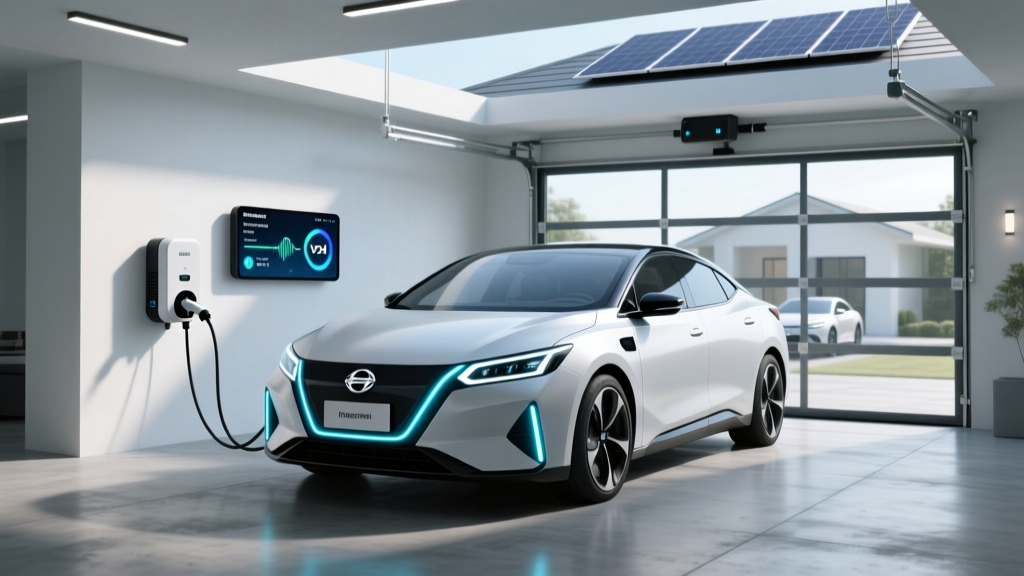
Level 2 is the home-charging standard. A 48-amp (11.5 kW) Level 2 station on a 240V circuit adds roughly 35–40 miles of range per hour to a typical midsize EV like the Hyundai Ioniq 5 or Tesla Model Y. Most EV owners charge overnight on Level 2 and wake up to a full battery every morning.
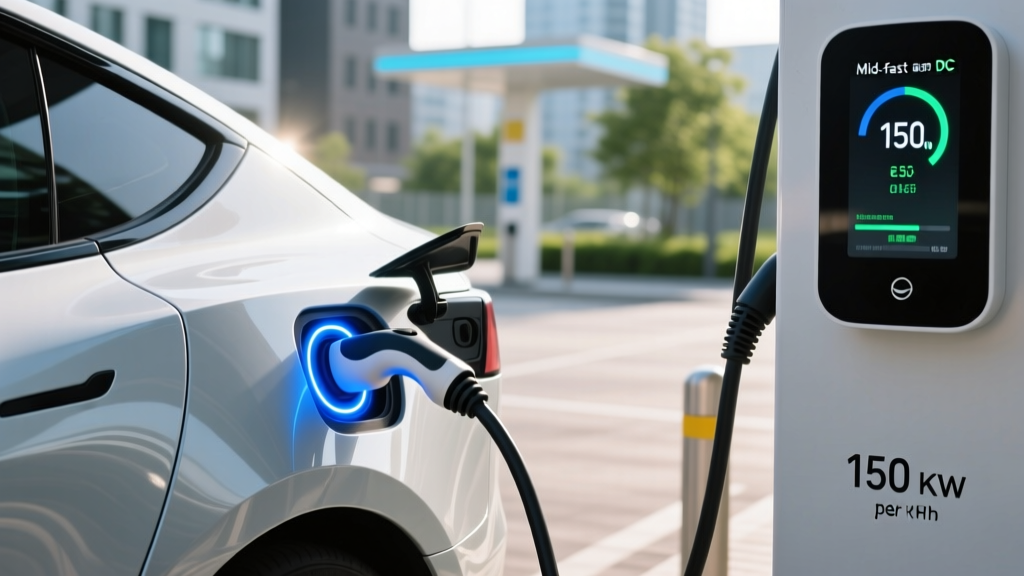
DC fast charging bypasses the vehicle's onboard AC-to-DC converter and pushes direct current straight into the battery pack. At a 350 kW station, vehicles with 800V architectures (Hyundai Ioniq 5, Kia EV6, Porsche Taycan, Genesis GV60) can add 200+ miles in 15–18 minutes. Most 400V vehicles (Ford Mustang Mach-E, Volkswagen ID.4, Chevrolet Equinox EV) peak between 130–170 kW and achieve 10–80% in roughly 25–35 minutes.
Real-World Fast DC Charging Times: 10–80% by Battery Size
Manufacturer charging claims cite peak kW — the maximum rate a vehicle can accept at the optimal state of charge (usually around 10–20% SoC) and ideal battery temperature. But charging is not linear. As the battery fills, the vehicle's battery management system (BMS) progressively reduces the charge rate to protect cell health. This is called the charge curve taper, and it's why a "250 kW capable" vehicle doesn't actually charge at 250 kW for the entire session.
Here's what 10–80% sessions actually look like for common 2025–2026 EVs at appropriately rated DC fast chargers:
| Vehicle | Battery (kWh usable) | Peak DC Rate (kW) | Charger Needed | 10–80% Time |
|---|---|---|---|---|
| Tesla Model Y (2025) | ~75 kWh | 250 kW | V3 Supercharger (250 kW) | ~25 min |
| Hyundai Ioniq 5 (2025) | ~77.4 kWh (NMC) | 240 kW | 350 kW station | ~18 min |
| Ford Mustang Mach-E ER (2025) | ~91 kWh (NMC) | 150 kW | 150+ kW station | ~34 min |
| Chevrolet Equinox EV (2025) | ~85 kWh (NMC) | 150 kW | 150+ kW station | ~30 min |
| Kia EV6 GT-Line (2025) | ~77.4 kWh (NMC) | 240 kW | 350 kW station | ~18 min |
| BMW iX xDrive50 (2025) | ~105 kWh (NMC) | 200 kW | 200+ kW station | ~34 min |
| Rivian R1T Dual Motor (2025) | ~128 kWh (NMC) | 220 kW | 350 kW station | ~38 min |
Key takeaway: the Hyundai Ioniq 5 and Kia EV6, with their 800V battery architectures, charge noticeably faster than most competitors. A Tesla Model Y on a V3 Supercharger (250 kW) is also quick, but Tesla's older V2 Superchargers (150 kW) will roughly double your charge time. Always check the station's rated output before pulling in.
Home Charger Installation: Electrical Requirements and Costs
Installing a Level 2 home charger is the single best upgrade an EV owner can make. But costs vary enormously depending on your home's electrical panel, the distance from the panel to your parking spot, and local permitting. Here's the full breakdown.
Electrical Requirements
A typical Level 2 home charger requires a dedicated 240V circuit — the same voltage your electric dryer or oven uses. Common configurations:
- 32-amp charger (7.7 kW): Requires a 40-amp breaker (NEC code mandates the circuit be rated 125% of the continuous load)
- 40-amp charger (9.6 kW): Requires a 50-amp breaker
- 48-amp charger (11.5 kW): Requires a 60-amp breaker — the most common "fast" home setup
- 64-amp charger (15.4 kW): Requires an 80-amp breaker — needs a robust 200-amp service panel
Most homes built after 1990 have a 200-amp electrical service panel, which can typically support a 48-amp EV charger alongside normal household loads. Older homes with 100-amp service may need a panel upgrade — and that's where costs escalate.
Installation Cost Breakdown
| Component | Simple Install (panel nearby, no upgrade) | Complex Install (long run or panel upgrade) |
|---|---|---|
| Level 2 Charger (hardwired, 48A) | $400–$700 | $400–$700 |
| Electrician labor (2–4 hrs vs. 6–10 hrs) | $300–$600 | $800–$1,800 |
| Conduit, wiring, materials | $50–$150 | $200–$600 |
| Electrical permit | $50–$150 | $50–$200 |
| Panel upgrade (100A → 200A) if needed | $0 | $1,500–$3,500 |
| Total Estimated Cost | $800–$1,600 | $2,950–$6,800 |
The IRS Residential Clean Energy Credit (§25D) covers 30% of the cost of home EV charging equipment and installation, up to $1,000 per year, through 2032. This applies to both the charger hardware and electrician labor. Consult a tax professional to confirm your eligibility.
Panel Upgrade: The Hidden Cost
If your home has a 100-amp service panel and it's already near capacity (common in older homes with electric heating, A/C, and appliances), adding a 60-amp EV circuit may push you over the safe limit. An electrician will perform a load calculation per NEC Article 220 to determine if your panel can handle the additional draw. If not, upgrading to a 200-amp panel typically costs $1,500–$3,500 depending on your utility's requirements and whether a new meter or service drop is needed.
An alternative: some utilities and smart panels (like the Span smart panel) offer load-management systems that dynamically throttle the EV charger when household demand spikes, allowing you to add an EV circuit without a full panel upgrade. Ask your electrician about this option.
Connector Compatibility: NACS, CCS1, and CHAdeMO
The connector landscape in North America has consolidated significantly since 2023, when Ford, GM, Rivian, and most major automakers adopted Tesla's North American Charging Standard (NACS). Here's where things stand for 2025–2026 model-year vehicles:
| Connector | Brands Using It (native) | DC Fast Charging Networks | Adapter Needed? |
|---|---|---|---|
| NACS (Tesla) | Tesla, Ford, GM, Rivian, Hyundai, Kia, BMW, Mercedes, Volvo, Polestar, Lucid, Fisker | Tesla Supercharger, Electrify America (NACS stalls), EVgo, ChargePoint | CCS→NACS adapter for older CCS vehicles at NACS stalls |
| CCS1 | Legacy: older VW ID.4, some Stellantis, Honda Prologue (2024–2025) | Electrify America, EVgo, ChargePoint, Ionity (EU) | NACS→CCS adapter to use Tesla Superchargers |
| CHAdeMO | Nissan Leaf (discontinued after 2025), Mitsubishi Outlander PHEV | Limited — most networks phasing out | CHAdeMO→CCS adapters exist but are expensive ($300+) |
The bottom line for 2026 buyers: NACS is the standard going forward. If you're buying a new EV, it almost certainly has a NACS port or will ship with a CCS-to-NACS adapter. Tesla Supercharger access is now available to most non-Tesla EVs either natively (Ford F-150 Lightning, Rivian R1T/R1S, GM Ultium vehicles) or via a manufacturer-supplied adapter.
For home Level 2 charging, the J1772 connector remains the standard plug for non-Tesla vehicles, but most NACS-equipped vehicles now ship with a J1772-to-NACS adapter. Tesla Wall Connectors use the NACS plug natively and work with all NACS-equipped vehicles.
Cost to Charge: Home vs. Public vs. DC Fast — Per Mile
One of the biggest advantages of EV ownership is lower fueling costs — but only if you charge smart. Here's a realistic cost comparison using 2026 national averages.
| Charging Scenario | Avg. $/kWh | Cost Per Mile (at 3 mi/kWh) | Annual Cost (12,000 mi) |
|---|---|---|---|
| Home, off-peak utility rate | $0.08–$0.14 | $0.03–$0.05 | $360–$600 |
| Home, standard residential rate | $0.14–$0.18 | $0.05–$0.06 | $600–$720 |
| Public Level 2 (workplace, shopping) | $0.20–$0.35 | $0.07–$0.12 | $840–$1,440 |
| Public DC fast (Electrify America, EVgo) | $0.35–$0.55 | $0.12–$0.18 | $1,440–$2,160 |
| Tesla Supercharger (avg.) | $0.28–$0.36 | $0.09–$0.12 | $1,080–$1,440 |
| Gasoline vehicle (27 MPG, $3.40/gal) | — | $0.13 | $1,560 |
According to fueleconomy.gov, the average 2025 EV achieves approximately 3–4 miles per kWh. Using a conservative 3 mi/kWh figure:
- Home charging saves $840–$1,200/year compared to gasoline at current prices.
- Exclusive DC fast charging is roughly cost-equivalent to gasoline — sometimes more expensive. This is why home Level 2 is essential for EV economics.
- Time-of-use (TOU) utility plans can drop your home charging cost to $0.06–$0.08/kWh during off-peak hours (typically 10 PM – 6 AM), making EVs dramatically cheaper to fuel.
Recommended Home Level 2 Chargers (2026)
These are proven, UL-listed chargers we recommend based on reliability, smart features, and value. All are available in NACS and/or J1772 configurations.
Tesla Wall Connector (Gen 4)
- Power: 48A / 11.5 kW (on 60A circuit)
- Connector: NACS native
- Cable length: 24 ft
- Smart features: Wi-Fi, OTA updates, power sharing between units, access control
- Price: ~$475
- Best for: Tesla owners and any NACS-equipped EV
ChargePoint Home Flex
- Power: Up to 50A / 12 kW (adjustable 16–50A)
- Connector: J1772 (NACS adapter included)
- Cable length: 23 ft
- Smart features: Wi-Fi, app scheduling, Alexa integration, amperage dial
- Price: ~$550–$650
- Best for: Mixed EV households, adjustable amperage for panel-limited homes
Emporia Vue Level 2 Charger
- Power: 48A / 11.5 kW (on 60A circuit)
- Connector: J1772 (NACS adapter available)
- Cable length: 24 ft
- Smart features: Wi-Fi, energy monitoring, solar integration, load management
- Price: ~$400–$500
- Best for: Budget-conscious buyers, solar-panel homes, energy tracking
For most buyers, the Tesla Wall Connector is the best value if your EV has a NACS port. Its $475 price, 48-amp output, and 24-foot cable are hard to beat. The ChargePoint Home Flex is ideal if you need J1772 compatibility or want to dial down the amperage to match a limited electrical panel.
Safety and Electrical Code Requirements
EV charging equipment must comply with the National Electrical Code (NEC) Article 625 and your local jurisdiction's amendments. Key requirements:
- Dedicated circuit: Your EV charger must have its own dedicated breaker — no sharing with other appliances or outlets.
- GFCI protection: NEC 2020 and later require GFCI (Ground Fault Circuit Interrupter) protection for all EV charging outlets. Hardwired installations may be exempt in some jurisdictions — ask your electrician.
- Outdoor rating: If your charger is installed outdoors (carport, driveway), it must carry a NEMA 4 or NEMA 4X rating for weather resistance. All three chargers recommended above meet this standard.
- Wire gauge: A 60-amp circuit typically requires 6 AWG copper wire (THHN in conduit) or 4 AWG if using NM-B (Romex). Your electrician will size this correctly based on run length and local code.
- Permit and inspection: Most jurisdictions require an electrical permit ($50–$200) and a post-installation inspection. Do not skip this — unpermitted work can void your homeowner's insurance and cause problems at resale.
Never use an extension cord with a portable EV charger. Never plug a Level 1 or Level 2 charger into an outlet that shows signs of heat damage, discoloration, or loose fit. Have any suspect outlet inspected by a licensed electrician before use.
Frequently Asked Questions
How much does it cost to install a home EV charger?
A straightforward Level 2 installation (short wire run, adequate 200-amp panel, no permit complications) typically costs $800–$1,600 including the charger, electrician labor, materials, and permit. If your home needs a panel upgrade from 100A to 200A service, expect $2,950–$6,800 total. The federal §25D tax credit covers 30% of equipment and installation costs, up to $1,000.
How fast will each charging level add range?
Level 1 (120V) adds 3–5 miles per hour. Level 2 (240V, 48A) adds 30–40 miles per hour for most midsize EVs. DC fast charging at 150+ kW can add 150–300+ miles in a 20–30 minute session, depending on your vehicle's peak charge rate and battery architecture.
Which connector is compatible with my EV?
For 2025–2026 model-year vehicles, NACS is now the dominant standard in North America. Tesla, Ford, GM, Hyundai, Kia, Rivian, BMW, and most others use NACS natively. Older CCS1-equipped vehicles can use CCS-to-NACS adapters (often provided by the manufacturer) to access Tesla Superchargers. CHAdeMO is effectively discontinued — only the Nissan Leaf still uses it, and the Leaf ended production after 2025.
How much does charging cost per mile vs. gas?
Home charging on a standard residential rate costs approximately $0.05–$0.06 per mile — roughly 60% less than gasoline at $3.40/gallon and 27 MPG. Off-peak home rates can drop this to $0.03–$0.04/mile. Public DC fast charging at $0.35–$0.55/kWh costs $0.12–$0.18/mile, which is comparable to or slightly more than gasoline.
What electrical upgrades might I need?
If your home has a 200-amp service panel with available capacity, you likely need nothing beyond a new dedicated circuit. If you have a 100-amp panel that's already heavily loaded (electric heat, A/C, dryer, oven), you may need a panel upgrade to 200A ($1,500–$3,500). A licensed electrician can perform a load calculation to determine your exact needs. Smart load-management systems offer an alternative to full panel upgrades in some cases.
Can I use a DC fast charger at home?
Technically, yes — but practically, no. Residential DC fast chargers (like the Autel MaxiCharger DC) cost $15,000–$40,000, require 480V three-phase power (unavailable in virtually all homes), and need utility-grade infrastructure. A 48-amp Level 2 home charger delivering 11.5 kW will fully recharge most EVs overnight for under $1,600 installed — making it the overwhelmingly practical choice for home charging.