The Real Speeds Behind Every Charging Level
Before plugging in anywhere, you need to understand the single most important distinction in EV charging: kW (kilowatts) measures power — how fast energy flows into your car. kWh (kilowatt-hours) measures energy — the total capacity of your battery. A 75 kWh battery charged at 150 kW doesn't take 30 minutes; charging curves, thermal limits, and taper above 80% SoC all affect real times.
Here's what each level actually delivers in practice, based on typical 2026 EVs with 70–100 kWh battery packs:
| Level | Voltage / Amps | Power (kW) | Miles Added per Hour | Typical Use Case |
|---|---|---|---|---|
| Level 1 (120V) | 120V / 12A | ~1.4 kW | 3–5 mi/hr | Overnight trickle, PHEVs, emergencies |
| Level 2 (240V) | 240V / 32–48A | 7.7–11.5 kW | 25–44 mi/hr | Daily home charging, workplace, destinations |
| DC Fast Charging | 400V–800V DC | 50–350 kW (peak) | 150–1,000+ mi/hr (at peak) | Road trips, quick top-ups, fleet depots |
The "miles per hour" figure for DC fast charging is misleading if taken at face value. A 350 kW charger might add 200 miles in 10 minutes to an 800V vehicle like the Hyundai Ioniq 5 or Porsche Taycan — but only while the battery is between roughly 10–40% SoC. Above 80%, the charge rate tapers dramatically to protect the cells. This is why every manufacturer quotes 10–80% times, not 0–100%.
Fast DC Charger Speeds: What You'll Actually See at Public Stations
Not all fast DC chargers are equal. Networks deploy a range of hardware, and your vehicle's maximum acceptance rate determines your actual speed. Here's what's on the ground in 2026:
- 50 kW units: Older Electrify America and EVgo stations, CHAdeMO-only locations. Expect 10–80% in 60–90 minutes for a 75 kWh battery.
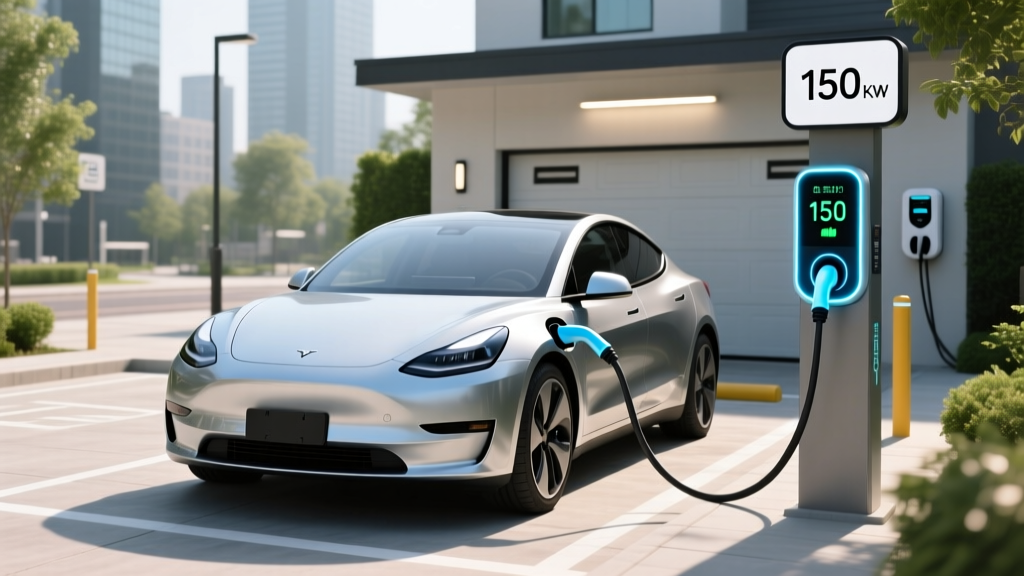
- 150 kW units: Common at Tesla Superchargers (V3), ChargePoint Express, and newer EA stalls. A vehicle that accepts 150 kW (e.g., Ford Mustang Mach-E Extended Range) hits 10–80% in roughly 35–40 minutes.
- 250 kW units: Tesla V4 Superchargers, Electrify America Hyperchargers. Vehicles with strong thermal management (BMW iX, Cadillac Lyriq) can sustain 200+ kW through the mid-SoC range, reaching 10–80% in ~20–25 minutes.
- 350 kW units: Electrify America, Ionity (Europe), and select EVgo eXtend stations. Only 800V-architecture vehicles — Porsche Taycan, Audi e-tron GT, Hyundai Ioniq 5/6, Kia EV6/EV9 — can meaningfully use this speed. The Ioniq 5 peaks near 240 kW and achieves 10–80% in approximately 18 minutes under ideal conditions.
Real-world charging caveat: Peak kW is not sustained kW. A "350 kW" stall doesn't deliver 350 kW for your entire session. Expect an average rate 40–60% below the peak during a 10–80% session. Cold batteries, high ambient heat, and battery age all reduce your curve. Always precondition your battery via the vehicle's navigation-routed charging feature before arriving at a fast DC charger.
Connector Compatibility: NACS, CCS1, and CHAdeMO in 2026
The North American connector landscape has consolidated heavily since Tesla opened its Supercharger network and the NACS (J3400) standard gained industry adoption. Here's where things stand for new and recent EVs:
| Connector | Vehicles Using It (2024–2026) | Network Access | Adapter Needed? |
|---|---|---|---|
| NACS (J3400) | Tesla (all), Ford (2025+), GM (2025+), Rivian (2025+), Hyundai/Kia (2026+), Volvo/Polestar (2025+) | Tesla Superchargers (open), Electrify America, EVgo, ChargePoint (newer stalls) | CCS-to-NACS adapter for older CCS vehicles at NACS stalls |
| CCS1 | Most 2022–2024 non-Tesla EVs: VW ID.4, BMW i4/iX, Mercedes EQS, older Ford/GM/Hyundai models | Electrify America, EVgo, ChargePoint, Ionity | NACS-to-CCS adapter needed at Tesla Superchargers |
| CHAdeMO | Nissan Leaf (legacy), Mitsubishi Outlander PHEV (older) | Limited — being phased out at most networks | No adapter available to NACS/CCS; use CHAdeMO stalls only |
If you're buying a 2026 model-year EV, it almost certainly ships with a native NACS port. If you own a 2023–2024 CCS vehicle, Ford and GM provide complimentary or low-cost NACS adapters for Supercharger access. CHAdeMO owners face the most restricted fast DC charger access; plan routes around remaining CHAdeMO-equipped stations or consider a vehicle upgrade if road-trip flexibility matters to you.
Can You Install a Fast DC Charger at Home?
The short answer: almost certainly not, and you don't need one.
Residential DC fast chargers exist — companies like Enel X and Wallbox offer 20–24 kW DC units for home use — but they require 480V three-phase power (commercial-grade), cost $10,000–$25,000 for the hardware alone, and demand electrical service that fewer than 5% of US homes have. Even then, 24 kW DC is far below the 150–350 kW you get at public fast DC chargers.
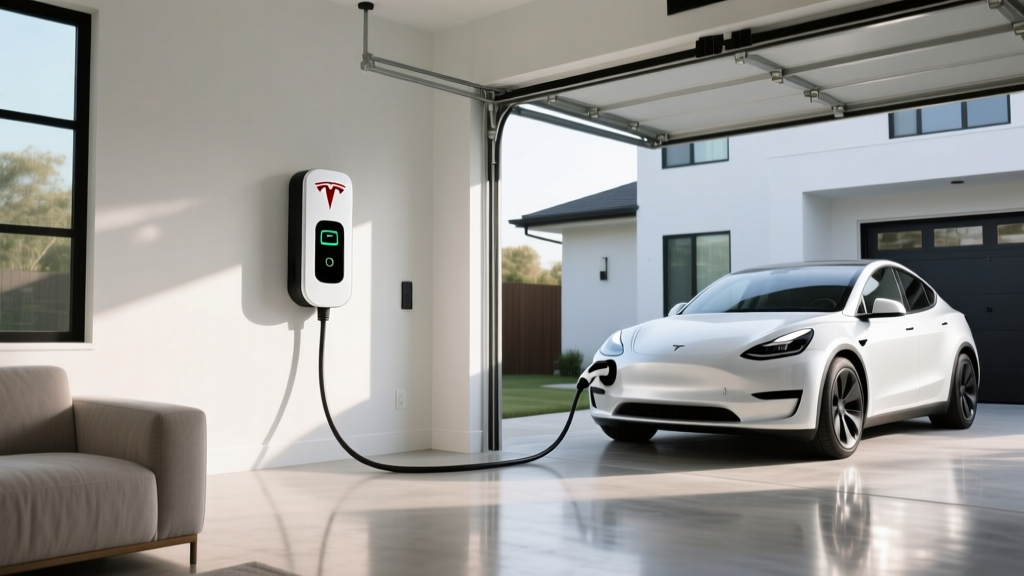
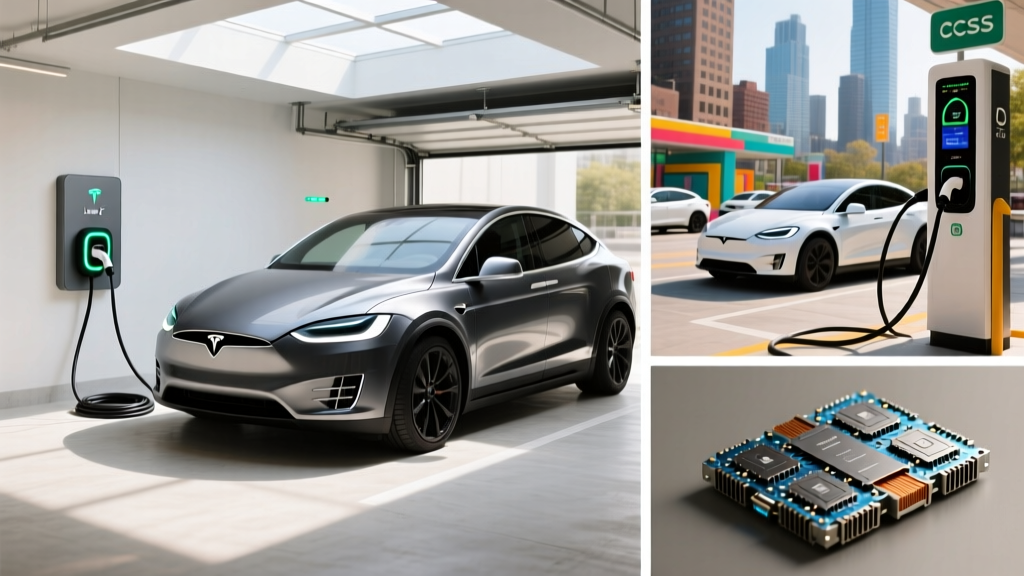
What most EV owners actually need is a Level 2 home charger on a dedicated 240V circuit. A quality 48A Level 2 unit delivers ~11.5 kW, adding 35–44 miles of range per hour. For a 75 kWh battery, that's a full 10–100% charge in roughly 7–8 hours — meaning you wake up every morning with a full battery. This covers 90%+ of real-world charging needs.
Home Level 2 Installation: Electrical Requirements and Costs
Installing a Level 2 charger is an electrical project, not just a purchase. Here's what's involved and what it costs:
| Component | Details | Cost Range |
|---|---|---|
| Level 2 Charger Hardware | 32A–48A, 240V, hardwired or NEMA 14-50 plug, 18–25 ft cable | $350–$750 |
| Electrician Labor | Running 6 AWG wire, installing dedicated 50A–60A breaker, mounting unit | $500–$2,000 |
| Permit & Inspection | Local electrical permit (required in most jurisdictions for code compliance) | $50–$300 |
| Electrical Panel Upgrade (if needed) | Upgrading from 100A to 200A service for older homes with insufficient capacity | $1,500–$4,000 |
| Total (no panel upgrade) | $900–$3,050 | |
| Total (with panel upgrade) | $2,400–$7,050 |
The panel upgrade is the variable that shocks most homeowners. If your home has a 100-amp main panel (common in homes built before 1990), adding a 50A dedicated circuit for EV charging may push total load beyond safe capacity. A licensed electrician will perform a load calculation per NEC Article 220 to determine if an upgrade is required. Don't skip this step — undersized panels are a fire risk, and unpermitted work can void homeowner's insurance.
For the installation itself, code requires a dedicated circuit (not shared with other appliances), a GFCI breaker if the charger is plug-connected (NEMA 14-50), and an outdoor-rated unit (NEMA 4) if installed outside. Hardwired units bypass the GFCI requirement in many jurisdictions and offer a cleaner, more reliable connection.
Level 2 Home Chargers Worth Buying: 2026 Picks
These are the units I recommend based on sustained reliability, charge speed, cable reach, and smart features. All support NACS or CCS1 natively or via included adapter.
ChargePoint Home Flex (NACS)
- Power: Up to 12 kW (50A) on a 60A circuit; adjustable down to 16A
- Connector: Native NACS (J3400); CCS adapter available separately
- Cable: 23 feet
- Smart features: Wi-Fi, scheduling, Alexa/Google integration, energy tracking via app
- Price: ~$550
- Best for: Flexible amperage adjustment if your panel is tight on capacity
Tesla Wall Connector (Gen 4)
- Power: Up to 11.5 kW (48A) on a 60A circuit
- Connector: Native NACS; works with all NACS-equipped vehicles (Ford, GM, Rivian, Hyundai/Kia 2025+)
- Cable: 24 feet
- Smart features: Wi-Fi, OTA updates, power-sharing between two units on one circuit, vehicle integration
- Price: ~$450
- Best for: Tesla owners and anyone in the expanding NACS ecosystem who wants the lowest hardware cost
Emporia Vue Level 2 Charger
- Power: Up to 11.5 kW (48A)
- Connector: NACS (2025+ models); CCS1 for older versions
- Cable: 24 feet
- Smart features: Integration with Emporia whole-home energy monitor, solar-aware charging, time-of-use scheduling
- Price: ~$400
- Best for: Homes with solar panels or whole-home energy monitoring who want to optimize charging around cheap/utility-scheduled electricity
What Charging Actually Costs: Home vs. Public vs. Gas
The economics of EV charging depend entirely on where you charge. A fast DC charger on a road trip costs significantly more per mile than overnight Level 2 charging at home — but still usually less than gasoline.
| Charging Scenario | Rate ($/kWh) | Cost to Add 200 Miles* | Cost per Mile |
|---|---|---|---|
| Home Level 2 (national avg residential) | $0.16/kWh | $11.20 | $0.056 |
| Home Level 2 (off-peak TOU rate) | $0.08/kWh | $5.60 | $0.028 |
| Public Level 2 (ChargePoint, workplace) | $0.25–$0.49/kWh | $17.50–$34.30 | $0.088–$0.172 |
| Fast DC Charger (Electrify America, EVgo) | $0.35–$0.55/kWh | $24.50–$38.50 | $0.123–$0.193 |
| Tesla Supercharger (avg 2026) | $0.28–$0.36/kWh | $19.60–$25.20 | $0.098–$0.126 |
| Gasoline (28 MPG combined, $3.30/gal) | $3.30/gal | $23.57 | $0.118 |
*Based on a vehicle consuming 3.5 kWh/mile (≈286 Wh/mi), typical of a midsize crossover like the Tesla Model Y or Hyundai Ioniq 5. Source: fueleconomy.gov EPA data.
The takeaway: home charging is the economic engine of EV ownership. At off-peak rates, you'll spend $0.03/mile — roughly one-quarter the cost of gasoline. Even at the most expensive public fast DC chargers, you're paying roughly what a 28 MPG gas car costs per mile. But if you rely exclusively on public DC fast charging without any home or workplace access, your cost advantage narrows substantially, and you may even exceed gas costs on some networks with idle fees and membership pricing.
Charging Times for Common Battery Sizes: 10–80% at Each Level
Here's what session lengths look like for representative 2026 EVs at different charger types. These assume a warm, preconditioned battery and a station delivering its rated power:
- Compact (58 kWh usable — VW ID.4 Standard): Level 2 (11.5 kW): ~5 hours. 150 kW DC fast charger: ~28 minutes. 350 kW DC: limited to 135 kW vehicle max, ~30 minutes.
- Midsize (77 kWh usable — Tesla Model Y Long Range): Level 2: ~6.5 hours. 250 kW Supercharger: ~25 minutes (10–80%).
- Large (100 kWh usable — Ford F-150 Lightning Extended): Level 2: ~8.5 hours. 150 kW DC: ~50 minutes. 350 kW capable station: limited to ~150 kW vehicle acceptance, ~45 minutes.
- 800V Architecture (77 kWh — Hyundai Ioniq 5): Level 2: ~6.5 hours. 350 kW DC fast charger: ~18 minutes (10–80%), peaking near 240 kW.
Notice the pattern: battery architecture matters as much as the station. An 800V vehicle at a 350 kW stall charges dramatically faster than a 400V vehicle at the same stall, because it can accept higher power without excessive current. When choosing your next EV, fast DC charger compatibility and peak acceptance rate should be as important as EPA range.
Frequently Asked Questions
How much does it cost to install a home EV charger?
For a Level 2 home charger (the practical standard for residential use), expect $900–$3,050 total if your electrical panel has sufficient capacity, or $2,400–$7,050 if you need a panel upgrade from 100A to 200A service. This includes the charger unit ($350–$750), licensed electrician labor ($500–$2,000), and permits ($50–$300). Always get a load calculation before assuming your panel can handle a new 50A circuit.
How fast will each charging level add range?
Level 1 (120V) adds 3–5 miles per hour — adequate only for PHEVs or very low daily mileage. Level 2 (240V, 48A) adds 35–44 miles per hour, fully recharging most EVs overnight. A fast DC charger adds 150–1,000+ miles per hour at peak rate, but the real-world average across a 10–80% session is far lower due to charge-curve taper.
Which connector and charger is compatible with my EV?
Check your vehicle's charge port. 2025–2026 models from Tesla, Ford, GM, Rivian, Volvo, Hyundai, and Kia use NACS (J3400). Most 2022–2024 non-Tesla EVs use CCS1. Older Nissan Leafs use CHAdeMO. For public fast DC charger access, NACS vehicles have the widest network in 2026 (Tesla Superchargers + growing third-party support). CCS1 vehicles need a NACS adapter for Supercharger access. CHAdeMO access is declining.
How much does charging cost per mile compared to gas?
At home on off-peak electricity ($0.08/kWh), EV charging costs roughly $0.03/mile — about one-quarter the cost of a 28 MPG gas car at $3.30/gallon ($0.12/mile). At public fast DC chargers ($0.35–$0.55/kWh), EV costs rise to $0.12–$0.19/mile, roughly matching or slightly exceeding gasoline. The economic case for EVs depends heavily on consistent home or workplace charging access. See fueleconomy.gov for vehicle-specific efficiency data.
What electrical upgrades might I need for a home charger?
The most common upgrade is a panel capacity increase from 100A to 200A service, costing $1,500–$4,000. You'll also need a dedicated 50A or 60A breaker, 6 AWG copper wire run from the panel to the charger location, and (for plug-in units) a NEMA 14-50 receptacle with GFCI protection. Homes built after 2000 with 200A service usually accommodate a Level 2 charger without a panel upgrade. A licensed electrician must perform a NEC Article 220 load calculation to confirm this. Some utilities offer rebates of $250–$1,000 for panel upgrades paired with EV charger installs — check with your local provider.