The Real Numbers Behind a Fast and Furious Charger
Every EV owner eventually asks: just how fast can I actually charge? Marketing brochures love phrases like "lightning-fast" and "blazing speeds," but when you're sitting at a rest stop watching a charge curve taper from 250 kW down to 40 kW, the reality is more nuanced. This guide strips away the hype and gives you the exact numbers — charge rates in kilowatts (kW), battery capacity in kilowatt-hours (kWh), real-world 10–80% times, and what it all costs whether you're plugging in at home or at a public DC fast-charging station.
Before we get into the data, let's settle the single most common EV confusion: kW is power (the rate at which energy flows, like water pressure in a hose), and kWh is energy (the total amount stored in your battery, like gallons in a tank). A 150 kW charger doesn't deliver 150 kWh — it delivers energy at a rate of 150 kilojoules per second. Your 75 kWh battery charged at a sustained 150 kW would theoretically fill in 30 minutes. In practice, charge curves, battery temperature, and state of charge (SoC) all affect that number. Let's break it all down.
Charging Levels Explained: How Fast Will Each Level Add Range?
The EV charging ecosystem operates across three tiers. Each serves a different use case, and understanding the speed differences is critical for trip planning and daily ownership.
| Level | Voltage / Amps | Power (kW) | Miles of Range per Hour | Best For |
|---|---|---|---|---|
| Level 1 | 120V / 12–16A | 1.4–1.9 kW | 3–5 miles/hr | Overnight top-ups, PHEVs, emergencies |
| Level 2 | 240V / 32–48A | 7.7–11.5 kW | 25–44 miles/hr | Daily home charging, workplace, destination |
| DC Fast Charge | 400–900V DC | 50–350+ kW | 150–1,200+ miles/hr (peak) | Road trips, rapid top-ups, fleet depots |
A few real-world caveats: those "miles per hour" figures for DC fast charging reflect peak rates that typically last only from about 10–50% SoC. Above 80%, charging speed tapers dramatically to protect battery health — a 350 kW station might drop to 40 kW past 80%. Cold batteries (below ~50°F) also charge slower until the thermal management system warms them, a process called preconditioning. Most modern EVs precondition automatically when you navigate to a charger.
Charging Time Examples for Common Battery Sizes
| Battery (usable kWh) | Example Vehicle | 50 kW DCFC | 150 kW DCFC | 250–350 kW DCFC | 11.5 kW Level 2 |
|---|---|---|---|---|---|
| 54 kWh | Volkswagen ID.4 (2026) | ~55 min | ~28 min | ~24 min | ~5.5 hr |
| 75 kWh | Tesla Model Y Long Range | ~75 min | ~32 min | ~22 min | ~7 hr |
| 84 kWh | Hyundai Ioniq 5 (800V arch.) | ~85 min | ~35 min | ~18 min | ~8 hr |
| 100 kWh | Ford F-150 Lightning Ext. Range | ~105 min | ~45 min | ~35 min | ~10 hr |
| 131 kWh | GMC Hummer EV | ~140 min | ~65 min | ~50 min | ~13 hr |
Note that the Hyundai Ioniq 5's 800-volt architecture lets it sustain higher charge rates deeper into the curve, which is why its 250–350 kW time is disproportionately fast compared to 400V vehicles with similar battery sizes. This is a key spec to check if road-trip charging speed matters to you.
Home Charger Installation: Electrical Requirements, Costs, and Panel Upgrades
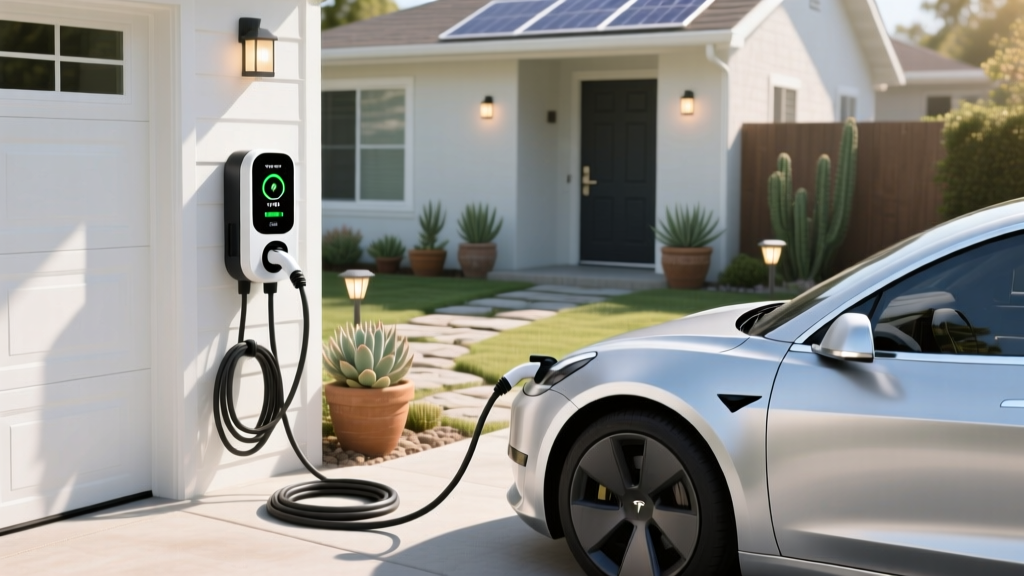
A Level 2 home charger is where most EV owners do 80–90% of their charging. But installing one isn't as simple as plugging in a dryer. Here's what's involved electrically and financially.
Electrical Requirements
A typical Level 2 home charger requires a dedicated 240-volt circuit — the same voltage your electric dryer or oven uses. Common configurations:
- 32A circuit (40A breaker): Delivers 7.7 kW — sufficient for most daily driving needs. Adds ~25–30 miles of range per hour.
- 40A circuit (50A breaker): Delivers 9.6 kW — the sweet spot for most EV owners. Adds ~32–38 miles per hour.
- 48A circuit (60A breaker): Delivers 11.5 kW — maximum for most residential chargers. Adds ~40–44 miles per hour. Requires hardwired installation (no plug).
Per the National Electrical Code (NEC), a continuous load like an EV charger can only use 80% of a circuit's rated capacity. That's why a 48A charger requires a 60A breaker. A licensed electrician will verify wire gauge (typically 6 AWG copper for 60A), conduit run length, and whether your panel has spare capacity.
Installation Cost Breakdown
| Component | Basic Install (Near Panel) | Standard Install (20–40 ft run) | Complex Install (Panel Upgrade + Long Run) |
|---|---|---|---|
| Charger hardware (Level 2, 40–48A) | $350–$700 | $350–$700 | $350–$700 |
| Electrician labor | $300–$600 | $600–$1,500 | $1,500–$3,000 |
| Electrical permit | $50–$150 | $50–$150 | $50–$200 |
| Panel upgrade (if needed) | — | — | $1,500–$3,000 |
| Conduit, wire, fittings | $50–$100 | $150–$400 | $300–$800 |
| Total estimated range | $750–$1,550 | $1,150–$2,750 | $3,700–$7,700 |
According to the U.S. Department of Energy, most homeowners spend between $1,000 and $2,500 for a straightforward Level 2 installation. Costs climb significantly when the panel is far from the garage, conduit must run through finished walls, or a service upgrade is needed.
Safety and Code Considerations
- Dedicated circuit: Your EV charger must have its own breaker — never share a circuit with other high-draw appliances.
- GFCI protection: NEC 2020 and later requires GFCI protection for outdoor receptacles used for EV charging. Hardwired installations may have different requirements depending on local code.
- Outdoor rating: If your charger is mounted outside (carport, driveway), ensure it carries a NEMA 4 or IP65 weather rating. Most major brands comply, but budget units may not.
- WiFi/smart features: Smart chargers allow scheduled charging during off-peak utility hours, which can cut your electricity cost by 30–50% depending on your rate plan.
Connector Compatibility: NACS, CCS1, CHAdeMO, and Adapters
The connector landscape has shifted dramatically since Tesla opened its North American Charging Standard (NACS) to the industry. Here's where things stand in 2026.
| Connector | Brands Using It (Native) | DC Fast Charge Availability | Adapter Needed? |
|---|---|---|---|
| NACS (Tesla) | Tesla, Ford, GM, Rivian, Volvo, Polestar, Mercedes, Nissan (2026+) | Tesla Supercharger network + growing third-party NACS stations | CCS→NACS adapter for non-Tesla vehicles at legacy CCS stations |
| CCS1 | Hyundai, Kia, Volkswagen, BMW, Subaru, Toyota (bZ series) | Electrify America, EVgo, ChargePoint, Ionity (EU) | NACS→CCS adapter for Supercharger access (Ford/GM provide or sell) |
| CHAdeMO | Nissan Leaf (legacy), Mitsubishi Outlander PHEV | Declining — most networks prioritize CCS/NACS | No adapter available; CHAdeMO is being phased out in North America |
The practical takeaway: if you're buying a new EV in 2026, NACS is becoming the default standard. Ford, GM, and Rivian owners can now access Tesla's Supercharger network (over 25,000 stalls in North America) directly or with a manufacturer-supplied adapter. If you drive a CCS-equipped vehicle, check whether your automaker offers a NACS adapter — Ford and GM have shipped these to owners, while aftermarket adapters from companies like Lectron are available for $200–$350.
For home Level 2 charging, the J1772 connector remains universal for non-Tesla vehicles. Tesla provides a J1772 adapter with every vehicle, and most third-party Level 2 chargers ship with either a J1772 or NACS plug. Confirm your vehicle's inlet before ordering.
Cost to Charge: Home vs. Public DC Fast — Per Mile Compared to Gas
One of the strongest arguments for EV ownership is fuel cost savings — but the gap narrows considerably when you rely on public DC fast charging. Here's how the numbers stack up.
| Scenario | Rate ($/kWh) | Vehicle Efficiency | Cost per Mile | Annual Cost (12,000 mi) |
|---|---|---|---|---|
| Home Level 2 (national avg. electricity) | $0.16/kWh | 3.5 mi/kWh (typical EV) | $0.046/mi | $548 |
| Home Level 2 (off-peak utility rate) | $0.09/kWh | 3.5 mi/kWh | $0.026/mi | $309 |
| Public Level 2 (network charging) | $0.30/kWh | 3.5 mi/kWh | $0.086/mi | $1,029 |
| DC Fast Charging (Electrify America, EVgo avg.) | $0.48/kWh | 3.5 mi/kWh | $0.137/mi | $1,646 |
| DC Fast Charging (Tesla Supercharger avg.) | $0.32/kWh | 3.5 mi/kWh | $0.091/mi | $1,097 |
| Gasoline (25 MPG combined, $3.40/gal) | $3.40/gal | 25 MPG | $0.136/mi | $1,632 |
| Gasoline (30 MPG combined, $3.40/gal) | $3.40/gal | 30 MPG | $0.113/mi | $1,360 |
Source: Electricity rates from U.S. Energy Information Administration (EIA); gas prices reflect 2026 national averages.
The key insight: home charging is where the savings live. At off-peak rates, an EV costs roughly 3–4 cents per mile to fuel — about a quarter of what a 25 MPG gas car costs. But if you rely entirely on public DC fast chargers at $0.48/kWh, you're paying roughly the same per mile as a gas vehicle. This is why home charging access is the single most important factor in EV ownership economics.
Equipment Recommendations: Top Level 2 Home Chargers for 2026
Here are four well-regarded Level 2 chargers across different price points, selected for reliability, safety certifications, and smart features.
ChargePoint Home Flex
- Power: Up to 11.5 kW (48A, hardwired) or 9.6 kW (40A, NEMA 14-50)
- Connector: J1772 (NACS adapter included for newer versions)
- Cable length: 23 ft
- Smart features: WiFi, Alexa/Google Home, scheduled charging, energy tracking
- Price: ~$599–$699
- UL listed: Yes
Best for: Flexible amperage settings let you match your circuit capacity without buying a different unit.
Emporia Level 2 EV Charger
- Power: Up to 11.5 kW (48A)
- Connector: J1772 (NACS version available)
- Cable length: 24 ft
- Smart features: WiFi, app-based scheduling, solar integration with Emporia energy monitor
- Price: ~$399–$449
- UL listed: Yes
Best for: Budget-conscious buyers who want smart features and solar-aware charging.
Tesla Wall Connector
- Power: Up to 11.5 kW (48A)
- Connector: NACS native (J1772 adapter available separately)
- Cable length: 24 ft
- Smart features: WiFi, OTA updates, power sharing between multiple units, Tesla app integration
- Price: ~$475
- UL listed: Yes
Best for: Tesla and NACS-equipped vehicle owners. Sleek design and reliable firmware.
Grizzl-E Smart
- Power: Up to 10 kW (40A)
- Connector: J1772
- Cable length: 24 ft
- Smart features: WiFi, OCPP-compatible, adjustable amperage via DIP switches
- Price: ~$449–$549
- UL listed: Yes (built in Canada)
Best for: Cold-climate durability (rated to -40°F) and outdoor installations.
Regardless of which charger you choose, verify that it's UL-listed or ETL-listed — this is a non-negotiable safety certification that your electrician and permit inspector will check. Avoid unbranded chargers from marketplace sites; they may lack proper thermal cutoffs and ground-fault protection.
Federal Tax Credit for Home Charger Installation
The IRS §30C Alternative Fuel Vehicle Refueling Property Credit covers 30% of the cost of home EV charging equipment and installation, up to a maximum credit of $1,000. Key eligibility details for 2026:
- The credit applies to both the charger hardware and the electrical installation labor.
- Your home must be located in a qualifying census tract (low-income or non-urban area) — many suburban and rural homes qualify, but urban cores may not. Check the IRS census tract locator tool.
- The credit is non-refundable, meaning it can reduce your tax liability to zero but won't generate a refund beyond that.
- There is no income cap for this credit (unlike the §30D vehicle purchase credit).
Always consult a tax professional to confirm eligibility based on your specific address and tax situation. Rules and qualifying census tracts can shift annually.
Public DC Fast Charging: What to Expect in 2026
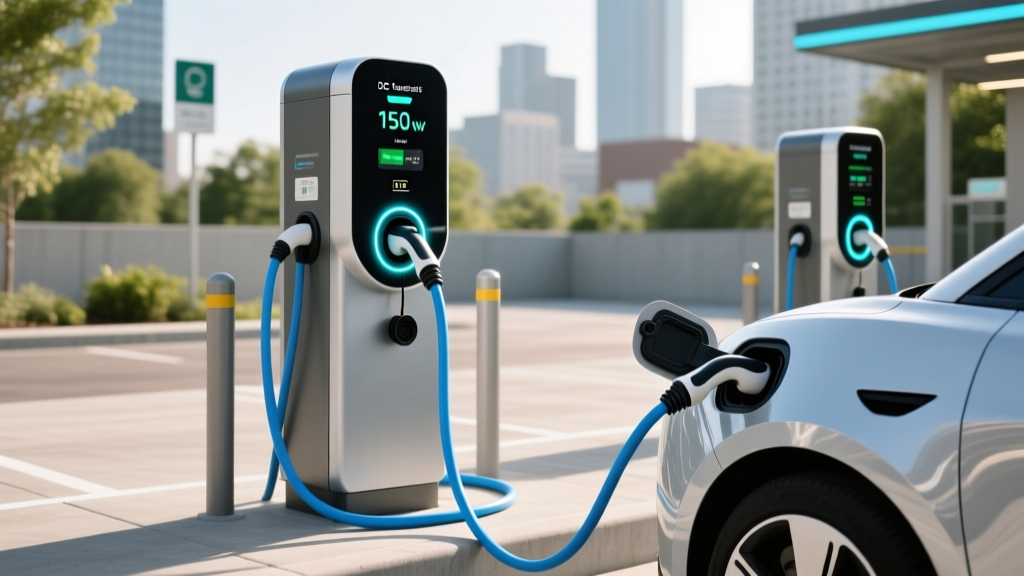
When you need a fast and furious charger on a road trip, the public DC fast-charging network has expanded significantly. Here's a practical snapshot of what you'll encounter:
- Tesla Supercharger: 150–350 kW (V3 and V4 stalls). Most reliable network with the fewest out-of-service stalls. Now open to non-Tesla NACS vehicles. Average price: $0.28–$0.36/kWh.
- Electrify America: 50–350 kW. Broad highway coverage. CCS and NACS connectors increasingly available. Pricing varies by state: $0.43–$0.56/kWh. Check stall status in-app before driving there — downtime remains a concern at some locations.
- EVgo: 50–350 kW. Strong urban and suburban presence. CCS and NACS. Pricing: $0.36–$0.52/kWh. Offers subscription plans that reduce per-kWh cost for frequent users.
- ChargePoint: Mix of Level 2 and DC fast (50–400 kW). Pricing set by site host, so it varies widely: $0.25–$0.60/kWh.
A practical road-trip strategy: plan to charge from 10–80% at DC fast stations (where charge speeds are highest), then rely on Level 2 overnight charging at hotels or destinations. Charging from 80–100% on DC fast can take nearly as long as the 10–80% session due to the taper — it's rarely worth the time or cost unless you absolutely need the full battery for the next leg.
Frequently Asked Questions
How much does it cost to install a home EV charger?
A straightforward Level 2 installation (panel within 20 feet, no upgrade needed) typically costs $1,000–$2,500 including equipment, electrician labor, and permit. Complex installs requiring a 200A panel upgrade and long conduit runs can reach $3,700–$7,700. Get at least two quotes from licensed electricians and confirm they perform a load calculation on your panel.
How fast will each charging level add range?
Level 1 (120V) adds roughly 3–5 miles per hour — suitable for plug-in hybrids with small batteries. Level 2 (240V) adds 25–44 miles per hour, enough to fully recharge most EVs overnight. DC fast charging adds 150–1,200+ miles per hour at peak rates, but real-world sessions average 20–45 minutes for a 10–80% charge depending on battery size and charger power.
Which connector/charger is compatible with my EV?
Check your vehicle's charge port: Tesla and most 2025+ Ford, GM, Rivian, and Volvo models use NACS. Most Hyundai, Kia, Volkswagen, and BMW models still use CCS1. The Nissan Leaf (legacy) uses CHAdeMO. For home Level 2 charging, all non-Tesla vehicles use J1772; Tesla includes a J1772 adapter. When buying a home charger, match the plug to your vehicle's inlet or plan to use an adapter.
How much does charging cost per mile vs gas?
At the 2026 national average home electricity rate of $0.16/kWh, a typical EV (3.5 miles per kWh) costs about 4.6 cents per mile to fuel — roughly one-third the cost of a 25 MPG gas car at $3.40/gallon (13.6 cents per mile). Off-peak home charging can drop that to 2.6 cents per mile. Public DC fast charging at $0.48/kWh brings the cost to ~13.7 cents per mile, roughly equal to gasoline.
What electrical upgrades might I need?
The most common upgrade is a panel capacity increase from 100A to 200A, needed when your existing panel doesn't have enough spare amperage for a dedicated 40–60A EV circuit. Other upgrades include adding a new breaker slot, upgrading service entrance wiring, or installing a sub-panel in the garage. Your electrician should perform a NEC-compliant load calculation to determine if an upgrade is required before any work begins.
Is DC fast charging bad for my battery long-term?
Modern EV battery management systems (BMS) actively manage heat and charge rate to minimize degradation from DC fast charging. Studies from the National Renewable Energy Laboratory (NREL) show that moderate DCFC use (a few times per month) causes negligible additional degradation compared to Level 2 charging. However, daily DCFC use in hot climates can accelerate capacity loss slightly. For daily charging, Level 2 remains the recommended approach.