F-150 Supercharged Gas vs F-150 Lightning: The Charging and Fueling Reality
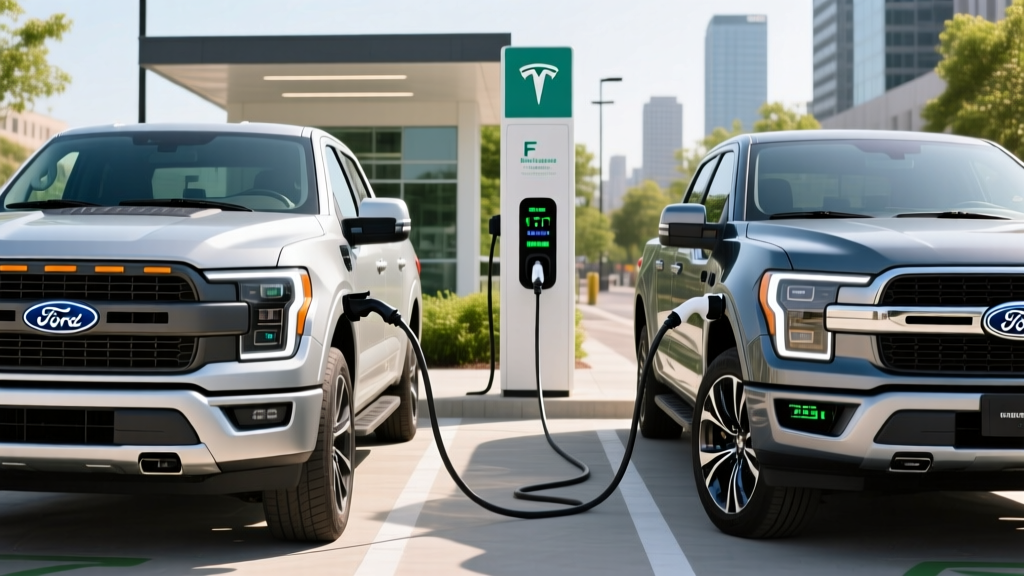
The Ford F-150 lineup in 2026 presents truck buyers with a genuine fork in the road. On one side, the F-150 with the 5.0L supercharged V8 (the Raptor and Tremor packages) delivers 700+ horsepower and a familiar refueling routine at the pump. On the other, the F-150 Lightning offers 563 horsepower, a 131 kWh usable battery (Extended Range), and a fundamentally different energy relationship. If you're cross-shopping an F-150 supercharged model against the Lightning, the charging infrastructure question is just as critical as the powertrain spec — and it starts at home.
This guide breaks down exactly what it takes to charge an F-150 Lightning at home, what you'll pay per mile versus the supercharged V8's fuel cost, which connectors matter in 2026, and the electrical upgrades your garage might demand. We'll use real numbers: kW charge rates, kWh battery capacity, dollars per mile, and installation cost ranges.
EPA estimate: 320 miles (2026 model year). Real-world highway driving at 70 mph with climate control: expect 250–275 miles. Cold-weather (below 32°F) highway range can drop to 210–230 miles. The supercharged 5.0L V8 F-150 gets an EPA-estimated 15–16 MPG combined; expect 13–14 MPG in real-world mixed driving.
Charging Levels Explained: kW, Miles Per Hour, and What Each Means for Your Lightning
The single most important EV literacy point: kW (kilowatts) measures power — how fast energy flows into the battery. kWh (kilowatt-hours) measures energy — the total capacity of the battery pack. The F-150 Lightning Standard Range has a 98 kWh usable battery; the Extended Range carries 131 kWh. Confusing these two units is the most common mistake in EV research.
| Level | Voltage / Amperage | Max Power (kW) | Miles Added Per Hour | Best For |
|---|---|---|---|---|
| Level 1 (120V) | 120V / 12A | ~1.4 kW | ~2–3 mi/hr | Emergency top-ups, overnight trickle |
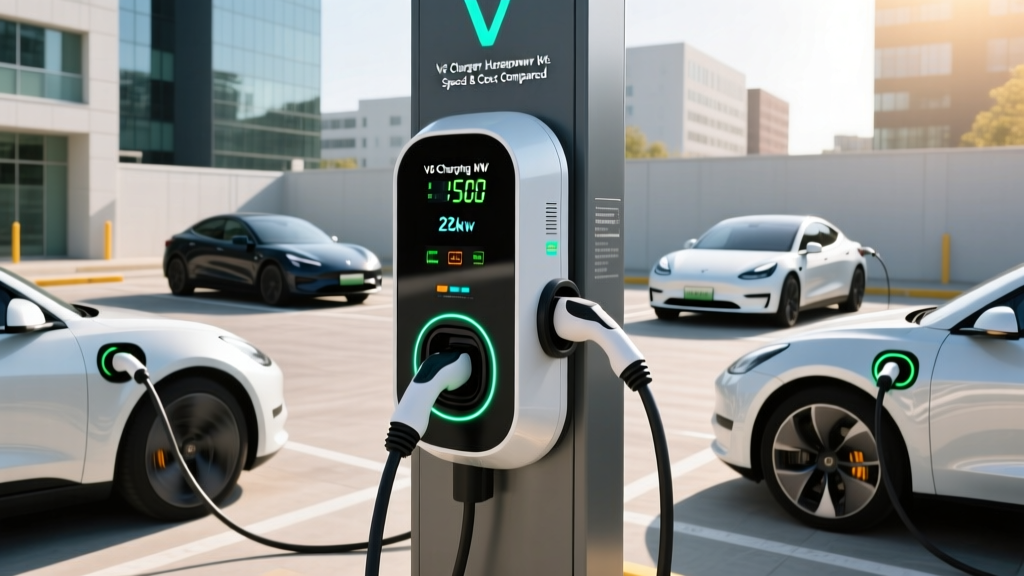
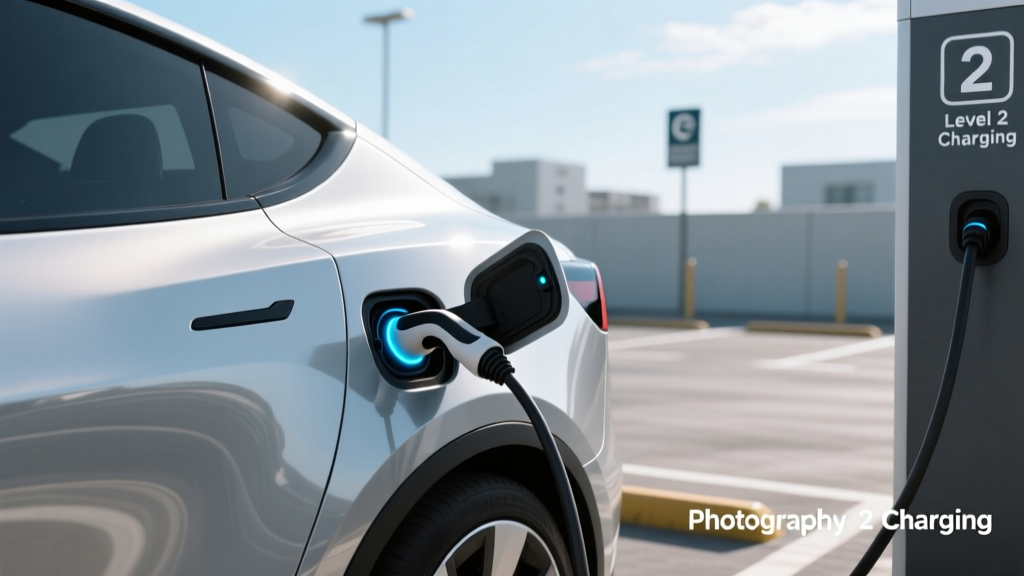
| Level 2 (240V) | 240V / 48A | 11.5 kW | ~20–25 mi/hr | Daily home charging, full overnight refill |
| DC Fast Charge | 400V architecture | 150 kW (peak) | ~180–220 mi/hr (peak) | Road trips, rapid replenishment |
The F-150 Lightning's onboard charger accepts up to 11.5 kW on Level 2 (48 amps on a 60-amp dedicated circuit). On DC fast charging, the Extended Range model peaks at approximately 150 kW, though sustained rates taper significantly above 80% State of Charge (SoC). A 10–80% DC fast charge takes roughly 41–45 minutes at a functioning 150 kW station — but plan for 55–65 minutes in real-world conditions accounting for taper, station variability, and battery preconditioning status.
Home Charger Installation: Electrical Requirements, Costs, and Panel Upgrades
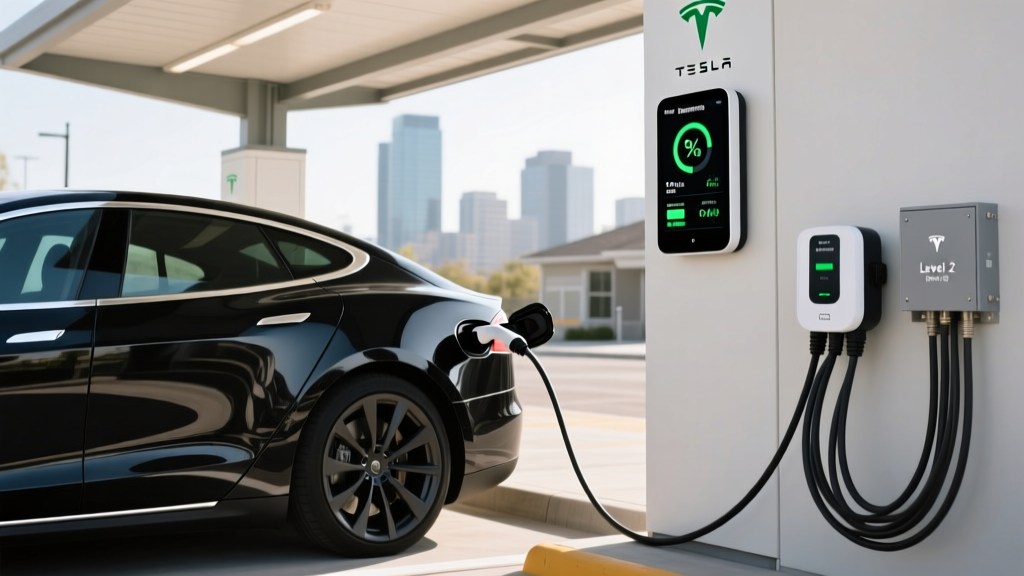
Charging an F-150 Lightning at home on Level 2 requires a 240-volt circuit, typically rated for 60 amps to deliver the full 48 amps (11.5 kW) the truck can accept. Here's what that actually involves and what it costs.
Electrical Requirements
- Circuit: Dedicated 60-amp, 240V breaker (NEMA 14-50 outlet or hardwired connection)
- Wire gauge: 6 AWG copper (or 4 AWG aluminum) for a 60-amp run
- Panel capacity: Minimum 200-amp main service panel recommended; older homes with 100-amp panels will likely need an upgrade
- Permit: Required in most jurisdictions — typically $50–$250 depending on municipality
- GFCI protection: NEC 2020+ requires GFCI breakers for NEMA 14-50 receptacles in garages; hardwired chargers often bypass this requirement (check local code)
Panel Upgrade Reality
This is where costs can spike. If your home has a 100-amp panel and you're adding a 60-amp EV circuit alongside existing loads (HVAC, electric oven, dryer), a panel upgrade to 200 amps is virtually mandatory. A panel upgrade runs $1,500–$3,500 depending on utility coordination, conduit runs, and local labor rates. Homes already on 200-amp service usually have sufficient headroom, but a licensed electrician should perform a load calculation before committing.
| Component | Low Estimate | High Estimate | Notes |
|---|---|---|---|
| Level 2 Charger (Equipment) | $400 | $750 | 40A–48A smart chargers |
| Electrician Labor (standard install) | $600 | $1,800 | Depends on panel-to-garage distance, wall type |
| Electrical Materials (wire, conduit, breaker) | $150 | $500 | Longer runs = higher cost |
| Permit & Inspection | $50 | $250 | Varies by municipality |
| Panel Upgrade (if needed) | $1,500 | $3,500 | 100A → 200A service upgrade |
| Total (no panel upgrade) | $1,200 | $3,300 | Typical scenario for modern homes |
| Total (with panel upgrade) | $2,700 | $6,800 | Older homes with 100A service |
The federal Residential Clean Energy Credit does not cover EV chargers as of 2026 (the alternative fuel vehicle refueling property credit expired for most residential installations). Some utility companies offer rebates of $200–$500 for Level 2 charger installation — check with your local provider.
Connector Compatibility in 2026: NACS, CCS, and the F-150 Lightning
The connector landscape has consolidated significantly. Ford transitioned the F-150 Lightning to the NACS (North American Charging Standard) port beginning with the 2025 model year. If you own a 2022–2024 Lightning, it has a CCS1 port and will need a CCS-to-NACS adapter (provided by Ford to eligible owners) to access Tesla Superchargers.
| Connector | F-150 Lightning Model Year | Network Access | Adapter Needed? |
|---|---|---|---|
| NACS (native) | 2025–2026 | Tesla Supercharger, Electrify America (NACS stalls), Rivian Adventure Network | No — native port |
| CCS1 (native) | 2022–2024 | Electrify America, EVgo, ChargePoint DC | CCS-to-NACS adapter for Superchargers |
| CHAdeMO | N/A | Legacy Nissan/Mitsubishi network | Not compatible, not recommended |
For home Level 2 charging, all F-150 Lightnings use the standard J1772 connector (built into NACS and CCS1 ports for AC charging). Any Level 2 home charger with a J1772 plug will work across all model years.
Cost Per Mile: F-150 Lightning Charging vs Supercharged V8 Fuel
This is where the Lightning makes its strongest economic case — and where the supercharged 5.0L V8's fuel bill stings most. Let's run real scenarios using the Lightning's efficiency of approximately 48–52 kWh/100 miles (combined) and the supercharged V8's real-world 13–14 MPG.
| Scenario | Cost per kWh / Gallon | F-150 Lightning ($/mile) | Supercharged V8 ($/mile) | Annual Savings (15k mi) |
|---|---|---|---|---|
| Home charging (off-peak utility rate) | $0.12/kWh | $0.058 | $0.264 (at $3.70/gal) | ~$3,090 |
| Home charging (high-cost state, e.g. CA) | $0.28/kWh | $0.135 | $0.264 | ~$1,935 |
| Public Level 2 (ChargePoint, EVgo) | $0.35/kWh | $0.169 | $0.264 | ~$1,425 |
| DC Fast Charging (Electrify America) | $0.48/kWh | $0.232 | $0.264 | ~$480 |
| DC Fast Charging (Tesla Supercharger avg) | $0.35/kWh | $0.169 | $0.264 | ~$1,425 |
The supercharged F-150 V8 is one of the thirstiest configurations in the lineup. At 13 MPG combined with $3.70/gallon fuel, you're spending roughly 28.5 cents per mile. The Lightning charged at home on a reasonable utility rate cuts that to under 6 cents per mile — a five-fold reduction. Even exclusive public DC fast charging at premium rates nearly matches the gas cost, which is why home charging access is the make-or-break factor in the Lightning ownership equation.
Choose the Lightning if: You can install Level 2 at home, your daily commute is under 200 miles, and your utility rate is below $0.20/kWh. The per-mile savings compound to $2,000–$3,500 annually.
Choose the supercharged V8 if: You lack home charging access, regularly tow over 7,000 lbs (Lightning range drops 40–50% under heavy tow), or drive in remote areas with sparse DC fast charging.
Recommended Level 2 Home Chargers for the F-150 Lightning
The F-150 Lightning's 11.5 kW onboard charger means you want a Level 2 unit that delivers at least 48 amps to maximize charge speed. Here are three proven options for 2026:
Ford Charge Station Pro (80A)
- Power output: 19.2 kW max (requires 100A circuit) — the Lightning will only draw 11.5 kW, but this future-proofs for other vehicles
- Connector: NACS (native for 2025+ Lightnings); J1772 adapter included
- Cable length: 25 feet
- Smart features: FordPass integration, scheduled charging, Intelligent Backup Power (V2H capable with Home Integration System)
- Price: ~$1,300 (equipment only)
- Best for: Lightning owners who want V2H backup power capability
ChargePoint Home Flex
- Power output: Up to 11.5 kW (48A) on a 60A circuit; configurable down to 32A
- Connector: J1772 (works with all Lightning model years)
- Cable length: 23 feet
- Smart features: Wi-Fi connected, app scheduling, Alexa integration, energy reporting
- Price: ~$550–$650
- Best for: Reliable daily charging without paying for unused 80A capacity
Wallbox Pulsar Plus (48A)
- Power output: 11.5 kW (48A) on a 60A circuit
- Connector: J1772 (NACS version available for 2025+ models)
- Cable length: 20 feet (25-foot option available)
- Smart features: Wi-Fi + Bluetooth, Power Sharing (daisy-chain two units on one circuit), app control
- Price: ~$450–$550
- Best for: Budget-conscious install with solid app experience
Safety, Code, and Installation Best Practices
EV charging draws sustained high current for hours — this is not the same as plugging in a dryer. Follow these non-negotiable guidelines:
- Dedicated circuit only: Never share the EV charger circuit with other appliances. A 60-amp dedicated breaker is standard for 48A charging.
- Hardwired vs. receptacle: Hardwired installations avoid the NEC GFCI breaker requirement that applies to NEMA 14-50 outlets, reducing nuisance trips. Many electricians now recommend hardwired for EV chargers.
- Outdoor rating: If your charger mounts outside or in an unsealed garage, ensure it carries a NEMA 4 (weatherproof) rating. The ChargePoint Home Flex and Wallbox Pulsar Plus are both outdoor-rated.
- Wire sizing: Undersized wire on a 60-amp circuit creates fire risk. Insist on 6 AWG copper minimum — some electricians cut costs with aluminum wire, which requires larger gauge and specific termination techniques.
- Permit and inspect: Skipping the permit saves $50–$250 but voids insurance coverage if a fire originates from the unpermitted work. Always pull a permit and schedule the inspection.
Public Charging: What to Expect on Road Trips
The F-150 Lightning's 150 kW peak DC fast charging rate is adequate but not class-leading — the Hyundai Ioniq 5 and Kia EV9 accept 230+ kW. On a road trip, plan for 45–60 minute stops every 200–240 miles (real-world highway range with a buffer). Preconditioning the battery via the truck's navigation system before arriving at a DC fast charger can shave 5–10 minutes off your session by warming the pack to optimal temperature.
For 2025+ NACS-equipped Lightnings, the Tesla Supercharger network provides the most reliable DC fast charging experience in the US, with over 25,000 stalls nationwide. CCS-equipped 2022–2024 models rely primarily on Electrify America, EVgo, and ChargePoint — reliability varies by station, and having backup charging options mapped in your route is essential.
Frequently Asked Questions
How much does it cost to install a home EV charger for the F-150 Lightning?
A standard Level 2 installation (60-amp circuit, 48A charger, no panel upgrade) runs $1,200–$3,300 including equipment, electrician labor, materials, and permit. If your home needs a panel upgrade from 100A to 200A service, add $1,500–$3,500. Always get a load calculation from a licensed electrician before committing.
How fast will each charging level add range to the Lightning?
Level 1 (120V): approximately 2–3 miles per hour — essentially unusable for the Lightning's 131 kWh battery. Level 2 (240V, 48A): approximately 20–25 miles per hour, fully replenishing the Extended Range battery in 11–13 hours. DC fast charging: peaks at roughly 180–220 miles per hour, delivering a 10–80% charge in about 41–45 minutes under ideal conditions.
Which connector does the F-150 Lightning use?
2025–2026 models use the NACS connector natively, granting direct access to Tesla Superchargers. 2022–2024 models use CCS1 and require a CCS-to-NACS adapter (available from Ford) for Supercharger access. All model years accept J1772 for Level 2 AC charging at home.
How much does charging the Lightning cost per mile vs the supercharged V8?
At home on a $0.12/kWh utility rate, the Lightning costs about $0.058 per mile. The supercharged 5.0L V8 at 13 MPG and $3.70/gallon costs about $0.285 per mile. That's roughly $3,400 in annual fuel savings for the Lightning at 15,000 miles per year. Even at California's $0.28/kWh rate, the Lightning saves nearly $2,000 annually.
What electrical upgrades might I need for a home charger?
The most common upgrade is a panel replacement from 100-amp to 200-amp service, needed when your existing panel lacks capacity for a 60-amp dedicated EV circuit. Homes with 200-amp panels usually have sufficient headroom. Other potential upgrades include conduit runs (if the garage is far from the panel), a sub-panel installation, or utility transformer upgrades for older neighborhoods — your electrician's load calculation will identify these.
Can I charge the F-150 Lightning on a standard 120V outlet?
Technically yes, but practically no. Level 1 charging at 1.4 kW adds about 2–3 miles per hour. Fully charging the Extended Range 131 kWh battery from empty would take approximately 90+ hours. Level 1 is suitable only for emergency trickle charging or maintaining a parked vehicle's battery — not for daily use with the Lightning's large pack.