From Supercharged V8 to Kilowatts: What Changes When You Go Electric
If you're coming from a 2024 Ford F-150 Single Cab 5.0 Supercharged — a truck built around a 5.0L Coyote V8 pushing 400+ hp and gulping 15-17 MPG combined — the shift to an electric vehicle rewires more than your powertrain. It rewires how you "refuel." Instead of a 26-gallon tank and a five-minute gas stop, you're managing kWh (kilowatt-hours, the energy in your battery) and kW (kilowatts, the rate at which energy flows in). Confusing these two is the single most common mistake new EV owners make, and it leads to buying the wrong charger, misreading charge times, and overspending on installation.
This guide is built for buyers transitioning from performance-oriented gas trucks — the kind who tracked boost psi and quarter-mile times — and need the same precision applied to charging infrastructure. We'll cover home installation costs, real charge speeds, connector standards, and gear recommendations with exact numbers.
Charging Levels Explained: Speeds in kW and Miles Per Hour
Every EV charges at one of three levels. The power output (measured in kW) determines how fast energy flows into your battery. Here's the breakdown with real-world range recovery rates for a typical mid-size EV or electric truck:
| Level | Voltage / Amps | Power (kW) | Miles of Range Per Hour | Best Use Case |
|---|---|---|---|---|
| Level 1 | 120V / 12A | ~1.4 kW | 3–5 mi/hr | Overnight top-ups, PHEVs, emergency |
| Level 2 | 240V / 32–48A | 7.7–11.5 kW | 25–44 mi/hr | Daily home charging (primary method) |
| DC Fast | 400–800V DC | 50–350 kW | 150–1,200+ mi/hr | Road trips, quick top-ups away from home |
A critical nuance: DC fast charging doesn't sustain its peak kW rate. A truck that peaks at 150 kW might hold that rate from 10–40% State of Charge (SoC), then taper to 80 kW through 60%, and drop below 40 kW past 80%. This charge curve taper is why manufacturers quote 10–80% times rather than 0–100%. Charging from 80% to 100% on DC fast can take as long as 10% to 80%.
How Much Does Home EV Charger Installation Actually Cost?
This is where most buyers get sticker shock — or worse, get lowballed by an estimate that ignores electrical panel reality. Here's an honest breakdown based on 2026 electrician rates and equipment pricing:
| Component | Typical Cost Range | Notes |
|---|---|---|
| Level 2 Charger (Equipment) | $400–$750 | Hardwired 48A units; plug-in 40A models slightly less |
| Electrician Labor | $500–$2,000 | Depends on run length from panel to garage/carport |
| Electrical Permit | $50–$250 | Required in most jurisdictions; varies by municipality |
| Panel Upgrade (if needed) | $1,500–$3,500 | 100A → 200A service; common in pre-2000 homes |
| Conduit & Wiring Materials | $150–$600 | Longer runs from panel to charger increase cost |
| Total (No Panel Upgrade) | $1,100–$3,600 | Most homes with 200A service and short runs |
| Total (With Panel Upgrade) | $2,600–$7,100 | Older homes or those with maxed-out 100A panels |
Panel upgrade gotcha: If you're coming from a home with a 100-amp electrical panel that's already supporting central A/C, an electric water heater, and a dryer, adding a 48-amp EV circuit (which requires a 60-amp breaker by NEC 80% continuous-load rule) may push you over capacity. A licensed electrician will perform a load calculation per NEC Article 220 before recommending a panel upgrade. Don't skip this step — an overloaded panel is a fire risk and will fail inspection.
Some utilities offer rebates of $250–$500 for Level 2 charger installation, and the federal Residential Clean Energy Credit (IRS §25C, extended through 2032) covers 30% of charger equipment and installation costs up to $1,000. Check your utility's EV program page before scheduling work.
Electrical Requirements: What Your Home Needs for Level 2
A Level 2 home charger requires a dedicated 240-volt circuit. Here's what that means in practice:
- 40-amp charger: Requires a 50-amp breaker and 6 AWG copper wire (or 4 AWG aluminum)
- 48-amp charger: Requires a 60-amp breaker and 4 AWG copper wire
- Dedicated circuit: The breaker must serve only the EV charger — no sharing with other outlets or appliances
- GFCI protection: NEC 2020 and later requires GFCI protection for EV charging outlets (hardwired units may not require a GFCI breaker depending on local code — confirm with your electrician)
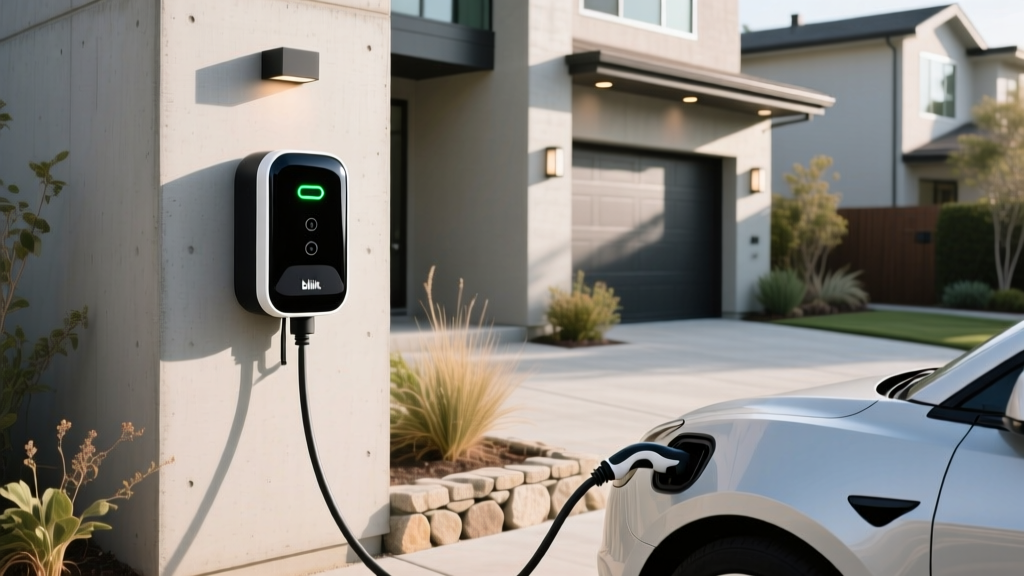
- Outdoor rating: If your charger mounts outside, the unit must carry a NEMA 4 (or IP65+) weather rating, and any outdoor receptacle must be in a weatherproof "in-use" cover
For homes with a 200-amp panel and moderate existing loads, a 48-amp Level 2 circuit is usually feasible without upgrades. The key variable is the wire run distance: a panel in the garage next to your parking spot might cost $500 in labor; a panel in the basement requiring a 60-foot conduit run to a detached carport could push labor past $1,500.
Connector Compatibility: NACS, CCS1, and CHAdeMO in 2026
The connector landscape has consolidated significantly. Here's where each standard stands and what it means for your charging setup:
| Connector | Brands Using It (2026 Models) | Home Charger Availability | Adapter Needed? |
|---|---|---|---|
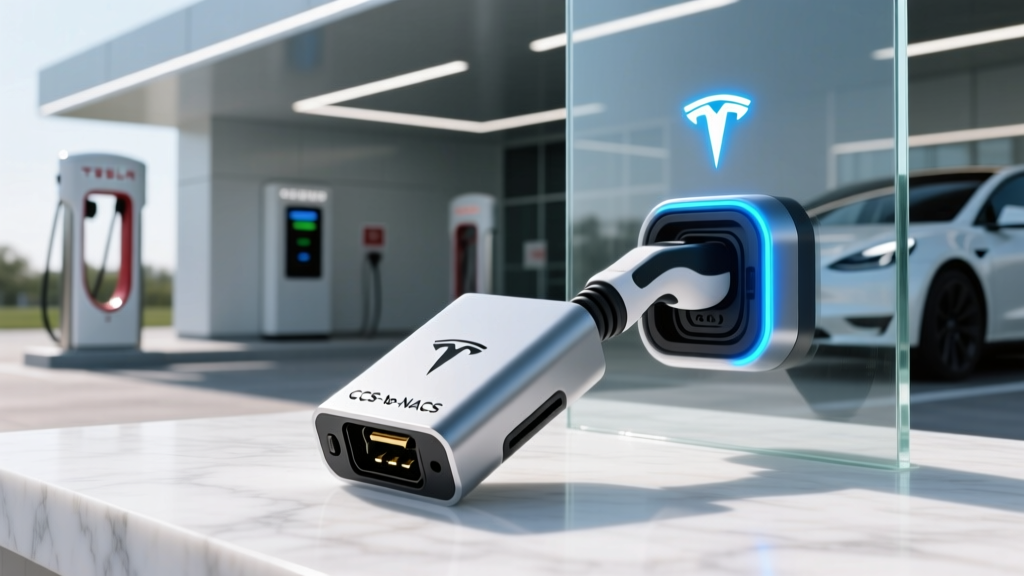
| NACS (Tesla / SAE J3400) | Tesla, Ford, GM, Rivian, Volvo, Polestar, Hyundai, Kia (most new models) | Tesla Wall Connector, Jolt, Lectron, Emporia | CCS-to-NACS adapters available from OEMs |
| CCS1 | Legacy models from VW, BMW, some Stellantis, older Hyundai/Kia | ChargePoint Home Flex, Emporia, JuiceBox | NACS-to-CCS adapters for public Tesla Superchargers |
| CHAdeMO | Nissan Leaf (legacy); effectively discontinued for new vehicles | Limited home options; mostly public DC stations | Adapters rare and expensive |
If you're buying a new EV in 2026, there's a strong probability it uses NACS. Ford's transition to NACS means F-150 Lightning owners can access Tesla Superchargers directly — a massive network advantage. For home charging, the connector on your wall unit should match your vehicle's inlet to avoid daily adapter fumbling. If your EV uses CCS1 but you want Supercharger access, OEM-provided adapters (Ford's complimentary adapter program, for example) solve the public-charging side while a CCS1 home unit handles daily needs.
Cost to Charge: Per-Mile Comparison vs. Your Supercharged F-150
A 2024 Ford F-150 Single Cab with the 5.0L Supercharged V8 delivers thrilling performance at a cost: roughly 14–16 MPG combined under enthusiastic driving. At $3.40/gallon (2026 national average), that's approximately $0.23–$0.26 per mile in fuel alone. Here's how EV charging scenarios compare:
| Charging Scenario | Cost per kWh | Cost per Mile (at 2.0 mi/kWh) | Annual Fuel Cost (12,000 mi) |
|---|---|---|---|
| Home Level 2 — Off-Peak Utility Rate | $0.08–$0.12 | $0.04–$0.06 | $480–$720 |
| Home Level 2 — Standard Rate (no TOU) | $0.14–$0.18 | $0.07–$0.09 | $840–$1,080 |
| Public Level 2 (ChargePoint, Blink, etc.) | $0.25–$0.49 | $0.13–$0.25 | $1,560–$3,000 |
| DC Fast Charging (Electrify America, EVgo) | $0.35–$0.55 | $0.18–$0.28 | $2,160–$3,360 |
| Tesla Supercharger (member rates) | $0.25–$0.35 | $0.13–$0.18 | $1,560–$2,160 |
| Supercharged F-150 5.0 (Gas) | $3.40/gal | $0.23–$0.26 | $2,760–$3,120 |
The takeaway: home charging on an off-peak rate plan is 4–5× cheaper per mile than gassing up a supercharged truck. Even exclusive DC fast charging — the most expensive EV scenario — is roughly comparable to or slightly cheaper than 14 MPG on premium fuel. Most EV owners do 80%+ of their charging at home, which is where the economics dominate.
Charging Time Examples: What to Expect with Common Battery Sizes
Charge time depends on battery capacity (kWh) and the power (kW) your vehicle can accept. Here are realistic timelines for common EV and electric truck batteries:
| Battery Size | Level 2 (11.5 kW) | DC Fast 10–80% | Example Vehicles |
|---|---|---|---|
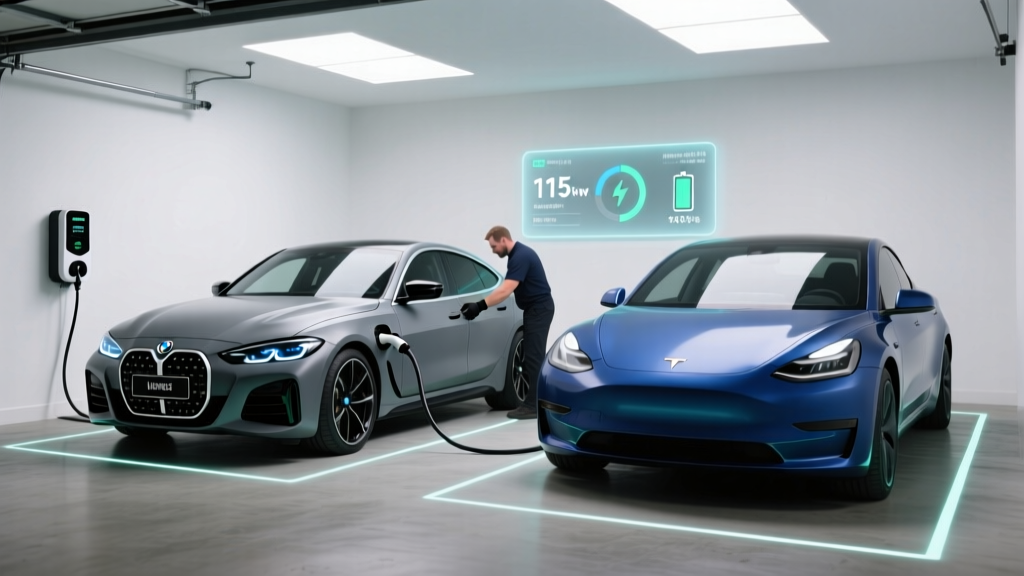
| 60 kWh usable | ~5 hours (0–100%) | ~22–28 min (at 150 kW peak) | Tesla Model Y RWD, Hyundai Ioniq 5 Std Range |
| 84 kWh usable | ~7.5 hours (0–100%) | ~18–25 min (at 230 kW peak) | Hyundai Ioniq 5 LR, Kia EV6 GT-Line |
| 100 kWh usable | ~9 hours (0–100%) | ~25–35 min (at 200 kW peak) | Tesla Model S/X, Rivian R1T (Max Pack) |
| 131 kWh usable | ~11.5 hours (0–100%) | ~35–45 min (at 170 kW peak) | Ford F-150 Lightning Ext Range, GMC Sierra EV |
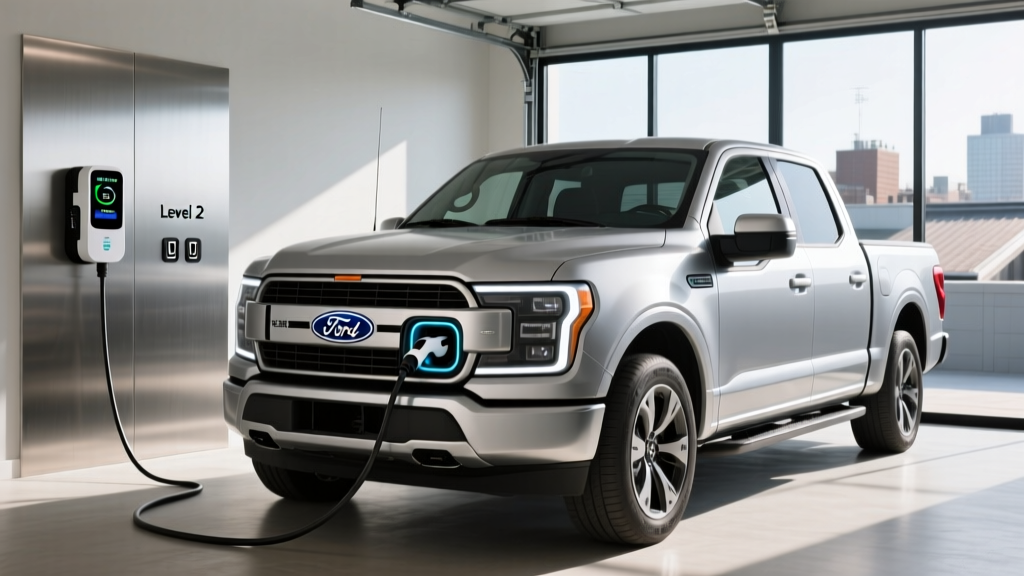
For context: a large-battery electric truck with 131 kWh usable (like the F-150 Lightning Extended Range) will fully replenish overnight on a 48-amp Level 2 charger — plug in at 9 PM, full by 8 AM. On a DC fast charger, the same truck reaches 80% in roughly 40 minutes, which aligns well with a meal break on a road trip. The larger the battery, the more important Level 2 home charging becomes — relying solely on DC fast charging with a 130+ kWh pack gets expensive and time-consuming.
Equipment Recommendations: Level 2 Chargers That Deliver
Based on real-world reliability, smart features, and build quality, here are top Level 2 home chargers for 2026:
Tesla Wall Connector (Gen 4)
- Power Output: Up to 11.5 kW (48A)
- Connector: NACS native; CCS adapter included in box for non-Tesla vehicles
- Cable Length: 24 feet
- Smart Features: Wi-Fi, OTA updates, load sharing between two units, access control
- Price: ~$475
- Best For: NACS-vehicle owners who want a clean, reliable, Tesla-ecosystem unit
ChargePoint Home Flex (Gen 2)
- Power Output: Up to 12 kW (50A, configurable down to 16A)
- Connector: NACS or J1772 (select at purchase)
- Cable Length: 23 feet
- Smart Features: Wi-Fi, scheduling, Alexa/Google integration, detailed energy reports, flexible amperage dip-switch settings
- Price: ~$599
- Best For: Buyers who want maximum configurability and a proven app ecosystem
Emporia Vue EV Charger
- Power Output: Up to 11.5 kW (48A)
- Connector: NACS or J1772
- Cable Length: 24 feet
- Smart Features: Integration with Emporia Vue home energy monitor, solar-aware charging, scheduling, real-time cost tracking
- Price: ~$399
- Best For: Solar-panel owners and budget-conscious buyers who want energy-monitoring integration
All three units are hardwired (no plug — the electrician connects directly to a junction box), which eliminates the GFCI breaker requirement in many jurisdictions and provides a cleaner installation. If you need a plug-in unit (NEMA 14-50 outlet), the ChargePoint Home Flex supports this configuration, but confirm your electrician installs a high-quality industrial-grade receptacle — cheap 14-50 outlets have been linked to overheating in EV charging applications.
Safety, Code, and the Details That Prevent Fires
EV charging draws sustained high current for hours — this is fundamentally different from a dryer or oven that cycles on and off. The National Electrical Code (NEC) treats EV charging as a continuous load, meaning the circuit must be rated at 125% of the charger's maximum draw. A 48-amp charger requires a 60-amp breaker. A 40-amp charger requires a 50-amp breaker. There is no rounding down.
Key safety requirements:
- Dedicated circuit: Your EV charger must have its own breaker — no shared circuits with laundry, HVAC, or workshop outlets
- Proper wire gauge: Undersized wire causes voltage drop, heat buildup, and fire risk. Follow NEC Table 310.16 for your specific wire type and run length
- Outdoor installations: Use NEMA 4-rated chargers and ensure the disconnect or breaker is accessible and weatherproof
- Permit and inspection: Most jurisdictions require a permit for new 240V circuits. Skipping inspection voids home insurance coverage for electrical fires — this is not optional
- Surge protection: A whole-panel surge protector ($150–$300 installed) protects your charger and vehicle from lightning-induced voltage spikes, especially in storm-prone regions
Frequently Asked Questions
How much does it cost to install a home EV charger?
Expect $1,100–$3,600 for a standard Level 2 installation in a home with a 200-amp panel and a short wire run. If your home needs a panel upgrade from 100A to 200A, add $1,500–$3,500, bringing the total to $2,600–$7,100. Equipment (the charger itself) runs $400–$750, with the remainder being electrician labor, permits, and materials. Always get three quotes and verify the electrician is licensed and pulls a permit.
How fast will each charging level add range?
Level 1 (120V standard outlet) adds 3–5 miles of range per hour — sufficient only for plug-in hybrids or very low daily mileage. Level 2 (240V, 48A) adds 25–44 miles per hour depending on vehicle efficiency, fully recharging most EVs overnight. DC fast charging adds 150–1,200+ miles per hour at peak rates, though sustained rates taper significantly above 60% SoC, making 10–80% in 18–45 minutes the realistic expectation depending on battery size and peak charge rate.
Which connector and charger is compatible with my EV?
Check your vehicle's charge port. If it's NACS (the Tesla-style connector now adopted by Ford, GM, Rivian, Hyundai, Kia, and Volvo for 2025+ models), buy a NACS home charger like the Tesla Wall Connector or ChargePoint Home Flex with NACS pigtail. If your EV has CCS1 (common on 2020–2024 models from VW, BMW, and others), choose a CCS1/J1772 unit. CHAdeMO is effectively discontinued for new vehicles. When in doubt, consult your vehicle's owner's manual or the EPA's fueleconomy.gov vehicle listing for connector specs.
How much does EV charging cost per mile vs. gas?
Home charging on off-peak utility rates costs $0.04–$0.06 per mile — roughly 4–5× cheaper than a supercharged 5.0L F-150 at 14–16 MPG ($0.23–$0.26/mile). Standard-rate home charging runs $0.07–$0.09/mile. Public DC fast charging is the most expensive scenario at $0.18–$0.28/mile, but most owners do 80%+ of charging at home. For a driver covering 12,000 miles/year, home charging saves $1,700–$2,600 annually versus premium fuel in a supercharged truck.
What electrical upgrades might I need?
The most common upgrade is a panel replacement from 100-amp to 200-amp service ($1,500–$3,500) if your existing panel lacks capacity for a 60-amp EV breaker. Homes built after 2005 typically have 200A panels and need no upgrade. Other potential needs: a new conduit run if the panel is far from the parking spot, a sub-panel for detached garages ($800–$2,000), or utility service upgrade if your transformer can't support additional load (rare, but possible in older neighborhoods — your utility will assess this at no charge). Always have your electrician perform a NEC Article 220 load calculation before committing to a charger amperage.