Why F-150 Single Cab Supercharged Drivers Are Looking at Electrification
The Ford F-150 has dominated American roads for decades, and the single cab supercharged variants — particularly the 5.0L Coyote V8 with aftermarket or OEM supercharger kits pushing 650+ horsepower — represent the old-school performance truck ethos. But with fuel prices fluctuating and Ford's electrified truck lineup expanding through 2026, many F-150 loyalists are asking: what does charging infrastructure look like if I move to a plug-in hybrid or full electric truck?
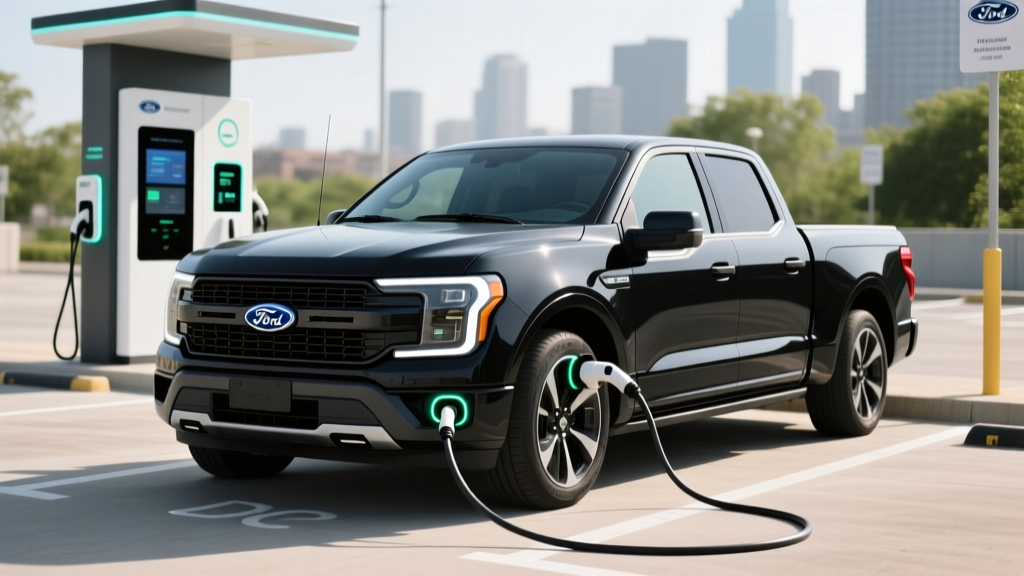
This guide breaks down home and public charging for F-150 owners considering the F-150 Lightning (full EV, 98–131 kWh usable battery) or the F-150 PowerBoost hybrid (1.5 kWh battery, no plug). We'll cover exact kW charge rates, installation costs, connector types, and per-mile economics compared to a supercharged 5.0L V8 getting 12–14 MPG combined.
Charging Levels Explained: kW Speeds and Miles Per Hour
The most common mistake new EV buyers make is confusing kW (kilowatts) — the rate of power delivery — with kWh (kilowatt-hours) — the total energy stored in the battery. Think of kW as the flow rate of a hose and kWh as the size of the bucket. A 131 kWh battery (F-150 Lightning Extended Range) charged at 11.5 kW takes roughly 11.4 hours from empty to full.
| Level | Voltage / Amps | Max kW | Miles of Range Per Hour | Best For |
|---|---|---|---|---|
| Level 1 | 120V / 12A | 1.4 kW | 2–3 mi/hr | Overnight trickle, PHEVs |
| Level 2 | 240V / 32–80A | 7.7–19.2 kW | 20–52 mi/hr | Daily home charging |
| DC Fast | 400–800V DC | 50–350 kW | 150–1,200+ mi/hr (peak) | Road trips, quick top-ups |
For the F-150 Lightning with the 131 kWh Extended Range pack, Ford specifies a maximum Level 2 acceptance rate of 19.2 kW (80A). At that rate, you're adding roughly 42 miles of range per hour. On a 150 kW DC fast charger, Ford rates a 15–80% charge in approximately 41 minutes for the Extended Range model. Real-world charging curves taper significantly above 80% state of charge — expect the final 20% to take nearly as long as the first 65%.
Home Charger Installation: Electrical Requirements and Real Costs
Installing a Level 2 home charger is the single biggest infrastructure decision an EV buyer makes. Here's what's actually involved for a typical F-150 Lightning owner.
Electrical Specifications
- Circuit: Dedicated 60A or 100A breaker (for 48A or 80A continuous charging, respectively)
- Wire: 6 AWG copper for 48A circuits; 3 AWG for 80A circuits
- Outlet vs. hardwired: NEMA 14-50 outlet (50A max) or direct hardwire (recommended for 80A)
- GFCI protection: Required by NEC 2020+ for outlet installations; hardwired units have internal protection
Panel Upgrade Reality
Many homes built before 2000 have 100A or 150A main panels. Adding a 60A or 100A EV circuit may exceed available capacity, especially if you already run electric HVAC, a dryer, and an oven. A panel upgrade to 200A typically costs $1,500–$3,500; a full 400A service upgrade runs $3,000–$7,000. An electrician will perform a load calculation per NEC Article 220 to determine if your panel can handle the addition.
| Item | Low Range | High Range |
|---|---|---|
| Level 2 charger hardware (48A–80A) | $400 | $1,200 |
| Electrician labor (2–6 hours) | $300 | $1,500 |
| Permit and inspection | $50 | $300 |
| Panel upgrade (if needed) | $1,500 | $5,000 |
| Conduit/wire run (50+ ft) | $200 | $800 |
| Total (no panel upgrade) | $950 | $3,800 |
| Total (with panel upgrade) | $2,450 | $8,800 |
The IRS Residential Clean Energy Credit (§25D) covers 30% of home charging equipment and installation costs through 2032, up to $1,000 annually. This applies to the charger hardware and electrician labor but not panel upgrades.
Connector Compatibility: NACS, CCS, and Adapter Requirements
Connector standards have consolidated significantly through 2026. Ford adopted the North American Charging Standard (NACS) — originally Tesla's proprietary connector — for the F-150 Lightning starting with the 2025 model year. If you own a 2022–2024 Lightning, it ships with CCS1 and requires Ford's official NACS adapter (approximately $230) to access Tesla Superchargers.
| Connector | Vehicles Using It (2026) | Public Network Access |
|---|---|---|
| NACS (Tesla-style) | Ford F-150 Lightning (2025+), Tesla, Rivian, GM, Hyundai/Kia (2025+) | Tesla Supercharger, Electrify America, EVgo (expanding) |
| CCS1 | Ford Lightning (2022–2024), VW ID.4, older BMW iX, legacy models | Electrify America, EVgo, ChargePoint |
| CHAdeMO | Nissan Leaf (discontinued), Mitsubishi Outlander PHEV | Limited — networks phasing out |
For Level 2 home charging, all EVs use the J1772 connector (or NACS, which integrates J1772 signaling). Any J1772 Level 2 charger will work with any EV sold in North America, either natively or through the adapter included with the vehicle.
Level 2 Charger Equipment Recommendations for F-150 Owners
The F-150 Lightning's large battery (98 or 131 kWh usable) rewards higher-amperage Level 2 chargers. A 48A unit delivers 11.5 kW, charging the Extended Range pack from 10–80% in roughly 8 hours overnight. An 80A hardwired unit pushes 19.2 kW, cutting that to about 5 hours — useful if you need quick turnaround between shifts or towing days.
ChargePoint Home Flex (48A)
- Power: Up to 11.5 kW (240V/48A)
- Connector: J1772 (NACS adapter available)
- Cable: 23 ft
- Smart features: Wi-Fi, scheduling, energy tracking, Alexa
- Price: ~$549
Ford Charge Station Pro (80A)
- Power: Up to 19.2 kW (240V/80A)
- Connector: NACS (2025+ trucks) or J1772
- Cable: 25 ft
- Smart features: FordPass integration, bi-directional V2H capable
- Price: ~$1,399 (hardwire required)
Tesla Wall Connector (48A)
- Power: Up to 11.5 kW (240V/48A)
- Connector: NACS native
- Cable: 24 ft
- Smart features: Wi-Fi updates, load sharing, power sharing
- Price: ~$475
Charging Cost Per Mile: Lightning vs. Supercharged 5.0L V8
This is where electrification makes its strongest economic case against a supercharged single cab F-150. A 5.0L Coyote V8 with a Whipple or Roush supercharger producing 650 HP typically returns 11–13 MPG combined in real-world driving. At $3.40/gallon (2026 national average), that's roughly $0.28–$0.31 per mile in fuel alone.
| Scenario | Rate | F-150 Lightning Cost/Mile | Supercharged 5.0L Cost/Mile |
|---|---|---|---|
| Home charging (off-peak utility rate) | $0.09/kWh | $0.03 | $0.29 (at 12 MPG) |
| Home charging (standard rate) | $0.16/kWh | $0.05 | $0.29 |
| Public Level 2 | $0.30/kWh | $0.10 | $0.29 |
| DC Fast Charging (road trip) | $0.48/kWh | $0.16 | $0.29 |
The F-150 Lightning Extended Range achieves an EPA efficiency rating of approximately 2.0–2.3 kWh/mile (70 MPGe combined, per fueleconomy.gov). Even at the most expensive DC fast-charging rates, the Lightning undercuts a supercharged V8 on per-mile fuel cost by nearly half. Over 15,000 annual miles, home-charging the Lightning at $0.12/kWh saves roughly $3,600/year versus premium fuel in a supercharged truck.
Safety, Code, and Practical Considerations
Level 2 charger installation must comply with NEC Article 625 and local amendments. Key requirements:
- Dedicated circuit: EV chargers cannot share a breaker with other appliances
- GFCI: Required for receptacle-based (NEMA 14-50) installations per NEC 2020; hardwired units use internal ground-fault protection
- Outdoor rating: If mounted outside, the charger must carry a NEMA 4 or IP55+ rating for weather resistance
- Permit and inspection: Most jurisdictions require an electrical permit ($50–$300) and a post-install inspection before energizing
- Load management: Smart chargers like the Emporia Vue or ChargePoint can dynamically reduce amperage if household demand spikes, avoiding a panel upgrade
Frequently Asked Questions
How much does it cost to install a home EV charger?
A typical 48A Level 2 installation with a NEMA 14-50 outlet runs $950–$3,800 including equipment, electrician labor, and permits. If your home needs a panel upgrade (common in pre-2000 builds with 100–150A service), add $1,500–$5,000. The federal §25D credit reimburses 30% of equipment and labor up to $1,000.
How fast will each charging level add range?
Level 1 (120V) adds 2–3 miles per hour — impractical for the Lightning's 230–320 mile battery. Level 2 (240V/48A) adds ~25 miles per hour, fully recharging overnight. DC fast charging at 150 kW can take the Lightning from 15–80% in roughly 41 minutes, adding ~190 miles of range.
Which connector/charger is compatible with my EV?
2025+ Ford F-150 Lightnings use NACS natively. 2022–2024 models use CCS1 and need Ford's NACS adapter (~$230) for Tesla Supercharger access. All J1772 Level 2 home chargers work with every EV via included adapters. CHAdeMO is effectively dead for new vehicles.
How much does charging cost per mile vs gas?
At home on a $0.12/kWh utility rate, the F-150 Lightning costs about $0.04/mile to "fuel." A supercharged 5.0L V8 getting 12 MPG on $3.40/gallon premium costs $0.28/mile — seven times more. Even public DC fast charging at $0.48/kWh ($0.16/mile) remains cheaper than the supercharged truck.
What electrical upgrades might I need?
If your main panel is 200A and has spare breaker slots, a 60A dedicated circuit is usually straightforward. Homes with 100A or 150A service often need a panel upgrade or a smart load-management device. Your electrician will run an NEC Article 220 load calculation — expect to pay $100–$200 for this assessment before committing to work.