Clearing Up the Confusion: Roush Supercharger Kits vs. EV Chargers
If you've searched for "F-150 Roush Supercharger" and landed on an EV charging guide, you're not alone. The terminology overlap trips up plenty of truck buyers. Here's the critical distinction:
- Roush Supercharger (automotive aftermarket): A belt-driven forced-induction kit (e.g., the Roush 2650 TVS or R2650 Phase II) that bolts onto Ford's 5.0L Coyote V8 to produce 700+ horsepower. It has nothing to do with electricity or charging.
- Tesla Supercharger (EV infrastructure): Tesla's DC fast-charging network delivering up to 350 kW of power to electric vehicles, now open to non-Tesla EVs via the NACS connector standard.
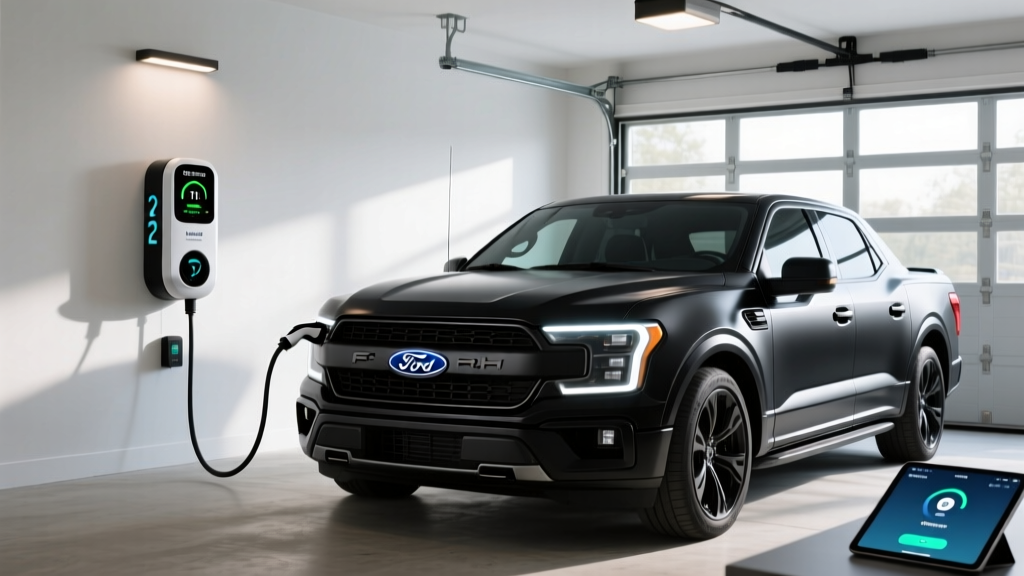
- Home EV charger (Level 2): A 240V wall-mounted unit that charges an electric vehicle's battery — what Ford F-150 Lightning owners install in their garages.
This guide addresses the EV charging side. If you own or are considering a Ford F-150 Lightning (the electric truck), or any other EV, you need a solid understanding of charging levels, home installation requirements, connector compatibility, and real-world costs. If you're researching a Roush supercharger kit for a gas-powered F-150, that's an entirely different aftermarket conversation best handled by performance specialists.
Charging Levels Explained: Speeds in kW and Miles Per Hour
Before buying equipment, understand the three charging tiers. Power is measured in kW (kilowatts) — this is the rate of energy delivery. Energy stored in the battery is measured in kWh (kilowatt-hours) — this is the total capacity. Think of kW as water flow rate and kWh as the size of the tank.
| Level | Voltage | Max Power (kW) | Miles of Range Per Hour | Typical Use Case |
|---|---|---|---|---|
| Level 1 | 120V AC | 1.0–1.4 kW | 3–5 mi/hr | Emergency/top-up, standard outlet |
| Level 2 | 240V AC | 3.3–19.2 kW | 12–75 mi/hr | Home garage, workplace, destination |
| DC Fast Charge | 400–800V DC | 50–350 kW | 150–1,000+ mi/hr (peak) | Road trips, highway corridors |
For an F-150 Lightning with its extended-range 131 kWh usable battery, Level 1 charging is impractical as a primary method — it would take over 5 days to fill from empty. Level 2 at 11.5 kW (48A) adds roughly 30 miles of range per hour, meaning a full overnight session (10 hours) restores about 300 miles. DC fast charging at a Tesla Supercharger or Electrify America station can take the Lightning from 10–80% in approximately 41 minutes, peaking around 150 kW before tapering.
Home Level 2 Installation: Electrical Requirements and Cost Breakdown
A proper Level 2 home charger requires a dedicated 240V circuit. The most common setup for EV owners is a NEMA 14-50 outlet (240V, 50A) or a hardwired connection on a 60A breaker. Here's what that entails:
- Circuit capacity: A 48A continuous-draw charger requires a 60A breaker (NEC code mandates 125% overhead for continuous loads). A 40A charger needs a 50A breaker.
- Wire gauge: 6 AWG copper for 50A circuits; 4 AWG for 60A circuits. Longer runs may require upsizing to compensate for voltage drop.
- Panel capacity: Most modern homes have 200A service panels. If your panel is already near capacity (common with electric ranges, dryers, and HVAC), you may need a panel upgrade to 300A–400A or an energy management system like the Emporia Vue with automatic load shedding.
- GFCI protection: The 2023 NEC (and continuing into 2026 adoptions) requires GFCI protection for EV charging outlets in garages. Hardwired chargers with built-in ground-fault protection can simplify compliance.
- Permit: Nearly all jurisdictions require an electrical permit for EV charger installation. This ensures the work is inspected and meets code — critical for insurance and resale.
Installation Cost Breakdown
| Component | Simple Install (panel nearby) | Complex Install (panel upgrade + long run) |
|---|---|---|
| EV charger equipment | $400–$700 | $400–$700 |
| Electrician labor (2–6 hours) | $500–$1,200 | $1,500–$3,000 |
| Electrical permit | $50–$150 | $100–$250 |
| Panel upgrade (if needed) | $0 | $2,000–$5,000 |
| Conduit/wire (50+ ft run) | $100–$300 | $500–$1,500 |
| Total estimated cost | $1,050–$2,350 | $4,500–$10,450 |
The wide range reflects real-world variation. A homeowner with a 200A panel and a garage wall directly behind the panel might pay under $1,500 total. A 1970s home with a 100A panel, a detached garage 80 feet away, and required utility service upgrade could approach $10,000. Always get 2–3 quotes from licensed electricians and confirm they hold proper EV installation certifications (many utilities maintain approved installer lists).
Connector Compatibility: NACS, CCS1, and Adapter Requirements
The connector landscape has consolidated significantly since 2023. Here's where things stand for 2026 model-year EVs:
| Connector | Brands Using It (2026) | DC Fast Charge Max kW | Notes |
|---|---|---|---|
| NACS (North American Charging Standard) | Tesla, Ford, GM, Rivian, Volvo, Polestar, Hyundai, Kia, BMW, Mercedes, Toyota | Up to 350 kW (V4 Superchargers) | Now the dominant standard; SAE J3400 |
| CCS1 (Combined Charging System) | Legacy models (pre-2025 VW ID.4, some Stellantis) | Up to 350 kW | Being phased out on new models |
| CHAdeMO | Nissan Leaf (discontinued), Mitsubishi Outlander PHEV | Up to 100 kW | Effectively discontinued in North America |
The Ford F-150 Lightning originally shipped with a CCS1 port, but Ford has transitioned to NACS for its 2025+ model-year EVs. If you own a 2022–2024 Lightning with CCS1, you'll need a Tesla CCS-to-NACS adapter (approximately $200–$250) to access Tesla Supercharger stalls. Ford provided these adapters to early Lightning owners at no cost. For 2025–2026 Lightnings with native NACS ports, no adapter is needed — plug directly into any Supercharger V3 or V4 stall.
For home Level 2 charging, nearly all chargers now ship with a NACS connector or include a J1772 adapter in the box. Since Level 2 AC charging uses the same pin configuration within the NACS standard, compatibility is straightforward.
Cost to Charge: Per-Mile Comparison vs. Gasoline
The economics of EV charging depend heavily on where and when you plug in. Here's a realistic breakdown using 2026 electricity rates and fuel prices:
| Scenario | Rate ($/kWh) | Cost for 131 kWh (Lightning Extended) | Cost Per Mile (at 2.0 mi/kWh) |
|---|---|---|---|
| Home off-peak (utility time-of-use) | $0.08–$0.12 | $10.50–$15.70 | $0.04–$0.06 |
| Home standard rate | $0.14–$0.18 | $18.35–$23.60 | $0.07–$0.09 |
| Public Level 2 (ChargePoint, etc.) | $0.25–$0.40 | $32.75–$52.40 | $0.13–$0.20 |
| DC fast charge (Electrify America, EVgo) | $0.35–$0.55 | $45.85–$72.05 | $0.18–$0.28 |
| Tesla Supercharger (non-Tesla rate) | $0.30–$0.48 | $39.30–$62.90 | $0.15–$0.24 |
Gasoline comparison: A gas-powered 2026 F-150 with the 3.5L EcoBoost averaging 20 MPG combined at $3.40/gallon costs $0.17 per mile. The Lightning charged at home on off-peak rates costs roughly $0.05 per mile — about 70% less per mile driven. Even on public DC fast chargers at the highest rates, the Lightning can match or beat gasoline on cost.
According to fueleconomy.gov, the F-150 Lightning Extended Range achieves 70 MPGe combined (2.0 kWh/mi or 48 kWh/100mi). Real-world highway efficiency drops to approximately 1.6–1.8 mi/kWh due to aerodynamic drag at 70+ mph, so adjust expectations accordingly.
Charging Time Examples: 10–80% for Common Battery Sizes
Charging speed is never linear. Batteries accept power fastest between roughly 10–50% State of Charge (SoC), then taper significantly above 80% to protect cell health. Here are realistic 10–80% times for popular EV battery sizes:
- Ford F-150 Lightning Extended Range (131 kWh, NMC):
- Level 2 at 11.5 kW (48A): ~10.5 hours (full 0–100%)
- DC fast at 150 kW peak: ~41 minutes (10–80%)
- DC fast at 350 kW (V4 Supercharger, limited by truck's onboard acceptance): ~38 minutes (10–80%)
- Tesla Model Y Long Range (75 kWh usable, NMC):
- Level 2 at 11.5 kW: ~6 hours (full 0–100%)
- DC fast at 250 kW peak: ~25 minutes (10–80%)
- Hyundai Ioniq 5 (77.4 kWh, NMC, 800V architecture):
- Level 2 at 10.9 kW: ~6.5 hours (full 0–100%)
- DC fast at 250 kW peak: ~18 minutes (10–80%)
The Lightning's large battery means longer absolute charging times, but it also means more range between stops. Preconditioning the battery (available via the FordPass app or by setting a navigation destination to a charger) warms the cells and enables faster DC charging acceptance — especially critical in cold weather, where charging speeds can drop 30–50% without preconditioning.
Recommended Level 2 Home Chargers for 2026
ChargePoint Home Flex (NACS)
- Power output: Up to 12 kW (50A) on a 60A circuit; configurable down to 16A
- Connector: NACS native (2025+ models); J1772 adapter included
- Cable length: 23 feet
- Smart features: Wi-Fi, scheduling, energy tracking, Alexa integration, utility demand-response compatible
- Price: ~$550–$650
- Best for: Most EV owners wanting reliable smart scheduling and energy monitoring
Tesla Wall Connector (NACS)
- Power output: Up to 11.5 kW (48A) on a 60A circuit
- Connector: NACS native; J1772 adapter available separately
- Cable length: 24 feet
- Smart features: Wi-Fi, over-the-air updates, power sharing (link multiple units on one circuit), Tesla app integration
- Price: ~$425–$475
- Best for: Tesla owners and NACS-native EV owners wanting the cleanest integration
Emporia Level 2 EV Charger
- Power output: Up to 11.5 kW (48A) on a 60A circuit
- Connector: NACS native (2025+ revision)
- Cable length: 24 feet
- Smart features: Wi-Fi, solar integration, real-time energy monitoring, load management with Emporia Vue panel monitor
- Price: ~$350–$450
- Best for: Budget-conscious buyers and solar-panel owners wanting energy ecosystem integration
Grizzl-E Smart (United Chargers)
- Power output: Up to 10 kW (40A) on a 50A circuit
- Connector: NACS or J1772 options available
- Cable length: 24 feet
- Smart features: Wi-Fi, OCPP protocol support, adjustable amperage via DIP switches, rugged aluminum enclosure
- Price: ~$450–$550
- Best for: Outdoor installations in extreme climates (rated to -40°F); built in Canada
For F-150 Lightning owners, any of these chargers will work. The ChargePoint Home Flex and Tesla Wall Connector offer the highest power output, shaving 1–2 hours off a full charge compared to 40A units. If your electrical panel is constrained, the Emporia's load-management capability can automatically reduce charging draw when other high-load appliances activate.
Safety, Code Compliance, and the Panel-Upgrade Reality
EV chargers draw significant sustained current — far more than most household appliances. This makes proper installation non-negotiable:
- Dedicated circuit: Your EV charger must be on its own dedicated breaker — never shared with other outlets or appliances. A shared circuit risks nuisance tripping or, worse, overheating.
- GFCI protection: Required by the 2023 NEC (Article 625) for all EV charging outlets rated 150V to ground or less and 50A or less. Hardwired chargers with integrated ground-fault detection satisfy this requirement.
- Outdoor rating: If installing outside, the charger must carry a NEMA 4 or NEMA 4X rating for weather resistance. All recommended chargers above meet this standard.
- Thermal imaging: After installation, a quality electrician will perform a thermal scan of the breaker and connections under load to detect any hot spots indicating poor torque or undersized wire.
- Utility notification: Some utilities require notification before installing a Level 2 charger, particularly if your service is 100A. They may offer rebates (often $250–$1,000) in exchange for enrolling in a managed-charging program.
The panel-upgrade gotcha: Homes built before 1990 frequently have 100A or 150A service. Adding a 60A EV charger circuit may push total calculated load beyond the panel's rating, triggering a mandatory upgrade to 200A or higher. This can add $2,000–$5,000 to the project. Solutions include:
- Installing a lower-amperage charger (32A/40A instead of 48A) to reduce circuit demand
- Using a smart load-management device (e.g., Emporia Vue, Span panel) that dynamically sheds EV charging when other loads spike
- Applying for utility rebates that offset panel-upgrade costs — many utilities in 2026 offer $500–$2,500 for service upgrades tied to EV adoption
Always consult a licensed electrician for final specifications — local code amendments vary, and only a qualified professional can assess your specific panel, wire runs, and load calculations.
Frequently Asked Questions
How much does it cost to install a home EV charger?
A straightforward Level 2 installation with an adequate electrical panel typically costs $1,050–$2,350, including the charger unit ($400–$700), electrician labor ($500–$1,200), and permit ($50–$150). If your home needs a panel upgrade or has a long wire run to the garage, costs can reach $4,500–$10,000+. Get multiple quotes and ask about utility rebates.
How fast will each charging level add range to my F-150 Lightning?
Level 1 (120V) adds about 3–5 miles per hour — too slow for daily use on a 131 kWh battery. Level 2 (240V, 48A/11.5 kW) adds approximately 30 miles per hour, easily refilling overnight. DC fast charging at 150 kW peaks at roughly 200+ miles added in the first 20 minutes, tapering above 80% SoC.
Which connector and charger is compatible with my EV?
For 2025–2026 F-150 Lightnings, the truck uses the NACS connector natively. For 2022–2024 Lightnings with CCS1 ports, a Tesla CCS-to-NACS adapter (~$200–$250) is needed for Supercharger access. At home, any NACS-equipped Level 2 charger works. Check your vehicle's charge port or owner's manual to confirm.
How much does charging cost per mile vs. gas?
Charging an F-150 Lightning at home on off-peak rates ($0.10/kWh) costs roughly $0.05 per mile. A comparable gas F-150 EcoBoost at 20 MPG and $3.40/gallon costs about $0.17 per mile. That's approximately $1,800 in annual fuel savings for a driver covering 15,000 miles/year — though savings shrink if you rely exclusively on public DC fast chargers at $0.40+/kWh.
What electrical upgrades might I need for a home charger?
The most common upgrade is a panel capacity increase from 100A or 150A to 200A+ to accommodate a dedicated 50A or 60A circuit. Other potential needs include: replacing an outdated fuse box with a modern breaker panel, running new conduit for long wire runs (50+ feet), upgrading the utility service drop, or installing a smart load-management system to avoid a full panel upgrade. Your electrician will perform a load calculation per NEC Article 220 to determine requirements.
Can I charge my F-150 Lightning at a Tesla Supercharger?
Yes. Tesla's Supercharger network is now open to non-Tesla EVs. 2025–2026 F-150 Lightnings with native NACS ports can plug in directly. For 2022–2024 models with CCS1 ports, use a CCS-to-NACS adapter. Supercharger V4 stalls deliver up to 350 kW, though the Lightning's onboard charging system caps acceptance at approximately 150 kW peak. Use the Tesla app or the built-in navigation to locate NACS-compatible stalls and check real-time availability.
Is there a federal tax credit for home charger installation?
The federal Alternative Fuel Vehicle Refueling Property Credit (IRS §30C) was available through 2032 under the Inflation Reduction Act, covering up to 30% of home charger equipment and installation costs (capped at $1,000). However, eligibility depends on your census tract meeting specific low-income or non-urban criteria per IRS guidance. Consult irs.gov or a tax professional to confirm whether your address qualifies for the current tax year.