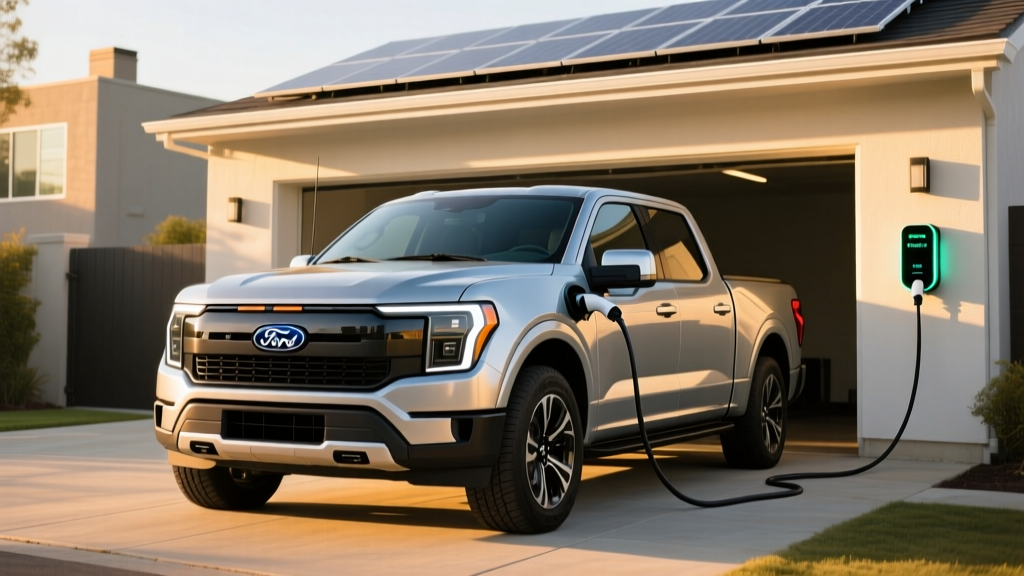
The 2025 Ford F-150 Lightning remains one of the most practical electric trucks on the market, but its usefulness hinges entirely on how well you understand its range envelope and charging ecosystem. Whether you're evaluating the Standard Range (98 kWh usable, LFP chemistry) or the Extended Range (131 kWh usable, NMC), real-world mileage and charging logistics differ significantly from the EPA sticker. This guide breaks down exactly what to expect on the road, what it costs to charge at home versus public stations, and the precise electrical requirements for a Level 2 home installation.
2025 Ford F-150 Lightning Range: EPA vs. Real-World Expectations
The EPA publishes range estimates under controlled laboratory conditions. On actual highways, in cold weather, or while towing, those numbers shrink — sometimes substantially. Here's how the 2025 Lightning lineup stacks up:
| Battery Pack | Usable Capacity | Chemistry | EPA Range | Real-World Highway | Cold Weather (20°F) | MPGe (Combined) |
|---|---|---|---|---|---|---|
| Standard Range | 98 kWh | LFP | 230 mi | ~190-210 mi | ~150-175 mi | 76 MPGe |
| Extended Range | 131 kWh | NMC | 320 mi | ~265-290 mi | ~210-240 mi | 70 MPGe |
The LFP (lithium iron phosphate) chemistry in the Standard Range pack trades energy density for longevity and a lower fire-risk profile. It also tolerates regular 100% charging better than NMC, meaning daily top-offs are less stressful on the battery. The NMC pack in the Extended Range variant delivers more miles per charge but benefits from charging to 80% for daily use and reserving 100% sessions for road trips.
Charging Levels Explained: kW, Speeds, and Time-to-Range
Before comparing chargers, it's critical to separate kW (power — the rate of energy flow) from kWh (energy — the total capacity of the battery). A 19.2 kW Level 2 charger delivers energy at 19.2 kilowatts. Charging a 131 kWh battery from empty to full at a sustained 19.2 kW would take roughly 6.8 hours. In practice, charge rates taper near full capacity.
| Level | Voltage / Amps | Power (kW) | Miles of Range per Hour | 10-80% Time (Extended Range) |
|---|---|---|---|---|
| Level 1 (120V outlet) | 120V / 12A | ~1.4 kW | ~3-5 mi/hr | Not practical (~90+ hours) |
| Level 2 (240V home) | 240V / 48A | 11.5 kW | ~30 mi/hr | ~8-9 hours (overnight) |
| Level 2 (240V / 80A) | 240V / 80A | 19.2 kW | ~50 mi/hr | ~5-5.5 hours |
| DC Fast Charge | 400V architecture | Up to 150 kW peak | ~200+ mi/hr (peak) | ~41 min (10-80%) |
Ford's onboard charger for the 2025 Lightning accepts up to 19.2 kW on Level 2 when equipped with the dual onboard charger option (standard on Extended Range Lariat and above, optional on lower trims). Without it, Level 2 caps at 11.5 kW. At a DC fast charger, the Extended Range pack peaks around 150 kW, though sustained rates average closer to 90-110 kW through the bulk of the charge curve, tapering significantly above 80% SoC.
According to fueleconomy.gov, the Extended Range Lightning achieves 70 MPGe combined. The Standard Range variant posts 76 MPGe combined — the higher figure reflects its lighter weight and lower energy consumption per mile despite the smaller battery.
Home Charger Installation: Electrical Requirements and Costs
Installing a Level 2 home charger for the F-150 Lightning is the single biggest ownership investment beyond the truck itself. Here's what the process entails and what it costs.
Electrical Panel Requirements
A 48-amp Level 2 charger requires a dedicated 60-amp circuit (NEC code mandates the continuous load not exceed 80% of the breaker rating). An 80-amp charger needs a dedicated 100-amp circuit. If your home has a 100-amp main service panel — common in homes built before the 1990s — you will almost certainly need a panel upgrade to 200 amps before adding a high-amperage EV circuit.
Homes with existing 200-amp panels can usually accommodate a 60-amp EV circuit, provided there's physical space for a double-pole breaker and the panel's calculated load allows it. A licensed electrician will perform a load calculation per NEC Article 220 before recommending a circuit size.
| Component | Basic Install (48A, short run) | Complex Install (80A, long run) | With Panel Upgrade |
|---|---|---|---|
| Level 2 Charger (hardware) | $500 - $750 | $600 - $1,200 | $500 - $1,200 |
| Electrical permits | $50 - $150 | $100 - $250 | $150 - $350 |
| Electrician labor + materials | $600 - $1,500 | $1,500 - $3,500 | $2,000 - $4,000 |
| Panel upgrade (if needed) | — | — | $2,000 - $4,500 |
| Total estimated cost | $1,150 - $2,400 | $2,200 - $4,950 | $4,650 - $10,050 |
The wide cost range reflects variables like the distance from your panel to the garage or driveway, whether conduit must run through walls or underground, local labor rates, and your jurisdiction's permit fees. Always get at least three quotes from licensed, EV-experienced electricians.
Safety and Code Considerations
- Dedicated circuit: NEC requires EV chargers to have their own dedicated breaker — no sharing with other appliances.
- GFCI protection: Outdoor installations require a GFCI breaker. Indoor garage installations on a dedicated circuit may not require GFCI under current NEC, but local amendments vary.
- NEMA 14-50 vs. hardwired: A NEMA 14-50 receptacle offers portability (take the charger when you move), but hardwired installations allow higher amperage (80A) and eliminate the receptacle as a failure point. Ford's Mobile Power Cord ships with a NEMA 14-50 adapter for up to 30A/7.2 kW.
- Outdoor rating: If mounting outside, the charger must carry a NEMA 4 or IP55+ weather rating. Most quality Level 2 units meet this standard.
- Utility notification: Many utilities require or incentivize advance notification of EV charger installations. Some offer rebates of $250-$1,000 for Level 2 equipment and installation.
Connector Compatibility: NACS, CCS1, and the Tesla Supercharger Network
The 2025 Ford F-150 Lightning ships with a CCS1 (Combined Charging System) port from the factory. However, Ford has granted Lightning owners access to Tesla's Supercharger network via a Ford-provided NACS adapter, which was included at no cost for early purchasers and is available for purchase for subsequent owners.
| Connector Type | Network Access | Max DC Fast Charge Speed | Notes |
|---|---|---|---|
| CCS1 (native port) | Electrify America, EVgo, ChargePoint, Ionity (non-Tesla) | Up to 150 kW | Built-in — no adapter needed |
| NACS (via adapter) | Tesla Supercharger V3/V4 network | Up to 150 kW (V3 stalls) | Ford-supplied adapter; verify Supercharger stall has adequate cable reach for trucks |
| CHAdeMO | Limited legacy stations | ~50 kW | Not natively supported; third-party adapters exist but are expensive and uncommon |
For 2025 and beyond, the industry is migrating toward NACS as the North American standard. Ford's 2026 model-year vehicles will ship with native NACS ports, but the 2025 Lightning retains CCS1. The adapter approach works well in practice: at a Supercharger, you plug the NACS adapter into the truck's CCS port, then connect the Tesla cable. Plan for an extra 15-20 seconds per session.
Cost to Charge: Home vs. Public vs. Gas Comparison
The economics of owning a Lightning depend heavily on where and when you charge. Here's a cost-per-mile breakdown using national average electricity rates and the Extended Range pack's efficiency of roughly 2.1 kWh/mile (derived from its 70 MPGe rating and EPA test cycle).
| Charging Scenario | Rate | Cost per Mile | Full 131 kWh Fill Cost |
|---|---|---|---|
| Home (off-peak utility rate) | $0.10/kWh | $0.21/mi | $13.10 |
| Home (national avg. residential) | $0.16/kWh | $0.34/mi | $20.96 |
| Public Level 2 (ChargePoint, etc.) | $0.25-$0.40/kWh | $0.53-$0.84/mi | $32.75-$52.40 |
| DC Fast Charge (Electrify America) | $0.35-$0.55/kWh | $0.74-$1.16/mi | $45.85-$72.05 |
| Tesla Supercharger (avg.) | $0.30-$0.45/kWh | $0.63-$0.95/mi | $39.30-$58.95 |
| Gas F-150 (4x4, 20 MPG, $3.40/gal) | $3.40/gal | $0.17/mi | $76.50 (26-gal tank) |
At off-peak home rates, the Lightning Extended Range costs roughly $0.21 per mile — competitive with the gas F-150's $0.17/mile, especially when you factor in the Lightning's lower maintenance costs (no oil changes, fewer brake replacements due to regenerative braking). At public DC fast chargers, however, the cost-per-mile can exceed gas, making home charging essential for the economic case.
For Standard Range owners with the LFP pack, the math improves slightly. The lighter truck consumes about 2.0 kWh/mile, bringing the off-peak home cost to roughly $0.20/mile. Pair that with LFP's longer cycle life and the Standard Range model becomes the value pick for daily commuters who can charge at home nightly.
Recommended Home Charging Equipment for the F-150 Lightning
Not all Level 2 chargers are equal. The F-150 Lightning's large battery (especially the 131 kWh Extended Range) rewards higher-amperage chargers — a 48A unit adds roughly 30 miles per hour, while an 80A unit can add 50 miles per hour, cutting overnight charge times nearly in half.
ChargePoint Home Flex
Power: Up to 12 kW (50A) on a 60A circuit
Connector: CCS1 (J1772 + CCS combo), NACS adapter available
Cable: 23 ft
Smart features: Wi-Fi, app scheduling, utility integration, Alexa
Price: ~$699
Best for: Most Lightning owners with a 60A circuit. Reliable, well-supported app.
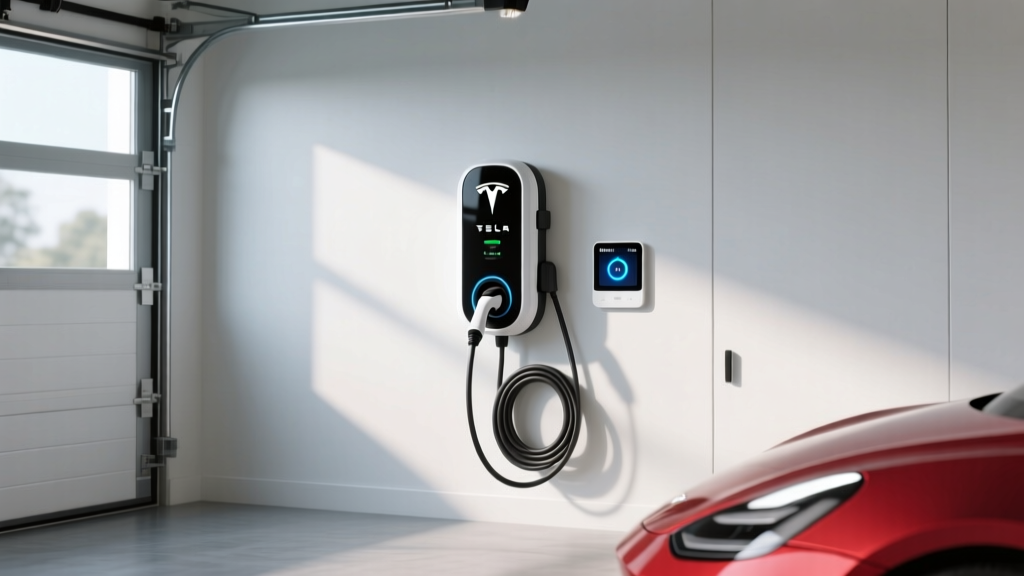
Tesla Wall Connector (with CCS adapter)
Power: Up to 11.5 kW (48A) on a 60A circuit
Connector: NACS native — requires CCS adapter for Lightning
Cable: 24 ft
Smart features: Wi-Fi, over-the-air updates, load sharing with multiple units
Price: ~$475 + CCS adapter (~$250)
Best for: Multi-EV households with both Tesla and Ford vehicles.
Grizzl-E Smart
Power: Up to 11.5 kW (48A) on a 60A circuit; 40A/32A/24A/16A selectable
Connector: J1772 (CCS combo compatible)
Cable: 24 ft
Smart features: OCPP protocol, adjustable amperage, rugged outdoor build (NEMA 4)
Price: ~$549
Best for: Outdoor installs, cold-climate owners (rated to -40°F), budget-conscious buyers.
Emporia Vue / Emporia Level 2
Power: Up to 11.5 kW (48A) on a 60A circuit
Connector: J1772 (CCS combo compatible)
Cable: 24 ft
Smart features: Energy monitoring, solar integration, time-of-use scheduling, EV-only tracking
Price: ~$399
Best for: Solar-equipped homes wanting to track EV energy separately and charge on excess production.
For Extended Range Lightning owners who want the fastest home charging possible, the Ford Charge Station Pro delivers up to 19.2 kW (80A) on a 100-amp circuit. At roughly $1,300 for the unit plus a more expensive electrical install, it's a premium option that cuts a full overnight charge from ~10 hours to ~5.5 hours — useful if you use the Lightning for heavy daily work cycles and need rapid turnaround.
Public Charging Strategy for the Lightning
The Lightning's 150 kW peak DC fast-charge rate isn't class-leading — competitors like the Hyundai Ioniq 5 and Kia EV6 accept 250+ kW on 800V architectures — but it's adequate for highway travel when paired with route planning.
On a typical road trip, a 10-80% session on a 150 kW charger takes roughly 41 minutes in the Extended Range model. That's enough for a meal stop but noticeably slower than 800V rivals that complete the same session in 18-22 minutes. The Standard Range model charges proportionally faster due to its smaller battery, reaching 80% in about 34 minutes at similar peak rates.
Key public-charging tips for Lightning owners:
- Precondition the battery: Navigate to a DC fast charger using the truck's built-in navigation, and the thermal management system will warm or cool the pack for optimal charge acceptance. Skipping preconditioning can add 5-10 minutes to your session, especially in cold weather.
- Use the FordPass app and PlugShare: Ford's app shows real-time stall availability at compatible networks. PlugShare fills in gaps with community-reported reliability data.
- Skip charging above 80% on road trips: The charge curve tapers dramatically above 80% SoC. Charging from 80-100% at a DC fast charger can take as long as the 10-80% session. Plan shorter, more frequent stops at 10-80% for faster total trip times.
- Supercharger access: Use the Ford-provided NACS adapter at Tesla Superchargers. Note that some Supercharger stalls have short cables designed for Tesla's charge-port location (rear driver side) — the Lightning's port is on the front driver-side fender, which may require parking at an angle or using a stall designed for larger vehicles.
F-150 Lightning Ownership Economics and Incentives
The 2025 F-150 Lightning starts at approximately $54,995 for the Pro Standard Range and climbs to $96,995 for the Platinum Extended Range (MSRP figures per Ford's official configurator). Federal tax credit eligibility under IRS §30D depends on several factors:
- MSRP cap: The Lightning qualifies as a pickup truck, so the MSRP cap is $80,000. Pro and XLT trims generally qualify; Lariat and above may exceed the cap depending on options.
- Buyer income limits: AGI must not exceed $150,000 (single), $225,000 (head of household), or $300,000 (joint filers).
- Battery sourcing and critical minerals: The credit splits into two $3,750 halves based on battery component manufacturing and critical mineral sourcing requirements. Eligibility shifts as supply chains evolve — verify current-year status on the IRS clean vehicle credit page before purchasing.
- Point-of-sale transfer: As of 2024, qualifying buyers can transfer the credit to the dealer at purchase, reducing the out-of-pocket price immediately rather than waiting for a tax refund.
| Trim | Battery | MSRP (est.) | §30D Eligible? | Effective Price (with full credit) |
|---|---|---|---|---|
| Pro | Standard Range | $54,995 | Yes (verify sourcing) | ~$47,495 |
| XLT | Standard Range | $62,995 | Yes (verify sourcing) | ~$55,495 |
| Lariat | Extended Range | $77,995 | Yes (under $80K cap) | ~$70,495 |
| Platinum | Extended Range | $96,995 | No (over $80K MSRP cap) | $96,995 |
State and local incentives vary widely and may stack on top of the federal credit. Check your state's energy office or your utility's EV program for additional rebates on the vehicle or home charger installation.
Frequently Asked Questions
How much does it cost to install a home EV charger for the F-150 Lightning?
A basic 48-amp Level 2 installation with a short wire run from a 200-amp panel typically costs $1,150-$2,400 including equipment, permits, and electrician labor. If your home needs a 200-amp panel upgrade (common in pre-1990 homes), total costs can reach $4,650-$10,050. An 80-amp circuit for the Ford Charge Station Pro adds $500-$1,500 in additional electrical work.
How fast will each charging level add range to the Lightning?
Level 1 (120V) adds roughly 3-5 miles per hour — adequate only for emergency trickle charging. Level 2 at 48 amps (11.5 kW) adds about 30 miles per hour, fully replenishing the Extended Range pack overnight in roughly 10 hours. DC fast charging at 150 kW peak can add 200+ miles per hour at the start of the session, though the average rate across a 10-80% session is closer to 90-110 kW sustained.
Which connector does the 2025 F-150 Lightning use?
The 2025 Lightning has a native CCS1 port. Ford provides a NACS adapter for access to Tesla Supercharger stations. CCS1 works natively with Electrify America, EVgo, ChargePoint, and most non-Tesla DC fast networks. CHAdeMO is not supported without an expensive third-party adapter and is increasingly rare at new installations.
How much does charging the Lightning cost per mile compared to gas?
At home on off-peak electricity ($0.10/kWh), the Extended Range Lightning costs about $0.21 per mile. The gas F-150 4x4 at 20 MPG and $3.40/gallon costs about $0.17 per mile. At national average residential rates ($0.16/kWh), the Lightning costs $0.34/mile. Public DC fast charging at $0.45/kWh pushes the cost to $0.95/mile — more expensive than gas. Home charging is essential for the cost-savings argument.
What electrical upgrades might I need for a home charger?
Homes with a 200-amp main panel usually need only a new 60-amp double-pole breaker and wiring to the garage. Homes with 100-amp panels almost always need a full panel upgrade to 200 amps ($2,000-$4,500). Very old homes with knob-and-tube wiring or 60-amp service may need a complete service upgrade ($4,000-$8,000+). A licensed electrician's load calculation is the definitive answer — get one before purchasing equipment.