F-150 Lightning Battery Options and Why They Matter for Charging
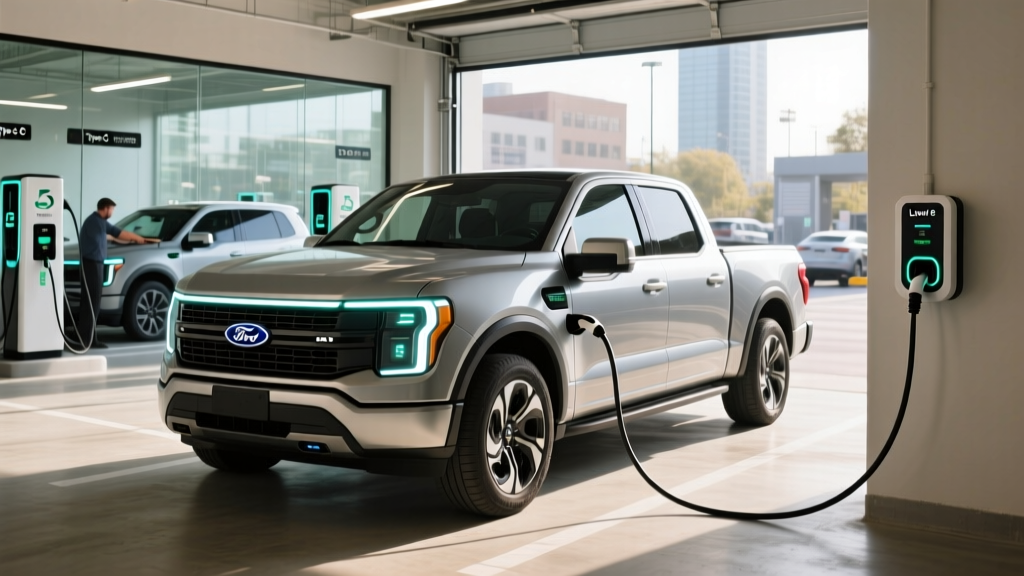
The Ford F-150 Lightning ships with two battery packs, and your charge time hinges entirely on which one sits under your truck's floor. The Standard Range pack stores 98 kWh of usable energy (lithium-ion NMC chemistry), while the Extended Range pack holds 131 kWh usable. Both use liquid-cooled thermal management, which matters for sustained fast-charging performance and longevity.
Here's the critical distinction buyers miss: Ford advertises a 19.2 kW onboard charger for Level 2 AC charging on higher trims (Lariat and up with the Max Trailer Tow package), while base Pro and XLT trims default to an 11.5 kW onboard charger. This onboard charger—not the wall unit—dictates your maximum AC charge rate. Plug a 19.2 kW home charger into an 11.5 kW-equipped Lightning, and you'll still charge at 11.5 kW. Always match your home charger to your truck's onboard capacity.
| Specification | Standard Range | Extended Range |
|---|---|---|
| Usable Battery Capacity | 98 kWh (NMC) | 131 kWh (NMC) |
Charging Levels Explained: Speeds in kW and Miles Per Hour
Understanding F-150 Lightning charge time requires separating kW (power, or how fast energy flows) from kWh (energy, or how much the battery holds). Think of kW as the width of a hose and kWh as the bucket size. A wider hose fills the bucket faster, but the bucket doesn't change.
| Level | Voltage / Amperage | Max Power (kW) | Miles of Range Added Per Hour | Typical Use Case |
|---|---|---|---|---|
| Level 1 (120V) | 120V / 12A | ~1.4 kW | ~2–3 mi/hr | Emergency top-off, overnight trickle |
| Level 2 (240V, 11.5 kW onboard) | 240V / 48A | 11.5 kW | ~20–23 mi/hr | Daily home charging (Pro/XLT trims) |
| Level 2 (240V, 19.2 kW onboard) | 240V / 80A | 19.2 kW | ~30–35 mi/hr | Daily home charging (Lariat+ with Max Tow) |
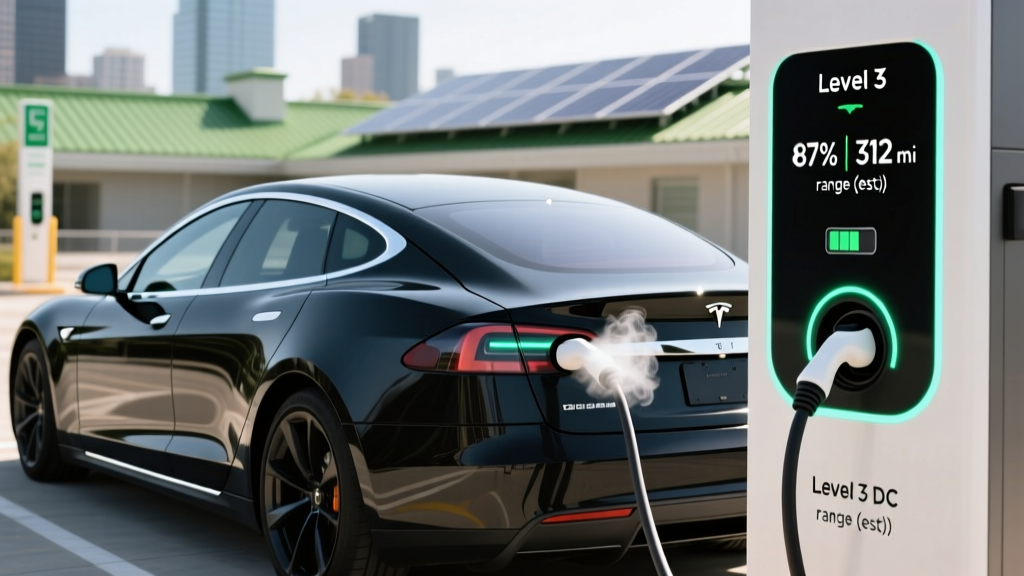
| DC Fast Charge (CCS1/NACS) | 400V architecture | ~155 kW peak (Std) / ~150 kW peak (Ext) | ~55–70 mi/hr average (10–80%) | Road trips, highway corridors |
F-150 Lightning Charge Time: 10–80% at Every Level
Most EV owners charge between 10% and 80% state of charge (SoC) for daily use. Charging above 80% slows dramatically—the battery management system tapers current to protect cell health. Here's what to expect:
| Charging Method | Standard Range (98 kWh) | Extended Range (131 kWh) |
|---|---|---|
| Level 1 (120V, 1.4 kW) | ~48 hours | ~64 hours |
| Level 2 (240V, 11.5 kW) | ~6.5 hours | ~8.5 hours |
| Level 2 (240V, 19.2 kW) | ~4 hours | ~5 hours |
| DC Fast Charge (peak ~155 kW) | ~41 minutes (10–80%) | ~44 minutes (15–80%) |
Ford advertises the Extended Range Lightning's DC fast-charge time from 15–80% in approximately 44 minutes at a 150 kW station. The Standard Range pack hits 10–80% in about 41 minutes. In practice, charging curves aren't linear: the Lightning peaks near 155 kW only between roughly 15–40% SoC, then tapers to 80–100 kW through 60%, and drops further above 70%. Expect the final 10% (70–80%) to take as long as the first 20%.
Cold-weather charging caveat: If the battery is cold (below 50°F) and you haven't preconditioned via the FordPass app, DC fast-charge speeds can be cut by 30–50% until the thermal system warms the pack. Always precondition 20–30 minutes before arriving at a fast charger.
Home Charger Installation: Electrical Requirements and Costs
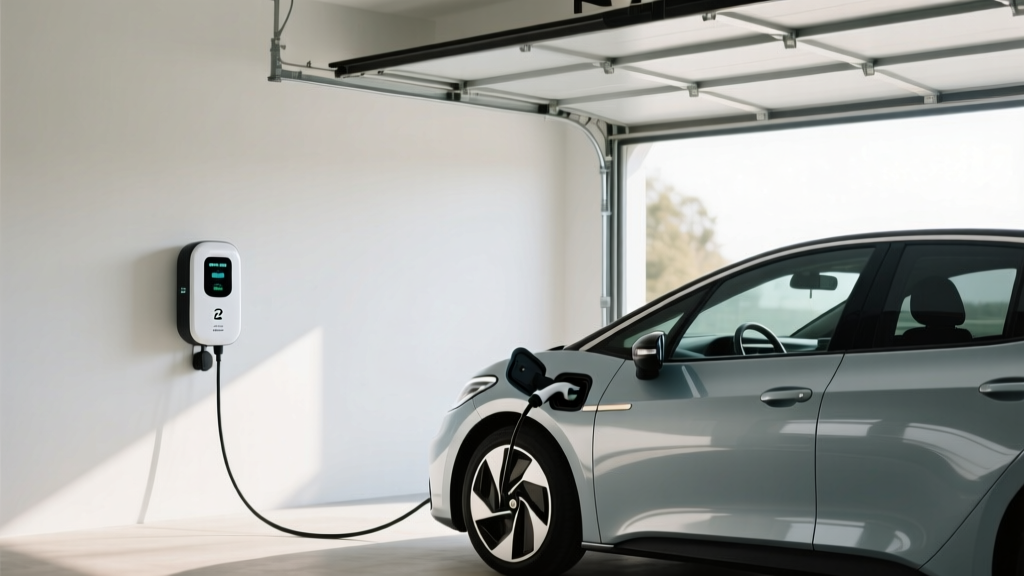
Installing a Level 2 home charger for your F-150 Lightning is where most new EV owners encounter sticker shock—or pleasant surprises. The total cost depends on your home's electrical panel capacity, the distance from panel to charger location, and local permit fees.
Electrical Requirements by Onboard Charger
- 11.5 kW onboard charger: Requires a 240V / 60A dedicated circuit (48A continuous draw, per NEC 80% rule). Uses a NEMA 14-60 outlet or hardwired connection.
- 19.2 kW onboard charger: Requires a 240V / 100A dedicated circuit (80A continuous draw). Must be hardwired—no plug configuration supports this amperage for EV use.
What About a Panel Upgrade?
Homes built before 2000 often have 100A or 150A main service panels. Adding a 60A EV circuit to a 100A panel that's already near capacity (electric dryer, range, HVAC) may require upgrading to a 200A panel—a significant added cost. Homes with existing 200A service usually accommodate a 60A EV circuit without issue, though a load calculation by a licensed electrician is mandatory per code.
| Cost Component | Simple Install (panel nearby, 200A service) | Complex Install (long run or panel upgrade) |
|---|---|---|
| Level 2 Charger Equipment (40A–48A) | $400–$700 | $400–$700 |
| Level 2 Charger Equipment (80A, hardwired) | $700–$1,200 | $700–$1,200 |
| Electrician Labor (2–4 hours typical) | $400–$900 | $1,200–$3,000 |
| Wiring, Conduit, Breaker | $150–$400 | $500–$1,500 |
| Permit and Inspection | $50–$200 | $50–$200 |
| Electrical Panel Upgrade (if needed) | N/A | $1,500–$4,000 |
| Total Estimated Cost | $1,000–$2,200 | $3,850–$10,600 |
The federal Alternative Fuel Vehicle Refueling Property Credit (IRC §30C) covers up to 30% of home charger equipment and installation costs, capped at $1,000. Eligibility depends on your census tract meeting certain income or rural-area criteria—consult a tax professional and the IRS guidelines for your specific situation.
Connector Compatibility: NACS, CCS1, and Adapters
The F-150 Lightning's charging port situation evolved significantly between its 2022 launch and the current model year. Here's where things stand for 2025–2026:
- 2022–2024 F-150 Lightning: Equipped with a CCS1 charge port. Ford provides (or has made available) a NACS adapter for accessing Tesla Superchargers.
- 2025+ F-150 Lightning: Ford began transitioning to the NACS (North American Charging Standard) port. Verify your specific model year and build date.
| Charging Network | Connector Type | Compatible with CCS1 Port? | Compatible with NACS Port? |
|---|---|---|---|
| Tesla Supercharger | NACS | Yes, with Ford-approved NACS adapter | Yes, native |
| Electrify America | CCS1 | Yes, native | Yes, with CCS adapter |
| EVgo | CCS1 / NACS (varies) | Yes (CCS stalls) | Yes (NACS stalls or adapter) |
| ChargePoint | CCS1 / NACS | Yes (CCS stalls) | Yes (NACS stalls or adapter) |
If you own a CCS1-equipped Lightning, invest in a high-quality NACS adapter rated for at least 250A DC. Ford's official adapter or the Lectron V-Box adapter are well-reviewed options. Never use an uncertified adapter—poor connections at high amperage create serious fire risk.
Cost to Charge: Per-Mile Breakdown vs. Gas
The F-150 Lightning's efficiency varies by configuration and driving conditions. The Extended Range model averages approximately 48–50 MPGe combined, translating to roughly 2.0–2.1 kWh per mile driven. The Standard Range model is slightly more efficient at about 2.0 kWh/mile. Here's what that costs in real dollars:
| Charging Scenario | Cost per kWh | Cost Per Mile | Cost for 300 Miles |
|---|---|---|---|
| Home (off-peak utility rate) | $0.10–$0.14 | $0.21–$0.29 | $63–$88 |
| Home (standard residential rate) | $0.15–$0.20 | $0.32–$0.42 | $95–$126 |
| Public Level 2 (ChargePoint, etc.) | $0.25–$0.49 | $0.53–$1.03 | $158–$309 |
| DC Fast Charging (Electrify America) | $0.40–$0.56 | $0.84–$1.18 | $252–$353 |
| Tesla Supercharger (avg.) | $0.28–$0.40 | $0.59–$0.84 | $177–$252 |
Gas comparison baseline: A comparable gas-powered F-150 4x4 with the 3.5L EcoBoost V6 averages 20 MPG combined. At $3.40/gallon, that's $0.17 per mile, or $51 for 300 miles. Home-charged Lightning owners paying off-peak rates can undercut gas costs substantially, but exclusive DC fast charging on road trips can exceed gas costs per mile. The economics favor home charging overwhelmingly.
Recommended Home Chargers for the F-150 Lightning
Based on onboard charger compatibility, reliability data, and real-world owner feedback, these are the top home Level 2 units for Lightning owners in 2025–2026:
Ford Charge Station Pro (80A)
- Power Output: 19.2 kW max (requires 19.2 kW onboard charger and 100A circuit)
- Connector: NACS (2025+) or CCS1 (2022–2024 models)
- Cable Length: 25 feet
- Smart Features: FordPass integration, scheduled charging, Pro Power Onboard integration for V2H (vehicle-to-home) backup power
- Price: ~$1,300–$1,600
- Best For: Extended Range owners with Lariat+ trims who want maximum AC speed and home backup capability
ChargePoint Home Flex (up to 50A)
- Power Output: Up to 12 kW (50A circuit) or 11.5 kW (48A/60A circuit)
- Connector: NACS or CCS1 (select at purchase), J1772 with adapter
- Cable Length: 18 or 23 feet
- Smart Features: Wi-Fi, app scheduling, Alexa integration, energy dashboard, load sharing for dual-unit installs
- Price: ~$550–$700
- Best For: Standard Range and 11.5 kW onboard charger owners; versatile amperage settings adapt to any panel
Emporia Level 2 EV Charger (48A)
- Power Output: 11.5 kW (48A on 60A circuit)
- Connector: J1772 (NACS/CCS adapters available), NACS version available
- Cable Length: 24 feet
- Smart Features: Wi-Fi, app-based scheduling, real-time energy monitoring, solar integration with Emporia Vue panel monitor
- Price: ~$350–$450
- Best For: Budget-conscious owners with solar panels; best value-to-feature ratio
Grizzl-E Smart (40A)
- Power Output: 9.6 kW (40A on 50A circuit)
- Connector: J1772 (NACS adapter sold separately)
- Cable Length: 24 feet
- Smart Features: Wi-Fi, OCPP protocol, adjustable amperage (16A–40A), extreme cold rated to -40°F
- Price: ~$400–$500
- Best For: Cold-climate owners; built in Canada with robust cold-weather engineering
Safety, Code, and Installation Best Practices
EV charging draws sustained high current for hours—far longer than a dryer or oven cycle. This makes proper installation non-negotiable.
- Dedicated circuit: Your Level 2 charger must be on its own dedicated breaker. Never share a circuit with other appliances.
- NEC 80% rule: Continuous loads (defined as 3+ hours) can only use 80% of a breaker's rated capacity. A 48A charger requires a 60A breaker. A 40A charger requires a 50A breaker.
- GFCI protection: The 2023 NEC revision requires GFCI protection for EV receptacles (plug-in chargers). Hardwired units may not require GFCI in all jurisdictions—confirm with your local inspector.
- Outdoor rating: If installing outdoors, choose a charger rated NEMA 4 (weather-resistant). Most quality units carry this rating, but verify before purchasing for exterior mounting.
- Wire gauge: A 60A circuit typically requires 6 AWG copper (THHN in conduit) or 4 AWG for NM-B (Romex) cable runs. Your electrician will size wire based on run length and local code.
- Permit and inspection: Nearly all jurisdictions require an electrical permit for EV charger installation. Unpermitted work can void homeowner's insurance coverage in the event of a fire.
Frequently Asked Questions
How much does it cost to install a home EV charger for the F-150 Lightning?
A straightforward Level 2 installation on an existing 200A panel typically costs $1,000–$2,200 including equipment, labor, wiring, and permits. If your home needs an electrical panel upgrade (common in homes with 100A or 150A service), total costs can reach $3,850–$10,600. The federal §30C tax credit may offset up to $1,000 of this expense.
How fast will each charging level add range to my Lightning?
Level 1 (120V) adds roughly 2–3 miles of range per hour—barely useful for a truck with a 98–131 kWh battery. Level 2 at 11.5 kW adds 20–23 miles per hour, enough to fully replenish overnight. Level 2 at 19.2 kW adds 30–35 miles per hour. DC fast charging averages 55–70 miles per hour during a 10–80% session, though peak rates hit higher in the early portion of the curve.
Which connector and charger is compatible with my F-150 Lightning?
Model years 2022–2024 use CCS1 natively and need a Ford-approved NACS adapter for Tesla Superchargers. Model year 2025+ Lightnings are transitioning to NACS natively and may need a CCS adapter for non-Tesla networks. For home charging, match your charger's amperage to your truck's onboard charger: 48A/60A circuit for the 11.5 kW onboard, or 80A/100A circuit for the 19.2 kW onboard.
How much does charging the F-150 Lightning cost per mile versus gas?
At home on off-peak electricity ($0.12/kWh), the Extended Range Lightning costs approximately $0.25 per mile—roughly comparable to a gas F-150 at $0.17/mile. On standard residential rates ($0.17/kWh), it rises to about $0.36/mile. Exclusive DC fast charging ($0.48/kWh) pushes cost to roughly $1.01/mile, which is significantly more expensive than gas. The economic case for the Lightning depends heavily on consistent home charging access.
What electrical upgrades might I need for a home charger?
The most common upgrade is a panel replacement from 100A or 150A to 200A service ($1,500–$4,000). You may also need a new breaker slot (your panel must have available spaces), upgraded service entrance wiring, or a sub-panel if the charger location is far from the main panel (detached garage, for example). A licensed electrician will perform a load calculation per NEC Article 220 to determine if your existing panel can handle the added draw. Never skip this step.
Can I use a regular 120V outlet to charge my F-150 Lightning?
Yes, but only as a last resort. The included Level 1 mobile cord charges at roughly 1.4 kW, adding about 2–3 miles of range per hour. Fully recharging the Extended Range battery from 10% would take over 60 hours—essentially impractical for daily use. Level 1 works for occasional overnight top-offs if you drive fewer than 30 miles per day, but a Level 2 home installation is strongly recommended for Lightning ownership.
Does preconditioning the battery really affect DC fast-charge speed?
Absolutely. The Lightning's battery management system restricts charge current when cells are cold to prevent lithium plating, which damages cells permanently. Using FordPass to precondition 20–30 minutes before arriving at a DC fast charger can improve peak charge rates by 30–50% in cold weather. Navigation-based preconditioning (when you set a charger as your destination) activates automatically on equipped models.
Sources: EPA F-150 Lightning fuel economy data, Ford F-150 Lightning specifications, IRS §30C Alternative Fuel Vehicle Refueling Property Credit.