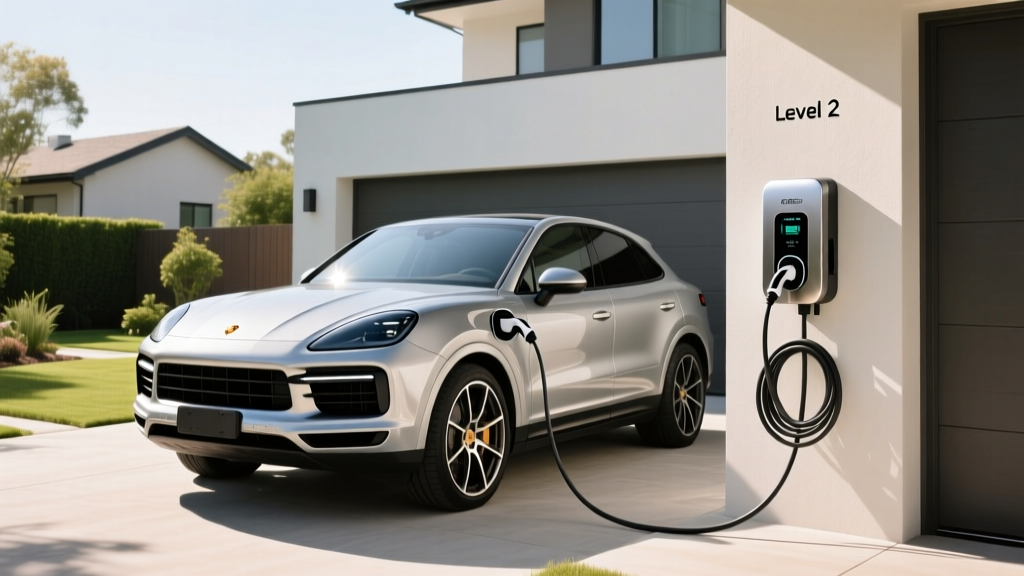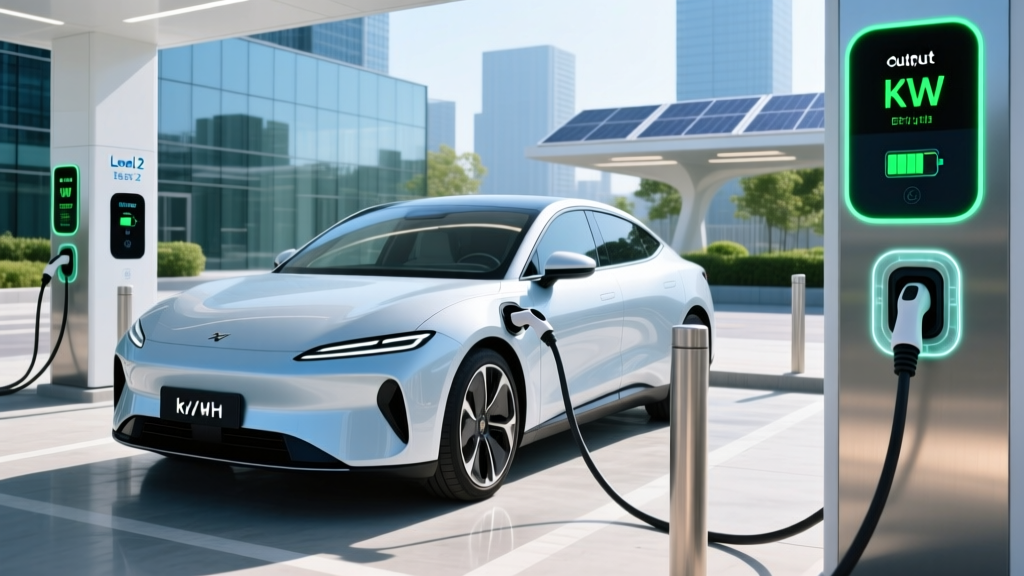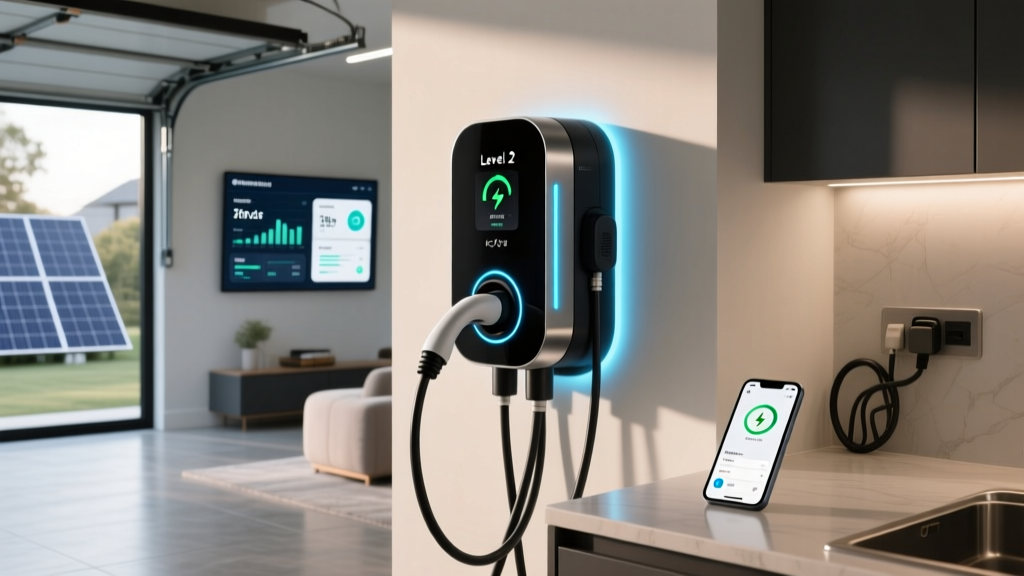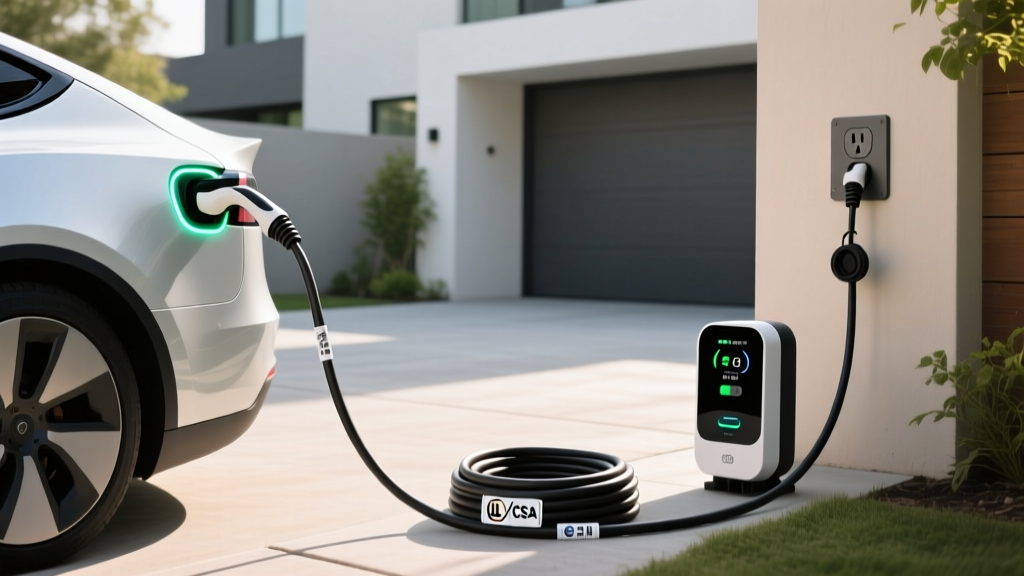
If you've ever unboxed a new EV and realized your garage outlet is 40 feet from where you park, the thought is inevitable: can I just use an extension cord for my EV charger? The short answer is that it depends heavily on the charging level, the cord's wire gauge and rating, and your local electrical code. The practical answer is that most off-the-shelf extension cords are unsafe for sustained EV charging loads — and the right solution is usually a properly rated cord or a dedicated circuit upgrade.
This guide walks through exactly what's safe, what isn't, and what you should actually buy if you need to bridge the gap between your outlet and your EV's charge port. We'll cover Level 1 and Level 2 requirements, the wire-gauge math, real-world cost comparisons, and when to call an electrician instead.
Why Most Extension Cords Are the Wrong Answer for EV Charging
Electric vehicles draw sustained, high-current loads for hours — a fundamentally different duty cycle than plugging in a vacuum cleaner or string lights. A Level 1 EV charger pulls 12 amps continuously at 120 volts (1.44 kW). A Level 2 unit pulls 32 to 48 amps at 240 volts (7.7 to 11.5 kW). That's not a brief surge; it's an 8-to-12-hour thermal stress test for any cable in the circuit.
Standard household extension cords — the 16-gauge, $12 variety from a big-box store — are rated for intermittent use at much lower loads. Pushing 12 amps continuously through undersized wire generates heat at the connections, degrades insulation over time, and creates a genuine fire hazard inside walls or under floor coverings where you can't see smoldering.
The National Fire Protection Association specifically warns against using extension cords as permanent wiring substitutes, and the National Electrical Code (NEC) prohibits using them in place of fixed wiring in most jurisdictions. For EV charging — which is effectively a permanent, nightly load — this matters.
Charging Levels Explained: What Power Are You Actually Pulling?
Before evaluating any cord, you need to know exactly what your charger demands. Here's the breakdown by level:
| Level | Voltage | Max Power (kW) | Miles of Range Added per Hour | Typical Use |
|---|---|---|---|---|
| Level 1 | 120V AC | 1.4 kW (12A) | 3–5 mi/hr | Overnight home; PHEVs; low-mileage drivers |
| Level 2 | 240V AC | 7.7–11.5 kW (32–48A) | 25–45 mi/hr | Primary home charging; workplace |
| DC Fast | 400–800V DC | 50–350 kW | 150–1,000+ mi/hr (peak) | Road trips; commercial stations |
For context: a 75 kWh battery (like the Tesla Model Y Long Range) charging from 10% to 80% takes roughly 50 hours on Level 1, about 8–10 hours on a 7.7 kW Level 2, and approximately 25–30 minutes on a 250 kW DC fast charger (accounting for charge-curve taper above 80%). You can see why Level 1 extension-cord scenarios are the most common question — and why Level 2 extension cords are almost never a good idea.
Level 1 Extension Cords: When It's Acceptable and What to Buy
If you're charging a plug-in hybrid with a small battery (say, 15–20 kWh like the Toyota RAV4 Prime) or a BEV with low daily mileage needs, Level 1 on a 120V outlet may be sufficient. In that case, using a properly rated extension cord is conditionally acceptable — with strict requirements:
- Wire gauge: 12 AWG minimum (thicker wire = lower gauge number). A 10 AWG cord is better for runs over 25 feet to reduce voltage drop.
- Rating: Must be rated for at least 15 amps / 1,875 watts. Your charger pulls 12A continuous; the cord needs headroom.
- Length: Shorter is always better. Every foot adds resistance. Stay under 50 feet on 12 AWG; under 25 feet is ideal.
- Construction: Heavy-duty outdoor-rated (SJTW or SOOW jacket), with a grounded 3-prong plug. No indoor-only, flat, or "lamp" cords.
- Condition: Inspect for cracked insulation, loose prongs, or warmth during use. If the plug or cord feels hot to the touch after 30 minutes of charging, stop immediately.
Brands like US Wire, Iron Box, and AmazonCommercial make 12 AWG, 25-foot, 15A-rated SJTW cords in the $30–$55 range that meet these requirements. Avoid any cord that doesn't clearly print its gauge and amp rating on the jacket.
Level 2 Extension Cords: Why You Should Almost Never Do This
Level 2 charging at 240V and 32–48 amps is a completely different animal. The power flowing through the cable is 5 to 8 times greater than Level 1. There is no consumer-grade "extension cord" rated for 48 amps at 240V continuous duty that you can simply buy at a hardware store.
Some EV owners attempt to use 240V dryer or welder extension cords (typically NEMA 14-50 or 10-30 plugs). Here's why this is risky:
- Continuous vs. intermittent rating: Dryer cords are designed for ~30-minute cycles, not 8-hour sustained draws. The NEC requires conductors to be rated at 125% of continuous loads — meaning a 40A charger needs wire rated for 50A.
- Connection integrity: Every plug junction is a potential failure point. Adding an extension cord introduces two more connection points that can arc, corrode, or overheat over months of nightly use.
- Insurance liability: If an electrical fire originates from an extension cord used as permanent wiring, your homeowner's insurance may deny the claim. The NEC and most local codes consider this a violation.
- Warranty implications: Some EV and EVSE manufacturers void warranty coverage for damage caused by non-compliant electrical setups.
The correct solution for Level 2 distance problems is a longer hardwired EVSE, a relocated outlet installed by a licensed electrician, or an EVSE with a 25-foot integrated cable (the longest commonly available). We cover equipment options below.
Home Charger Installation: Costs, Electrical Requirements, and Panel Upgrades
If you're reading this because your outlet is too far from your parking spot, the permanent fix is a properly installed Level 2 circuit. Here's what that involves and what it costs in 2026:
| Component | Typical Range | Notes |
|---|---|---|
| EVSE hardware (Level 2, 32–48A) | $300 – $700 | Smart Wi-Fi models on the higher end |
| 240V outlet (NEMA 14-50) or hardwire | $200 – $500 | Hardwire preferred for 48A+ units |
| Electrical panel capacity assessment | $0 – $150 | Often included in electrician's quote |
| New dedicated circuit (wire + breaker) | $300 – $1,200 | Depends on run length from panel |
| Panel upgrade (100A → 200A) | $1,500 – $3,500 | Required for older homes with maxed-out panels |
| Permit and inspection | $50 – $300 | Varies by municipality |
| Total (no panel upgrade) | $850 – $2,850 | Most homes with 200A service |
| Total (with panel upgrade) | $2,350 – $6,350 | Older homes with 100A service |
The single biggest variable is whether your electrical panel has spare capacity. A 48A Level 2 charger requires a 60A breaker (per NEC 125% continuous-load rule). If your panel is already near capacity — common in homes with electric ranges, dryers, and HVAC — you may need a panel upgrade or a smart load-management device like the Emporia VUE or Span panel, which can avoid a full upgrade by dynamically sharing capacity.
According to the U.S. Department of Energy, most homes with 200-amp service can accommodate a Level 2 charger without a panel upgrade. But get a licensed electrician to do a load calculation before committing.
Connector Compatibility: NACS, CCS1, CHAdeMO, and Adapter Needs
As of 2026, the North American charging connector landscape has largely consolidated around NACS (the Tesla-designed plug now adopted by most major automakers), but CCS1 vehicles remain common on the road and in used-car inventory. Here's what fits what:
| Connector | Brands Using It (Native) | Home Level 2 Charger Options |
|---|---|---|
| NACS (Tesla plug) | Tesla, Ford, GM, Rivian, Volvo, Polestar, Hyundai/Kia (2025+), BMW, Mercedes | Tesla Wall Connector, Emporia J1772 + adapter, ChargePoint Home Flex (NACS variant) |
| CCS1 | Volkswagen ID.4 (pre-2025), older BMW i4/iX, older Hyundai/Kia, Nissan Ariana (pre-2025) | ChargePoint Home Flex, Emporia Vue, JuiceBox (any J1772 charger — CCS uses J1772 for AC) |
| CHAdeMO | Nissan LEAF (discontinued after 2025), Mitsubishi Outlander PHEV (older) | J1772 chargers work (CHAdeMO is DC-only; AC uses J1772) |
For home Level 2 charging, all AC charging in North America uses either NACS or J1772 connectors. CCS1 vehicles charge at home using the J1772 portion of their CCS inlet — so any J1772 home charger works. If you buy a NACS home charger and own a J1772 vehicle (or vice versa), adapters are available from Tesla and third-party brands for $150–$250.
Recommended EV Chargers for Home: Solving the Distance Problem
If your goal is to avoid an extension cord, the right move is an EVSE with a long integrated cable or a strategically placed outlet. Here are top options for 2026:
Tesla Wall Connector (Gen 4)
- Power: Up to 11.5 kW (48A) at 240V
- Cable length: 24 feet
- Connector: NACS native
- Smart features: Wi-Fi, OTA updates, load sharing between units, Powerwall integration
- Price: ~$450
- Best for: NACS vehicles; long cable reach; clean wall-mount install
ChargePoint Home Flex
- Power: Up to 12 kW (50A) at 240V, configurable down to 16A
- Cable length: 23 feet
- Connector: J1772 (NACS adapter available)
- Smart features: Wi-Fi, app scheduling, Alexa integration, flexible amperage
- Price: ~$550–$700
- Best for: CCS/J1772 vehicles; adjustable amperage for limited panels
Emporia Level 2 EV Charger
- Power: Up to 11.5 kW (48A) at 240V
- Cable length: 24 feet
- Connector: J1772 (NACS adapter sold separately)
- Smart features: Wi-Fi, energy monitoring via Emporia VUE, solar integration, load management
- Price: ~$350–$400
- Best for: Budget-conscious buyers; solar-home owners; panel monitoring
Grizzl-E Smart (United Chargers)
- Power: Up to 10 kW (40A) at 240V
- Cable length: 24 feet
- Connector: J1772 (NACS version available)
- Smart features: Wi-Fi, OCPP-compatible, extreme cold rated (-40°F)
- Price: ~$450–$550
- Best for: Cold-climate garages; open-protocol smart charging
All of these units offer 23–24 foot cables — the practical maximum for wall-mounted home EVSEs. If your parking spot is more than 24 feet from the nearest feasible wall location, the solution is relocating the outlet or installing a pedestal mount, not adding an extension cord.
Cost to Charge: Home vs. Public vs. Gas per Mile
One reason EV owners tolerate the hassle of home charging setup is that the economics are overwhelmingly better than gas or public fast charging. Here's the per-mile cost breakdown for a typical EV averaging 3.5 miles per kWh (roughly 28.5 kWh/100mi, similar to a Hyundai Ioniq 5 or Tesla Model 3):
| Scenario | Rate | Cost per Mile | Notes |
|---|---|---|---|
| Home, off-peak utility rate | $0.09/kWh | $0.026/mi | Time-of-use plan, overnight charging |
| Home, average U.S. rate | $0.17/kWh | $0.049/mi | National residential average (2026 EIA data) |
| Public Level 2 (ChargePoint, etc.) | $0.35/kWh | $0.100/mi | Typical retail/destination charging |
| DC Fast Charging (Electrify America) | $0.48/kWh | $0.137/mi | Peak rates at highway stations |
| Gasoline, 30 MPG at $3.40/gal | $3.40/gal | $0.113/mi | Comparable compact ICE sedan |
| Gasoline, 22 MPG at $3.40/gal | $3.40/gal | $0.155/mi | Comparable ICE SUV/truck |
Home off-peak charging is roughly 4× cheaper per mile than gasoline. Even public DC fast charging is competitive with or cheaper than gas for most vehicles. The EPA's fueleconomy.gov provides per-model MPGe and kWh/100mi figures so you can calculate exact costs for your specific vehicle.
Safety and Electrical Code: What the NEC Requires
If you do proceed with any cord or adapter setup, these are non-negotiable safety requirements:
- Dedicated circuit: EV chargers should be on a dedicated circuit with no other loads. Sharing a 15A bedroom circuit with your EV means the charger and anything else plugged in compete for the same 12 amps of continuous capacity.
- GFCI protection: The 2020 NEC and later require GFCI (ground-fault circuit interrupter) protection for all EV charging outlets, including 240V NEMA 14-50 receptacles. Many older homes lack this.
- Outdoor rating: If any part of your charging setup is outdoors, all components — cord, outlet, EVSE — must carry an outdoor/wet-location rating (NEMA 3R or 4 enclosure for the EVSE, outdoor-rated cord jacket).
- No daisy-chaining: Never plug an extension cord into another extension cord. Each junction adds resistance, heat, and failure probability.
- Thermal monitoring: Smart EVSEs (Tesla Wall Connector, ChargePoint, Emporia) include built-in temperature sensors at the plug that throttle or stop charging if overheating is detected. This is a meaningful safety advantage over basic units.
Frequently Asked Questions
Can I use a heavy-duty extension cord for Level 1 EV charging?
Yes, conditionally — if the cord is 12 AWG or thicker (10 AWG for runs over 25 feet), rated for 15A minimum, outdoor-rated (SJTW jacket), and kept under 50 feet in length. Inspect connections regularly for heat. This is still a compromise; a dedicated 120V outlet near your parking spot is the proper fix.
Can I use a dryer extension cord for my Level 2 EV charger?
This is strongly discouraged. Dryer extension cords are rated for intermittent use, not the 8+ hour continuous draws that EV charging requires. The NEC mandates 125% conductor rating for continuous loads, meaning a 40A charger needs 50A-rated wiring. Dryer cords, their connectors, and the added junction points are fire and insurance-liability risks when used nightly.
How much does it cost to install a home EV charger?
A typical Level 2 installation with adequate panel capacity runs $850–$2,850 (EVSE hardware, dedicated 240V circuit, outlet or hardwire, permit). If your home needs a panel upgrade from 100A to 200A service, add $1,500–$3,500. Get at least two quotes from licensed electricians and confirm they'll pull a permit.
How fast will each charging level add range to my EV?
Level 1 (120V, 1.4 kW): 3–5 miles of range per hour. Level 2 (240V, 7.7–11.5 kW): 25–45 miles per hour depending on the vehicle's onboard charger. DC Fast (50–350 kW): 150–1,000+ miles per hour at peak, though charging curves taper significantly above 80% state of charge. A 10–80% charge on a 250 kW DC charger typically takes 18–30 minutes for modern 800V-architecture vehicles.
Which connector is compatible with my EV?
For 2026 models: Tesla, Ford, GM, Rivian, Volvo, Hyundai, and Kia now use NACS natively. Older VW, BMW, and pre-2025 Hyundai/Kia models use CCS1 (which accepts J1772 for home AC charging). The Nissan LEAF used CHAdeMO for DC but J1772 for AC. Check your vehicle's charge port or owner's manual — and note that adapters exist for most cross-compatibility scenarios.
What electrical upgrades might I need for a home charger?
The most common upgrade is adding a dedicated 240V circuit (60A breaker for a 48A charger) from your panel to your garage or parking spot. Older homes with 100A electrical service may need a full panel upgrade to 200A, costing $1,500–$3,500. Alternatives include smart load-management devices that share existing panel capacity, or reducing charger amperage (e.g., running a 48A-capable unit at 32A) to stay within your panel's headroom.
Is there a tax credit for home EV charger installation?
The federal Alternative Fuel Vehicle Refueling Property Credit (IRS §30C) was available for home charger hardware and installation costs, covering up to 30% (max $1,000) for qualifying installations in eligible census tracts. Check IRS guidelines for current-year eligibility, as rules around census-tract qualification and sourcing requirements apply. Many states and utilities also offer rebates — check your local utility's EV programs.