If you are shopping an extended range electric vehicle list, you are likely looking at EVs with EPA ratings of 300 miles or more—models like the Tesla Model 3 Long Range (363 miles), Lucid Air Pure (419 miles), Hyundai Ioniq 6 SE Long Range (361 miles), Chevrolet Silverado EV 4WT (400 miles), and the Rivian R1T Dual-Motor Max Pack (est. 410 miles). But a big battery only solves half the problem. The other half is how you will actually refill a 75–118 kWh pack without spending your life at a charger.
This guide pairs a quick-reference extended range EV list with a data-driven charging setup plan: how fast each level adds range, what a Level 2 home install actually costs in 2026, which connector your car uses, and what you will pay per mile versus gas. Numbers below reference EPA data via fueleconomy.gov and manufacturer spec sheets.
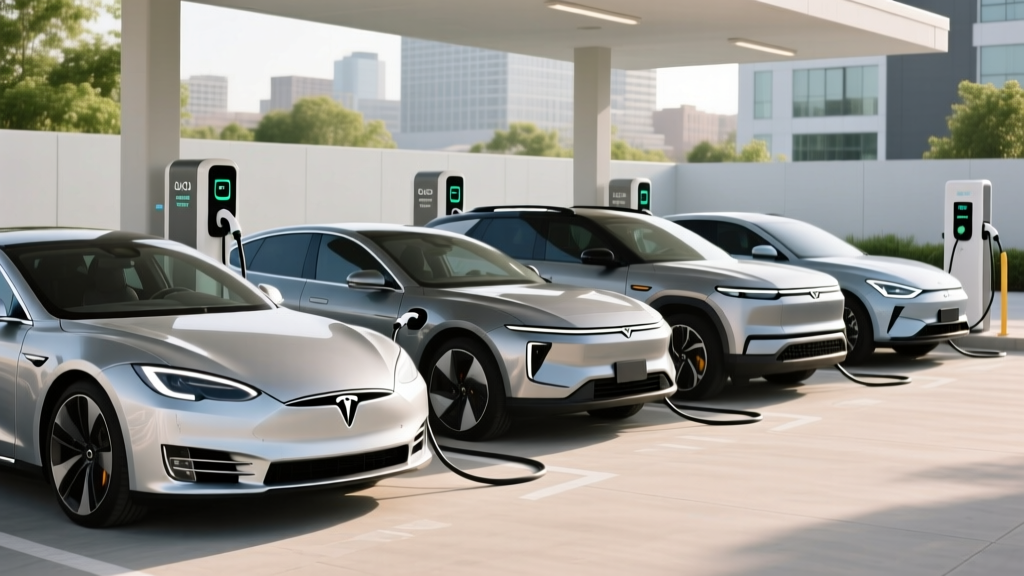
The 2026 Extended Range Electric Vehicle List (300+ Miles EPA)
Before we talk electrons, here are the current long-range BEVs most buyers cross-shop. Real-world highway range at 70–80 mph typically runs 10–20% below the EPA sticker; add another 15–30% loss in sub-freezing weather due to cabin heating and battery impedance.
| Model | Battery (usable, kWh) | EPA Range | Real-World Hwy* | Peak DC kW | 10–80% min | Base MSRP |
|---|---|---|---|---|---|---|
| Tesla Model 3 Long Range AWD | 75 (NMC) | 363 mi | ~290–310 mi | 250 kW | ~25 | $47,240 |
| Hyundai Ioniq 6 SE LR RWD | 77.4 (NMC) | 361 mi | ~290–305 mi | 240 kW | ~18 | $45,500 |
| Lucid Air Pure | 88 (NMC) | 419 mi | ~340–360 mi | 220 kW | ~24 | $74,900 |
| Chevy Silverado EV 4WT | ~200 (NMC) | 400 mi | ~310–340 mi | 350 kW | ~30 | $77,900 |
| Rivian R1T Dual-Motor Max | 141 (NMC) | 410 mi (est.) | ~320–345 mi | 220 kW | ~34 | $99,900 |
| Tesla Model S Long Range | 95 (NMC) | 402 mi | ~320–345 mi | 250 kW | ~27 | $84,990 |
*Real-world highway estimates assume 70–80 mph, 65–75°F, minimal elevation change. Cold weather (below 32°F) reduces these figures further.
Two patterns stand out. First, every vehicle on this extended range electric vehicle list uses an NMC (nickel manganese cobalt) chemistry pack sized between 75 and 200 kWh usable—meaning long 10–80% sessions compared to smaller commuter EVs. Second, peak DC fast-charge rates (220–350 kW) only hold for a portion of the session; above ~55–65% SoC the curve tapers sharply, which is why 10–80% times matter far more than peak kW marketing numbers.
Charging Levels Explained: kW Speed and Miles Per Hour
A common mistake is conflating kW (power—how fast energy flows) with kWh (energy—the battery's total capacity). Think of kW as the hose diameter and kWh as the bucket size. A 100 kWh battery charged at 10 kW takes 10 hours; at 150 kW (sustained), roughly 40 minutes for a 0–100% fill, though taper slows the final stretch.
| Level | Voltage / Amps | Power (kW) | Mi/hr (avg EV) | Best Use |
|---|---|---|---|---|
| Level 1 (120V) | 120V / 12A | ~1.4 kW | 3–5 | Overnight top-off, PHEVs |
| Level 2 (240V) | 240V / 32–48A | 7.7–11.5 kW | 25–45 | Daily home charging |
| DC Fast (CCS/NACS) | 400–800V DC | 50–350 kW | 180–800 | Road trips, quick fills |
For any EV on the extended range list above, Level 1 is impractical as a primary strategy—refilling a 100 kWh pack from 20% to 80% at 1.4 kW takes roughly 43 hours. Level 2 at 11.5 kW handles the same session in about 5.2 hours, which fits an overnight window. DC fast charging at a sustained 150 kW average (realistic for a 250 kW-peak stall on a modern pack) delivers 10–80% in 20–35 minutes depending on pack size and thermal preconditioning.
Home Level 2 Installation: Electrical Requirements and Cost Breakdown
A proper Level 2 home install is a dedicated 240V circuit on a breaker sized 125% above the charger's continuous draw. A 48A charger requires a 60A breaker; a 32A charger needs a 40A breaker. Hardwired units are preferred for outdoor installs and higher amperage because they avoid the 80% continuous-load derating that applies to NEMA 14-50 receptacles.
When You Need a Panel Upgrade
Homes built before 1990 often have 100A service. Adding a 60A EV circuit can push total calculated load past the panel's rating, triggering a service upgrade to 200A—a $2,000–$5,000 job on top of the charger install. A licensed electrician will run a load calculation per NEC Article 220; if your panel has spare capacity and existing headroom, you will avoid this cost. Always get a written load calc before committing to a 48A charger.
| Item | Low | High | Notes |
|---|---|---|---|
| Level 2 charger (48A, 25-ft cable) | $500 | $750 | Emporia, ChargePoint, Wall Connector |
| Electrician labor (run + termination) | $600 | $1,800 | Depends on conduit run length |
| Permit and inspection | $75 | $300 | Municipality-dependent |
| Panel upgrade (if required) | $2,000 | $5,000 | 100A → 200A service |
| Total (no panel upgrade) | $1,175 | $2,850 | Most suburban installs |
| Total (with panel upgrade) | $3,175 | $7,850 | Older homes |
The federal §30D credit does not apply to home charging equipment, but the separate 30C Alternative Fuel Infrastructure credit can cover up to 30% of equipment and install costs (capped at $1,000 for residential) if you live in an eligible census tract. Confirm eligibility on IRS.gov before filing.
Connector Compatibility: NACS, CCS1, CHAdeMO, and Adapters
As of 2026, the North American market has largely standardized on NACS (Tesla's connector, now SAE J3400). Most legacy CCS1 vehicles can access Tesla Superchargers via a manufacturer-supplied or aftermarket NACS adapter, but verify your VIN's eligibility with the OEM before plugging in—incorrect adapters can damage inlet pins.
| Brand / Model | Native Inlet | DC Network Access | Adapter Needed? |
|---|---|---|---|
| Tesla (all) | NACS | Supercharger + CCS via adapter | CCS adapter (included on newer) |
| Ford (F-150 Lightning, Mach-E) | NACS | Supercharger + Electrify America | None |
| Rivian (R1T/R1S 2025+) | NACS | Supercharger + EA | None |
| Hyundai / Kia (2025+) | NACS | Supercharger + CCS networks | None on 2025+; adapter for 2024 |
| GM (Ultium-based) | NACS | Supercharger + CCS | None on 2025+; adapter for 2024 |
| Nissan Ariya (legacy) | CCS1 | EA, EVgo; Supercharger via adapter | NACS-to-CCS adapter |
| Older Nissan Leaf | CHAdeMO | Limited network | None widely available |
For any EV on the extended range electric vehicle list above, you will have either native NACS or CCS1 with adapter access to Superchargers—currently the most reliable DC network by uptime metrics.
Cost to Charge Per Mile vs Gasoline
Electricity pricing varies wildly by region and time of use. Below are three realistic 2026 scenarios using a 3.0 mi/kWh efficiency average (typical for a midsize sedan on the extended range list; SUVs and trucks run 2.0–2.5 mi/kWh).
| Scenario | $/kWh | $/mi (3.0 mi/kWh) | $/mi (2.2 mi/kWh truck) |
|---|---|---|---|
| Home off-peak TOU | $0.12 | $0.040 | $0.055 |
| Home standard rate | $0.18 | $0.060 | $0.082 |
| Public Level 2 | $0.35 | $0.117 | $0.159 |
| DC fast (Electrify America, etc.) | $0.48 | $0.160 | $0.218 |
| Gasoline baseline (30 mpg, $3.40/gal) | — | $0.113 | $0.155 (22 mpg) |
At home off-peak rates, an extended range EV costs roughly one-third to one-half per mile versus a 30 mpg gas car. That advantage disappears if you rely primarily on DC fast charging at $0.48/kWh—at that price, you are paying more per mile than gasoline. This is why a home Level 2 install is non-negotiable for long-term economics on any large-battery EV.
Recommended Level 2 Home Chargers (2026 Picks)
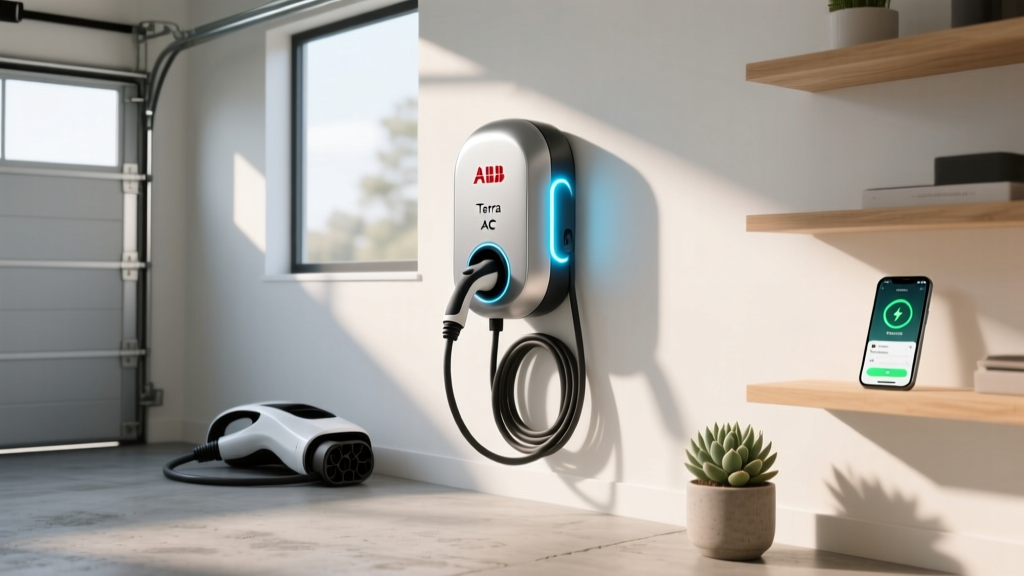
For large packs on the extended range list, prioritize 48A output (11.5 kW) and a 25-foot cable to reach both garage and driveway positions. Below are three proven units.
Emporia Vue Level 2 (J1772/NACS)
- Output: 48A hardwired / 40A plug-in (11.5 kW / 9.6 kW)
- Cable: 25 ft
- Smart features: Wi-Fi, scheduling, solar integration, energy monitoring
- Price: ~$500 (hardwired)
- Best for: Budget-conscious install with full app control
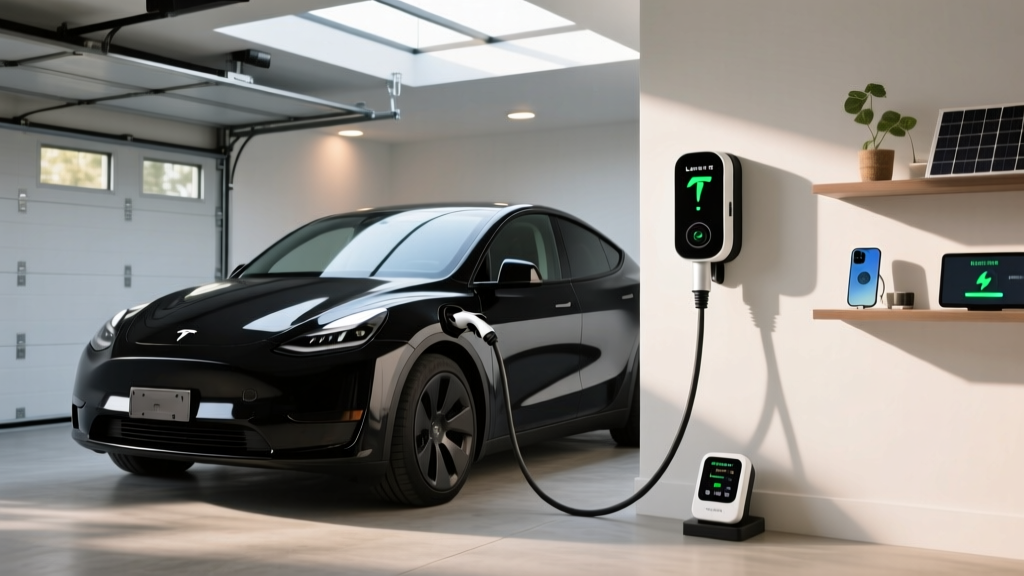
Tesla Wall Connector (NACS native)
- Output: 48A (11.5 kW); supports J1772 via Magic Dock on newer units
- Cable: 24 ft
- Smart features: Wi-Fi, OTA updates, Power-Share between two units
- Price: ~$475
- Best for: Tesla or NACS-native vehicles on a single circuit
ChargePoint Home Flex (NACS or J1772)
- Output: up to 50A adjustable (12 kW hardwired)
- Cable: 23 ft
- Smart features: Alexa, scheduling, detailed session logs
- Price: ~$650
- Best for: Users wanting flexible amperage to match panel capacity
All three are UL-listed, NEMA 4 rated for outdoor use, and support firmware updates. Avoid non-UL Amazon imports; insurers and inspectors can reject them, and warranty coverage is spotty.
Safety, Code, and Preconditioning Tips for Large Packs
NEC 2023 (adopted in most jurisdictions by 2026) requires GFCI protection on 240V receptacles used for EV charging—another reason hardwired installs are preferred, as they bypass this requirement and avoid nuisance trips. Use a dedicated circuit; sharing with a dryer or welder violates code and risks breaker wear.
For DC fast sessions, always precondition the battery by routing to the charger via the car's navigation. This warms the pack to ~95°F, enabling peak charge rates. Without preconditioning, a cold 100 kWh pack arriving at a 350 kW stall may only accept 50–80 kW for the first 10 minutes, stretching a 25-minute session into 40+.
FAQ: Extended Range EV Charging
How much does it cost to install a home EV charger?
Expect $1,175–$2,850 for a 48A hardwired Level 2 install in a home with sufficient panel capacity. Older homes needing a 100A-to-200A service upgrade should budget $3,175–$7,850 total. Always obtain a written NEC load calculation before purchasing equipment.
How fast will each charging level add range?
Level 1 adds 3–5 mi/hr, Level 2 adds 25–45 mi/hr, and DC fast charging adds 180–800 mi/hr depending on peak kW and pack acceptance. For a 100 kWh extended range EV, only Level 2 or DC fast charging is practical as a primary strategy.
Which connector or charger is compatible with my EV?
2025+ Tesla, Ford, Rivian, GM, Hyundai, and Kia models use NACS natively. Older CCS1 vehicles can use Tesla Superchargers with an OEM-approved NACS-to-CCS adapter. CHAdeMO vehicles (older Leaf) have limited fast-charge access and no mainstream adapter path.
How much does charging cost per mile vs gas?
At $0.12/kWh home off-peak rates and 3.0 mi/kWh efficiency, EV charging costs ~$0.04/mi—about one-third the $0.113/mi of a 30 mpg gas car at $3.40/gallon. Public DC fast charging at $0.48/kWh costs ~$0.16/mi, exceeding gasoline.
What electrical upgrades might I need?
A 48A charger requires a 60A breaker and 6 AWG copper wire. If your home has 100A service or a near-full panel, a 200A service upgrade ($2,000–$5,000) may be required. A 32A charger on a 40A breaker is a common workaround for panels with limited headroom.
Does a bigger battery mean slower home charging?
Not slower in kW—the car's onboard charger caps that, typically at 11.5 kW—but longer in hours. A 75 kWh pack charges 20–80% in about 4 hours at 11.5 kW; a 140 kWh pack takes closer to 7.5 hours. Plan overnight windows accordingly.
Are extended range EVs eligible for the §30D tax credit?
Eligibility hinges on MSRP caps ($80,000 for SUVs/trucks, $55,000 for sedans), buyer income limits ($300k MFJ / $150k single), and battery critical-mineral and component sourcing rules that tighten annually. Verify current-year status on IRS.gov and confirm point-of-sale transfer eligibility with the dealer before signing.
Bottom line: an extended range EV is only as practical as the charging plan behind it. Budget for a 48A hardwired Level 2 install, confirm your panel has headroom, use TOU rates to keep per-mile cost below $0.05, and treat DC fast charging as a road-trip tool—not a daily habit. Get those four pieces right and a 350-mile pack becomes one of the lowest-cost, lowest-friction drivetrains on the road.