The arrival of extended range electric vehicles — models pushing 350 to 500+ miles of EPA-rated range with battery packs exceeding 100 kWh — has fundamentally shifted the charging calculus for buyers and the infrastructure industry alike. When the Lucid Air Grand Touring delivers an EPA-estimated 516 miles on a 112 kWh battery, or the Chevrolet Silverado EV 4WT posts 440 miles from a massive pack, the question is no longer "can I make it to the charger?" It's "can my home electrical panel, my local utility, and the public DC fast network actually support this much energy throughput?"
This guide breaks down exactly what extended range EVs mean for your charging setup, your wallet, and the broader industry — with precise numbers for every scenario.
Why Extended Range EVs Change the Charging Equation
Extended range EVs (typically defined as 350+ miles EPA) carry battery packs ranging from 90 kWh to 131 kWh usable capacity. That's 50–80% more energy storage than a mid-range EV like the base Tesla Model Y (75 kWh usable). The implications cascade through every layer of charging:
- Home Level 2 charging takes longer: Replenishing a 112 kWh pack from 10% to 90% on a 48-amp (11.5 kW) Level 2 charger takes roughly 8.5 hours — versus 5.5 hours for a 75 kWh pack.
- DC fast charging demands higher sustained power: Vehicles like the Hyundai Ioniq 5 (84 kWh) and Lucid Air (112 kWh) can accept peak rates of 240 kW and 300+ kW respectively, but only if the station delivers it.
- Electrical panel capacity matters more: A 60-amp dedicated circuit (48A continuous) draws 11.5 kW — a significant load on a 100-amp main panel already serving HVAC, dryer, and range.
- Public infrastructure must scale: The U.S. EPA's fueleconomy.gov database now lists over 30 models exceeding 300 miles EPA, pushing networks like Electrify America and Tesla Supercharger to deploy 350 kW and 400 kW+ dispensers.
Charging Levels Explained: Speeds, Power, and Range Recovery
Understanding the difference between kW (power — the rate of energy delivery) and kWh (energy — the total capacity of your battery) is the single most important concept in EV ownership. Think of kW as the flow rate of a hose and kWh as the size of the bucket. Here's how each level performs with extended range packs:
| Level | Voltage / Amps | Power (kW) | Miles Added per Hour | 10–80% Time (100 kWh Pack) |
|---|---|---|---|---|
| Level 1 | 120V / 12A | 1.4 kW | 3–5 mi/hr | ~50 hours (impractical) |
| Level 2 (Standard) | 240V / 32A | 7.7 kW | 22–28 mi/hr | ~11 hours |
| Level 2 (High-Power) | 240V / 48A | 11.5 kW | 32–40 mi/hr | ~7.5 hours |
| Level 2 (Max Residential) | 240V / 80A | 19.2 kW | 52–65 mi/hr | ~4.5 hours |
| DC Fast (150 kW) | 400V+ DC | 150 kW peak | ~500 mi/hr (peak) | ~40 min (with taper) |
| DC Fast (350 kW) | 800V DC | 350 kW peak | ~1,000+ mi/hr (peak) | ~20 min (800V vehicles) |
The charge curve matters enormously with large packs. A 350 kW-capable vehicle like the Hyundai Ioniq 5 or Kia EV6 (both on 800V architecture) will peak near 240 kW only between roughly 10–45% state of charge, then taper progressively. Above 80% SoC, charging slows dramatically to protect battery health — often dropping below 50 kW. This is why manufacturers quote 10–80% times rather than 0–100%.
Home Charging Installation: Electrical Requirements and Real Costs
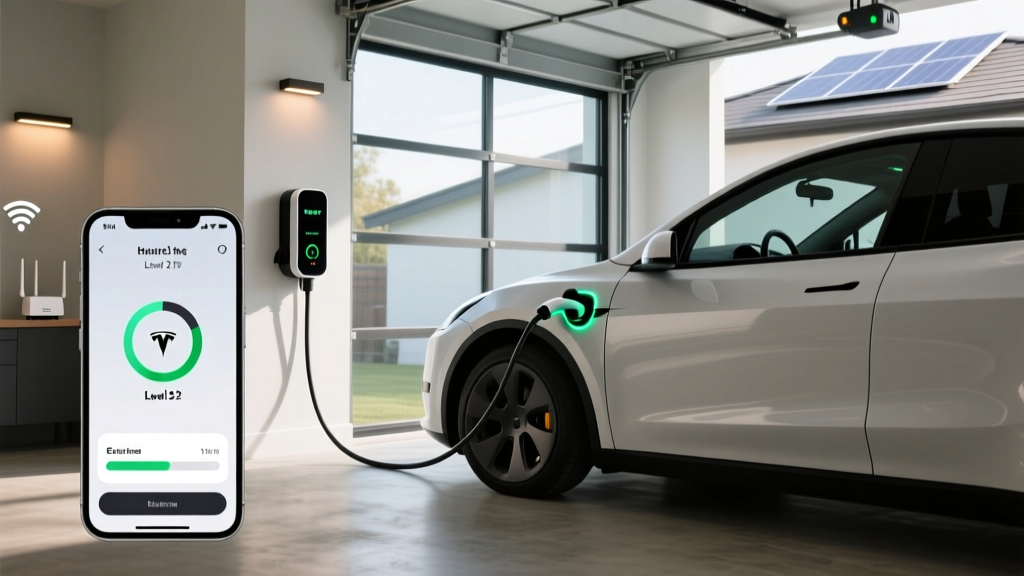
Installing a Level 2 home charger for an extended range EV isn't a simple plug-and-play affair — especially for homes built before 2010 with 100-amp or 150-amp main panels. Here's what the installation landscape looks like in 2026:
Electrical Requirements by Charger Amperage
- 32A charger (7.7 kW): Requires a 40A dedicated circuit, 240V, using 8 AWG copper wire.
- 48A charger (11.5 kW): Requires a 60A dedicated circuit, 240V, using 6 AWG copper wire. This is the most common high-power residential choice.
- 80A charger (19.2 kW): Requires a 100A dedicated circuit, 240V, using 3 AWG copper wire. Many panels cannot support this without an upgrade.
Panel Upgrade Reality
If your home has a 100-amp main panel, adding a 60A EV circuit will almost certainly require a panel upgrade to 200 amps. Homes with 150A panels may accommodate a 40A circuit (32A charger) but may need an upgrade for 48A+ chargers. A licensed electrician must perform a load calculation per NEC Article 220 to determine available capacity.
| Component | Low-End Cost | High-End Cost | Notes |
|---|---|---|---|
| Level 2 Charger (Equipment) | $350 | $750 | 32A–48A smart chargers; 80A units $800–$1,200 |
| Electrical Permit | $50 | $250 | Varies by municipality |
| Electrician Labor (simple run) | $400 | $1,000 | Panel within 20 ft of garage, conduit accessible |
| Electrician Labor (complex run) | $1,000 | $2,500 | Long wire runs, attic/crawlspace routing, trenching |
| Panel Upgrade (100A → 200A) | $2,000 | $4,500 | Includes new panel, utility coordination, re-inspection |
| Total (No Panel Upgrade) | $800 | $2,000 | Typical suburban home with adequate panel |
| Total (With Panel Upgrade) | $2,800 | $6,500 | Older homes or high-power 80A installations |
The IRS §30D tax credit does not cover home charger equipment for most taxpayers in 2026 — the alternative fuel vehicle refueling property credit (§30C) expired for residential installations after 2032 under the IRA, but availability and income caps vary. Check current IRS guidance or consult a tax professional before assuming eligibility.
Connector Compatibility: NACS, CCS1, and CHAdeMO in 2026
The connector landscape has consolidated dramatically. Following Ford, GM, Rivian, Volvo, and others adopting the North American Charging Standard (NACS) for their vehicles starting in 2025, NACS has become the dominant connector for new EVs sold in North America. Here's where things stand:
| Connector | Brands Using (2026 Models) | Max DC Power Available | Adapter Needed? |
|---|---|---|---|
| NACS (Tesla standard) | Tesla, Ford, GM, Rivian, Volvo, Polestar, Mercedes, Hyundai (select), Toyota (bZ series) | Up to 400 kW at V4 Superchargers | CCS → NACS adapters available (~$200–$250) for legacy CCS vehicles |
| CCS1 | VW (ID.4 legacy), BMW (iX, i4), Stellantis, Hyundai/Kia (2024 and earlier), Honda (Prologue) | Up to 350 kW at Electrify America | NACS → CCS1 adapters for new NACS vehicles at legacy stations |
| CHAdeMO | Nissan Leaf (discontinued), Mitsubishi Outlander PHEV (legacy) | Up to 100 kW (limited) | Increasingly unsupported; no viable adapter path |
For extended range EV buyers in 2026: If you're purchasing a new vehicle, NACS is the connector to have. Tesla's Supercharger network now exceeds 30,000 stalls in North America, with V4 cabinets delivering up to 400 kW to compatible vehicles. Electrify America and other networks have also begun deploying NACS-equipped dispensers alongside CCS1. Always confirm your vehicle's native connector before purchasing a home charger — most charger manufacturers now offer both NACS and J1772/CCS variants.
Cost to Charge: Home vs. Public vs. Gas Comparison
Extended range EVs consume more total energy per fill, but their per-mile cost remains dramatically lower than gasoline. Here's a realistic cost breakdown using 2026 electricity rates and gas prices:
| Scenario | Rate ($/kWh) | Cost for 100 kWh Fill | Cost per Mile (3.0 mi/kWh) | Annual (12,000 mi) |
|---|---|---|---|---|
| Home Off-Peak (utility rate) | $0.08–$0.14 | $8–$14 | $0.027–$0.047 | $320–$560 |
| Home Standard Rate | $0.13–$0.20 | $13–$20 | $0.043–$0.067 | $520–$800 |
| Public Level 2 (ChargePoint, etc.) | $0.25–$0.49 | $25–$49 | $0.083–$0.163 | $1,000–$1,960 |
| DC Fast (Electrify America, EVgo) | $0.35–$0.55 | $35–$55 | $0.117–$0.183 | $1,400–$2,200 |
| Tesla Supercharger (avg.) | $0.25–$0.36 | $25–$36 | $0.083–$0.120 | $1,000–$1,440 |
| Gas Vehicle (28 MPG, $3.40/gal) | — | — | $0.121 | $1,457 |
The takeaway: even exclusive DC fast charging costs roughly the same per mile as gasoline for an efficient gas car. Home charging at off-peak rates delivers 60–75% savings. For extended range EV owners who charge primarily at home, the annual fuel cost can drop below $400 — a compelling economic argument that partially offsets the higher purchase price of large-battery vehicles.
Recommended Home Charging Equipment for Extended Range EVs
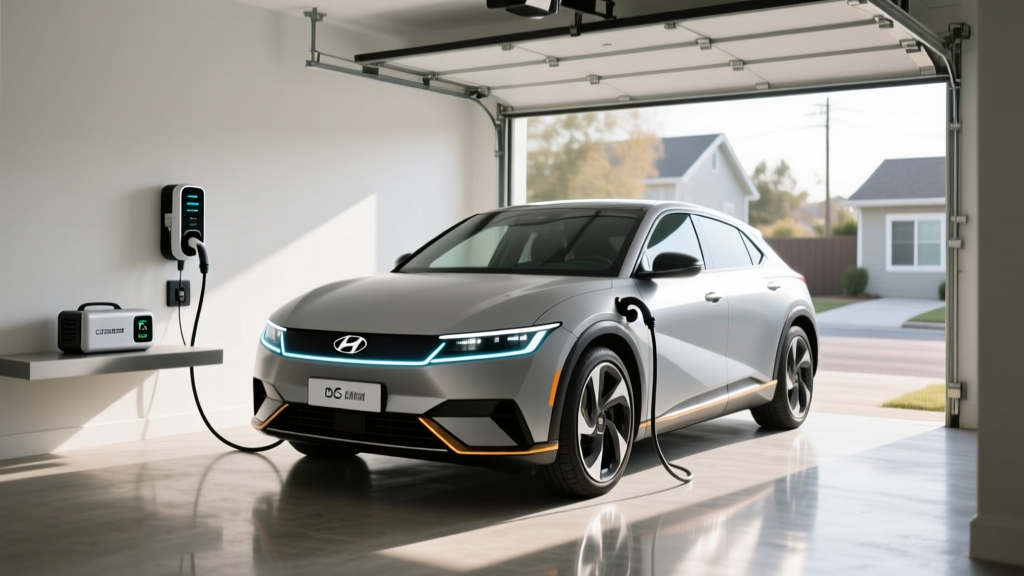
For vehicles with 90+ kWh battery packs, we recommend 48-amp (11.5 kW) chargers as the practical sweet spot — they replenish a 100 kWh pack overnight in roughly 7–8 hours and don't typically require a panel upgrade in homes with 200A service. Here are our top picks:
ChargePoint Home Flex (NACS or J1772)
- Power Output: Up to 50A (12 kW) — adjustable down to 16A for panel-limited homes
- Connector: Available in NACS and J1772 variants
- Cable Length: 23 feet
- Smart Features: Wi-Fi, scheduling, energy tracking, Alexa integration
- Price: ~$550–$650
- Best For: Flexible amperage adjustment, strong app, UL-listed
Wall Connector Gen 3 (Tesla)
- Power Output: Up to 48A (11.5 kW) on 60A circuit
- Connector: Native NACS; includes J1772 adapter in box
- Cable Length: 24 feet
- Smart Features: Wi-Fi, OTA updates, power sharing (link multiple units on one circuit)
- Price: ~$450
- Best For: Tesla and NACS-vehicle owners; best value at 48A
Emporia Level 2 EV Charger
- Power Output: Up to 48A (11.5 kW)
- Connector: J1772 (NACS adapter sold separately)
- Cable Length: 24 feet
- Smart Features: Real-time energy monitoring, solar integration, load management
- Price: ~$400
- Best For: Budget-conscious buyers; solar-home integration
FLO Home X5 (48A)
- Power Output: 48A (11.5 kW)
- Connector: J1772 (NACS adapter available)
- Cable Length: 25 feet
- Smart Features: Load sharing, robust outdoor rating (NEMA 4), 3-year warranty
- Price: ~$650–$750
- Best For: Outdoor installations, cold climates, multi-EV households
Safety, Code, and Installation Best Practices
The National Electrical Code (NEC) treats EV chargers as continuous loads — meaning the circuit must be rated at 125% of the charger's maximum draw. A 48A charger requires a 60A breaker. Key safety requirements include:
- Dedicated circuit: The EV charger must have its own dedicated breaker — never shared with other appliances.
- GFCI protection: NEC 2020 and later require GFCI protection for all 125V–250V receptacles used for EV charging in garages and outdoor locations. Hardwired installations (no plug) may exempt this in some jurisdictions — check local code.
- Outdoor rating: For outdoor installations, the charger must carry a NEMA 4 or NEMA 4X rating for weather resistance. All recommended chargers above meet this standard.
- Wire gauge: Undersized wire is a fire hazard. Your electrician will size conductors per NEC Table 310.16 — typically 6 AWG copper for 60A circuits, 3 AWG for 100A circuits.
- Permit and inspection: Every jurisdiction requires a permit for new 240V circuit installation. The inspection verifies proper grounding, breaker sizing, wire gauge, and GFCI compliance. Never skip this step — unpermitted work can void homeowner's insurance.
- Load management systems: For homes with limited panel capacity, devices like the Emporia Smart Panel or ChargePoint load-sharing feature can dynamically reduce charger power when other high-draw appliances (dryer, HVAC) are active — avoiding a costly panel upgrade.
Industry Implications: How Extended Range EVs Are Reshaping Infrastructure
The proliferation of extended range EVs carries significant implications for the charging industry:
1. Utility grid stress and time-of-use rates. A single extended range EV charging at 11.5 kW draws roughly the same power as three to four central air conditioning units running simultaneously. Utilities are responding with aggressive time-of-use (TOU) rate structures — offering electricity as low as $0.05–$0.08/kWh overnight (midnight–6 AM) while charging $0.25–$0.45/kWh during peak evening hours. Smart chargers with scheduling features are becoming essential, not optional.
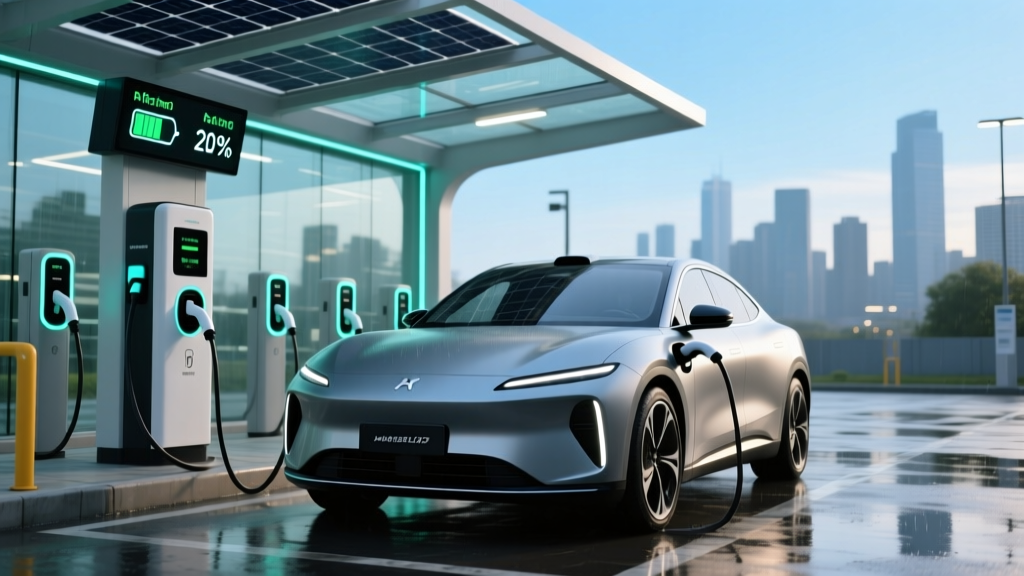
2. DC fast charger power escalation. Networks are racing to deploy 350 kW and 400 kW+ dispensers. Tesla's V4 Supercharger architecture supports up to 400 kW for vehicles on 800V platforms. Electrify America's next-generation stations feature liquid-cooled cables capable of 600 kW. The National Highway Traffic Safety Administration and Department of Energy continue to fund corridor charging through the NEVI program, targeting 500,000 public chargers by 2030.
3. Commercial and fleet charging demands. Extended range electric trucks (Ford F-150 Lightning Extended Range at 131 kWh, Silverado EV at 200+ kWh packs) require commercial-grade infrastructure. Fleet depots are installing 150–350 kW DC chargers with sophisticated load management — a market segment growing faster than residential.
4. Battery chemistry shifts. Many extended range EVs now use nickel-manganese-cobalt (NMC) or nickel-cobalt-aluminum (NCA) chemistries for maximum energy density. However, some manufacturers are exploring large-format LFP (lithium iron phosphate) packs that sacrifice some range for lower cost, longer cycle life, and reduced fire risk. The 2026 Ford Mustang Mach-E Select uses LFP in its standard-range variant, while extended range trims retain NMC.
Frequently Asked Questions
How much does it cost to install a home EV charger?
For a 48-amp Level 2 charger in a home with an adequate 200A electrical panel, expect to pay $800–$2,000 total (equipment + electrician + permit). If your home needs a panel upgrade from 100A to 200A, total costs rise to $2,800–$6,500. Always get three quotes from licensed electricians and verify they include permit costs.
How fast will each charging level add range?
Level 1 (120V) adds 3–5 miles per hour — adequate only for PHEVs or very low daily mileage. Level 2 at 48A adds 32–40 miles per hour, replenishing most extended range EVs overnight. DC fast charging at 150 kW can add 150–200 miles in 15–20 minutes on compatible vehicles, while 350 kW chargers with 800V vehicles like the Ioniq 5 can add 200+ miles in under 10 minutes at peak rate.
Which connector/charger is compatible with my EV?
Check your vehicle's charge port. Most 2025–2026 new EVs use NACS (Tesla's connector, now the North American Charging Standard). Older EVs (2024 and prior, non-Tesla) typically use CCS1. The Nissan Leaf uses CHAdeMO, which is being phased out. For home chargers, buy the connector that matches your vehicle natively — adapters work but add resistance and potential failure points for daily use.
How much does charging cost per mile vs gas?
Home charging at average U.S. electricity rates ($0.16/kWh) costs roughly $0.04–$0.05 per mile for an efficient EV achieving 3 mi/kWh. Gasoline at $3.40/gallon in a 28 MPG vehicle costs $0.12 per mile. That's a 60–65% per-mile savings with home EV charging. Even DC fast charging at $0.40/kWh costs $0.13/mile — roughly equal to gas.
What electrical upgrades might I need?
The most common upgrade is a panel replacement from 100A to 200A service ($2,000–$4,500). You may also need: a new dedicated 60A or 100A breaker, upgraded wire from the meter to the panel, or a load management device if your utility requires it. Homes with 200A+ panels typically need no upgrade for a 48A charger. Have an electrician perform a NEC Article 220 load calculation before committing to a charger amperage.
Extended range EVs represent a genuine step forward in usability — eliminating range anxiety for most drivers on most trips. But they also demand a more deliberate approach to charging infrastructure, from your home electrical panel to your public charging strategy. The numbers make the case: with proper home charging, an extended range EV delivers the lowest per-mile fuel cost in automotive history while offering 350+ miles of real-world flexibility. Just make sure your electrons have a path to get there.