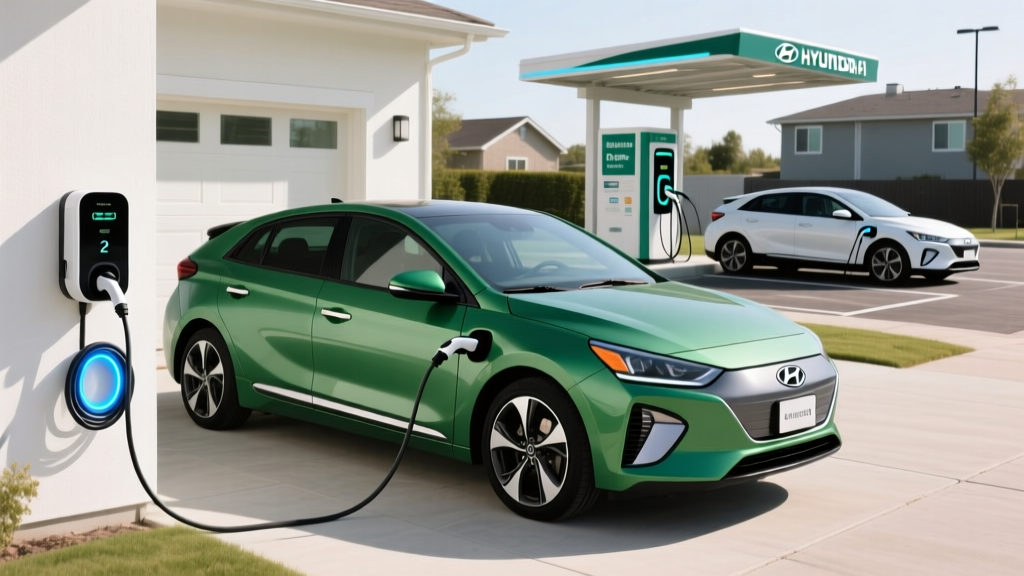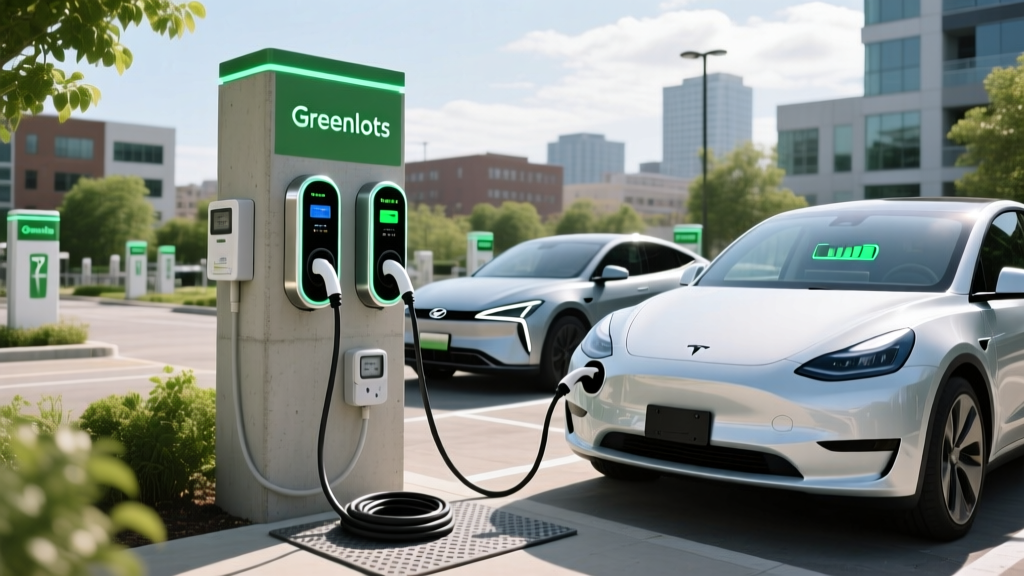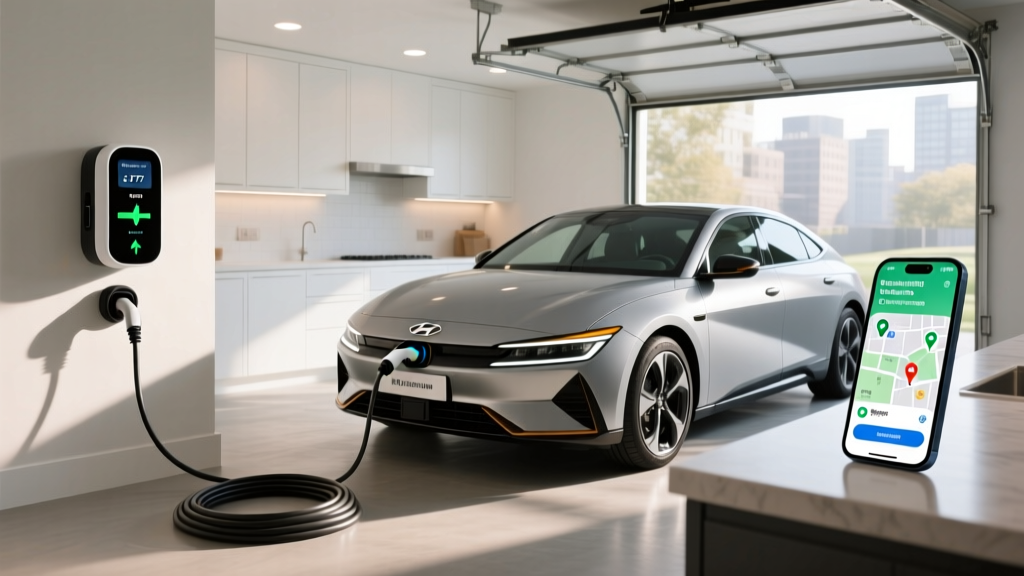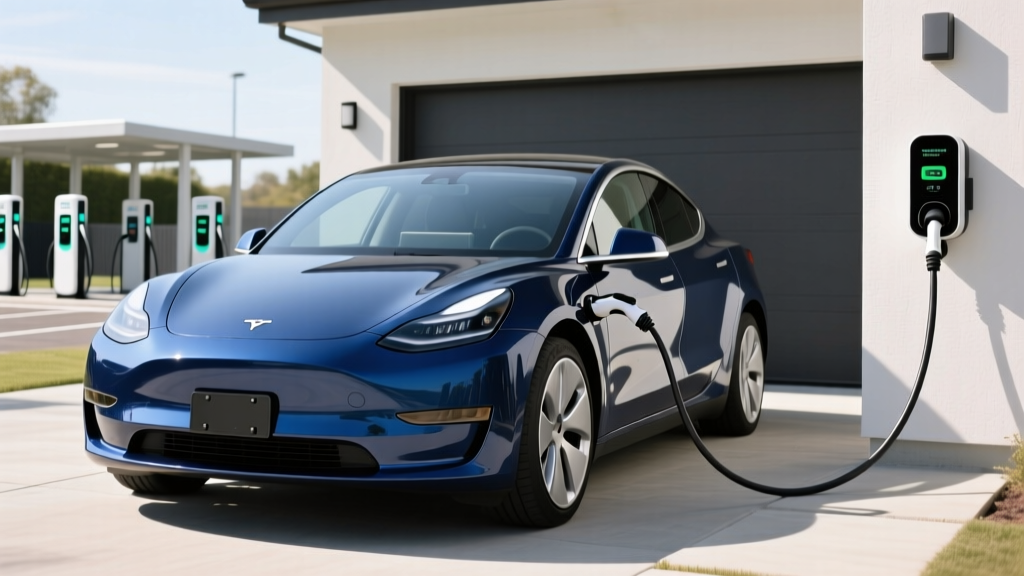
If you've chosen an extended-range electric vehicle — typically a BEV with 300+ miles of EPA range or a series-hybrid EREV with a range-extending generator — you've already solved the range side of the equation. The next challenge is keeping a large battery (often 75–100+ kWh usable) replenished efficiently. A bigger battery means longer charge times at lower power levels, higher peak demand on your home electrical panel, and more sensitivity to the difference between a charger's peak kW rating and its sustained output on the actual charge curve.
This guide covers everything you need to charge an extended-range EV at home and on the road in 2026: charging-level speeds, home installation costs, connector compatibility, real-world charge times for large packs, cost per mile versus gasoline, and specific equipment recommendations that can handle a 100 kWh battery overnight.
Charging Levels Explained: kW Speeds and Range Added per Hour
The single most common source of EV confusion is the difference between kW (kilowatts), which measures charging power — how fast energy flows — and kWh (kilowatt-hours), which measures battery capacity — how much energy is stored. A 100 kWh battery charged at 10 kW takes roughly 10 hours from empty; the same battery at 150 kW DC fast charging can recover 80% in under 30 minutes. Here's how the three main levels break down:
| Level | Voltage / Amps | Power (kW) | Miles of Range per Hour | Best Use Case |
|---|---|---|---|---|
| Level 1 (120V) | 120V / 12A | ~1.4 kW | ~4–5 mi/hr | Emergency trickle; inadequate for large packs |
| Level 2 (240V) | 240V / 32–48A | 7.7–11.5 kW | ~24–40 mi/hr | Daily home charging; overnight fill |
| DC Fast Charge | 400–800V DC | 50–350 kW | ~150–900 mi/hr (peak) | Road trips; rapid replenishment |
For an extended-range EV with a 90–100 kWh usable battery, Level 1 is functionally useless for a full recharge (it would take 60–70 hours). Level 2 at 11.5 kW is the practical home standard, delivering a full overnight fill in 8–10 hours. DC fast charging is where you'll spend the least time, but peak kW ratings are misleading — charge curves taper significantly above 80% state of charge (SoC).
Real-World Charge Times for Extended-Range Battery Packs
Manufacturer claims of "10–80% in 18 minutes" apply only under ideal conditions: a preconditioned battery, a compatible high-power charger, and moderate ambient temperatures. In practice, the charge curve matters enormously for large packs.
- 10–30% SoC: Sustains near peak rate (e.g., 230–250 kW on a 350 kW charger)
- 30–60% SoC: Gradual taper to ~180–200 kW
- 60–80% SoC: Further taper to ~120–150 kW
- 80–100% SoC: Dramatic slowdown to 40–50 kW (protects battery longevity)
Result: A 10–80% charge may take 20–25 minutes at a 350 kW station, but 80–100% adds another 30+ minutes. For road trips, charge to 80% and go.
| Charging Method | Power | 10–80% Time | 0–100% Time |
|---|---|---|---|
| Level 2 (48A / 11.5 kW) | 11.5 kW | ~6.5–7.5 hours | ~9–10 hours |
| DC Fast (150 kW station) | Peak 150 kW | ~38–45 min | ~60–70 min |
| DC Fast (350 kW station, 800V vehicle) | Peak 250–350 kW | ~18–25 min | ~45–55 min |
| DC Fast (350 kW station, 400V vehicle) | Peak ~150–180 kW | ~32–40 min | ~55–65 min |
Vehicles with 800V architectures — such as the Hyundai Ioniq 5/6, Kia EV6/EV9, Porsche Taycan, and Genesis Electrified GV70 — accept power faster at 350 kW stations because higher voltage allows more kW at lower amperage. If your extended-range EV uses a 400V platform (many older or more affordable models), your DC fast charging will cap around 150–180 kW regardless of the station's capability.
Home Charger Installation: Electrical Requirements and Costs
Installing a Level 2 home charger for an extended-range EV is the single highest-impact upgrade you can make. Here's what's involved electrically and financially.
Electrical Requirements
A Level 2 charger delivering 11.5 kW requires a 240V circuit rated at 60 amps (EVSE code requires the circuit to be rated 125% above the continuous load, so a 48A charger needs a 60A breaker). For a 7.7 kW charger (32A), a 40A circuit suffices.
- Wire gauge: 6 AWG copper for 60A; 8 AWG for 40A
- Dedicated circuit: The EV charger must have its own breaker — no sharing with other appliances
- GFCI protection: NEC 2020 and later require GFCI breakers for EV receptacles (NEMA 14-50 outlets)
- Outdoor rating: If mounted outside, the EVSE unit must carry a NEMA 3R or NEMA 4 enclosure rating
Panel Capacity and the Upgrade Question
Most homes built after 2000 have a 200A main service panel. Adding a 60A EV circuit consumes roughly 30% of that panel's capacity. An electrician will perform a load calculation (per NEC Article 220) to determine whether your panel can handle the EV charger alongside existing loads (HVAC, electric oven, dryer, water heater).
Installation Cost Breakdown
| Component | Simple Install (panel nearby, no upgrade) | Complex Install (long run, panel upgrade) |
|---|---|---|
| EVSE unit (Level 2, 40–48A) | $400–$700 | $500–$800 |
| Electrical permit | $50–$150 | $100–$250 |
| Electrician labor (2–4 hrs simple; 6–10 hrs complex) | $400–$800 | $1,200–$2,500 |
| Materials (wire, conduit, breaker) | $100–$300 | $300–$800 |
| Panel upgrade (if needed) | $0 | $2,000–$5,000 |
| Total | $950–$1,950 | $4,100–$9,350 |
For a straightforward install — panel in the garage, charger on the adjacent wall, 200A service with capacity — expect to spend $1,000–$1,800 all-in. If your panel needs upgrading or the charger is far from the panel (requiring a long conduit run through walls or underground), costs can easily exceed $5,000. Always hire a licensed electrician and pull a permit; unpermitted EVSE work can void homeowner's insurance and create fire risk.
Connector Compatibility: NACS, CCS, and CHAdeMO
As of 2026, the North American connector landscape has consolidated significantly around NACS (North American Charging Standard), the Tesla-originated connector now adopted by most major automakers. Here's what your extended-range EV likely uses:
| Connector | Brands Using It Natively | DC Fast Network Access |
|---|---|---|
| NACS (J3400) | Tesla, Ford, GM, Rivian, Volvo, Polestar, Mercedes, Nissan, Fisker, Honda (2025+) | Tesla Supercharger, Electrify America (NACS stalls), EVgo |
| CCS1 | Hyundai, Kia, Genesis, BMW, Stellantis/Chrysler, VW (ID.4), some legacy models | Electrify America, EVgo, ChargePoint, Ionity (EU) |
| CHAdeMO | Nissan Leaf (legacy only; 2025+ Ariya uses NACS), Mitsubishi Outlander PHEV | Limited and declining network |
Adapter needs: If you own a CCS-equipped vehicle and want access to Tesla Superchargers (the largest and most reliable DC fast network), you'll need a Tesla CCS-to-NACS adapter (~$175–$250). Conversely, NACS-equipped vehicles can access CCS stations using a NACS-to-CCS adapter from third-party manufacturers. Confirm adapter compatibility with your specific model year before purchasing — some adapters don't support DC fast charging and are limited to Level 2 AC only.
Cost to Charge: Per-Mile Economics vs. Gasoline
One of the strongest ownership arguments for an extended-range EV is the fuel cost advantage — but the savings depend heavily on where and when you charge.
| Scenario | Rate ($/kWh) | Cost per Mile | Cost for 300-Mile "Tank" |
|---|---|---|---|
| Home, off-peak utility rate | $0.08–$0.12 | $0.027–$0.040 | $8.00–$12.00 |
| Home, standard residential rate | $0.14–$0.18 | $0.047–$0.060 | $14.00–$18.00 |
| Public Level 2 (workplace, retail) | $0.20–$0.35 | $0.067–$0.117 | $20.00–$35.00 |
| DC Fast Charging (Electrify America, EVgo) | $0.35–$0.55 | $0.117–$0.183 | $35.00–$55.00 |
| Gasoline vehicle (28 MPG combined, $3.40/gal) | — | $0.121 | $36.40 |
At home on off-peak rates, an extended-range EV costs roughly $0.03–$0.04 per mile — about one-quarter the cost of a 28 MPG gasoline car. Even on standard residential rates ($0.15/kWh), you're at roughly $0.05/mile. However, if you rely exclusively on DC fast charging at $0.45/kWh, your per-mile cost ($0.15) can actually exceed a fuel-efficient gas car. The economics strongly favor home charging.
Utility time-of-use (TOU) tip: Most utilities offer TOU plans with rates 40–60% lower during overnight hours (typically 10 PM – 6 AM). Programming your EV or charger to charge only during off-peak windows can cut your annual charging cost by $300–$600. Check with your utility for EV-specific rate plans — some offer flat-rate EV charging add-ons.
Level 2 Equipment Recommendations for Large-Battery EVs
For an extended-range EV with a 90–100 kWh battery, you want the fastest Level 2 charger your electrical system supports. A 48A / 11.5 kW unit fills the pack overnight; a 32A / 7.7 kW unit may fall short if you arrive home nearly empty.
ChargePoint Home Flex
- Power: Up to 12 kW (50A) on a 60A circuit
- Connector: J1772 (NACS adapter included in 2026 kits)
- Cable: 23 ft
- Smart features: Wi-Fi, app scheduling, TOU optimization, Alexa
- Price: ~$550–$650
Tesla Wall Connector
- Power: Up to 11.5 kW (48A) on a 60A circuit
- Connector: NACS native
- Cable: 24 ft
- Smart features: Wi-Fi, OTA updates, power sharing (dual units on one circuit), load management
- Price: ~$475
Emporia Vue + EV Charger
- Power: Up to 11.5 kW (48A)
- Connector: J1772 or NACS
- Cable: 24 ft
- Smart features: Energy monitoring, solar integration, TOU scheduling, whole-home panel monitoring
- Price: ~$400–$500 (charger); ~$400 additional for Vue panel monitor
Grizzl-E Smart
- Power: Up to 10 kW (40A) on a 50A circuit
- Connector: J1772 or NACS
- Cable: 24 ft
- Smart features: OCPP-compatible, app control, outdoor rated (NEMA 4)
- Price: ~$450–$550
For most extended-range EV owners, the ChargePoint Home Flex or Tesla Wall Connector (if you drive a NACS-equipped vehicle) offer the best combination of power, reliability, and smart scheduling. If you have solar panels and want to charge from excess generation, the Emporia ecosystem provides unmatched energy visibility. For outdoor installations in harsh climates, the Grizzl-E's NEMA 4 rating and rugged build make it a strong choice.
Public Charging Networks: Strategy for Extended-Range Batteries
Your extended-range EV's large battery is an asset on road trips — you can skip low-power chargers and target only 150+ kW DC fast stations. Here's how the major US networks stack up in 2026:
- Tesla Supercharger: 250–350 kW stalls; NACS native. CCS vehicles can access via adapter at select "open to non-Tesla" locations. Highest reliability (~97% uptime per Tesla's published data).
- Electrify America: 150–350 kW CCS and NACS stalls. Expanding NACS deployment in 2025–2026. Variable reliability; check station status in-app before routing.
- EVgo: 100–350 kW; growing NACS availability. Strong urban coverage; some stations shared with rideshare fleets.
- ChargePoint (DC): 62.5–400 kW depending on location. Largest network by station count, but DC fast locations are a minority.
Preconditioning is critical. Most extended-range EVs will precondition (warm) the battery when you navigate to a DC fast charger via the built-in nav system. This can increase your peak charge rate by 30–50% in cold weather. If you drive to a charger without preconditioning — especially below 50°F — expect significantly slower charging. Always use the vehicle's native navigation to route to chargers when possible.
Safety and Code Considerations
EV charging involves sustained high-current draw for hours — more demanding on wiring than any other household appliance. Key safety points:
- Dedicated circuit: Never share the EV charger circuit with another outlet or appliance. NEC Article 511 and 625 require dedicated overcurrent protection.
- Hardwired vs. plug-in: Hardwired installations (no NEMA outlet) avoid the GFCI breaker requirement and eliminate the most common failure point (loose receptacle connections). Many electricians now recommend hardwired for 48A+ chargers.
- Permit and inspection: Most jurisdictions require an electrical permit for EVSE installation. The inspection ensures wire gauge, breaker sizing, and grounding meet code. Skipping the permit risks insurance denial in the event of a fire.
- Cable management: A 23–24 ft cable is heavy. Use a wall-mounted cable organizer to prevent tripping hazards and connector strain.
- Outdoor installations: Ensure the EVSE is rated NEMA 3R (rain-resistant) or NEMA 4 (watertight). Install at least 18 inches above grade per NEC requirements.
Frequently Asked Questions
How much does it cost to install a home EV charger for my extended-range EV?
For a standard 48A Level 2 charger with a simple installation (panel nearby, 200A service, short wire run), expect $1,000–$1,800 including the EVSE unit, permit, materials, and electrician labor. If your home needs a panel upgrade (100A to 200A) or has a long conduit run, costs can reach $4,000–$9,000. Always get a load calculation from a licensed electrician first.
How fast will each charging level add range to a 100 kWh battery?
Level 1 (120V, 1.4 kW) adds roughly 4–5 miles per hour — impractical for a large battery. Level 2 (240V, 48A / 11.5 kW) adds 30–40 miles per hour, filling a 100 kWh pack overnight in 8–10 hours. DC fast charging at 150 kW can add 150–200 miles in 20 minutes; at 350 kW with an 800V vehicle, you can recover 200+ miles in 10–15 minutes.
Which connector and charger is compatible with my extended-range EV?
Check your vehicle's charge port. For 2025–2026 models, most new EVs from Tesla, Ford, GM, Rivian, Volvo, Honda, and Nissan use NACS. Hyundai, Kia, BMW, and VW currently use CCS1. For home Level 2 charging, J1772 is the legacy AC standard, but many 2026 chargers now ship with NACS connectors or include adapters. Confirm your vehicle's AC onboard charger capacity (most extended-range EVs accept 11.5 kW AC; some cap at 7.7 kW).
How much does charging cost per mile compared to gasoline?
At home on off-peak electricity ($0.10/kWh), an extended-range EV averaging 3.0 mi/kWh costs about $0.033 per mile. A comparable 28 MPG gasoline vehicle at $3.40/gallon costs $0.121 per mile — roughly 3.7x more. Even on DC fast charging at $0.45/kWh ($0.15/mile), the EV is competitive with gas. The savings are most dramatic with consistent home charging.
What electrical upgrades might I need for a home charger?
If your home has a 200A panel with available capacity, you likely need only a new 60A breaker, wiring, and the EVSE. Homes with 100A or 150A service, or those running electric HVAC, oven, dryer, and water heater simultaneously, may need a panel upgrade to 200A or 400A. Older homes (pre-1980) may also need grounding upgrades or service-line replacement from the utility. A licensed electrician's load calculation will determine this before any work begins.
Sources: EPA fuel economy data via fueleconomy.gov; IRS §30D residential energy credit rules via irs.gov; NEC Articles 511/625 for EVSE installation code requirements.