Extended range electric vehicles — EVs packing 80 kWh to over 100 kWh of usable battery capacity and 320+ miles of EPA-rated range — solve highway road-trip anxiety but introduce a new challenge: refilling that massive battery efficiently. A 100 kWh pack charged on a standard 120V household outlet takes over four days. The difference between Level 1, Level 2, and DC fast charging isn't academic for these vehicles; it's the difference between overnight readiness and multi-day downtime.
This guide covers exactly what you need to charge extended range electric vehicles like the Lucid Air Grand Touring (112 kWh usable, EPA 516 mi), Tesla Model S Long Range (100 kWh, EPA 402 mi), Chevrolet Silverado EV 4WT (200+ kWh, EPA 440 mi), and Rivian R1T Max Pack (141 kWh, EPA 410+ mi). We'll break down charging speeds in kilowatts (kW, the rate of power delivery) versus kilowatt-hours (kWh, the total energy stored), home installation costs, connector standards, and real cost-per-mile figures versus gasoline.
Charging Levels Explained: Speeds in kW and Miles Added Per Hour
Every EV owner needs to internalize the distinction between kW (power — how fast energy flows) and kWh (energy — how much the battery holds). A 100 kWh battery charged at 10 kW takes roughly 10 hours; charged at 150 kW, it takes under an hour to reach 80%. Here's how each level performs on extended range electric vehicles:
| Level | Voltage / Amps | Max Power (kW) | Miles Added Per Hour | 10–80% Time (100 kWh) |
|---|---|---|---|---|
| Level 1 (120V) | 120V / 12A | 1.4 kW | 3–5 mi/hr | ~100+ hours (impractical) |
| Level 2 (240V) | 240V / 32–48A | 7.7–11.5 kW | 22–38 mi/hr | 7–10 hours |
| DC Fast Charging | 400V–900V DC | 50–350 kW | 150–1,000+ mi/hr (peak) | 15–40 minutes |
Real-world note on DC fast charging: Peak kW ratings are not sustained. A Lucid Air can accept up to 300 kW on a 900V DC fast charger, but that peak only holds between roughly 10% and 40% state of charge (SoC). Above 60%, the charge curve tapers significantly — by 80%, you may be pulling only 60–80 kW. This is why manufacturers quote 10–80% times rather than 0–100%. According to fueleconomy.gov, real-world efficiency for extended range EVs typically falls between 2.5 and 3.5 kWh per mile depending on vehicle weight and aerodynamics.
Home Charger Installation: Electrical Requirements and Cost Breakdown
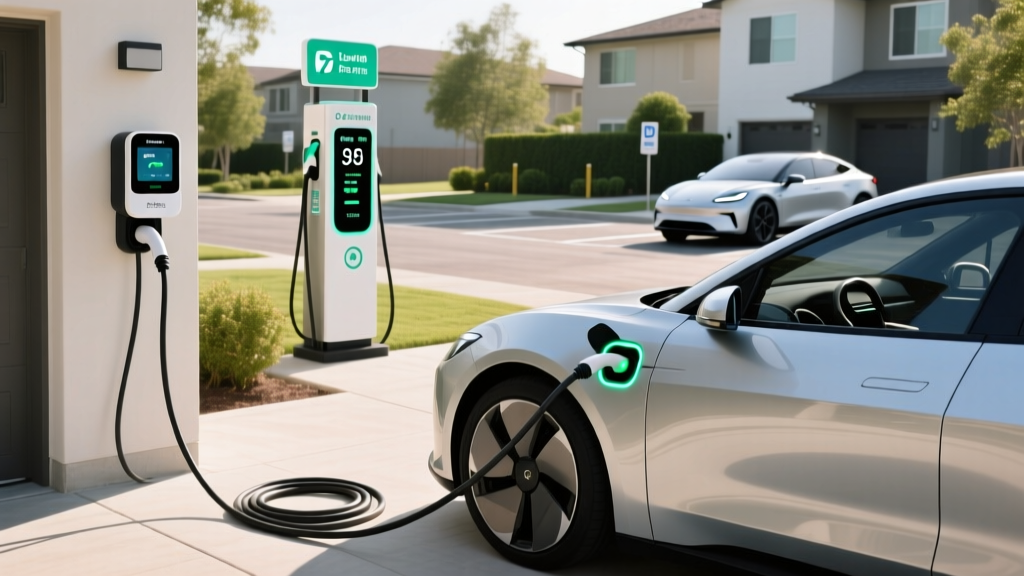
For extended range electric vehicles, Level 2 home charging is the practical baseline. Here's what a 240V Level 2 installation requires:
- Circuit: Dedicated 40-amp or 50-amp breaker (for 32A or 40A continuous charging, respectively)
- Wiring: 6 AWG copper (50A circuit) or 8 AWG (40A circuit), run in conduit where exposed
- Outlet vs hardwired: NEMA 14-50 outlet offers portability; hardwired units support higher amperage and avoid GFCI nuisance tripping common on 50A receptacles
- Panel capacity: Your main panel must have spare amperage headroom — a 200-amp panel with heavy existing loads may require a load calculation or upgrade to 400A service
How Much Does It Cost to Install a Home EV Charger?
| Component | Simple Install (panel adjacent) | Complex Install (long run, panel upgrade) |
|---|---|---|
| Level 2 charger equipment | $400–$700 | $500–$800 |
| Electrician labor | $300–$600 | $1,200–$3,000 |
| Permit and inspection | $50–$150 | $100–$300 |
| Panel upgrade (if needed) | N/A | $1,500–$4,000 |
| Total | $750–$1,450 | $3,300–$8,100 |
Panel upgrade reality check: Homes built before 1990 frequently have 100-amp main panels. Adding a 50-amp EV circuit to a panel already near capacity triggers a service upgrade to 200A or 400A — the single largest variable in installation cost. Always get a licensed electrician's load calculation before purchasing equipment. Some utilities offer rebates covering $250–$1,000 of installation cost; check your local provider. The federal §30C alternative fuel vehicle refueling property credit covers 30% of home charging equipment and installation costs up to $1,000 for eligible taxpayers in qualifying census tracts — verify current-year eligibility with a tax professional.
Connector Compatibility: NACS, CCS1, and CHAdeMO
The North American charging connector landscape consolidated heavily in 2024–2025 when most major automakers adopted the Tesla-designed North American Charging Standard (NACS) for new vehicles. For extended range electric vehicles on sale in 2026:
| Vehicle | AC Charging Port | DC Fast Charging Port | Adapter Needed? |
|---|---|---|---|
| Tesla Model S / Model X | NACS | NACS | CCS adapter (included) for non-Tesla networks |
| Lucid Air (all trims) | J1772 / CCS1 | CCS1 | NACS-to-CCS adapter for Tesla Superchargers |
| Rivian R1T / R1S (2025+) | NACS | NACS | None — native Supercharger access |
| Chevrolet Silverado EV | NACS | NACS | None — native Supercharger access |
| Mercedes EQS (2025+ refresh) | J1772 / CCS1 | CCS1 | NACS-to-CCS adapter for Tesla Superchargers |
| Nissan Ariya (e-4ORCE, 87 kWh) | J1772 / CCS1 | CCS1 | NACS-to-CCS adapter for Tesla Superchargers |
CHAdeMO is effectively discontinued on new passenger EVs in North America. If you drive a vehicle with a CCS1 port, purchase a NACS-to-CCS adapter ($150–$250) to access Tesla Supercharger stalls — the largest DC fast-charging network in the U.S. with over 28,000 stalls. For home Level 2 charging, most wall connectors now ship with NACS plugs or include a J1772 adapter in the box.
Cost to Charge: Home, Public, and DC Fast Charging Per Mile vs Gas
Extended range electric vehicles have large batteries, meaning each fill-up costs more in absolute terms than a compact EV — but the per-mile cost still undercuts gasoline in nearly every scenario.
| Scenario | Rate ($/kWh) | Cost for 10–80% (70 kWh) | Cost Per Mile |
|---|---|---|---|
| Home off-peak (utility TOU rate) | $0.08–$0.13 | $5.60–$9.10 | $0.027–$0.043 |
| Home standard residential | $0.14–$0.18 | $9.80–$12.60 | $0.047–$0.060 |
| Public Level 2 (ChargePoint, etc.) | $0.25–$0.49 | $17.50–$34.30 | $0.083–$0.163 |
| DC fast charging (Electrify America, EVgo) | $0.35–$0.58 | $24.50–$40.60 | $0.117–$0.193 |
| Tesla Supercharger (average) | $0.28–$0.36 | $19.60–$25.20 | $0.093–$0.120 |
Gas comparison: A comparable full-size sedan or truck averaging 22 MPG combined at $3.40/gallon costs $0.155 per mile. Home-charged extended range EVs cost 60–80% less per mile; even DC fast charging at the highest public rates roughly matches gasoline. The savings compound over ownership: at 15,000 miles/year, home charging saves roughly $1,500–$2,000 annually versus gasoline.
Preconditioning tip: Always precondition your battery (via the vehicle's app or navigation to a charger) before DC fast charging. Cold batteries charge significantly slower — a 100 kWh pack at 35°F may accept only 50 kW until internal temperature rises, adding 15–20 minutes to your stop.
Level 2 Equipment Recommendations for Extended Range EVs
With a 100+ kWh battery, your Level 2 charger's output directly determines whether you wake up fully charged. A 48-amp (11.5 kW) charger adds roughly 35 miles of range per hour — enough to fully replenish a 100 kWh pack in about 9 hours. Here are top picks:
ChargePoint Home Flex (NACS or J1772)
- Power output: Up to 11.5 kW (48A) on a 60A circuit; adjustable down to 16A
- Connector: Available in NACS or J1772
- Cable length: 23 feet
- Smart features: Wi-Fi, scheduling, energy tracking, Alexa integration
- Price: $549–$649
Tesla Wall Connector (NACS)
- Power output: Up to 11.5 kW (48A) on a 60A circuit
- Connector: NACS native; J1772 adapter included
- Cable length: 24 feet
- Smart features: Wi-Fi, load sharing (pair two units on one circuit), OTA updates
- Price: $450
Emporia Vue Level 2 Charger
- Power output: Up to 11.5 kW (48A)
- Connector: J1772 (NACS adapter available separately)
- Cable length: 24 feet
- Smart features: Integrated energy monitoring with Emporia Vue panel monitor, solar integration
- Price: $399–$499
For extended range electric vehicles, we recommend a 48A-capable unit on a dedicated 60-amp circuit. This maximizes overnight charging speed and future-proofs your installation. Hardwired models avoid the GFCI breaker issues that plague NEMA 14-50 receptacles at high amperage.
Safety, Code, and Electrical Considerations
EV charging is a continuous load — the National Electrical Code (NEC) requires the circuit to be rated at 125% of the charger's maximum draw. A 40A charger requires a 50A breaker; a 48A charger requires a 60A breaker. Key safety requirements:
- Dedicated circuit: Your EV charger must have its own breaker — no shared circuits with dryers, ranges, or HVAC
- GFCI protection: NEC 2023+ requires GFCI on all EV receptacles; hardwired units with built-in ground-fault protection satisfy this without nuisance tripping
- Outdoor rating: If mounting outside, choose a NEMA 4-rated (weatherproof) enclosure and confirm the charger is rated for outdoor use — most Level 2 units are, but connector holsters should include a weather cover
- Permit and inspection: Virtually all jurisdictions require an electrical permit and post-installation inspection; skipping this voids homeowner's insurance coverage for electrical fires
- Wire gauge: Never undersize wire — 6 AWG copper minimum for 50A, 4 AWG for 60A circuits. Aluminum wire requires two sizes larger
Frequently Asked Questions
How fast will each charging level add range to an extended range EV?
Level 1 (120V) adds 3–5 miles per hour — essentially unusable for a 100+ kWh battery. Level 2 (240V, 48A) adds 25–38 miles per hour, fully recharging overnight. DC fast charging at 150–350 kW adds 150–1,000 miles per hour at peak, with a 10–80% session taking 15–40 minutes depending on vehicle architecture (900V systems like Lucid charge faster than 400V platforms).
Which connector and charger is compatible with my extended range EV?
Check your vehicle's charge port. Tesla, Rivian (2025+), and GM's Ultium-based vehicles (Silverado EV, Cadillac Escalade IQ) use NACS natively. Lucid, Mercedes, Hyundai/Kia, and most legacy EVs use CCS1 — a NACS-to-CCS adapter ($150–$250) unlocks Tesla Superchargers. For home Level 2, any J1772 or NACS wall connector works with the appropriate adapter.
How much does charging an extended range EV cost per mile versus gas?
Home charging at off-peak utility rates costs roughly $0.03–$0.06 per mile. Public DC fast charging costs $0.10–$0.19 per mile. A comparable gasoline vehicle at 22 MPG and $3.40/gallon costs about $0.155 per mile. Home charging delivers 60–80% fuel cost savings; road-trip DC fast charging roughly matches gasoline cost.
What electrical upgrades might I need for a home charger?
If your home has a 200-amp panel with available capacity, you likely need only a new dedicated 50A or 60A breaker and a wire run ($750–$1,500 total). Homes with 100-amp panels, or 200-amp panels already near capacity (electric heat, pool, workshop), may require a panel upgrade to 200A or 400A service — adding $1,500–$4,000. Always get a professional load calculation first.
Can I use a standard 120V outlet for my extended range EV?
Technically yes, but practically no. At 1.4 kW, charging a 100 kWh battery from 10% to 80% takes over 100 hours — more than four full days. Level 1 is only viable for plug-in hybrids with small batteries or as an emergency trickle. Extended range EV owners should treat Level 2 installation as essential, not optional.