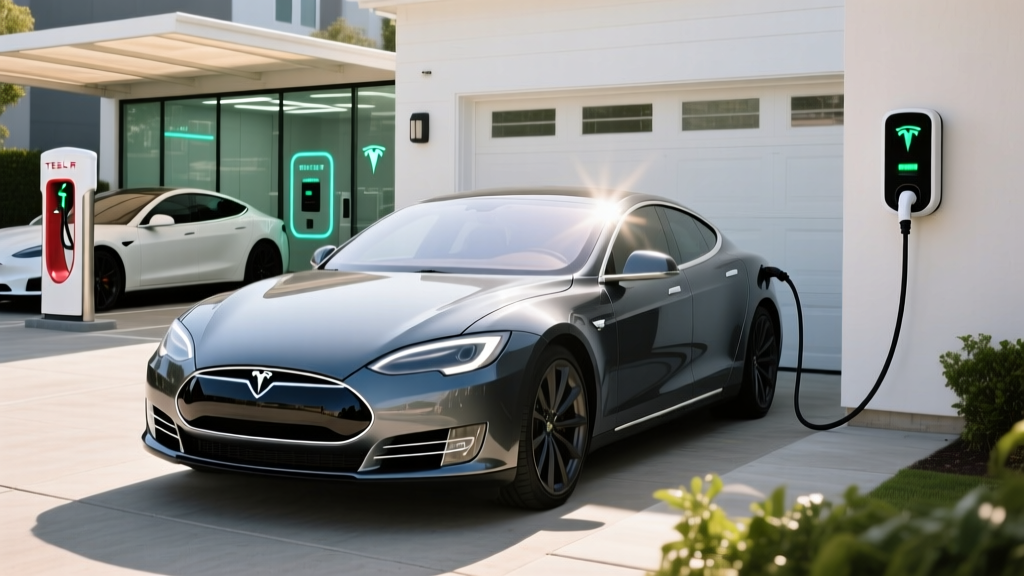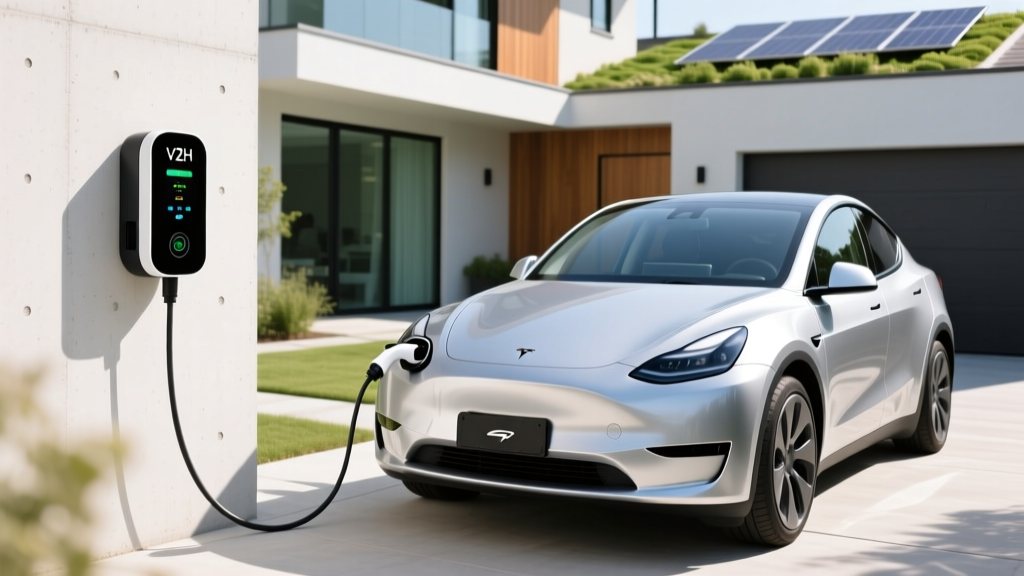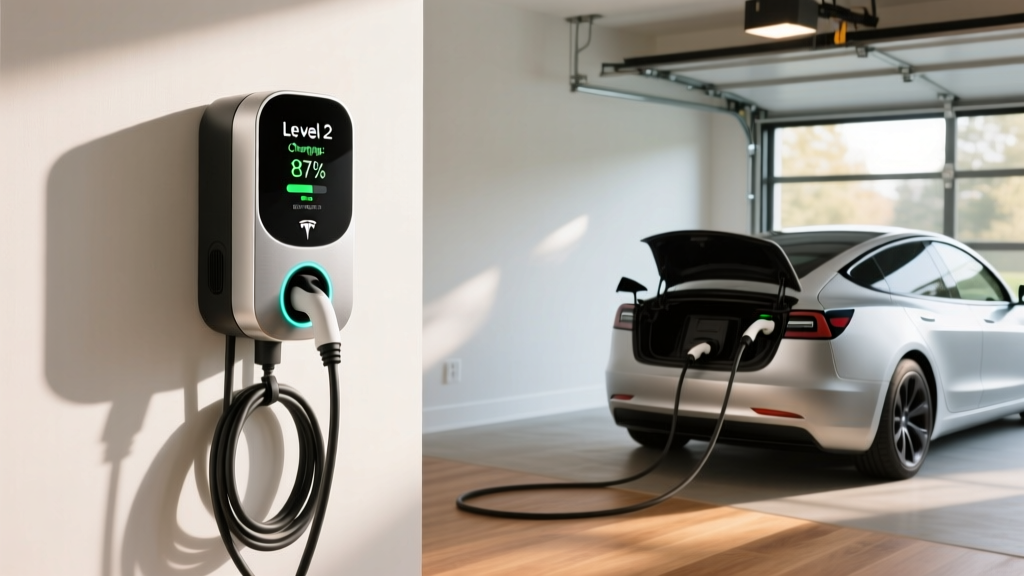
If you own or are shopping for an electric vehicle, a home EVSE Level 2 charger is the single most impactful upgrade you can make to your ownership experience. Level 2 charging at home eliminates the daily friction of hunting for public stations, delivers enough range overnight for nearly all commutes, and costs a fraction of public DC fast charging per mile. But navigating electrical requirements, connector standards, and equipment choices can feel overwhelming.
This guide breaks down exactly what a Level 2 EVSE (Electric Vehicle Supply Equipment) does, what your home's electrical system needs to support one, what installation actually costs in 2026, and which chargers deliver the best performance for the money. We'll also compare charging costs against gasoline so you can see the real economics.
Understanding EV Charging Levels: Speeds, Power, and Real-World Range
Before choosing equipment, you need to understand the three charging levels and what each delivers. The key distinction that trips up new EV owners: kW (kilowatts) measures power — how fast energy flows into your battery. kWh (kilowatt-hours) measures energy — the total capacity stored in your battery, like gallons in a gas tank. A 75 kWh battery charged at 7.2 kW takes roughly 10.4 hours from empty to full.
| Level | Voltage | Power (kW) | Miles of Range Added Per Hour | Typical Use Case |
|---|---|---|---|---|
| Level 1 | 120V AC | 1.0–1.4 kW | 3–5 miles | Overnight trickle; PHEVs or low-mileage commutes |
| Level 2 (EVSE) | 208/240V AC | 3.3–19.2 kW | 12–75 miles | Home daily charging; workplace; public destination |
| DC Fast Charge | 400–900V DC | 50–350+ kW | 150–1,000+ miles (equivalent) | Road trips; rapid top-ups; 10–80% in 15–30 min |
For most EV owners, a Level 2 home EVSE is the workhorse. A typical 48-amp Level 2 station delivers 11.5 kW on a 240V circuit, adding roughly 35–44 miles of range per hour of charging. That means a depleted 75 kWh battery (roughly 270 miles of EPA range in a vehicle like the Hyundai IONIQ 5 or Tesla Model Y) can recharge from 10% to 80% in about 5–6 hours overnight — more than enough for daily needs.
Electrical Requirements: What Your Home Needs for a Level 2 EVSE
Installing a Level 2 EVSE isn't as simple as plugging into an existing outlet. Most homes need a dedicated 240V circuit — the same voltage your electric dryer or oven uses — run from your main electrical panel to the charger location.
Circuit and Amperage Basics
The National Electrical Code (NEC) requires that continuous loads (anything running 3+ hours, which includes EV charging) use no more than 80% of a circuit's rated capacity. This means:
- 40-amp circuit → supports a 32-amp charger (7.7 kW at 240V)
- 50-amp circuit → supports a 40-amp charger (9.6 kW at 240V)
- 60-amp circuit → supports a 48-amp charger (11.5 kW at 240V)
- 100-amp circuit → supports an 80-amp charger (19.2 kW at 240V)
For most homes, a 60-amp circuit with a 48-amp EVSE provides the best balance of charging speed and electrical panel headroom. If your panel is already near capacity, a 40-amp circuit with a 32-amp charger still delivers meaningful overnight charging.
Do You Need a Panel Upgrade?
This is the question that separates a $1,200 charger install from a $4,500 one. Most homes built after 1990 have 200-amp electrical service, which typically supports a Level 2 EVSE without an upgrade. Older homes with 100-amp or 150-amp service may need a panel upgrade to 200 amps, especially if you also run electric heat, a dryer, and an oven simultaneously.
A licensed electrician will perform a load calculation to determine if your existing panel can handle the additional continuous draw. Some newer EVSE models (like the Emporia Vue-integrated chargers or the Wallbox Pulsar Max with Power Boost) offer dynamic load management — they throttle charging speed when household demand spikes, avoiding the need for a panel upgrade entirely.
How Much Does It Cost to Install a Home EV Charger?
Installation costs vary enormously based on your home's electrical infrastructure, the distance from panel to charger location, and local permit fees. Here's a realistic breakdown for 2026:
| Component | Basic Install | Standard Install | Complex Install |
|---|---|---|---|
| EVSE Equipment (charger unit) | $300–$500 | $500–$750 | $600–$1,200 |
| Electrician Labor (240V circuit run) | $400–$800 | $800–$1,500 | $1,500–$3,000 |
| Materials (wire, conduit, breaker) | $100–$200 | $200–$400 | $400–$800 |
| Permit Fees | $50–$150 | $100–$250 | $150–$400 |
| Panel Upgrade (if needed) | — | — | $1,500–$3,500 |
| Total Estimated Cost | $850–$1,650 | $1,600–$2,900 | $4,150–$8,900 |
Basic install assumes the charger mounts on a wall directly adjacent to the electrical panel with a short wire run. Standard install covers a 30–60 foot wire run through an attached garage or along an exterior wall. Complex install involves long conduit runs, trenching to a detached garage, or a panel upgrade.
Connector Compatibility: NACS, CCS1, and CHAdeMO Explained
The connector landscape has shifted dramatically. As of 2026, the North American Charging Standard (NACS) — originally Tesla's proprietary connector — has become the dominant standard, with Ford, GM, Rivian, Hyundai, Kia, and most other automakers adopting it for new vehicles.
| Connector | Brands Using It (New Vehicles) | Notes |
|---|---|---|
| NACS (J3400) | Tesla, Ford, GM, Rivian, Hyundai, Kia, Volvo, Polestar, BMW, Mercedes, Nissan (new models) | Now the SAE J3400 standard; compact, lightweight |
| CCS1 | Volkswagen ID.4 (some trims), legacy models from pre-2025 | Phasing out on new models; still widely available at public chargers |
| CHAdeMO | Nissan Leaf (legacy only) | Effectively discontinued for new vehicles |
If your EV uses CCS1 and you want to charge at Tesla Superchargers (now open to non-Tesla vehicles), you'll need a CCS-to-NACS adapter. Tesla sells one for approximately $250, and third-party options from Lectron and A2Z are available for $150–$200. For home charging, most EVSE manufacturers now ship with NACS connectors by default, with CCS1 available as an option or via adapter.
Choosing the Right Connector for Your Home EVSE
If all EVs in your household use NACS, buy a NACS-terminated charger. If you have mixed connectors (say, a CCS1 VW ID.4 and a NACS Ford F-150 Lightning), consider a charger with a J1772 connector and use the appropriate adapter for each vehicle, or install two separate circuits.
Top EVSE Level 2 Chargers for 2026: Equipment Picks
We evaluated home chargers on power output, cable length, smart features, build quality, connector options, and price. Here are the standout picks for different needs:
Best Overall: Tesla Wall Connector
- Power: 48A / 11.5 kW (on 60A circuit)
- Connector: NACS (native)
- Cable: 24 ft
- Smart Features: Wi-Fi, OTA updates, load sharing (pair up to 6 units on one circuit), access control
- Price: ~$475
- Best for: NACS-equipped households; cleanest integration with Tesla and newer Ford/GM/Hyundai EVs
Best Universal: ChargePoint Home Flex
- Power: Configurable 16A–50A / up to 12 kW (on 60A circuit)
- Connector: J1772 (NACS adapter included in 2026 refresh)
- Cable: 23 ft
- Smart Features: Wi-Fi, app scheduling, Alexa/Google integration, amperage adjustable via DIP switches
- Price: ~$699
- Best for: Multi-EV households with mixed connectors; flexible amperage for panel-constrained homes
Best Budget: Emporia Level 2 EV Charger
- Power: 40A / 9.6 kW (on 50A circuit)
- Connector: J1772 (NACS adapter available)
- Cable: 24 ft
- Smart Features: Wi-Fi, energy monitoring via Emporia Vue integration, solar-aware scheduling
- Price: ~$349
- Best for: Budget-conscious buyers; solar panel owners who want to charge on excess production
Best High-Power: Wallbox Pulsar Max
- Power: 48A / 11.5 kW (on 60A circuit)
- Connector: NACS or J1772 options
- Cable: 25 ft
- Smart Features: Wi-Fi + Bluetooth, Power Boost load management, Eco-Smart solar mode, app scheduling
- Price: ~$649
- Best for: Homes with limited panel capacity (Power Boost avoids upgrades); outdoor installs (NEMA 4 rated)
Charging Cost Per Mile: Home Level 2 vs. Gas vs. Public DC Fast
The economic case for home Level 2 charging is compelling when you compare cost per mile against gasoline. Here's how the numbers work using national averages:
| Charging/Fueling Method | Cost per kWh or Gallon | Vehicle Efficiency | Cost Per Mile |
|---|---|---|---|
| Home Level 2 (off-peak utility rate) | $0.08–$0.14/kWh | 3.0 mi/kWh (e.g., Tesla Model 3) | $0.03–$0.05 |
| Home Level 2 (standard utility rate) | $0.14–$0.20/kWh | 3.0 mi/kWh | $0.05–$0.07 |
| Public Level 2 (network pricing) | $0.25–$0.49/kWh | 3.0 mi/kWh | $0.08–$0.16 |
| DC Fast Charging (public) | $0.35–$0.65/kWh | 3.0 mi/kWh | $0.12–$0.22 |
| Gasoline (25 MPG vehicle) | $3.40/gallon | 25 MPG | $0.14 |
| Gasoline (35 MPG vehicle) | $3.40/gallon | 35 MPG | $0.10 |
At home on off-peak rates, an efficient EV costs roughly $0.03–$0.05 per mile to fuel — about one-quarter to one-third the cost of a 25 MPG gasoline car. Even at standard residential rates, home charging saves 50% or more per mile.
However, public DC fast charging at highway rates ($0.48–$0.65/kWh at networks like Electrify America or EVgo) can actually exceed gasoline costs on a per-mile basis. This is why home charging is the economic foundation of EV ownership — road-trip DC charging is a convenience premium, not a savings strategy.
Charging Time Examples: How Long Does a Full Charge Take?
Charging time depends on your battery's usable capacity (in kWh) and your EVSE's sustained power output (in kW). Here are realistic 10%–80% charge times for common battery sizes on different Level 2 circuits:
| Battery Size (Usable kWh) | 32A EVSE (7.7 kW) | 40A EVSE (9.6 kW) | 48A EVSE (11.5 kW) |
|---|---|---|---|
| 58 kWh (e.g., VW ID.4 Standard) | ~5.3 hours | ~4.2 hours | ~3.5 hours |
| 75 kWh (e.g., Tesla Model Y LR, IONIQ 5) | ~6.8 hours | ~5.5 hours | ~4.6 hours |
| 90 kWh (e.g., Rivian R1S, BMW iX) | ~8.2 hours | ~6.6 hours | ~5.5 hours |
| 131 kWh (e.g., F-150 Lightning Ext. Range) | ~11.9 hours | ~9.6 hours | ~8.0 hours |
Note that Level 2 charging is linear — unlike DC fast charging, there's no significant taper above 80% SoC because the onboard charger manages the AC-to-DC conversion at a steady rate. However, charging from 80% to 100% still takes proportionally longer because you're filling the remaining capacity at the same rate. For daily use, most owners set a charge limit of 80–90% to preserve long-term battery health, especially with NMC chemistry packs.
Safety, Permits, and Code Requirements
A Level 2 EVSE installation must comply with the National Electrical Code (NEC Article 625) and your local building codes. Key requirements include:
- Dedicated circuit: Your EVSE must have its own circuit — it cannot share with other appliances. This prevents overloading and tripped breakers during extended charging sessions.
- GFCI protection: NEC 2020 and later require Ground Fault Circuit Interrupter (GFCI) protection for all EVSE outlets rated 150V to ground or less and 50 amps or less. Hardwired EVSE units have GFCI built in; for plug-in units, your electrician must install a GFCI breaker.
- Outdoor rating: If your charger is installed outdoors (carport, driveway wall, or pole-mounted), the EVSE must carry a NEMA 4 or NEMA 4X rating for weather resistance. All chargers recommended above meet this standard.
- Permit and inspection: Virtually all jurisdictions require an electrical permit for a new 240V circuit. The permit ensures a licensed inspector verifies the work meets code. Skipping permits risks insurance claim denials and code violations at resale.
- Cable management: NEC requires that charging cables not create a tripping hazard. If your cable crosses a walkway, use a cable management system or retractable reel.
Always hire a licensed electrician experienced with EVSE installations. Ask for their load calculation documentation and confirm they'll pull the permit — reputable electricians handle this routinely.
Frequently Asked Questions
Can I install a Level 2 EVSE myself?
Technically, if you're a skilled DIYer with electrical experience, you can run a 240V circuit. However, most jurisdictions require a licensed electrician to pull the permit, and insurance companies may deny claims related to unpermitted or DIY electrical work. Given the $400–$1,500 typical labor cost, professional installation is the safer and usually required path.
What's the difference between a hardwired and plug-in EVSE?
A hardwired EVSE connects directly to your home's wiring with no plug — this allows up to 48 amps (on a 60A circuit) and eliminates one failure point. A plug-in EVSE uses a NEMA 14-50 or NEMA 6-50 outlet, making the unit portable if you move. Plug-in units are limited to 40 amps on a 50A circuit per NEC rules. Hardwired is preferred for permanent garage installs; plug-in is better if you may relocate or want a portable backup.
Will a Level 2 charger degrade my EV battery faster?
No. Level 2 AC charging is actually gentler on batteries than DC fast charging because the onboard charger controls the charge rate and thermal management. The primary degradation factors are sustained high state of charge (sitting at 100% for days) and extreme heat. Set your charge limit to 80–90% for daily use and your battery should retain 90%+ capacity over 100,000 miles.
Do I need a smart charger, or is a basic unit fine?
A basic (non-smart) EVSE will charge your car just fine — the car itself manages charge rate, timing, and battery protection. However, a smart charger adds utility TOU scheduling, energy monitoring, remote start/stop, and integration with solar systems. For the $50–$150 price premium, smart features typically pay for themselves through off-peak rate savings within the first year.
My electrical panel is full — what are my options?
You have several paths: (1) Use a lower-amperage EVSE (16A or 24A) that draws less from your panel. (2) Install a load-management EVSE like the Wallbox Pulsar Max with Power Boost, which dynamically reduces charge rate when household demand spikes. (3) Use a panel-space expander ("tandem breakers") if your panel supports them. (4) Upgrade to a 200A panel — expensive ($1,500–$3,500) but future-proofs your home for additional electrification like heat pumps.