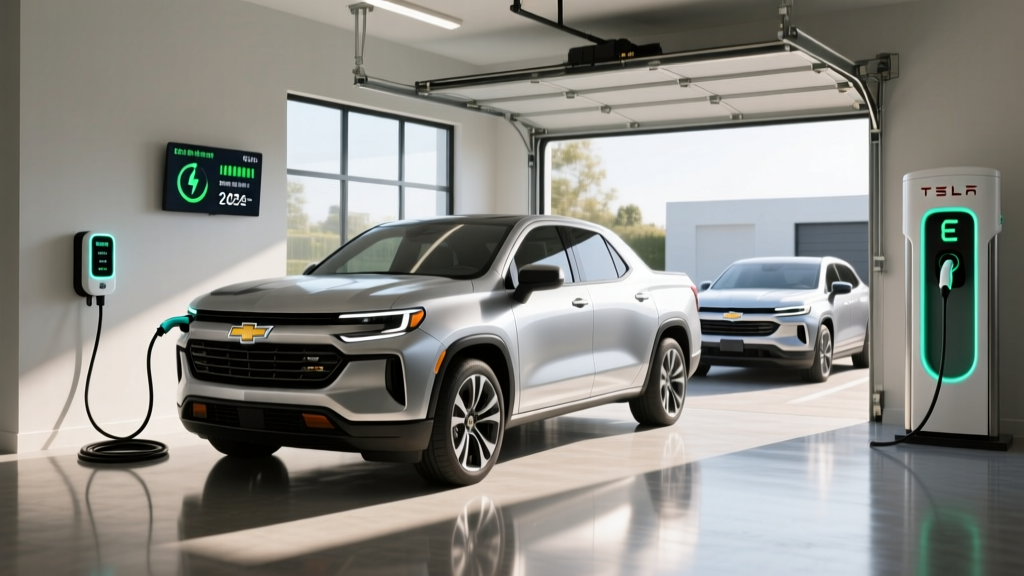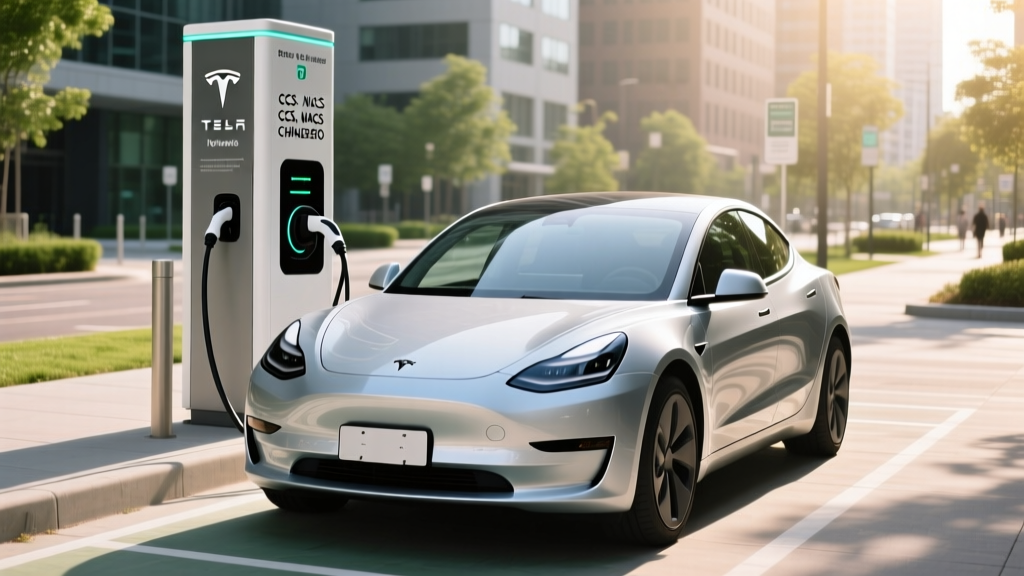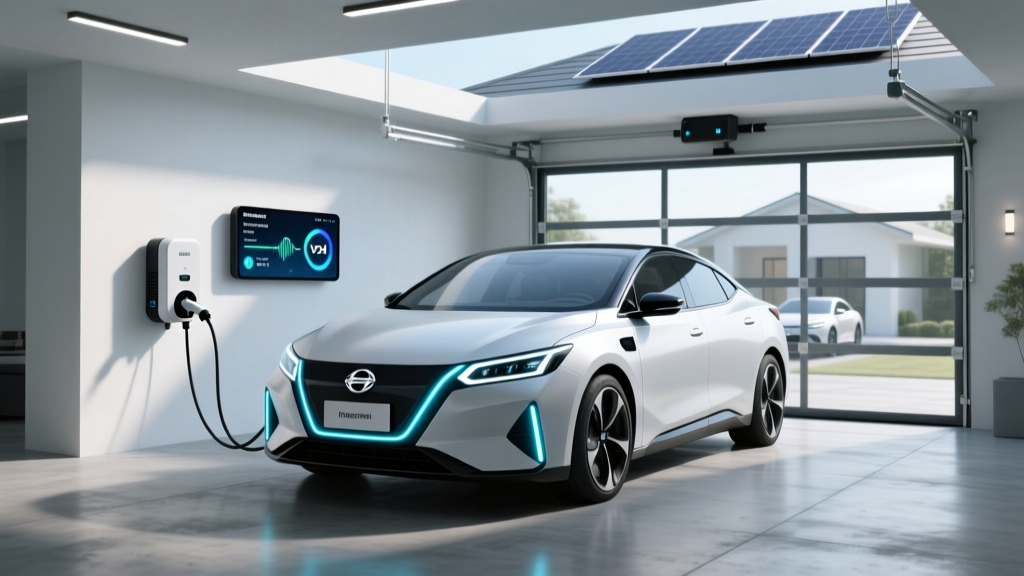
Bidirectional charging turns your electric vehicle into more than transportation — it becomes a mobile power station. In 2026, a growing roster of EVs can push energy back to your home during an outage (V2H), power tools and appliances at a job site or campsite (V2L), or even feed electricity to the grid for utility credits (V2G). But the hardware ecosystem is still maturing, and the home electrical requirements are more demanding than a standard Level 2 install.
This guide maps every mainstream EV with bidirectional capability available in the U.S. for the 2026 model year, explains the three charging levels you'll use day-to-day, breaks down the real cost of a bidirectional-ready home installation, and shows what you'll pay per mile compared to gasoline.
What Bidirectional Charging Actually Means (V2L, V2H, V2G)
Before we look at vehicles, the terminology matters because not all bidirectional features are equal:
- V2L (Vehicle-to-Load): Powers external devices via a standard 120V or 240V outlet. Think tailgating, job-site tools, or running a refrigerator during a short outage. No special home hardware required — just the vehicle's built-in outlet or an adapter.
- V2H (Vehicle-to-Home): Backs up your entire home electrical panel during an outage, similar to a standby generator. Requires a compatible bidirectional DC charger or an integrated AC-coupling system plus a transfer switch or energy gateway.
- V2G (Vehicle-to-Grid): Sends power back to the utility grid for demand-response programs and bill credits. Requires utility participation, a certified bidirectional charger, and grid-interconnection approval.
2026 EVs With Bidirectional Charging: What's Available
| Vehicle | V2L | V2H | V2G | Battery (kWh) | EPA Range | Starting MSRP |
|---|---|---|---|---|---|---|
| Ford F-150 Lightning | ✔ | ✔ | ✔ | 98 / 131 | 240–320 mi | ~$55,000 |
| Hyundai Ioniq 5 | ✔ | ✔* | — | 63 / 84 | 245–318 mi | ~$43,000 |
| Kia EV9 | ✔ | ✔* | — | 76.1 / 100 | 230–304 mi | ~$56,000 |
| Chevrolet Silverado EV | ✔ | ✔ | ✔ | 200 | 390–450 mi | ~$57,000 |
| Tesla Cybertruck | ✔ | ✔ | — | 123 | 320–340 mi | ~$80,000 |
| VW ID.4 | — | — | — | 62 / 82 | 206–291 mi | ~$40,000 |
* Hyundai/Kia V2H requires the optional Ioniq Home Charger or Wallbox Quasar-compatible hardware and an energy gateway — not all dealers stock this. Confirm availability for your model year.
Real-world range caveat: EPA figures assume moderate temperatures and mixed driving. On the highway at 75 mph, expect 10–15% less range. In sub-30°F weather without preconditioning, range can drop 20–30%. A 131 kWh F-150 Lightning rated at 320 miles may deliver closer to 240 miles in a cold winter highway scenario.
Charging Levels Explained: Speeds, Power, and Range Per Hour
Understanding the difference between kW (power — the rate of energy flow) and kWh (energy — the total capacity of the battery) is essential. Think of kW as how fast water flows from a hose, and kWh as the size of the bucket. Here's what each charging level delivers:
| Level | Voltage / Amperage | Power (kW) | Miles of Range Per Hour | Typical Use |
|---|---|---|---|---|
| Level 1 | 120V / 12A | 1.4 kW | 3–5 mi/hr | Overnight trickle; emergency top-ups |
| Level 2 (basic) | 240V / 32A | 7.7 kW | 25–30 mi/hr | Standard home charging |
| Level 2 (high-power) | 240V / 48A | 11.5 kW | 35–44 mi/hr | Faster home; some bidirectional setups |
| DC Fast Charge | 400V–800V DC | 50–350 kW | 150–1,000+ mi/hr | Road trips; public stations |
| Bidirectional V2H | 240V AC output | 9.6–19.2 kW | N/A (discharging) | Home backup during outages |
Real Charging Time Examples
Charging isn't linear — EVs charge fastest between 10–80% State of Charge (SoC) and taper significantly above 80% to protect the battery. Here are realistic 10–80% times:
- Ford F-150 Lightning (131 kWh, Extended Range): ~41 minutes on a 150 kW DCFC; ~12.5 hours on a 48A Level 2
- Hyundai Ioniq 5 (84 kWh, 800V architecture): ~18 minutes on a 350 kW DCFC; ~7.5 hours on a 48A Level 2
- Kia EV9 (100 kWh): ~24 minutes on a 238 kW DCFC; ~9 hours on a 48A Level 2
- Chevrolet Silverado EV (200 kWh): ~45 minutes on a 350 kW DCFC; ~18 hours on a 48A Level 2
Home Installation: Electrical Requirements and Costs
A bidirectional-ready home setup is more complex than a standard Level 2 charger install. Here's what you're working with:
Standard Level 2 Install (Charging Only)
For a typical 48A Level 2 charger on a dedicated 60A circuit at 240V, the requirements are:
- Circuit: Dedicated 60-amp breaker (NEC requires 125% overhead: 48A continuous load = 60A circuit)
- Wire: 6 AWG copper (THHN in conduit or NM-B depending on run)
- Panel capacity: Your main panel must have enough spare amperage. A 200A panel with existing heavy loads (electric range, dryer, HVAC) may need a load calculation or upgrade to 300A–400A
- GFCI protection: Required by NEC 2020+ for EV charging outlets (625.41) — some hardwired units bypass this requirement
- Permit: Required in virtually all U.S. jurisdictions; cost varies $50–$300
Bidirectional V2H Install
Adding V2H capability means installing an energy gateway (such as the Ford Charge Station Pro with Home Integration System, or a DTECH-style transfer panel), which adds complexity:
- Transfer switch or energy gateway: Isolates your home from the grid during outages to prevent backfeeding (a safety and code requirement)
- Panel upgrade: Homes with 100A or 150A service almost always need an upgrade to 200A+ for bidirectional systems. Even 200A panels may need a load-management device
- Additional conduit and wiring: The gateway sits between the meter and your panel, requiring significant rewiring
- Utility interconnection agreement: Required for V2G; some utilities also require it for V2H
| Component | Standard Level 2 | Bidirectional V2H Setup |
|---|---|---|
| Charger / hardware | $400–$750 | $2,000–$4,500 |
| Energy gateway / transfer switch | N/A | $1,500–$3,000 |
| Electrician labor (install) | $500–$1,500 | $2,000–$4,000 |
| Panel upgrade (if needed) | $0–$2,500 | $1,500–$4,000 |
| Permit and inspection | $50–$300 | $150–$500 |
| TOTAL | $950–$5,050 | $7,150–$16,000 |
Connector Compatibility: NACS, CCS1, and CHAdeMO
The North American connector landscape has consolidated around NACS (the Tesla-designed connector, now standardized as SAE J3400) for new vehicles. Here's where bidirectional-capable EVs land in 2026:
| Vehicle | Native Connector | Adapter Needed? | Bidirectional Charger Options |
|---|---|---|---|
| Ford F-150 Lightning | CCS1 (2022–2024); NACS (2025+) | CCS→NACS adapter for newer models at older stations | Ford Charge Station Pro (80A bidirectional) |
| Hyundai Ioniq 5 | CCS1 (2022–2024); NACS (2025+) | Depends on model year and station | Wallbox Quasar (limited availability); Ioniq Home Charger |
| Kia EV9 | CCS1 (2024); NACS (2025+) | Same as Ioniq 5 | Wallbox Quasar 2; Kia-approved home units |
| Chevrolet Silverado EV | CCS1 (2024); NACS (2025+) | Adapter for cross-compatibility | GM Energy PowerShift Charger |
| Tesla Cybertruck | NACS | NACS→CCS adapter for non-Tesla DCFC | Tesla Powerwall + Wall Connector (V2H via Powerwall gateway) |
Adapter note: Using an adapter adds a connection point that can introduce resistance and heat. For bidirectional V2H, most manufacturers require their proprietary charger — adapters are generally not supported for home-backup mode. Always use UL-listed adapters and follow manufacturer guidance.
Equipment Recommendations: Chargers for Bidirectional and Standard Use
Ford Charge Station Pro
- Power output: 80A (19.2 kW) bidirectional
- Connector: CCS1 (older) / NACS (newer)
- Cable length: 25 ft
- Smart features: FordPass app, scheduled charging, V2H via Home Integration System
- Price: ~$1,300 (charger) + ~$2,500–$4,000 (gateway + install)
Best for: F-150 Lightning owners wanting full V2H backup.
Wallbox Quasar 2
- Power output: 48A (11.5 kW) bidirectional (DC-coupled)
- Connector: CCS1 / NACS (model dependent)
- Cable length: 18 ft
- Smart features: myWallbox app, solar integration, V2H/V2G capable
- Price: ~$3,500–$5,000 + install
Best for: Hyundai/Kia owners; one of the few CCS/NACS bidirectional units available.
Tesla Wall Connector (charge-only)
- Power output: 48A (11.5 kW) — charge only, no V2H
- Connector: NACS native
- Cable length: 24 ft
- Smart features: Tesla app, Wi-Fi updates, power sharing for multi-unit installs
- Price: ~$475 + install ($500–$1,500)
Best for: Tesla owners who don't need V2H (use Powerwall for backup instead).
ChargePoint Home Flex
- Power output: Up to 50A (12 kW), adjustable
- Connector: J1772 (NACS adapter included with some models)
- Cable length: 23 ft
- Smart features: ChargePoint app, Alexa, amperage adjustment via dip switches
- Price: ~$550 + install ($500–$1,500)
Best for: Non-bidirectional homes wanting a reliable, flexible Level 2.
Cost to Charge: Per-Mile Economics vs. Gasoline
Electricity pricing varies dramatically depending on where and when you charge. Here's what EV owners actually pay in 2026:
| Scenario | $/kWh | Cost Per Mile* | Notes |
|---|---|---|---|
| Home off-peak (utility time-of-use) | $0.08–$0.12 | $0.025–$0.04 | Best-case; schedule charging overnight |
| Home standard rate | $0.14–$0.18 | $0.04–$0.06 | Average U.S. residential |
| Public Level 2 (ChargePoint, EVgo) | $0.20–$0.35 | $0.06–$0.11 | Varies widely by network and location |
| DC Fast Charging (Electrify America, Tesla Supercharger) | $0.30–$0.55 | $0.09–$0.17 | Idle fees can add cost; membership plans lower rates |
| Gasoline (28 MPG avg, $3.40/gal) | — | $0.12 | U.S. average mid-grade |
*Based on an EV averaging 3.2 miles/kWh (roughly 31 kWh/100mi), typical of a midsize SUV like the Ioniq 5 or Model Y. Larger vehicles like the F-150 Lightning average 2.0–2.5 mi/kWh, pushing costs ~30% higher.
The bidirectional bonus: If your utility offers V2G demand-response programs (available in parts of California, Texas, and the Northeast), you can earn $10–$40/month in credits by allowing the grid to draw from your battery during peak hours. Check with your utility — programs like PG&E's VGI program or Vermont's Green Mountain Power V2H pilot pay participants directly.
Safety, Code, and Best Practices
Bidirectional installations carry additional code and safety requirements beyond a standard charger:
- Dedicated circuit: Your bidirectional charger must be on its own dedicated breaker — no sharing with other appliances. NEC Article 625 governs EV charging installations.
- Anti-islanding protection: V2H systems must automatically disconnect from the grid during an outage to prevent backfeeding electricity onto lines where utility workers may be operating. This is handled by the energy gateway/transfer switch.
- Outdoor rating: If mounting outdoors, ensure the charger is rated NEMA 4 (weatherproof). Most bidirectional units are rated for outdoor use, but verify before purchase.
- Grounding: Proper equipment grounding is critical. Bidirectional systems should be inspected for correct ground bonding, especially in older homes.
- Ventilation: While the EV battery itself doesn't need ventilation during V2H operation, the charger electronics generate heat. Install in a location with airflow, not enclosed in a tight cabinet.
- Permit and inspection: Skipping the permit risks insurance denial if an electrical fire occurs. Most jurisdictions require inspection for circuits over 30A. Budget $50–$500 for permitting.
Federal Tax Credits and Incentives for Charger Installation
The IRS Residential Clean Energy Credit (25C) covers 30% of home EV charger hardware and installation costs, up to $1,000 per year. This applies to Level 2 and bidirectional chargers alike. Key eligibility points:
- Credit equals 30% of qualified expenditure (charger + labor + wiring)
- Maximum $1,000 credit per tax year for EV supply equipment
- Must be installed at your primary U.S. residence
- Nonrefundable — can reduce your tax liability to zero but won't generate a refund
- Some states offer additional rebates (e.g., California's CCAM program, New York's Charge Ready NY) — check your state energy office
Separately, the §30D New Clean Vehicle Credit of up to $7,500 applies to the EV purchase itself, subject to MSRP caps ($80,000 for trucks/vans/SUVs, $55,000 for sedans), buyer income limits ($300K MFJ / $150K single), and battery critical-mineral sourcing requirements. Eligibility shifts as supply chains change — verify on fueleconomy.gov before purchasing.
Frequently Asked Questions
How much does it cost to install a home EV charger?
A standard Level 2 charger install (48A, 240V) runs $950–$5,050 total, with most homeowners spending $1,500–$2,500 if no panel upgrade is needed. A bidirectional V2H system costs $7,150–$16,000 due to the energy gateway, heavier wiring, and potential panel upgrade.
How fast will each charging level add range?
Level 1 (120V) adds 3–5 miles per hour. Level 2 at 48A adds 35–44 miles per hour. DC fast charging adds 150–1,000+ miles per hour but tapers above 80% SoC. For bidirectional V2H, a 131 kWh F-150 Lightning at 9.6 kW output can power an average U.S. home (30 kWh/day) for roughly 3–4 days.
Which connector/charger is compatible with my EV?
2025+ model-year vehicles from Ford, GM, Hyundai, Kia, Rivian, and Volvo now ship with NACS. Older models (2022–2024) typically have CCS1. For bidirectional V2H, you generally need the manufacturer's approved charger — the Ford Charge Station Pro for Lightning, GM Energy PowerShift for Silverado EV, Wallbox Quasar for Hyundai/Kia. Tesla uses NACS exclusively and relies on the Powerwall ecosystem for home backup.
How much does charging cost per mile vs gas?
Home charging on off-peak rates costs $0.025–$0.04 per mile for an efficient EV — roughly 75% less than gasoline at $3.40/gal and 28 MPG ($0.12/mile). Even DC fast charging at $0.40/kWh costs $0.12–$0.17/mile, comparable to or slightly above gas. The savings advantage is strongest when you charge at home.
What electrical upgrades might I need?
If your home has a 100A or 150A main panel, you'll likely need a service upgrade to 200A or higher ($2,000–$4,000). Homes with 200A panels may still need a load calculation to confirm capacity, especially if you run electric heat, a dryer, and an oven simultaneously. A load-management device (like the Emporia VUE or Span smart panel) can sometimes avoid a full upgrade by dynamically limiting charger draw when other loads spike.
Can I use my EV to power my home during any outage?
Only if you have a V2H-capable charger and an energy gateway or transfer switch installed. V2L (plugging devices directly into the vehicle) works without any home modifications but is limited to 1.9–3.6 kW — enough for a refrigerator, some lights, and charging laptops, but not whole-home backup.
Does bidirectional charging degrade my battery faster?
Additional cycling does contribute to degradation, but the effect is modest. Battery degradation correlates primarily with total energy throughput and time spent at high SoC. If you V2H discharge from 80% to 40% during an outage (a moderate cycle), the wear is comparable to a normal driving cycle. Most manufacturers warranty batteries for 8 years/100,000 miles at 70% capacity retention. Hyundai and Kia offer 10-year/100,000-mile coverage on the battery pack.