What Does EVgo Fast Charging Actually Cost in 2026?
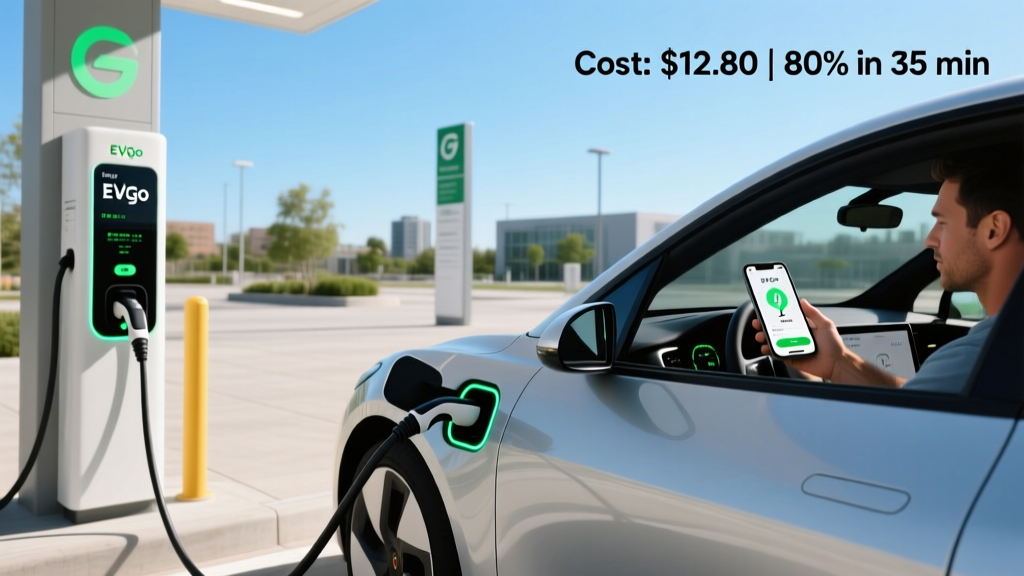
If you've pulled into an EVgo station and watched the per-kWh price flash on the screen, you've probably wondered how it stacks up against charging at home — or against filling a gas tank. The EVgo fast charging cost varies by location, membership tier, and time of day, but the numbers are predictable enough to build a real ownership budget around.
As of early 2026, EVgo's standard pay-as-you-go rates for DC fast charging typically fall between $0.39 and $0.59 per kWh depending on the metro area, with California and Northeast stations clustering at the higher end. EVgo's Plus1 and Plus2 subscription plans reduce that by roughly 10–20%, bringing effective rates down to approximately $0.31–$0.49/kWh. Some utility-partner stations offer off-peak rates as low as $0.27/kWh.
To put that in perspective: charging a Tesla Model Y (75 kWh usable battery, ~310 miles EPA range) from 10% to 80% at an EVgo station in Austin, Texas at $0.43/kWh costs roughly $22.57 and adds about 217 miles of range. That same charge at home on a Level 2 charger at the national average residential electricity rate of ~$0.17/kWh costs about $8.93.
Charging Levels Explained: Speed, Power, and Range Added Per Hour
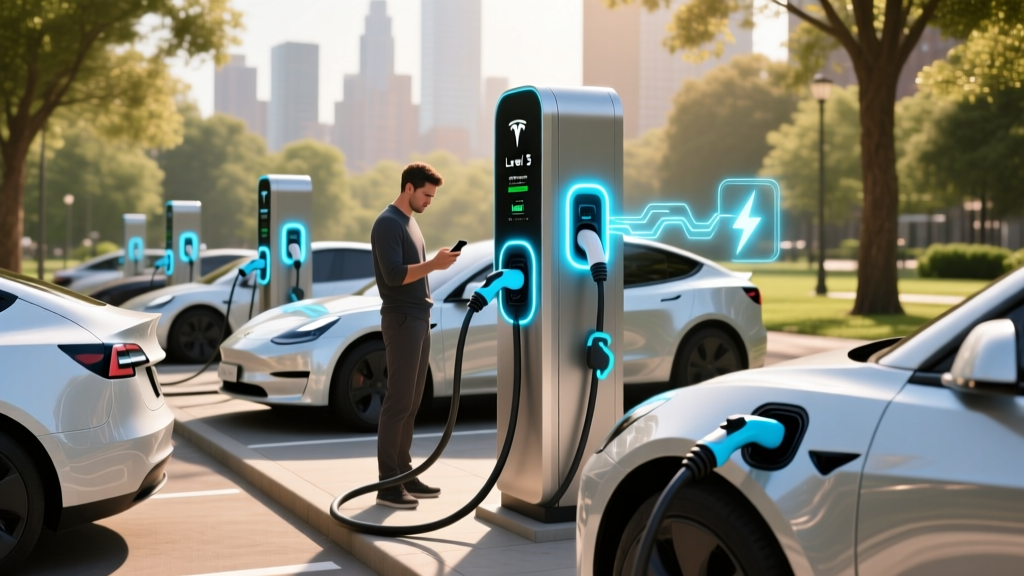
Before comparing costs, you need to understand the three charging levels and what they actually deliver. The single most important distinction in EV charging: kW (kilowatts) measures power — the rate of energy flow, like water pressure from a hose. kWh (kilowatt-hours) measures energy — the total amount stored, like gallons in a tank. A 150 kW charger delivers energy faster than a 7.2 kW charger, filling your battery's kWh capacity more quickly.
| Level | Voltage / Power | Miles of Range Added Per Hour | Best For |
|---|---|---|---|
| Level 1 | 120V / 1.0–1.4 kW | 3–5 mi/hr | Overnight trickle, PHEVs, emergencies |
| Level 2 | 240V / 7.2–19.2 kW | 25–75 mi/hr | Daily home charging, workplaces |
| DC Fast (Level 3) | 400–800V / 50–350 kW | 150–1,200+ mi/hr (peak) | Road trips, quick top-ups, no home charging |
Charging time examples for a 75 kWh battery (10–80%, or ~52.5 kWh needed):
- Level 1 (1.4 kW): ~37.5 hours — impractical for BEVs, fine for a PHEV with a 15 kWh battery
- Level 2 (11.5 kW, 48A): ~4.5 hours — ideal overnight charge
- DC Fast (150 kW peak, ~100 kW sustained average): ~32 minutes — note that charge speed tapers significantly above 80% State of Charge (SoC), which is why 10–80% is the standard benchmark
The taper matters: a vehicle that peaks at 250 kW may only sustain that rate between 10–30% SoC before dropping to 150 kW, then 100 kW, then 50 kW above 70%. This is why a "350 kW charger" doesn't fill your battery at 350 kW the entire session. Your vehicle's battery management system (BMS) controls the acceptance rate, and factors like battery temperature, state of charge, and chemistry all affect the charge curve.
How Much Does It Cost to Install a Home EV Charger?
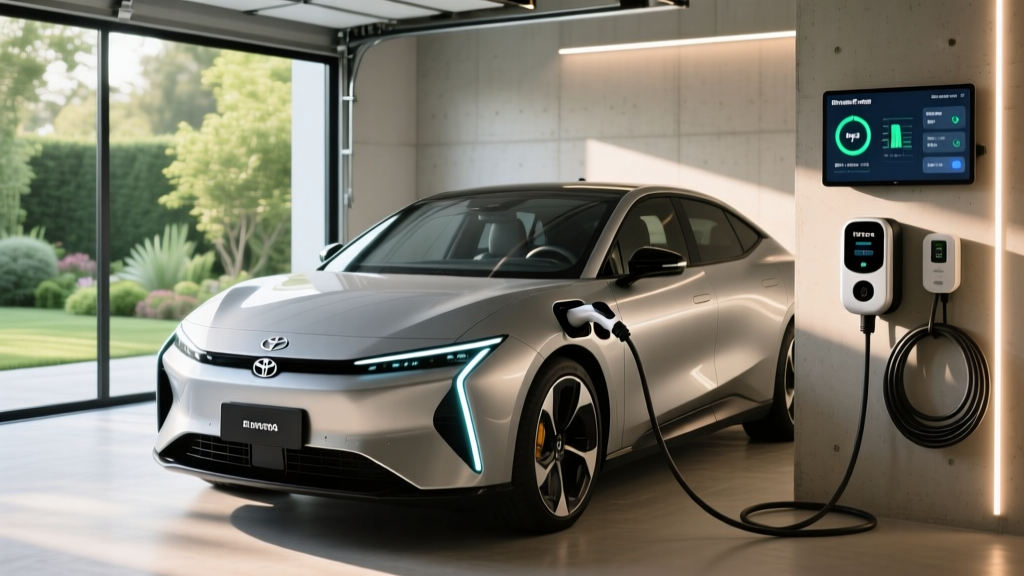
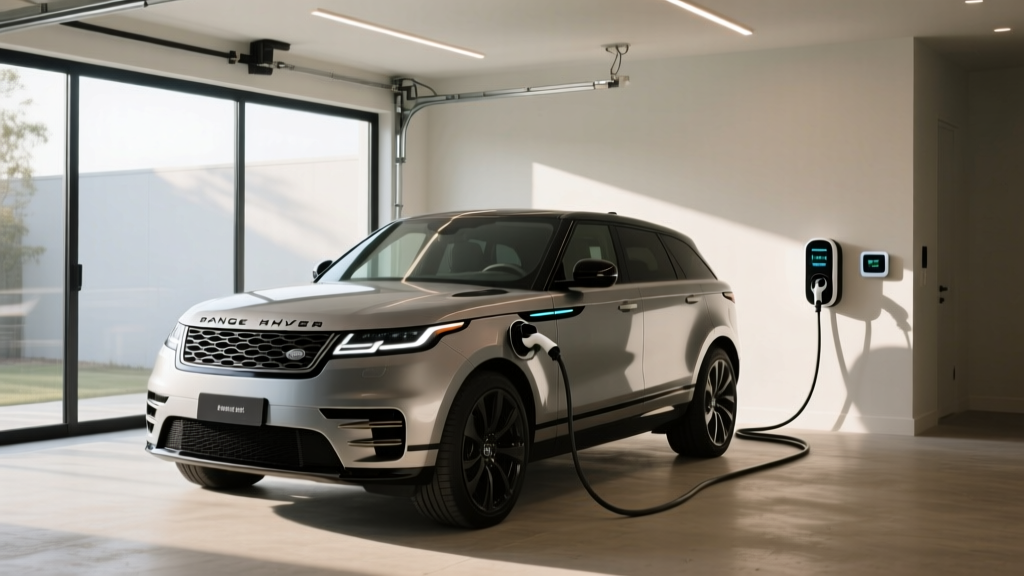
Home Level 2 charging is where the economics overwhelmingly favor EV ownership. But the install cost is the gatekeeping question. Here's a realistic breakdown for a typical 240V / 48-amp (11.5 kW) hardwired Level 2 charger installation in 2026:
| Component | Typical Cost Range | Notes |
|---|---|---|
| Level 2 charger (hardware) | $350 – $750 | Varies by brand, power output, smart features |
| Electrician labor (240V circuit run) | $400 – $1,500 | Depends on distance from panel, wall material, conduit |
| Electrical permit | $50 – $250 | Required in most jurisdictions; varies by city/county |
| Panel upgrade (if needed) | $1,500 – $3,500 | Homes with 100A service often need upgrade to 200A |
| Total (no panel upgrade) | $800 – $2,500 | Most homes with 200A service and short conduit runs |
| Total (with panel upgrade) | $2,300 – $6,000 | Older homes, 100A panels, or maxed-out breaker boxes |
Electrical Requirements: What Your Installer Needs to Know
A 48-amp Level 2 charger requires a dedicated 60-amp, 240-volt circuit (National Electrical Code requires circuits rated at 125% of the continuous load: 48A × 1.25 = 60A). The circuit uses 6 AWG copper wire for most runs, or 4 AWG for longer distances to minimize voltage drop.
Panel upgrade gotcha: If your home has a 100-amp main panel — common in homes built before the 1990s — adding a 60-amp EV circuit may exceed your panel's capacity, especially if you already run electric range, dryer, and HVAC. A licensed electrician will perform a load calculation per NEC Article 220 to determine if an upgrade is required. Don't skip this step.
Safety and code considerations:
- Dedicated circuit: Your EV charger must be on its own breaker — no sharing with other appliances
- GFCI protection: NEC 2020+ requires GFCI protection for outdoor receptacles; hardwired units may have different requirements by jurisdiction
- Outdoor rating: If installing outside (garage-free homes), choose a NEMA 4-rated charger enclosure rated for rain, dust, and UV exposure
- Permit and inspection: Most municipalities require a permit and final inspection — this protects your home insurance coverage and is often required to claim utility rebates
EVgo Pricing vs. Home Charging: The Per-Mile Cost Breakdown
Let's get concrete about the EVgo fast charging cost compared to home electricity and gasoline. The metric that matters most is cost per mile — because that's what you actually spend to go somewhere.
| Scenario | Rate | Vehicle Efficiency | Cost Per Mile |
|---|---|---|---|
| Home Level 2 (national avg) | $0.17/kWh | 3.0 mi/kWh (e.g., Hyundai Ioniq 6) | $0.057/mi |
| Home Level 2 (off-peak TOU rate) | $0.09/kWh | 3.0 mi/kWh | $0.030/mi |
| EVgo DC Fast (avg metro) | $0.45/kWh | 3.0 mi/kWh | $0.150/mi |
| EVgo DC Fast (peak California) | $0.59/kWh | 3.0 mi/kWh | $0.197/mi |
| Gasoline (30 MPG, $3.40/gal) | $3.40/gallon | 30 MPG combined | $0.113/mi |
| Gasoline (25 MPG, $3.40/gal) | $3.40/gallon | 25 MPG combined | $0.136/mi |
The key takeaway: Home Level 2 charging at national average rates costs roughly half what gasoline costs per mile. EVgo DC fast charging at average rates is slightly more expensive per mile than gas — but you're paying for speed and convenience on the road, not daily commuting. If your EVgo sessions are a small fraction of your total charging (say 10–15% on road trips), your blended cost per mile remains well below gasoline.
Efficiency matters enormously here. A Hyundai Ioniq 6 SE (3.5 mi/kWh on the EPA cycle) stretches each kWh further than a Ford F-150 Lightning (2.0 mi/kWh), cutting your per-mile cost by over 40% on the same electricity rate. Check fueleconomy.gov for the official kWh/100mi rating of any EV you're considering.
Connector Compatibility: Will EVgo Work With Your EV?
EVgo's network in 2026 supports multiple connector standards, but the landscape has shifted significantly since the industry-wide adoption of the North American Charging Standard (NACS). Here's what you need to know:
| Connector | Vehicles Using It | EVgo Support | Adapter Needed? |
|---|---|---|---|
| NACS (Tesla/J3400) | Tesla (all years), Ford, GM, Rivian, Volvo, Polestar, and most 2025+ models | Yes — new EVgo stations include NACS cables; retrofits ongoing | No for NACS-equipped vehicles |
| CCS1 | Hyundai, Kia, BMW, VW, most 2024 and earlier non-Tesla EVs | Yes — most existing EVgo stations have CCS1 | No for CCS-equipped vehicles |
| CHAdeMO | Nissan Leaf (legacy), Mitsubishi Outlander PHEV | Limited — being phased out at many stations | No, but station availability declining |
| CCS1-to-NACS adapter | NACS vehicles charging at CCS-only stations | Bring your own adapter | Yes — ~$150–$250 aftermarket |
If you're buying a 2025 or 2026 model-year EV, it almost certainly has a NACS port (or will ship with a CCS-to-NACS adapter from the manufacturer). Tesla owners have had access to EVgo stations with NACS connectors since late 2024, and that footprint has expanded significantly through 2025–2026. Always check the EVgo app for connector availability at your specific station before driving there.
Level 2 Home Charger Recommendations for 2026
Based on real-world reliability, charging speed, build quality, and smart features, here are three Level 2 chargers that cover different budgets and needs. All three support NACS (J3400) natively or via included adapter:
Emporia Vue Level 2 Smart Charger
- Power output: 48A / 11.5 kW (hardwired) or 40A / 9.6 kW (NEMA 14-50 plug)
- Connector: NACS (J3400) native; CCS1 adapter available
- Cable length: 24 feet
- Smart features: Wi-Fi, app-based scheduling, energy monitoring, solar integration, time-of-use optimization
- Outdoor rating: NEMA 4 (fully weatherproof)
- Price: ~$399 (hardwired) / ~$449 (plug-in)
- Why we recommend it: Best value in smart chargers; energy monitoring pairs with Emporia's whole-home panel to track exact charging cost per session
ChargePoint Home Flex (2nd Gen)
- Power output: Up to 50A / 12 kW (adjustable 16A–50A via DIP switches)
- Connector: NACS native (2025+ models); CCS1 on earlier models
- Cable length: 23 feet
- Smart features: Wi-Fi, Alexa integration, flexible amperage settings, detailed session history in app
- Outdoor rating: NEMA 4
- Price: ~$599
- Why we recommend it: Adjustable amperage means you can dial it down to match a smaller circuit if your panel doesn't support 60A — avoids a costly panel upgrade
Tesla Wall Connector
- Power output: 48A / 11.5 kW (hardwired, 60A circuit required)
- Connector: NACS native; includes J1772 adapter for non-Tesla EVs
- Cable length: 24 feet
- Smart features: Wi-Fi, OTA firmware updates, load sharing (pair two units on one circuit), power sharing with Tesla Powerwall
- Outdoor rating: NEMA 3R (rain-resistant, not fully sealed against hose-directed water)
- Price: ~$425
- Why we recommend it: Best-in-class for Tesla owners; load-sharing feature lets two Teslas charge on a single 60A circuit — ideal for two-EV households without a panel upgrade
For all three, a hardwired installation is preferable to a plug-in (NEMA 14-50) setup. Hardwired connections avoid the NEC requirement for a GFCI breaker on receptacles (which can cost $150–$250 extra and occasionally nuisance-trip), and they allow the full 48A output versus the 40A limit of most plug-in configurations.
Maximizing Value: When to Use EVgo vs. When to Charge at Home
The economics are straightforward once you see the numbers laid out:
Decision Framework: Where to Charge
Charge at home (Level 2) when:
- You have a garage or dedicated parking spot with 240V access
- Your daily driving is under 60 miles (covers 90%+ of American commutes)
- Your utility offers time-of-use (TOU) rates — schedule charging for off-peak hours (typically 10 PM – 6 AM) at $0.07–$0.12/kWh
- You want the lowest possible cost per mile ($0.03–$0.06/mi)
Use EVgo (or similar DC fast network) when:
- You're on a road trip and need 150+ miles of range in 20–30 minutes
- You live in an apartment or condo without Level 2 access (supplement with workplace charging if available)
- Your EV's state of charge dropped unexpectedly and you need a quick top-up
- An EVgo Plus subscription or utility partnership rate makes DC fast charging competitive ($0.27–$0.35/kWh off-peak at partner stations)
One underappreciated strategy: if your utility partners with EVgo (common with PG&E, ConEdison, Dominion, and several others), you may have access to reduced DC fast charging rates during off-peak hours. Check your utility's EV programs — some offer $25–$50 monthly charging credits that effectively bring EVgo costs below gasoline per mile.
For the federal §30D tax credit, note that the credit applies to the vehicle purchase, not charging equipment. However, the Alternative Fuel Vehicle Refueling Property Credit (IRC §30C) can cover up to 30% of home charger hardware and installation costs (up to $1,000) if you live in an eligible census tract. Consult a tax professional for eligibility — rules depend on your specific location and income.
Frequently Asked Questions
How much does EVgo fast charging cost for a full session?
For a typical 10–80% charge on a 75 kWh battery (about 52.5 kWh added), expect to pay $16–$31 at EVgo depending on your metro area's per-kWh rate and whether you have a Plus subscription. In expensive markets like San Francisco or New York, a full session can approach $35 at peak rates. In lower-cost markets like Dallas or Atlanta, it may be closer to $18.
Is EVgo more expensive than charging at home?
Yes — significantly. EVgo rates ($0.39–$0.59/kWh) are 2–4× the national average residential electricity rate (~$0.17/kWh). A 10–80% charge that costs $25 at EVgo costs roughly $9 at home. The difference is approximately $16 per session, or about $830 per year if you charged exclusively at EVgo weekly. This is why home Level 2 installation pays for itself within 1–3 years for most drivers.
Does EVgo charge by the minute or by the kWh?
EVgo bills by the kWh in most states, which is the fairer model since you pay for actual energy received rather than time connected. In a handful of states where regulations prohibit per-kWh billing by non-utilities, EVgo charges by the minute — in those cases, your cost varies with your vehicle's charge acceptance rate. A vehicle that charges at 150 kW pays far less per kWh effectively than one limited to 50 kW on per-minute billing.
What electrical upgrades might I need for a home charger?
The most common upgrade is a panel replacement from 100A to 200A service ($1,500–$3,500). Other potential needs: a new conduit run from the panel to the garage or driveway ($15–$40 per linear foot for long runs), a sub-panel if your main panel is full, or a smart electrical panel (like SPAN) that can manage circuit-level load to avoid a full panel upgrade. Always get a load calculation from a licensed electrician before committing.
Can I use a regular 120V outlet to charge my EV?
Yes, but slowly. Level 1 charging at 120V / 12A delivers roughly 1.4 kW, adding about 3–5 miles of range per hour. That's 36–60 miles overnight — adequate for PHEVs with small batteries (12–18 kWh) or for BEV owners who drive less than 30 miles daily. For any BEV with a 60+ kWh battery, Level 1 is impractically slow as a primary strategy: a full charge would take 2–3 days.
Which is cheaper long-term: relying on public DC fast charging or installing a home Level 2?
Home Level 2 wins decisively. Even at the high end of installation costs ($2,500 with no panel upgrade), the per-session savings of ~$16 versus EVgo pays back the installation in approximately 156 sessions — about 3 years of weekly charging. After payback, you're saving roughly $830/year indefinitely. If you need a panel upgrade ($5,000 total install), payback extends to about 6 years, but you also gain a modernized electrical system that supports future electrification (heat pumps, solar, etc.).
Sources: Residential electricity rates from U.S. EIA; vehicle efficiency data from fueleconomy.gov; EVgo pricing verified via EVgo app (rates vary by location and are subject to change); IRS §30D and §30C credit rules. Always confirm current rates and tax credit eligibility with official sources before making purchase decisions.