Why EVgo Charging Rates Matter to Your EV Budget
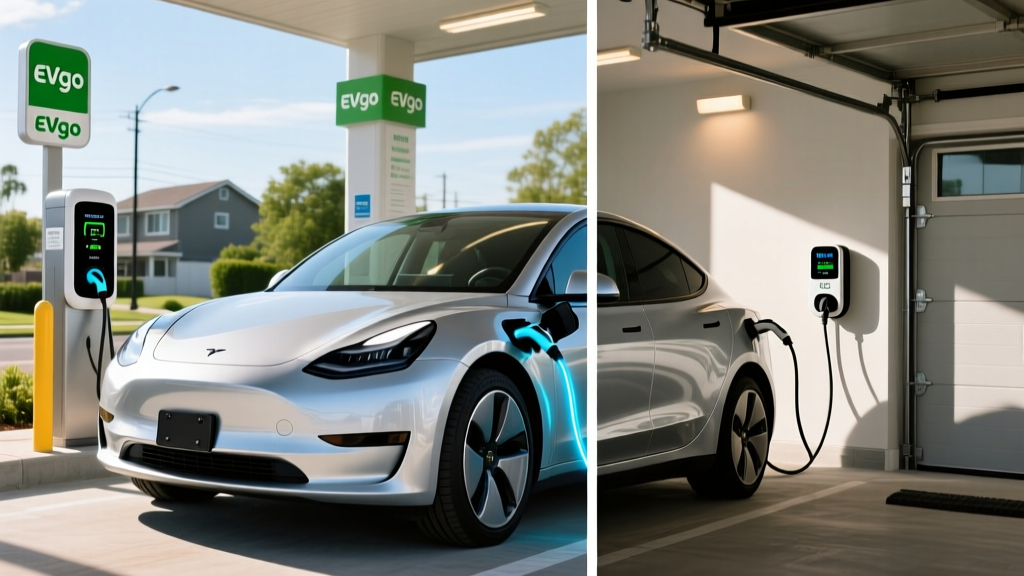
If you've ever pulled up to an EVgo station and watched the per-minute meter spin, you know that public DC fast charging isn't cheap. In 2026, EVgo charging rates typically range from $0.30 to $0.48 per kWh depending on your membership tier, location, and time of day — and that's before any idle fees or session charges. For road trips, that's a fair trade for 150+ kW charging speeds. For daily driving? It can quietly double or triple your electricity cost compared to home charging.
This guide breaks down exactly what EVgo (and comparable networks) charge, how that stacks up against home Level 2 charging, what equipment you need, and how to calculate your real cost per mile. We'll also cover the installation realities — including the panel upgrades that catch older-home buyers off guard.
Charging Levels Explained: Speed, Power, and Real-World Range Gains
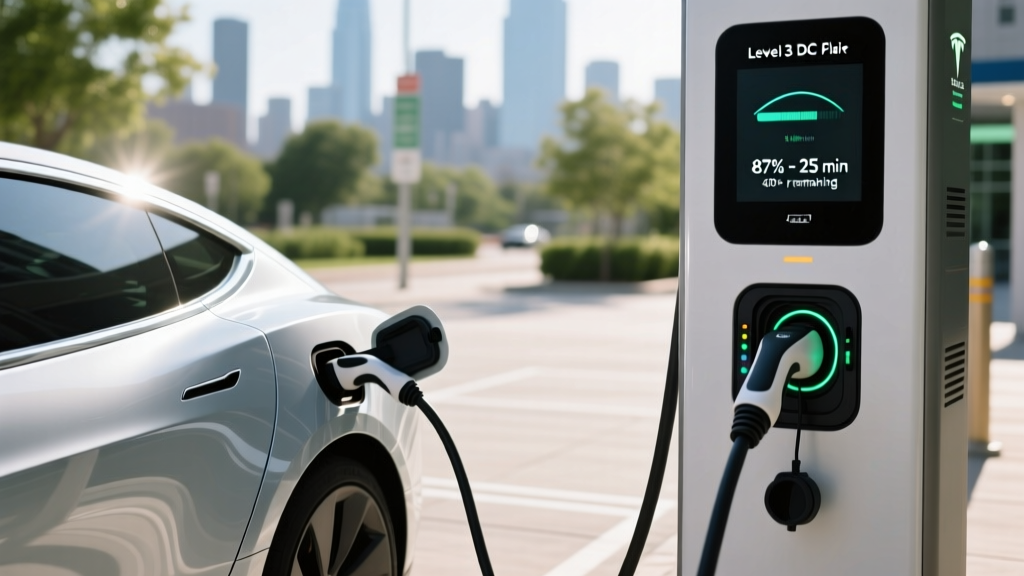
Before comparing costs, you need the vocabulary right. kW (kilowatts) measures power — how fast energy flows into your battery. kWh (kilowatt-hours) measures energy — the total amount stored. A 75 kWh battery charged at 7.2 kW takes roughly 10 hours from empty; the same battery at 150 kW can hit 80% in about 25 minutes.
| Level | Typical Power | Miles Added per Hour | Best Use Case | 10–80% Time (75 kWh Battery) |
|---|---|---|---|---|
| Level 1 (120V) | 1.2–1.9 kW | 3–5 mi/hr | Overnight top-ups, PHEVs | ~40+ hours (not practical) |
| Level 2 (240V) | 3.3–19.2 kW | 12–75 mi/hr | Home/workplace daily charging | 4–12 hours |
| DC Fast Charge | 50–350 kW | 120–300+ mi/hr | Road trips, quick top-ups | 18–35 minutes |
A critical caveat: DC fast charging speeds follow a charge curve. Your EV may accept 200 kW at 15% state of charge but taper to 50 kW past 70%. That's why we cite 10–80% times — it's the usable fast-charging window. Above 80%, speeds drop sharply to protect battery health.
EVgo Charging Rates in 2026: Tier-by-Tier Breakdown
EVgo operates one of the largest public DC fast-charging networks in the U.S., with over 1,100 stations and growing. Pricing varies by metro area, but here's the general structure as of early 2026:
- Guest (no membership): $0.43–$0.48/kWh + potential session fee
- EVgo Plus (free tier): $0.36–$0.43/kWh, slight discount off guest rate
- EVgo Plus+ ($4.99/month): $0.30–$0.38/kWh, best per-kWh rate
- Automaker partnerships (e.g., BMW, GM): Bundled or discounted credits, often $0.25–$0.32/kWh equivalent for limited periods
At $0.43/kWh (a common guest rate in mid-cost markets), fully charging a Tesla Model Y Long Range (75 kWh usable) from 10–80% costs roughly $22.50. That adds about 230 miles of EPA-rated range. At the Plus+ rate of $0.33/kWh, the same session drops to about $17.30.
Home Level 2 Charging: The Cost Per Mile Winner
Home charging is where EV ownership economics shine. The U.S. average residential electricity rate sits around $0.16/kWh in 2026, though rates in California and the Northeast push $0.25–$0.32/kWh while the Southeast and Midwest often hover $0.11–$0.14/kWh. Many utilities offer off-peak EV rates as low as $0.07–$0.10/kWh between 11 PM and 6 AM.
Using that same 75 kWh battery and a 10–80% session (52.5 kWh added):
- At $0.16/kWh (national avg): $8.40
- At $0.09/kWh (off-peak EV rate): $4.73
- At $0.28/kWh (California peak): $14.70
Even at California's high rates, home charging undercuts EVgo's guest rate by 35% or more. With an off-peak plan, you're paying one-fifth the public fast-charging cost.
Cost Per Mile: EVgo vs Home vs Gas
Let's translate kWh costs into something tangible — cost per mile — using a Tesla Model Y Long Range (310 EPA miles, ~75 kWh usable, yielding ~4.1 mi/kWh) and a comparable gas SUV getting 26 MPG combined.
| Charging/Fueling Method | Cost per Unit | Cost per Mile (Model Y / Gas SUV) |
|---|---|---|
| Home (national avg) | $0.16/kWh | $0.039 / $0.135 |
| Home (off-peak EV rate) | $0.09/kWh | $0.022 / — |
| EVgo Plus+ member | $0.33/kWh | $0.080 / — |
| EVgo guest rate | $0.43/kWh | $0.105 / — |
| Gasoline (national avg) | $3.45/gal | — / $0.133 |
The takeaway: home-charged EVs cost 3–5 cents per mile, versus 13+ cents for gas. Even EVgo's guest rate of ~10.5 cents/mile undercuts gasoline, though the margin is thin. If you rely exclusively on public DC fast charging, your per-mile fuel cost approaches that of a fuel-efficient hybrid.
Home Charger Installation: Costs, Electrical Requirements, and Panel Gotchas
A Level 2 home charger is the single best investment for EV ownership convenience and economics. But installation costs vary wildly — from a $500 straightforward add to a $3,500+ project requiring a panel upgrade.
Electrical Requirements
Most Level 2 chargers draw 32–48 amps and require a dedicated 240V circuit rated at 40–60 amps. The National Electrical Code (NEC) requires circuits to be rated at 125% of continuous load, so a 40-amp charger needs a 50-amp breaker.
- Standard setup: 240V / 40A circuit, NEMA 14-50 outlet or hardwired
- High-power setup: 240V / 60A circuit for 48A chargers (e.g., ChargePoint Home Flex at max, Tesla Wall Connector)
- Minimum viable: 240V / 20A circuit for 16A charging (slower but functional for PHEVs and low-mileage drivers)
Panel Upgrade Reality Check
Homes built before 1990 often have 100-amp electrical panels. Adding a 50-amp EV circuit may exceed your panel's capacity, especially if you're already running central AC, an electric dryer, and an electric range. A panel upgrade to 200 amps typically costs $1,500–$3,000 before the charger circuit is even installed. Some utilities offer rebates or financing for panel upgrades tied to EV adoption — check with your provider.
An alternative: the Span smart panel or a load-management device (like the Emporia V2 with load shedding) can sometimes avoid a full panel upgrade by dynamically limiting EV charge rate when other appliances draw heavily.
Installation Cost Breakdown
| Component | Simple Install (panel nearby, no upgrade) | Complex Install (long run, panel upgrade) |
|---|---|---|
| Level 2 charger (equipment) | $350–$650 | $350–$650 |
| Electrician labor (2–4 hrs simple / 6–10 hrs complex) | $300–$700 | $900–$2,000 |
| Electrical permit | $50–$150 | $50–$150 |
| Panel upgrade (if needed) | $0 | $1,500–$3,000 |
| Conduit, wiring, misc. materials | $50–$150 | $200–$500 |
| Total | $750–$1,650 | $3,000–$6,300 |
Many utilities and states offer rebates of $250–$1,000 for home charger installation. The federal Residential Clean Energy Credit (IRC §25D) covers 30% of charger equipment and installation costs up to $1,000 through 2032, though it phases down afterward. Confirm current eligibility with a tax professional.
Connector Compatibility: NACS, CCS, and CHAdeMO in 2026
The connector landscape has consolidated significantly. Tesla's North American Charging Standard (NACS) is now the dominant connector for new vehicles, with most major automakers — Ford, GM, Rivian, Hyundai, Kia, Volvo, and others — having switched to NACS for 2025+ models. CCS1 remains on many 2022–2024 vehicles still on the road. CHAdeMO is effectively legacy (Nissan Leaf being the last major holdout).
| Connector | Vehicles Using It (2026) | EVgo Availability | Adapter Needed? |
|---|---|---|---|
| NACS (Tesla-style) | Tesla (all years), Ford F-150 Lightning/Mach-E (2025+), GM Ultium vehicles (2025+), Hyundai Ioniq 5/6 (2026+), Rivian (2025+) | Expanding — most new EVgo stalls include NACS | CCS-to-NACS adapter for older CCS vehicles at NACS-only stalls |
| CCS1 | Hyundai/Kia (2022–2025), VW ID.4 (2021–2025), Ford (2022–2024), BMW iX/i4 (2022–2024), most pre-2025 non-Tesla EVs | Widely available on existing EVgo stalls | NACS-to-CCS adapter (e.g., Lectron, A2Z) for CCS vehicles at NACS-only stalls |
| CHAdeMO | Nissan Leaf (all years), Mitsubishi Outlander PHEV (older) | Limited — being phased out at many sites | No adapter exists; must find CHAdeMO-equipped station |
For home chargers: Most Level 2 units ship with a J1772 connector (the universal Level 2 standard). Tesla vehicles use a J1772-to-NACS adapter (included with every Tesla). If you buy a Tesla Wall Connector, it ships NACS-native but works with all EVs using the proper adapter.
Equipment Picks: Best Home Level 2 Chargers for 2026
Here are three chargers we recommend based on reliability, features, and value — all UL-listed and compatible with the vast majority of EVs.
Emporia Vue Level 2 Charger — Best Value
- Power output: Up to 48A / 11.5 kW (on 60A circuit) or configurable down to 16A
- Connector: J1772 (NACS adapter included)
- Cable length: 24 feet
- Smart features: Wi-Fi, scheduling, energy monitoring, solar integration, load management with Emporia Vue panel monitor
- Price: ~$399
- Why we pick it: The load-management capability can avoid a panel upgrade, saving $1,500+. Energy monitoring pairs with the Emporia home energy monitor for real-time cost tracking.
ChargePoint Home Flex — Best All-Rounder
- Power output: Up to 50A / 12 kW (on 60A circuit); configurable 16–50A via DIP switches
- Connector: J1772 (NACS version available for 2025+)
- Cable length: 23 feet
- Smart features: Wi-Fi, Alexa/Google integration, scheduling, detailed session history in app
- Price: ~$549–$649
- Why we pick it: Rock-solid reliability track record, excellent app, UL-listed for indoor/outdoor use. The amperage configurability lets you match your circuit exactly.
Tesla Wall Connector — Best for Tesla Households
- Power output: Up to 48A / 11.5 kW (on 60A circuit)
- Connector: NACS native (J1772 adapter sold separately for non-Tesla EVs)
- Cable length: 24 feet
- Smart features: Wi-Fi, over-the-air updates, power sharing (link multiple units on one circuit), access control
- Price: ~$475
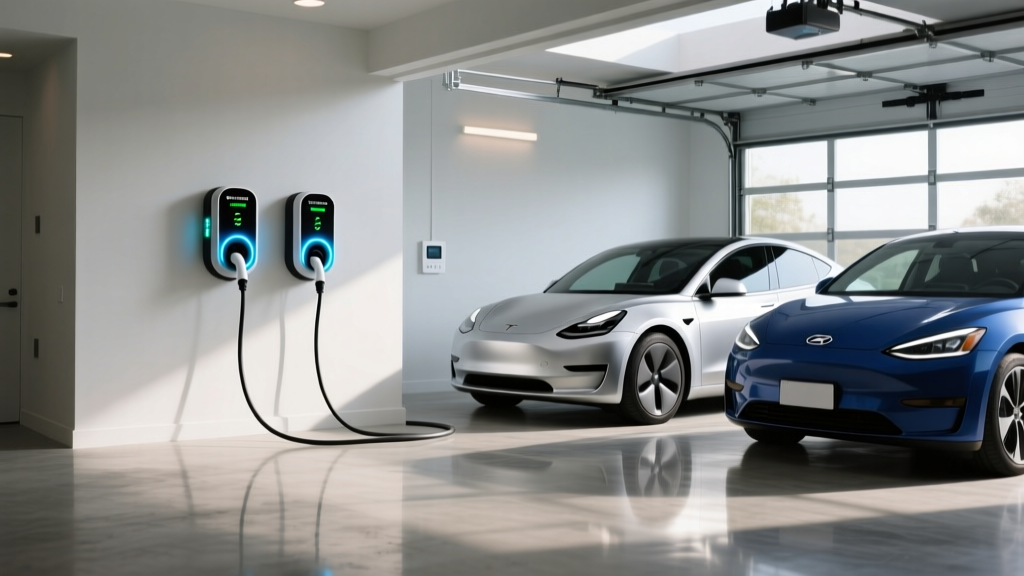
- Why we pick it: If your household runs Teslas, nothing beats the native integration. Power sharing lets you install two connectors on a single 60A circuit — ideal for two-car garages.
Safety, Code, and Installation Best Practices
EV charging is a continuous high-draw load — your charger may run at full power for 6–10 hours straight. That demands code-compliant installation:
- Dedicated circuit: Your EV charger must have its own breaker — no sharing with other outlets or appliances.
- GFCI protection: NEC 2020+ requires GFCI protection for outdoor receptacles. Hardwired installations often avoid nuisance tripping that GFCI outlets can cause with high-draw EV loads.
- Outdoor rating: If installing outside, ensure the charger carries a NEMA 4 or IP65 weather rating. All three picks above are outdoor-rated.
- Permit and inspection: Most jurisdictions require a permit for new 240V circuits. Skipping this can void homeowner's insurance coverage for electrical fires and create issues at resale.
- Wire gauge: 6 AWG copper for 50A circuits; 4 AWG for 60A. Your electrician will size this correctly, but verify — undersized wire is a fire hazard.
We strongly recommend hardwired installations over NEMA 14-50 outlets for dedicated EV circuits. Outlets can loosen over time with the sustained thermal load of daily charging, and several EV-related residential fires have been traced to 14-50 receptacle failures.
Strategic Charging: When to Use EVgo vs Home
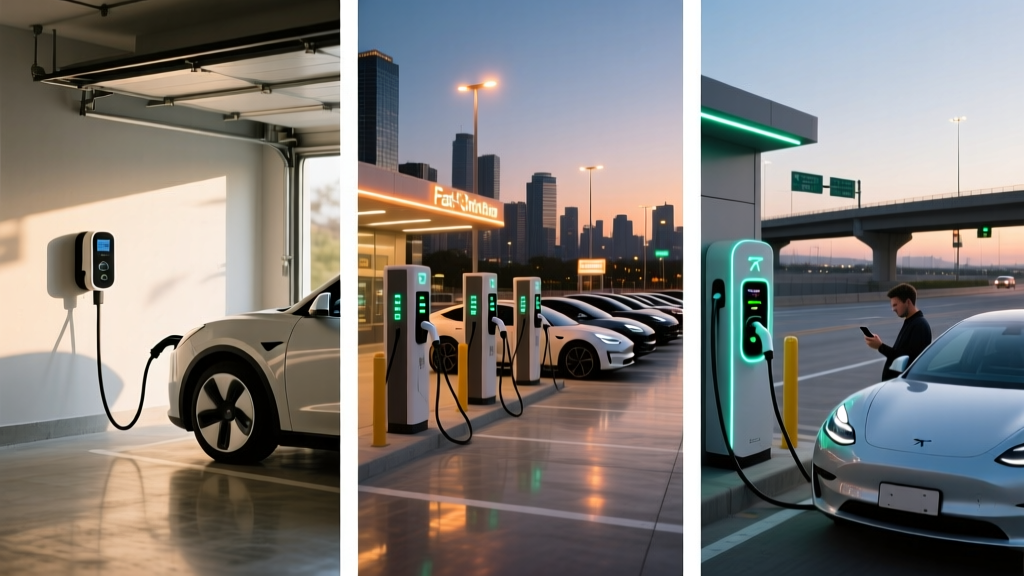
The economics are clear: home charging wins on cost by a wide margin. But EVgo and other DC fast networks fill specific roles:
- Road trips: Essential. A 20-minute EVgo stop at 150+ kW is the only practical way to recharge on a 300+ mile drive.
- Apartment dwellers: If you can't install a home charger, public DC fast charging becomes your primary option. Negotiate workplace charging access or find a reliable Level 2 destination charger near your routine.
- Emergency top-ups: Forgot to plug in and need 100 miles by morning? A 15-minute DC fast session costs $8–$12 and solves the problem.
- Time-of-day arbitrage: Some EVgo locations now offer off-peak discounts. If your local station drops to $0.28/kWh overnight, it becomes competitive with high-rate home electricity.
For the cost-conscious owner, the ideal split is 90%+ home Level 2, under 10% public DC fast charging. That keeps your per-mile cost in the 3–4 cent range while retaining road-trip freedom.
Frequently Asked Questions
How much does it cost to install a home EV charger?
A straightforward installation with an adequate electrical panel typically runs $750–$1,650 including equipment, electrician labor, permit, and materials. If your home needs a 200-amp panel upgrade, total costs can reach $3,000–$6,300. Federal and utility rebates can offset $250–$1,000 of this.
How fast will each charging level add range?
Level 1 (120V) adds 3–5 miles per hour — adequate for PHEVs with small batteries. Level 2 (240V) adds 12–75 miles per hour depending on amperage and your vehicle's onboard charger. DC fast charging at 150 kW can add 150–200+ miles in 20 minutes, though the charge curve tapers significantly past 80% state of charge.
Which connector is compatible with my EV?
Check your vehicle's charge port. If you drive a 2025+ model from Ford, GM, Rivian, Hyundai, or Kia, you likely have NACS. Older non-Tesla EVs (2022–2024) mostly use CCS1. The Nissan Leaf uses CHAdeMO. For home Level 2, all EVs accept J1772 (Teslas via included adapter). When in doubt, check your owner's manual or the EPA's fueleconomy.gov vehicle listings.
How much does charging cost per mile compared to gas?
Home-charged EVs average $0.03–$0.05 per mile, while the average gas SUV costs $0.13–$0.15 per mile at $3.45/gallon and 26 MPG. Even EVgo's guest rate of ~$0.43/kWh yields about $0.10/mile for an efficient EV — still below gasoline. The savings compound: a 12,000-mile year saves $1,000–$1,500 with home charging versus gas.
What electrical upgrades might I need for a home charger?
The most common surprise is needing a panel upgrade from 100A to 200A, which affects older homes with high existing electrical loads (central AC, electric range, dryer). A load calculation by a licensed electrician will determine if your panel has headroom. Alternatives include smart load-management devices (Span panel, Emporia load shed) or simply installing a lower-amperage circuit (20–30A) that charges more slowly but stays within your panel's capacity.
Are EVgo rates the same everywhere?
No. EVgo pricing varies by city, state electricity costs, and station utilization. Urban centers in California and the Northeast tend toward the $0.43–$0.48/kWh range for guests, while Midwest and Southern stations may be $0.35–$0.40/kWh. Always check the EVgo app for real-time pricing at your specific station before plugging in.
Is it worth getting an EVgo membership?
If you use EVgo more than twice a month, the Plus+ plan at $4.99/month pays for itself quickly. The per-kWh discount of $0.05–$0.10 saves $3–$7 per session. For road-trip-heavy drivers, the annual savings versus guest rates can exceed $200. Compare with Electrify America's Pass+ and Tesla Supercharger pricing if you have access to multiple networks.