If you've recently purchased or are shopping for an electric vehicle, you've likely encountered the term "EV Type 2 charger" and wondered how it fits into the North American charging landscape. The Type 2 connector — formally known as the IEC 62196-2 standard — is the dominant AC charging plug in Europe, but its relevance to US and Canadian EV owners has grown significantly as manufacturers harmonize global platforms and as adapters become widely available. This guide cuts through the confusion with exact speeds, real installation costs, equipment recommendations, and the electrical realities of setting up Level 2 charging at home in 2026.
Understanding EV Charging Levels: kW, Speeds, and Real-World Range Addition
Before evaluating any charger, you need to understand the three charging tiers and the critical distinction between kW (kilowatts — a measure of power, or how fast energy flows) and kWh (kilowatt-hours — a measure of energy, or how much your battery stores). Think of kW as the width of the pipe and kWh as the size of the tank. A charger's kW rating tells you how quickly it can push energy into your battery; your battery's kWh capacity tells you how much it holds.
| Level | Voltage | Power (kW) | Miles of Range Added Per Hour | Typical Use Case |
|---|---|---|---|---|
| Level 1 | 120V AC | 1.0–1.9 kW | 3–5 miles/hr | Overnight top-up, PHEVs, low-mileage drivers |
| Level 2 (Type 2 / J1772 / NACS AC) | 240V AC | 3.3–19.2 kW | 12–75 miles/hr | Home daily charging, workplace, public AC stations |
| DC Fast Charging | 400–800V DC | 50–350 kW | 150–1,000+ miles/hr (peak) | Road trips, highway corridors, rapid top-ups |
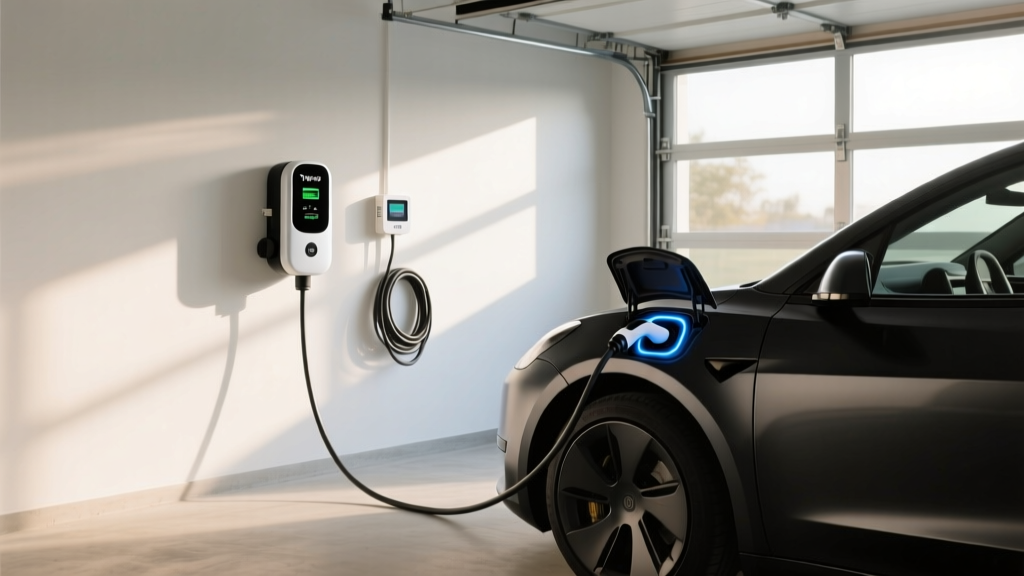
For most EV owners, Level 2 is the daily workhorse. A typical 60 kWh battery (like the one in a base Tesla Model 3 RWD or a Chevrolet Equinox EV) charged from 10% to 80% on a 48-amp (11.5 kW) Level 2 circuit takes roughly 4.5 to 5 hours. On a 32-amp (7.7 kW) circuit, that same charge stretches to about 7 hours — still fine for overnight, but tight if you need a quick turnaround.
EV Type 2 Charger Connector Compatibility in North America
The "Type 2" connector name can cause confusion in the US market. Here's the breakdown: In Europe, the Type 2 (Mennekes) connector is the standard for all AC charging. In North America, the equivalent AC charging standard has historically been J1772 (a different physical plug but serving the same purpose). However, as of 2025-2026, the North American Charging Standard (NACS, developed by Tesla and now adopted by Ford, GM, Rivian, Hyundai, Kia, and most major automakers) is rapidly becoming the unified connector for both AC and DC charging.
| Connector | Brands Using It (2026) | AC Level 2 Charging? | DC Fast Charging? |
|---|---|---|---|
| NACS (Tesla standard) | Tesla, Ford, GM, Rivian, Hyundai, Kia, Volvo, Polestar, Mercedes-Benz | Yes | Yes |
| J1772 (legacy) | Remaining Stellantis models, some older Nissan/Mitsubishi, legacy fleet | Yes | No (needs CCS1 for DC) |
| CCS1 (J1772 + DC pins) | Legacy VW ID.4, older BMW iX, pre-2025 models | Yes (via J1772 portion) | Yes |
| CHAdeMO | Nissan Leaf (discontinued), Mitsubishi Outlander PHEV (older) | Yes (via J1772) | Yes (declining network) |
| Type 2 (IEC 62196-2, European) | European-market EVs; not natively on US vehicles | Yes (with adapter) | No |
What this means for you: If you're buying a new EV in 2026, it almost certainly has a NACS port or a J1772 port. A European "Type 2" wallbox charger will not physically plug into a North American EV without an adapter. However, many high-quality Level 2 charging stations sold in the US are functionally equivalent to European Type 2 chargers — they deliver the same 240V AC power at the same kW ratings — just with a NACS or J1772 plug attached. If you see "Type 2 charger" referenced in product listings, verify the included connector before purchasing.
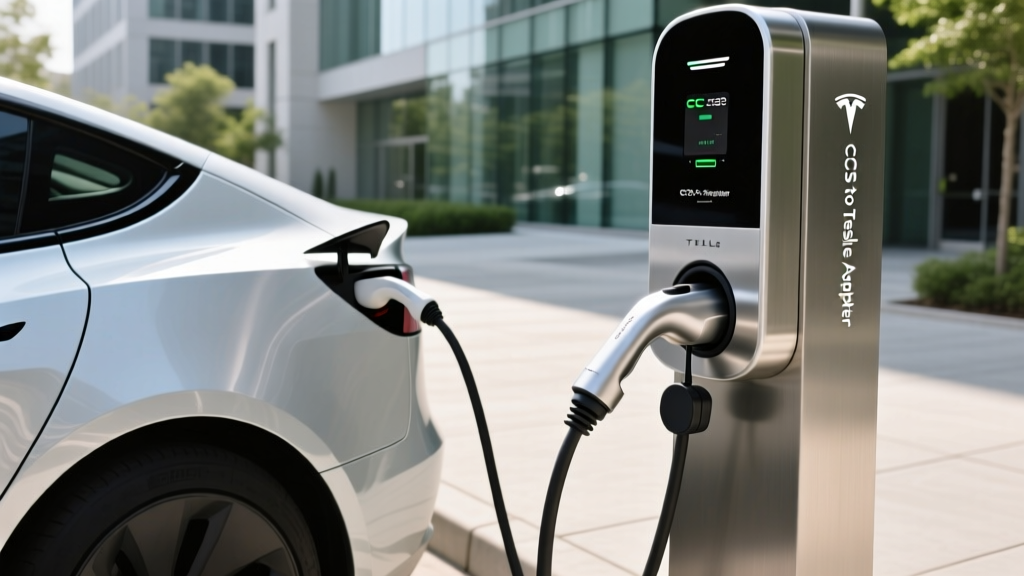
For NACS-equipped vehicles, adapters are available to use legacy J1772 public chargers (Tesla sells a J1772-to-NACS adapter for approximately $75). For J1772-equipped vehicles, NACS-to-J1772 adapters are available from third-party brands like Lectron and A2Z (~$100-$150).
How Much Does It Cost to Install a Home EV Type 2 / Level 2 Charger?
Home Level 2 charger installation costs vary enormously based on your electrical panel's capacity, the distance from the panel to the charger location, and local permitting requirements. Here's a realistic breakdown based on 2026 electrician rates and equipment pricing:
| Component | Simple Install (Panel Near Garage) | Complex Install (Long Run / Panel Upgrade) |
|---|---|---|
| Level 2 Charging Station (hardware) | $300–$700 | $300–$700 |
| Electrical Permit | $50–$200 | $50–$200 |
| Electrician Labor (240V circuit run) | $300–$800 | $800–$2,500 |
| Electrical Panel Upgrade (if needed) | $0 (not needed) | $1,500–$3,500 |
| Conduit, Wiring, Breaker | $100–$300 | $300–$800 |
| Total Estimated Cost | $750–$2,000 | $2,950–$7,700 |
The panel upgrade variable is the single biggest cost wildcard. Most homes built after 2000 have a 200-amp electrical panel, which can typically support a 40-amp or 48-amp dedicated EV circuit alongside existing loads. Homes built before 1990 often have 100-amp or even 60-amp panels. Adding a 48-amp EV circuit to a maxed-out 100-amp panel requires either a panel upgrade to 200 amps or a load-management device that throttles the charger when other high-draw appliances (dryer, oven, HVAC) are running.
• Voltage: 240V (same as your electric dryer or oven)
• Circuit Amperage: 40A, 48A, or 60A dedicated circuit (charger draws 80% of circuit rating continuously — a 48A charger requires a 60A circuit per NEC Article 625)
• Wire Gauge: 6 AWG copper for 48A; 4 AWG for 60A (varies by run length)
• GFCI Protection: Required by NEC 2020+ for EV outlets; hardwired chargers typically have built-in ground-fault protection
• Outdoor Rating: If installing outside, ensure the charger carries a NEMA 4 or IP65 weatherproof rating
Always hire a licensed electrician and pull a permit. Unpermitted EV charger installations can void home insurance claims and create fire hazards. Many utilities offer rebates of $200-$500 for permitted Level 2 installations — check with your local provider. The federal Residential Clean Energy Credit does not cover EV chargers as of 2026, but the Alternative Fuel Vehicle Refueling Property Credit (Form 8911) offers up to 30% (max $1,000) for home charging equipment installed in eligible census tracts. Verify your eligibility with a tax professional.
Best EV Type 2 / Level 2 Chargers for Home in 2026: Equipment Picks
These are the Level 2 charging stations that deliver reliable performance, smart features, and proper safety certifications for North American homes. Each recommendation includes the power output, connector type, and cable length — because recommending a charger without those specs is useless.
Tesla Wall Connector (Gen 4)
Power: Up to 11.5 kW (48A on 60A circuit)
Connector: NACS (native Tesla plug)
Cable Length: 24 feet
Smart Features: Wi-Fi, OTA updates, load sharing between multiple units, Tesla app scheduling
Price: ~$475
Best For: Tesla owners and NACS-equipped EVs (Ford, GM, Hyundai, Kia with adapter). Cleanest integration for Tesla ecosystem.
ChargePoint Home Flex (2nd Gen)
Power: Up to 12 kW (50A on 60A circuit) — adjustable down to 16A
Connector: J1772 (NACS adapter available separately)
Cable Length: 23 feet
Smart Features: Wi-Fi, ChargePoint app, Alexa integration, amperage flexibility for older panels, Energy Star certified
Price: ~$550
Best For: Non-Tesla EVs with J1772 ports; flexible amperage settings for homes with limited panel capacity.
Emporia Level 2 EV Charger
Power: Up to 11.5 kW (48A on 60A circuit)
Connector: J1772
Cable Length: 24 feet
Smart Features: Wi-Fi, Emporia app with energy monitoring, solar-integration scheduling, load management
Price: ~$400
Best For: Budget-conscious buyers who want smart features and energy tracking without premium pricing.
Grizzl-E Smart (United Chargers)
Power: Up to 10 kW (40A on 50A circuit)
Connector: J1772
Cable Length: 24 feet
Smart Features: Wi-Fi, OCPP-compatible (works with utility demand-response programs), built-in load balancing
Price: ~$500
Best For: Cold-climate owners (rated to -40°F); Canadian-built with robust outdoor enclosure.
Key selection criteria: Match the charger's maximum amperage to your panel's available capacity. A 48A charger is ideal for most homes with 200A panels, but if your electrician calculates only 30A of spare capacity, choose a charger adjustable down to 24A (like the ChargePoint Home Flex) rather than upgrading the entire panel.
Charging Cost Per Mile: EV vs. Gas in 2026
The economics of home Level 2 charging are where EV ownership gets compelling — but the numbers depend heavily on your local electricity rate and whether you charge at home, at public Level 2 stations, or on DC fast chargers.
| Scenario | Cost per kWh | EV Efficiency (kWh/100mi) | Cost Per Mile | Equivalent Gas Price (at 28 MPG) |
|---|---|---|---|---|
| Home Level 2 (national avg. rate) | $0.16/kWh | 30 kWh/100mi | $0.048/mi | $1.34/gal |
| Home Level 2 (off-peak TOU rate) | $0.09/kWh | 30 kWh/100mi | $0.027/mi | $0.76/gal |
| Home Level 2 (high-cost state, e.g., CA) | $0.30/kWh | 30 kWh/100mi | $0.090/mi | $2.52/gal |
| Public Level 2 (network pricing) | $0.25–$0.49/kWh | 30 kWh/100mi | $0.075–$0.147/mi | $2.10–$4.12/gal |
| DC Fast Charging (Tesla Supercharger avg.) | $0.30–$0.45/kWh | 30 kWh/100mi | $0.090–$0.135/mi | $2.52–$3.78/gal |
| DC Fast Charging (Electrify America) | $0.38–$0.56/kWh | 30 kWh/100mi | $0.114–$0.168/mi | $3.19–$4.70/gal |
| Gasoline vehicle (national avg.) | — | 28 MPG combined | $0.114/mi | $3.20/gal (actual) |
The takeaway: Home Level 2 charging on any rate plan beats gasoline on cost per mile, often dramatically. Off-peak time-of-use (TOU) plans offered by many utilities can drop your effective charging cost below $0.03 per mile. Public DC fast charging, however, can approach or exceed gasoline costs — making it a road-trip expense, not a daily strategy.
For a driver covering 12,000 miles per year, home charging at the national average rate costs approximately $576 annually. The same distance in a 28 MPG gas car at $3.20/gallon costs $1,371 — a savings of roughly $795 per year with the EV, before accounting for the EV's lower maintenance costs (no oil changes, fewer brake replacements due to regenerative braking).
Charging Time Examples: How Long to Charge Common EV Batteries on Level 2
Charge times depend on battery size (kWh), the charger's power output (kW), and the vehicle's onboard charger capacity (which caps the maximum AC charge rate regardless of how powerful the wallbox is). Here are real-world estimates for popular 2026 EVs charging from 10% to 80% on a 48A (11.5 kW) Level 2 circuit:
| Vehicle | Battery (usable kWh) | Max AC Charge Rate | 10-80% Charge Time | EPA Range |
|---|---|---|---|---|
| Tesla Model 3 Long Range | 75 kWh (NMC) | 11.5 kW | ~4 hr 15 min | 363 mi |
| Hyundai Ioniq 5 (Long Range) | 77.4 kWh (NMC) | 10.9 kW | ~4 hr 45 min | 318 mi |
| Ford Mustang Mach-E (Extended Range) | 91 kWh (NMC) | 10.5 kW | ~5 hr 50 min | 320 mi |
| Chevrolet Equinox EV 3RS | 85 kWh (NMC) | 11.5 kW | ~4 hr 50 min | 319 mi |
| Toyota bZ4X | 64 kWh (NMC) | 6.6 kW | ~5 hr 50 min (capped by onboard charger) | 252 mi |
| BMW i4 eDrive40 | 81.5 kWh (NMC) | 11 kW | ~5 hr 10 min | 307 mi |
Critical note on the Toyota bZ4X: Its 6.6 kW onboard charger means that even on a 48A (11.5 kW) circuit, the car will only accept 6.6 kW. This is a vehicle-side limitation, not a charger limitation. Always check your EV's maximum AC charge rate before investing in a high-amperage wallbox — you may not benefit from the extra capacity.
Safety, Electrical Code, and Installation Best Practices
EV charging draws sustained high current for hours — far longer than a dryer cycle. This makes proper installation non-negotiable. Key safety and code considerations per the National Electrical Code (NEC) Article 625:
- Dedicated Circuit: Your Level 2 charger must be on its own dedicated circuit — not shared with other outlets or appliances. A 48A charger requires a 60A breaker; a 32A charger requires a 40A breaker.
- Continuous Load Rule: NEC defines EV charging as a continuous load (3+ hours). The circuit must be rated for 125% of the charger's maximum draw. A 48A charger = 60A circuit minimum.
- GFCI Protection: NEC 2020 and later requires GFCI protection for EV charging outlets (NEMA 14-50 or hardwired). Most quality chargers have built-in ground-fault detection; your electrician will verify compliance.
- Outdoor Installation: Use a charger rated NEMA 4 (weatherproof) or IP65 minimum. Ensure the connector holster protects the plug from rain and debris when not in use.
- Wire Sizing: Undersized wire causes overheating and fire risk. For a 60A circuit with a run under 50 feet, 6 AWG copper (THHN in conduit) is standard. Longer runs may require 4 AWG to prevent voltage drop.
- Permit and Inspection: Always pull an electrical permit. The inspection ensures your installation meets code and protects your home insurance coverage. Unpermitted work can result in denied claims in the event of an electrical fire.
Frequently Asked Questions
Is a Type 2 charger the same as a Level 2 charger?
In Europe, yes — "Type 2" refers to the IEC 62196-2 AC connector standard, which is the universal Level 2 plug there. In North America, Level 2 charging uses J1772 (legacy) or NACS (2025+ standard) connectors. The electrical function is identical (240V AC, 3.3-19.2 kW), but the physical plugs are different. If you see a "Type 2 charger" sold online, confirm it includes a NACS or J1772 plug for North American vehicles.
Can I use a European Type 2 charger on my US EV?
Not directly. The Type 2 plug will not physically mate with a NACS or J1772 vehicle inlet. Adapters exist (Type 2 to J1772), but they are uncommon and add a point of failure. It's simpler and safer to buy a Level 2 charger designed for the North American market with the correct native connector.
Do I need a 200-amp electrical panel for a Level 2 charger?
Not necessarily. A 200A panel is standard in most modern homes and can typically support a 48A EV circuit. If you have a 100A panel, you have options: (1) upgrade to 200A ($1,500-$3,500), (2) install a lower-amperage charger (24A or 32A) that fits within your existing capacity, or (3) use a load-management device like the Emporia Load Manager or Tesla Wall Connector load-sharing feature, which automatically reduces charger draw when other circuits are active.
How fast does a 32A Level 2 charger add range compared to a 48A charger?
A 32A charger delivers 7.7 kW and adds roughly 25-30 miles of range per hour for a typical EV. A 48A charger delivers 11.5 kW and adds roughly 37-44 miles per hour. For overnight charging (8-10 hours), both will fully replenish most EV batteries. The 48A unit matters more if you need faster turnaround between drives or have a large battery (90+ kWh).
Is it cheaper to charge at home or at public stations?
Home Level 2 charging is almost always cheaper. At the national average residential rate of ~$0.16/kWh, home charging costs roughly $0.05 per mile. Public Level 2 stations typically charge $0.25-$0.49/kWh ($0.08-$0.15 per mile), and DC fast chargers charge $0.30-$0.56/kWh ($0.09-$0.17 per mile). For daily driving, home charging is 2-3x cheaper than public options.
What is the federal tax credit for home EV charger installation?
The Alternative Fuel Vehicle Refueling Property Credit (IRS Form 8911) offers up to 30% of the cost of home EV charging equipment and installation, capped at $1,000. However, eligibility is restricted to equipment installed in eligible census tracts (generally non-urban or low-income communities as defined by the IRS). Verify your address eligibility and consult a tax professional — rules are subject to change and interact with your specific tax situation.