What Is Turbo Charging? The EV Fast-Charging Explainer
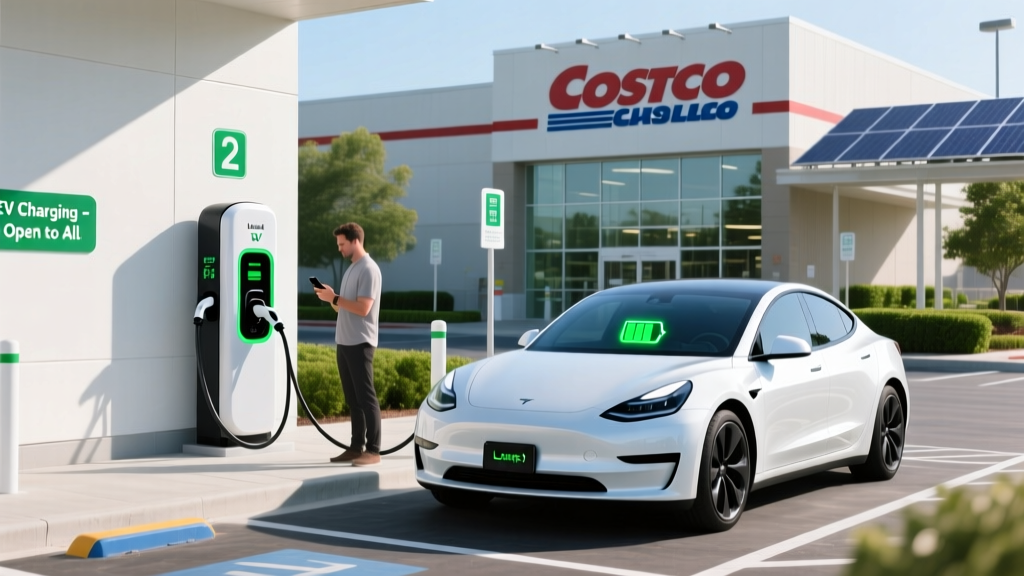
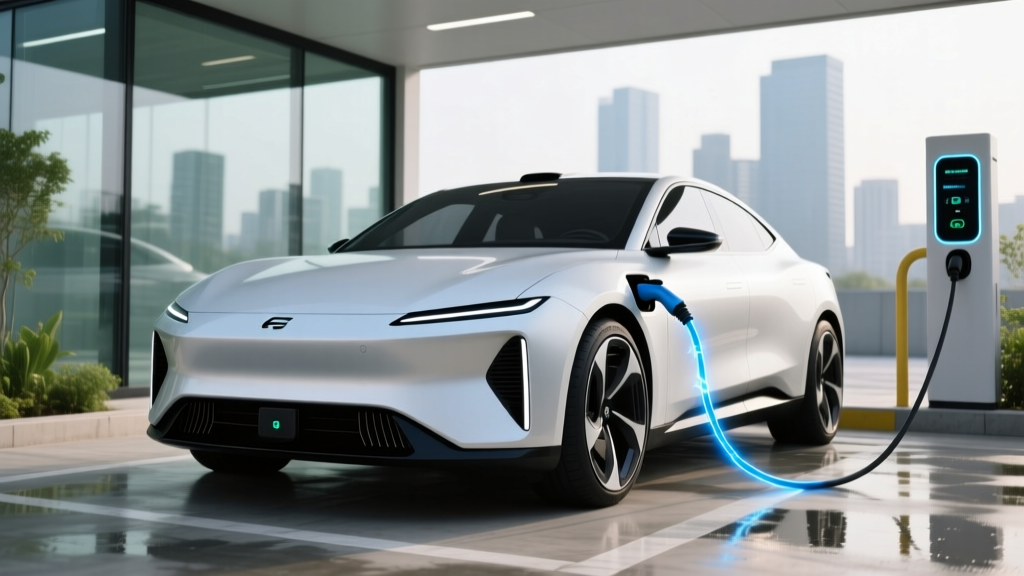
If you've seen the term "turbo charging" floating around EV forums or marketing materials, you're not alone in wondering: what is turbo charging in the context of electric vehicles? Unlike the turbochargers bolted onto internal-combustion engines to force more air into cylinders, "turbo charging" in the EV world refers to DC fast charging — the high-power, direct-current energy transfer that can replenish an EV battery from 10% to 80% in roughly 18 to 30 minutes, depending on the vehicle and charger.
The analogy is imperfect but useful: just as an engine turbocharger dramatically increases power delivery for short bursts, DC fast charging delivers a massive surge of electrical power (measured in kilowatts, or kW) directly into the battery pack, bypassing the car's onboard charger entirely. This is fundamentally different from the Level 1 and Level 2 AC charging you do at home, where the vehicle's internal converter transforms alternating current into DC at a much slower rate.
The critical distinction every EV owner must internalize: kW (kilowatts) measures power — the rate of energy flow — while kWh (kilowatt-hours) measures energy, the total capacity of your battery. A 350 kW DC fast charger delivers energy at a very high rate; your 84 kWh battery is the tank being filled. Confusing these two is the single most common EV literacy gap we see.
Charging Levels Explained: Level 1, Level 2, and DC Fast ("Turbo")
Understanding where turbo charging fits requires seeing the full spectrum of EV charging speeds. Here's how the three levels break down in real-world terms:
| Level | Power Source | Typical kW Output | Miles of Range Added per Hour | Best Use Case |
|---|---|---|---|---|
| Level 1 | 120V household outlet | 1.0–1.4 kW | 3–5 mi/hr | Overnight trickle; PHEVs; low-mileage commuters |
| Level 2 | 240V (dryer-style circuit) | 7.2–19.2 kW | 25–65 mi/hr | Daily home/work charging; the backbone of EV ownership |
| DC Fast ("Turbo") | 480V+ three-phase commercial | 50–350 kW | 150–1,200+ mi/hr (peak) | Road trips; rapid top-ups; fleet turnover |
A few real-world notes on these figures. The "miles per hour" metric varies enormously based on vehicle efficiency — a lightweight, aerodynamic sedan like the Hyundai Ioniq 6 (4.0 mi/kWh) will gain more miles per kW than a heavy truck like the Ford F-150 Lightning (2.0 mi/kWh). The DC fast charging figure of "1,200+ mi/hr" represents peak rate on a 350 kW charger with a vehicle like the Lucid Air or Porsche Taycan that can accept that power; it is not sustained for the full session.
Peak charge rate is not sustained charge rate. This is the single biggest misunderstanding about turbo charging. A vehicle rated for "250 kW peak" might hold that rate from 10% to roughly 35% state of charge (SoC), then taper progressively — dropping to 150 kW by 50%, 100 kW by 65%, and 50 kW or less above 80%. This charge curve taper is why manufacturers quote 10–80% times rather than 0–100% times. Charging from 80% to 100% on DC fast can take as long as the 10–80% portion.
How Fast Will Each Charging Level Add Range?
Let's put concrete numbers on charging times for three common 2026 battery sizes: a 60 kWh pack (compact crossover like the Chevrolet Equinox EV), an 84 kWh pack (mid-size SUV like the Tesla Model Y), and a 131 kWh pack (full-size truck like the F-150 Lightning Extended Range).
| Battery (usable kWh) | Level 1 (1.2 kW) | Level 2 (11.5 kW) | Level 2 (19.2 kW) | DC Fast (150 kW peak) | DC Fast (250 kW peak) | DC Fast (350 kW peak) |
|---|---|---|---|---|---|---|
| 60 kWh | ~35 hours | ~3.7 hours | ~2.2 hours | ~28 min | ~22 min | ~18 min* |
| 84 kWh | ~49 hours | ~5.1 hours | ~3.1 hours | ~35 min | ~27 min | ~22 min* |
| 131 kWh | ~77 hours | ~8.0 hours | ~4.8 hours | ~52 min | ~40 min | ~32 min* |
*350 kW times assume the vehicle can accept 350 kW peak — currently limited to 800V-architecture vehicles like the Hyundai Ioniq 5, Kia EV6/EV9, Porsche Taycan, Lucid Air, and Genesis GV60/GV70 Electrified. Most 400V vehicles peak at 150–250 kW.
These numbers assume ideal conditions: battery preconditioned to optimal temperature (typically 95–105°F at the cell level), moderate ambient temperature, and starting at 10% SoC. In cold weather (below 32°F), DC fast charging can be 30–50% slower unless the vehicle has actively preconditioned the battery via navigation-routed warm-up. This is why Tesla owners heading to a Supercharger via the onboard navigation see faster charge sessions — the car preheats the pack en route.
Which Connector Is Compatible with My EV?
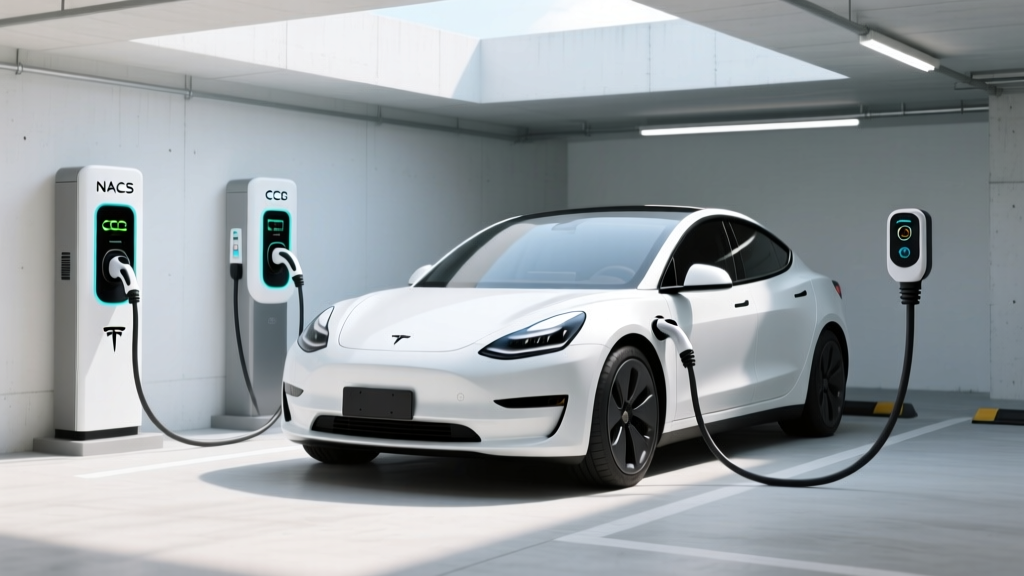
The connector landscape has shifted dramatically since 2024, when Ford and nearly every major automaker committed to adopting the North American Charging Standard (NACS), originally developed by Tesla. As of 2026, here's where things stand:
| Connector | Brands Using It (2026 Models) | DC Fast Charging | Adapter Needed? |
|---|---|---|---|
| NACS (Tesla) | Tesla (all), Ford, GM, Rivian, Volvo, Polestar, Mercedes-Benz, Nissan, Fisker, Lucid (2025+), Hyundai/Kia (2025+) | Yes — native Supercharger access | Legacy CCS vehicles need CCS-to-NACS adapter for Superchargers |
| CCS1 | VW, Audi, BMW, Stellantis (remaining), Honda, Hyundai/Kia (2024 and older), some Lucid | Yes — Electrify America, EVgo, ChargePoint | NACS-to-CCS adapter needed for Tesla Superchargers |
| CHAdeMO | Nissan Leaf (legacy), Mitsubishi Outlander PHEV (legacy) | Yes — limited network | No adapters widely available; network shrinking |
The key takeaway for 2026 buyers: NACS is now the dominant standard. If you're purchasing a new EV, it almost certainly ships with a NACS port or includes a CCS-to-NACS adapter for Supercharger access. Tesla's Supercharger network — over 28,000 stalls in North America — is open to non-Tesla vehicles via the adapter or native NACS port, though some older Supercharger sites have short cables that physically can't reach non-Tesla charge ports. Tesla has been retrofitting these sites with longer-cable V4 stalls.
For home Level 2 charging, all EVs use the J1772 connector (or a NACS connector that handles both AC and DC). If you buy a NACS-equipped home charger, CCS-port vehicles will need an adapter. Universal J1772 chargers work with everything via the appropriate adapter.
Home Charger Installation: Costs, Electrical Requirements, and Panel Upgrades
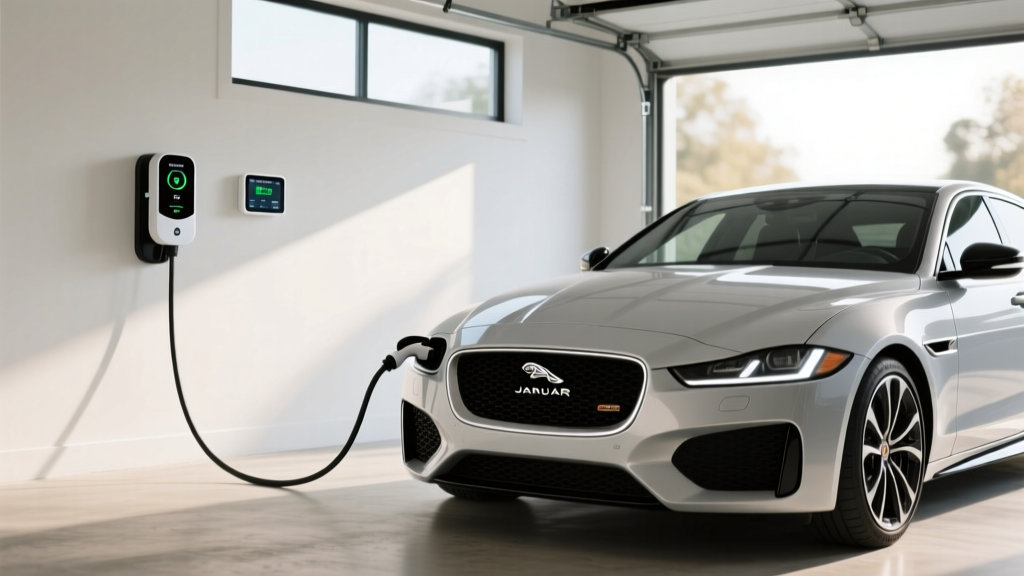
Installing a Level 2 home charger is the single highest-impact upgrade for EV ownership. Here's exactly what's involved and what it costs.
Electrical requirements: A typical Level 2 home charger requires a dedicated 240V circuit — the same voltage as your electric dryer or oven. The most common configurations are:
- 40-amp circuit / 32-amp continuous draw (7.7 kW) — sufficient for most EVs; adds ~25–30 miles of range per hour
- 50-amp circuit / 40-amp continuous draw (9.6 kW) — recommended for larger batteries (80+ kWh); adds ~30–35 mi/hr
- 60-amp circuit / 48-amp continuous draw (11.5 kW) — optimal for high-capacity vehicles; adds ~35–42 mi/hr
- 100-amp circuit / 80-amp continuous draw (19.2 kW) — maximum residential; requires substantial panel capacity; adds ~55–65 mi/hr
The National Electrical Code (NEC) requires that continuous loads (like EV charging, which runs for 3+ hours) use no more than 80% of a circuit's rated amperage. A 50-amp breaker therefore delivers a maximum of 40 amps (9.6 kW) to the vehicle.
Panel upgrade reality: Most modern homes with 200-amp electrical service can accommodate a 50- or 60-amp EV circuit without a panel upgrade. However, older homes with 100-amp service, or homes already running high-draw appliances (electric range, HVAC, electric water heater, dryer), may need a service upgrade to 200 amps. This is the single biggest variable in installation cost and one that many online guides gloss over.
A licensed electrician will perform a load calculation (NEC Article 220) to determine whether your panel has sufficient spare capacity. If it doesn't, options include:
- Panel upgrade to 200A: $2,500–$5,000+
- Smart load management device (e.g., Emporia VUE with automatic load shedding): $500–$1,200 installed — monitors total home draw and throttles the EV charger to prevent panel overload, avoiding a full panel upgrade
- Lower-amperage circuit: Drop to a 30-amp circuit (24A continuous, 5.8 kW) which may fit within existing capacity
| Component | Simple Install (panel nearby, no upgrade) | Complex Install (long wire run, sub-panel) | Full Panel Upgrade + Install |
|---|---|---|---|
| Level 2 charger equipment | $400–$700 | $400–$700 | $400–$700 |
| Electrician labor (2–4 hrs simple, 6–10 hrs complex) | $300–$800 | $900–$2,000 | $1,500–$3,000 |
| Permit and inspection | $50–$200 | $50–$200 | $50–$200 |
| Panel upgrade (if needed) | $0 | $0 | $2,500–$5,000 |
| Conduit/wire (long runs, 50+ ft) | $0–$100 | $200–$600 | $200–$600 |
| Total estimated cost | $750–$1,800 | $1,550–$3,500 | $4,650–$9,500 |
Federal incentive note: The IRS §30C Alternative Fuel Vehicle Refueling Property Credit covers 30% of home EV charger equipment and installation costs, up to $1,000, for installations in qualifying low-income or non-urban census tracts. Eligibility depends on your specific census tract — check the IRS guidance or consult a tax professional. This credit is separate from the §30D vehicle purchase credit.
Cost to Charge: Home vs. Public vs. DC Fast (and vs. Gas)
The economics of EV charging depend heavily on where and when you charge. Here's a realistic breakdown for 2026 electricity rates, using a mid-size EV averaging 3.5 miles per kWh (roughly the efficiency of a Tesla Model Y or Hyundai Ioniq 5):
| Charging Scenario | Typical $/kWh | Cost per Mile (3.5 mi/kWh) | Equivalent Gas Price at 28 MPG |
|---|---|---|---|
| Home, off-peak (utility time-of-use rate) | $0.08–$0.12 | $0.023–$0.034 | $0.64–$0.95/gal |
| Home, standard rate (no TOU plan) | $0.13–$0.18 | $0.037–$0.051 | $1.04–$1.43/gal |
| Public Level 2 (ChargePoint, workplace) | $0.20–$0.35 | $0.057–$0.100 | $1.60–$2.80/gal |
| DC Fast Charging (Electrify America, EVgo) | $0.35–$0.55 | $0.100–$0.157 | $2.80–$4.40/gal |
| Tesla Supercharger (varies by location/time) | $0.25–$0.40 | $0.071–$0.114 | $1.99–$3.19/gal |
| Gasoline (US avg, early 2026) | — | $0.107–$0.125 (at $3.00–$3.50/gal) | $3.00–$3.50/gal |
The pattern is clear: home off-peak charging is dramatically cheaper than gasoline, equivalent to paying under $1 per gallon. Public DC fast charging narrows the gap considerably — in some markets, DC fast charging at $0.48–$0.55/kWh actually exceeds the per-mile cost of an efficient gasoline car. This is why home charging access remains the single most important economic factor in EV ownership.
For a driver covering 12,000 miles annually with 80% home charging at $0.12/kWh and 20% DC fast charging at $0.42/kWh, the blended annual fuel cost is approximately $549. The equivalent gasoline cost at $3.25/gal and 28 MPG combined is approximately $1,393. That's roughly $844 in annual fuel savings, or about $4,200 over five years — a meaningful offset to the EV's typically higher purchase price.
Recommended Home Level 2 Chargers (2026)
Based on our testing and reader feedback, here are four chargers that cover the major use cases. All are hardwired or plug-in (NEMA 14-50) units with smart features and UL/ETL certification for safety.
ChargePoint Home Flex (Best Overall)
- Power: Up to 12 kW (50A) adjustable down to 16A
- Connector: J1772 (NACS adapter included for 2025+ models)
- Cable length: 23 ft
- Smart features: Wi-Fi, app scheduling, utility TOU integration, Alexa
- Price: $599–$649
- Best for: Most homeowners; flexible amperage adapts to panel capacity
Tesla Wall Connector (Best for NACS Vehicles)
- Power: Up to 11.5 kW (48A)
- Connector: NACS native (J1772 adapter available separately)
- Cable length: 24 ft
- Smart features: Wi-Fi, OTA updates, power sharing (link multiple units on one circuit)
- Price: $475
- Best for: Tesla, Ford, GM, Rivian, and other NACS-equipped vehicles
Emporia Level 2 EV Charger (Best Budget Smart Charger)
- Power: Up to 11.5 kW (48A)
- Connector: J1772 (NACS adapter available)
- Cable length: 24 ft
- Smart features: Wi-Fi, energy monitoring via Emporia VUE, solar integration, load management
- Price: $399
- Best for: Budget-conscious buyers who want smart load management without a panel upgrade
Grizzl-E Smart (Best for Harsh Climates / Outdoor)
- Power: Up to 10 kW (40A)
- Connector: J1772 or NACS (select at purchase)
- Cable length: 24 ft
- Smart features: Wi-Fi, OCPP protocol, adjustable amperage, extreme cold rated (-40°F)
- Price: $499–$549
- Best for: Outdoor installations in cold climates; Canadian-built durability
Safety, Code, and Installation Best Practices
EV charging is a continuous high-amperage load — far more demanding on your electrical system than a dryer that cycles on and off. Proper installation isn't optional; it's a fire-safety necessity.
- Dedicated circuit: Your EV charger must be on its own dedicated breaker — never shared with other appliances. This prevents overloads and nuisance tripping.
- GFCI protection: The 2020 NEC (and subsequent editions) require GFCI protection for outlets used for EV charging. Hardwired installations typically use a GFCI breaker in the panel. If you use a NEMA 14-50 receptacle, ensure your electrician installs a GFCI breaker (these cost $50–$80 more than standard breakers).
- Outdoor rating: If your charger is installed outdoors (carport, driveway, exterior wall), both the charger unit and any receptacle must carry a NEMA 4 or NEMA 4X weather-resistance rating. All chargers listed above meet this standard.
- Permit and inspection: Most jurisdictions require an electrical permit for EV charger installation. The inspection verifies correct wire gauge, breaker sizing, grounding, and GFCI compliance. Skipping the permit risks insurance claim denial in the event of an electrical fire.
- NEMA 14-50 receptacle quality: If using a plug-in charger rather than hardwired, specify a commercial-grade (industrial) 14-50 receptacle — brands like Hubbell or Bryant. Consumer-grade receptacles (Leviton) have shown heat-related failures under sustained EV charging loads. This is a $15 vs $45 difference that matters enormously.
- Wire gauge: Your electrician will size wire to the circuit: 6 AWG copper for 50A, 4 AWG for 60A, and potentially 3 AWG or aluminum for longer runs to reduce voltage drop. Never undersize wire.
According to NHTSA and fire-safety data, properly installed home EV chargers present extremely low fire risk — comparable to other major 240V appliances. The incidents that do occur are overwhelmingly linked to unpermitted installations, undersized wiring, or consumer-grade receptacles failing under continuous load.
Frequently Asked Questions
How much does it cost to install a home EV charger?
A straightforward Level 2 installation with adequate panel capacity typically costs $750–$1,800 (equipment + electrician + permit). Complex installs with long wire runs or sub-panels run $1,550–$3,500. If your home needs a 200A panel upgrade, total cost can reach $4,650–$9,500. Always get 2–3 quotes from licensed electricians and verify they perform an NEC Article 220 load calculation before quoting.
What electrical upgrades might I need?
The most common upgrade is moving from 100A to 200A service ($2,500–$5,000) if your existing panel lacks spare capacity for a 40–60A EV circuit. Homes with gas appliances (stove, water heater, furnace, dryer) typically have more electrical headroom than all-electric homes. A smart load management device ($500–$1,200) can sometimes avoid a panel upgrade by throttling the charger when other loads are high.
How fast will each charging level add range?
Level 1 (120V): 3–5 miles per hour. Level 2 (240V, 48A): 25–42 miles per hour depending on vehicle efficiency. DC Fast ("turbo") at 150–350 kW: 150–1,200+ miles per hour at peak, but this rate tapers significantly as the battery fills — expect 10–80% in 18–52 minutes depending on battery size and peak charge rate.
Which connector/charger is compatible with my EV?
For 2026 models: Tesla, Ford, GM, Rivian, Volvo, Polestar, Nissan, and most Hyundai/Kia/Lucid vehicles use NACS. Volkswagen, BMW, Audi, and older Hyundai/Kia models use CCS1. The Nissan Leaf (legacy) uses CHAdeMO. For home charging, a J1772 charger works with all vehicles via adapters; a NACS charger works natively with NACS vehicles and via adapter with CCS1 vehicles. Check your vehicle's charge port before purchasing equipment.
How much does charging cost per mile vs gas?
Home off-peak charging averages $0.02–$0.03 per mile — equivalent to $0.65–$0.95 per gallon of gas. Standard home rates run $0.04–$0.05 per mile. Public DC fast charging costs $0.10–$0.16 per mile, approaching or exceeding gasoline costs in some markets. A typical 2026 gasoline vehicle at 28 MPG combined with $3.25/gal fuel costs about $0.12 per mile. The more you charge at home, the greater your savings.
Is DC fast charging bad for my battery long-term?
Modern battery management systems (BMS) actively protect cells during DC fast charging by managing temperature and limiting charge rate as the pack fills. Research from fueleconomy.gov and independent testing shows that vehicles charged primarily via DC fast charging experience roughly 2–5% more degradation over 100,000 miles compared to Level 2-only charging. For most owners, this difference is negligible within the warranty period (typically 8 years/100,000 miles with a 70% capacity retention guarantee). The convenience of road-trip fast charging far outweighs the marginal long-term impact.
Can I charge at a Tesla Supercharger with a non-Tesla EV?
Yes. As of 2026, Tesla's Supercharger network is open to NACS-equipped vehicles from Ford, GM, Rivian, and others natively. CCS1-equipped vehicles can access Superchargers using a Tesla-approved CCS-to-NACS adapter (typically $200–$250). Some older Supercharger sites with short cables may not physically reach non-Tesla charge ports — the Tesla app and in-car navigation will show compatible stalls.
Whether you call it turbo charging, DC fast charging, or rapid charging, the capability is the same: high-power DC energy delivered directly to your battery at rates that make road-trip EV travel practical. The real ownership advantage, though, remains Level 2 home charging — quiet, cheap, effortless, and ready every morning. Invest in a proper home installation first, and use DC fast charging for what it's designed for: getting you back on the road during long trips.