Why Big-Battery Electric Trucks Demand a Smart Charging Strategy
The 2026 crop of full-size electric pickups carries batteries that would have seemed absurd five years ago. The Chevrolet Silverado EV 4WT posts an EPA-estimated 460 miles of range from a ~200 kWh Ultium pack; the GMC Sierra EV Denali Edition 1 reaches 440 miles EPA on a similarly massive battery; and the Rivian R1T Dual-Motor Max Pack delivers 420 miles EPA from 149 kWh of usable NMC capacity. Even the Ford F-150 Lightning Extended Range and Tesla Cybertruck AWD push past 320 miles EPA with ~131 kWh and ~123 kWh packs respectively.
These are the ev trucks with longest range on the market, and their enormous batteries create a charging challenge most buyers underestimate. A 200 kWh pack charging on a standard 120V household outlet (Level 1) gains roughly 3 miles of range per hour — meaning a full depletion-to-full recharge would take over 6 days. That makes a deliberate home and public charging plan not optional, but essential.
This guide covers every charging tier, real installation costs, connector compatibility across every major electric truck platform, and exactly what you will pay per mile compared to a gas pickup.
Charging Levels Explained: kW, Miles Per Hour, and What Each Tier Delivers
Before evaluating equipment, the distinction between kW (kilowatts) and kWh (kilowatt-hours) must be clear. kW measures power — the rate at which electricity flows into your truck. kWh measures energy — the total capacity of the battery. A 200 kWh battery charged at 11.5 kW (a typical Level 2 home charger) takes roughly 17.4 hours from 0% to 100%. That same battery at a 350 kW DC fast charger can reach 80% in roughly 35–40 minutes, depending on the charge curve.
| Level | Voltage / Amperage | Power (kW) | Miles of Range Added Per Hour | Best Use Case |
|---|---|---|---|---|
| Level 1 | 120V / 12A | ~1.4 kW | 3–5 mi/hr | Overnight top-off, emergencies |
| Level 2 (Home) | 240V / 32A–48A | 7.7–11.5 kW | 20–35 mi/hr | Daily home charging |
| Level 2 (Commercial) | 208V–240V / 80A | Up to 19.2 kW | 45–55 mi/hr | Workplace, fleet depots |
| DC Fast Charging | 400V–800V DC | 50–350 kW | 150–400+ mi in 20–40 min | Road trips, rapid top-ups |
Real-world charge curve reality: Peak kW ratings are not sustained. A Silverado EV that peaks at 350 kW on a DC fast charger will taper significantly above 80% state of charge. Expect a 10–80% session in roughly 35–40 minutes at a 350 kW station, but the final 80–100% could add another 25–30 minutes. This is why most road-trip strategies target 10–80% charges.
Real-World Range vs. EPA Sticker: The Silverado EV 4WT's 460-mile EPA figure assumes mixed driving at moderate temperatures. In real-world highway testing at 70–75 mph, expect roughly 370–400 miles. In cold weather (below 32°F), battery chemistry and cabin heating can reduce range by 15–30%, bringing usable range down to 310–350 miles. The Rivian R1T Max Pack's 420-mile EPA estimate similarly drops to ~330–360 miles on the highway and ~280–320 miles in deep cold. Plan charging stops accordingly.
Home Charger Installation: Electrical Requirements, Panel Upgrades, and True Costs
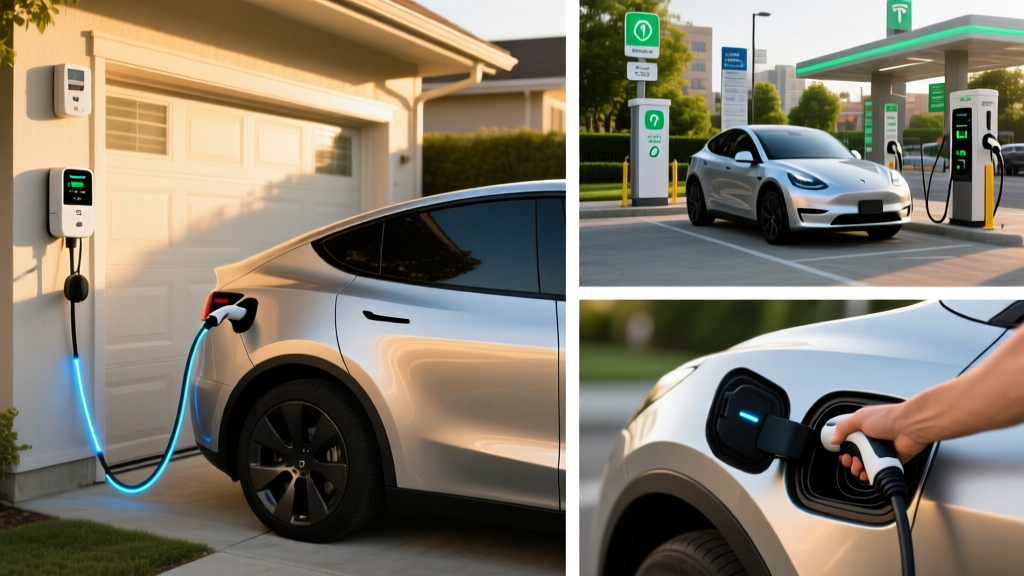
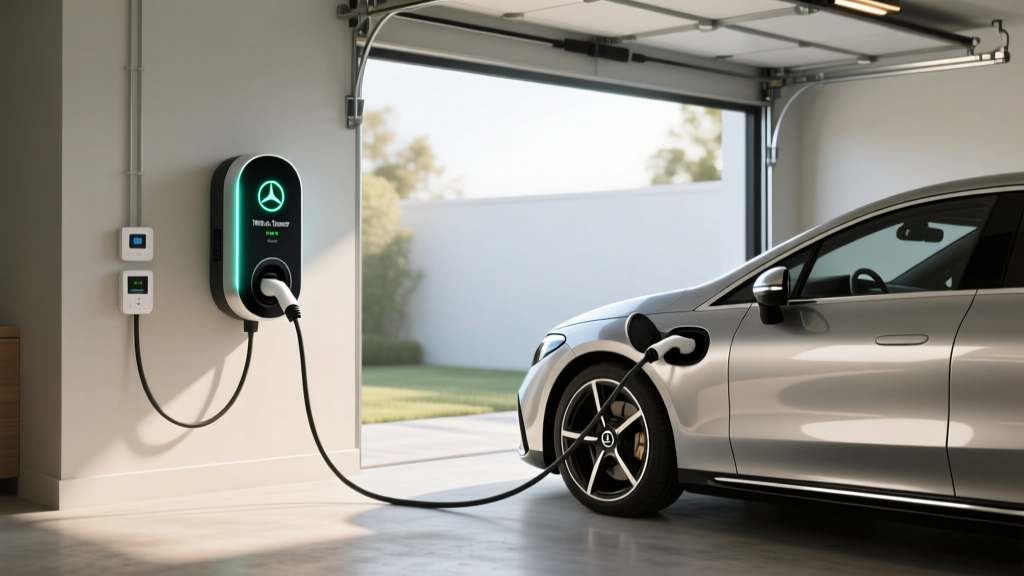
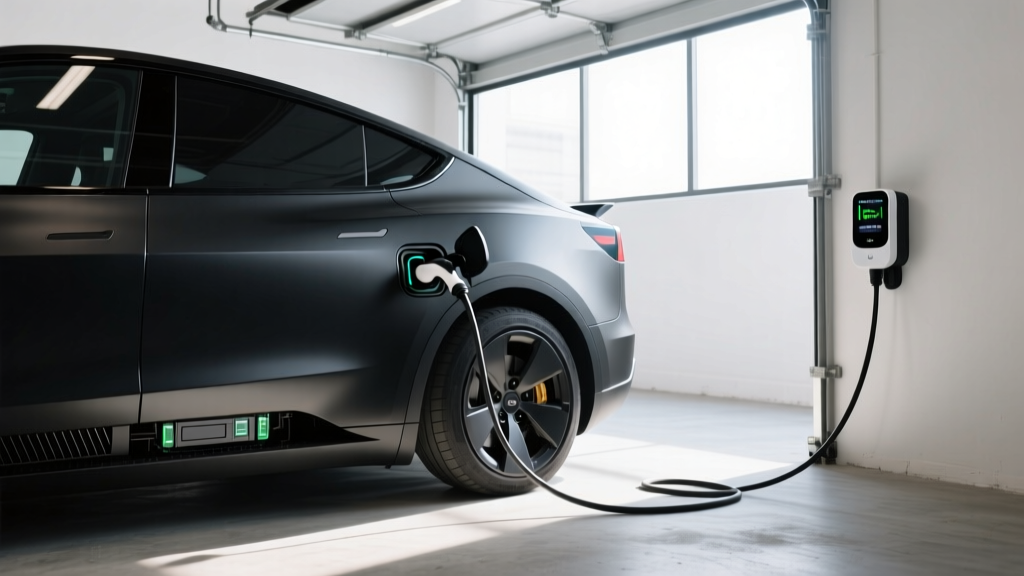
Level 2 home charging is where 85–90% of all EV charging happens, and it is the single most important investment an electric truck owner makes. But the large batteries in long-range EV trucks mean you want the fastest Level 2 connection your electrical panel can support.
Electrical Requirements for Level 2 Charging
A Level 2 charger requires a dedicated 240V circuit — the same voltage as your electric dryer or oven. The amperage determines your charge speed:
- 240V / 32A (7.7 kW): Adds ~22 miles of range per hour. A 149 kWh R1T Max Pack charges from 0–100% in roughly 19 hours. Requires a 40A breaker.
- 240V / 40A (9.6 kW): Adds ~28 miles per hour. Full charge in ~15.5 hours. Requires a 50A breaker.
- 240V / 48A (11.5 kW): Adds ~33 miles per hour. Full charge in ~13 hours. Requires a 60A breaker. This is the recommended target for trucks with 130+ kWh batteries.
- 240V / 80A (19.2 kW): Adds ~50 miles per hour. Full charge in ~7.5 hours. Requires a 100A breaker and a panel with substantial spare capacity.
Do You Need a Panel Upgrade?
Most homes built before 2010 have 100A or 150A main electrical panels. A 200A panel is standard in newer construction. Adding a 60A dedicated circuit for a 48A charger on a 100A panel is often impossible without a panel upgrade, which adds significant cost. Even 150A panels may lack the spare capacity once you account for existing loads (HVAC, electric range, dryer, water heater).
A licensed electrician will perform a load calculation (per NEC Article 220) to determine whether your panel can support the new circuit. If an upgrade to 200A or 400A service is needed, costs increase substantially.
| Cost Component | Typical Range | Notes |
|---|---|---|
| Level 2 Charger (Equipment) | $400–$750 | Hardwired 48A units; smart WiFi models at higher end |
| Electrician Labor (Standard Install) | $600–$1,500 | Assumes panel is nearby, conduit run under 50 ft |
| Electrical Permit | $50–$200 | Varies by municipality |
| Panel Upgrade (100A→200A) | $1,500–$3,500 | Only if needed; common in older homes |
| Conduit / Trenching (Long Runs) | $500–$2,000 | Detached garages, long distances from panel |
| Total (No Panel Upgrade) | $1,050–$2,450 | Most common scenario for newer homes |
| Total (With Panel Upgrade) | $2,550–$5,950 | Older homes, higher-amperage installs |
Safety and Code Requirements
Every Level 2 installation must meet National Electrical Code (NEC) requirements and local amendments:
- Dedicated circuit: The charger must have its own breaker — no sharing with other appliances.
- GFCI protection: NEC 2020 and later require GFCI breakers for EV receptacles in garages. Hardwired units may have different rules depending on jurisdiction.
- Outdoor rating: If the charger is mounted outside, it must carry a NEMA 4 or NEMA 4X rating for weather resistance.
- Wire gauge: 6 AWG copper for 48A circuits; 4 AWG for 60A; 2 AWG for 80A. Aluminum wire requires larger gauges.
- Permit and inspection: Nearly all jurisdictions require a permit and final inspection. Skipping this risks insurance denial in the event of an electrical fire.
Connector Compatibility: NACS, CCS1, and What Each Electric Truck Uses
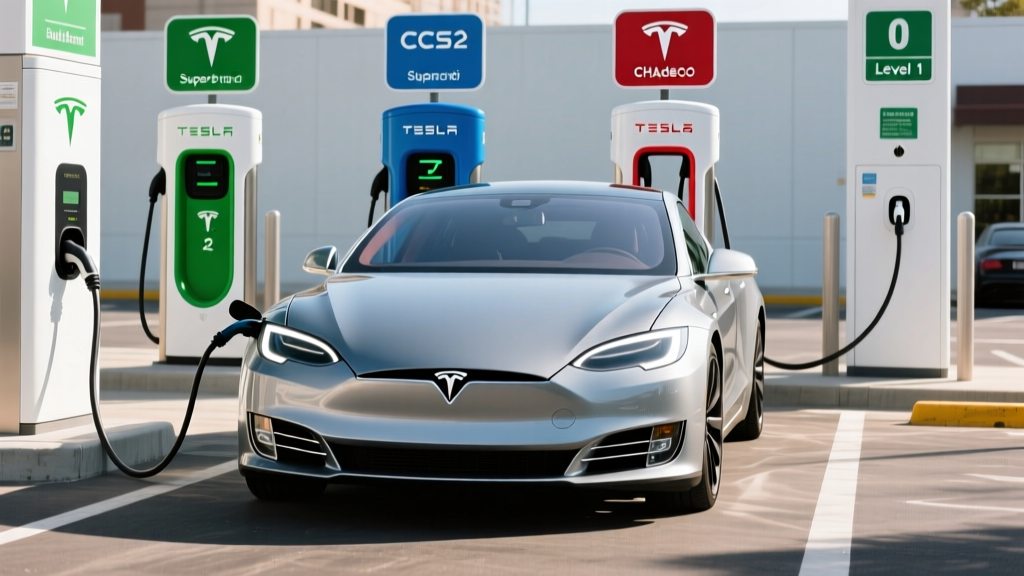
The connector landscape shifted dramatically in 2024–2025 when Ford, GM, Rivian, and most major automakers adopted the North American Charging Standard (NACS), originally developed by Tesla. Here is where each long-range electric truck stands for 2026:
| Vehicle | Built-In Connector | DC Fast Charge Network Access | Adapter Needed? |
|---|---|---|---|
| Chevrolet Silverado EV | NACS | Tesla Supercharger + third-party NACS stations | CCS adapter available for legacy stations |
| GMC Sierra EV | NACS | Tesla Supercharger + third-party NACS stations | CCS adapter available for legacy stations |
| Ford F-150 Lightning | NACS (2025+ models) | Tesla Supercharger + third-party NACS stations | 2022–2024 CCS models need NACS adapter for Superchargers |
| Tesla Cybertruck | NACS | Tesla Supercharger network (native) | CCS adapter ($250) for Electrify America, etc. |
| Rivian R1T | NACS (2025+ models) | Tesla Supercharger + Rivian Adventure Network | 2022–2024 CCS models need NACS adapter |
Adapter reality check: If you own a 2022–2024 F-150 Lightning or R1T with a CCS port, Ford and Rivian sell official NACS adapters (typically $200–$300) that unlock Tesla Supercharger access. Third-party CCS-to-NACS adapters are also available from companies like Lectron. Always verify the adapter is rated for the full DC fast-charge amperage your truck supports.
Charging Cost Per Mile: Electric Trucks vs. Gas Pickups
Electric trucks consume more energy per mile than sedans — they are heavy, boxy, and often towing or hauling. Understanding cost per mile requires looking at efficiency in kWh per 100 miles (or equivalently, miles per kWh).
| Vehicle | Efficiency (kWh/100 mi) | Home Charging ($0.13/kWh) | Public DC Fast ($0.40/kWh) | Gas Equivalent (20 MPG @ $3.50/gal) |
|---|---|---|---|---|
| Silverado EV 4WT | ~48 kWh/100 mi | $0.062/mi | $0.192/mi | $0.175/mi |
| Rivian R1T Max Pack | ~44 kWh/100 mi | $0.057/mi | $0.176/mi | $0.175/mi |
| F-150 Lightning Ext. Range | ~49 kWh/100 mi | $0.064/mi | $0.196/mi | $0.175/mi |
| Cybertruck AWD | ~42 kWh/100 mi | $0.055/mi | $0.168/mi | $0.175/mi |
| GMC Sierra EV Denali | ~47 kWh/100 mi | $0.061/mi | $0.188/mi | $0.175/mi |
Key takeaway: At home electricity rates (national average ~$0.13–$0.16 per kWh, with off-peak utility rates as low as $0.07–$0.09 in some regions), every electric truck on this list costs roughly one-third of what a comparable gas pickup costs per mile. Even at public DC fast-charging rates of $0.35–$0.48 per kWh, the cost per mile is comparable to or slightly above a 20 MPG gas truck. The savings compound dramatically if you charge primarily at home.
Off-peak utility rates: Many utilities offer time-of-use (TOU) plans with overnight rates as low as $0.06–$0.09/kWh. Charging a 149 kWh Rivian R1T Max Pack from 20% to 80% (~90 kWh) at $0.08/kWh costs $7.20 and adds roughly 200 miles of range. The same distance in a gas F-150 at 20 MPG and $3.50/gallon costs $35.00.
Charging Time Examples: What to Expect With These Massive Batteries
Here is how long a 10–80% charge session takes for the longest-range electric trucks across different charging scenarios. Times assume optimal battery preconditioning (warming the pack to ideal temperature before charging, a feature all these trucks support via navigation-routed preconditioning).
| Vehicle (Usable Battery) | Level 2 @ 11.5 kW (48A) | DC Fast (Peak kW) | DC Fast 10–80% Time |
|---|---|---|---|
| Silverado EV 4WT (~200 kWh) | ~12.2 hours | 350 kW peak | ~35–40 minutes |
| Sierra EV Denali (~200 kWh) | ~12.2 hours | 350 kW peak | ~35–40 minutes |
| Rivian R1T Max Pack (149 kWh) | ~9.1 hours | 220 kW peak | ~38–42 minutes |
| F-150 Lightning Ext. (131 kWh) | ~8.0 hours | 150 kW peak | ~41–45 minutes |
| Cybertruck AWD (~123 kWh) | ~7.5 hours | 250 kW peak | ~28–33 minutes |
Charge curve taper: The F-150 Lightning's 150 kW peak charge rate is a known limitation — it sustains roughly 120–130 kW through the 10–60% range, then tapers to under 60 kW above 80%. The Cybertruck benefits from Tesla's 800V architecture, sustaining higher rates deeper into the charge. The Silverado EV and Sierra EV on GM's Ultium platform sustain 250–300 kW through the 10–50% window before tapering. Always plan road-trip stops around the 10–80% window for the fastest sessions.
Equipment Recommendations: Best Level 2 Chargers for Long-Range Electric Trucks
For trucks with 130–200 kWh batteries, you want the fastest Level 2 charger your panel supports. Here are top picks across configurations, all WiFi-enabled with app-based scheduling for TOU rate optimization:
ChargePoint Home Flex
- Power: Up to 12 kW (240V / 50A), configurable in 8A increments
- Connector: NACS or J1772 (select at purchase)
- Cable length: 23 feet
- Smart features: WiFi, app scheduling, Alexa integration, energy reports
- Price: ~$549–$599
- Best for: Flexible amperage configuration; works with panels that can't support a full 60A circuit
Wall Connector (Tesla)
- Power: Up to 11.5 kW (240V / 48A)
- Connector: NACS (native Tesla)
- Cable length: 24 feet
- Smart features: WiFi, OTA updates, power sharing (link multiple units), access control
- Price: ~$450
- Best for: Cybertruck, Silverado EV, Sierra EV, F-150 Lightning (2025+), R1T (2025+) — any NACS-equipped truck
Emporia Level 2 EV Charger
- Power: Up to 11.5 kW (240V / 48A)
- Connector: J1772 (NACS adapter available separately)
- Cable length: 24 feet
- Smart features: WiFi, app, integrates with Emporia home energy monitor, solar-aware scheduling
- Price: ~$399
- Best for: Budget-conscious buyers who want energy monitoring and solar integration
Ford Charge Station Pro
- Power: Up to 19.2 kW (240V / 80A)
- Connector: NACS (2025+ models)
- Cable length: 25 feet
- Smart features: WiFi, FordPass integration, bi-directional charging capable (V2H with Home Integration System)
- Price: ~$1,299 (equipment only)
- Best for: F-150 Lightning owners wanting the fastest possible home charge and backup power capability; requires 100A breaker and substantial panel capacity
Hardwired vs. plug-in: Chargers above 40A (9.6 kW) must be hardwired — there is no standard NEMA receptacle rated for 48A or 80A continuous use. Hardwired installations are more reliable and avoid the GFCI nuisance-tripping issues that sometimes plague NEMA 14-50 receptacles. For trucks with large batteries, hardwiring a 48A or 80A unit is the recommended approach.
Federal Tax Credit for Home Charging Equipment (§30C)
The IRS §30C Alternative Fuel Vehicle Refueling Property Credit covers 30% of the cost of home EV charging equipment and installation, up to a maximum credit of $1,000. This applies to both the charger hardware and the electrician's labor.
Key eligibility requirements:
- The charger must be installed at your primary residence.
- The property must be located in a qualifying census tract (low-income or non-urban areas qualify — the IRS provides a lookup tool).
- The credit is non-refundable — it can reduce your tax liability to zero but will not generate a refund beyond what you owe.
- Equipment must be new and placed in service during the tax year.
Check with a tax professional for your specific eligibility, as census tract qualification and income considerations vary by location and tax year.
Frequently Asked Questions
How much does it cost to install a home EV charger for an electric truck?
A standard Level 2 installation (48A hardwired, no panel upgrade) typically costs $1,050–$2,450 total, including the charger ($400–$750), electrician labor ($600–$1,500), and permit ($50–$200). If your home needs a panel upgrade from 100A to 200A service, add $1,500–$3,500. Long conduit runs to detached garages can add another $500–$2,000.
How fast will each charging level add range to my electric truck?
Level 1 (120V) adds 3–5 miles per hour — essentially useless for daily use of a truck with a 130–200 kWh battery. Level 2 at 11.5 kW (48A, 240V) adds 20–35 miles per hour depending on the truck's efficiency, which is sufficient to replenish a day's driving overnight. DC fast charging at 250–350 kW adds 150–300+ miles in a 20–40 minute session, though peak rates are not sustained through the entire session.
Which connector and charger is compatible with my EV truck?
For 2026 models: the Chevrolet Silverado EV, GMC Sierra EV, Tesla Cybertruck, and 2025+ Ford F-150 Lightning and Rivian R1T all use NACS connectors natively. If you own a 2022–2024 Lightning or R1T with CCS, you need a NACS adapter ($200–$300) to access Tesla Superchargers. For home charging, a NACS Wall Connector or ChargePoint Home Flex (NACS version) will plug directly into any 2025+ electric truck.
How much does charging an electric truck cost per mile vs. gas?
At home electricity rates of $0.13/kWh, an electric truck costs $0.055–$0.064 per mile — roughly one-third the $0.175 per mile of a gas F-150 getting 20 MPG at $3.50/gallon. At public DC fast chargers ($0.40/kWh), the cost rises to $0.168–$0.196 per mile, roughly equivalent to gas. Off-peak home rates of $0.08/kWh drop the cost to $0.034–$0.039 per mile, making home charging five times cheaper than gas per mile driven.
What electrical upgrades might I need for a Level 2 charger?
The most common upgrade is a panel replacement from 100A or 150A to 200A service ($1,500–$3,500), needed when your existing panel lacks the spare capacity for a 60A breaker (required for a 48A charger). Other potential upgrades include adding a sub-panel for a detached garage, upgrading service entrance wiring, or replacing an outdated fuse box with a modern breaker panel. A licensed electrician's load calculation will determine what is required.
Can I use a NEMA 14-50 outlet instead of hardwiring?
A NEMA 14-50 receptacle supports up to 40A continuous (9.6 kW), which is adequate for most electric trucks but slower than a 48A hardwired unit. Many electricians now recommend hardwiring over 14-50 receptacles due to GFCI breaker nuisance-tripping issues required by NEC 2020+. If you choose a receptacle, invest in a high-quality industrial-grade outlet (Hubbell or Bryant) — cheap 14-50 receptacles have been linked to overheating and melting under sustained EV charging loads.
Do electric trucks lose range when towing?
Yes, significantly. Towing a 5,000–7,000 lb trailer can reduce range by 40–60% depending on trailer profile, weight, speed, and terrain. A Silverado EV rated at 460 miles EPA unladen might deliver only 200–260 miles while towing a large travel trailer at highway speeds. Plan charging stops accordingly and use the truck's built-in trailering energy calculator (available on the Silverado EV, F-150 Lightning, and R1T) for route planning.
Sources: EPA range and efficiency data from fueleconomy.gov; IRS §30C credit rules from irs.gov; manufacturer specifications from Chevrolet, Ford, Rivian, Tesla, and GMC official press sites.