What EV Smart Charging Actually Means
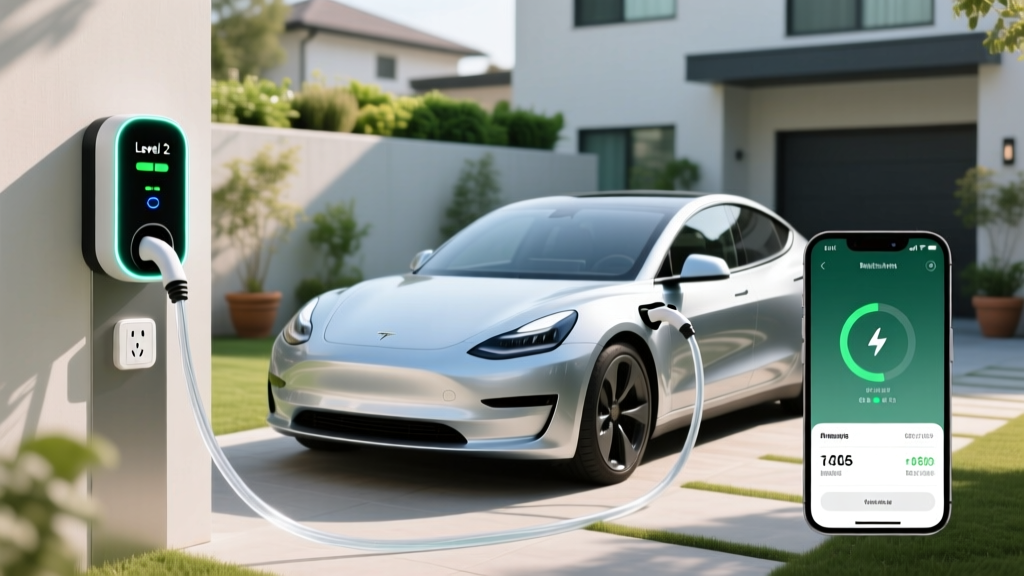
EV smart charging isn't a single feature—it's a system where your vehicle, charger, and utility coordinate to optimize when, how fast, and how cheaply your battery fills. At its core, smart charging lets a Level 2 home unit or networked public station adjust power delivery based on grid demand, electricity rates, battery temperature, and your departure schedule. The result: lower bills, less battery wear, and fewer surprises at public chargers.
This guide covers the three charging levels, real installation costs, connector compatibility across today's EVs, per-mile economics versus gasoline, and specific equipment worth buying in 2026. We'll also flag where homeowners hit electrical bottlenecks—panel upgrades, permit delays, and the 80% continuous-load rule that catches many first-time EV buyers off guard.
Charging Levels Explained: kW, Miles per Hour, and Real 10–80% Times
The first rule of EV literacy: kW (kilowatts) measures power—how fast energy flows. kWh (kilowatt-hours) measures energy—the battery's fuel tank. A 77 kWh battery charged at 11.5 kW takes roughly 6.7 hours from 0–100% in ideal conditions. Peak charge rates rarely sustain for the full session; most EVs taper above 80% State of Charge (SoC) to protect the cells.
| Level | Voltage / Phase | Typical Power (kW) | Miles Added per Hour | Best Use Case |
|---|---|---|---|---|
| Level 1 | 120V / single | 1.2–1.9 kW | 3–5 mi/hr | Overnight top-up, PHEVs |
| Level 2 (home) | 240V / single | 7.2–11.5 kW | 25–45 mi/hr | Daily home charging |
| Level 2 (public/commercial) | 208–240V | 11.5–19.2 kW | 40–65 mi/hr | Workplace, apartments, hotels |
| DC Fast (Level 3) | 400–800V DC | 50–350 kW | 150–1,200 mi/hr (peak) | Road trips, quick stops |
Real 10–80% examples from current models:
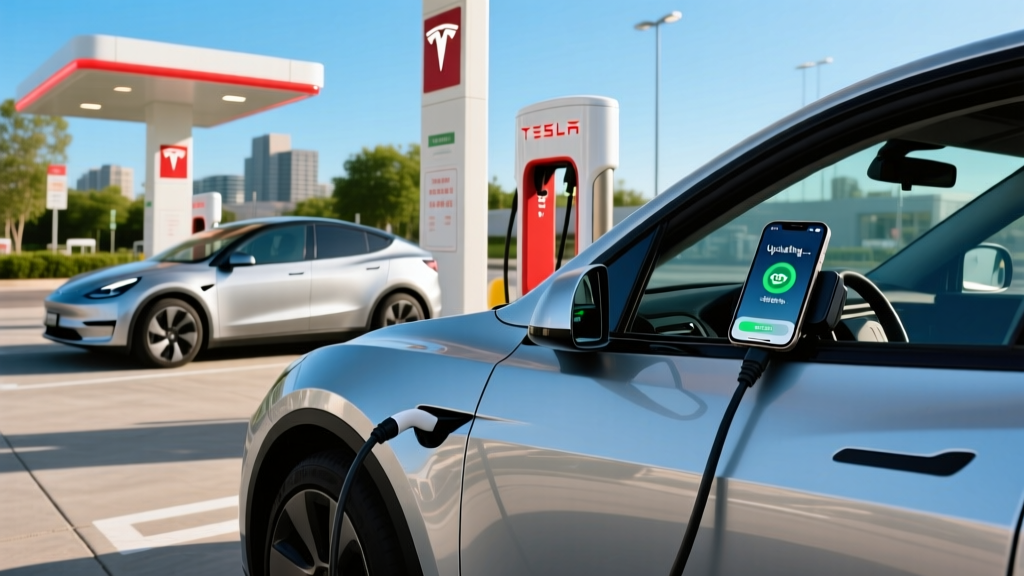
- Tesla Model Y Long Range (75 kWh usable, NMC): ~250 kW peak on V4 Supercharger, 10–80% in ~18 minutes, tapering hard above 80%.
- Hyundai Ioniq 5 (77.4 kWh, NMC): 800V architecture peaks at ~240 kW, 10–80% in ~18 minutes when battery is preconditioned.
- Ford F-150 Lightning Extended Range (131 kWh, NMC): ~150 kW peak, 10–80% in ~41 minutes due to the large pack.
- Chevrolet Equinox EV (85 kWh, NMC): ~150 kW peak, 10–80% in ~30 minutes.
Cold weather (below 32°F) can add 30–50% to these times unless the EV actively preconditioned the battery on navigation to the charger.
Home Charger Installation: Electrical Requirements, Costs, and Gotchas
Most EV owners want a hardwired 240V Level 2 station delivering 11.5 kW (48 amps). The National Electrical Code (NEC) requires the circuit be rated 125% of continuous load—so a 48A charger needs a 60A breaker and 6 AWG copper wire (or 4 AWG aluminum). This is where many first-timers get sticker shock.
| Component | Low End | High End | Notes |
|---|---|---|---|
| Level 2 EVSE equipment | $400 | $750 | Smart Wi-Fi units, 24 ft cable |
| Electrician labor (2–6 hrs) | $600 | $1,800 | $100–$175/hr depending on region |
| Materials (wire, conduit, breaker) | $150 | $500 | Longer runs = more copper cost |
| Permit & inspection | $75 | $250 | Required in most jurisdictions |
| Panel upgrade (if needed) | $1,500 | $4,500 | 100A → 200A service, older homes |
| Total (no panel upgrade) | $1,225 | $3,300 | Median ~$2,000 nationally |
When a panel upgrade is likely: Homes built before 1990 often have 100A service. Adding a 60A EV circuit may exceed capacity when you sum HVAC, electric range, dryer, and water heater. A licensed electrician will run a load calculation per NEC Article 220. If you're near the limit, options include a service upgrade (~$3,000), an automatic load-management device like the Emporia Smart Load Shed (~$250), or downgrading to a 32A/7.7 kW charger on a 40A breaker.
Safety and code requirements:
- Dedicated circuit—never share with other appliances.
- GFCI protection for outdoor outlets (NEC 2020+); hardwired units bypass this requirement.
- NEMA 4 rating for outdoor installations (rain, dust, ice).
- UL-listed or ETL-listed equipment only—skip uncertified imports.
- Utility notification: some providers require it and offer rebates.
Connector Compatibility: NACS, CCS1, and CHAdeMO in 2026
The North American Charging Standard (NACS, formerly Tesla's proprietary plug) has become the dominant connector. Ford, Rivian, GM, Volvo, Polestar, and Mercedes now ship with native NACS ports. Legacy CCS1 EVs (2021–2024 model years) and CHAdeMO vehicles (Nissan Leaf, Mitsubishi Outlander PHEV) rely on adapters at Tesla Superchargers.
| Connector | Brands Using It | Adapter Notes |
|---|---|---|
| NACS (native) | Tesla, Ford, GM, Rivian, Volvo, Polestar, Mercedes, Hyundai/Kia (2025+), BMW (2025+) | Direct Supercharger access |
| CCS1 (legacy) | Hyundai/Kia (2024 and older), VW ID.4 (2024 and older), Stellantis | CCS-to-NACS adapter (~$200) for Superchargers |
| CHAdeMO | Nissan Leaf, Mitsubishi Outlander PHEV | Declining network support; no NACS adapter widely available |
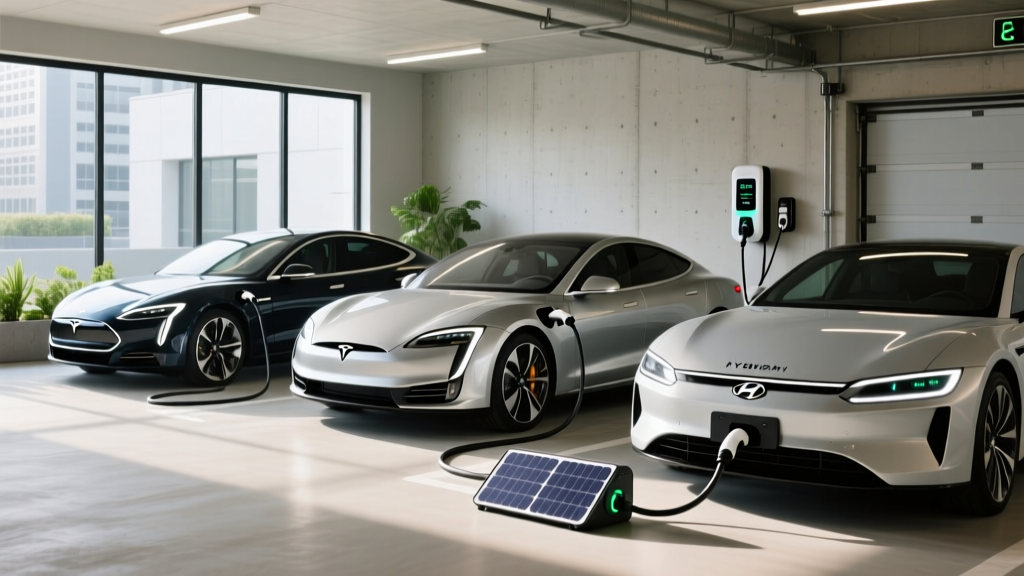
Home charging uses the J1772 connector (or NACS for newer EVs). Most Level 2 EVSEs ship with J1772, and a J1772-to-NACS adapter (~$100–$150) covers newer vehicles. Tesla's Universal Wall Connector includes both tips natively.
Cost to Charge: Per-Mile Economics vs. Gasoline
The economic case for EV smart charging hinges on time-of-use (TOU) utility rates. Charge at the right hour and your per-mile cost can drop below $0.04; rely on DC fast chargers on road trips and it can exceed $0.15—still competitive with gas, but less dramatic.
| Scenario | Rate ($/kWh) | Cost per Mile (EV) | Cost per Mile (Gas @ $3.40/gal) |
|---|---|---|---|
| Home off-peak (overnight TOU) | $0.09 | $0.027 | $0.121 |
| Home standard rate | $0.16 | $0.048 | $0.121 |
| Public Level 2 (ChargePoint, EVgo) | $0.28 | $0.084 | $0.121 |
| DC Fast (Electrify America, Tesla) | $0.42 | $0.126 | $0.121 |
Smart charging—scheduling sessions via the EVSE app or the vehicle's built-in scheduler to hit off-peak windows—typically saves $300–$600 annually for a driver covering 12,000 miles. Utilities like PG&E, ConEdison, and Xcel Energy offer EV-specific TOU plans with super-off-peak rates as low as $0.06/kWh between midnight and 5 AM.
Equipment Recommendations: Smart Level 2 Chargers Worth Buying
These picks prioritize smart features (Wi-Fi, scheduling, load management), reliability, and correct power ratings. All are UL-listed as of early 2026.
Emporia Level 2 EV Charger
- Power output: 11.5 kW / 48A (hardwired) or 9.6 kW / 40A (plug-in NEMA 14-50)
- Connector: J1772 (NACS adapter included in 2026 refresh)
- Cable length: 24 ft
- Smart features: Wi-Fi, app scheduling, solar integration, TOU optimization, load shedding with Emporia Vue panel monitor
- Price: ~$400 (EVSE only)
- Best for: Homes with solar panels or Emporia whole-home energy monitors
Tesla Universal Wall Connector
- Power output: 11.5 kW / 48A
- Connector: Integrated NACS + J1772 magic-dock style tip
- Cable length: 24 ft
- Smart features: Wi-Fi, OTA updates, Power-Share load balancing between two units, scheduled charging via Tesla app
- Price: ~$600
- Best for: Multi-EV households (one Tesla, one non-Tesla) or all-Tesla homes
ChargePoint Home Flex (2nd Gen)
- Power output: Up to 12 kW / 50A (configurable down to 16A for weaker panels)
- Connector: J1772 (NACS version shipping 2026)
- Cable length: 23 ft
- Smart features: Alexa, Google Home, app scheduling, utility demand-response programs, flexible amperage dial
- Price: ~$550
- Best for: Homes with limited panel capacity (dial down to 32A/40A breaker)
Grizzl-E Smart (United Chargers)
- Power output: 9.6 kW / 40A
- Connector: J1772 or NACS (select at order)
- Cable length: 24 ft
- Smart features: OCPP 1.6J compatible (works with utility programs), adjustable amperage, extreme cold rating (-40°F)
- Price: ~$550
- Best for: Cold-climate owners and OCPP utility integrations
Public Charging Networks: Reliability and Smart Features
Home charging covers ~80% of most owners' needs. For road trips, the networks that matter in 2026 are:
- Tesla Supercharger (open to NACS EVs): 17,000+ stalls, 250–350 kW V3/V4, best uptime (~97% per Tesla's network data).
- Electrify America: CCS1 and NACS, 150–350 kW, improving reliability after 2024–2025 hardware refresh.
- EVgo: Urban DC fast, 50–350 kW, strong in apartment-dense metros.
- ChargePoint / Shell Recharge: Mixed Level 2 and DC fast, excellent app integration for smart scheduling.
Smart public charging means preconditioning the battery (navigating to the station via the EV's built-in nav so thermal management warms the pack) and arriving between 20–40% SoC where the charge curve peaks. Arriving above 60% SoC cuts peak kW dramatically.
Federal Tax Credits and Utility Rebates for Home Charging
The IRS §30D and §25C credits and the Alternative Fuel Vehicle Refueling Property Credit (§30C) can offset up to $1,000 of home charger equipment and installation. Eligibility depends on census-tract income thresholds, and the credit is nonrefundable. Many utilities stack rebates of $250–$750 on top—check your provider's EV program page. As with vehicle credits, rules shift; consult a tax professional for your specific situation.
EV Smart Charging FAQ
How much does it cost to install a home EV charger?
Expect $1,200–$3,300 for a standard 48A/11.5 kW hardwired installation when your electrical panel has headroom. Add $1,500–$4,500 if you need a 100A-to-200A service upgrade. The national median sits around $2,000 including equipment, labor, materials, and permit.
How fast will each charging level add range?
Level 1 (120V) adds 3–5 miles per hour—fine for PHEVs with small batteries. Level 2 (240V, 48A) adds 30–45 miles per hour, enough to fully refill most BEVs overnight. DC fast charging peaks at 150–1,200 miles per hour but tapers sharply above 80% SoC; realistic road-trip stops are 18–35 minutes for 10–80%.
Which connector/charger is compatible with my EV?
Check your EV's charge port: NACS (smaller, 5-pin) on Teslas and most 2025+ models from Ford, GM, Rivian, Hyundai/Kia, BMW, Volvo. CCS1 (larger, 7-pin) on 2024-and-older VW, Hyundai, Kia, and Stellantis EVs. CHAdeMO on Nissan Leaf and Mitsubishi. For home, J1772 EVSEs work with all EVs using the appropriate adapter.
How much does charging cost per mile vs gas?
Home off-peak charging runs $0.027/mile versus $0.121/mile for a 28 MPG gas car at $3.40/gallon—a 78% savings. Public DC fast charging at $0.42/kWh is roughly break-even at $0.126/mile. Smart scheduling on TOU rates is what unlocks the big savings.
What electrical upgrades might I need?
Homes with 100A service, full electric appliances, and long wire runs (>50 ft from panel to garage) are the usual candidates for upgrades. Options include a service panel upgrade, an automatic load-shedding device, or downsizing to a 32A charger. A licensed electrician's load calculation is the first step.
Does smart charging really save money, or is it a gimmick?
It's real, but savings depend on your utility's rate structure. On flat-rate plans, smart scheduling saves nothing. On TOU plans with super-off-peak windows, a 12,000-mile/year driver saves $300–$600 annually by shifting sessions to midnight–5 AM. Solar owners with excess midday production can program charging to coincide with peak generation, effectively charging for free.
Can I charge my EV from a standard 120V outlet?
Yes, as Level 1 at 1.2–1.9 kW. For a PHEV with 15 kWh of usable battery, that's an 8–10 hour overnight fill. For a BEV with 75+ kWh, Level 1 adds ~40 miles overnight—adequate for low-mileage commuters but frustrating for anyone driving more than 30 miles daily. Plan for Level 2.
Smart charging is less about a single gadget and more about matching your EV, electrical system, utility rates, and driving pattern. Get the Level 2 hardware right, pair it with TOU scheduling, and your per-mile cost drops below any gasoline vehicle on the road. For detailed EPA range and efficiency data on specific models, cross-reference fueleconomy.gov before buying.