Whether you're planning your first cross-country EV road trip or simply trying to understand what happens when you plug in at home, mastering EV road charging means understanding three things: how fast each charging level actually delivers energy, what your home's electrical panel can support, and which connector your vehicle requires. This guide cuts through the marketing noise with exact numbers — kilowatts (kW), kilowatt-hours (kWh), real-world charge times, and costs per mile — so you can plan every stop and every dollar.
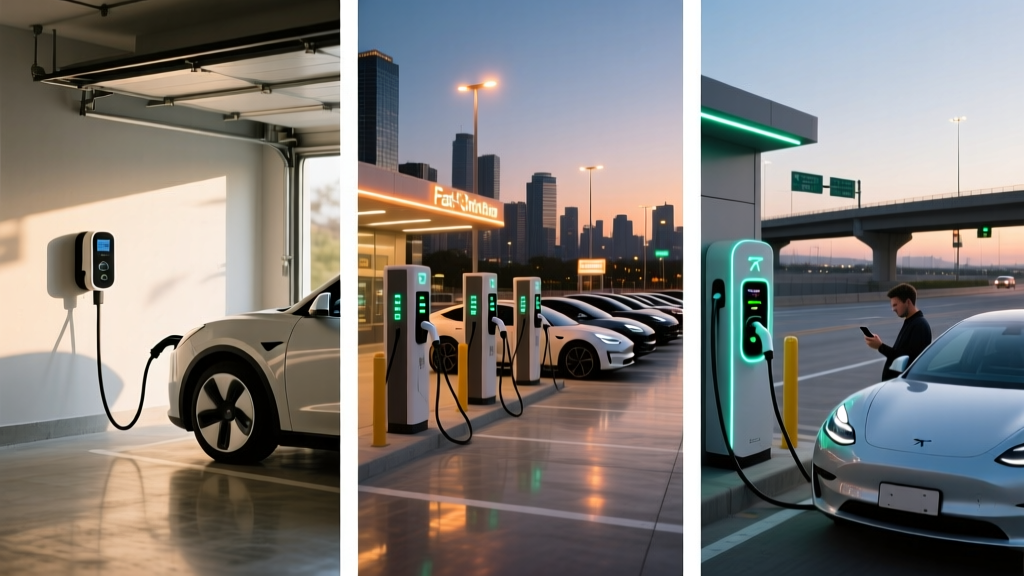
The Three Charging Levels: Speeds, Power, and Real-World Range Added
EV charging is categorized into three levels. The single most important distinction to internalize: kW (kilowatts) measures power — how fast energy flows into your battery at any given moment. kWh (kilowatt-hours) measures energy — the total capacity of your battery, like gallons in a fuel tank. A 75 kWh battery charged at 11 kW takes roughly 7 hours from empty; that same battery at 150 kW takes under 30 minutes to 80%. Never confuse the two.
| Level | Voltage | Max Power (kW) | Miles of Range Added Per Hour | Best For |
|---|---|---|---|---|
| Level 1 | 120V AC | 1.2–1.9 kW | 3–5 mi/hr | Overnight top-ups, PHEVs, emergencies |
| Level 2 | 240V AC | 3.3–19.2 kW | 12–75 mi/hr | Daily home charging, workplace, hotels |
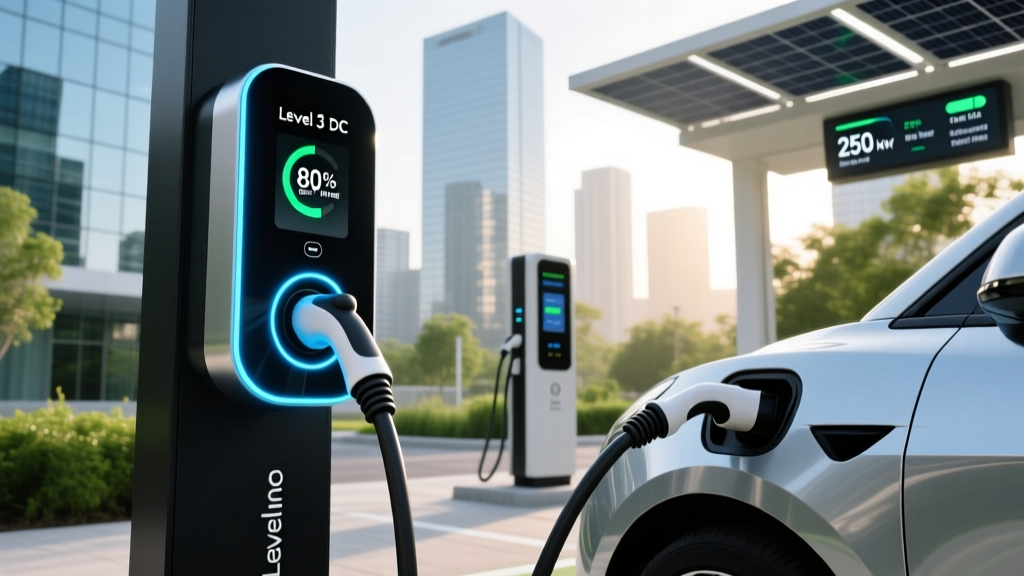
| DC Fast Charge | 400–900V DC | 50–350+ kW | 150–1,200+ mi/hr (peak) | Road trips, rapid top-ups, commercial fleets |
A few real-world caveats: those "miles per hour" figures assume average efficiency (~3.0 mi/kWh, typical of a midsize crossover like the Hyundai Ioniq 5 or Tesla Model Y). A heavy truck-class EV like the Rivian R1T will add fewer miles per kWh, while a sleek sedan like the Lucid Air adds more. DC fast-charging speeds also taper significantly above 80% State of Charge (SoC) to protect battery health — a 350 kW peak doesn't mean sustained 350 kW across the entire session.
Home Charger Installation: Electrical Requirements, Costs, and Panel Upgrades
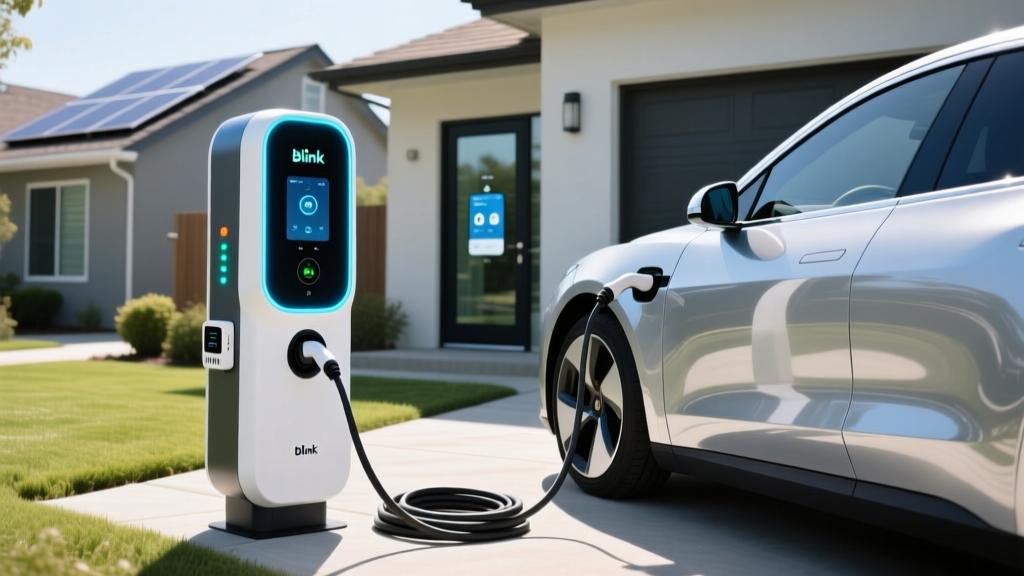
Most EV owners do 80% or more of their charging at home on Level 2. Installing a dedicated 240V circuit is the single best investment for daily EV convenience, but costs vary wildly based on your home's electrical infrastructure.
Typical Electrical Requirements
A standard Level 2 home charger runs on a 240V dedicated circuit. The most common setup is a 40-amp or 48-amp circuit, which supports continuous charging at 32A or 40A respectively (the National Electrical Code requires circuits rated 125% above continuous load). That translates to 7.7 kW or 9.6 kW of charging power — enough to fully replenish most EV batteries overnight.
If you own a high-capacity EV like the Ford F-150 Lightning Extended Range (131 kWh usable battery), you'll benefit from a 60-amp circuit (48A continuous, 11.5 kW) to ensure a full charge within 10–12 hours. For smaller batteries or PHEVs with 15–20 kWh packs, even a 20-amp circuit (16A continuous, 3.8 kW) may suffice.
Installation Cost Breakdown
| Component | Simple Install (Near Panel) | Complex Install (Long Run / Panel Upgrade) |
|---|---|---|
| Level 2 Charger Equipment | $350–$700 | $500–$750 |
| Electrician Labor (licensed) | $300–$600 | $1,000–$2,500 |
| Electrical Permit | $50–$150 | $50–$200 |
| Panel Upgrade (if needed) | $0 (not needed) | $1,500–$3,500 |
| Conduit, Wiring, Misc. Materials | $50–$150 | $200–$600 |
| Total Estimated Cost | $750–$1,600 | $3,250–$7,550 |
The wide range comes down to two variables: distance from your electrical panel to the charger location (longer wire runs mean more labor and copper cost) and whether your panel has spare capacity. Homes with 100-amp service often need a panel upgrade to 200 amps to safely support an EV charger alongside existing loads like HVAC, electric range, and dryer. Homes with 200-amp service usually have headroom for a 40–60A EV circuit without upgrades.
Some utilities and states offer rebates of $200–$1,000 for home charger installation — check your local utility's EV program page and the Alternative Fuels Data Center state incentive database for current offers. The federal Residential Clean Energy Credit (26 USC §25D) does not cover EV chargers, but the now-expired §30C charger credit may be reinstated or replaced — consult a tax professional for current-year eligibility.
Connector Compatibility: NACS, CCS, CHAdeMO, and Adapters
The North American EV market has consolidated heavily around the North American Charging Standard (NACS), originally developed by Tesla and now adopted by nearly every major automaker for 2025 and newer models. Here's where each brand stands for 2026 model-year vehicles:
| Connector Type | Brands Using It (Native Port) | DC Fast-Charger Availability |
|---|---|---|
| NACS (Tesla / J3400) | Tesla, Ford, GM, Rivian, Volvo, Polestar, Mercedes-Benz, Hyundai/Kia (2025+), BMW, Toyota, Subaru, Lucid | Tesla Supercharger network (20,000+ stalls), plus growing third-party NACS stations |
| CCS1 (Combined Charging System) | Remaining Stellantis models, some legacy VW ID.4 (pre-2025), older BMW/Hyundai/Kia models | Electrify America, EVgo, ChargePoint, and other public networks |
| CHAdeMO | Nissan Leaf (legacy only, discontinued in US) | Declining; limited to older public stations |
Adapter needs: If you own a CCS-equipped EV (model year 2024 or earlier from most brands), you'll need a CCS-to-NACS adapter (approximately $150–$250) to access Tesla Superchargers, which now welcome non-Tesla vehicles at many locations. Ford, GM, and Rivian owners received complimentary adapters from their manufacturers. Conversely, NACS-equipped vehicles can use CCS public stations with a NACS-to-CCS adapter. Always verify adapter compatibility with your specific model year before purchasing.
Cost to Charge: Home, Public, and DC Fast — Price Per Mile vs. Gas
One of the strongest arguments for EV ownership is lower per-mile energy cost — but only if you charge strategically. Electricity pricing varies enormously depending on where and when you plug in.
| Charging Scenario | Avg. Cost ($/kWh) | Cost Per Mile (at 3.0 mi/kWh) | Equivalent Gas Price (at 30 MPG) |
|---|---|---|---|
| Home — Off-Peak (Time-of-Use Rate) | $0.08–$0.12 | $0.03–$0.04 | $0.90–$1.20/gal |
| Home — Standard Residential Rate | $0.14–$0.18 | $0.05–$0.06 | $1.50–$1.80/gal |
| Public Level 2 (Workplace, Mall) | $0.20–$0.35 | $0.07–$0.12 | $2.10–$3.60/gal |
| DC Fast Charging (Public) | $0.35–$0.55 | $0.12–$0.18 | $3.60–$5.40/gal |
| Gasoline Vehicle (30 MPG avg.) | — | $0.12 (at $3.50/gal) | $3.50/gal baseline |
The takeaway: home charging on off-peak rates delivers the lowest cost per mile by a wide margin — often one-quarter the cost of gasoline. DC fast charging on road trips approaches or slightly exceeds gasoline cost per mile, but you're paying for speed and convenience. For road-trip budgeting, plan on $0.12–$0.18 per mile at DC fast chargers, or roughly $40–$60 for a 300-mile leg depending on the network and your vehicle's efficiency.
Networks like Electrify America and EVgo often offer subscription plans ($4–$10/month) that reduce per-kWh rates by 15–25%, worthwhile if you DC fast-charge more than twice a month. Tesla Supercharger pricing averages $0.28–$0.36/kWh nationally, with off-peak discounts at select urban stations.
Real-World Charging Times: 10–80% Sessions for Common Battery Sizes
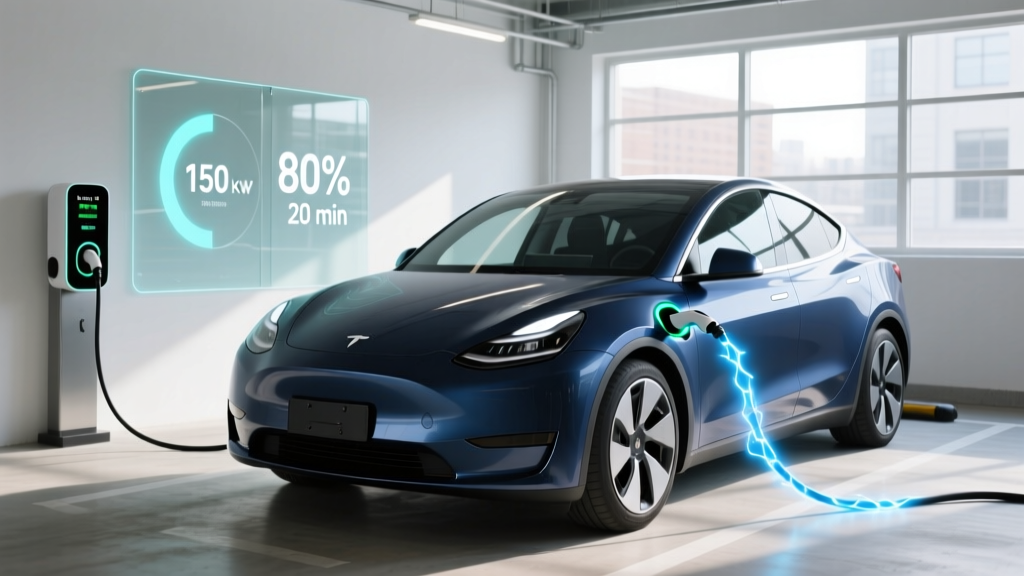
EV batteries charge fastest between roughly 10% and 50% SoC, then taper progressively to protect cell health. Manufacturers quote "10–80%" times because charging above 80% slows dramatically — sometimes to Level 2 speeds — to prevent lithium plating and thermal stress.
Here's what to expect for common battery sizes on a modern DC fast charger:
- ~60 kWh battery (e.g., base Tesla Model 3 RWD, Hyundai Kona Electric): Peak 150–180 kW. Expect 10–80% in ~22–28 minutes on a 150+ kW charger. Adds roughly 150–180 miles of range.
- ~75–85 kWh battery (e.g., Tesla Model Y Long Range, Ford Mustang Mach-E Extended Range): Peak 170–250 kW. Expect 10–80% in ~20–30 minutes on a 250 kW charger. Adds roughly 200–250 miles.
- ~100+ kWh battery (e.g., GMC Hummer EV, Ford F-150 Lightning Extended Range, Rivian R1S Max Pack): Peak 200–350 kW (on 800V architectures). Expect 10–80% in ~25–40 minutes on a 350 kW charger. Adds roughly 200–280 miles.
A critical concept for road-trip planning: preconditioning. Most modern EVs will warm or cool the battery to optimal charging temperature when you navigate to a DC fast charger. This can improve peak charge rates by 20–40% in cold weather. If your EV supports preconditioning (Tesla, Hyundai/Kia E-GMP platform, GM Ultium, Ford), always use the built-in navigation to route to your charger — it triggers this automatically. Skipping preconditioning in sub-40°F weather can add 10–15 minutes to your charge stop.
Recommended Home Level 2 Chargers for 2026
After testing dozens of Level 2 units across multiple homes and vehicles, here are three chargers that consistently deliver reliability, smart features, and proper power output for the vast majority of EV owners:
Emporia Level 2 Smart EV Charger
- Power Output: 48A continuous (11.5 kW on 60A circuit)
- Connector: NACS (J3400) — CCS adapter included
- Cable Length: 24 feet
- Smart Features: Wi-Fi scheduling, energy monitoring via app, solar integration, load management
- Price: ~$399–$449
- Best For: Budget-conscious buyers wanting full smart features and high power output
ChargePoint Home Flex (2nd Gen)
- Power Output: Up to 50A continuous (12 kW on 60A circuit); adjustable down to 16A
- Connector: NACS native; J1772 version also available
- Cable Length: 23 feet
- Smart Features: Wi-Fi, Alexa integration, scheduled charging, detailed session history
- Price: ~$599–$649
- Best For: Reliability-focused owners who want a proven brand with broad utility partnerships
Tesla Wall Connector (Gen 4)
- Power Output: 48A continuous (11.5 kW on 60A circuit)
- Connector: NACS native
- Cable Length: 24 feet
- Smart Features: Wi-Fi, power sharing (link up to 6 units on one circuit), over-the-air updates
- Price: ~$420–$470
- Best For: Tesla and NACS-equipped EV owners wanting a clean, minimal design with power-sharing for multi-EV garages
For all three, a NEMA 14-50 outlet installation (rather than hardwired) gives you the flexibility to unplug and take the charger if you move — but hardwired installations eliminate the outlet as a potential failure point and may be required by code in some jurisdictions for circuits above 50A. Discuss both options with your electrician.
Safety, Electrical Code, and Outdoor Installation Considerations
EV charging draws sustained high current for hours — this is fundamentally different from the short bursts of a dryer or oven. Safety and code compliance aren't optional extras.
- Dedicated circuit: Your Level 2 charger must be on its own dedicated circuit — never shared with other appliances. This prevents overloads and tripped breakers.
- GFCI protection: The 2023 NEC (National Electrical Code) requires GFCI (Ground Fault Circuit Interrupter) protection for EV charging outlets. Many newer chargers have built-in GFCI; if yours doesn't, your electrician must install a GFCI breaker. Note: GFCI breakers can occasionally nuisance-trip with certain chargers — if this happens, a hardwired connection with integrated GFCI in the charger unit often resolves it.
- Outdoor rating: If your charger is installed outdoors or in an unsealed garage, verify it carries a NEMA 4 (weatherproof) rating. All three chargers recommended above are rated for outdoor use.
- Wire gauge: A 48A continuous charger on a 60A circuit typically requires 4 AWG copper wire (or 2 AWG aluminum). Your electrician will size this correctly based on run length and local code amendments.
- Permit and inspection: Virtually all jurisdictions require an electrical permit for a new 240V circuit. The inspection ensures proper wire sizing, breaker rating, grounding, and GFCI compliance — it's a $50–$200 safeguard that protects your home and satisfies insurance requirements.
Frequently Asked Questions
How much does it cost to install a home EV charger?
A straightforward Level 2 installation near your electrical panel typically costs $750–$1,600 all-in (equipment, electrician, permit). If your home needs a panel upgrade from 100A to 200A service, expect $3,250–$7,550 total. Always get at least two quotes from licensed electricians and verify they include permit costs.
How fast will each charging level add range?
Level 1 (120V) adds 3–5 miles per hour — suitable for PHEVs with small batteries but impractical for full-size BEVs. Level 2 (240V, 48A) adds roughly 30–40 miles per hour for a typical crossover, fully recharging most EVs overnight. DC fast charging at 150–350 kW can add 150–280 miles in 20–30 minutes, making it viable for road-trip stops.
Which connector and charger is compatible with my EV?
For 2025–2026 model-year vehicles, nearly all brands have adopted NACS (the Tesla connector). Check the EPA's fueleconomy.gov listing for your specific model to confirm. If your EV has a CCS port (common on 2024 and older models), purchase a CCS-to-NACS adapter ($150–$250) to access Tesla Superchargers. CHAdeMO is effectively discontinued in the US — only legacy Nissan Leaf models still use it.
How much does EV charging cost per mile compared to gasoline?
Home charging on off-peak rates costs $0.03–$0.04 per mile — roughly equivalent to $0.90–$1.20 per gallon of gasoline. Standard residential rates bring it to $0.05–$0.06/mile. DC fast charging on road trips runs $0.12–$0.18/mile, comparable to gasoline at $3.60–$5.40/gallon. Over a year of 12,000 miles, home charging saves most drivers $800–$1,500 versus gasoline, per fueleconomy.gov comparisons.
What electrical upgrades might my home need for an EV charger?
The most common upgrade is a panel capacity increase from 100 amps to 200 amps ($1,500–$3,500), required when your existing panel lacks spare breaker slots or amperage headroom. Older homes with knob-and-tube wiring or aluminum branch wiring may need partial rewiring. Some utilities now offer "smart panel" load-management devices ($200–$500 installed) that let you add an EV charger without a full panel upgrade by automatically throttling charger power when other large loads are active — ask your electrician if this option is available in your area.