The Physics of Speed: Why Your EV Range Shrinks on the Highway
Every EV owner learns this lesson eventually: the EPA range sticker assumes a mix of city and highway driving. Push your speed from 65 mph to 80 mph on an interstate run, and that 310-mile EPA estimate can drop to 230 miles or less. Understanding this EV range speed impact is the single most practical piece of knowledge for trip planning, charging strategy, and choosing the right vehicle.
The reason is straightforward physics. Aerodynamic drag increases with the square of your velocity. Double your speed, and drag quadruples. At 55 mph, an EV like the Tesla Model Y Long Range (EPA 320 miles, 75 kWh usable battery) might achieve 3.8 miles per kWh. At 80 mph, that same vehicle could drop to 2.6 mi/kWh — a 32% efficiency loss. Unlike gas cars, EVs don't have multi-speed transmissions to mitigate this, and regenerative braking recovers far less energy at sustained highway speeds where braking events are rare.
EPA range tests use a weighted mix of city (55%) and highway (45%) driving cycles at moderate speeds. In real-world highway testing at 70 mph in fair weather, expect 85-90% of EPA range. At 80 mph, plan for 70-78%. In cold weather (below 32°F) at highway speed, 55-65% of EPA is realistic. Source: fueleconomy.gov EV testing methodology.
Speed vs. Range: Real-World Efficiency Data
Below is a synthesized look at how speed impacts range across popular 2025-2026 EVs, based on real-world highway testing from independent reviewers and owner data. These figures assume fair weather (65-75°F), no wind, and flat terrain.
| Vehicle (Battery kWh) | EPA Range | @ 65 mph | @ 75 mph | @ 85 mph |
|---|---|---|---|---|
| Tesla Model Y LR (75 kWh, NMC) | 320 mi | ~295 mi | ~255 mi | ~210 mi |
| Hyundai Ioniq 5 LR (77.4 kWh, NMC) | 303 mi | ~280 mi | ~240 mi | ~195 mi |
| Ford F-150 Lightning Ext (131 kWh, NMC) | 320 mi | ~285 mi | ~240 mi | ~190 mi |
| Chevrolet Equinox EV RS (85 kWh, NMC) | 319 mi | ~290 mi | ~248 mi | ~200 mi |
| BMW iX xDrive50 (105.2 kWh, NMC) | 324 mi | ~300 mi | ~260 mi | ~215 mi |
Several patterns emerge. First, boxy, heavy vehicles like the F-150 Lightning suffer the most at high speed — that flat truck face is an aerodynamic wall. Second, more efficient vehicles with lower drag coefficients (the Ioniq 5 at 0.28 Cd, the Model Y at 0.23 Cd) hold up better but still lose roughly 18-25% going from 65 to 75 mph. Third, the drop from 75 to 85 mph is often larger in absolute miles than 65 to 75, because drag compounds exponentially.
Charging Levels Explained: kW Speed and Miles Added Per Hour
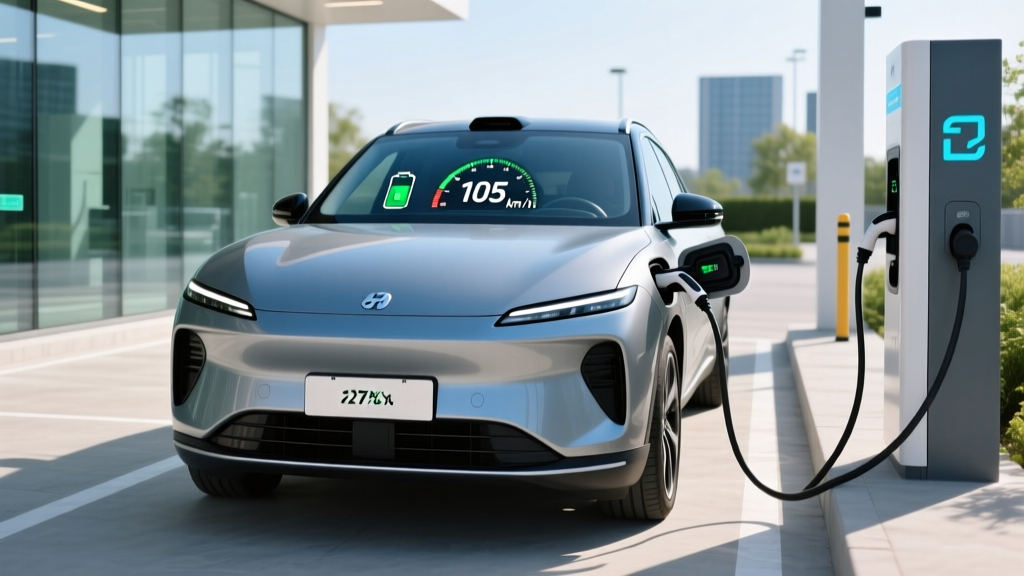
Your driving speed determines how quickly you consume energy. Your charging speed determines how quickly you replenish it. Understanding kW (kilowatts — the rate of power delivery) versus kWh (kilowatt-hours — the total energy stored in your battery) is essential. Think of kW as the width of a hose and kWh as the size of the bucket.
| Level | Voltage / Amps | Power (kW) | Miles of Range / Hour | Best For |
|---|---|---|---|---|
| Level 1 | 120V / 12A | 1.4 kW | 3-5 mi/hr | Overnight top-up, PHEVs, low-mileage drivers |
| Level 2 | 240V / 32-48A | 7.7-11.5 kW | 25-44 mi/hr | Daily home charging, workplace, destinations |
| DC Fast | 400-800V DC | 50-350 kW | 150-1,000+ mi/hr (peak) | Road trips, rapid top-ups |
A critical nuance: DC fast charging speeds are peak rates, not sustained rates. A vehicle that peaks at 250 kW may only hold that rate from 10-30% State of Charge (SoC), then taper progressively. A realistic 10-80% session on a 350 kW-capable charger with a vehicle like the Ioniq 5 (which peaks around 240 kW on its 800V architecture) takes roughly 18-22 minutes. The same session on a 150 kW charger takes 28-35 minutes. Always plan road-trip stops around 10-80% charges — pushing past 80% at a DC fast charger wastes time due to severe tapering.
Home Charger Installation: Electrical Requirements and Costs
Most EV owners do 80%+ of their charging at home on Level 2. A proper installation requires a dedicated 240V circuit — the same voltage as your electric dryer or oven. Here's what's involved:
Electrical requirements: A 48-amp Level 2 charger requires a 60-amp dedicated circuit (the National Electrical Code requires circuits to be rated at 125% of continuous load). A 40-amp charger needs a 50-amp circuit. Your charger draws continuous current for hours, so this margin prevents overheating.
Panel capacity: Most modern homes with 200-amp electrical service can accommodate a Level 2 charger without a panel upgrade. Older homes with 100-amp service, or homes already running multiple high-draw appliances (electric range, dryer, HVAC, water heater), may need a service upgrade to 200A — a $2,000-$4,500 project on its own.
| Component | Simple Install (near panel) | Complex Install (long run, conduit) |
|---|---|---|
| Level 2 Charger (40-48A) | $400-$700 | $400-$700 |
| Electrician labor (2-4 hrs simple / 6-10 hrs complex) | $300-$600 | $800-$2,000 |
| Materials (wire, conduit, breaker) | $50-$150 | $200-$500 |
| Permit and inspection | $50-$200 | $100-$300 |
| Total (no panel upgrade) | $800-$1,650 | $1,500-$3,500 |
| Total (with 200A panel upgrade) | $2,800-$5,000 | $3,500-$7,000 |
Always hire a licensed electrician and pull a permit. Unpermitted EV charger work can void home insurance claims and create fire risk. The charger should be on a GFCI-protected circuit if installed outdoors, and the unit itself should carry a NEMA 4 (outdoor/watertight) rating for exterior installations. Consult the National Electrical Code (NEC) Article 625 for EV-specific requirements, and defer to your electrician's final specifications.
Connector Compatibility: NACS, CCS1, and CHAdeMO
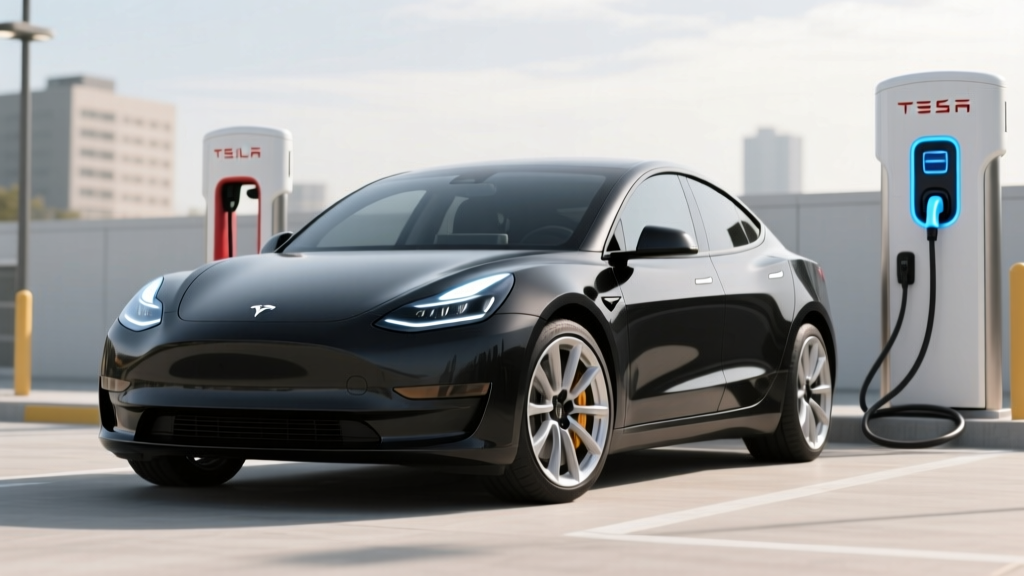
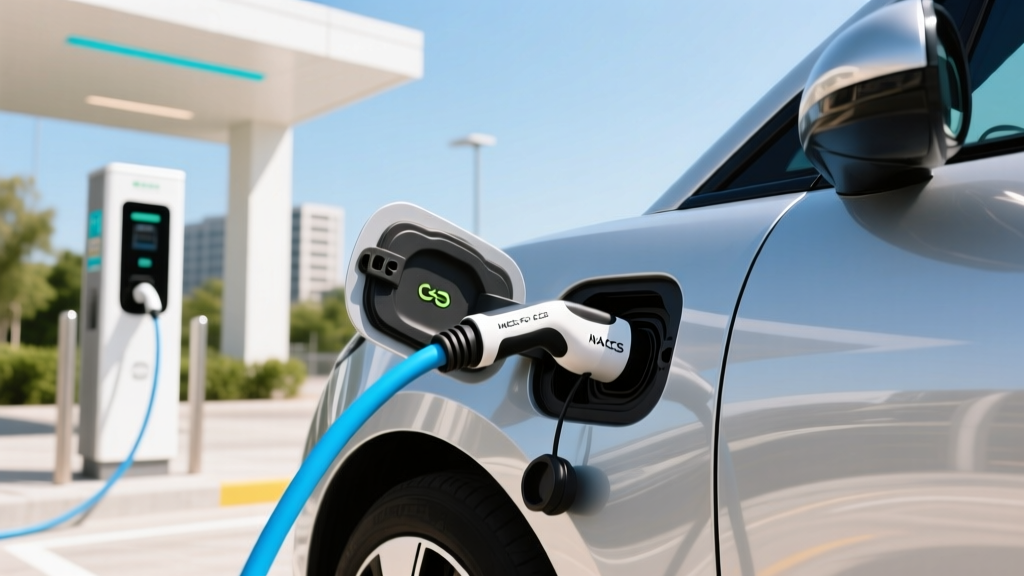
The connector landscape has shifted dramatically. As of 2025-2026, the North American Charging Standard (NACS), pioneered by Tesla, has become the dominant connector for new vehicles. Here's where each brand stands:
| Connector | Native Brands | Adapter Needed? |
|---|---|---|
| NACS (Tesla) | Tesla (all), Ford (2025+), GM (2025+), Rivian (2025+), Volvo/Polestar (2025+), Hyundai/Kia (2026+) | CCS→NACS adapter for older CCS vehicles accessing Superchargers (~$200-$250) |
| CCS1 | VW ID.4, BMW iX (2025), some remaining 2024 models | NACS→CCS adapter needed for Tesla Superchargers |
| CHAdeMO | Nissan Leaf (legacy), Mitsubishi Outlander PHEV | Limited adapter options; network shrinking |
If you're buying a new EV in 2025-2026, NACS is the future-proof choice. Tesla's Supercharger network now welcomes NACS-equipped non-Tesla vehicles at thousands of locations. For home Level 2 charging, most chargers ship with a J1772 connector (the legacy Level 2 standard), and NACS vehicles include a J1772-to-NACS adapter in the box. When purchasing a home charger, confirm whether it ships with NACS or J1772 and whether an adapter is included.
Cost to Charge: Per-Mile Economics vs. Gasoline
Charging cost depends heavily on where and when you charge. Electricity rates vary by utility, time of day, and network. Here are realistic 2025-2026 scenarios for a mid-size EV averaging 3.0 mi/kWh (roughly 112 MPGe):
| Scenario | Rate ($/kWh) | Cost Per Mile | Annual (12,000 mi) |
|---|---|---|---|
| Home, off-peak (utility avg) | $0.12 | $0.04 | $480 |
| Home, standard rate | $0.18 | $0.06 | $720 |
| Public Level 2 (ChargePoint, EVgo) | $0.30-$0.45 | $0.10-$0.15 | $1,200-$1,800 |
| DC Fast (Electrify America, Tesla) | $0.35-$0.55 | $0.12-$0.18 | $1,440-$2,160 |
| Gas car (28 MPG avg, $3.40/gal) | — | $0.12 | $1,440 |
The takeaway: home charging at off-peak rates is roughly one-third the cost of gasoline per mile. Public DC fast charging at premium rates can equal or exceed gas costs. This is why home Level 2 access is the economic linchpin of EV ownership. If you can't charge at home, your cost advantage narrows significantly, and a PHEV may make more financial sense. According to the Department of Energy, the average U.S. electricity price is $0.17/kWh, but time-of-use plans can drop off-peak rates to $0.08-$0.12/kWh.
Equipment Recommendations: Home Level 2 Chargers for 2025-2026
Not all Level 2 chargers are equal. Here are four well-regarded options across price points, with exact specifications:
Tesla Wall Connector (Gen 3)
- Power: 11.5 kW (48A)
- Connector: NACS native
- Cable: 24 ft
- Smart features: Wi-Fi, OTA updates, power sharing (load balance up to 6 units on one circuit)
- Price: ~$475
- Best for: NACS-vehicle households, multi-EV garages
ChargePoint Home Flex
- Power: Up to 12 kW (50A, configurable 16-50A)
- Connector: J1772 (NACS adapter included)
- Cable: 23 ft
- Smart features: Wi-Fi, app scheduling, Alexa integration, amperage adjustment
- Price: ~$550-$700
- Best for: Mixed-fleet garages, flexible amperage
Emporia Vue Level 2 Charger
- Power: 11.5 kW (48A)
- Connector: J1772 (NACS adapter available)
- Cable: 24 ft
- Smart features: Wi-Fi, energy monitoring, solar integration, load management
- Price: ~$350-$400
- Best for: Budget-conscious buyers, solar homes
Grizzl-E Smart
- Power: 10 kW (40A)
- Connector: J1772 or NACS (choose at purchase)
- Cable: 24 ft
- Smart features: Wi-Fi, OCPP-compatible, adjustable amperage
- Price: ~$400-$500
- Best for: Outdoor installs (IP65 rated), extreme cold climates (-40°F rated)
For most buyers, 40-48 amps on a 50-60 amp circuit is the sweet spot. It delivers a full charge overnight for any current-production EV battery (60-130 kWh). Don't overspend on an 80-amp charger unless your vehicle's onboard charger can accept it — most EVs max out at 11.5 kW (48A) onboard, meaning a more powerful charger won't charge them faster.
Mitigating the Speed-Range Penalty: Practical Strategies
You can't change the physics of aerodynamic drag, but you can manage its impact on your trips:
- Target 70 mph, not 80. The difference is roughly 15-25% more range on a long trip — often the difference between needing one charging stop or two on a 300-mile run.
- Precondition your battery. Before arriving at a DC fast charger, use your vehicle's navigation-based preconditioning (available on Tesla, Hyundai/Kia E-GMP, BMW, Ford). This warms the battery to optimal temperature, enabling peak charge rates and reducing time spent at the charger.
- Use trip-planning tools. Apps like A Better Routeplanner (ABRP) let you input your speed, weather, and elevation to get realistic range predictions — far more accurate than the dashboard guess-o-meter.
- Manage climate load. At highway speed, aerodynamic drag dominates. But in extreme cold, using seat heaters instead of cabin heat can recover 5-10 miles of range. Heat pumps (standard on most 2025+ EVs) cut HVAC energy consumption by 30-50% compared to resistive heaters.
- Plan 10-80% stops. Charging from 10-80% at a DC fast charger is 2-3x faster per kWh than 80-100%. Plan shorter, more frequent stops rather than long waits for a full battery.
Frequently Asked Questions
How much does it cost to install a home EV charger?
A straightforward Level 2 installation (charger near the electrical panel, no panel upgrade) costs $800-$1,650 including equipment, electrician labor, materials, and permit. Complex installs with long wire runs or conduit can reach $1,500-$3,500. If your home needs a 200-amp panel upgrade, add $2,000-$4,500. Always get multiple quotes from licensed electricians and verify they pull the required permits.
How fast will each charging level add range?
Level 1 (120V) adds 3-5 miles of range per hour — adequate for PHEVs with small batteries or drivers covering under 30 miles daily. Level 2 (240V, 40-48A) adds 25-44 miles per hour, fully recharging most EVs overnight in 6-10 hours. DC fast charging at 150-350 kW can add 100-250 miles in 15-25 minutes, but only from roughly 10-80% SoC before tapering slows the rate dramatically.
Which connector and charger is compatible with my EV?
Check your vehicle's charge port. 2025-2026 Teslas, Fords, GMs, Rivians, and an expanding list of others use NACS. Most 2023-2024 non-Tesla EVs use CCS1. The Nissan Leaf uses CHAdeMO. For home Level 2, nearly all vehicles accept J1772 with an included adapter (NACS vehicles) or natively (CCS1/CHAdeMO vehicles). When buying a home charger, match the plug or confirm the adapter is included.
How much does EV charging cost per mile compared to gas?
Home charging at $0.12/kWh (off-peak) costs roughly $0.04/mile for an efficient EV — about one-third the cost of gasoline at $3.40/gal and 28 MPG ($0.12/mile). Public DC fast charging at $0.40-$0.55/kWh costs $0.13-$0.18/mile, which can equal or exceed gas. The economic advantage of an EV depends heavily on home charging access.
What electrical upgrades might I need for a home charger?
Most homes with 200-amp electrical service can add a 50-60 amp dedicated circuit for Level 2 charging without upgrades. Homes with 100-amp service, or those already running electric range, dryer, HVAC, and water heater, may need a service upgrade to 200A ($2,000-$4,500). Some utilities offer smart panel solutions or managed charging programs that limit charger draw during peak demand, avoiding a panel upgrade entirely. Have an electrician perform a load calculation before committing to a charger amperage.
Does cold weather affect the speed-range relationship?
Yes, compounding the penalty. Cold air is denser (increasing drag slightly), battery internal resistance rises (reducing efficiency), and cabin heating draws significant energy. At 20°F and 75 mph, expect 50-60% of EPA range — a dramatic reduction from the 75-85% you'd see at the same speed in mild weather. Preconditioning the battery and cabin while still plugged in at home recovers some of this loss.
The bottom line: speed is the single largest variable under your control that affects real-world EV range. Plan your trips around 70-75 mph highway speeds, invest in home Level 2 charging for the lowest cost per mile, and understand your vehicle's charging curve so road-trip stops stay short. The data consistently shows that informed drivers who manage speed and charging strategy can reliably achieve 85-90% of EPA range in fair conditions — enough to make any current-production EV practical for daily use and road trips alike.