The most persistent EV range misconception isn't about how far a car can go on a full battery. It's about how quickly you can put miles back on — and what that actually costs in time, money, and electrical infrastructure. A 320-mile EPA sticker means little if your home outlet adds 3 miles per hour or your nearest DC fast charger is 40 minutes out of the way.
This guide dismantles the range misconception by focusing on what actually determines your usable range day-to-day: charging levels, real-world speeds, home installation requirements, connector compatibility, and the true cost per mile compared to gasoline. Every figure below reflects 2026 equipment pricing and current model-year EV architectures.
The Core EV Range Misconception: Miles vs. Miles-Per-Hour
Automakers advertise EPA range prominently — 312 miles, 340 miles, 402 miles. But range is a tank size, not a refueling experience. The metric that actually shapes ownership is miles of range added per hour of charging, and that number varies by a factor of 100x depending on your charging level.
A second layer of misconception: confusing kW (kilowatts, the rate of energy flow — like water pressure) with kWh (kilowatt-hours, the total energy stored — like tank volume). A 75 kWh battery charged at 7.5 kW takes roughly 10 hours from empty. That same battery on a 150 kW DC fast charger can go from 10% to 80% in about 25 minutes. Same battery. Wildly different experiences.
| Level | Voltage | Power (kW) | Miles of Range Added/Hour | Typical Use Case |
|---|---|---|---|---|
| Level 1 | 120V AC | 1.0–1.4 kW | 3–5 mi/hr | Overnight top-up, PHEVs, low-mileage drivers |
| Level 2 | 240V AC | 7.2–19.2 kW | 25–65 mi/hr | Home daily charging, workplace, shopping centers |
| DC Fast (Level 3) | 400–800V DC | 50–350 kW | 150–800+ mi/hr (peak) | Road trips, highway corridors, rapid top-ups |
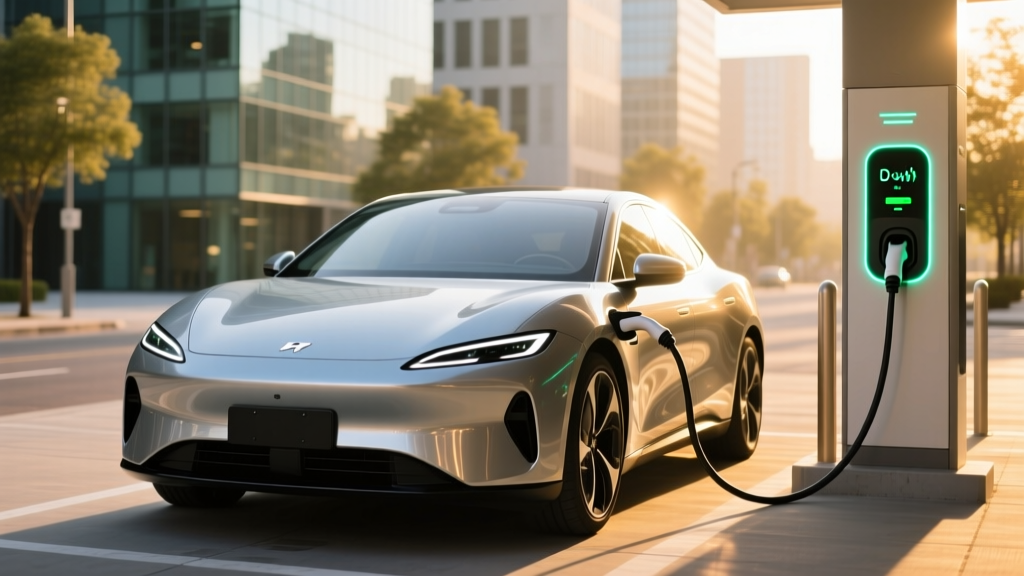
Note on the DC fast row: peak kW is not sustained kW. A Hyundai Ioniq 5 with its 800V architecture may peak at 240 kW but tapers significantly above 80% state of charge. Expect a 10–80% session in roughly 18 minutes under ideal conditions, but plan for 25–30 minutes including plug-in, authentication, and taper. The U.S. Department of Energy's fueleconomy.gov provides vehicle-specific efficiency data to help you calculate realistic charging times.
Home Charger Installation: What It Actually Costs
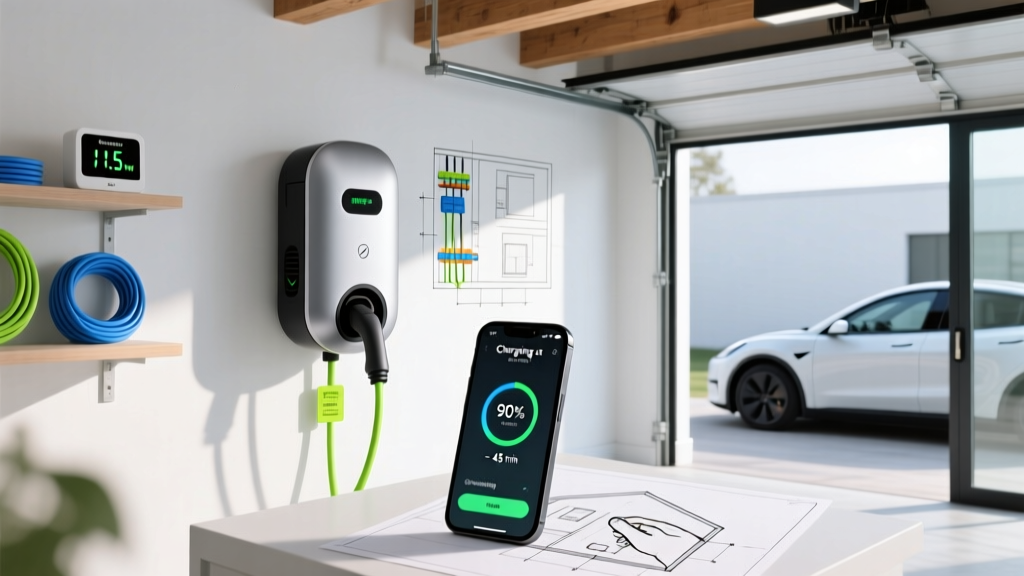
This is where the range misconception hits your wallet. Installing a Level 2 home charger isn't just buying a $500 wallbox — it's an electrical project that may require a panel upgrade, a new dedicated circuit, conduit runs, and a local permit.
| Component | Low End | High End | Notes |
|---|---|---|---|
| Level 2 Charger (Equipment) | $350 | $750 | 32A–48A smart chargers; hardwired vs. NEMA 14-50 plug |
| Electrician Labor | $500 | $2,000 | Depends on conduit run length, wall type, and circuit distance from panel |
| Electrical Permit | $50 | $250 | Varies by municipality; some jurisdictions waive for simple installs |
| Panel Upgrade (if needed) | $1,500 | $4,500 | Required if your panel lacks capacity; 100A → 200A service upgrade |
| Total (no panel upgrade) | $900 | $3,000 | Most homes with 200A service and nearby panel |
| Total (with panel upgrade) | $2,400 | $7,500 | Older homes, 100A panels, or distant garage runs |
Electrical Requirements for Level 2 Charging
A typical 48-amp Level 2 charger requires a 240V, 60-amp dedicated circuit (the National Electrical Code requires circuits rated at 125% of continuous load — so a 48A charger needs a 60A breaker). If you opt for a 32A charger, a 40A circuit suffices.
Panel capacity check: A 200-amp residential panel can typically support a 60A EV circuit alongside normal household loads. A 100-amp panel — common in homes built before 1990 — almost certainly cannot. Your electrician will perform a load calculation per NEC Article 220 to determine if an upgrade is required.
Don't skip the permit. Unpermitted electrical work can void your homeowner's insurance in the event of a fire and may cause issues during a future home sale. Most jurisdictions require a licensed electrician to pull the permit and schedule a post-install inspection.
Safety and Code Considerations
- Dedicated circuit: Your EV charger must be on its own breaker — never shared with dryer, oven, or HVAC loads.
- GFCI protection: NEC 2020 and later require GFCI protection for outdoor receptacles. Hardwired chargers sidestep this requirement and are generally preferred for outdoor installs.
- Outdoor rating: If your charger is mounted outside or in an unenclosed carport, ensure it carries a NEMA 4 (weatherproof) rating. Most major chargers meet this standard.
- Cable management: A 25-foot cable is standard; 18-foot cables may not reach all parking orientations. Consider your driveway layout before ordering.
Connector Compatibility: NACS, CCS1, and CHAdeMO in 2026
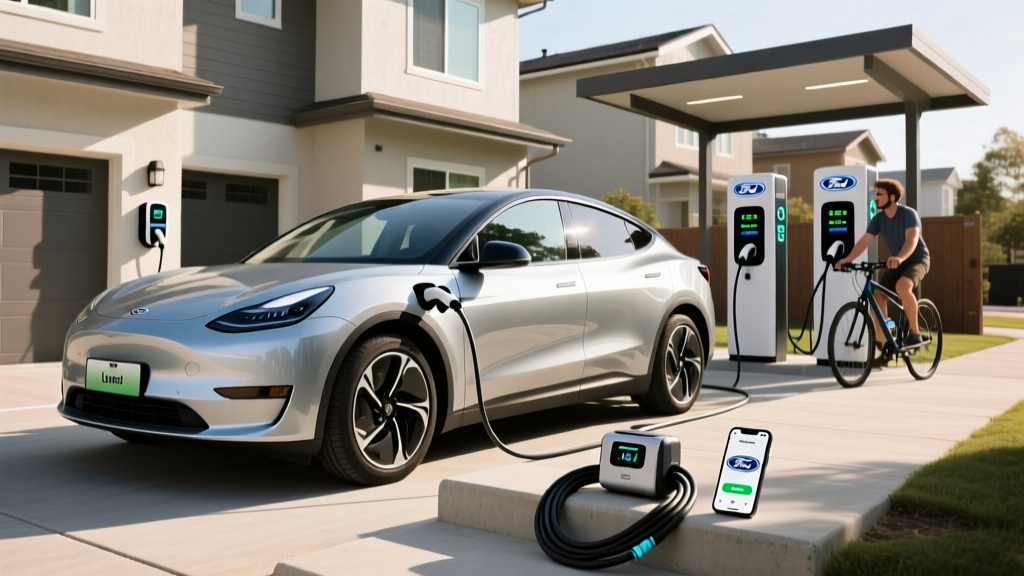
The connector landscape has shifted dramatically. As of the 2025–2026 model years, the North American Charging Standard (NACS) — originally developed by Tesla — has become the dominant connector for new EVs sold in North America. Ford, GM, Rivian, Hyundai, Kia, BMW, and most other legacy automakers have adopted NACS on new models.
However, hundreds of thousands of CCS1-equipped EVs remain on the road, and most public DC fast-charging stations outside the Tesla Supercharger network still carry CCS1 connectors.
| Connector | Brands Using It (New Vehicles) | Adapter Needed? |
|---|---|---|
| NACS (native) | Tesla (all), Ford (2025+), GM (2025+), Rivian (2025+), Hyundai/Kia (2025+), BMW, Mercedes, Volvo/Polestar | CCS1 → NACS adapter (~$200) for older public stations |
| CCS1 | Remaining 2024 and older models from most brands; some VW/ID.4 inventory | NACS → CCS1 adapter for Tesla Supercharger access (where enabled) |
| CHAdeMO | Nissan Leaf (legacy); no new 2026 models use CHAdeMO | Limited adapter options; network shrinking |
Practical advice for 2026 buyers: If you're purchasing a new EV, NACS is the future-proof choice. If you own a CCS1 vehicle, adapters from Ford, GM, and third-party makers now enable access to Tesla Superchargers (V3 and V4 stalls that support non-Tesla vehicles). Check your automaker's official adapter compatibility list before purchasing. The Alternative Fuels Data Center maintains a live map of public charging stations filtered by connector type.
Cost Per Mile: Charging vs. Gasoline
The economic argument for EVs hinges on fuel cost, but the savings vary enormously depending on where and when you charge. Here's a realistic breakdown using a 3.5 mi/kWh efficiency (typical for a midsize crossover like the Tesla Model Y or Hyundai Ioniq 5) versus a 28 MPG gasoline equivalent.
| Scenario | Rate | Cost per kWh | Cost per Mile | Savings vs. Gas ($3.50/gal, 28 MPG) |
|---|---|---|---|---|
| Home, off-peak (utility TOU rate) | $0.09–$0.14/kWh | $0.12 avg | $0.034 | ~$0.091/mi saved (73% cheaper) |
| Home, standard residential rate | $0.14–$0.22/kWh | $0.18 avg | $0.051 | ~$0.074/mi saved (59% cheaper) |
| Public Level 2 (ChargePoint, etc.) | $0.25–$0.49/kWh | $0.35 avg | $0.100 | ~$0.025/mi saved (20% cheaper) |
| DC Fast Charging (Electrify America, EVgo) | $0.35–$0.55/kWh | $0.48 avg | $0.137 | ~$0.012/mi saved (8% cheaper) |
| Gasoline baseline | $3.50/gal | — | $0.125 | — |
Key takeaway: If you charge at home on off-peak rates, you'll pay roughly $0.03–0.05 per mile — a fraction of gasoline. But if you rely exclusively on public DC fast charging at $0.48/kWh, your per-mile cost can actually exceed gasoline. This is why home charging access is the single most important factor in EV economics, and why the range misconception extends to cost: an EV is only cheap to "fuel" if you can charge where electricity is cheap.
Charging Time Examples: What 10–80% Actually Takes
The 10–80% metric is the industry standard because charging slows dramatically above 80% state of charge to protect battery health. Here are real-world 10–80% times for common 2026 battery architectures:
- Tesla Model Y Long Range (75 kWh, NMC, 400V): Peak 250 kW on V3 Supercharger → 10–80% in approximately 25 minutes. Sustains ~175 kW through 50% SoC, then tapers.
- Hyundai Ioniq 5 (77.4 kWh, NMC, 800V): Peak 240 kW on 350 kW station → 10–80% in approximately 18 minutes. The 800V architecture sustains higher power longer.
- Ford F-150 Lightning Extended Range (131 kWh, NMC, 400V): Peak 155 kW → 10–80% in approximately 55 minutes. Larger batteries take longer even at high kW.
- Chevrolet Equinox EV (85 kWh, NMC, 400V): Peak 150 kW → 10–80% in approximately 35 minutes.
- BMW iX xDrive50 (111.5 kWh, NMC): Peak 200 kW → 10–80% in approximately 34 minutes.
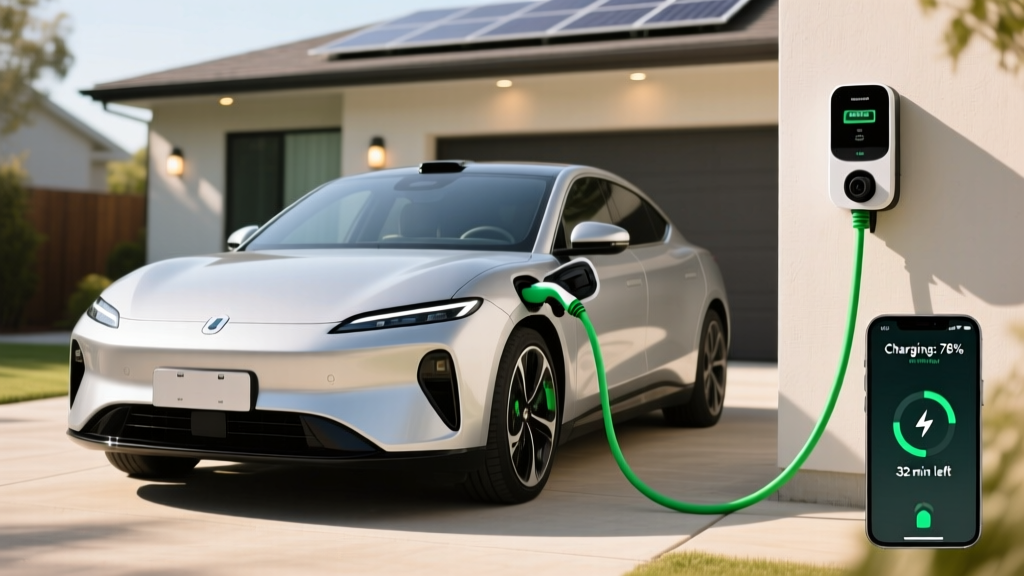
At home on a 48A / 11.5 kW Level 2 charger, expect a full overnight charge (10–100%) in 7–12 hours for most vehicles — more than enough to wake up with a full battery every morning.
Recommended Home Chargers for 2026
ChargePoint Home Flex (2nd Gen)
- Power: Up to 12 kW (50A, adjustable down to 16A)
- Connector: NACS or J1772 (select at purchase)
- Cable length: 24 feet
- Smart features: Wi-Fi, app scheduling, utility TOU integration, Alexa/Google Home
- Price: ~$550 (NACS) / ~$500 (J1772)
- Best for: Flexible amperage for older panels; excellent app
Tesla Wall Connector
- Power: Up to 11.5 kW (48A)
- Connector: NACS (native Tesla); includes J1772 adapter dongle for non-Tesla EVs
- Cable length: 24 feet
- Smart features: Wi-Fi, OTA firmware updates, power sharing between multiple units, load management
- Price: ~$475
- Best for: Tesla owners; multi-EV households with power-sharing needs
Emporia Level 2 EV Charger
- Power: Up to 11.5 kW (48A)
- Connector: NACS or J1772
- Cable length: 24 feet
- Smart features: Wi-Fi, real-time energy monitoring, solar integration, TOU scheduling
- Price: ~$400
- Best for: Budget-conscious buyers; solar-panel households wanting energy tracking
Grizzl-E Smart
- Power: Up to 10 kW (40A)
- Connector: J1772 (NACS adapter available separately)
- Cable length: 24 feet
- Smart features: Wi-Fi, OCPP-compatible, adjustable amperage
- Price: ~$450
- Best for: Cold-climate durability (rated to -40°F); Canadian-built, rugged enclosure
Real-World Range: The Misconception You Can Measure
Beyond charging speed, the broader EV range misconception involves the EPA sticker itself. EPA range is measured on a mixed city/highway dynamometer cycle at moderate temperatures. In practice, three factors consistently reduce real-world range:
- Highway driving at 70+ mph: Aerodynamic drag increases with the square of speed. Expect 10–20% less range than the EPA sticker at sustained highway speeds. A 310-mile EPA vehicle may deliver 250–270 miles on a 75 mph interstate run.
- Cold weather (below 32°F): Battery chemistry slows, cabin heating draws 2–5 kW, and regenerative braking is limited until the battery warms. Range loss of 20–35% is common in sub-freezing conditions, even with a heat pump. Vehicles without heat pumps (some older models) can lose 40% or more.
- Elevation and terrain: Mountain passes consume energy climbing that isn't fully recovered descending. A 5,000-foot ascent can burn 15–25 kWh beyond what flat-land driving would use over the same distance.
The fix isn't a bigger battery — it's understanding your charging ecosystem. A 250-mile real-world range is perfectly adequate when you charge at home every night and wake up full. It only becomes a problem when you can't charge where you park, or when road-trip DC fast chargers are sparse or unreliable.
Frequently Asked Questions
How much does it cost to install a home EV charger?
A typical Level 2 home charger installation costs $900–$3,000 including equipment, electrician labor, and permit — assuming your electrical panel has sufficient capacity. If a panel upgrade from 100A to 200A is needed, add $1,500–$4,500. Get at least two quotes from licensed electricians, and confirm they include permit and inspection in their estimate.
How fast will each charging level add range?
Level 1 (120V) adds 3–5 miles per hour. Level 2 (240V, 48A) adds 30–45 miles per hour depending on vehicle efficiency. DC fast charging adds 150–800+ miles per hour at peak, but sessions are typically limited to 10–80% in 18–55 minutes depending on battery size and voltage architecture.
Which connector/charger is compatible with my EV?
For 2025–2026 model-year vehicles from Tesla, Ford, GM, Hyundai, Kia, Rivian, BMW, and most others, the native connector is NACS. Older CCS1 vehicles can use adapters for Tesla Supercharger access. CHAdeMO is limited to legacy Nissan Leaf models. Check your vehicle's charge port and your local public charging network's connector availability before purchasing an adapter.
How much does charging cost per mile vs. gas?
Home off-peak charging costs roughly $0.03–0.05 per mile — about 60–75% cheaper than gasoline at $3.50/gallon and 28 MPG. Public DC fast charging at $0.48/kWh averages $0.13–0.14 per mile, which can be slightly more expensive than gas. The savings advantage of an EV is overwhelmingly tied to home charging access.
What electrical upgrades might I need?
If your home has a 200-amp electrical panel with available breaker slots, you likely need only a new 60A dedicated circuit and conduit run. Homes with 100-amp panels, older wiring, or panels at capacity will require a service upgrade to 200A — a $1,500–$4,500 job. Your electrician's load calculation (NEC Article 220) will determine this definitively. Some utilities offer rebates for panel upgrades that support EV charging; check with your local provider. The IRS §30D clean vehicle credit applies to the vehicle itself, but certain home charging equipment may qualify under the separate §25C energy efficient home improvement credit — consult a tax professional for eligibility.