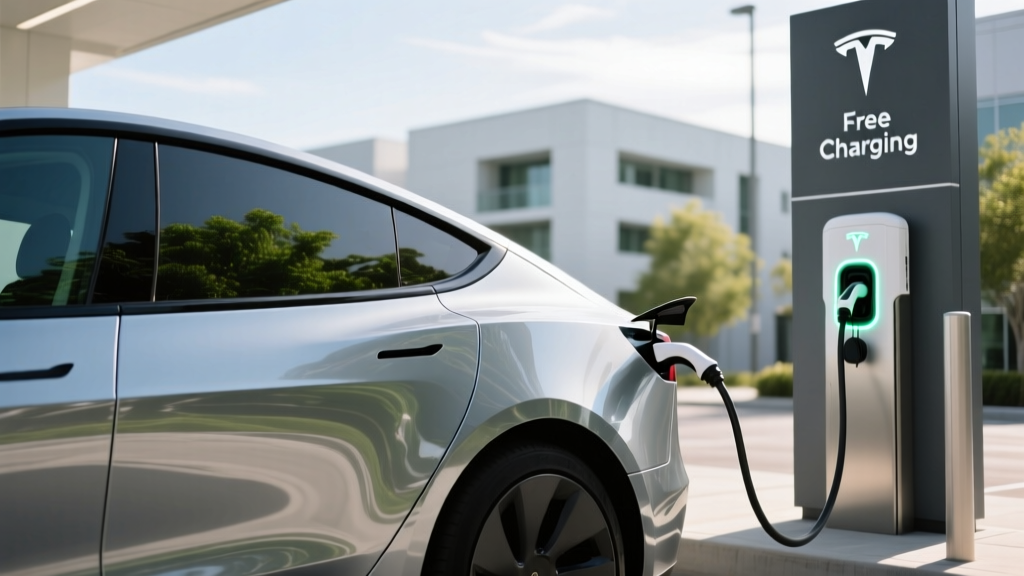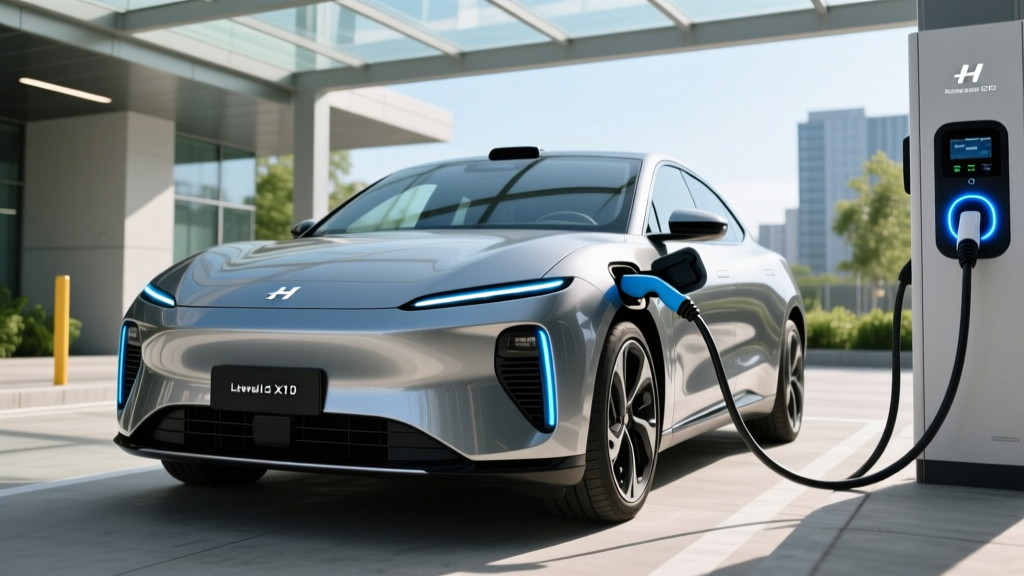
If you've been researching electric vehicle charging, you've likely encountered the term EV Level 3 charger. It sounds impressive — and it is — but there's a critical distinction every EV shopper and owner needs to understand before spending a dime or planning a road trip. Level 3 charging (formally called DC Fast Charging or DCFC) is the high-power, commercial-grade system you find at highway rest stops and retail charging stations. It is not something you install in your garage.
This guide dissects exactly what Level 3 chargers deliver, how they compare to Level 1 and Level 2 home charging, what connectors you'll need, what it actually costs per mile, and which home equipment makes the most sense for daily driving. Let's get precise with the numbers.
The Three EV Charging Levels: kW, Speeds, and Real-World Range Added
The most common mistake new EV owners make is confusing kW (kilowatts) with kWh (kilowatt-hours). Think of it like plumbing: kW is the width of the pipe (how fast energy flows), while kWh is the total volume of water in the tank (your battery's energy capacity). A 150 kW charger fills a 75 kWh battery much faster than a 7.2 kW home charger — but both deliver the same electrons.
Here's how each level breaks down in real-world terms:
| Level | Power Source | Max Power (kW) | Miles of Range Added per Hour | Typical Use Case | 10–80% Time (75 kWh Battery) |
|---|---|---|---|---|---|
| Level 1 | 120V AC (standard outlet) | 1.2–1.4 kW | 3–5 mi/hr | Overnight top-up, PHEVs, low-mileage drivers | ~45–50 hours |
| Level 2 | 240V AC (dryer-style outlet or hardwired) | 7.2–19.2 kW | 20–60 mi/hr | Daily home/workplace charging | ~4–8 hours |
| Level 3 (DC Fast) | 400–800V DC (commercial station) | 50–350 kW | 150–1,200+ mi/hr | Road trips, highway corridors, fleet depots | ~15–45 minutes |
Can You Install a Level 3 EV Charger at Home?
The short answer: No. Level 3 / DC Fast chargers require dedicated three-phase commercial power, specialized 480V utility connections, liquid-cooled cables, and equipment costing $25,000–$150,000+ per unit. They also demand utility demand charges and commercial permitting that don't apply to residential properties.
What you can install at home is a Level 2 charger, which delivers the vast majority of charging most EV owners need. A properly installed Level 2 station replenishes 200–300 miles overnight — more than enough for daily commuting and weekend errands. Level 3 chargers exist for road trips, not daily routines.
Home Level 2 Charger Installation: Electrical Requirements and Costs
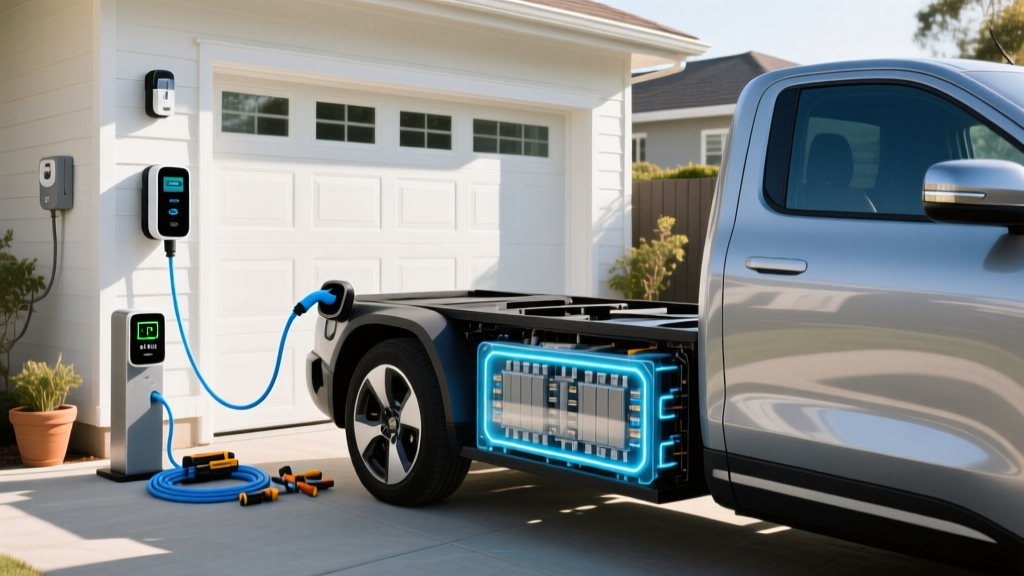
Installing a Level 2 home charger involves electrical work that varies significantly based on your home's panel capacity, the distance from your electrical panel to the charging location, and local code requirements. Here's what to expect:
Electrical requirements: A typical Level 2 charger requires a dedicated 240V circuit rated at 40A to 60A. A 48A charger (the most common high-power home unit) requires a 60A breaker because the National Electrical Code (NEC) mandates that continuous loads cannot exceed 80% of the circuit rating. That means a 60A circuit delivers a maximum continuous 48A (11.5 kW at 240V).
Panel upgrade consideration: Many older homes have 100A or 125A main panels already near capacity. Adding a 60A EV circuit may push total load beyond the panel's rating, requiring a panel upgrade to 200A. This is the single biggest variable in installation cost and can add $1,500–$3,500 to the project. A licensed electrician will perform a load calculation to determine if an upgrade is necessary.
| Component | Low-End Estimate | High-End Estimate | Notes |
|---|---|---|---|
| Level 2 Charging Equipment | $350 | $700 | Smart WiFi-enabled units, 32A–48A, 18–25 ft cable |
| Electrical Permit | $50 | $300 | Varies by municipality; some jurisdictions waive for EV installs |
| Electrician Labor (simple install) | $400 | $800 | Short run from panel, same wall or adjacent, no panel upgrade |
| Electrician Labor (complex install) | $1,000 | $2,500 | Long conduit run, trenching, sub-panel addition, or garage retrofit |
| Panel Upgrade (if needed) | $1,500 | $3,500 | Upgrade from 100A/125A to 200A main service panel |
| Total (no panel upgrade) | $800 | $2,300 | Most homes with 200A panels and short wire runs |
| Total (with panel upgrade) | $2,300 | $5,800 | Older homes needing full service upgrade |
The IRS offers a residential clean energy credit under §25C that covers up to 30% of EV charger equipment and installation costs (capped at $1,000) for equipment placed in service. Always confirm current-year eligibility with a tax professional, as incentive structures shift.
Connector Compatibility: NACS, CCS1, and CHAdeMO in 2026
The connector landscape has shifted dramatically. As of the 2025–2026 model years, the North American Charging Standard (NACS) — originally developed by Tesla — has become the dominant connector for new EVs sold in North America. Most legacy CCS1 vehicles can access Tesla Superchargers via adapter, and CHAdeMO is effectively limited to the aging Nissan Leaf fleet.
| Connector | Brands Using It (New Vehicles) | Adapter Availability | Network Access |
|---|---|---|---|
| NACS (Tesla) | Tesla, Ford, GM, Rivian, Volvo, Polestar, Mercedes, BMW, Hyundai/Kia (2026+), Toyota, Subaru, Lucid | N/A (native); CCS-to-NACS adapters for older CCS vehicles (~$200–$250) | Tesla Supercharger network (17,000+ stalls); growing third-party NACS stations |
| CCS1 | Volkswagen ID.4 (through 2025), some remaining 2024–2025 models from Hyundai, Kia, BMW, Mercedes | CCS-to-NACS adapter for Supercharger access | Electrify America, EVgo, ChargePoint, Ionity (EU) |
| CHAdeMO | Nissan Leaf (discontinued after 2025 model year), Mitsubishi Outlander PHEV (legacy) | CHAdeMO-to-CCS adapters exist but are rare and expensive (~$400+) | Shrinking network; many stations removing CHAdeMO connectors |
Charging Cost Per Mile: EV vs. Gas in 2026
One of the strongest economic arguments for EV ownership is fuel cost savings — but the math depends heavily on where and when you charge. Here's a realistic breakdown using a mid-size electric SUV averaging 3.0 miles per kWh (roughly equivalent to a Tesla Model Y or Hyundai Ioniq 5):
| Charging Scenario | Price per kWh | Cost per Mile | Annual Cost (12,000 mi) | Savings vs. Gas ($3.40/gal) |
|---|---|---|---|---|
| Home Level 2 (national avg. residential rate) | $0.16/kWh | $0.053 | $640 | $817/year |
| Home Level 2 (off-peak utility rate) | $0.09/kWh | $0.030 | $360 | $1,097/year |
| Public Level 2 (network pricing) | $0.30/kWh | $0.100 | $1,200 | $257/year |
| DC Fast Charging / Level 3 (typical highway) | $0.40/kWh | $0.133 | $1,600 | -$143/year (more expensive than gas) |
| Gas Vehicle (28 MPG @ $3.40/gal) | $3.40/gal | $0.121 | $1,457 | — |
The takeaway is clear: home charging is where the savings live. If you charge exclusively on DC fast chargers at highway rates, you'll actually spend more per mile than a comparable gas vehicle. The economics of EV ownership depend on reliable home or workplace Level 2 access. Use fueleconomy.gov to look up specific MPGe and kWh/100mi ratings for any EV you're considering.
Level 3 DC Fast Charging Times: What to Expect on the Road
Charging speed at a Level 3 station depends on three variables: the station's maximum output (kW), the vehicle's maximum acceptance rate (kW), and the battery's state of charge (SoC) and temperature. The vehicle will always limit the session to its own maximum — plugging a 150 kW-capable Hyundai Ioniq 5 into a 350 kW Electrify America stall won't exceed 150 kW peak (though it will sustain higher average speeds than a 50 kW station).
Here are representative 10–80% charging times for popular 2025–2026 EVs at compatible DC fast chargers:
- Hyundai Ioniq 5 (84 kWh battery, 350 kW peak): ~18 minutes at a 350 kW station; ~28 minutes at a 150 kW station
- Tesla Model Y Long Range (75 kWh battery, 250 kW peak): ~22 minutes at a V3/V4 Supercharger
- Ford F-150 Lightning Extended Range (131 kWh battery, 150 kW peak): ~42 minutes at a 150 kW station
- Chevrolet Equinox EV (85 kWh battery, 150 kW peak): ~30 minutes at a 150 kW station
- Kia EV6 GT-Line (77.4 kWh battery, 350 kW peak): ~18 minutes at a 350 kW station
These times assume a preconditioned battery (the vehicle's navigation routes you to a charger, triggering thermal prep). A cold, un-preconditioned battery can add 10–20 minutes to these figures in winter conditions.
Best Home Level 2 EV Chargers for 2026: Equipment Picks
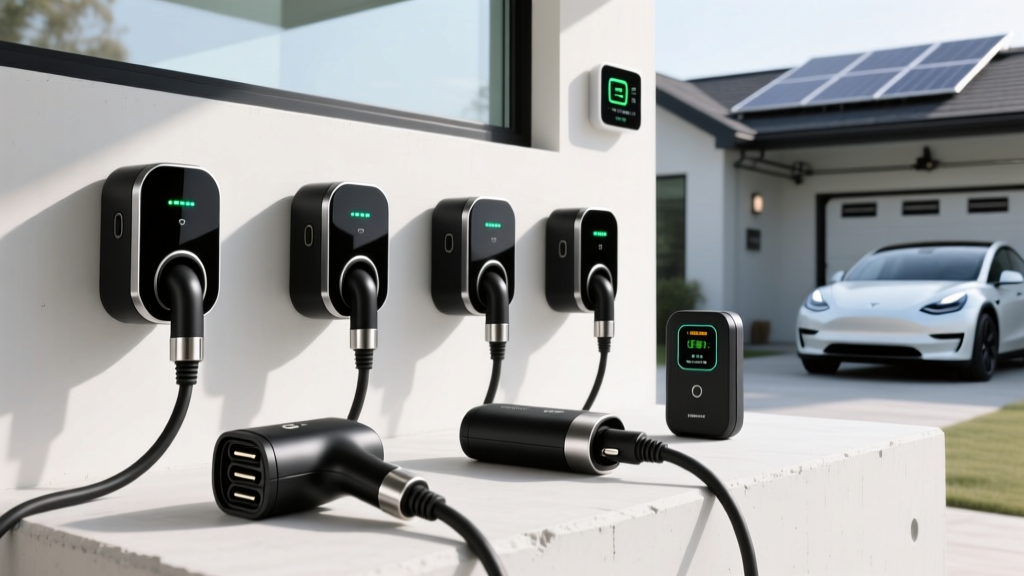
Since Level 3 chargers aren't a home option, here are the top-performing Level 2 units worth your investment. All are WiFi-enabled for scheduling, energy monitoring, and off-peak rate optimization:
ChargePoint Home Flex
- Power Output: Up to 12 kW (50A) on a 60A circuit; configurable down to 16A for smaller panels
- Connector: J1772 (NACS vehicles use included adapter or native NACS variant available 2025+)
- Cable Length: 23 feet
- Smart Features: WiFi, app scheduling, Alexa integration, energy dashboard, utility demand-response compatible
- Price: ~$549 (unit only)
- Best For: Flexible amperage for homes with limited panel capacity
Wallbox Pulsar Plus
- Power Output: Up to 11.5 kW (48A) on a 60A circuit
- Connector: J1772 or NACS (available in both configurations)
- Cable Length: 25 feet
- Smart Features: WiFi + Bluetooth, Power Sharing (daisy-chain two units on one circuit), solar integration, app control
- Price: ~$449 (unit only)
- Best For: Multi-EV households and solar-equipped homes
Tesla Wall Connector
- Power Output: Up to 11.5 kW (48A) on a 60A circuit
- Connector: NACS native (J1772 adapter included for non-Tesla EVs)
- Cable Length: 24 feet
- Smart Features: WiFi, over-the-air updates, power sharing between multiple units, integrated with Tesla app
- Price: ~$475 (unit only)
- Best For: Tesla owners and households with NACS-equipped vehicles
Emporia Level 2 EV Charger
- Power Output: Up to 11.5 kW (48A) on a 60A circuit
- Connector: J1772 or NACS
- Cable Length: 24 feet
- Smart Features: WiFi, deep energy monitoring via Emporia Vue panel integration, solar-aware charging, time-of-use scheduling
- Price: ~$399 (unit only)
- Best For: Budget-conscious buyers who want granular energy data
Safety, Code, and Installation Best Practices
EV charging involves sustained high-current electrical loads — this is not a DIY project. Key safety and code requirements include:
- Dedicated circuit: Your EV charger must have its own dedicated breaker — it cannot share a circuit with other appliances. A 48A charger requires a 60A dedicated breaker.
- GFCI protection: The 2023 NEC (adopted by most jurisdictions by 2025–2026) requires GFCI protection for all EV charging outlets rated 60A or less. Hardwired units may be exempt depending on local interpretation — your electrician will know.
- Outdoor rating: If your charger is installed outside or in an unenclosed carport, the unit must carry a NEMA 4 (weatherproof) rating. All major chargers listed above meet this standard.
- NEMA 14-50 outlet vs. hardwired: A NEMA 14-50 receptacle gives you flexibility to unplug and take the charger when you move, but some jurisdictions now require GFCI breakers for receptacles (adding ~$150–$200 to the breaker cost). Hardwired installations are often simpler and cheaper but less portable.
- Permit and inspection: Virtually all jurisdictions require an electrical permit for EV charger installation. The inspection ensures the work meets code and protects your homeowner's insurance coverage. Never skip this step.
Frequently Asked Questions
How much does it cost to install a home EV charger?
A Level 2 home charger installation typically costs $800–$2,300 in homes with an adequate 200A electrical panel and a short wire run. Older homes requiring a panel upgrade to 200A should budget $2,300–$5,800 total. The charger unit itself runs $350–$700. Federal and state incentives may offset 30% of the cost up to $1,000 under the §25C credit.
How fast will each charging level add range?
Level 1 (120V) adds roughly 3–5 miles per hour. Level 2 (240V, 48A) adds roughly 30–40 miles per hour depending on vehicle efficiency. Level 3 DC Fast Charging adds 150–1,200+ miles per hour at peak rates, though sustained averages are lower due to charge-curve tapering above 80% SoC.
Which connector/charger is compatible with my EV?
For 2025–2026 model-year vehicles, NACS is the dominant standard — used by Tesla, Ford, GM, Rivian, Hyundai, Kia, Toyota, and most others. CCS1 is found on some remaining 2024–2025 models. CHAdeMO is limited to the Nissan Leaf (now discontinued). Check your vehicle's charge port or the manufacturer's spec sheet to confirm.
How much does charging cost per mile vs gas?
Home charging at the national average residential rate ($0.16/kWh) costs roughly $0.05/mile for a typical EV — about 60% less than a 28 MPG gas vehicle at $3.40/gallon. Off-peak utility rates can push this below $0.03/mile. However, exclusive use of DC fast chargers at $0.40/kWh costs roughly $0.13/mile, which is more expensive than gas.
What electrical upgrades might I need?
The most common upgrade is a main panel replacement from 100A or 125A to 200A service, costing $1,500–$3,500. You may also need a new dedicated 60A breaker, conduit runs through walls or underground, and a GFCI breaker if you're installing a NEMA 14-50 outlet. A licensed electrician's load calculation will determine exact requirements.
Why can't I install a Level 3 DC Fast Charger at home?
Level 3 chargers require 480V three-phase commercial power, liquid-cooled cabling, utility demand-charge agreements, and equipment costing $25,000–$150,000+. Residential electrical service in the US is single-phase 240V — fundamentally incompatible with DCFC hardware. Level 2 is the correct home solution.
Does DC fast charging damage my EV battery?
Frequent exclusive use of DC fast charging can accelerate battery degradation slightly compared to Level 2 charging — studies from NREL and battery analytics firms show roughly 1–3% additional capacity loss over 100,000 miles for vehicles that primarily DC fast charge. Modern thermal management systems have minimized this gap. Occasional road-trip DCFC use has negligible impact on long-term battery health.