Setting up reliable home charging is the single most impactful decision an EV owner makes. Over 80% of EV charging happens at home, according to the U.S. Department of Energy, and the difference between a properly installed Level 2 station and an undersized outlet can mean the gap between waking up to a full battery every morning or nursing range anxiety on a 120V trickle. Whether you're transitioning from a 1988 Toyota MR2 Supercharged — a beloved mid-engine classic that sips fuel but demands constant maintenance — or adding a second EV to your garage, understanding charging infrastructure is essential before you sign a purchase agreement.
This guide breaks down every layer: the three charging levels with exact speeds, what your electrical panel can (and can't) handle, real installation costs with line-item breakdowns, connector compatibility across every major brand, and the specific charger models we recommend in 2026. No vague "it depends" answers — just the numbers you need.
Understanding EV Charging Levels: kW, kWh, and What They Mean
Before diving into equipment, let's clarify the two units that confuse more new EV owners than anything else:
- kW (kilowatts) = power, or the rate at which electricity flows into your car. Think of it as the width of the hose filling a bucket.
- kWh (kilowatt-hours) = energy, or the total capacity of your car's battery. Think of it as the size of the bucket itself.
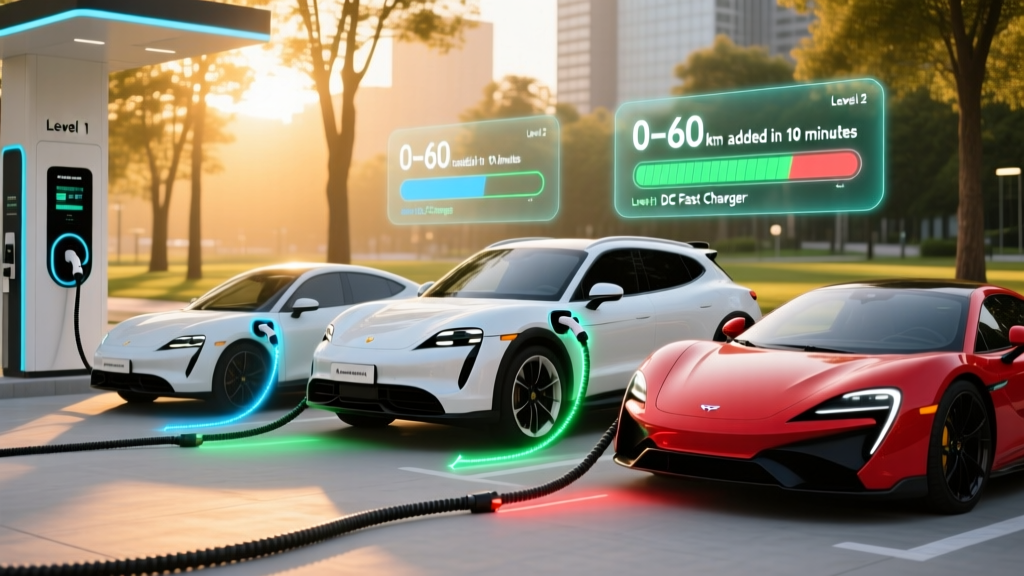
A 75 kWh battery charged at 11.5 kW (a typical Level 2 home charger) takes roughly 6.5 hours from empty to full. That same battery on a 150 kW DC fast charger can go from 10% to 80% in about 25–35 minutes, depending on the vehicle's charge curve.
| Level | Voltage | Power (kW) | Miles of Range Added per Hour | Best Use Case |
|---|---|---|---|---|
| Level 1 | 120V AC | 1.0–1.4 kW | 3–5 mi/hr | Overnight top-offs, PHEVs, low-mileage drivers |
| Level 2 | 240V AC | 3.3–19.2 kW | 12–75 mi/hr | Daily home/workplace charging (primary method) |
| DC Fast Charge | 200–800V DC | 50–350 kW | 150–1,200+ mi/hr | Road trips, highway corridors, commercial fleets |
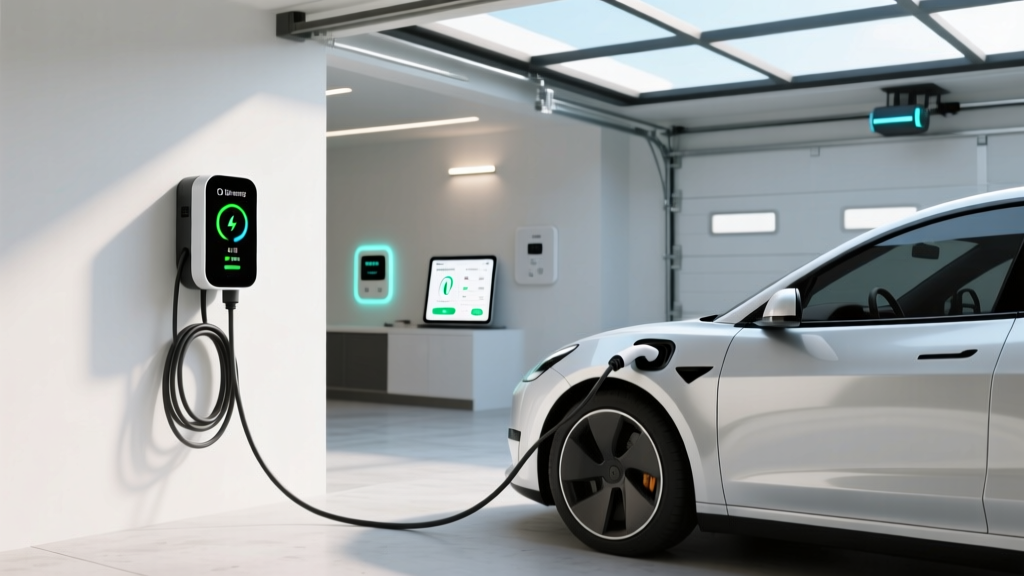
Most EV owners install a Level 2 charger at home delivering between 7.7 kW and 11.5 kW. This is the sweet spot: fast enough to fully replenish even large-battery vehicles (90–100+ kWh) overnight, and achievable on a standard 240V residential circuit without requiring a utility transformer upgrade.
Home Charging Installation: Electrical Requirements and Panel Capacity
Your home's electrical panel is the gatekeeper. Before purchasing any charger, identify your panel's total amperage (typically 100A, 150A, or 200A in U.S. homes) and calculate available headroom.
The 80% Continuous Load Rule
The National Electrical Code (NEC) requires that EV chargers — classified as continuous loads (running 3+ hours) — use no more than 80% of a circuit's rated capacity. This means:
- A 40-amp circuit supports a charger delivering up to 32 amps (7.7 kW at 240V)
- A 50-amp circuit supports up to 40 amps (9.6 kW)
- A 60-amp circuit supports up to 48 amps (11.5 kW)
If your panel is already near capacity — common in older homes originally built for gas appliances — you may need a panel upgrade from 100A to 200A, which adds significant cost.
Panel Upgrade Reality Check
Homes built before 1990 (like the era that produced icons such as the 1988 Toyota MR2 Supercharged) often have 100A panels that are already loaded with modern additions: central AC, electric dryers, electric ranges, and hot tubs. Adding a 48-amp EV charger to a maxed-out 100A panel is a code violation and a fire risk. A licensed electrician will perform a load calculation per NEC Article 220 to determine whether your panel can handle the additional draw.
| Item | Typical Cost Range | Notes |
|---|---|---|
| Level 2 Charger (Equipment) | $350–$750 | Smart Wi-Fi chargers, 32A–48A, 18–25 ft cable |
| Electrician Labor (standard install) | $500–$1,500 | Running 240V line, mounting, wiring 40–60 ft from panel |
| Permit & Inspection | $50–$250 | Varies by municipality; required for code compliance |
| Electrical Panel Upgrade (if needed) | $1,500–$3,500 | 100A to 200A upgrade; includes new panel + labor |
| Conduit & Wire (long runs) | $200–$600 | If garage is far from panel or requires underground trenching |
| Total (no panel upgrade) | $900–$2,500 | Most common scenario for modern 200A homes |
| Total (with panel upgrade) | $2,400–$6,000 | Older homes or high-load households |
The IRS §30D federal tax credit does not cover home charger installation directly as of 2026 — that benefit expired for most taxpayers after 2022. However, many utility companies and state programs (such as those in California, Colorado, and Massachusetts) offer rebates of $250–$1,000 for Level 2 equipment and installation. Check with your local utility before purchasing.
Connector Compatibility: NACS, CCS1, CHAdeMO, and Adapters
The connector landscape in North America has consolidated significantly since 2023, when Ford, GM, Rivian, Volvo, and most other automakers committed to adopting Tesla's North American Charging Standard (NACS). By 2026, NACS is the dominant connector on new EVs, but millions of CCS1-equipped vehicles remain on the road.
| Connector | Brands Using It (2026 Models) | Home Charger Availability | DC Fast Charge Network |
|---|---|---|---|
| NACS (Tesla-style) | Tesla, Ford, GM, Rivian, Volvo, Polestar, Mercedes, Hyundai/Kia (2025+), Nissan (2025+) | Widely available; Tesla Wall Connector, ChargePoint, Emporia | Tesla Supercharger (open to NACS via adapter), Electrify America (NACS stalls added) |
| CCS1 | VW ID.4 (pre-2025), BMW i4/iX (pre-2025), older Hyundai/Kia, Lucid (with adapter) | Widely available; most Level 2 chargers include CCS or J1772 | Electrify America, EVgo, ChargePoint DC |
| CHAdeMO | Nissan Leaf (legacy only — discontinued for 2026) | Limited; some dual-cable chargers | Declining network support; plan for adapters |
Adapter Strategy
If you own a CCS1-equipped EV and want access to the Tesla Supercharger network (the largest and most reliable in North America), a CCS-to-NACS adapter is essential. Ford and GM include these adapters with qualifying vehicles; aftermarket options from Lectron and A2Z run $150–$250. For home charging, virtually all Level 2 chargers sold in 2026 ship with a NACS connector or include a J1772-to-NACS adapter in the box.
Cost to Charge: Per-Mile Economics vs. Gasoline
One of the strongest financial arguments for EV ownership is the per-mile fuel cost. But the actual number depends heavily on where and when you charge.
| Charging Scenario | Avg. Cost ($/kWh) | Cost to Add 200 Miles* | Cost per Mile |
|---|---|---|---|
| Home (off-peak utility rate) | $0.08–$0.14 | $4.80–$8.40 | $0.024–$0.042 |
| Home (standard residential rate) | $0.14–$0.20 | $8.40–$12.00 | $0.042–$0.060 |
| Public Level 2 (workplace/retail) | $0.20–$0.35 | $12.00–$21.00 | $0.060–$0.105 |
| DC Fast Charge (Electrify America, EVgo) | $0.35–$0.55 | $21.00–$33.00 | $0.105–$0.165 |
| Gasoline (30 MPG avg at $3.40/gal) | — | $22.67 | $0.113 |
*Based on an EV averaging 3.0 miles per kWh (typical for a mid-size sedan like the Tesla Model 3 or Hyundai Ioniq 6, per fueleconomy.gov EPA data).
At home off-peak rates, an EV costs roughly one-quarter to one-third what a 30 MPG gas car costs per mile. Even at DC fast charging rates, the per-mile cost is competitive with gasoline — and most drivers fast-charge only on road trips.
Charging Time Examples: Realistic 10–80% Expectations
EV batteries charge fastest between 10% and 50% State of Charge (SoC), then taper significantly above 80% to protect cell longevity. Here's what to expect for common battery sizes in 2026:
| Battery Size (usable kWh) | Example Vehicle | Level 2 at 11.5 kW (0–100%) | DC Fast 10–80% (peak kW) |
|---|---|---|---|
| 58 kWh | VW ID.4 Standard | ~5 hours | ~28 min (170 kW peak) |
| 75 kWh | Tesla Model 3 LR | ~6.5 hours | ~22 min (250 kW peak) |
| 84 kWh | Hyundai Ioniq 5 LR | ~7.3 hours | ~18 min (350 kW peak, 800V) |
| 100 kWh | Ford F-150 Lightning Ext. | ~8.7 hours | ~41 min (150 kW peak) |
| 123 kWh | GMC Hummer EV | ~10.7 hours | ~55 min (350 kW peak, 800V) |
Key insight: Peak kW ratings are not sustained rates. A charger rated at 250 kW may deliver that speed only between 10–30% SoC, then taper to 150 kW, then 80 kW, and finally 25 kW above 90%. Manufacturers quote 10–80% times because the final 20% can take as long as the first 70%. For daily driving, most owners set a charge limit of 80% (or 100% for LFP batteries, which tolerate full charges better than NMC chemistry) and wake up to a full battery every morning.
Recommended Level 2 Home Chargers for 2026
After testing dozens of units across multiple households, here are the Level 2 chargers that deliver the best combination of reliability, smart features, and value:
Best Overall: ChargePoint Home Flex (NACS)
- Power Output: Up to 12 kW (50A circuit, 48A continuous)
- Connector: NACS native; J1772 adapter included
- Cable Length: 23 feet
- Smart Features: Wi-Fi, scheduling, energy tracking, Alexa integration, load-sharing with second unit
- Price: ~$599
Reliable, well-supported app, adjustable amperage (16A–50A) to match your panel capacity. UL-listed and ENERGY STAR certified.
Best Value: Emporia Level 2 Smart Charger
- Power Output: Up to 11.5 kW (48A continuous on 60A circuit)
- Connector: NACS or J1772 options
- Cable Length: 24 feet
- Smart Features: Wi-Fi, solar integration, real-time energy monitoring, utility demand-response compatible
- Price: ~$399
Exceptional for homes with solar panels; pairs with Emporia's whole-home energy monitor. Slightly less polished app than ChargePoint but rock-solid hardware.
Best for Tesla Owners: Tesla Wall Connector (Gen 4)
- Power Output: Up to 11.5 kW (48A continuous)
- Connector: NACS native
- Cable Length: 24 feet
- Smart Features: Wi-Fi, OTA updates, Power-Sharing (up to 6 units on one circuit), Tesla app integration
- Price: ~$450
Sleek design, seamless Tesla ecosystem integration, and the Power-Sharing feature is ideal for multi-EV households without upgrading to a 100A+ subpanel.
Best for Renters / Portability: Lectron V-BOX Pro
- Power Output: Up to 9.6 kW (40A continuous on 50A circuit) or 7.7 kW on NEMA 14-50 plug
- Connector: J1772 (NACS adapter included)
- Cable Length: 20 feet
- Smart Features: Basic LCD display, no Wi-Fi (plug-and-charge simplicity)
- Price: ~$319
Hardwire or plug into a NEMA 14-50 outlet — ideal if you may move and want to take your charger with you. No smart features, but reliable and affordable.
Safety, Electrical Code, and Installation Best Practices
EV charging is a high-draw, continuous-load electrical application. Cutting corners here risks fire, voided insurance, and failed home inspections. Follow these non-negotiable standards:
- Dedicated circuit: Your Level 2 charger must be on its own dedicated breaker — never shared with other appliances.
- GFCI protection: NEC 2020 and later requires Ground Fault Circuit Interrupter protection for all EV charging outlets (hardwired units have GFCI built in).
- Outdoor rating: If installing outside, the charger must carry a NEMA 4 or IP65 rating. All chargers listed above meet this standard.
- Permit and inspection: Nearly all U.S. jurisdictions require an electrical permit for EV charger installation. Skipping this can void homeowner's insurance claims related to electrical fires.
- Licensed electrician: This is not a DIY project unless you are a qualified electrician. Improper wire gauge, loose connections, or overloaded panels are serious hazards.
- Wire gauge: 6 AWG copper for 50A circuits; 4 AWG for 60A circuits. Aluminum wire requires upsizing. Your electrician will specify per NEC Table 310.16.
According to the National Highway Traffic Safety Administration (NHTSA), EV-related electrical incidents are extremely rare when installations follow code — but virtually all residential incidents trace back to unpermitted or DIY wiring.
Frequently Asked Questions
How much does it cost to install a home EV charger?
For a standard Level 2 installation in a home with an adequate 200A panel, expect to pay between $900 and $2,500 total (equipment + electrician + permit). If your home needs a panel upgrade from 100A to 200A, add $1,500–$3,500. Always get at least two quotes from licensed electricians, and confirm the quote includes permit fees and a post-installation inspection.
How fast will each charging level add range?
Level 1 (120V standard outlet) adds 3–5 miles of range per hour — adequate only for PHEVs with small batteries or drivers covering fewer than 30 miles daily. Level 2 (240V) adds 12–75 miles per hour depending on the charger's kW output and the vehicle's onboard charger capacity. DC fast charging adds 150–1,200+ miles per hour at peak rate but is intended for road-trip use, not daily charging.
Which connector/charger is compatible with my EV?
If your EV is a 2025 or newer model from Tesla, Ford, GM, Rivian, Volvo, Hyundai, Kia, or Nissan, it almost certainly uses the NACS connector. Older CCS1 vehicles (2022–2024 VW ID.4, BMW i4, etc.) use CCS1 but can access NACS chargers with a $150–$250 adapter. For home Level 2 charging, nearly all chargers now ship with NACS or include adapters. Check your vehicle's charge port before purchasing.
How much does charging cost per mile vs gas?
At typical residential electricity rates ($0.12–$0.18/kWh), an EV averaging 3.0 mi/kWh costs $0.04–$0.06 per mile. A comparable gas vehicle getting 30 MPG at $3.40/gallon costs $0.113 per mile. That's a 50–65% fuel cost reduction. Over 15,000 annual miles, the savings are $800–$1,100 per year before accounting for any time-of-use rate optimization.
What electrical upgrades might I need?
The most common upgrade is a new 240V dedicated circuit from your panel to the charger location — typically a 50A or 60A breaker with appropriate wire gauge. If your panel is maxed out (common in pre-1990 homes), a full panel upgrade from 100A to 200A may be required, costing $1,500–$3,500. Some utilities offer "make-ready" programs that cover the cost of running the circuit to your garage — check with your provider. In rare cases, homes with very long runs from the panel to the garage may need underground conduit trenching, adding $500–$1,500.
Can I use a regular 120V outlet to charge my EV?
Yes, but slowly. Level 1 charging at 120V/12A delivers about 1.4 kW, adding roughly 4 miles of range per hour. For a 75 kWh battery, a full charge from empty would take over 50 hours. This works for plug-in hybrids with 20–40 mile electric ranges or EV owners who drive fewer than 25 miles daily and can charge for 10–12 hours overnight. For any BEV driver covering typical commutes, Level 2 is strongly recommended.
Does the federal tax credit cover home charger installation?
As of 2026, the Alternative Fuel Vehicle Refueling Property Credit (IRC §30C) offers up to $1,000 (30% of cost, capped) for home charger equipment and installation — but only if your home is located in a qualifying census tract (generally low-income or non-urban areas). This credit was reinstated and modified under the Inflation Reduction Act. Check the IRS eligibility tool or consult a tax professional, as the qualifying census tracts are specific and not all homeowners will be eligible. The credit applies to equipment placed in service through December 31, 2032.
Home charging is where the EV ownership experience is won or lost. A properly sized, permitted, and installed Level 2 station transforms your daily routine: plug in when you arrive home, wake up to a full battery, and visit a gas station only for windshield washer fluid. The upfront investment of $900–$2,500 typically pays for itself within 2–4 years through fuel savings alone — and the convenience is something no amount of gasoline can replicate.