If you're coming from a thirsty luxury SUV like the 2014 Range Rover 5.0 Supercharged — which returns a combined 14 MPG and gulps premium fuel at roughly $4.00/gallon — the economics of electric vehicle charging can feel almost unbelievable. But before you plug in, you need a clear picture of what home charging actually costs, how fast each level adds range, and whether your electrical panel can handle it. This guide covers every number you need to make an informed decision in 2026.
Charging Levels Explained: How Fast Will Each Level Add Range?
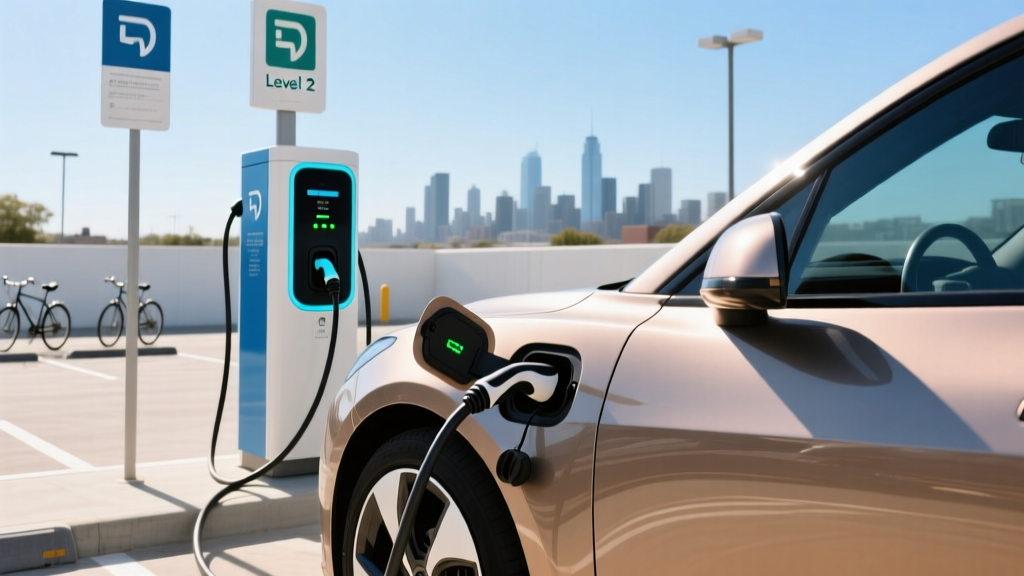
EV charging operates at three distinct levels, each defined by its power delivery in kilowatts (kW). Remember: kW measures power (the rate of energy flow, like water pressure from a hose), while kWh measures energy (the total amount stored in your battery, like gallons in a tank). Confusing these two is the single most common EV literacy mistake — we'll keep them strictly separated throughout this guide.
| Level | Voltage | Power (kW) | Miles of Range Added per Hour | Best For |
|---|---|---|---|---|
| Level 1 (120V) | 120V AC | 1.2–1.9 kW | 3–5 mi/hr | Overnight top-ups, PHEVs, low daily mileage |
| Level 2 (240V) | 240V AC | 3.3–19.2 kW | 12–75 mi/hr | Daily home charging, most EVs overnight |
| DC Fast Charging | 400–800V DC | 50–350+ kW | 150–1,000+ mi/hr (peak) | Road trips, rapid top-ups, commercial fleets |
Real-world charging time examples:
- Tesla Model Y (75 kWh battery, ~320 mi EPA): Level 2 at 11.5 kW fills 10–80% in roughly 5.5 hours. DC fast charging at a V3 Supercharger (250 kW peak) achieves 10–80% in about 20–25 minutes, though the charge curve tapers significantly above 80% SoC.
- Ford F-150 Lightning Extended Range (131 kWh usable): Level 2 at 11.5 kW requires approximately 10 hours for a 10–80% session. A 150 kW DC fast charger handles 10–80% in roughly 40–45 minutes.
- Hyundai Ioniq 5 (77.4 kWh, 800V architecture): On a 350 kW DC fast charger, 10–80% takes just 18 minutes — one of the fastest production EVs available. Level 2 at home still takes around 6 hours for the same range band.
How Much Does It Cost to Install a Home EV Charger?
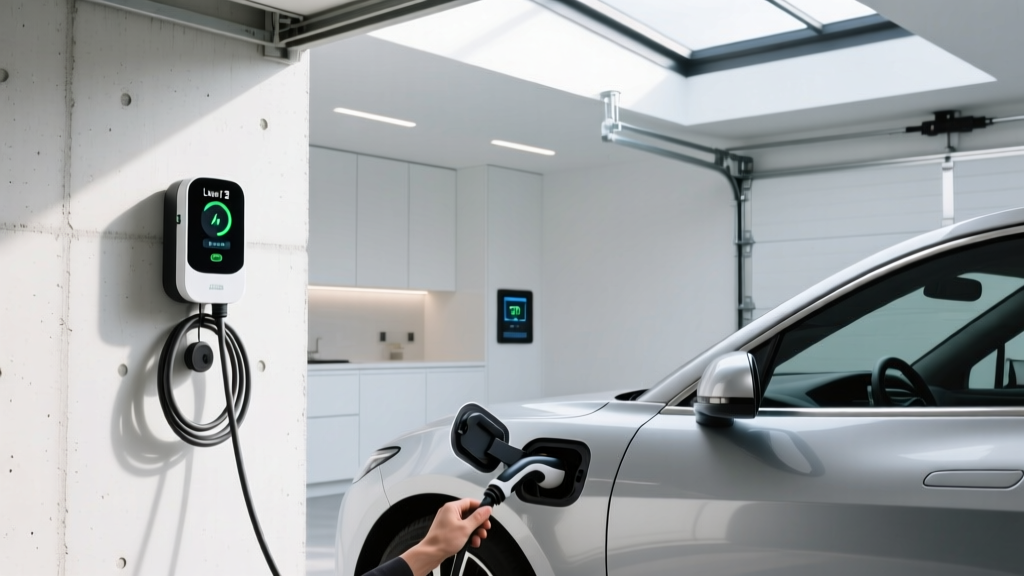
Home Level 2 charger installation costs vary enormously depending on your home's electrical infrastructure. A straightforward install near the panel might run $800–$1,200 total, while older homes needing a panel upgrade can see costs exceed $3,500. Here's the honest breakdown:
| Component | Simple Install | Moderate Install | Complex Install (Panel Upgrade) |
|---|---|---|---|
| Level 2 Charger Equipment (hardwired, 40–48A) | $400–$650 | $400–$650 | $400–$650 |
| Electrician Labor (licensed) | $300–$500 | $500–$900 | $800–$1,500 |
| Electrical Permit | $50–$150 | $50–$200 | $100–$300 |
| Panel Upgrade (100A → 200A) | Not needed | Not needed | $1,500–$3,000 |
| Conduit/Wiring Run (long distance from panel) | Minimal ($0–$100) | $200–$500 | $300–$600 |
| Total Estimated Cost | $750–$1,400 | $1,150–$2,250 | $3,100–$6,050 |
What Electrical Upgrades Might I Need?
A 48-amp Level 2 charger requires a dedicated 60-amp circuit on a 240V line (NEC code requires circuits to be rated at 125% of continuous load). Before installation, a licensed electrician will assess:
- Panel capacity: Most modern homes have 200-amp service panels. If your panel is already near capacity (common in homes with electric ranges, dryers, and HVAC), you may need a service upgrade to 200A or even 400A.
- Available breaker slots: You need two adjacent slots for a 240V double-pole breaker.
- Wire gauge: A 60A circuit typically requires 6 AWG copper wire (or 4 AWG aluminum). Longer runs from panel to garage may need thicker wire to prevent voltage drop.
- GFCI protection: The 2023 NEC (and subsequent 2026 adoptions in many jurisdictions) requires GFCI protection for EV charging circuits. Some hardwired chargers have built-in GFCI; plug-in units on NEMA 14-50 outlets require a GFCI breaker, which adds $50–$120.
Connector Compatibility: Which Plug Fits Your EV?
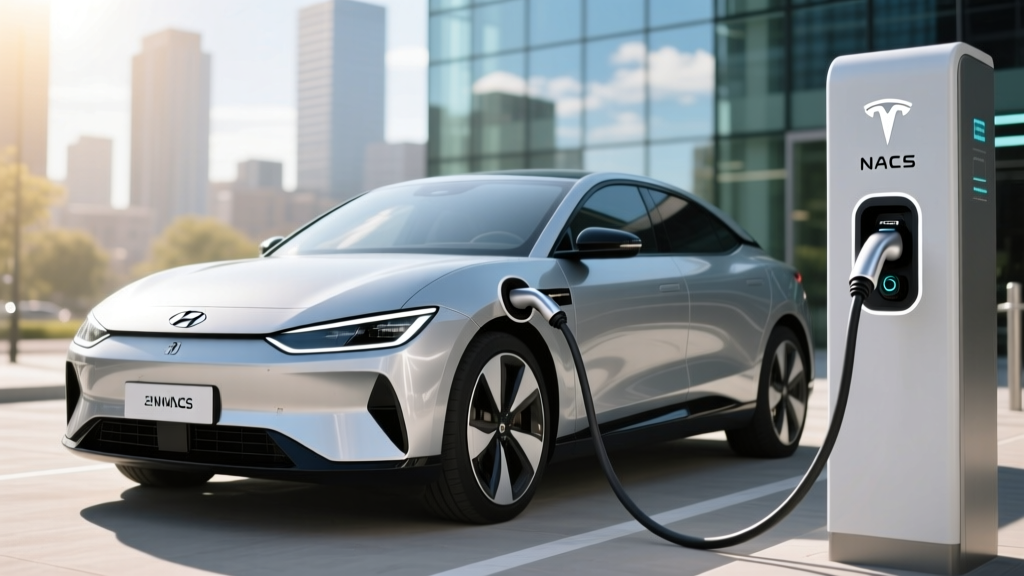
The North American charging connector landscape consolidated significantly between 2023 and 2026, with the Tesla-designed NACS (North American Charging Standard) now adopted by most major automakers. Here's where things stand:
| Connector Type | Brands Using It (Native) | Adapter Needed? |
|---|---|---|
| NACS (Tesla plug) | Tesla (all), Ford (2025+), GM (2025+), Rivian (2025+), Volvo, Polestar, Mercedes (2026+), Honda (2026+) | CCS→NACS adapter ($100–$200) for older CCS vehicles at Superchargers |
| CCS1 (Combo) | Hyundai, Kia (pre-2026), BMW, VW (pre-2026), legacy models | NACS→CCS adapter needed at Tesla Superchargers |
| CHAdeMO | Nissan Leaf (legacy only, discontinued after 2025) | CHAdeMO→CCS adapters available (~$250) but limited DC fast charging network |
For home Level 2 charging: All Level 2 home chargers use the J1772 connector standard, which is the AC portion of both CCS1 and NACS. If your EV has a native NACS port (Tesla, new Ford/GM), you'll need a J1772-to-NACS adapter for non-Tesla home chargers — or simply buy a Tesla Wall Connector, which natively outputs NACS. Tesla provides a J1772 adapter with every vehicle.
Cost to Charge: EV vs. Your 2014 Range Rover 5.0 Supercharged
The 2014 Range Rover 5.0 Supercharged, with its 510-horsepower supercharged V8, delivers a combined EPA rating of 14 MPG. At $4.00/gallon for premium fuel, that's roughly $0.286 per mile in fuel cost alone. Let's compare that to EV charging scenarios:
| Scenario | Cost per kWh | Efficiency (kWh/mi) | Cost per Mile | Annual Cost (12,000 mi) |
|---|---|---|---|---|
| Home charging (off-peak utility rate) | $0.10–$0.14 | 0.28–0.35 | $0.028–$0.049 | $336–$588 |
| Home charging (standard residential rate) | $0.15–$0.18 | 0.28–0.35 | $0.042–$0.063 | $504–$756 |
| Public Level 2 (ChargePoint, EVgo L2) | $0.25–$0.40 | 0.28–0.35 | $0.070–$0.140 | $840–$1,680 |
| DC Fast Charging (Electrify America, Tesla Supercharger) | $0.30–$0.55 | 0.28–0.35 | $0.084–$0.193 | $1,008–$2,316 |
| 2014 Range Rover 5.0 SC (14 MPG, $4.00/gal premium) | — | — | $0.286 | $3,432 |
The bottom line: Even at the most expensive public DC fast-charging rates, an EV costs roughly $0.15–$0.19 per mile to "fuel." At home on off-peak rates, that drops to $0.03–$0.05 per mile. A driver covering 12,000 miles per year who charges primarily at home saves between $2,676 and $3,096 annually compared to fueling the 2014 Range Rover 5.0 Supercharged. Over five years, that's $13,000–$15,500 in fuel savings alone — enough to cover the price premium of many EVs and the home charger installation.
For the most current electricity rates and efficiency data by vehicle, the U.S. Department of Energy's fueleconomy.gov provides kWh/100mi figures for every EPA-rated EV, and your local utility can provide time-of-use rate schedules.
Best Home EV Chargers: Equipment Picks for 2026
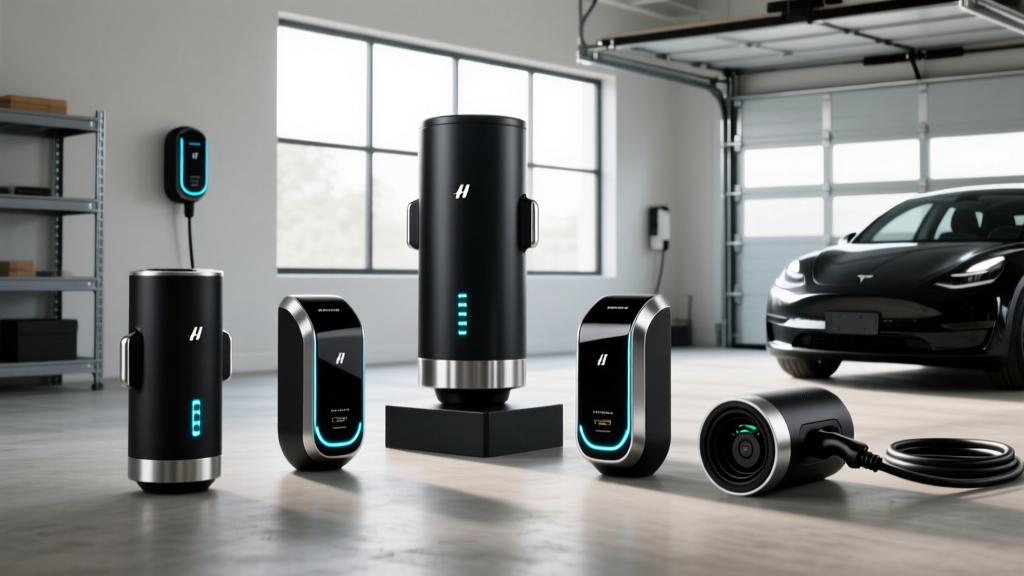
Not all Level 2 chargers are created equal. Here are the most reliable, feature-rich options available, with their exact specifications:
Tesla Wall Connector (Gen 4)
- Power Output: 11.5 kW (48A)
- Connector: Native NACS
- Cable Length: 24 ft
- Smart Features: Wi-Fi, OTA updates, power sharing (link multiple units on one circuit), scheduled charging
- Price: ~$475
- Best For: Tesla, Ford, GM, and other NACS-native EVs. J1772 adapter needed for CCS vehicles.
ChargePoint Home Flex (2nd Gen)
- Power Output: Up to 12 kW (50A adjustable)
- Connector: J1772 (works with all EVs via adapter)
- Cable Length: 23 ft
- Smart Features: Wi-Fi, app scheduling, Alexa/Google integration, amperage adjustment for panel-limited homes
- Price: ~$550–$650
- Best For: Multi-EV households, universal compatibility, adjustable amperage
Emporia Level 2 EV Charger
- Power Output: 11.5 kW (48A)
- Connector: J1772
- Cable Length: 24 ft
- Smart Features: Wi-Fi, energy monitoring (pairs with Emporia Vue home energy monitor), solar integration
- Price: ~$350–$400
- Best For: Budget-conscious buyers, solar homes, energy monitoring enthusiasts
Grizzl-E Smart (United Chargers)
- Power Output: 10 kW (40A)
- Connector: J1772
- Cable Length: 24 ft
- Smart Features: OCPP-compatible, adjustable amperage, extreme cold rating (-40°F)
- Price: ~$450–$550
- Best For: Cold-climate garages, outdoor installs (IP67 rated), Canadian/Alaskan owners
Safety and Code Considerations for Home EV Charging
EV charging is a continuous, high-draw electrical load — your charger may run at full power for 6–10 hours straight every night. This is fundamentally different from a dryer or oven that cycles on and off. The National Electrical Code (NEC) and local jurisdictions impose specific requirements:
- Dedicated circuit: Your Level 2 charger must have its own dedicated double-pole breaker. Sharing a circuit with other appliances is a code violation and fire risk.
- 125% rule: A 48A charger requires a 60A breaker (48 × 1.25 = 60). Never install a charger rated higher than 80% of the circuit breaker rating.
- GFCI protection: Required for all EV supply equipment under NEC 2023 and later. Hardwired installations may use the charger's internal GFCI; receptacle installations (NEMA 14-50) require a GFCI breaker.
- Outdoor rating: If your charger is installed outside (driveway, carport), it must carry at least an IP55 rating for weather resistance. NEMA 4 or IP67 is preferred for areas with driving rain or snow.
- Permit and inspection: Virtually all jurisdictions require a permit for EV charger installation. Your electrician pulls the permit; a city/county inspector verifies the work. Skipping this step can void homeowner's insurance claims and create liability issues.
- Hardwired vs. plug-in: Hardwired chargers (directly connected to junction box) are preferred for reliability and avoid the known issue of NEMA 14-50 receptacle overheating under sustained load. If using a receptacle, specify a commercial-grade Hubbell or Bryant brand — residential-grade 14-50 outlets have documented thermal failures under continuous EV charging loads.
Federal Tax Credit for Home Charger Installation (§30C)
The IRS §30C Alternative Fuel Vehicle Refueling Property Credit covers 30% of the cost of home EV charging equipment and installation, up to a maximum of $1,000. Key eligibility rules for 2026:
- The property must be installed at your primary residence.
- The credit covers both equipment and labor/installation costs.
- Income caps apply — check current IRS guidelines as thresholds are adjusted annually.
- The charger must be installed in a census tract that is not classified as a high-income area (per IRA provisions).
- This credit is separate from the §30D new clean vehicle credit (up to $7,500) and can be claimed in addition to it.
Always consult a tax professional before claiming — eligibility depends on your specific income, tax liability, and census tract designation.
Frequently Asked Questions
Can I just use a regular 120V outlet to charge my EV?
Yes, but slowly. Level 1 charging at 120V adds roughly 3–5 miles of range per hour. For a vehicle with a 300-mile EPA range and an 80 kWh battery, a full charge from empty would take 50+ hours. Level 1 works for plug-in hybrids with smaller batteries (15–40 miles of electric range) or for EV owners who drive fewer than 30 miles daily and can top up overnight. For any EV with a battery over 60 kWh, Level 2 at 240V is strongly recommended.
Will charging at home increase my electricity bill significantly?
It depends on your rate structure. Charging a 75 kWh battery from 20% to 80% (about 45 kWh) at $0.13/kWh costs roughly $5.85. If you drive 40 miles daily and charge nightly, expect your monthly electricity bill to increase by $40–$80 depending on local rates. Most utilities offer time-of-use (TOU) plans that make overnight charging 30–50% cheaper than daytime rates. Contact your utility to enroll before your EV arrives.
Do I need a smart charger, or is a basic "dumb" charger fine?
A basic non-connected charger will charge your EV just fine — the car manages the charging session, not the charger. However, smart chargers offer practical benefits: scheduled charging (to hit off-peak rates automatically), energy monitoring, remote start/stop via app, and integration with solar or home energy systems. For most owners, the $50–$100 premium for a smart charger is worthwhile for the scheduling feature alone.
How does the 2014 Range Rover 5.0 Supercharged's fuel cost compare to a modern EV over 5 years?
At 14 MPG combined and $4.00/gallon premium fuel, the Range Rover costs approximately $3,432/year in fuel at 12,000 miles/year — or $17,160 over five years. A comparable-size electric SUV (e.g., Rivian R1S or Tesla Model X) charged at home on average residential rates ($0.16/kWh, ~0.32 kWh/mi) costs roughly $614/year or $3,070 over five years. That's a $14,090 five-year fuel savings, not counting oil changes, transmission fluid, or the supercharger's premium maintenance requirements.
My home has a 100-amp electrical panel — can I still install a Level 2 charger?
Possibly, but with limitations. A 100A panel may not have capacity for a 60A dedicated circuit if other large loads (electric range, dryer, HVAC) are already drawing heavily. Options include: (1) upgrading to a 200A panel ($1,500–$3,000), (2) installing a lower-amperage charger at 24A or 32A (requiring only a 30A or 40A circuit), or (3) using an automated load-management device like the Emporia Smart Load Manager, which dynamically reduces charger draw when other appliances activate. A licensed electrician should perform a load calculation to determine what's feasible.
What's the difference between kW and kWh, and why does it matter?
kW (kilowatts) measures power — the rate at which energy flows into your battery, analogous to gallons per minute from a hose. kWh (kilowatt-hours) measures energy — the total capacity of your battery, analogous to the size of a fuel tank in gallons. A 250 kW DC fast charger delivers energy very quickly; an 80 kWh battery stores 80 kilowatt-hours of total energy. Charging an 80 kWh battery at 10 kW (Level 2) takes about 8 hours. Charging at 250 kW (DC fast, peak) could theoretically fill it in 20 minutes — but in practice, the charge curve tapers above 50–60% SoC, so real-world 10–80% times are 20–30 minutes.