Note: This guide focuses on home charging for battery-electric vehicles (BEVs) and plug-in hybrids (PHEVs). If you're searching for information on the Jeep Grand Cherokee — including supercharged, 4xe plug-in hybrid, or Trackhawk variants — know that the Grand Cherokee 4xe PHEV uses a standard J1772 connector for Level 2 home charging at up to 7.2 kW, and the same installation principles below apply. The supercharged ICE Grand Cherokee variants (like the SRT Trackhawk) are not electrified and cannot use EV chargers; the 4xe PHEV is the electrified option in the lineup.
Understanding EV Charging Levels: Speeds in kW and Miles Per Hour
Before evaluating equipment or hiring an electrician, you need to understand the three charging levels available to EV owners. The critical distinction: kW (kilowatts) measures power — how fast energy flows into your battery. kWh (kilowatt-hours) measures energy capacity — the total size of your battery. Think of kW as the diameter of a hose and kWh as the bucket you're filling.
| Level | Voltage | Max Power (kW) | Miles of Range Added Per Hour | Typical Use Case |
|---|---|---|---|---|
| Level 1 | 120V AC | 1.2–1.9 kW | 3–5 mi/hr | Overnight trickle, PHEVs, emergency |
| Level 2 | 240V AC | 3.3–19.2 kW | 12–75 mi/hr | Home daily charging, workplace |
| DC Fast Charging | 400–800V DC | 50–350 kW | 150–1,000+ mi/hr (peak) | Road trips, highway corridors |
For context, a typical BEV with a 75 kWh battery charging on a 48-amp Level 2 circuit (11.5 kW) will go from 10% to 80% in roughly 5–6 hours. That same charge on Level 1 (1.4 kW) would take over 40 hours — making Level 1 impractical for daily BEV use but adequate for PHEVs with smaller batteries (like the Grand Cherokee 4xe's 17.3 kWh pack, which fully recharges overnight on Level 1).
DC fast charging is not a home option; it requires commercial-grade infrastructure found along highways and at networks like Tesla Supercharger, Electrify America, and EVgo. Peak speeds (e.g., 250 kW) are only sustained for a portion of the session — expect the charge curve to taper significantly above 80% state of charge (SoC) to protect battery health.
Home Level 2 Charger Installation: Electrical Requirements and Costs
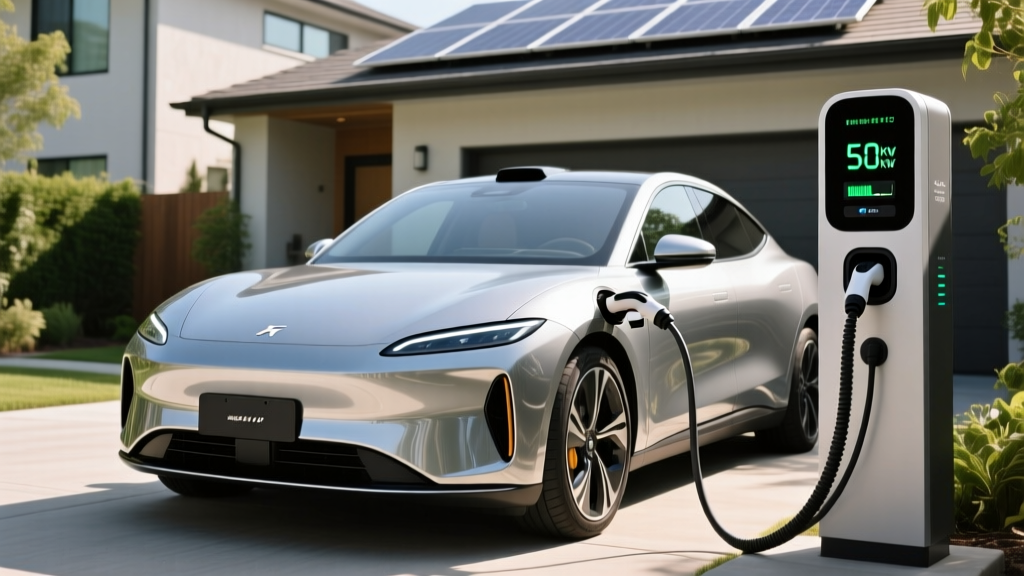
A proper Level 2 home installation requires a dedicated 240V circuit, typically rated at 40 to 60 amps. Here's what that means in practice:
- 40-amp circuit: Delivers up to 32 amps continuous (7.7 kW at 240V). Sufficient for most daily driving needs — adds ~25–30 miles of range per hour.
- 50-amp circuit: Delivers up to 40 amps continuous (9.6 kW). The most common residential sweet spot — adds ~32–38 miles per hour.
- 60-amp circuit: Delivers up to 48 amps continuous (11.5 kW). Maximizes home charging speed for larger-battery EVs like the Ford F-150 Lightning or Rivian R1S.
Panel capacity is the make-or-break factor. Most modern homes have a 200-amp main electrical panel. Adding a 50-amp EV circuit is straightforward if you have available capacity. Older homes with 100-amp panels, or homes already running heavy loads (electric range, dryer, HVAC, hot tub), may require a panel upgrade to 200 amps — a significant added cost.
Installation Cost Breakdown
| Component | Simple Install (panel nearby, no upgrade) | Complex Install (long run, panel upgrade) |
|---|---|---|
| Level 2 EVSE Equipment (charger) | $350–$750 | $350–$750 |
| Electrician Labor (2–4 hrs simple; 6–12 hrs complex) | $400–$1,000 | $1,200–$3,000 |
| Electrical Materials (conduit, wire, breaker) | $100–$300 | $300–$800 |
| Permit & Inspection | $50–$200 | $100–$300 |
| Panel Upgrade (100A → 200A, if needed) | $0 | $1,500–$4,000 |
| Total | $900–$2,250 | $3,450–$8,850 |
For a straightforward install — a 50-amp circuit run 20 feet from a 200A panel to a garage wall with a hardwired ChargePoint Home Flex — expect to spend roughly $1,200–$1,800 total. The national average for a standard Level 2 home installation hovers around $1,500–$2,500, per industry surveys.
Federal incentive: The §30C Alternative Fuel Vehicle Refueling Property Credit provides a 30% tax credit (up to $1,000) for home EV charger equipment and installation costs, subject to census-tract eligibility and current IRS rules. Check irs.gov for eligibility details and consult a tax professional.
Connector Compatibility: NACS, CCS1, and CHAdeMO Explained
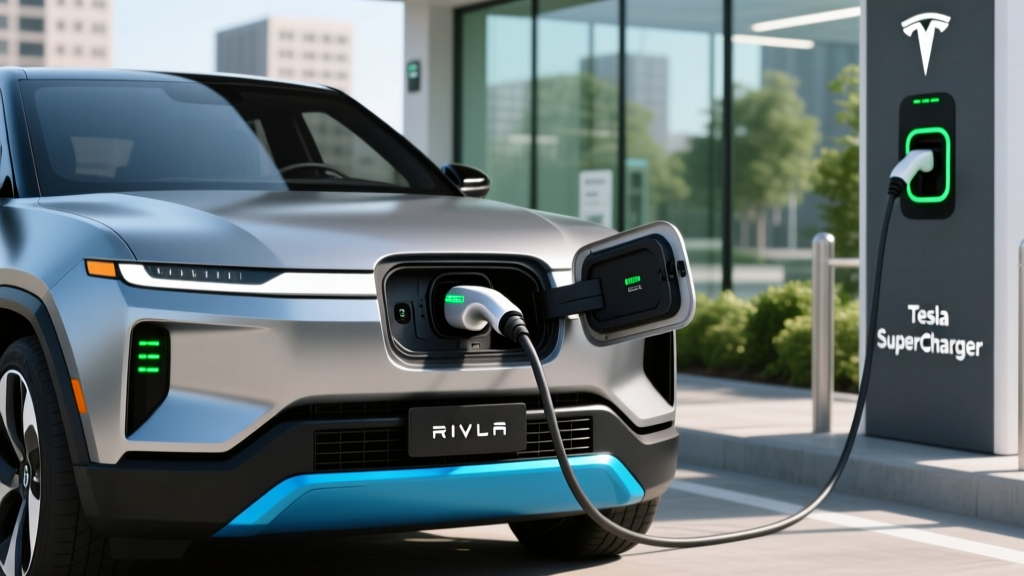
The North American charging standard has shifted dramatically since 2023, when Ford, GM, Rivian, and most other automakers adopted Tesla's North American Charging Standard (NACS) for their vehicles. By the 2026 model year, the landscape is:
| Connector Type | Vehicle Brands Using It (2026) | Notes |
|---|---|---|
| NACS (Tesla) | Tesla, Ford, GM, Rivian, Volvo, Polestar, Mercedes, Nissan, Fisker, and most others | Now the dominant standard; smaller/lighter plug |
| CCS1 (Combo) | Hyundai, Kia (some models), Stellantis (Jeep/Chrysler/Dodge PHEVs), legacy VW ID.4 | Phasing out on new models; still common on 2022–2025 vehicles |
| CHAdeMO | Nissan Leaf (discontinued), Mitsubishi Outlander PHEV | Effectively obsolete; no new vehicles |
| J1772 | All EVs/PHEVs (Level 1 & 2 only) | Universal for AC charging; NACS vehicles use an adapter or native J1772 inlet for Level 2 |
For home Level 2 charging, the situation is simpler than public DC fast charging. Most Level 2 home chargers ship with either a J1772 connector (universal for AC charging) or a NACS connector. If your EV has a NACS inlet (Tesla, or 2025+ Ford/GM), you can either:
- Buy a NACS-connector home charger (e.g., Tesla Wall Connector) and use a NACS-to-J1772 adapter for non-Tesla guests, or
- Buy a J1772 home charger and use the J1772-to-NACS adapter that came with your vehicle.
If you drive a Jeep Grand Cherokee 4xe PHEV, it uses a J1772 inlet for Level 2 AC charging. Any standard J1772 Level 2 charger will work without adapters. For the Grand Cherokee 4xe's 7.2 kW onboard charger, a 32-amp (7.7 kW) circuit is sufficient — there's no benefit to installing a 48-amp circuit since the vehicle cannot accept more than 7.2 kW.
Charging Cost Per Mile: Home Electricity vs. Gasoline
One of the strongest ownership arguments for EVs is fuel cost savings — but the math depends heavily on where and when you charge. Here's a realistic breakdown for a mid-size EV (e.g., Tesla Model Y, Hyundai Ioniq 5) averaging 3.0 miles per kWh:
| Scenario | Rate | Cost Per Mile | Annual Cost (12,000 mi) |
|---|---|---|---|
| Home off-peak (utility TOU rate) | $0.08–$0.12/kWh | $0.027–$0.040 | $320–$480 |
| Home standard rate (no TOU) | $0.14–$0.18/kWh | $0.047–$0.060 | $560–$720 |
| Public Level 2 (ChargePoint, etc.) | $0.25–$0.49/kWh | $0.083–$0.163 | $1,000–$1,960 |
| DC Fast Charging (EA, EVgo) | $0.35–$0.55/kWh | $0.117–$0.183 | $1,400–$2,200 |
| Gasoline vehicle (28 MPG combined) | $3.20/gal | $0.114 | $1,370 |
The takeaway: Home charging at off-peak rates delivers a per-mile cost roughly 70–75% lower than gasoline. Public DC fast charging, however, can approach or even exceed gas costs — making home charging access the single most important factor in EV ownership economics. If you rely exclusively on public fast charging, the financial advantage narrows considerably.
For PHEV owners like Grand Cherokee 4xe drivers, the electric-only range (EPA-rated at 26 miles) covers most daily commutes at the low home-charging rate, with the gas engine handling longer trips. The combined MPGe rating of 56 MPGe (per fueleconomy.gov) reflects this blended usage.
Charging Time Examples: 10–80% for Common Battery Sizes
Charge time depends on three factors: battery capacity (kWh), the vehicle's onboard charger limit (kW for AC), and the circuit's output. Below are realistic Level 2 home charging times for common EV battery sizes, assuming a 48-amp (11.5 kW) circuit:
| Vehicle Example | Battery (kWh usable) | Onboard Charger Limit | 10–80% Time (approx.) |
|---|---|---|---|
| Jeep Grand Cherokee 4xe (PHEV) | 17.3 kWh | 7.2 kW | ~2 hours (full charge) |
| Tesla Model Y Long Range | 75 kWh | 11.5 kW | ~4.5 hours |
| Hyundai Ioniq 5 (Long Range) | 77.4 kWh | 10.9 kW | ~5 hours |
| Ford F-150 Lightning (Extended) | 131 kWh | 19.2 kW* | ~5.5 hours (with 80A circuit) |
| Chevrolet Equinox EV | 85 kWh | 11.5 kW | ~5.5 hours |
*Requires the F-150 Lightning's optional 19.2 kW onboard charger and an 80-amp dedicated circuit — not standard on most homes.
For DC fast charging on a road trip, expect 10–80% in 18–35 minutes on a 150–350 kW charger, depending on the vehicle's peak charge rate and battery preconditioning. Vehicles with 800V architectures (Hyundai Ioniq 5, Kia EV6, Porsche Taycan) can sustain higher charge rates longer than 400V platforms, completing 10–80% in roughly 18 minutes on a 350 kW charger. Always precondition your battery before arriving at a DC fast charger — most EVs do this automatically when you navigate to a charger in the vehicle's infotainment system.
Best Home EV Chargers for 2026: Equipment Recommendations
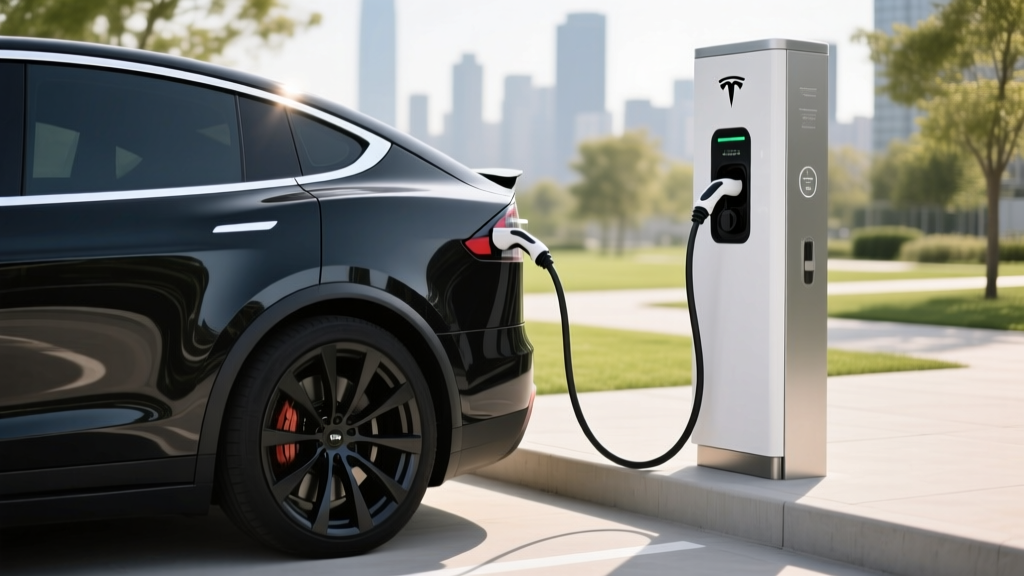
Tesla Wall Connector
- Power: Up to 11.5 kW (48A)
- Connector: NACS (native Tesla plug)
- Cable Length: 24 ft
- Smart Features: Wi-Fi, OTA updates, power sharing (multiple units on one circuit), access control
- Price: ~$475
- Best For: Tesla owners or households with all-NACS vehicles
ChargePoint Home Flex
- Power: Up to 12 kW (50A), adjustable 16–50A
- Connector: J1772 (NACS adapter included)
- Cable Length: 23 ft
- Smart Features: Wi-Fi, app scheduling, energy tracking, Alexa integration, amperage dip-switch adjustable
- Price: ~$550–$650
- Best For: Mixed-fleet households (J1772 + NACS via adapter)
Emporia Vue Smart EV Charger
- Power: Up to 11.5 kW (48A)
- Connector: J1772 (NACS version available)
- Cable Length: 24 ft
- Smart Features: Wi-Fi, integrates with Emporia Vue energy monitor, solar-aware charging, scheduling
- Price: ~$400
- Best For: Budget-conscious buyers wanting smart features; solar households
Grizzl-E Smart
- Power: Up to 10 kW (40A)
- Connector: J1772
- Cable Length: 24 ft
- Smart Features: Wi-Fi, OCPP-compatible, adjustable amperage
- Price: ~$450
- Best For: Cold-climate durability (rated to -40°F); Canadian-built
Hardwired vs. plug-in: Chargers rated above 40 amps must be hardwired per NEC code (a NEMA 14-50 outlet is limited to 40 amps continuous). If you want the flexibility to unplug and move your charger, stick with a 40A/32A plug-in unit on a NEMA 14-50 receptacle. For maximum charging speed (48A+), hardwiring is mandatory and provides a safer, more reliable connection.
Safety, Electrical Code, and Permit Requirements
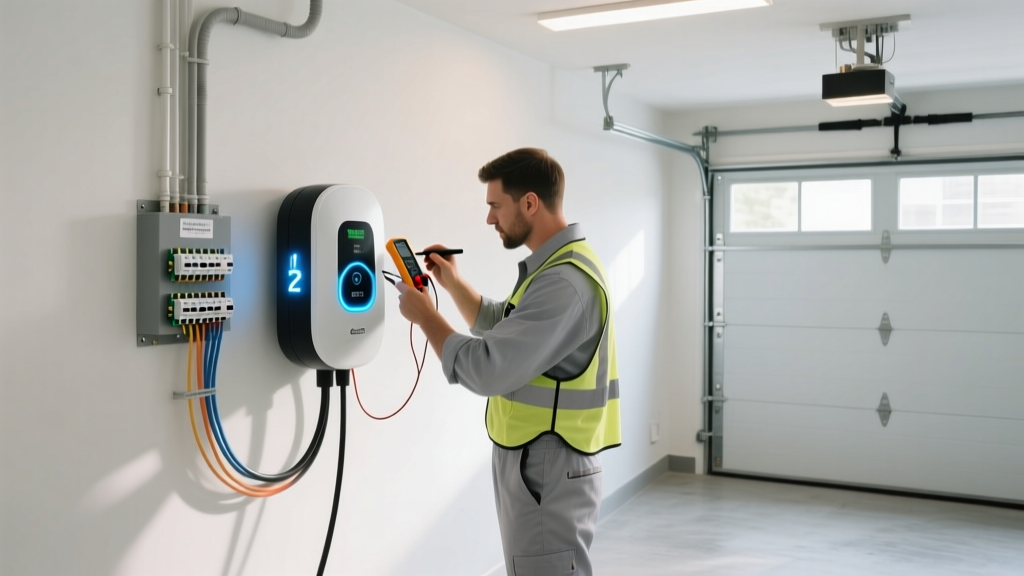
EV charger installation is regulated electrical work. Skipping permits or using undersized wiring creates fire risk and may void your homeowner's insurance. Key requirements:
- Dedicated circuit: Your EV charger must have its own dedicated breaker — it cannot share a circuit with other appliances.
- GFCI protection: NEC 2020 and later requires GFCI (Ground Fault Circuit Interrupter) protection for all EVSE installations. Most modern hardwired chargers have built-in GFCI; for plug-in units on a NEMA 14-50, your electrician should install a GFCI breaker.
- Outdoor rating: If mounting outside, ensure the EVSE carries a NEMA 4 or IP55+ weather rating. All chargers listed above meet outdoor-use standards.
- Wire gauge: A 50-amp circuit requires 6 AWG copper wire (THHN in conduit or NM-B Romex for indoor runs). A 60-amp circuit requires 4 AWG. Your electrician will size appropriately.
- Permit and inspection: Most jurisdictions require an electrical permit for new 240V circuits. Permit fees typically run $50–$200. The inspection ensures code compliance — don't skip this step.
- Load management: If your panel is near capacity, consider a smart load-management system (e.g., Emporia, Span panel) that dynamically reduces charger amperage when other household loads spike, avoiding a costly panel upgrade.
Frequently Asked Questions
How much does it cost to install a home EV charger?
A straightforward Level 2 home charger installation (50-amp circuit, short wire run, no panel upgrade) typically costs $1,200–$2,500 including equipment, electrician labor, materials, and permit. Complex installations requiring long conduit runs, trenching, or a 100A-to-200A panel upgrade can reach $3,500–$8,800. The §30C federal tax credit may cover 30% of equipment and installation costs up to $1,000, subject to census-tract eligibility per IRS guidelines.
How fast will each charging level add range?
Level 1 (120V) adds roughly 3–5 miles of range per hour — adequate only for PHEVs or very low daily mileage. Level 2 (240V) at 48 amps adds approximately 30–38 miles per hour, fully recharging most EVs overnight. DC fast charging at 150–350 kW can add 100–250 miles in 15–20 minutes, though the charge rate tapers above 80% SoC.
Which connector and charger is compatible with my EV?
For 2026 model-year vehicles: Tesla, Ford, GM, Rivian, and most others now use the NACS connector. Hyundai, Kia, and Stellantis (including Jeep Grand Cherokee 4xe) still use CCS1 or J1772. For home Level 2 charging, a J1772 charger works universally with an adapter (included with most NACS vehicles). Check your vehicle's charge port or owner's manual to confirm.
How much does EV charging cost per mile versus gas?
Home charging at off-peak utility rates ($0.08–$0.12/kWh) costs roughly $0.03–$0.04 per mile for a typical EV — about 70% less than a 28 MPG gas vehicle at $3.20/gallon ($0.114/mile). Public DC fast charging ($0.35–$0.55/kWh) costs $0.12–$0.18 per mile, approaching or matching gasoline costs. Home charging access is essential to realizing EV fuel savings.
What electrical upgrades might I need for a home EV charger?
The most common upgrade is ensuring sufficient panel capacity. A 200-amp panel with available headroom needs only a new double-pole breaker and wire run. Homes with 100-amp panels or heavily loaded 200-amp panels may need a service upgrade ($1,500–$4,000). Alternatives include smart load-management devices that throttle charger amperage dynamically, or a lower-amperage circuit (32A/24A) that draws less from the panel while still providing adequate overnight charging for most daily driving needs.