If you've bought—or are about to buy—an electric vehicle, the single most impactful ownership decision you'll make is installing a home charger. Public DC fast charging gets the headlines, but the reality for most EV owners is that 80% or more of charging happens at home. The question isn't whether to install one; it's how much it will cost and what you need to get it right.
This guide breaks down the real numbers: equipment pricing, electrician labor, electrical panel realities, and the ongoing cost per mile compared to gasoline. We'll also clarify the critical difference between kW (power—the rate of charging) and kWh (energy—the amount stored in your battery), because confusing them is the most common mistake new EV owners make.
How Much Does It Cost to Install a Home EV Charger?
The total EV home charger cost breaks into three components: the charging equipment itself, the electrician's labor and materials, and any necessary electrical panel upgrade. For most homeowners with a modern 200-amp panel and a garage close to that panel, expect to spend between $1,100 and $2,200 all-in. For older homes needing a panel upgrade or long conduit runs, costs can climb to $3,500–$5,000+.
| Component | Typical Range | Notes |
|---|---|---|
| Level 2 Charger (Equipment) | $300 – $700 | 32A–48A smart chargers; Wi-Fi enabled models at the high end |
| Electrician Labor & Materials | $500 – $1,500 | Depends on conduit run length, wall type, and local rates |
| Electrical Permit | $50 – $300 | Varies by municipality; some bundle with inspection |
| Panel Upgrade (if needed) | $1,500 – $4,000 | 100A → 200A service; common in pre-1990 homes |
| Total (no panel upgrade) | $850 – $2,500 | Most common scenario for modern homes |
| Total (with panel upgrade) | $2,350 – $6,500 | Older homes or high-load panels |
Federal Tax Credit for Home Charging Equipment
The IRS Residential Clean Energy Credit (IRC §25C/30C, depending on current-year provisions) has historically offered up to 30% of equipment and installation costs, capped at $1,000. Eligibility rules and caps shift year to year—consult a tax professional and the latest IRS guidance before counting on this credit. Some utilities also offer rebates of $200–$500 for installing smart Level 2 chargers; check with your local provider.
How Fast Will Each Charging Level Add Range?
Understanding charging speeds is essential for sizing your home setup correctly. Here's what each level delivers in real-world terms:
| Level | Voltage / Amperage | Power (kW) | Miles of Range per Hour | Best For |
|---|---|---|---|---|
| Level 1 | 120V / 12A | 1.4 kW | 3–5 mi/hr | PHEVs, overnight top-ups, no-install option |
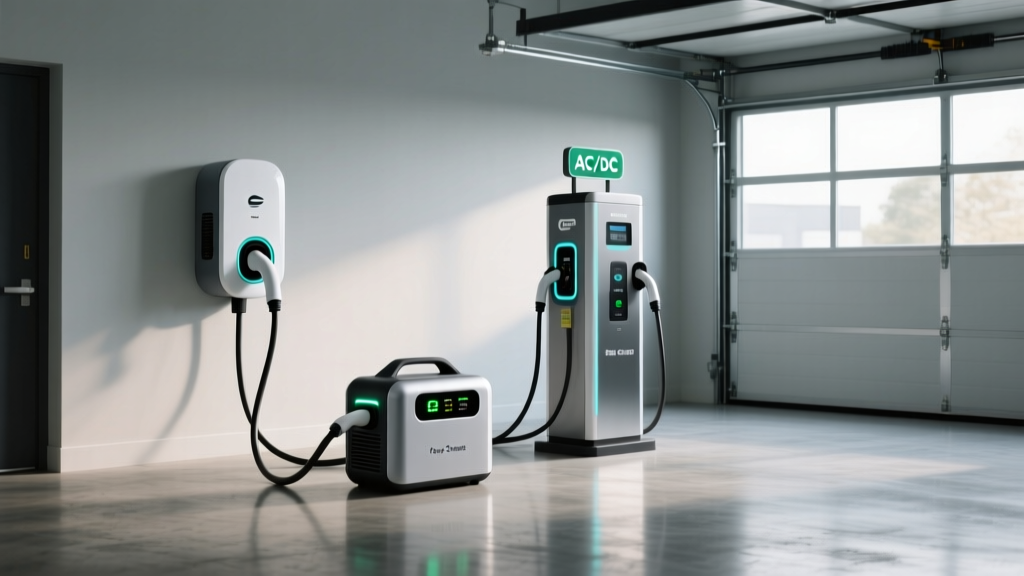
| Level 2 | 240V / 32A–48A | 7.7–11.5 kW | 25–44 mi/hr | Daily home charging for all BEVs |
| DC Fast Charge | 400V–800V DC | 50–350 kW | 150–1,000+ mi/hr | Road trips; public stations only |
Real-world example: A Tesla Model Y with a ~75 kWh battery and 320 miles of EPA range needs roughly 53 kWh to charge from 10% to 80%. On a 48-amp (11.5 kW) Level 2 charger, that takes approximately 4.5–5 hours. On a 150 kW DC fast charger, the same 10–80% session takes about 25 minutes, though the charge curve tapers significantly above 80%—a reality that peak-kW marketing numbers often obscure.
Which Connector Is Compatible With My EV?
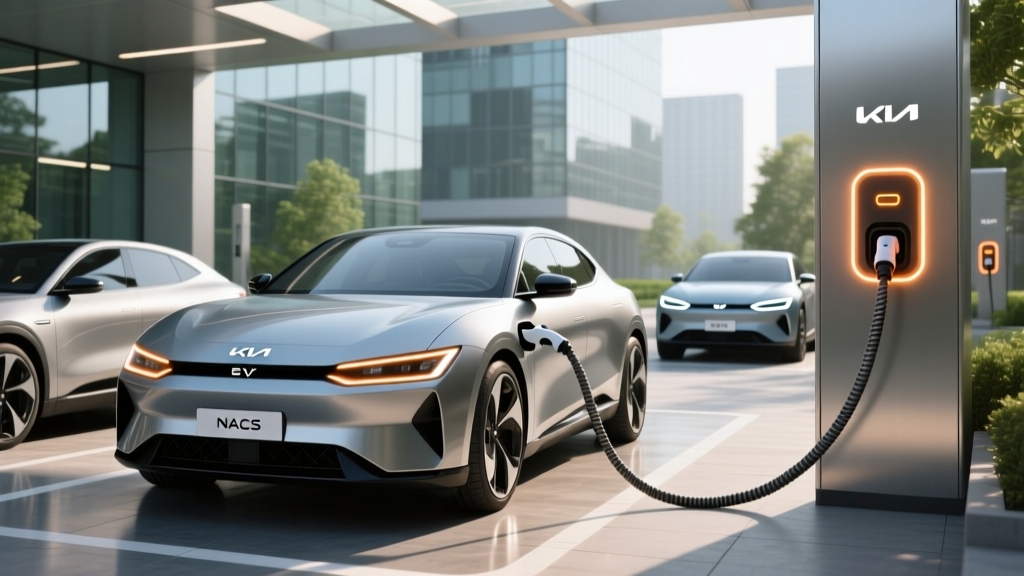
The North American charging connector landscape consolidated significantly between 2023 and 2026, with the vast majority of automakers adopting the North American Charging Standard (NACS)—the connector Tesla developed and opened to the industry. Here's where things stand:
| Connector | Brands Using It (New Vehicles) | Home Charger Availability |
|---|---|---|
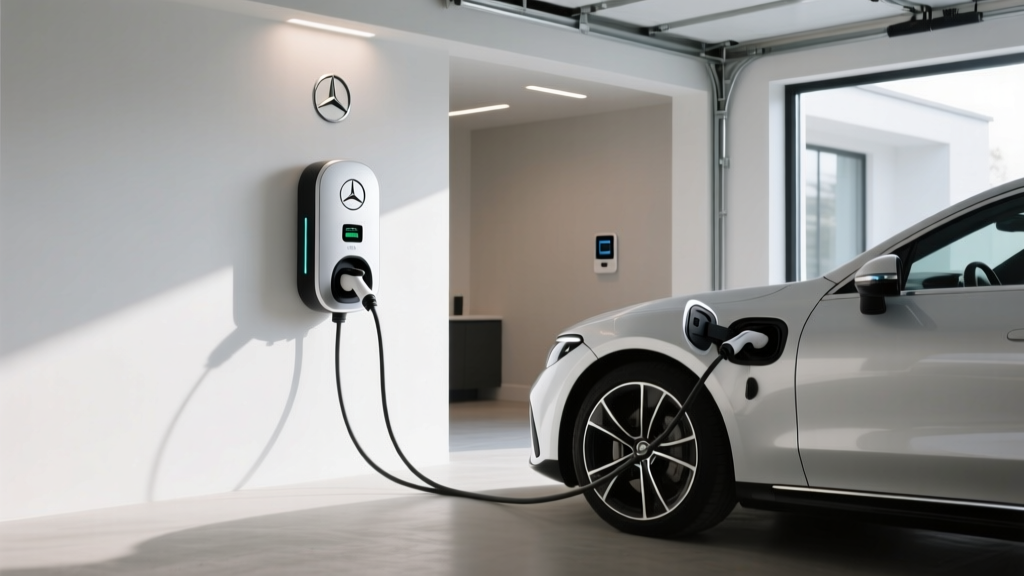
| NACS (Tesla) | Tesla, Ford, GM, Rivian, Hyundai, Kia, BMW, Volvo, Polestar, Mercedes, and most others | Tesla Wall Connector, Emporia, Autel, ChargePoint (NACS models) |
| CCS1 | Remaining VW Group models (transitioning), some older inventory | ChargePoint Home Flex, Emporia, Wallbox (CCS models) |
| CHAdeMO | Discontinued (Nissan Ariana switched to CCS/NACS) | Legacy adapters available; not recommended for new installs |
Adapter considerations: If you own a pre-2025 CCS-equipped EV (like a Hyundai Ioniq 5 built before the NACS switchover), you can purchase a CCS-to-NACS adapter ($150–$250) to access Tesla Superchargers. For home charging, simply buy a Level 2 charger with the connector that matches your vehicle—no adapter needed for daily use. If you have two EVs with different connectors, dual-connector chargers or a simple swap cable is the cleanest solution.
What Electrical Upgrades Might I Need?
A Level 2 charger requires a dedicated 240-volt circuit, typically 40 to 60 amps. Here's what determines whether your home is ready:
Panel Capacity
Your home's electrical panel has a total amperage rating—commonly 100A, 150A, or 200A. A 48-amp EV charger requires a 60-amp breaker (National Electrical Code requires circuits be rated at 125% of continuous load). Your electrician will perform a load calculation to determine whether your panel has enough spare capacity for the new circuit alongside your existing loads (HVAC, electric oven, dryer, etc.).
When a panel upgrade is likely needed:
- Homes with 100-amp service (common in pre-1990 construction)
- Panels already near capacity with electric heat, electric water heater, and electric range
- Homes with older Federal Pacific or Zinsco panels (insurance may require replacement regardless)
When you're probably fine:
- 200-amp service with gas appliances (heat, water heater, cooking)
- Newer construction (post-2000) with 200A panels
- Available breaker slots and sufficient load headroom
Circuit and Wiring Requirements
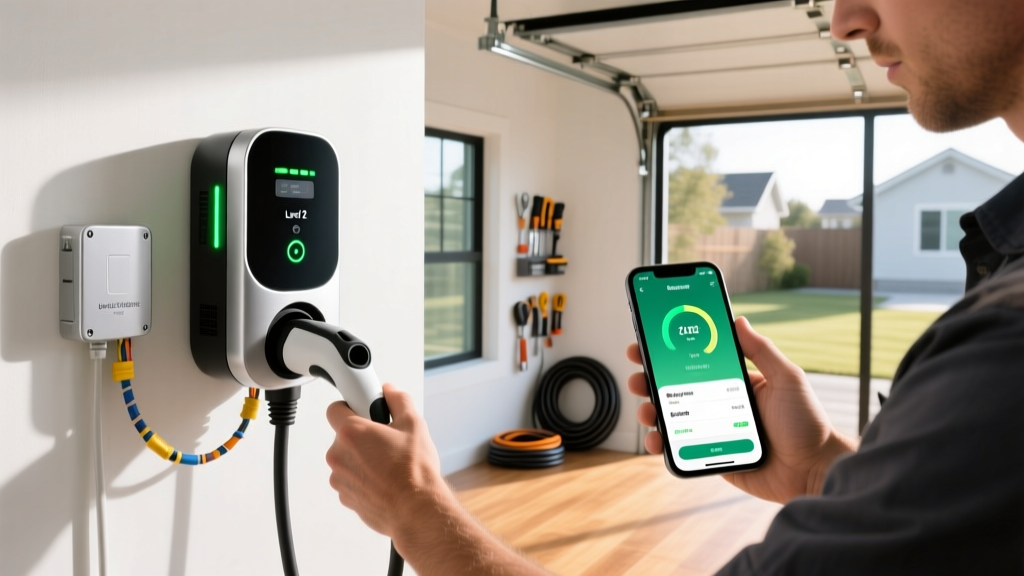
For a hardwired 48-amp charger, your electrician will install a 60-amp double-pole breaker and run 6 AWG copper wire (or 4 AWG aluminum) through conduit to the charger location. For a plug-in charger using a NEMA 14-50 outlet, a 50-amp breaker with matching wire is standard. Hardwired installations are generally preferred—they allow higher amperage, eliminate the outlet as a failure point, and some jurisdictions don't require GFCI breakers on hardwired circuits (saving $100–$200 on the breaker alone).
Permits and Inspection
Most jurisdictions require an electrical permit for a new 240V circuit. The permit fee typically runs $50–$300, and an inspector will verify the installation meets NEC (National Electrical Code) standards after completion. Skipping the permit risks insurance coverage denial if an electrical fire occurs and may cause issues at home sale. Your electrician typically handles the permit application.
How Much Does Charging Cost Per Mile vs. Gas?
The ongoing fuel savings are where EV ownership economics really shine—but the exact number depends heavily on your local electricity rates and whether you charge at home or on the road.
| Scenario | Rate | Cost per Mile (EV at 3.5 mi/kWh) | Annual Cost (12,000 mi) |
|---|---|---|---|
| Home (national avg electricity) | $0.17/kWh | $0.049/mi | $588 |
| Home (off-peak TOU rate) | $0.09/kWh | $0.026/mi | $312 |
| Public Level 2 (network charging) | $0.30/kWh | $0.086/mi | $1,032 |
| DC Fast Charge (public) | $0.45/kWh | $0.129/mi | $1,548 |
| Gas car (28 MPG avg, $3.40/gal) | $3.40/gal | $0.121/mi | $1,457 |
The key takeaway: Home charging on an off-peak time-of-use (TOU) rate saves roughly $1,100–$1,200 per year compared to a 28 MPG gas car. Even at the national average residential electricity rate, home charging cuts fuel costs by about 60%. However, if you rely exclusively on DC fast charging, your per-mile cost can actually exceed gasoline—which is why home charging access is the single biggest economic factor in EV ownership.
Check whether your utility offers a dedicated EV rate or TOU plan. Many utilities offer rates as low as $0.06–$0.10/kWh during overnight hours (typically 11 PM – 6 AM), which can reduce your charging cost to under $0.03/mile. Data from the U.S. Energy Information Administration via fueleconomy.gov can help you compare your specific vehicle's efficiency (in kWh/100mi or MPGe) against local rates.
Best Home EV Chargers: Equipment Picks
The Level 2 charger market in 2026 is mature and competitive. Here are the top-performing units we recommend, based on reliability, features, and value:
Tesla Wall Connector (Gen 4)
- Power: 48A / 11.5 kW (hardwired, 60A circuit)
- Connector: NACS (native)
- Cable length: 24 ft
- Smart features: Wi-Fi, OTA updates, load sharing between multiple units, Power-Share with Tesla Powerwall
- Price: ~$450
- Best for: Tesla owners and NACS-equipped EVs; cleanest ecosystem integration
ChargePoint Home Flex (2nd Gen)
- Power: Up to 50A / 12 kW (adjustable via DIP switches for 16A–50A)
- Connector: NACS or CCS1 (select at purchase)
- Cable length: 23 ft
- Smart features: Wi-Fi, app scheduling, Alexa/Google Home, utility demand-response programs
- Price: ~$550–$650
- Best for: Flexibility across amperages; utility integration; available in NACS or CCS
Emporia Vue EV Charger
- Power: 48A / 11.5 kW
- Connector: NACS (J1772 adapter included)
- Cable length: 24 ft
- Smart features: Wi-Fi, integrates with Emporia Vue energy monitor for whole-home load tracking, solar-aware charging
- Price: ~$400
- Best for: Budget-conscious buyers; solar homes; energy-monitoring enthusiasts
Safety, Code, and Installation Best Practices
A Level 2 charger draws significant current continuously for hours—making proper installation non-negotiable for safety:
- Dedicated circuit: Your EV charger must have its own dedicated breaker. Never share a circuit with other appliances.
- GFCI protection: NEC 2023 and later require GFCI protection for outlets used for EV charging (NEMA 14-50). Hardwired installations may be exempt in some jurisdictions—another reason to prefer hardwired.
- Outdoor rating: If installing outside, ensure the charger carries a NEMA 4 (weatherproof) rating. All major chargers listed above are rated for outdoor installation, but the electrical junction box and conduit connections must also be weatherproofed.
- Cable management: A 24-foot cable is heavy. Plan for a wall-mounted cable organizer or holster to prevent tripping hazards and connector damage.
- Use a licensed electrician: This is not a DIY project. Improper installation can cause fires, void warranties, and invalidate home insurance. Always verify your electrician is licensed and insured, and insist on a permit and inspection.
Frequently Asked Questions
Can I just use the Level 1 cord that came with my EV?
Yes, but it's impractical for most BEV owners. Level 1 adds roughly 3–5 miles of range per hour. Fully charging a 75 kWh battery from empty would take over 50 hours. For a plug-in hybrid with 30–40 miles of electric range, Level 1 is often adequate overnight. For a battery-electric vehicle, Level 2 is strongly recommended.
Will a home charger increase my electric bill significantly?
Expect your monthly electricity bill to increase by $40–$80 if you drive 12,000 miles per year and charge primarily at home at average residential rates ($0.17/kWh). This replaces the $100–$130/month you'd spend on gasoline for the same mileage, so net savings are typically $40–$80/month.
Should I get a plug-in (NEMA 14-50) or hardwired charger?
Hardwired is generally preferred for new installations: it supports up to 48A continuously, eliminates the outlet as a failure point, may not require a GFCI breaker (saving $100–$200), and provides a cleaner look. A NEMA 14-50 plug-in setup offers portability if you plan to move and take the charger with you. If you choose plug-in, have the outlet installed by a licensed electrician—cheap or improperly wired 14-50 outlets have been linked to overheating incidents.
How long does the installation take?
Most straightforward installations (panel to garage, short conduit run, no panel upgrade) take 2–4 hours. If your panel needs upgrading or the conduit run is long (detached garage, underground trenching), expect a full day or two. Permit approval timelines vary by municipality—factor in 1–3 weeks for scheduling.
Does my EV qualify for the $7,500 federal tax credit?
The §30D New Clean Vehicle Credit has complex eligibility rules involving buyer income caps, vehicle MSRP limits ($55,000 for cars, $80,000 for SUVs/trucks), battery critical-mineral sourcing, and North American assembly requirements. Eligibility changes frequently. Check the latest IRS guidance and verify with your dealer before assuming you qualify.
Sources: U.S. Department of Energy (fueleconomy.gov), Internal Revenue Service (irs.gov), National Electrical Code (NFPA 70). Pricing reflects 2026 market estimates and may vary by region and installer.