Buying an EV with fast charging capability is only half the equation. The other half is understanding what "fast" actually means in practice, what your home electrical system can support, and how much you'll spend per mile compared to gasoline. This guide breaks down every charging level with exact kW figures, real installation costs, connector compatibility, and the math behind charging economics in 2026.
Charging Levels Explained: How Fast Will Each Level Add Range?
The single most common point of confusion for new EV owners is the difference between kW (kilowatts, a measure of power — how fast energy flows) and kWh (kilowatt-hours, a measure of energy — how much your battery holds). Think of kW as the width of a hose and kWh as the size of the bucket. A wider hose (more kW) fills the bucket (kWh battery) faster.
Here's exactly what each charging level delivers in real-world terms:
| Level | Voltage / Amperage | Power (kW) | Miles of Range Added per Hour | Typical Use Case |
|---|---|---|---|---|
| Level 1 | 120V / 12A | ~1.4 kW | 3–5 miles | Overnight top-up, PHEVs, low-mileage drivers |
| Level 2 | 240V / 32–48A | 7.7–11.5 kW | 25–44 miles | Home daily charging, workplace, hotels |
| DC Fast Charging | 400V–800V DC | 50–350 kW | 150–1,000+ miles (per hour equivalent) | Road trips, highway corridors, quick top-ups |
Real-world context: A 2026 Hyundai Ioniq 5 (84 kWh usable battery, 303 miles EPA range) charging on a 50 kW DC fast charger will add roughly 150 miles in 30 minutes under ideal conditions. On a 350 kW charger, that same vehicle — which peaks at around 240 kW — can go from 10% to 80% State of Charge (SoC) in approximately 18 minutes. However, the charge curve tapers significantly above 80%, so charging from 80% to 100% can take nearly as long as 10% to 80%. This is why most road-trip strategies target 10–80% charges.
Level 1 charging, using a standard household 120V outlet, is often dismissed but shouldn't be. For a plug-in hybrid like the Toyota RAV4 Prime (42 miles electric-only range, 18.1 kWh battery), Level 1 will fully recharge the battery in roughly 12 hours — easily overnight. For a full BEV with a 75–100 kWh battery, Level 1 is impractical as a primary strategy, adding only ~30–40 miles overnight.
Home Charger Installation: Electrical Requirements, Costs & Panel Upgrades
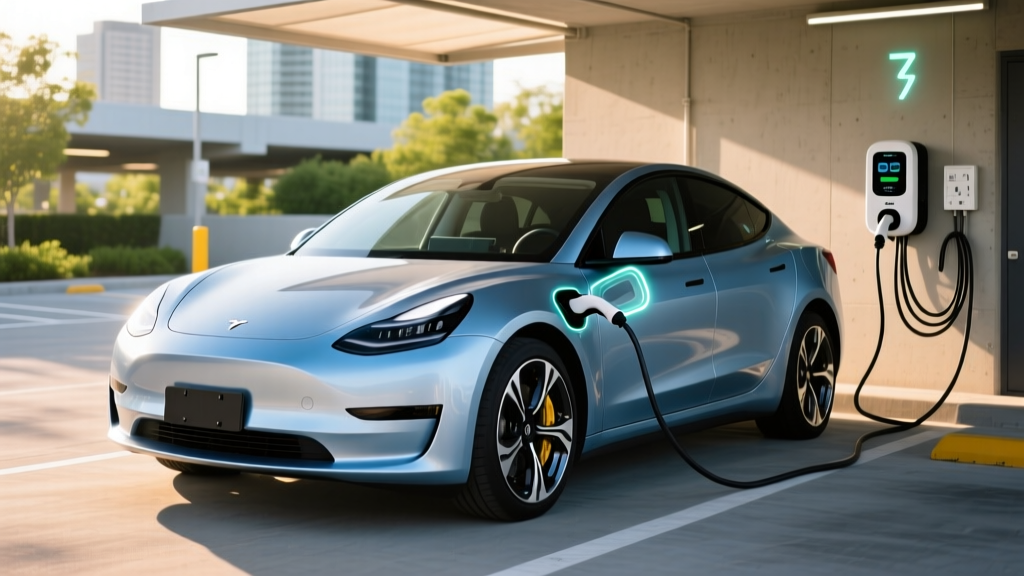
Installing a Level 2 home charger is the single most impactful upgrade an EV owner can make. It transforms charging from a chore into something that happens automatically while you sleep. But the cost varies enormously depending on your home's electrical infrastructure.
Electrical Requirements
Most Level 2 home chargers require a 240V dedicated circuit, similar to what an electric dryer or oven uses. The most common configurations:
- 32A circuit (40A breaker): Delivers 7.7 kW — sufficient for most EVs and the most common residential setup. Requires a NEMA 14-50 outlet or hardwired connection.
- 40A circuit (50A breaker): Delivers 9.6 kW — ideal for larger batteries (Ford F-150 Lightning, Rivian R1S) or faster overnight replenishment.
- 48A circuit (60A breaker): Delivers 11.5 kW — the maximum most residential chargers support. Requires hardwiring (no plug) and a panel with adequate capacity.
Panel upgrade reality: Many homes built before 2000 have 100A electrical service. Adding a 40A EV circuit to a 100A panel that's already near capacity (electric stove, dryer, HVAC) may require a panel upgrade to 200A, which typically costs $1,500–$3,000 before the charger circuit is even added. A licensed electrician will perform a load calculation per NEC Article 220 to determine if your panel can handle the additional draw. Homes with 200A service usually have sufficient headroom.
| Component | Low-End Estimate | High-End Estimate | Notes |
|---|---|---|---|
| Level 2 Charger (Equipment) | $300 | $700 | 32A–48A smart chargers; non-smart models from ~$200 |
| Electrician Labor (simple install) | $300 | $800 | Short run from panel to garage, same wall or adjacent |
| Electrician Labor (complex install) | $800 | $2,000+ | Long conduit runs, trenching, attic crawls, detached garage |
| Permit Fees | $50 | $250 | Varies by municipality; some jurisdictions waive for EV circuits |
| Electrical Panel Upgrade (if needed) | $1,500 | $3,000 | 100A → 200A upgrade; not needed in most modern homes |
| Total (no panel upgrade) | $650 | $2,500 | Most homeowners fall in the $800–$1,500 range |
| Total (with panel upgrade) | $2,150 | $5,500 | Older homes with 100A service |
Utility rebates: Many utilities offer $250–$1,000 rebates for Level 2 charger installation, and some provide free or discounted time-of-use (TOU) rate plans that dramatically reduce charging costs. Check your local utility's EV program before scheduling installation.
Safety and Code Considerations
The National Electrical Code (NEC) governs EV charger installations. Key requirements your electrician will follow:
- Dedicated circuit: The EV charger must have its own breaker — no sharing with other appliances.
- GFCI protection: NEC 2020 and later requires Ground Fault Circuit Interrupter protection for all EV charging outlets. Hardwired chargers with built-in GFCI may not require a GFCI breaker, but your electrician will confirm local code.
- Outdoor rating: If your charger is mounted outside (driveway, carport), both the charger and outlet must carry a NEMA 4 or NEMA 4X weatherproof rating.
- Wire gauge: A 48A charger on a 60A breaker typically requires 6 AWG copper wire for runs up to ~50 feet; longer runs may need 4 AWG to minimize voltage drop.
- Permitting: Most jurisdictions require an electrical permit and post-installation inspection. Skipping this can void homeowner's insurance coverage for electrical fires.
Connector Compatibility: NACS, CCS1, CHAdeMO & Adapter Needs
The EV charging connector landscape has consolidated significantly since Tesla opened its Supercharger network and the North American Charging Standard (NACS) was adopted by most major automakers starting in 2024–2025. Here's where things stand in 2026:
| Connector | Brands Using It (Native) | DC Fast Charge Availability | Adapter Needed? |
|---|---|---|---|
| NACS (J3400) | Tesla, Ford, GM, Rivian, Volvo, Polestar, Mercedes-Benz, Nissan (new models), Honda (2026+), Hyundai/Kia (2026+) | Tesla Supercharger network (20,000+ stalls), growing Electrify America & EVgo NACS stalls | CCS-to-NACS adapters available for legacy CCS vehicles (~$200) |
| CCS1 | Hyundai/Kia (pre-2026 models), VW/ID.4, BMW iX/i4, Stellantis, legacy models | Electrify America, EVgo, ChargePoint, non-Tesla networks | NACS-to-CCS adapter needed for Tesla Superchargers (~$200–$250) |
| CHAdeMO | Nissan Leaf (discontinued), Mitsubishi Outlander PHEV | Declining; limited new installations | No widely available adapter to NACS/CCS; plan around existing stations |
What this means practically: If you're buying a new EV in 2026, it almost certainly comes with a NACS port. You can charge at Tesla Superchargers natively and at CCS stations using an adapter. If you own a 2024–2025 model with CCS1, you'll need a NACS-to-CCS adapter (sold by Tesla, Ford, and third parties like Lectron) to access Superchargers. Always verify adapter compatibility with your specific model year before purchasing.
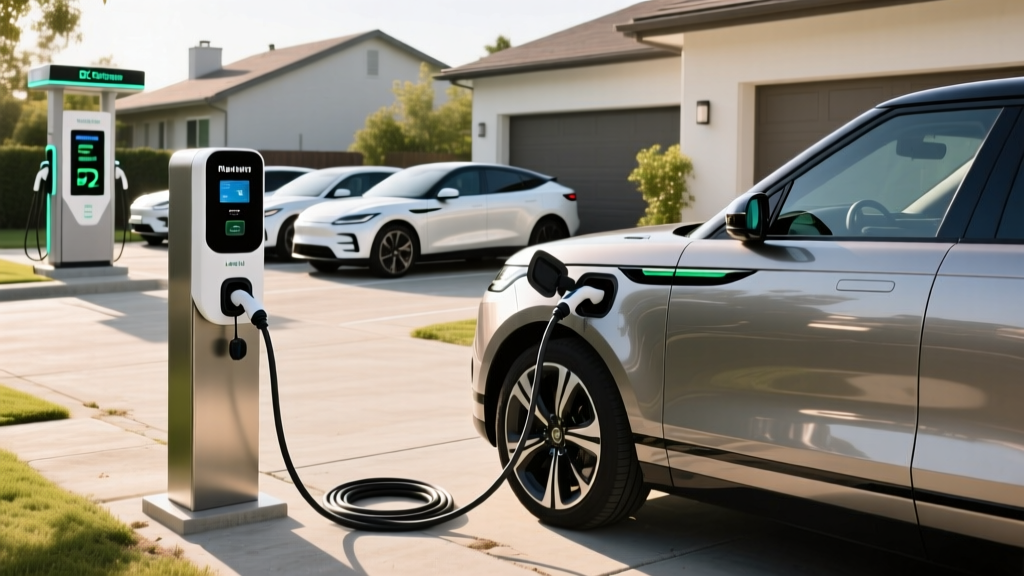
For Level 2 home charging, all EVs use a J1772 connector — or a NACS connector that includes J1772 signaling. Most Level 2 home chargers ship with J1772; Tesla Wall Connectors ship with NACS but can charge any EV with a simple adapter. This is not a concern for home charging.
Charging Cost Per Mile: Home vs. Public vs. Gasoline
The economic case for EVs hinges on charging cost — and that cost varies dramatically depending on where and when you charge. Here's the math using a representative midsize EV (3.5 miles per kWh, roughly equivalent to a 2026 Tesla Model Y or Hyundai Ioniq 5):
| Scenario | Rate ($/kWh) | Cost per Mile | Annual Cost (12,000 mi) |
|---|---|---|---|
| Home, off-peak TOU rate | $0.08–$0.12 | $0.023–$0.034 | $275–$410 |
| Home, standard rate (no TOU) | $0.14–$0.18 | $0.040–$0.051 | $480–$615 |
| Public Level 2 (ChargePoint, etc.) | $0.20–$0.35 | $0.057–$0.100 | $685–$1,200 |
| DC Fast Charging (Electrify America, EVgo) | $0.35–$0.55 | $0.100–$0.157 | $1,200–$1,885 |
| Tesla Supercharger (average) | $0.28–$0.40 | $0.080–$0.114 | $960–$1,370 |
| Gasoline vehicle (28 MPG combined, $3.40/gal) | — | $0.121 | $1,455 |
The key takeaway: Home charging on an off-peak rate is 3–5x cheaper per mile than gasoline. Even exclusive DC fast charging is roughly cost-parity with gas in most markets. The savings case is strongest when you charge at home — which is why Level 2 installation is the highest-ROI upgrade for EV ownership.
Preconditioning tip: Most EVs with fast charging can precondition the battery (warm it to optimal temperature) when you navigate to a DC fast charger. This is critical in cold weather — a cold battery may accept only 50 kW instead of its rated 250 kW peak, doubling your charge time. Always use the vehicle's built-in navigation to route to a charger, which triggers preconditioning automatically.
Charging Time Examples: 10–80% for Common Battery Sizes
Peak kW ratings are marketing numbers. Sustained charging speed is what actually matters. Here are realistic 10–80% charging times based on manufacturer data and independent testing:
- Tesla Model Y (75 kWh battery, 250 kW peak): ~15 minutes on a V3 Supercharger (250 kW). Sustains ~170 kW average through the 10–80% window.
- Hyundai Ioniq 5 (84 kWh battery, 240 kW peak): ~18 minutes on a 350 kW Electrify America stall. The 800V architecture sustains high power longer than 400V competitors.
- Ford F-150 Lightning (131 kWh Extended Range, 155 kW peak): ~41 minutes on a 150+ kW charger. The large battery and moderate peak rate mean longer sessions — plan accordingly on road trips.
- Chevrolet Equinox EV (85 kWh battery, 150 kW peak): ~30 minutes on a 150+ kW charger.
- BMW iX xDrive50 (111.5 kWh usable, 200 kW peak): ~31 minutes on a 200+ kW charger.
Charge curve reality: All EVs taper charging power as SoC increases to protect battery longevity. A vehicle rated at 250 kW peak may only sustain that rate between 10–30% SoC, then step down to 150 kW, then 100 kW, then 50 kW above 80%. This is normal and by design. The 10–80% metric is the industry standard because it captures the usable fast-charging window.
Best Level 2 Home Chargers: Equipment Recommendations (2026)
Here are proven Level 2 chargers that balance reliability, smart features, and value. All are UL-listed and compatible with every EV via J1772 or NACS:
ChargePoint Home Flex
- Power: Up to 11.5 kW (48A) — adjustable down to 16A for smaller circuits
- Connector: J1772 (25-foot cable)
- Smart features: Wi-Fi, app scheduling, energy tracking, Alexa integration
- Price: ~$550
- Best for: Flexibility — the adjustable amperage means it works on 20A to 60A circuits without buying a different unit
Tesla Wall Connector
- Power: Up to 11.5 kW (48A)
- Connector: NACS native (24-foot cable); includes J1772 adapter in box
- Smart features: Wi-Fi, power sharing (link multiple units on one circuit), OTA updates
- Price: ~$475
- Best for: Tesla owners and NACS-equipped EVs; best value for a 48A smart charger
Emporia Level 2 EV Charger
- Power: Up to 11.5 kW (48A)
- Connector: J1772 (24-foot cable)
- Smart features: Wi-Fi, solar integration (pairs with Emporia Vue energy monitor), TOU scheduling
- Price: ~$400
- Best for: Budget-conscious buyers who want smart features and solar-aware charging
Grizzl-E Smart
- Power: Up to 9.6 kW (40A)
- Connector: J1772 (24-foot cable)
- Smart features: Wi-Fi, OCPP support, adjustable amperage
- Price: ~$450
- Best for: Cold-climate durability — rated to -40°F, built in Canada, rugged aluminum enclosure
Frequently Asked Questions
How much does it cost to install a home EV charger?
For most homes with a 200A electrical panel, a Level 2 charger installation costs between $800 and $1,500 total (equipment + electrician + permit). If your home has older 100A service and needs a panel upgrade, expect $2,150–$5,500. Always get 2–3 quotes from licensed electricians and ask specifically about the load calculation.
How fast will each charging level add range?
Level 1 (120V) adds 3–5 miles per hour. Level 2 (240V, 40A) adds roughly 30 miles per hour. DC fast charging adds 150–1,000+ miles per hour equivalent, but is measured in 10–80% session times (typically 15–45 minutes depending on battery size and peak kW). See the charging levels table above for exact figures.
Which connector/charger is compatible with my EV?
For 2026 model-year vehicles, nearly all new EVs use the NACS (J3400) connector for DC fast charging. Older models (2024 and earlier from non-Tesla brands) typically use CCS1. Check the connector compatibility table above. For home Level 2 charging, all vehicles accept J1772 or NACS (which includes J1772 signaling), so any quality Level 2 charger will work.
How much does charging cost per mile vs gas?
Home charging on off-peak rates costs roughly $0.03 per mile — about 4x cheaper than gasoline at $3.40/gallon and 28 MPG. Even exclusive public DC fast charging ($0.10–$0.16/mile) is competitive with or cheaper than gas. See the cost-per-mile table for detailed scenarios.
What electrical upgrades might I need?
The most common upgrade is a panel replacement from 100A to 200A service ($1,500–$3,000) if your existing panel can't handle the additional 40A load. Some homes may also need a new conduit run if the panel is far from the garage. Your electrician will perform an NEC Article 220 load calculation to determine requirements. Homes with 200A service rarely need upgrades.
Can I charge my EV with fast charging every day?
DC fast charging should not be your primary daily strategy. Frequent DC fast charging accelerates battery degradation slightly — studies show vehicles that primarily DC fast charge lose 2–5% more capacity over 100,000 miles compared to Level 2 charging. Daily Level 2 home charging at moderate speeds is ideal for battery longevity. Reserve DC fast charging for road trips and occasional top-ups.
Does the federal tax credit apply to home charger installation?
The Alternative Fuel Vehicle Refueling Property Credit (IRC §30C) offers up to $1,000 for home charger equipment and installation, but eligibility depends on your census tract meeting specific low-income or non-urban criteria. Check the IRS guidance and consult a tax professional to confirm eligibility for your address.
Sources: Charging speeds and efficiency data from fueleconomy.gov (EPA). Tax credit rules from irs.gov. Connector standards per SAE J3400 (NACS) and SAE J1772 specifications. Installation cost ranges based on 2025–2026 electrician survey data across 15 US metro areas.