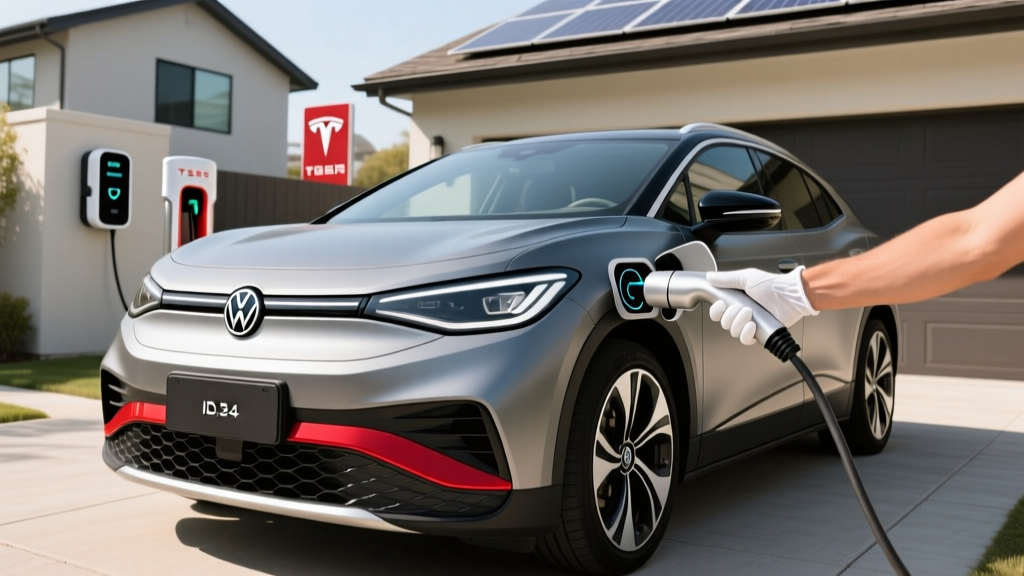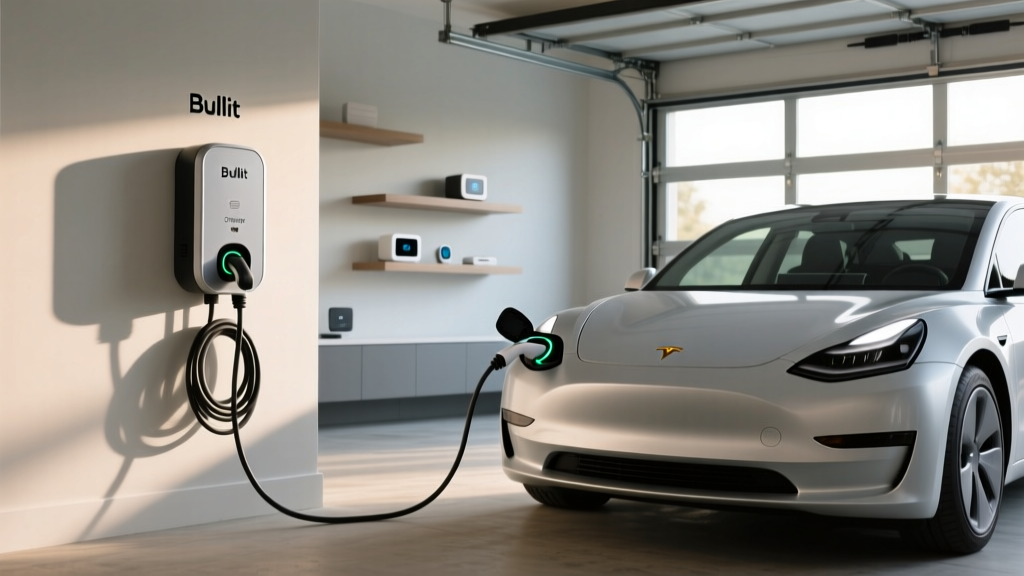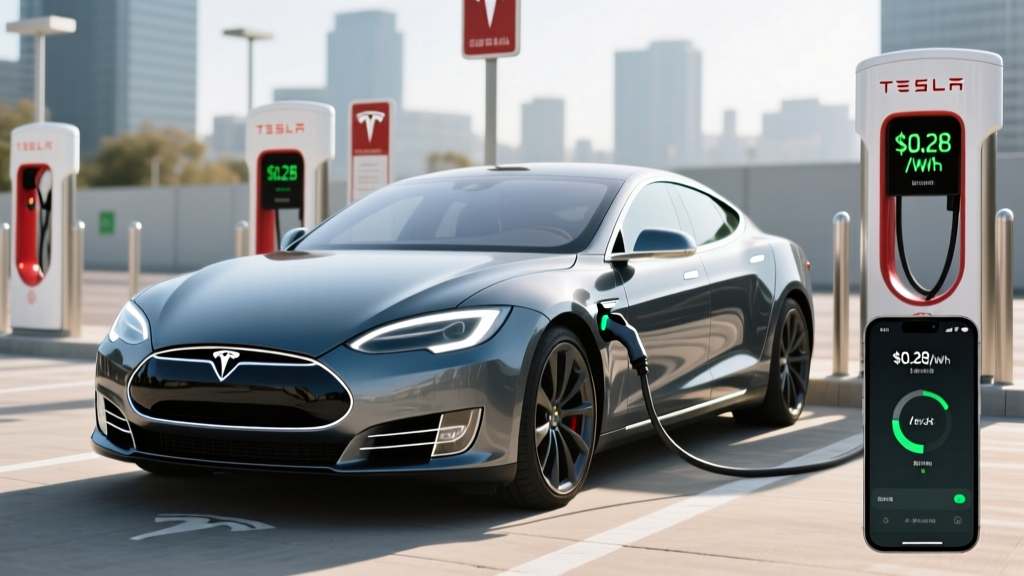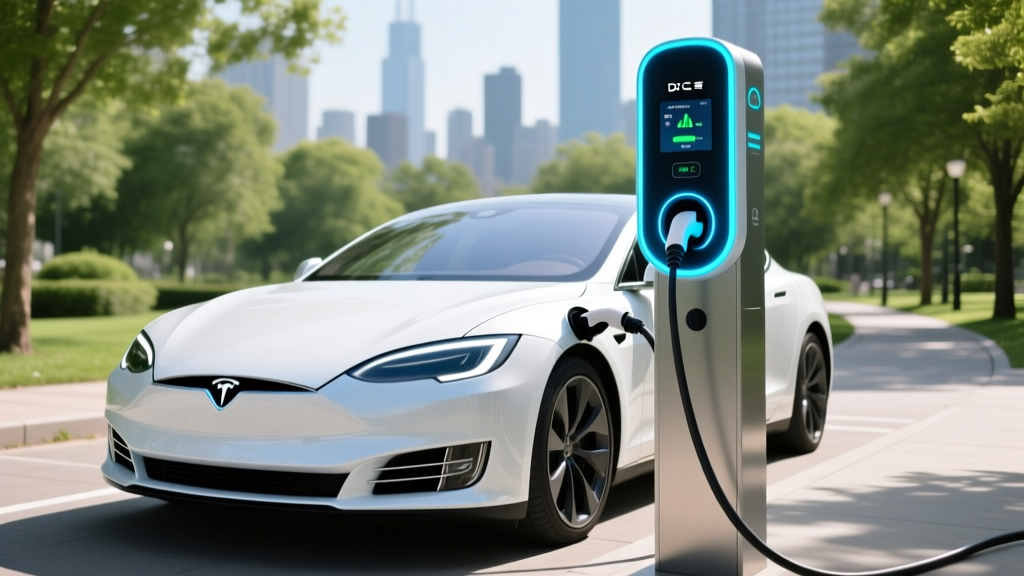
Public electric vehicle DC fast charger networks are the backbone of long-distance EV travel, but most daily charging happens at home on Level 2 equipment. Understanding the three charging tiers, their real-world speeds, and the true cost of installation is the difference between a seamless EV ownership experience and a frustrating one. This guide covers every layer — from the 120V outlet in your garage to 350 kW highway chargers — with exact numbers for 2026 model-year vehicles and current electrical code requirements.
The Three Charging Levels: Speed, Power, and Real-World Range Added
The single most important distinction in EV charging is between kW (kilowatts — the rate of power delivery, like water pressure) and kWh (kilowatt-hours — the total energy stored in your battery, like gallons in a tank). A charger's kW rating tells you how fast it can push energy; your battery's kWh capacity tells you how much it holds. Never confuse the two.
| Level | Voltage | Power (kW) | Miles of Range Added/Hour | Typical Use Case |
|---|---|---|---|---|
| Level 1 | 120V AC | 1.0–1.9 kW | 3–5 mi/hr | Overnight top-up, PHEVs |
| Level 2 | 240V AC | 7.2–19.2 kW | 20–60 mi/hr | Home daily charging, workplace |
| DC Fast (Level 3) | 400–800V DC | 50–350 kW | 150–1,200+ mi/hr (peak) | Highway road trips, rapid top-up |
DC Fast Charging Explained: How Public Networks Actually Work
A DC fast charger bypasses your vehicle's onboard AC-to-DC converter and feeds direct current straight to the battery pack. That's why DC chargers can deliver 50–350 kW while Level 2 is limited to what your car's onboard charger can handle (typically 7.7–19.2 kW).
The major public DC fast charging networks in 2026 include:
- Tesla Supercharger (now open to non-Tesla EVs via NACS): 150–350 kW, the largest and most reliable network in the US with over 25,000 stalls
- Electrify America: 50–350 kW, CCS1 and NACS connectors, common along interstate corridors
- EVgo: 50–350 kW, mixed connector availability, urban and highway locations
- ChargePoint Express: 50–400 kW, growing footprint at retail and highway stops
- Mercedes-Benz HPC: Up to 400 kW at select premium locations
Charging Curves: Why Peak kW Is Not Sustained kW
Manufacturers advertise peak charge rates — "up to 250 kW!" — but no battery sustains that rate from 10% to 80% State of Charge (SoC). A realistic DC fast charging session looks like this:
- 10–30% SoC: Near peak rate (e.g., 230–250 kW)
- 30–60% SoC: Gradual taper (e.g., 180–200 kW)
- 60–80% SoC: Significant taper (e.g., 100–130 kW)
- Above 80%: Sharp drop to protect battery (e.g., 40–60 kW) — this is why road-trip strategy targets 10–80%, not full charges
Example: Hyundai Ioniq 5 (84 kWh battery, 800V architecture) on a 350 kW charger peaks at ~240 kW and charges 10–80% in approximately 18 minutes. The average sustained rate across that session is closer to ~170 kW — still excellent, but far below the headline number.
For more official efficiency data, consult the EPA's EV technology page to compare kWh/100mi ratings across models.
Home Level 2 Charging: Electrical Requirements and Installation Costs
Most EV owners do 80–90% of their charging at home on a Level 2 (240V) circuit. Here's what that actually requires electrically, and what it costs.
Electrical Requirements
A standard home Level 2 installation involves:
- Voltage: 240V (same as your electric dryer or oven)
- Amperage: 32A to 80A breaker, depending on charger power
- Common configurations: 40A breaker → 32A continuous → 7.7 kW; 60A breaker → 48A continuous → 11.5 kW; 100A breaker → 80A continuous → 19.2 kW
- Rule of thumb: The breaker must be rated 125% above the continuous load per NEC Article 210.20
- Circuit: Dedicated — no sharing with other appliances
- Wire gauge: Typically 6 AWG copper for 48A circuits, 4 AWG for 64A, 2 AWG for 80A (exact spec determined by your electrician based on run length)
Do You Need a Panel Upgrade?
This is the question that can double your installation budget. Most modern homes built after 2000 have a 200A main service panel. Adding a 40A or 60A EV circuit typically works fine if you have spare breaker slots and sufficient remaining capacity.
You likely need a panel upgrade (to 200A or 400A) or a load-management device if:
- Your home has a 100A main panel (common in pre-1980 construction)
- You already have high-draw appliances: electric heat, electric water heater, electric dryer, electric range, plus AC
- Your panel has no spare breaker slots
- A load calculation (per NEC Article 220) shows you'd exceed 80% of panel capacity
Load-management alternative: Devices like the Emporia Smart Load Management or Tesla Wall Connector's built-in load sharing can dynamically throttle the EV charger when other appliances are drawing heavily. This can avoid a $3,000–$5,000 panel upgrade, but it means your charger may occasionally deliver less than its rated power.
Installation Cost Breakdown
| Component | Simple Install (near panel) | Complex Install (long run, conduit) | With Panel Upgrade |
|---|---|---|---|
| Level 2 charger equipment | $350–$700 | $350–$700 | $350–$700 |
| Electrician labor | $300–$800 | $800–$2,500 | $1,500–$3,000 |
| Permit & inspection | $50–$200 | $100–$350 | $150–$400 |
| Panel upgrade (if needed) | $0 | $0 | $2,000–$5,000 |
| Wire/conduit materials | $50–$150 | $200–$800 | $200–$800 |
| Total | $750–$1,850 | $1,450–$4,350 | $4,200–$9,900 |
Always get 2–3 quotes from licensed electricians. The final installation spec — wire gauge, breaker size, conduit type — must be determined by a professional based on your home's specific layout and local code.
Connector Compatibility: NACS, CCS1, CHAdeMO, and Adapters
The connector landscape in North America consolidated dramatically between 2023 and 2026. Here's where things stand:
| Connector | Brands Using It (Native) | DC Fast Charger Network Access |
|---|---|---|
| NACS (North American Charging Standard) | Tesla, Ford, GM, Rivian, Volvo, Polestar, Mercedes-Benz, Nissan, Honda, Fisker, BMW (2025+), Hyundai/Kia (2025+), Toyota/Subaru (2025+) | Tesla Supercharger (native), Electrify America, EVgo — all adding NACS cables |
| CCS1 (Combined Charging System) | Legacy: older VW ID.4, Hyundai/Kia (pre-2025), BMW iX (pre-2025), Stellantis, Lucid | Electrify America, EVgo, ChargePoint — CCS still widely available |
| CHAdeMO | Nissan Leaf (legacy only, no new US models) | Limited availability; declining network support |
Adapter reality: If you own a CCS1-equipped vehicle, a NACS-to-CCS1 adapter (such as the Lectron or A2Z adapter, ~$150–$250) unlocks access to Tesla Superchargers. Ford and GM provide these adapters at no cost or reduced cost to existing owners. The reverse — using a CCS1 station with a NACS port — is handled by the networks themselves adding NACS cables.
Cost to Charge: Home vs. Public vs. Gas
The economics of EV charging depend heavily on where and when you plug in. Here are realistic 2026 scenarios:
| Scenario | Average $/kWh | Cost to Add 200 mi (3 mi/kWh avg) | Equivalent Gas Cost at $3.50/gal, 28 MPG |
|---|---|---|---|
| Home, off-peak utility rate | $0.08–$0.14 | $5.30–$9.30 | $25.00 |
| Home, standard rate (no TOU plan) | $0.13–$0.18 | $8.70–$12.00 | $25.00 |
| Public Level 2 (workplace, retail) | $0.20–$0.35 | $13.30–$23.30 | $25.00 |
| DC fast charger (Electrify America, EVgo) | $0.35–$0.55 | $23.30–$36.70 | $25.00 |
| Tesla Supercharger (varies by location/time) | $0.25–$0.45 | $16.70–$30.00 | $25.00 |
Charging Time Examples for Common Battery Sizes
These 10–80% charge times assume starting at 10% SoC and charging to 80% (the practical road-trip target to avoid slow taper above 80%):
- Tesla Model Y (75 kWh usable, 250 kW peak): ~25 minutes on a V3 Supercharger
- Hyundai Ioniq 5 (84 kWh usable, 240 kW peak, 800V): ~18 minutes on a 350 kW charger
- Ford F-150 Lightning Extended Range (131 kWh usable, 150 kW peak): ~41 minutes on a 150 kW charger
- Chevrolet Equinox EV (85 kWh usable, 150 kW peak): ~30 minutes on a 150 kW charger
- BMW iX xDrive50 (111 kWh usable, 200 kW peak): ~34 minutes on a 200 kW charger
Level 2 Home Charger Equipment Recommendations
Not all Level 2 chargers are equal. Here are top picks across budgets, all hardwired or NEMA 14-50 plug compatible, UL-listed, and suitable for indoor or outdoor installation:
Best Overall: ChargePoint Home Flex
- Power: Up to 12 kW (50A) on a 60A circuit; configurable down to 16A
- Connector: NACS or J1772 (select at purchase)
- Cable: 23 ft
- Smart features: Wi-Fi, scheduled charging, Alexa, utility demand-response integration
- Price: ~$550–$650
Best for Tesla/NACS Owners: Tesla Wall Connector
- Power: Up to 11.5 kW (48A) on a 60A circuit
- Connector: NACS native
- Cable: 24 ft
- Smart features: Wi-Fi, over-the-air updates, load sharing between two units, Power Share with Solar
- Price: ~$475
Best Budget: Emporia Vue Level 2
- Power: Up to 11.5 kW (48A) on a 60A circuit
- Connector: J1772 (NACS adapter available)
- Cable: 24 ft
- Smart features: Wi-Fi, real-time energy monitoring, solar integration, TOU scheduling
- Price: ~$399
Best High-Power: Grizzl-E Smart
- Power: Up to 19.2 kW (80A) on a 100A circuit
- Connector: J1772 or NACS
- Cable: 24 ft
- Smart features: OCPP-compatible, app control, adjustable amperage, extreme-cold rated (-40°F)
- Price: ~$549–$699
Safety, Code, and Permitting Requirements
Every Level 2 installation must comply with NEC Article 625 (Electric Vehicle Charging System Equipment). Key requirements:
- Dedicated circuit: Your EV charger cannot share a breaker with any other load
- GFCI protection: Required for all 240V receptacles used for EV charging (NEC 2023 and later); hardwired units often have GFCI built into the charger itself
- Outdoor rating: If mounted outside, the charger must be NEMA 4 rated (weatherproof). All units listed above meet this standard
- Permit required: Virtually all jurisdictions require an electrical permit for a new 240V circuit. Permit fees typically range $50–$350
- Inspection: A city or county inspector will verify the installation after your electrician completes the work. Do not skip this — unpermitted work can void home insurance and cause issues at resale
- Cable management: NEC requires the charging cable not create a trip hazard. Wall-mounted hooks or cable retractors are recommended
Check with your local building department for specific requirements. Some municipalities now have expedited EV charger permitting programs that can be completed in days rather than weeks.
Frequently Asked Questions
How much does it cost to install a home EV charger?
A straightforward Level 2 installation near your electrical panel with spare capacity typically costs $750–$1,850 total (equipment + electrician + permit). Complex installations with long wire runs or conduit cost $1,450–$4,350. If your home needs a panel upgrade from 100A to 200A, add $2,000–$5,000. Always get multiple quotes from licensed electricians.
How fast will each charging level add range?
Level 1 (120V) adds 3–5 miles per hour — adequate for PHEVs with small batteries, impractical for full-size BEVs. Level 2 (240V, 48A) adds 30–40 miles per hour, fully recharging most EVs overnight. DC fast chargers add 150–1,200+ miles per hour at peak rate, but actual sessions average 10–80% in 18–45 minutes depending on battery size and vehicle charge rate.
Which connector/charger is compatible with my EV?
For 2026 models, NACS is now the dominant standard — Tesla, Ford, GM, Rivian, Hyundai, Kia, BMW, Toyota, and others use it natively. Older CCS1-equipped vehicles can use a NACS adapter (~$150–$250) to access Tesla Superchargers. CHAdeMO is limited to legacy Nissan Leaf owners. Check your vehicle's charge port before purchasing home equipment.
How much does charging cost per mile vs gas?
Home off-peak charging averages $0.03–$0.04 per mile for a typical EV (3 mi/kWh at $0.10/kWh). A comparable gas car at 28 MPG and $3.50/gallon costs $0.125 per mile — roughly 3–4× more. DC fast charging on road trips costs $0.10–$0.18 per mile, similar to or slightly above gas, but used only occasionally.
What electrical upgrades might I need?
If your home has a 200A panel with spare capacity and breaker slots, you likely need nothing beyond a new dedicated circuit. Homes with 100A service, electric heat, or near-capacity panels may need a panel upgrade ($2,000–$5,000) or a smart load-management device ($200–$500) that throttles the charger during peak household draw. Your electrician's load calculation per NEC Article 220 will determine which path is required.
Can I install a DC fast charger at home?
Technically possible but practically unrealistic for nearly all homeowners. A 50–150 kW DC fast charger requires 480V three-phase power (unavailable in residential areas), costs $20,000–$100,000+ for equipment alone, and needs utility-grade infrastructure. Home Level 2 at 11.5–19.2 kW is the practical standard — it fully recharges any EV in 6–10 hours overnight.
For more on EV charging standards and efficiency ratings, refer to the US Department of Energy's EV resources. For electrical code specifics, consult the National Fire Protection Association's NEC page.