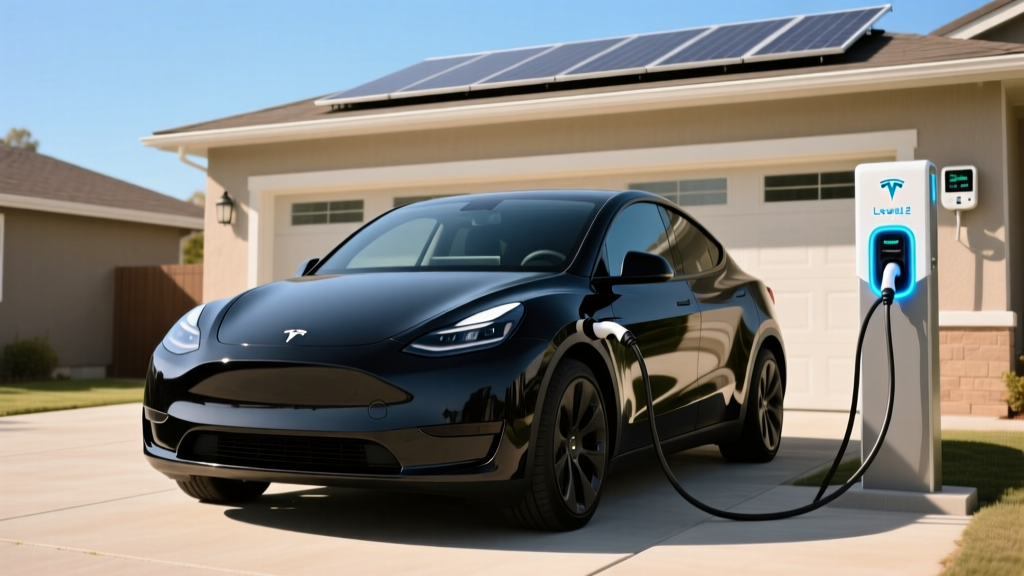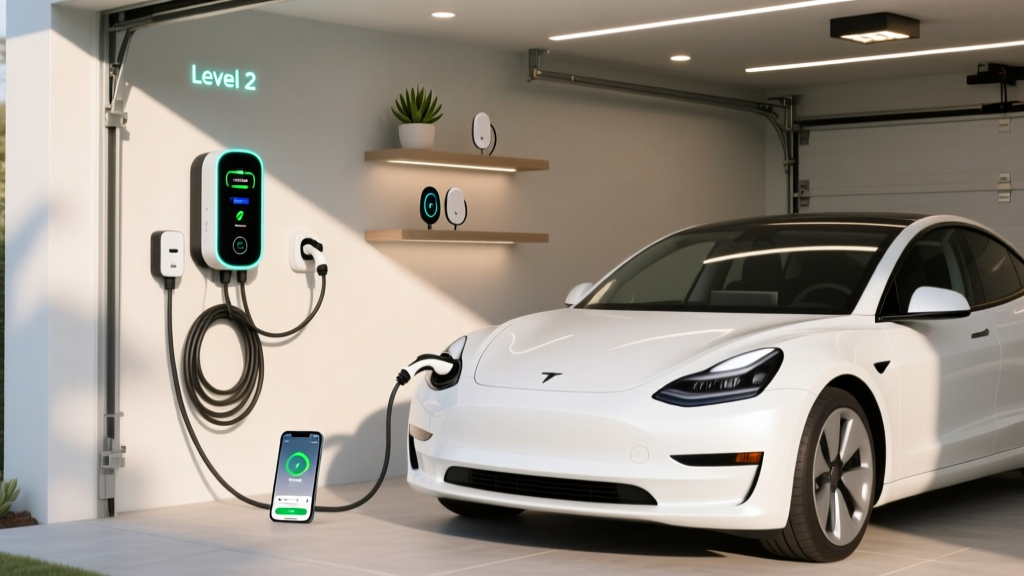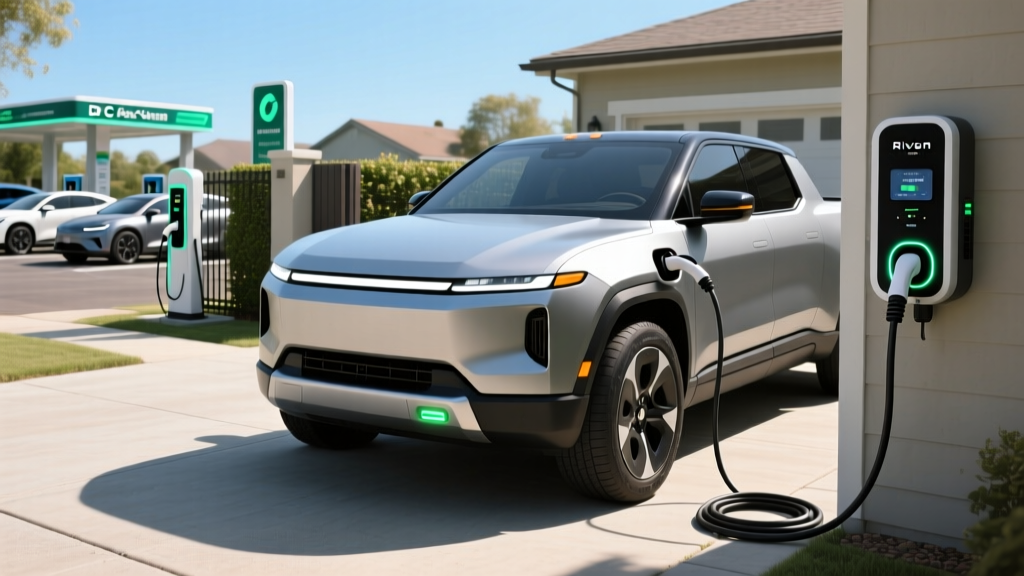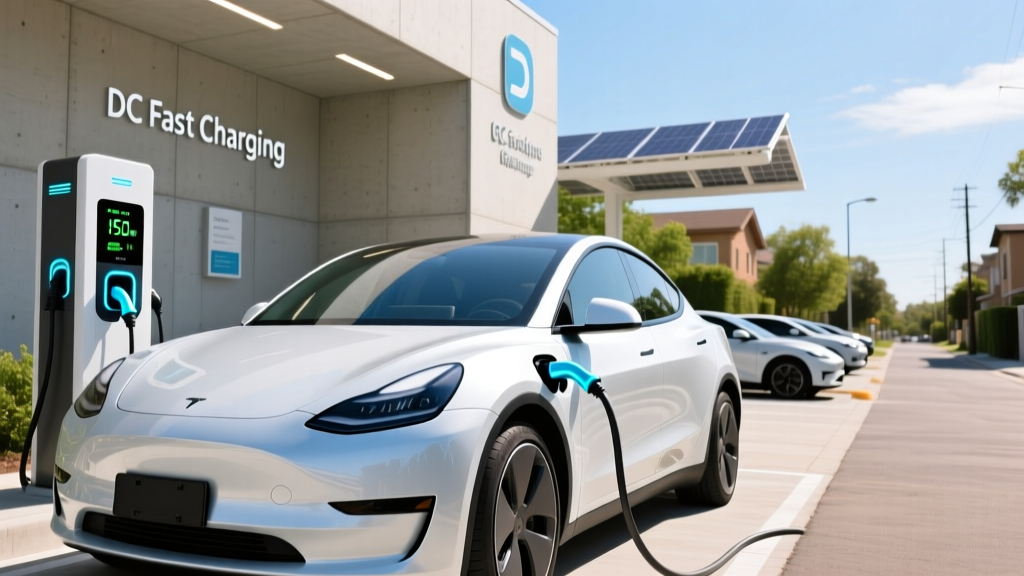
Buying an electric vehicle is only half the equation — figuring out how to keep it charged is the other. Whether you're researching a home wallbox, planning a road trip around public networks, or trying to understand what an EV DC fast charger actually does to your battery, the terminology can be a minefield. The single most important distinction to internalize before anything else: kW (kilowatts) measures power — how fast energy flows into your car — while kWh (kilowatt-hours) measures energy — how much your battery holds. Confusing the two is the most common EV mistake new owners make.
This guide walks through every charging level, what home installation really costs (including the panel upgrade nobody warns you about), which connector your car needs, and how EV charging stacks up against gasoline on a per-mile basis.
Charging Levels Explained: Speed, Power, and Real-World Range Added
EV charging falls into three categories, each defined by voltage, amperage, and whether the AC-to-DC conversion happens in the charger or inside the car. Here's how they compare in measurable terms:
| Level | Voltage | Typical Power (kW) | Miles of Range per Hour | Best Use Case |
|---|---|---|---|---|
| Level 1 | 120V AC | 1.0–1.4 kW | 3–5 mi/hr | Overnight top-up, PHEVs, low-mileage drivers |
| Level 2 | 240V AC | 7.2–19.2 kW | 25–65 mi/hr | Daily home charging, workplace, destinations |
| DC Fast (Level 3) | 400–800V DC | 50–350+ kW | 150–1,200+ mi/hr (peak) | Road trips, highway corridors, fleet depots |
A few real-world nuances the table doesn't capture:
- Level 2 variance is enormous. A 32-amp, 7.7 kW wallbox adds roughly 28 miles per hour — enough for most daily drivers. A 48-amp, 11.5 kW unit on a 60A circuit pushes closer to 42 mi/hr, which matters if your EV has a large battery (100+ kWh) and you arrive home near empty.
- DC fast charging peak rates are not sustained. A charger rated for 350 kW won't deliver that for the full session. Most EVs hit peak power only between roughly 10–40% State of Charge (SoC), then taper significantly. A "250 kW capable" car might average 120–150 kW across a 10–80% session.
- 800V architectures charge faster. Vehicles like the Hyundai Ioniq 5, Kia EV6, Porsche Taycan, and Genesis GV60 use 800V battery systems that accept higher DC power without excessive current, enabling 10–80% charges in roughly 18 minutes at compatible 350 kW stations.
EV DC Fast Charger Charging Times: 10–80% by Battery Size
Most EV owners charge from 10% to 80% on DC fast chargers — the 80% ceiling is both a practical sweet spot (charging slows dramatically above 80% to protect the battery) and a courtesy at shared public stations. Here's what to expect for common battery sizes at different DC power levels:
| Battery Size | Example Vehicles | 150 kW Charger (10–80%) | 250 kW Charger (10–80%) | 350 kW Charger (10–80%) |
|---|---|---|---|---|
| 60 kWh | Chevy Equinox EV, base Tesla Model 3 | ~28–32 min | ~22–26 min | ~20–24 min (if car accepts) |
| 77–84 kWh | Ford Mustang Mach-E ER, Tesla Model Y LR, Hyundai Ioniq 5 | ~35–42 min | ~24–30 min | ~18–22 min (800V vehicles) |
| 100+ kWh | Lucid Air, Ford F-150 Lightning ER, GMC Hummer EV | ~50–65 min | ~35–45 min | ~28–35 min (if architecture supports) |
Home EV Charger Installation: Electrical Requirements and Real Costs
Installing a Level 2 home charger is the single highest-impact upgrade an EV owner can make. You'll do roughly 80–90% of your charging at home, and a proper wallbox eliminates daily range anxiety entirely. But the total cost varies enormously depending on your home's electrical infrastructure.
Electrical Requirements
A Level 2 charger requires a 240-volt dedicated circuit, identical to what a clothes dryer or electric range uses. The circuit amperage must exceed the charger's rated draw by 25% per the National Electrical Code (NEC Article 625). For example:
- A 32-amp charger (7.7 kW) requires a 40-amp breaker
- A 40-amp charger (9.6 kW) requires a 50-amp breaker
- A 48-amp charger (11.5 kW) requires a 60-amp breaker
When You Need a Panel Upgrade
Most homes built after 1990 have a 200-amp electrical panel, which can typically accommodate a 40–60 amp EV circuit alongside existing loads. However, homes with 100-amp service, heavy existing loads (electric heat, pool, hot tub, second kitchen), or panels near capacity may need a service upgrade to 200A or even 400A. This is the hidden cost that catches buyers off guard.
| Component | Low End | High End | Notes |
|---|---|---|---|
| Level 2 Charger (Equipment) | $350 | $750 | Smart WiFi chargers: ChargePoint, Emporia, Wallbox, Tesla |
| Electrician Labor | $500 | $2,000 | Depends on run length from panel to garage/driveway |
| Materials (conduit, wire, breaker) | $150 | $600 | Longer runs and outdoor installs cost more |
| Permit & Inspection | $50 | $300 | Varies by municipality; some jurisdictions waive for EV |
| Panel Upgrade (if needed) | $1,500 | $4,500 | 100A→200A upgrade; 400A service significantly more |
| Total (no panel upgrade) | $1,050 | $3,650 | Most common scenario for modern homes |
| Total (with panel upgrade) | $2,550 | $8,150 | Older homes or heavy-load households |
Always hire a licensed electrician and pull a permit. Unpermitted EV charger installs can void homeowner's insurance claims and cause issues during home resale. The NEC Article 625 governs EV charging equipment installation in the US.
Connector Compatibility: NACS, CCS1, and CHAdeMO
The connector landscape in North America underwent a seismic shift starting in late 2023 when Ford, GM, Rivian, Volvo, and nearly every major automaker committed to adopting Tesla's North American Charging Standard (NACS). By 2026, NACS is the dominant connector on new EVs, though CCS1 vehicles remain widespread on the road.
| Connector | Brands Using It (2026 Models) | DC Fast Availability | Adapter Needed? |
|---|---|---|---|
| NACS (Tesla standard) | Tesla (all), Ford, GM, Rivian, Volvo, Polestar, Mercedes, BMW, Hyundai/Kia (select), Lucid, Toyota | Tesla Supercharger network + growing third-party NACS stations | CCS1→NACS adapters available (~$200–$300) for CCS vehicles |
| CCS1 | VW ID.4 (pre-2026), Porsche Taycan (pre-2025), older BMW i4/iX, Honda Prologue (early), Chevy Bolt (discontinued) | Electrify America, EVgo, ChargePoint DC, Ionity (EU) | NACS→CCS1 adapters for charging at Superchargers (~$200) |
| CHAdeMO | Nissan Leaf (legacy only, no new US models) | Declining; some Electrify America & EVgo stations retain connectors | No practical adapter to CCS or NACS |
If you're buying a new EV in 2026, NACS is the safest bet for long-term charging access — the Tesla Supercharger network remains the most reliable public DC fast charging infrastructure in North America, with over 30,000 stalls. CCS1 owners aren't stranded, but should budget for an adapter ($200–$300) to access Superchargers as CCS-only public stations become less common.
Cost to Charge: Home vs. Public DC Fast Charger vs. Gasoline
The economic case for EVs hinges on fuel cost savings, but those savings vary dramatically depending on where you charge. Here's a realistic breakdown using 2026 electricity and gasoline pricing:
| Charging Scenario | Cost per kWh | Cost per Mile (at 3 mi/kWh) | Annual Cost (12,000 mi) |
|---|---|---|---|
| Home — Off-peak utility rate | $0.08–$0.14 | $0.03–$0.05 | $360–$600 |
| Home — Standard residential rate | $0.14–$0.22 | $0.05–$0.07 | $600–$840 |
| Public Level 2 (workplace, retail) | $0.20–$0.40 | $0.07–$0.13 | $840–$1,560 |
| Public DC Fast Charger | $0.35–$0.60 | $0.12–$0.20 | $1,440–$2,400 |
| Tesla Supercharger (member rate) | $0.25–$0.38 | $0.08–$0.13 | $960–$1,560 |
| Gasoline vehicle (27 MPG avg, $3.50/gal) | — | $0.13 | $1,560 |
Best Home Level 2 EV Chargers: Equipment Picks for 2026
You can't install a DC fast charger at home — the electrical service required (480V three-phase, 50–350 kW) is commercial/industrial grade and prohibitively expensive for residential use. A Level 2 wallbox is the right home solution. Here are proven options across price points:
Emporia Vue Level 2 Smart Charger
- Power: 48A / 11.5 kW (on 60A circuit)
- Connector: NACS (J3400) native; CCS adapter included
- Cable: 24 ft
- Smart features: WiFi, app scheduling, solar integration, energy monitoring via Emporia Vue panel
- Price: ~$399
- Best for: Budget-conscious buyers who want full smart features and solar pairing
ChargePoint Home Flex
- Power: Up to 50A / 12 kW (adjustable 16–50A)
- Connector: NACS or CCS1 (select at purchase)
- Cable: 23 ft
- Smart features: WiFi, Alexa/Google Home, flexible amperage dial to match circuit
- Price: ~$549
- Best for: Homes where circuit capacity may change; amperage adjustability avoids over-provisioning
Tesla Wall Connector
- Power: 48A / 11.5 kW (on 60A circuit)
- Connector: NACS native; J1772 adapter included for non-Tesla EVs
- Cable: 24 ft
- Smart features: WiFi, OTA updates, Power-Share (load balancing with two units on one circuit), vehicle integration
- Price: ~$425
- Best for: Tesla owners; multi-EV households using Power-Share
Wallbox Pulsar Plus
- Power: 40A / 9.6 kW (on 50A circuit)
- Connector: NACS or J1772
- Cable: 25 ft
- Smart features: WiFi + Bluetooth, Eco-Smart solar mode, Power Boost dynamic load management
- Price: ~$499
- Best for: Homes with solar panels; compact unit size
Safety, Code, and Installation Best Practices
EV charging draws sustained high current for hours — this is fundamentally different from short-burst appliances. Safety and code compliance aren't optional:
- Dedicated circuit: Your EV charger must be on its own dedicated breaker — never shared with other outlets or appliances.
- GFCI protection: NEC 2023 and later require GFCI (Ground Fault Circuit Interrupter) protection for all EV charging outlets. Many modern hardwired chargers include built-in GFCI; plug-in units require a GFCI breaker.
- Outdoor rating: If your charger is installed outside or in an unenclosed carport, it must carry a NEMA 4 (weatherproof) rating. All chargers listed above meet this standard.
- Hardwired vs. plug-in: Hardwired chargers (directly connected to junction box) are preferred for circuits above 40A, as NEMA 14-50 receptacles are rated for intermittent use, not the sustained 3–8 hour draws typical of EV charging. Some jurisdictions now require hardwired connections for 48A+ chargers.
- Cable management: Keep charging cables off the ground using the included holster or a wall-mounted cable organizer to prevent trip hazards and cable damage.
For detailed electrical code requirements, consult the National Fire Protection Association's NEC resources and always hire a licensed electrician familiar with NEC Article 625.
Frequently Asked Questions
How much does it cost to install a home EV charger?
For most homes with an existing 200-amp panel, expect $1,050–$3,650 total including equipment ($350–$750), electrician labor ($500–$2,000), materials ($150–$600), and permits ($50–$300). If your home needs a panel upgrade from 100A to 200A, add $1,500–$4,500. Get at least three quotes from licensed electricians — prices vary significantly by region and run length from panel to charger location.
How fast will each charging level add range?
Level 1 (120V standard outlet) adds 3–5 miles of range per hour — adequate for PHEVs with small batteries but impractical for full BEVs. Level 2 (240V home charger) adds 25–65 miles per hour depending on amperage, easily replenishing a day's driving overnight. DC fast chargers add 150–1,200+ miles per hour at peak rates, enabling 10–80% charges in 18–45 minutes depending on battery size and vehicle architecture.
Which connector/charger is compatible with my EV?
Check your vehicle's charge port. If you drive a 2025–2026 Ford, GM, Rivian, Tesla, Volvo, or most new models, you likely have NACS. Older non-Tesla EVs (2021–2024 VW, BMW, Honda) typically use CCS1. Nissan Leaf uses CHAdeMO (legacy). For home Level 2 charging, match the charger connector to your car — or buy a NACS-to-CCS adapter ($200–$300) for flexibility. See the connector compatibility table above for brand-specific details.
How much does charging cost per mile vs gas?
At home with off-peak electricity ($0.08–$0.14/kWh), EVs cost $0.03–$0.05 per mile — roughly one-third the cost of gasoline at $3.50/gallon and 27 MPG ($0.13/mile). However, exclusive reliance on public DC fast chargers ($0.35–$0.60/kWh) pushes EV per-mile costs to $0.12–$0.20, which can match or exceed gasoline. Home charging access is the critical variable in EV fuel savings.
What electrical upgrades might I need?
The most common upgrade is adding a 240V dedicated circuit (40–60 amp) to your existing panel — straightforward if you have spare breaker slots and 200A service. Homes with 100A panels, maxed-out breaker boxes, or heavy existing electrical loads (electric heating, hot tub, workshop) may need a panel upgrade to 200A ($1,500–$4,500) or 400A service. A licensed electrician can perform a load calculation to determine your home's capacity before you purchase a charger.
Can I install a DC fast charger at home?
Practically, no. DC fast chargers require 480V three-phase power and draw 50–350+ kW — commercial-grade electrical service that costs tens of thousands of dollars to bring to a residence. A Level 2 home charger (7–12 kW) is the correct residential solution and handles 80–90% of typical charging needs. Reserve DC fast charging for road trips and occasional rapid top-ups.
Does the federal tax credit cover home charger installation?
The IRS §30C Alternative Fuel Vehicle Refueling Property Credit covers 30% of home EV charger equipment and installation costs, up to $1,000. However, eligibility depends on your home being in a qualifying census tract (rural or low-income community as defined by the IRS). Check the IRS guidance and consult a tax professional to confirm eligibility — rules and qualifying tracts are subject to change.
Understanding the full charging ecosystem — from the humble 120V outlet to 350 kW highway chargers — is essential to making an EV work for your lifestyle. The math overwhelmingly favors home Level 2 installation for daily use, with DC fast chargers serving as the road-trip backbone. Nail the home setup, and range anxiety largely disappears.