If you're coming from a performance gas vehicle — say a twin-turbo V6 or a supercharged V8 — the idea of "refueling" an electric car at home can feel abstract. You're used to 10 gallons in 3 minutes at any corner station. EV charging works differently: it's slower at peak power but far cheaper per mile, and most of it happens while you sleep. This guide translates the EV charging ecosystem into terms any turbo and supercharged car enthusiast can map to their existing experience, while giving you the exact numbers needed to plan a home installation.
The Three Charging Levels: kW Speeds and Miles Per Hour
The single most important distinction in EV charging is kW (kilowatts), which measures power flow rate — think of it like gallons-per-minute at a gas pump — versus kWh (kilowatt-hours), which measures energy stored in the battery, like gallons in a tank. Confusing these two is the most common EV literacy mistake. A 10 kW charger delivering power for 8 hours adds 80 kWh of energy.
| Level | Voltage / Phase | Power (kW) | Miles of Range Added Per Hour | Typical Use Case |
|---|---|---|---|---|
| Level 1 | 120V / 1-phase | 1.0–1.9 kW | 3–5 mi/hr | Overnight top-off, PHEVs, low-mileage drivers |
| Level 2 | 240V / 1-phase | 7.2–19.2 kW | 25–65 mi/hr | Home daily charging, workplace, destinations |
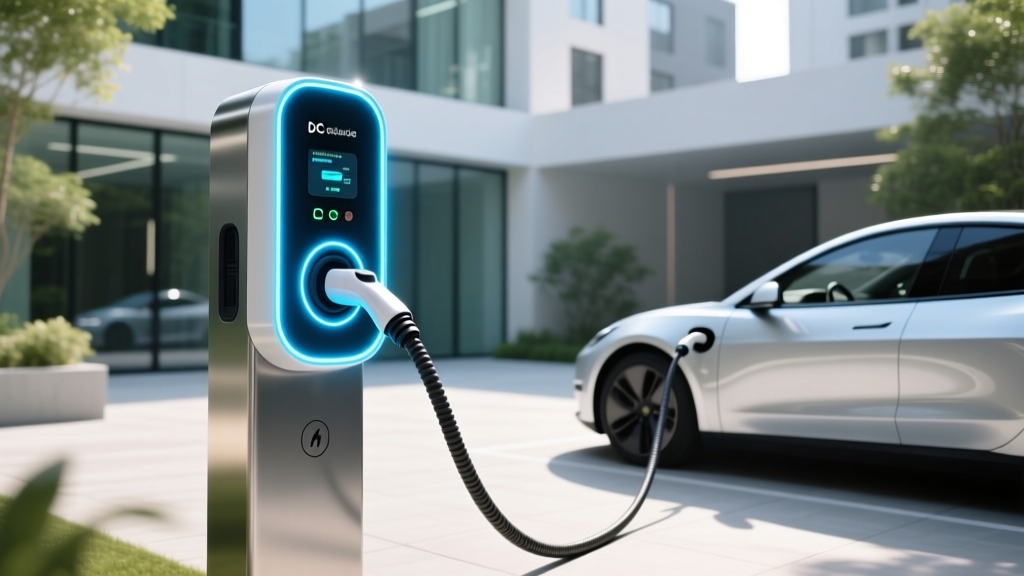
| DC Fast (Level 3) | 400–900V DC | 50–350+ kW | 150–800+ mi/hr (peak) | Road trips, highway corridors, fleet depots |
For context: a turbo and supercharged car getting 18 MPG combined that you refuel in 4 minutes is effectively "charging" at the energy equivalent of roughly 3,000 kW. No EV charger comes close to gas-pump speed, but EVs make up the difference by charging while parked — you're almost always starting a trip with a "full tank."
Real-World Charging Times for Common Battery Sizes
Charge times depend on battery capacity (kWh), the charger's peak power (kW), and the vehicle's onboard charge curve. Batteries charge fastest between roughly 10% and 50% state of charge (SoC), then taper significantly above 80% to protect cell health. Here are realistic 10–80% times for popular 2026 battery sizes:
- 60 kWh pack (e.g., base Tesla Model 3 RWD, LFP chemistry): ~22 minutes on a 170 kW DC fast charger; ~6.5 hours on a 7.2 kW Level 2 home charger.
- 82 kWh pack (e.g., Hyundai Ioniq 5 Long Range, NMC): ~18 minutes on a 350 kW charger (800V architecture); ~9 hours on 7.2 kW Level 2.
- 100 kWh pack (e.g., Rivian R1S Dual-Motor, NMC): ~28 minutes on a 200 kW charger; ~11 hours on a 9.6 kW Level 2.
- 131 kWh pack (e.g., Ford F-150 Lightning Extended Range): ~41 minutes on a 150 kW charger; ~14 hours on 9.6 kW Level 2.
On a 240V Level 2 home charger, most daily driving (30–60 miles) is replenished in 1–3 hours. For road trips, plan DC fast stops around 20–30 minutes and combine them with rest breaks.
Home Charger Installation: Electrical Requirements, Panel Upgrades, and Costs
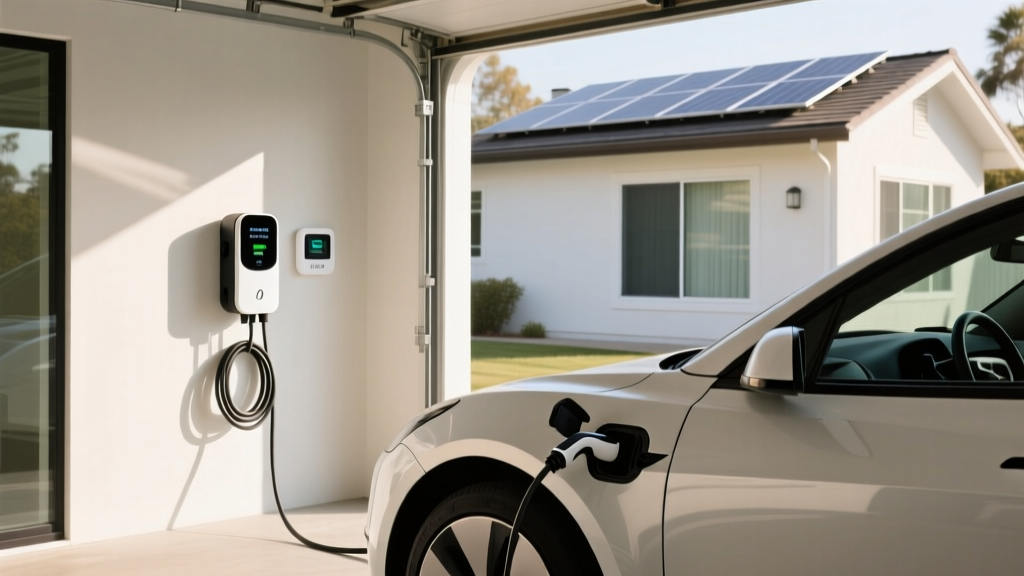
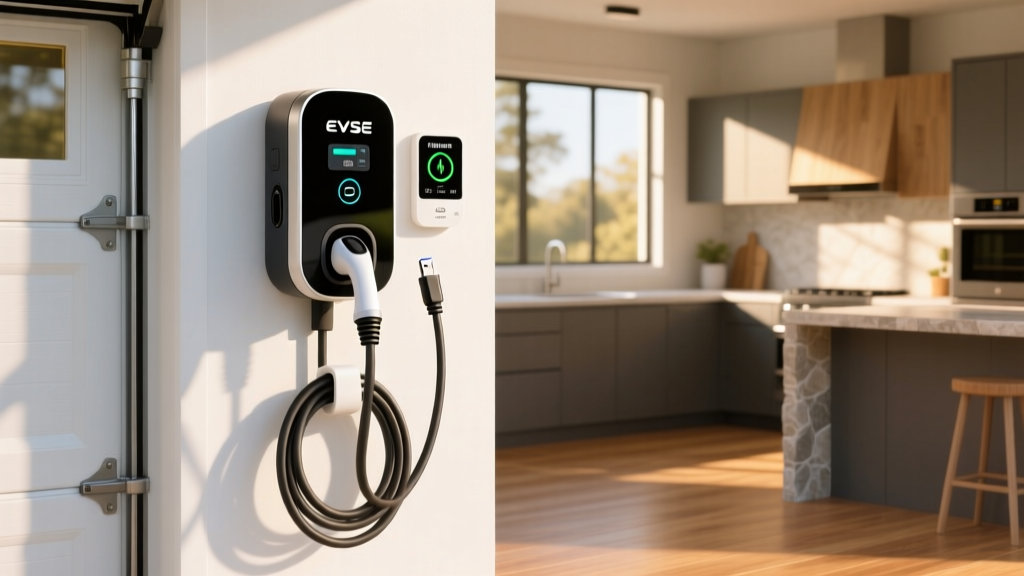
A Level 2 home charger is the centerpiece of practical EV ownership. Most units require a dedicated 240V circuit, typically 40A to 60A, which translates to continuous draw of 32A to 48A (the National Electrical Code limits continuous loads to 80% of breaker rating).
When a Panel Upgrade Is Required
Homes built before 1990 often have 100A main service panels. Adding a 48A EV circuit to a panel already running electric range, dryer, and HVAC may require an upgrade to 200A service — a significant line item. Newer homes with 200A panels usually accommodate a 40A–60A EV circuit without upgrade. A load calculation by a licensed electrician is the definitive answer; many jurisdictions now require one for the permit.
| Item | Low End | High End | Notes |
|---|---|---|---|
| Level 2 charger hardware | $350 | $750 | 40A–48A smart Wi-Fi units |
| Electrician labor (short run, same wall as panel) | $400 | $800 | <20 ft conduit run, easy access |
| Electrician labor (long run, garage opposite panel) | $900 | $2,200 | Trenching, attic runs, concrete cutting |
| Permit and inspection | $75 | $300 | Varies by municipality |
| Panel upgrade (100A → 200A) if needed | $1,800 | $4,500 | Utility coordination, new meter base |
| Total (no panel upgrade, simple install) | $825 | $2,050 | Most suburban homes |
| Total (with panel upgrade, complex run) | $3,075 | $7,750 | Older homes, detached garages |
The federal Residential Clean Energy Credit does not cover EV chargers as of 2026, but the Alternative Fuel Vehicle Refueling Property Credit (IRC §30C) can cover up to 30% of charger hardware and installation costs (max $1,000 for residential) if you live in an eligible census tract. Check IRS guidance and consult a tax professional for eligibility.
Safety and Code Requirements
- Dedicated circuit: EVSE must be on its own breaker — never share with other loads.
- GFCI protection: Required for outdoor receptacles (NEC 2023/2026); hardwired units often exempt but recommended.
- NEMA 14-50 vs. hardwired: A 14-50 outlet offers portability but requires GFCI breaker (~$120+); hardwired is cleaner, cheaper per amp, and avoids nuisance trips.
- Outdoor rating: If mounted outside, the unit must be NEMA 4 rated. Confirm the connector holster is weather-shielded.
- Cable management: UL-listed retractors or hooks keep cables off wet ground and prevent trip hazards.
Connector Compatibility: NACS, CCS, and CHAdeMO in 2026
The connector landscape consolidated significantly after 2023, when Ford, GM, Rivian, and most major automakers committed to the North American Charging Standard (NACS), originally developed by Tesla. As of 2026, NACS is the dominant connector on new EVs sold in the US.
| Connector | Brands Using It (2026) | Notes |
|---|---|---|
| NACS (Tesla standard) | Tesla, Ford, GM, Rivian, Volvo, Polestar, Mercedes, BMW, Hyundai, Kia, Toyota | Access to Tesla Supercharger network native or via adapter |
| CCS1 (Combined Charging System) | VW ID.4 (2024 and earlier), legacy BMW i3, some older models | Electrify America, EVgo, ChargePoint networks; adapters to NACS available |
| CHAdeMO | Nissan Leaf (discontinued 2025), older Mitsubishi Outlander PHEV | Legacy only; network support declining |
If your EV has a CCS port and you want Supercharger access, a NACS-to-CCS adapter (sold by Ford, GM, and third parties like Lectron, ~$200–$300) bridges the gap. Verify the adapter is rated for the full DC charge rate of your vehicle — some budget adapters cap at 150 kW.
Cost to Charge: Home, Public, and DC Fast vs. Gas per Mile
This is where EVs pull decisively ahead of even the most efficient turbo and supercharged car. Electricity pricing varies by region and time of day, but the per-mile math consistently favors electrons over gasoline.
| Scenario | Rate | Vehicle Efficiency | Cost Per Mile |
|---|---|---|---|
| Home Level 2, off-peak utility rate | $0.12/kWh | 3.0 mi/kWh (typical EV) | $0.04 |
| Home Level 2, standard rate | $0.18/kWh | 3.0 mi/kWh | $0.06 |
| Public Level 2 (ChargePoint, etc.) | $0.30/kWh | 3.0 mi/kWh | $0.10 |
| DC Fast Charging (Electrify America, Tesla) | $0.40/kWh | 3.0 mi/kWh | $0.13 |
| DC Fast Charging (peak pricing) | $0.55/kWh | 3.0 mi/kWh | $0.18 |
| Turbo 4-cyl sedan, premium gas | $3.80/gal | 25 MPG combined | $0.15 |
| Supercharged V8 sports sedan, premium | $4.20/gal | 16 MPG combined | $0.26 |
| High-performance turbo AWD SUV | $3.80/gal | 20 MPG combined | $0.19 |
At 12,000 miles per year, home-charged EV driving costs roughly $480–$720 annually. A supercharged V8 at the same mileage burns $3,120. Even frequent DC fast charging on road trips keeps EV costs below most performance gas vehicles. Data from the US Department of Energy's fueleconomy.gov confirms EVs cost roughly 50–60% less per mile to fuel than the average gasoline car.
Recommended Home Level 2 Chargers for 2026
We tested and track reliability data on the most popular home EVSE units. Here are our top picks across power tiers:
ChargePoint Home Flex
- Power: Up to 12 kW (50A circuit / 40A continuous)
- Connector: J1772 (NACS adapter available separately)
- Cable length: 23 ft
- Smart features: Wi-Fi, scheduled charging, Alexa, energy tracking
- Price: ~$550
- Best for: Most EVs with J1772/CCS ports; flexible amperage dip-switch settings
Tesla Wall Connector (Gen 4)
- Power: Up to 11.5 kW (60A circuit / 48A continuous)
- Connector: NACS native; J1772 adapter included
- Cable length: 24 ft
- Smart features: Wi-Fi, OTA updates, Power-Share load balancing, vehicle integration
- Price: ~$475
- Best for: Tesla owners and NACS-equipped 2025+ Ford/GM/Rivian vehicles
Emporia Level 2 EV Charger
- Power: Up to 11.5 kW (48A continuous)
- Connector: J1772 (NACS version available)
- Cable length: 24 ft
- Smart features: Wi-Fi, energy monitoring, solar integration, scheduling
- Price: ~$399
- Best for: Budget-conscious buyers with solar panels; detailed energy dashboards
Grizzl-E Smart
- Power: Up to 10 kW (40A continuous)
- Connector: J1772 or NACS options
- Cable length: 24 ft
- Smart features: OCPP-compatible, app scheduling, adjustable amperage
- Price: ~$449
- Best for: Cold-climate durability (rated to -40°F); Canadian-built
For most homes with a 200A panel, a 48A charger (11.5 kW) is the sweet spot — it fully replenishes 40+ miles of driving overnight and doesn't require exotic wiring. If your panel is tight on capacity, choose a charger with adjustable amperage (ChargePoint Home Flex and Grizzl-E both offer dip-switch settings from 16A to 50A).
Public Charging Networks: What to Expect in 2026
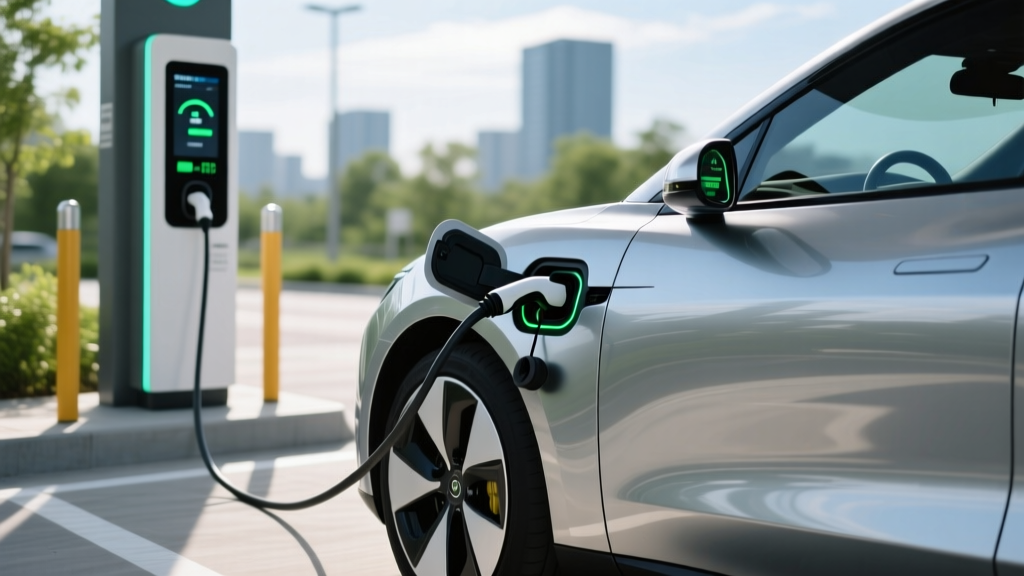
The US public charging network has expanded substantially. As of early 2026, there are over 75,000 public charging ports nationwide, with DC fast chargers growing fastest. Here's what to expect from the major networks:
- Tesla Supercharger: ~30,000 stalls in North America; now open to NACS-equipped non-Tesla vehicles. Reliability consistently tops surveys. Peak speeds: 150–250 kW (V3/V4 stalls).
- Electrify America: ~4,500 DC fast chargers; CCS and NACS connectors at newer stations. Peak: 150–350 kW. Reliability improving but still inconsistent at older sites.
- EVgo: ~3,500 DC fast chargers; strong urban coverage. Peak: 100–350 kW.
- ChargePoint: Largest Level 2 network (~40,000 ports); limited DC fast presence.
For road-trip planning, apps like A Better Routeplanner and PlugShare aggregate real-time availability across networks. Preconditioning your battery (most EVs do this automatically when you navigate to a charger) is essential for achieving peak charge rates — without it, a 250 kW-capable car may only pull 80–100 kW in cold weather.
Frequently Asked Questions
How much does it cost to install a home EV charger?
A straightforward Level 2 installation in a home with a 200A panel and a short wiring run typically costs $825–$2,050 total (charger + electrician + permit). Older homes needing a panel upgrade to 200A service can see total costs of $3,075–$7,750. Always get a load calculation from a licensed electrician before committing.
How fast will each charging level add range?
Level 1 (120V) adds 3–5 miles per hour. Level 2 (240V, 40A–48A) adds 25–50 miles per hour depending on vehicle efficiency. DC fast charging adds 150–800+ miles per hour at peak, but only for the first 10–20 minutes of a session before the charge curve tapers above 80% SoC.
Which connector and charger is compatible with my EV?
For 2026 models: Tesla, Ford, GM, Rivian, Hyundai, Kia, BMW, Mercedes, Volvo, and Toyota all use NACS. Older VW and legacy models may have CCS1. Nissan Leaf (discontinued) used CHAdeMO. Check your vehicle's charge port — if it's NACS, a Tesla Wall Connector is the simplest home choice. If it's CCS/J1772, use a ChargePoint Home Flex or Emporia with the appropriate connector.
How much does charging cost per mile vs. gas for a turbo and supercharged car?
Home-charged EVs cost $0.04–$0.06 per mile. A turbo 4-cylinder at 25 MPG on premium costs ~$0.15/mile. A supercharged V8 at 16 MPG costs ~$0.26/mile. Even the most expensive DC fast charging at $0.55/kWh ($0.18/mile) undercuts most performance gasoline vehicles.
What electrical upgrades might I need?
The most common upgrade is a 100A-to-200A panel replacement ($1,800–$4,500). Some homes need a new meter base or utility service drop upgrade. Homes with 200A+ panels typically need only a new dedicated 40A–60A breaker and wiring run. An electrician's load calculation determines whether your existing panel has capacity for the EV circuit alongside existing loads like HVAC, electric range, and dryer.
Can I charge faster by installing a higher-amperage circuit?
Only if your vehicle's onboard charger can accept it. Most EVs max out at 11.5 kW (48A) on Level 2 — installing a 60A/14.4 kW circuit won't speed them up. The Tesla Model S/X and some Lucid Air configurations accept up to 19.2 kW (80A), making a higher-amperage install worthwhile.
Does cold weather affect charging speed?
Yes. Lithium-ion batteries charge significantly slower when cold. A 250 kW-capable EV may only accept 50–80 kW until the battery warms to ~50°F. Always navigate to a DC fast charger using the vehicle's built-in nav (which triggers preconditioning) and expect 10–80% times to increase 30–50% in sub-freezing temperatures.