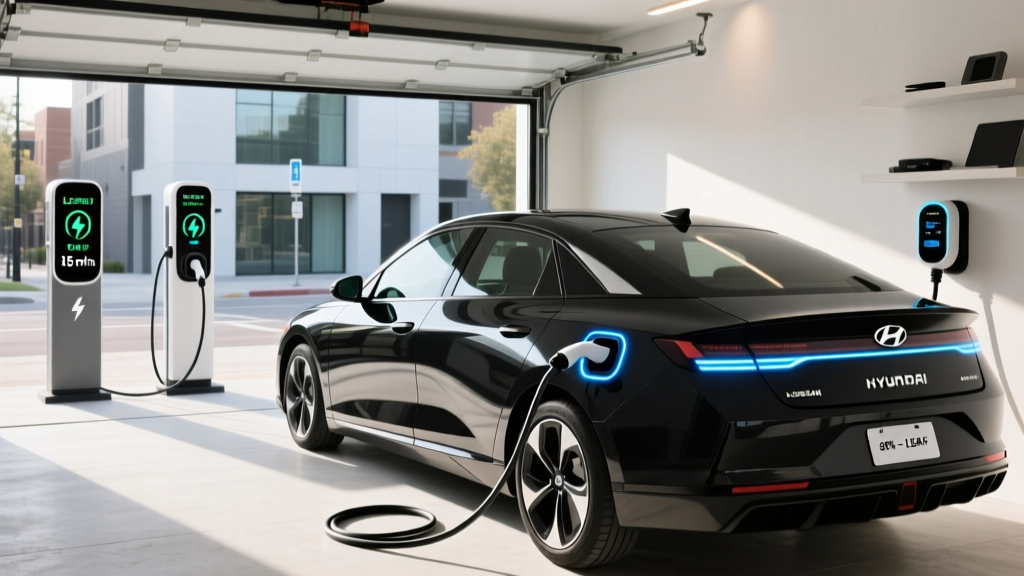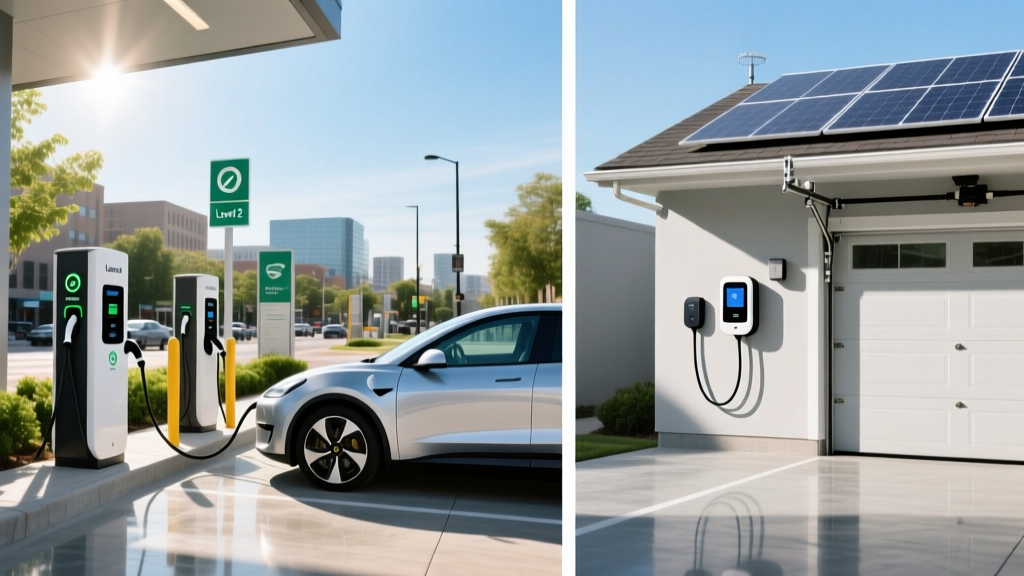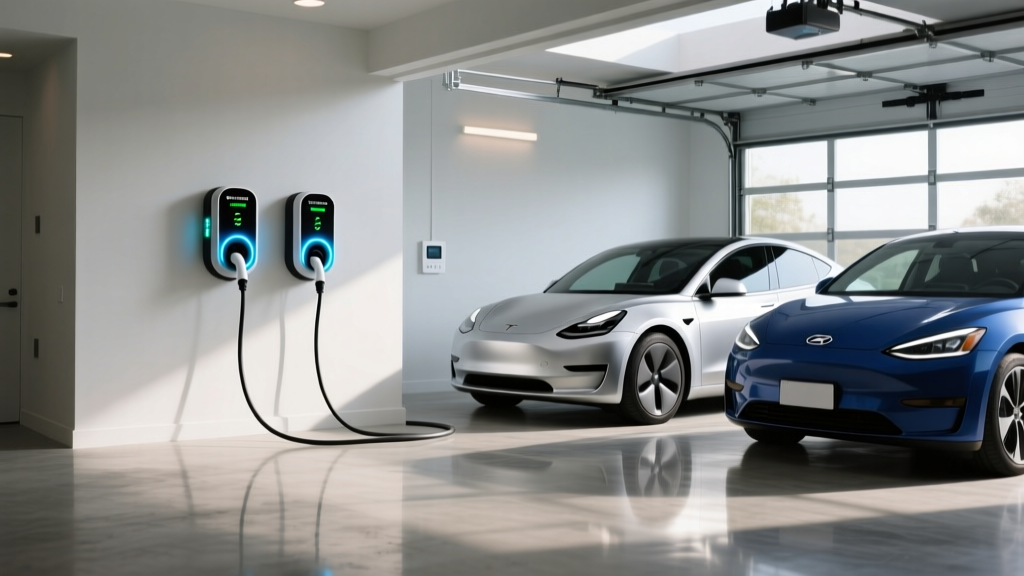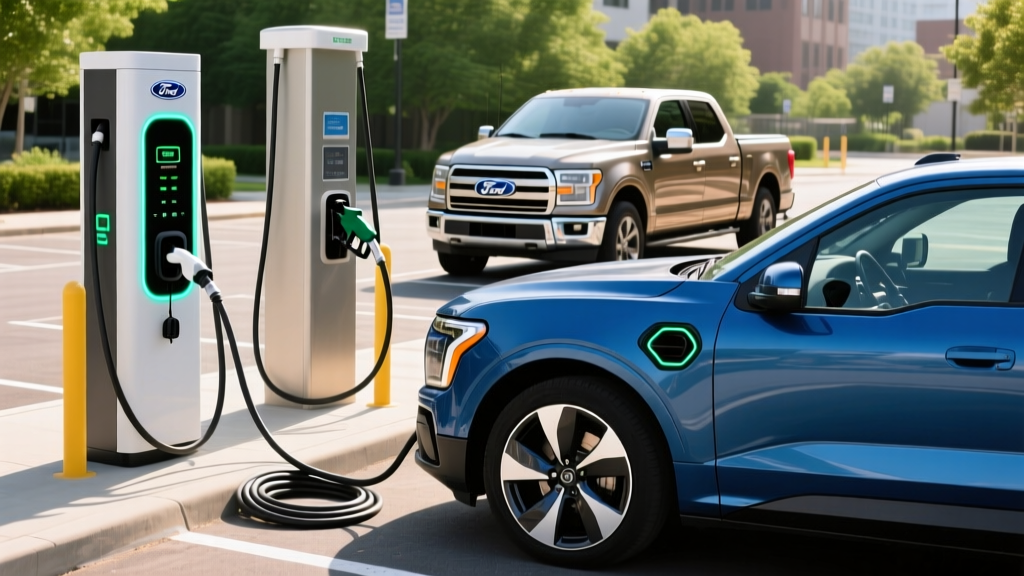
If you're cross-shopping a lifted, supercharged 5.0L Coyote V8 in a regular-cab F-150 against an electric truck like the F-150 Lightning, the real decision isn't just horsepower — it's what you pay every mile and what you install in your garage. A 700+ hp single-cab 5.0 supercharged build is a niche, enthusiast-driven configuration (Ford never sold a factory supercharged single cab from the assembly line; most are dealer- or aftermarket-blown Roush/Whipple builds on the XL or XLT regular cab), and its fuel appetite makes the EV charging math unusually favorable. This guide walks through the home and public charging setup you'd need for an electric truck — and stacks it directly against the per-mile cost of feeding a blown 5.0.
Charging Levels Explained: kW, Miles Per Hour, and What Each Does
EV charging is measured in kW (power) — how fast energy flows — while the battery stores kWh (energy). Confusing the two is the most common EV mistake. A 131 kWh battery (like the F-150 Lightning Extended Range) charged at 11.5 kW takes roughly 11.4 hours from 0–100%; pushed at 150 kW DC it can add 10–80% in around 40 minutes. The table below is the baseline every EV buyer should memorize.
| Level | Voltage / Amps | Power (kW) | Miles of Range Added Per Hour | Typical Use |
|---|---|---|---|---|
| Level 1 | 120V / 12A | ~1.4 kW | 3–5 mi/hr | Overnight top-off, PHEVs |
| Level 2 (Home) | 240V / 32–48A | 7.7–11.5 kW | 25–45 mi/hr | Daily home charging |
| Level 2 (Commercial) | 208/240V / 80A | up to 19.2 kW | 50–70 mi/hr | Workplace, apartments |
| DC Fast (CCS/NACS) | 400–800V DC | 50–350 kW | 150–1,000+ mi/hr (peak) | Road trips, fleets |
For a truck-class EV with a 100–131 kWh pack, Level 1 is effectively useless except as a trickle. Plan around Level 2 at home and DC fast charging on the road.
Home Charger Installation: Requirements, Panel Upgrades, and Real Costs
A proper Level 2 home install is a 240-volt dedicated circuit, typically 40A to 60A, wired with copper conductors (6 AWG for 60A, 8 AWG for 40A) to a NEMA 14-50 receptacle or hardwired junction box. Hardwired is increasingly preferred — it eliminates the receptacle as a failure point, unlocks 48A continuous charging (vs. 40A on a 50A plug per NEC 80% rule), and often satisfies insurers more easily.
Panel-Upgrade Reality Check
Most post-2000 homes with a 200A service can absorb a 60A EV circuit without a panel upgrade, provided a NEC Article 220 load calculation clears it. Older homes on 100A service, homes with electric heat + electric range + electric dryer already on the panel, or homes with Federal Pacific / Zinsco panels will likely need either a panel upgrade ($2,500–$5,000) or a smart load-management device like an Emporia Load Manager or Span panel that throttles the charger when other loads spike. Skipping the load calc is how people trip main breakers in January.
| Item | Low | Typical | High |
|---|---|---|---|
| Level 2 EVSE hardware (40A–48A) | $400 | $600 | $900 |
| Electrician labor (short run, same wall as panel) | $350 | $700 | $1,200 |
| Long conduit run (50–100 ft, attic/crawlspace) | $800 | $1,400 | $2,400 |
| Permit & inspection | $75 | $175 | $350 |
| Panel upgrade to 200A (if needed) | $2,500 | $3,500 | $5,500 |
| Total without panel upgrade | $825 | $1,475 | $2,850 |
| Total with panel upgrade | $3,325 | $4,975 | $8,350 |
The federal 25C residential clean energy credit covers 30% of EVSE hardware and installation costs up to $1,000 through 2032 — stack it on top of any utility rebate (many investor-owned utilities run $250–$750 EVSE rebates). A licensed electrician should always pull the permit; unpermitted work can void homeowner's insurance after a fire.
Connector Compatibility: NACS, CCS, CHAdeMO, and What Your Truck Needs
As of the 2026 model year, nearly every automaker selling in North America has adopted the Tesla NACS connector as the standard. Ford's F-150 Lightning transitioned to NACS-native on 2025+ models; earlier Lightnings shipped with CCS1 and now use Ford's NACS adapter (included on newer trucks, ~$230 retroactively). The legacy CHAdeMO connector is effectively dead on new passenger vehicles — only the older Nissan Leaf still uses it.
| Connector | Adopted By | Notes |
|---|---|---|
| NACS (Tesla) | Tesla, Ford, GM, Rivian, Volvo, Polestar, Hyundai/Kia (2025+), most others | Access to Tesla Supercharger network (35,000+ stalls) |
| CCS1 | Legacy 2022–2024 EVs, VW ID.4 (pre-2025), BMW iX (pre-2025) | Requires NACS adapter for Superchargers |
| CHAdeMO | Nissan Leaf only (discontinued after 2025 MY) | Declining public infrastructure |
For home Level 2 charging, the plug is a J1772 (or a NACS connector that includes J1772 signaling). Any modern EVSE you buy will work with any EV using either the native inlet or the car's included adapter.
Cost to Charge Per Mile vs. Fueling a Supercharged 5.0 F-150
Here's where the comparison gets stark. A supercharged 5.0L Coyote in a regular-cab F-150 — a popular Roush Phase 2 or Whipple Stage 1 build producing 700–775 hp — typically returns 11–13 mpg combined in real-world driving when driven with any enthusiasm, and 9–10 mpg if you regularly use the power you paid for. Premium fuel is mandatory on forced-induction Coyotes to avoid knock retard. At $4.20/gallon for 93-octane (national average early 2026), that's roughly $0.35–$0.42 per mile.
| Scenario | Energy Cost | $/Mile |
|---|---|---|
| SC 5.0 F-150 (12 mpg, $4.20/gal premium) | $4.20/gal | $0.35 |
| Home Level 2, off-peak utility rate ($0.13/kWh) | $0.13/kWh | $0.04 (Lightning) |
| Home Level 2, national avg blended ($0.17/kWh) | $0.17/kWh | $0.05 |
| Public DC fast charging ($0.48/kWh avg) | $0.48/kWh | $0.15 |
| Tesla Supercharger (~$0.30/kWh) | $0.30/kWh | $0.09 |
At 15,000 miles per year, the supercharged 5.0 costs roughly $5,250 in fuel. A Lightning charged 80% at home off-peak and 20% on DC fast chargers costs about $900/year in electricity — a $4,350 annual gap, before any oil changes or the premium maintenance forced-induction V8s demand.
Charging Times for Common Truck-Class Batteries
Charge time depends on battery size (kWh) and the sustained charge curve, not the peak kW number. Most EVs taper significantly above 80% state-of-charge to protect the cells — so 10–80% times are the meaningful metric. Below are real-world approximations for the F-150 Lightning and comparable truck-class batteries.
- F-150 Lightning Std Range (98 kWh, LFP): 10–80% in ~38 min on 150 kW DC; 11.5 hr on 11.5 kW Level 2.
- F-150 Lightning Ext Range (131 kWh, NMC): 10–80% in ~41 min on 150 kW DC; 15 hr on 11.5 kW Level 2.
- Chevy Silverado EV 4WT (200+ kWh): 10–80% in ~55 min on 350 kW DC (peak); 20+ hr on Level 2.
- Rivian R1T Max Pack (149 kWh): 10–80% in ~35 min on 220 kW peak DC.
Preconditioning the battery — routing through a DCFC in the nav system — warms the pack and can shave 5–10 minutes off a fast-charge session in cold weather. Skipping preconditioning in sub-40°F weather can cut peak kW in half.
Equipment Picks: Which Home EVSE to Buy
For a truck-class EV that can accept 11.5 kW or more on Level 2, buy a 48A hardwired EVSE on a 60A circuit. The price delta over a 40A/50A unit is small, and the faster daily charge matters when you're refilling a 131 kWh pack overnight.
- Emporia Vue / Emporia Level 2 (48A, $399): Wi-Fi, load management, 24-ft cable, NEMA 4 outdoor-rated. Best value for panel-constrained homes.
- ChargePoint Home Flex (up to 50A configurable, ~$649): 23-ft cable, app scheduling, utility integration. NACS or J1772 plug options.
- Tesla Wall Connector (48A, $475): NACS native, 24-ft cable, load sharing between two units on one circuit. Best for Tesla and NACS-native Fords.
- Grizzl-E Smart (40A, $499): Built in Canada, -40°F rated, NEMA 4, 24-ft cable. Pick for cold-climate outdoor installs.
Any of these should be UL-listed (or cUL/ETL), GFCI-protected per NEC 625, and rated for the install environment — NEMA 3R minimum for covered outdoor, NEMA 4 for exposed walls.
Safety, Code, and the Things Electricians Actually Check
NEC Article 625 governs EV charging. Key requirements that affect your install: the circuit must be dedicated (no sharing with a dryer or welder outlet unless using a certified load-sharing device); continuous loads are capped at 80% of breaker rating (a 48A charger needs a 60A breaker); outdoor receptacles require GFCI protection; and the disconnect must be within sight of the EVSE. Inspectors in jurisdictions that have adopted NEC 2023/2026 will also ask for EV-ready panel capacity documentation in new construction.
Use copper wire only — aluminum is cheaper but terminations loosen over time with thermal cycling, and most EVSE manufacturers specify copper in their install guides. Torque the lugs to spec with a calibrated driver; this is where most field failures originate.
Frequently Asked Questions
How much does it cost to install a home EV charger?
A straightforward 48A hardwired install on an existing 200A panel typically runs $1,100–$1,800 all-in (hardware, labor, permit). Add $2,500–$5,500 if your home needs a panel upgrade. Federal 25C credit covers 30% of the install up to $1,000.
How fast will each charging level add range on a truck-class EV?
Level 1 (120V): 3–5 miles per hour. Level 2 (240V/48A): 25–40 miles per hour. DC fast charging: 150–1,000+ miles per hour at peak, tapering after 80% SoC.
Which connector is compatible with my EV?
2025-and-newer Fords, GMs, Rivians, and most others use NACS. Older CCS1 EVs need a NACS adapter to use Tesla Superchargers. Home Level 2 EVSEs use J1772 or NACS — both work with all modern EVs via adapter.
How much does charging cost per mile vs. a supercharged 5.0 F-150?
Home Level 2 charging averages $0.04–$0.05 per mile for an electric truck; a supercharged 5.0L at 12 mpg on premium costs $0.35+ per mile — roughly 7–9x more per mile.
What electrical upgrades might I need?
Homes with 100A service, FPE/Zinsco panels, or panels already near capacity will need either a 200A service upgrade or a smart load-management device. A licensed electrician performs a NEC 220 load calculation to determine which.