Why Compare EV Charging to the LT4 Supercharged?
The GM LT4 supercharged 6.2L V8 is a legend of internal combustion — powering the C7 Corvette Z06 (650 hp), the third-gen Cadillac CTS-V (640 hp), and the Camaro ZL1 (650 hp). It's also a fuel-hungry brute: EPA ratings hover around 13-15 mpg combined depending on the application, and real-world spirited driving can push that well into single digits. For enthusiasts weighing an EV performance car against an LT4-swapped or LT4-powered build, the question isn't just about 0-60 times — it's about what you'll spend at the plug versus the pump.
This guide breaks down everything you need to know about EV charging — from Level 1 trickle charging to DC fast charging — and compares the per-mile cost against feeding a supercharged V8. Whether you're considering a Tesla Model S Plaid, a Porsche Taycan, or a Lucid Air as your next performance machine, the math below will tell you exactly what ownership looks like.
Charging Levels Explained: Speed, Power, and Range Added
EV charging falls into three tiers. Understanding each one determines how you'll plan daily driving, road trips, and home infrastructure.
| Level | Voltage | Power (kW) | Miles of Range per Hour | Best For |
|---|---|---|---|---|
| Level 1 (120V) | 120V AC | 1.2–1.9 kW | 3–5 mi/hr | Overnight top-ups, PHEVs, low-mileage drivers |
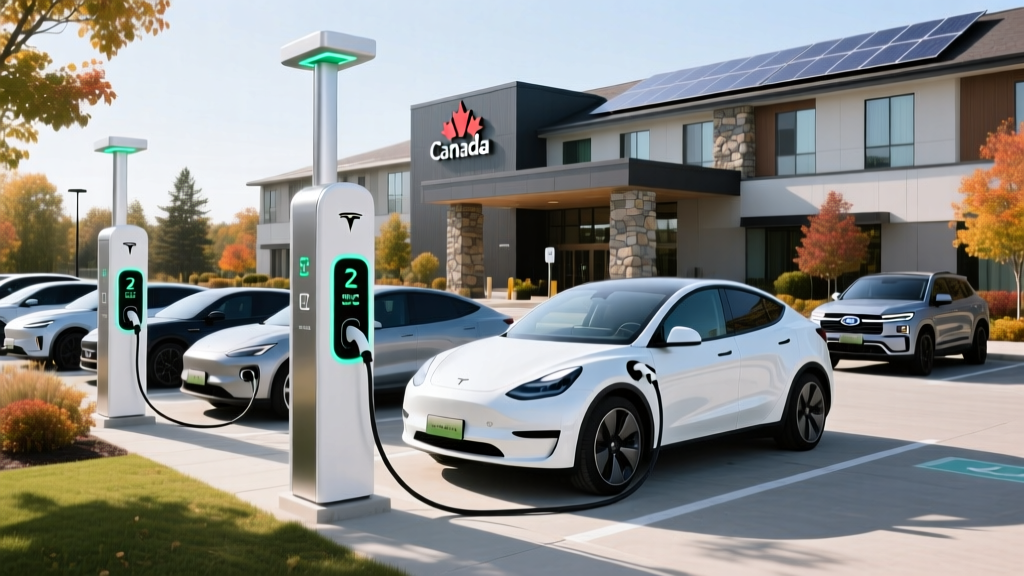
| Level 2 (240V) | 240V AC | 7.2–19.2 kW | 20–60 mi/hr | Daily home charging, workplace, destinations |
| DC Fast Charge | 400–800V DC | 50–350 kW | 150–800+ mi/hr (peak) | Road trips, highway corridors, rapid top-ups |
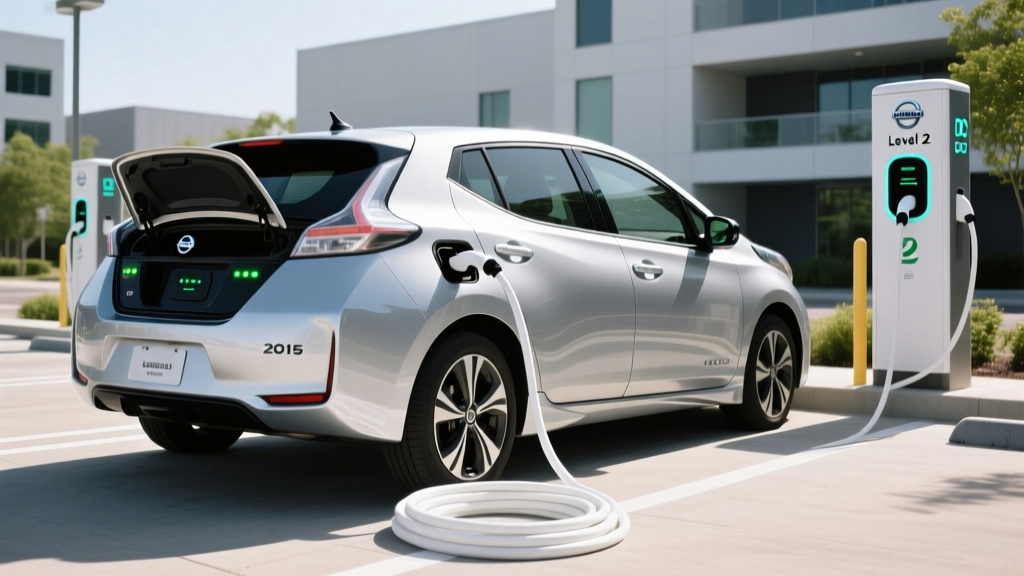
Level 1 uses a standard household 120V outlet. It's included with nearly every EV via a portable cord, but at ~1.4 kW, adding 200 miles of range can take 40+ hours. Fine for a plug-in hybrid with 30 miles of electric range; inadequate for a 100 kWh battery EV used daily.
Level 2 is the backbone of practical EV ownership. A 240V circuit — the same voltage as a clothes dryer — delivers 7.2 kW (32A) to 11.5 kW (48A) in most home setups, with some high-power chargers reaching 19.2 kW (80A). At 11.5 kW, a 100 kWh battery goes from empty to full in roughly 9 hours. Most EV owners wake up to a full battery every morning.
DC Fast Charging bypasses the car's onboard charger and feeds DC current directly to the battery. Peak rates vary enormously: a 150 kW charger can take a 75 kWh battery from 10-80% in roughly 25 minutes, while 350 kW chargers (like Electrify America's 800V stations) can achieve 10-80% in ~18 minutes on compatible vehicles like the Hyundai Ioniq 5 or Porsche Taycan. However, peak kW is never sustained — the charge curve tapers significantly above 80% SoC to protect battery health.
Home Charger Installation: Costs, Electrical Requirements, and Panel Upgrades
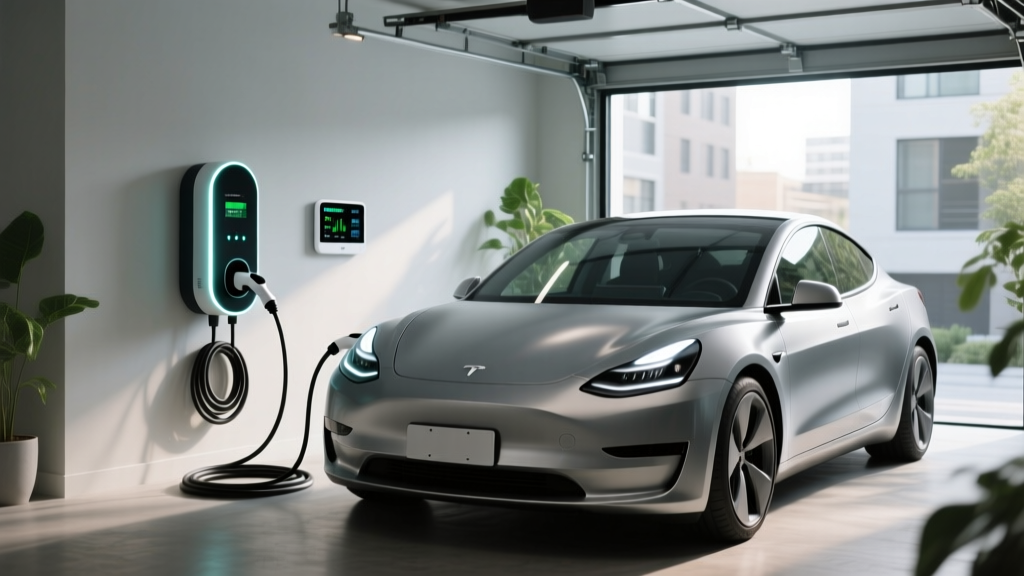
Installing a Level 2 home charger is the single biggest infrastructure decision an EV owner makes. Costs vary wildly based on your electrical panel's capacity, the distance from panel to charger location, and local permit fees.
Electrical Requirements
Most Level 2 chargers require a dedicated 240V circuit. Common configurations:
- 40A circuit / 32A continuous — delivers 7.7 kW; works with a NEMA 14-50 outlet or hardwired connection
- 50A circuit / 40A continuous — delivers 9.6 kW; NEMA 14-50 or hardwired
- 60A circuit / 48A continuous — delivers 11.5 kW; hardwired only (most code-compliant)
- 100A circuit / 80A continuous — delivers 19.2 kW; hardwired, requires substantial panel capacity
The National Electrical Code (NEC) requires EV chargers to be treated as continuous loads, meaning the circuit must be rated 125% above the charger's maximum draw. A 48A charger needs a 60A breaker.
Panel Upgrade Reality
Homes built before 2000 often have 100A or 150A main panels. Adding a 60A EV circuit may exceed your panel's spare capacity, requiring a 200A service upgrade — a $2,000–$5,000 job depending on utility requirements and whether a new meter/main is needed. Newer homes with 200A panels typically have enough headroom.
An alternative: a smart panel monitor like the Span Drive or Emporia smart breaker can dynamically limit charger draw based on real-time household load, avoiding a panel upgrade entirely.
| Item | Low End | High End | Notes |
|---|---|---|---|
| Level 2 Charger (Equipment) | $350 | $800 | 40A–48A smart chargers; Wi-Fi enabled |
| Electrician Labor | $500 | $2,500 | Depends on run length, wall type, conduit |
| Electrical Permit | $50 | $250 | Varies by municipality |
| Panel Upgrade (if needed) | $2,000 | $5,000 | 100A→200A service upgrade |
| Outlet or Hardwire Materials | $50 | $200 | NEMA 14-50 receptacle or junction box |
| Total (No Panel Upgrade) | $950 | $3,750 | Typical suburban install |
| Total (With Panel Upgrade) | $2,950 | $8,750 | Older homes with 100A service |
Safety and Code Considerations
- Dedicated circuit: EV chargers must have their own breaker — no sharing with other appliances.
- GFCI protection: NEC 2020 and later require GFCI protection for outdoor receptacles; hardwired chargers often sidestep this requirement and reduce nuisance trips.
- Outdoor rating: If your charger mounts outside, ensure NEMA 4 (weatherproof) rating. Most major chargers (ChargePoint, Wallbox, Emporia) carry this rating.
- Permit and inspection: Skipping the permit risks insurance claim denial if an electrical fire occurs. Most jurisdictions require a final inspection.
Connector Compatibility: NACS, CCS, and CHAdeMO
The connector landscape has shifted dramatically. As of 2026, the Tesla NACS (North American Charging Standard) has become the dominant connector, adopted by Ford, GM, Rivian, Hyundai, Kia, BMW, and most major automakers for new models. CCS1 remains on many vehicles sold between 2019–2024, and CHAdeMO is effectively legacy (Nissan Leaf being the last holdout).
| Connector | Brands Using It | Adapter Needed? |
|---|---|---|
| NACS (Tesla) | Tesla, Ford, GM, Rivian, Hyundai, Kia, BMW, Volvo, Polestar, Mercedes (2025+), Toyota (2025+) | None for new models; CCS→NACS adapters available ($200–$350) for older CCS vehicles |
| CCS1 | VW ID.4 (pre-2025), older BMW i4/iX, Stellantis EVs, legacy models | NACS→CCS adapter needed for Tesla Superchargers |
| CHAdeMO | Nissan Leaf (discontinued 2025), Mitsubishi Outlander PHEV (older) | Limited network; adapters rare |
Home charger note: Nearly all Level 2 home chargers use a J1772 connector (the AC standard), and NACS-equipped vehicles include a J1772-to-NACS adapter in the box. If you buy a third-party Level 2 charger, confirm it ships with J1772 (universal) or native NACS.
Cost to Charge vs. Fueling the LT4 Supercharged
This is where the EV proposition gets compelling for anyone coming from a high-performance V8. The LT4 supercharged 6.2L in a C7 Z06 or CTS-V averages roughly 14 mpg combined per fueleconomy.gov. At $3.50/gallon (a reasonable 2026 national average for premium 93-octane, which the LT4 requires), that's $0.25 per mile — and aggressive driving drops efficiency to 10-11 mpg, pushing cost to $0.32–$0.35 per mile.
| Scenario | Rate | Efficiency | Cost per Mile |
|---|---|---|---|
| Home Level 2 (off-peak utility rate) | $0.08–$0.13/kWh | 3.0 mi/kWh (typical EV) | $0.03–$0.04 |
| Home Level 2 (standard residential rate) | $0.15–$0.20/kWh | 3.0 mi/kWh | $0.05–$0.07 |
| Public Level 2 (ChargePoint, workplace) | $0.25–$0.40/kWh | 3.0 mi/kWh | $0.08–$0.13 |
| DC Fast Charge (Electrify America, Tesla Supercharger) | $0.35–$0.55/kWh | 3.0 mi/kWh | $0.12–$0.18 |
| LT4 Supercharged (premium fuel, combined) | $3.50/gal (93 oct) | 14 mpg | $0.25 |
| LT4 Supercharged (aggressive driving) | $3.50/gal | 10 mpg | $0.35 |
At 12,000 miles per year, a typical EV charged primarily at home costs $360–$840 annually in electricity. The LT4 supercharged V8 at the same mileage burns roughly 857 gallons of premium fuel, costing $3,000 per year. That's a $2,160–$2,640 annual savings — enough to pay for a home charger installation within the first year.
Charging Time Examples: 10-80% for Common Battery Sizes
Real-world charging times depend on the battery's usable capacity (kWh), the charger's sustained power (kW), and the vehicle's charge curve. Here are representative examples:
- 60 kWh battery (e.g., base Tesla Model 3) — 150 kW DC fast charger: ~22 minutes (10-80%). At home on 11.5 kW Level 2: ~5 hours (0-100%).
- 82 kWh battery (e.g., BMW i4 eDrive40) — 200 kW DC fast charger: ~28 minutes (10-80%). At home on 11.5 kW: ~7 hours.
- 100 kWh battery (e.g., Lucid Air Grand Touring) — 300 kW DC fast charger: ~25 minutes (10-80%, thanks to 900V architecture). At home on 11.5 kW: ~8.5 hours.
- 112 kWh battery (e.g., GMC Hummer EV) — 350 kW DC fast charger: ~35 minutes (10-80%). At home on 11.5 kW: ~9.5 hours.
Recommended Home EV Chargers (2026)
ChargePoint Home Flex
- Power: Up to 12 kW (50A) configurable
- Connector: J1772 (NACS adapter included)
- Cable: 23 ft
- Smart features: Wi-Fi, app scheduling, utility demand-response, Alexa
- Price: ~$550
Best for: Flexible amperage settings to match your panel capacity.
Wallbox Pulsar Plus
- Power: Up to 11.5 kW (48A)
- Connector: J1772 or native NACS
- Cable: 25 ft
- Smart features: Wi-Fi + Bluetooth, Power Sharing (daisy-chain two units on one circuit), app control
- Price: ~$500
Best for: Two-EV households wanting to share a single 60A circuit.
Emporia Level 2 Smart Charger
- Power: Up to 11.5 kW (48A)
- Connector: J1772 (NACS adapter available)
- Cable: 24 ft
- Smart features: Integrates with Emporia Vue energy monitor, real-time solar matching, app + voice control
- Price: ~$400
Best for: Solar-panel owners who want to charge on excess production only.
Tesla Wall Connector
- Power: Up to 11.5 kW (48A)
- Connector: Native NACS (J1772 adapter included)
- Cable: 24 ft
- Smart features: Wi-Fi updates, power sharing, Tesla app integration, load balancing
- Price: ~$425
Best for: Tesla or NACS-equipped owners wanting a sleek, native-connector solution.
Frequently Asked Questions
How much does it cost to install a home EV charger?
A straightforward Level 2 installation on an existing 200A panel with a short wire run typically costs $950–$2,500 (equipment + electrician + permit). If your home needs a 200A panel upgrade, total costs range from $3,000 to $8,750. Always get 2-3 quotes from licensed electricians, and check whether your utility offers a rebate — many cover $200–$500 of charger cost or installation.
How fast will each charging level add range?
Level 1 (120V) adds 3–5 miles per hour — adequate only for PHEVs or very low daily mileage. Level 2 (240V, 48A) adds 30–40 miles per hour, fully recharging most EVs overnight. DC fast charging adds 150–800+ miles per hour at peak rates, but practical sessions (10-80%) take 18–35 minutes depending on battery size and charger power.
Which connector/charger is compatible with my EV?
For 2025–2026 model-year EVs from Ford, GM, Hyundai, Kia, Rivian, BMW, and most others, the NACS connector is now standard. Tesla vehicles have always used NACS. Older EVs (2019–2024) from VW, Stellantis, and some BMW models use CCS1 — adapters ($200–$350) are available for Supercharger access. For home Level 2 charging, virtually all EVs accept J1772, and NACS vehicles include a J1772 adapter.
How much does charging cost per mile vs. gas?
Home EV charging costs $0.03–$0.07 per mile depending on your utility rate. DC fast charging on road trips runs $0.12–$0.18 per mile. By comparison, the LT4 supercharged V8 at 14 mpg on $3.50 premium fuel costs $0.25 per mile — and aggressive driving pushes that to $0.35. Even exclusive DC fast charging is cheaper than fueling a supercharged V8.
What electrical upgrades might I need?
If your home has a 100A or 150A main panel with limited spare breaker slots, you'll likely need a 200A service upgrade ($2,000–$5,000). Homes with existing 200A panels usually accommodate a 60A EV circuit without issue. A load calculation by a licensed electrician will determine your exact needs. Smart load-management devices can sometimes avoid a panel upgrade by dynamically throttling charger amperage.
The Bottom Line
The LT4 supercharged V8 delivers visceral, irreplaceable performance — but at $0.25–$0.35 per mile in fuel alone (before oil changes, spark plugs, and supercharger-belt maintenance), it's an expensive proposition for daily driving. A modern performance EV charged at home costs a fraction of that per mile, with the added benefit of instant torque that matches or exceeds the LT4's 650 hp in many cases.
The upfront investment in a home Level 2 charger — typically $1,000–$3,500 installed — pays for itself within 6–18 months of fuel savings alone. For the enthusiast ready to add an EV to the garage alongside the LT4-powered car, the infrastructure is mature, the connectors have consolidated around NACS, and the per-mile economics are undeniable.
For the latest on federal EV tax credits that can offset your vehicle purchase (though not charger installation directly), consult the IRS §30D clean vehicle credit guidelines. And for energy-efficiency data on specific EV models, fueleconomy.gov remains the authoritative source for MPGe and kWh/100mi ratings.