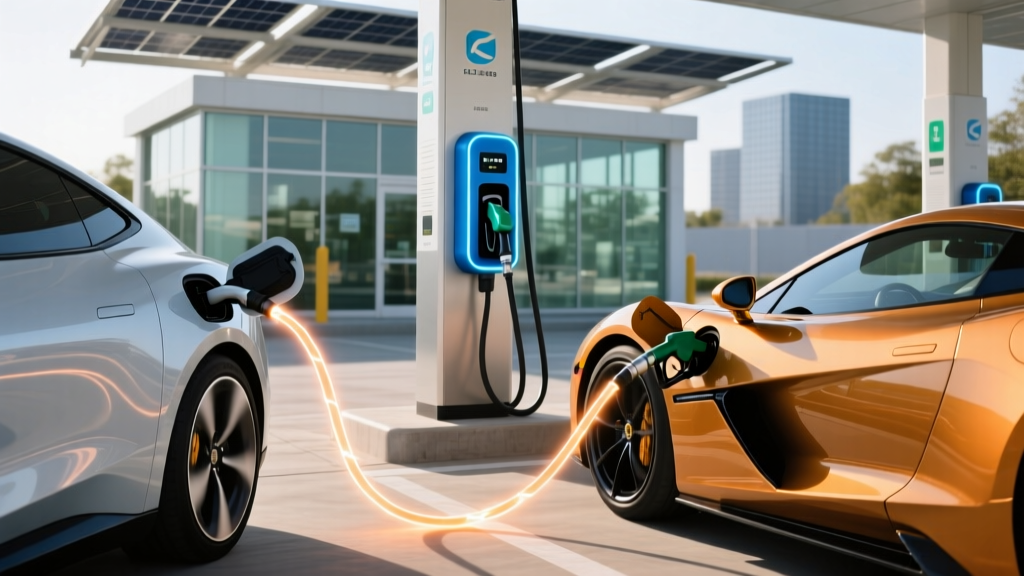
Why Compare EV Charging to the LT4 Supercharged Engine?
The LT4 supercharged engine — the 6.2L supercharged V8 found in vehicles like the Chevrolet Corvette Z06, Camaro ZL1, and Cadillac CT5-V Blackwing — represents the pinnacle of internal-combustion performance. It produces up to 670 horsepower and delivers thrilling acceleration. But that power comes at a cost at the pump: most LT4-equipped vehicles average 12–16 MPG combined, meaning frequent and expensive fill-ups.
Electric vehicles offer a fundamentally different approach to "refueling." Instead of visiting gas stations, most EV owners charge at home overnight, waking up to a full battery every morning. But how do the costs, speeds, and logistics of EV charging actually stack up against dropping $80–$100 on premium fuel for a supercharged V8? This guide breaks down every level of EV charging, home installation requirements, real-world costs per mile, and the best equipment available in 2026 — all with the LT4's fuel appetite as a baseline comparison.
EV Charging Levels Explained: Speeds, Power, and Range Added
Before comparing costs, you need to understand the three tiers of EV charging. The critical distinction: kW (kilowatts) measures power — the rate at which energy flows into your battery. kWh (kilowatt-hours) measures energy — the total capacity of the battery itself. Think of kW as the size of the water hose and kWh as the size of the tank.
| Level | Voltage | Power (kW) | Miles of Range Added Per Hour | Typical Use |
|---|---|---|---|---|
| Level 1 | 120V AC | 1.0–1.9 kW | 3–5 miles | Overnight trickle; PHEVs; emergency top-ups |
| Level 2 | 240V AC | 3.3–19.2 kW | 12–75 miles | Home daily charging; workplace; public destinations |
| DC Fast Charging | 400–800V DC | 50–350 kW | 150–1,200+ miles/hr (peak) | Road trips; highway corridors; rapid top-ups |
For context, a typical 75 kWh battery (like the one in a Tesla Model Y Long Range) charged from 10% to 80% takes roughly:
- Level 1 (1.4 kW): ~40+ hours — impractical for full recharges
- Level 2 (11.5 kW / 48A): ~5–6 hours — ideal overnight
- DC Fast Charger (250 kW peak): ~18–25 minutes (10–80%), though the charge curve tapers significantly above 80%
The charge curve matters: most EVs pull peak kW only between roughly 10–50% State of Charge (SoC). Above 80%, speeds often drop to under 50 kW to protect battery longevity. This is why manufacturers quote 10–80% times, not 0–100%.
Home EV Charger Installation: Electrical Requirements and Costs
Installing a Level 2 home charger is the single most impactful upgrade an EV owner can make. Here's what it involves electrically and financially.
Electrical Requirements
A typical Level 2 home charger requires a 240-volt dedicated circuit, similar to what powers an electric dryer or oven. Common configurations:
- 40-amp circuit / 32A continuous: Delivers 7.7 kW — sufficient for most EVs overnight
- 50-amp circuit / 40A continuous: Delivers 9.6 kW — faster, ideal for larger batteries (100+ kWh)
- 60-amp circuit / 48A continuous: Delivers 11.5 kW — maximum practical single-phase residential speed
The National Electrical Code (NEC) requires that continuous loads (like EV charging) use no more than 80% of a circuit's rated amperage. So a 50A breaker supports 40A continuous draw.
Panel Upgrade Considerations
Many older homes have 100-amp electrical panels. Adding a 50A EV circuit to an already-loaded 100A panel may require a panel upgrade to 200 amps, which is a significant additional cost. Even some 200A panels lack physical breaker spaces or have insufficient headroom for a new high-amperage circuit. A licensed electrician will perform a load calculation per NEC Article 220 to determine if your panel can handle the addition. Always defer final specifications to a licensed electrician — local codes and your home's wiring condition will dictate the final requirements.
Installation Cost Breakdown
| Component | Simple Install (panel nearby, no upgrade) | Complex Install (long run, panel upgrade) |
|---|---|---|
| Level 2 Charger Equipment | $350–$700 | $350–$700 |
| Electrician Labor | $300–$800 | $1,000–$2,500 |
| Electrical Permit | $50–$200 | $50–$200 |
| Panel Upgrade (if needed) | $0 | $1,500–$3,500 |
| Conduit, Wire, Misc. | $50–$200 | $200–$600 |
| Total Estimated Range | $750–$1,900 | $3,100–$7,500 |
Some utilities and states offer rebates of $200–$1,000 for home charger installation, which can significantly offset these costs. Check your local utility's EV programs and the Alternative Fuels Data Center state incentive database for current programs in your area.
Connector Compatibility: NACS, CCS, and CHAdeMO in 2026
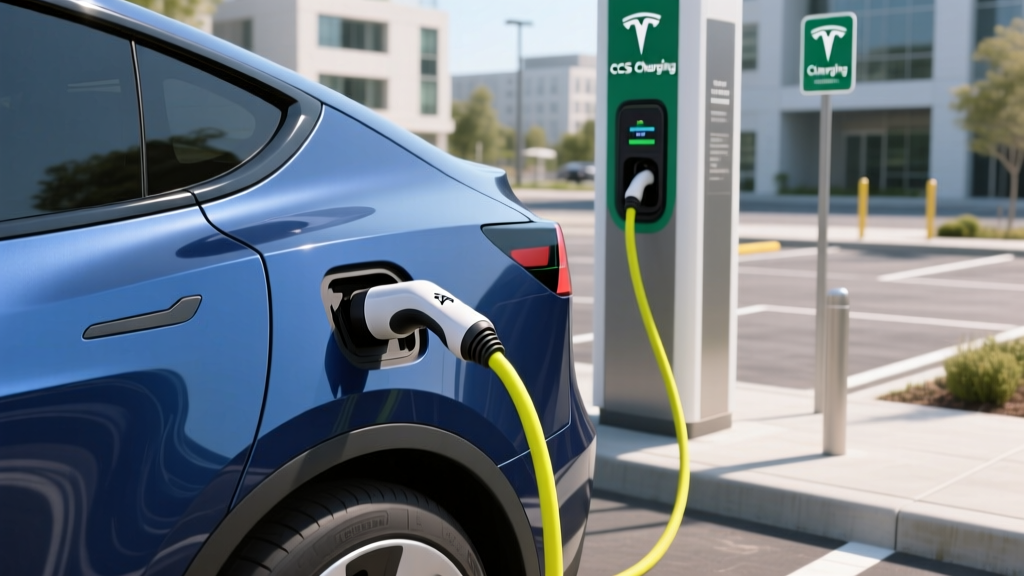
The connector landscape has shifted dramatically. As of 2026, the North American Charging Standard (NACS) — originally Tesla's proprietary connector — has become the dominant standard, with Ford, GM, Rivian, Volvo, Hyundai, and most other major automakers adopting it for new vehicles.
| Connector | Brands Using It (New Vehicles) | Public Network Availability | Adapter Needed? |
|---|---|---|---|
| NACS (Tesla) | Tesla, Ford, GM, Rivian, Volvo, Polestar, Hyundai/Kia (2025+), Mercedes | Tesla Supercharger (20,000+ stalls), Electrify America, EVgo (expanding) | CCS-to-NACS adapters available (~$100–$200) for legacy CCS vehicles |
| CCS1 | Legacy models (2024 and earlier from VW, BMW, some Hyundai/Kia) | Electrify America, EVgo, ChargePoint | NACS-to-CCS adapter needed at Tesla Superchargers |
| CHAdeMO | Nissan Leaf (discontinued), Mitsubishi Outlander PHEV (legacy) | Limited and declining | No practical adapter to NACS/CCS for DC fast charging |
Practical advice for 2026 buyers: If you're purchasing a new EV, prioritize one with a native NACS port. It grants access to Tesla's Supercharger network — the largest and most reliable DC fast-charging network in North America — without an adapter. If you own a CCS-equipped EV, a NACS-to-CCS adapter (sold by Tesla and third parties like Lectron) lets you use Superchargers, though you may experience slightly reduced peak charge rates due to adapter resistance.
Cost to Charge an EV vs. Fueling an LT4 Supercharged V8
This is where the EV value proposition becomes stark. Let's compare real-world fueling costs per mile.
| Scenario | Energy/Fuel Cost | Efficiency | Cost Per Mile |
|---|---|---|---|
| Home charging (off-peak, $0.13/kWh) | $0.13/kWh | 3.5 mi/kWh (typical EV) | $0.037/mile |
| Home charging (peak, $0.25/kWh) | $0.25/kWh | 3.5 mi/kWh | $0.071/mile |
| Public Level 2 ($0.35/kWh) | $0.35/kWh | 3.5 mi/kWh | $0.10/mile |
| DC Fast Charging ($0.48/kWh avg) | $0.48/kWh | 3.5 mi/kWh | $0.137/mile |
| LT4 Supercharged V8 (premium $4.50/gal, 14 MPG) | $4.50/gal | 14 MPG combined | $0.321/mile |
| LT4 Supercharged V8 (aggressive driving, 11 MPG) | $4.50/gal | 11 MPG | $0.409/mile |
At 15,000 miles driven annually, the math is revealing:
- EV (home off-peak): ~$555/year in electricity
- EV (50% home / 50% DC fast): ~$1,275/year
- LT4 V8 (14 MPG): ~$4,815/year in premium fuel
- LT4 V8 (11 MPG aggressive): ~$6,136/year
Even using exclusively the most expensive DC fast chargers, an EV costs roughly $2,062/year in electricity — still less than half the fuel cost of an LT4-equipped vehicle driven at moderate efficiency. Source: fueleconomy.gov EV side-by-side comparison tool.
Best Home EV Chargers for 2026: Equipment Picks
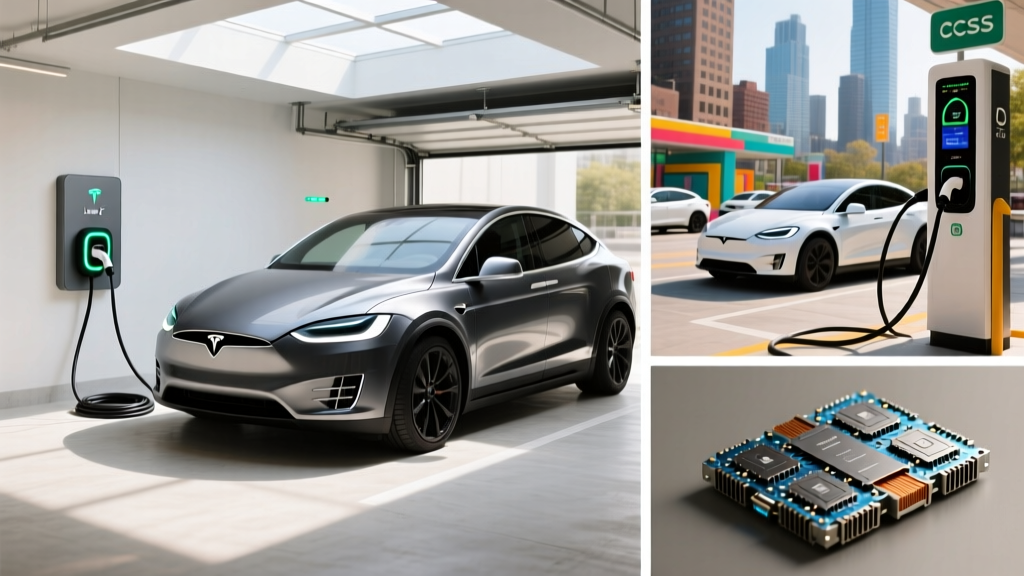
Not all Level 2 chargers are equal. Here are top picks based on power output, reliability, smart features, and value.
ChargePoint Home Flex (NACS)
- Power Output: Up to 12 kW (50A circuit) — adjustable down to 16A
- Connector: NACS (also available in J1772 for legacy EVs)
- Cable Length: 23 feet
- Smart Features: Wi-Fi, Alexa/Google integration, scheduled charging, utility demand-response, energy tracking via app
- Price: ~$549
- Best For: Most EV owners wanting a reliable, app-connected charger with flexible amperage
Tesla Wall Connector
- Power Output: Up to 11.5 kW (48A on a 60A circuit)
- Connector: NACS native
- Cable Length: 24 feet
- Smart Features: Wi-Fi, over-the-air updates, power sharing (link up to 6 units on one circuit), Tesla app integration
- Price: ~$475
- Best For: Tesla owners or NACS-equipped EV owners wanting maximum power at a competitive price
Emporia Level 2 EV Charger
- Power Output: Up to 11.5 kW (48A)
- Connector: NACS or J1772 options
- Cable Length: 24 feet
- Smart Features: Wi-Fi, real-time energy monitoring, solar integration (pairs with Emporia Vue home energy monitor), scheduled charging
- Price: ~$399
- Best For: Budget-conscious buyers with solar panels or those wanting detailed energy data
Key buying tip: Always match your charger's maximum amperage to your installed circuit. A 48A charger on a 50A breaker violates NEC 80% rule (50A × 0.8 = 40A max continuous). You need a 60A breaker for a 48A charger.
Safety, Code, and Permit Considerations
EV charging involves sustained high-amperage electrical loads. Cutting corners creates fire risk. Here's what matters:
- Dedicated circuit: Your Level 2 charger must be on its own dedicated breaker — never shared with other appliances.
- GFCI protection: NEC 2020 and later require GFCI (Ground Fault Circuit Interrupter) protection for EV charging outlets in garages and outdoor locations. Hardwired chargers often have GFCI built into the unit.
- Outdoor rating: If mounting outdoors, ensure the charger carries a NEMA 4 or IP65 weather resistance rating. All recommended chargers above meet this standard.
- Permit requirement: Virtually all jurisdictions require an electrical permit for new 240V circuits. Your electrician will pull this. The inspection ensures wire gauge, breaker sizing, and grounding meet code. Expect the permit to cost $50–$200 depending on your municipality.
- Hardwired vs. plug: Hardwired installations (no plug) eliminate the NEMA 14-50 receptacle as a potential failure point and are generally preferred for permanent installations. Plug-in setups offer portability if you move.
- Wire gauge: A 60A circuit typically requires 4 AWG copper wire; a 50A circuit requires 6 AWG. Longer runs may need larger wire to minimize voltage drop. Your electrician will calculate this.
Charging Time Examples for Common EV Battery Sizes
Real-world charging times depend on battery size, charger power, and the charge curve. Here are representative 10–80% times for popular 2026 EVs:
- Tesla Model Y Long Range (75 kWh, NMC): ~18 min at a 250 kW Supercharger (peak); ~5.5 hrs on an 11.5 kW home charger
- Hyundai Ioniq 5 (77.4 kWh, NMC, 800V architecture): ~18 min at a 350 kW charger (peak); ~6 hrs on an 11.5 kW home charger
- Ford F-150 Lightning Extended Range (131 kWh, NMC): ~41 min at a 150 kW DC charger; ~10.5 hrs on an 11.5 kW home charger
- Chevrolet Equinox EV (85 kWh, NMC): ~24 min at a 150 kW charger; ~6.5 hrs on an 11.5 kW home charger
Note that larger batteries like the F-150 Lightning's 131 kWh pack take proportionally longer. This is where a robust home Level 2 setup becomes essential — Level 1 would take over 70 hours for the Lightning.
Frequently Asked Questions
How much does it cost to install a home EV charger?
A straightforward Level 2 installation with an adequate electrical panel typically costs $750–$1,900 total (equipment + electrician + permit). If your home needs a panel upgrade from 100A to 200A, total costs can reach $3,100–$7,500. Always get 2–3 quotes from licensed electricians.
How fast will each charging level add range?
Level 1 (120V) adds 3–5 miles per hour. Level 2 (240V) adds 12–75 miles per hour depending on amperage and vehicle acceptance rate. DC Fast Charging adds the equivalent of 150–1,200+ miles per hour at peak power, but only for a portion of the session due to the charge curve taper above 80% SoC.
Which connector/charger is compatible with my EV?
For 2026 model-year vehicles, NACS is the dominant standard — used by Tesla, Ford, GM, Rivian, Hyundai, Kia, Volvo, and others. If your EV has a CCS1 port (common on 2024 and earlier models from VW, BMW, and others), you can use a NACS-to-CCS adapter to access Tesla Superchargers. CHAdeMO is essentially legacy-only, limited to older Nissan Leafs and Mitsubishi Outlander PHEVs.
How much does charging cost per mile vs gas?
Home EV charging at off-peak rates ($0.13/kWh) costs roughly $0.037/mile. Even DC fast charging at $0.48/kWh comes to about $0.137/mile. Compare that to an LT4 supercharged V8 at 14 MPG with premium fuel at $4.50/gallon: $0.321/mile — roughly 2.3x to 8.7x more expensive per mile depending on your EV charging scenario.
What electrical upgrades might I need?
The most common upgrade is a panel replacement from 100A to 200A service ($1,500–$3,500). You may also need additional breaker spaces, a new meter base, or upgraded service entrance conductors. Homes built after 2000 with 200A panels usually have sufficient capacity. A licensed electrician will perform a NEC Article 220 load calculation to determine your exact needs. Some utilities offer load-management devices (like the Emporia Smart Load Management) that allow EV charging without a panel upgrade by dynamically throttling charger power when other appliances are running.