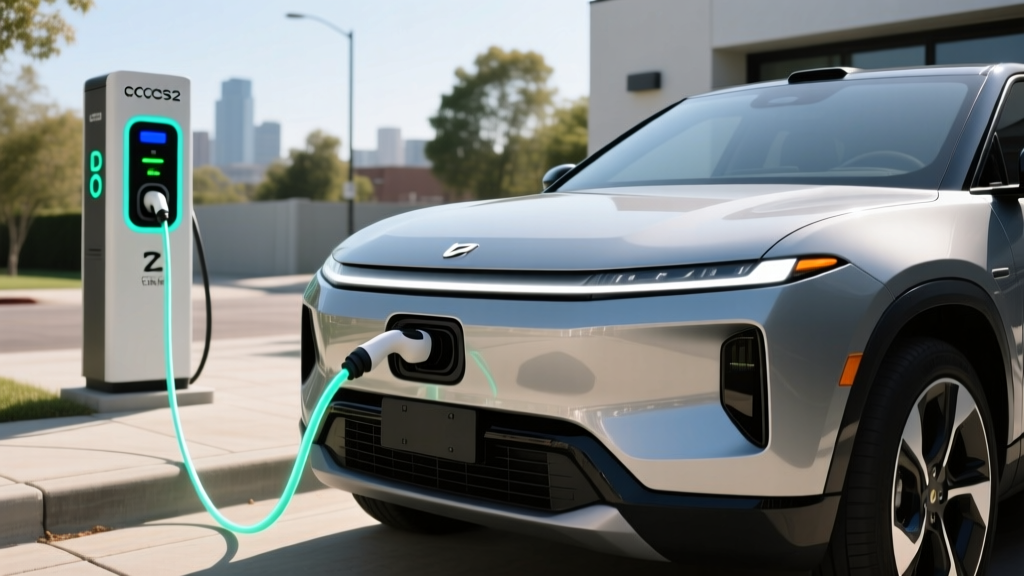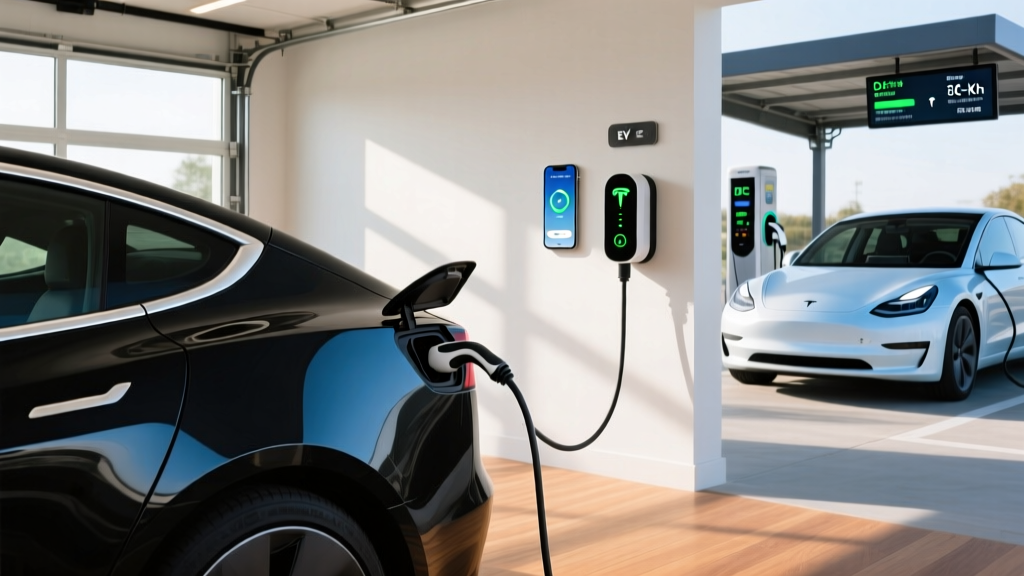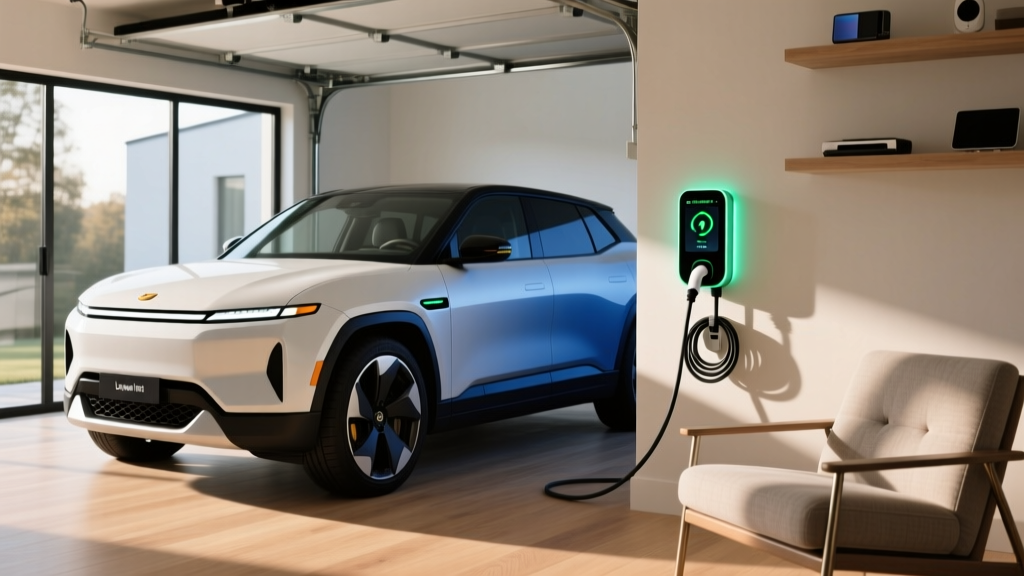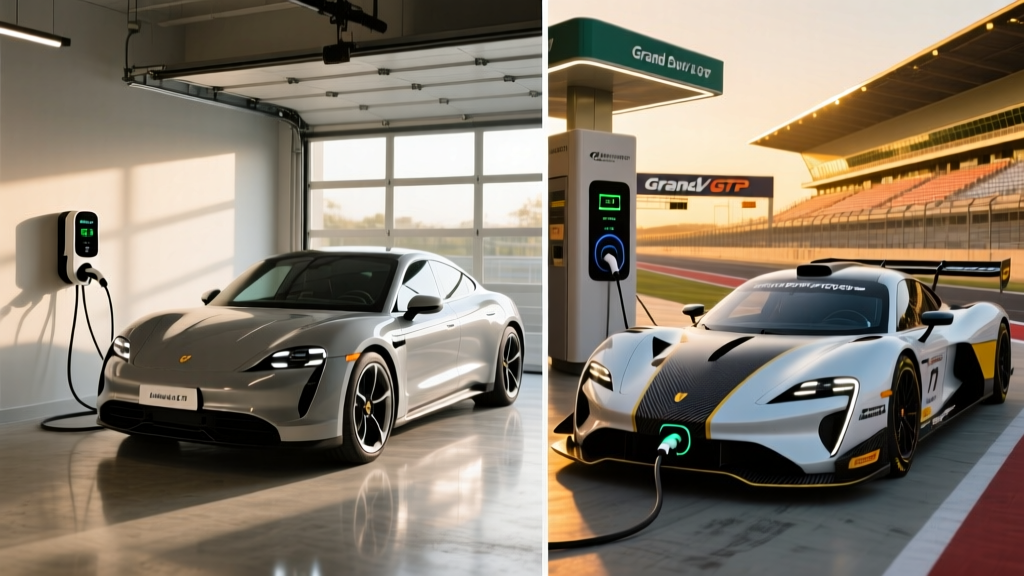
If you've ever owned or admired the Grand Prix GTP Supercharged — Pontiac's 240-horsepower, supercharged 3.8L V6 sedan from the early-to-mid 2000s — you remember the thrill of instant torque and a fuel bill that stung. That 3800 Series II/III supercharged engine delivered around 24 MPG combined on a good day, often dipping into the high teens under spirited driving. Today's EV drivers face a fundamentally different refueling equation: electricity instead of premium unleaded, home charging instead of gas stations, and a cost-per-mile that can be a fraction of what a Grand Prix GTP Supercharged owner paid at the pump.
This guide breaks down everything you need to know about EV charging — from plugging into a standard wall outlet to installing a Level 2 home charger and using public DC fast chargers — with hard numbers, real costs, and direct comparisons to the fuel economics of the Grand Prix GTP Supercharged. Whether you're trading in a classic Pontiac or just curious how EV refueling works in 2026, this is your practical reference.
Charging Levels Explained: How Fast Will Each Level Add Range?
The single most important EV literacy concept: kW (kilowatts) measures power — how fast energy flows into your battery. kWh (kilowatt-hours) measures energy — how much your battery holds. Think of kW as the width of a hose and kWh as the size of the bucket. A wider hose (higher kW) fills the bucket faster.
Here's what each charging level actually delivers in practice:
| Level | Voltage | Power (kW) | Miles of Range Added per Hour | Best For |
|---|---|---|---|---|
| Level 1 | 120V AC | 1.2–1.9 kW | 3–5 miles/hr | Overnight top-ups, PHEVs, low-mileage drivers |
| Level 2 (Home/Public) | 240V AC | 3.3–19.2 kW | 12–75 miles/hr | Daily home charging, workplace, shopping centers |
| DC Fast Charging (DCFC) | 400–800V DC | 50–350 kW | 150–1,200+ miles/hr (peak) | Road trips, quick top-ups, commercial fleets |
For a Grand Prix GTP Supercharged comparison: filling its 17.5-gallon tank took about 5 minutes at a gas station and added roughly 380 miles of range (at ~22 MPG combined). A modern EV with a 75 kWh battery and 300-mile EPA range needs roughly 18–25 minutes on a 150+ kW DC fast charger to go from 10–80% — adding about 210–240 miles. The EV takes longer per fill, but you'll do most of your "refueling" at home while you sleep.
How Much Does It Cost to Install a Home EV Charger?
This is the question that stops many potential EV buyers cold. The answer depends heavily on your home's electrical panel, the distance from panel to charger location, and local permit requirements. Here's a realistic breakdown for a Level 2 home charger installation in 2026:
| Component | Low End | Typical | High End |
|---|---|---|---|
| Level 2 Charger (Equipment) | $350 | $550 | $800 |
| Electrician Labor (240V/40–50A circuit) | $400 | $900 | $2,000 |
| Electrical Permit | $50 | $150 | $350 |
| Conduit & Wiring Materials | $100 | $300 | $700 |
| Panel Upgrade (if needed: 100A → 200A) | $1,500 | $2,500 | $4,500 |
| Total (No Panel Upgrade) | $900 | $1,900 | $3,850 |
| Total (With Panel Upgrade) | $2,400 | $4,400 | $8,350 |
Electrical Requirements for a Level 2 Charger
A typical Level 2 home charger requires a dedicated 240V circuit, similar to what an electric dryer or oven uses. The most common setup is a 40-amp or 50-amp circuit, which supports chargers delivering 32A (7.7 kW) or 40A (9.6 kW) respectively. The National Electrical Code (NEC) requires that continuous loads not exceed 80% of a circuit's rated capacity — so a 40A breaker supports a maximum continuous draw of 32A.
Your home's electrical panel is the critical variable. Most homes built after the 1990s have a 200-amp service panel, which usually has enough spare capacity for a 40–50A EV circuit. Older homes — the kind that might have been sold alongside a Grand Prix GTP Supercharged in 2004 — may still have 100-amp panels. If your panel is near capacity with existing loads (HVAC, electric range, dryer), adding a 40A EV circuit could require a panel upgrade to 200A, which is where costs jump significantly.
What Electrical Upgrades Might I Need?
Before committing to a charger purchase, have a licensed electrician perform a load calculation on your panel. This assesses your existing electrical demands and determines whether your panel can handle the additional EV circuit. Signs you might need an upgrade:
- Your panel is 100A or less and already has few open breaker slots
- You frequently trip breakers with existing appliances
- Your home has a 60A service (common in pre-1970s construction)
- You're adding other high-draw equipment simultaneously (heat pump, hot tub)
Some homeowners opt for a lower-amperage Level 2 charger (16A / 3.8 kW on a 20A circuit) to avoid a panel upgrade. This delivers roughly 15 miles of range per hour — enough for drivers who travel under 60 miles daily and can charge for 8–10 hours overnight.
Which Connector and Charger Is Compatible with My EV?
As of 2026, the North American EV connector landscape has consolidated significantly, but you'll still encounter three main standards. Here's which vehicles use which:
| Connector | Also Known As | Vehicles Using It | Adapter Availability |
|---|---|---|---|
| NACS | Tesla connector / J3400 | Tesla (all), Ford (2025+), GM (2025+), Rivian (2025+), Volvo, Polestar, Fisker, and most new 2025+ models | CCS-to-NACS adapters widely available ($150–$250) |
| CCS1 | Combo / J1772+DC | Hyundai, Kia, BMW, VW, Porsche, older Ford/GM/Rivian models (pre-2025) | NACS-to-CCS adapters available; many CCS vehicles now have Supercharger access via adapter |
| CHAdeMO | — | Nissan Leaf (legacy), Mitsubishi Outlander PHEV (legacy) | Limited adapters; network declining in the US |
The NACS shift: Tesla opened its Supercharger network to non-Tesla vehicles starting in 2024, and by 2026 most major automakers have adopted NACS as their native connector. If you're buying a new EV in 2026, it almost certainly has a NACS port. If you own an older CCS-equipped EV, a Tesla NACS adapter (or third-party equivalent) unlocks access to the Supercharger network — the most reliable public charging infrastructure in North America.
For Level 2 home charging, all EVs use the same J1772 connector (or NACS, which handles AC natively on Teslas). Any Level 2 home charger you buy will work with any EV sold in North America, either natively or with a simple adapter.
Cost Per Mile: EV Charging vs. Grand Prix GTP Supercharged Fuel Costs
The Grand Prix GTP Supercharged was rated at approximately 18 city / 28 highway / 22 combined MPG by the EPA. With premium unleaded recommended for the supercharged 3.8L V6, let's model real-world fuel costs against several EV charging scenarios.
| Scenario | Rate | Cost Per Mile | Annual Cost (12,000 mi) |
|---|---|---|---|
| Home Level 2 (off-peak utility rate) | $0.09/kWh | $0.027 | $324 |
| Home Level 2 (average US residential) | $0.17/kWh | $0.051 | $612 |
| Public Level 2 (workplace/shopping) | $0.25/kWh | $0.075 | $900 |
| DC Fast Charging (Electrify America, EVgo) | $0.40/kWh | $0.120 | $1,440 |
| Grand Prix GTP Supercharged (premium fuel, $4.10/gal, 20 MPG real-world) | $4.10/gal | $0.205 | $2,460 |
Even at the most expensive public DC fast charging rates, an EV costs roughly 40% less per mile to fuel than a Grand Prix GTP Supercharged on premium gas. At home off-peak rates, the savings are dramatic: 87% cheaper per mile. Over 12,000 miles annually, a home-charging EV owner saves roughly $1,800–$2,100 compared to fueling the Pontiac.
Charging Time Examples: How Long Does It Really Take?
Charging times depend on two variables: your battery size (kWh) and your charger's power output (kW). Here are realistic 10–80% charge times for common EV battery sizes across different charging levels:
Small Battery (60 kWh usable — e.g., base Tesla Model 3, Chevy Equinox EV)
- Level 1 (1.4 kW): ~30 hours (impractical for daily use)
- Level 2 (7.7 kW / 32A): ~5.5 hours
- Level 2 (11.5 kW / 48A): ~3.7 hours
- DC Fast (150 kW peak): ~20 minutes (10–80%)
- DC Fast (250 kW peak): ~15 minutes (10–80%)
Large Battery (85–100 kWh usable — e.g., Tesla Model S, Ford F-150 Lightning Extended Range)
- Level 1 (1.4 kW): ~43–50 hours
- Level 2 (7.7 kW / 32A): ~7.8–9.4 hours
- Level 2 (11.5 kW / 48A): ~5.2–6.3 hours
- DC Fast (150 kW peak): ~30–35 minutes (10–80%)
- DC Fast (350 kW peak): ~18–22 minutes (10–80%, vehicles with 800V architecture)
For context, the Grand Prix GTP Supercharged could be refueled in under 5 minutes. No EV matches that yet. But the practical question is different: when do you need those 5 minutes? Most EV owners charge at home overnight and start every morning with a full battery. The 20–30 minute DC fast charge only matters on road trips — and it aligns well with a rest stop for food and a break.
Equipment Recommendations: Which Home Charger Should You Buy?
Not all Level 2 chargers are equal. Here are top picks for 2026, evaluated on power output, cable length, smart features, build quality, and price:
ChargePoint Home Flex (NACS or J1772)
- Power Output: Up to 12 kW (50A) — adjustable down to 16A for panel-limited homes
- Cable Length: 23 feet
- Smart Features: Wi-Fi, app scheduling, Alexa integration, energy tracking, automatic amperage detection
- Connector: Available in NACS or J1772
- Price: ~$550–$650
- Best For: Flexible amperage for homes with panel constraints; excellent app
Tesla Wall Connector (NACS)
- Power Output: Up to 11.5 kW (48A)
- Cable Length: 24 feet
- Smart Features: Wi-Fi, over-the-air updates, power sharing (multiple units on one circuit), Tesla app integration
- Connector: NACS native; J1772 adapter included for non-Tesla EVs
- Price: ~$420–$475
- Best For: Tesla owners or households with mixed Tesla/non-Tesla EVs; best value
Emporia Level 2 EV Charger
- Power Output: Up to 11.5 kW (48A)
- Cable Length: 24 feet
- Smart Features: Wi-Fi, detailed energy monitoring, solar integration, time-of-use scheduling, load management
- Connector: J1772 (NACS adapter available)
- Price: ~$350–$400
- Best For: Budget-conscious buyers who want full smart features; solar-panel households
Grizzl-E Smart (J1772 or NACS)
- Power Output: Up to 10 kW (40A)
- Cable Length: 24 feet
- Smart Features: OCPP-compatible, app control, adjustable amperage, built-in RFID
- Connector: J1772 or NACS
- Price: ~$450–$550
- Best For: Extreme cold climates (rated to -40°F); rugged outdoor builds
A note on portable chargers: Most new EVs ship with a dual-voltage mobile connector (120V/240V). These are fine as a backup or for travel but typically max out at 3.0–3.8 kW on 240V — roughly half the speed of a dedicated wall unit. For daily home use, a hardwired or NEMA 14-50 plugged wall charger is the right choice.
Safety and Code Considerations
EV charger installation is electrical work that must comply with the National Electrical Code (NEC) and your local jurisdiction's amendments. Key requirements:
- Dedicated circuit: Your EV charger must have its own dedicated breaker — no sharing with other appliances or outlets.
- GFCI protection: NEC 2020 and later require GFCI (Ground Fault Circuit Interrupter) protection for all EV charging outlets. Hardwired chargers with built-in ground-fault protection may satisfy this without a GFCI breaker. Many modern chargers include integrated GFCI, which avoids nuisance tripping issues that GFCI breakers sometimes cause with EV loads.
- Outdoor rating: If your charger is installed outside (garage exterior, driveway, carport), it must carry a NEMA 4 or NEMA 4X weatherproof rating. All chargers listed above meet this standard.
- Permit and inspection: Most jurisdictions require an electrical permit for a new 240V circuit. Your electrician will pull the permit, and a city/county inspector will verify the installation meets code. Do not skip this — unpermitted work can void home insurance claims and complicate future home sales.
- Cable management: NEC requires that charging cables not trail across walkways. Plan your charger location so the cable reaches your EV's charge port without crossing a pedestrian path.
Utility Rebates and Incentives
Many electric utilities offer rebates for Level 2 charger installation — often $250–$500 toward equipment or installation costs. Some utilities also offer time-of-use (TOU) rate plans that discount electricity during off-peak hours (typically 10 PM – 6 AM), reducing your per-kWh cost to $0.06–$0.09. Check with your local utility before purchasing equipment, as some rebate programs require specific charger models or smart-charging enrollment.
At the federal level, the Alternative Fuel Vehicle Refueling Property Credit (§30C) may cover up to 30% of home charger equipment and installation costs (capped at $1,000) — but only if you live in an eligible census tract. IRS rules on this credit are specific and change periodically; consult a tax professional for your situation.
Frequently Asked Questions
Can I charge my EV from a regular 120V outlet?
Yes — this is Level 1 charging. It delivers 1.2–1.9 kW and adds roughly 3–5 miles of range per hour. For a plug-in hybrid with 30 miles of electric range, Level 1 is perfectly adequate overnight. For a full EV with 250+ miles of range, Level 1 is only practical as a backup or for very low daily mileage (under 30 miles). Expect a full charge from empty to take 40–60+ hours on Level 1.
Do I need a Tesla charger if I don't own a Tesla?
No. The Tesla Wall Connector works with any EV (it includes a J1772 adapter), but there's no advantage for non-Tesla owners over a native J1772 or NACS charger from ChargePoint, Emporia, or others. For public charging, non-Tesla EVs with NACS ports can use Tesla Superchargers, and CCS vehicles can access many Superchargers via a Tesla-approved adapter.
Will fast charging damage my EV battery?
Modern EVs have sophisticated thermal management systems that protect the battery during DC fast charging. Occasional fast charging has minimal impact on long-term battery health. However, exclusive reliance on DC fast charging (never using Level 2) can accelerate degradation slightly. Most manufacturers recommend a mix: daily Level 2 charging to 80–90% SoC, with DC fast charging reserved for road trips. LFP (lithium iron phosphate) batteries, found in base Tesla Model 3/Y and some Ford and Hyundai models, tolerate frequent 100% charging better than NMC batteries.
How much does it cost to charge an EV vs. fueling a Grand Prix GTP Supercharged?
At average US residential electricity rates ($0.17/kWh), charging a midsize EV costs about $0.05 per mile. Fueling a Grand Prix GTP Supercharged at 20 MPG real-world on premium fuel ($4.10/gallon) costs about $0.21 per mile — roughly four times more per mile. Over 12,000 miles annually, that's a difference of approximately $1,900 in the EV's favor. With off-peak home rates ($0.09/kWh), the gap widens to over $2,100 annually.
What if my apartment or HOA doesn't allow charger installation?
This is a real barrier for roughly 30% of US households. Options include: (1) petitioning your HOA — many states now have "right to charge" laws that limit HOA restrictions on EV chargers; (2) using workplace charging if available; (3) relying on public Level 2 and DC fast charging networks; (4) portable Level 2 chargers that plug into existing 240V outlets (like a NEMA 14-50 dryer outlet) if your parking space has one. Check your state's EV charging rights legislation — California, Colorado, Florida, and several others have protections for renters and condo owners.
Is a hardwired charger better than a plug-in (NEMA 14-50) charger?
Hardwired chargers can deliver higher amperage (up to 48A–80A depending on the unit) because they don't rely on a receptacle's thermal limits. NEMA 14-50 outlets are rated for 50A but NEC continuous-load rules limit them to 40A — meaning a plug-in charger maxes out at 9.6 kW. Hardwired installations also avoid the GFCI breaker nuisance-tripping issues that some EV owners experience with receptacle-based setups. If you want maximum charge speed or have a larger battery, hardwired is preferable. If portability matters (you might move), a NEMA 14-50 plug-in offers flexibility.