Why Compare an EV Charger to a 7.3 Godzilla Supercharged Crate Engine?
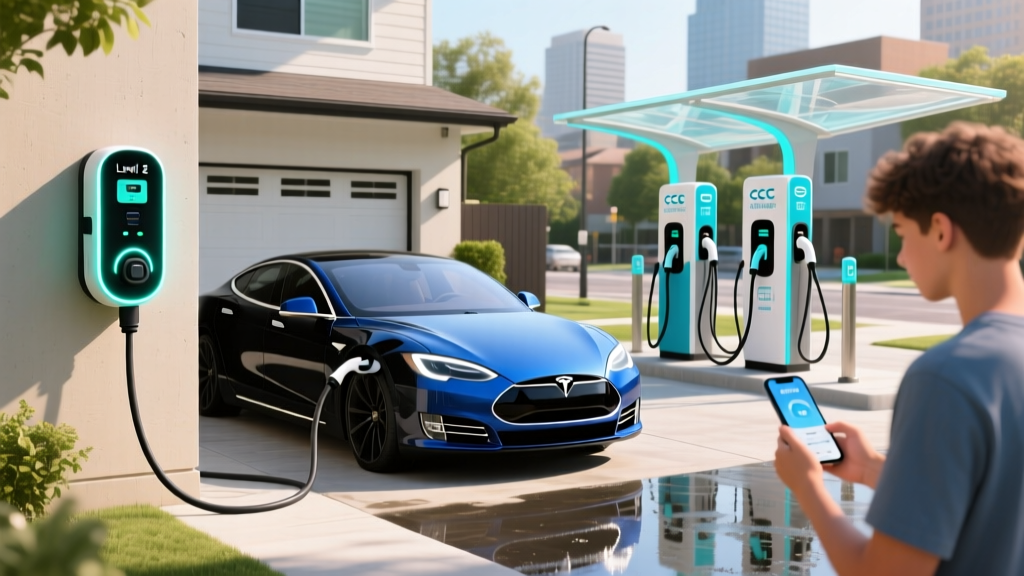
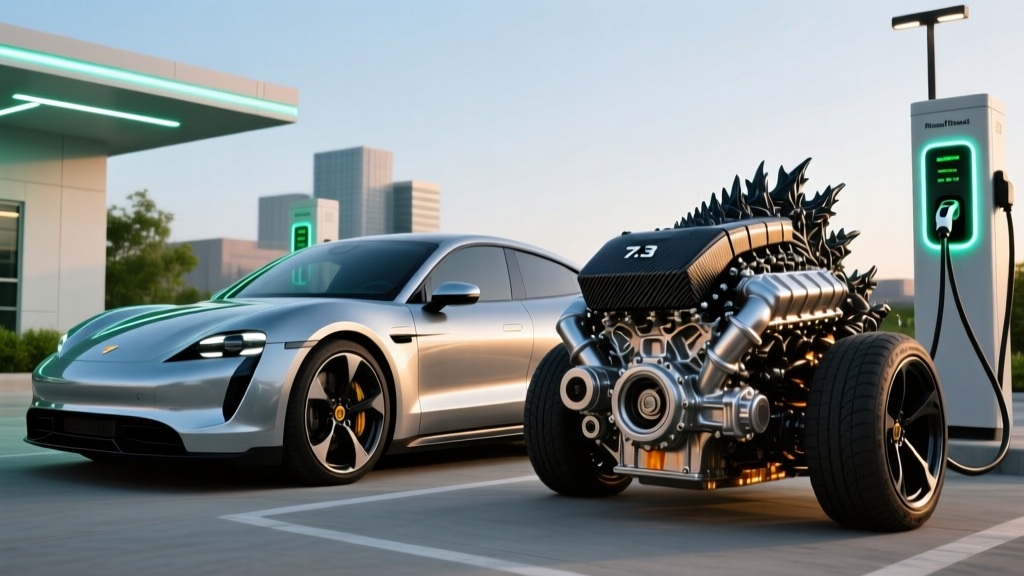
On paper, nothing separates these two worlds more than the 7.3 Godzilla supercharged crate engine and a home Level 2 EV charger. One is Ford's monstrous 7.3-liter pushrod V8 — a favorite in the hot-rodding and swap community, pushing well past 700 horsepower when supercharged. The other is a wall-mounted box quietly refueling your daily driver overnight. But if you're weighing an EV purchase against a performance-V8 build or simply trying to understand what electrification actually costs, the comparison gets surprisingly practical.
This guide covers everything you need to know about EV charging — home installation, public networks, equipment, and connector compatibility — while anchoring the economics to what you'd spend fueling a high-output V8 like the 7.3 Godzilla. Whether you're a cross-shopping enthusiast or a practical buyer running the numbers, the data below speaks for itself.
Charging Levels Explained: kW, Miles Per Hour, and Real-World Speeds
Before we talk cost, let's clear up the single most important distinction in EV literacy: kW (kilowatts) measures power — the rate of energy flow, like water pressure from a hose. kWh (kilowatt-hours) measures energy — the total amount stored, like gallons in a tank. A 10 kW charger delivering power for 8 hours adds 80 kWh of energy. Confusing the two is the most common mistake new EV owners make.
Here's how the three charging tiers break down in real-world terms:
| Level | Voltage | Max Power (kW) | Miles of Range Added Per Hour | Best Use Case |
|---|---|---|---|---|
| Level 1 (120V) | 120V AC | 1.2–1.9 kW | 3–5 miles/hr | Overnight trickle, PHEVs, low-mileage commuters |
| Level 2 (240V) | 240V AC | 3.3–19.2 kW | 12–75 miles/hr | Daily home charging, workplace, destination |
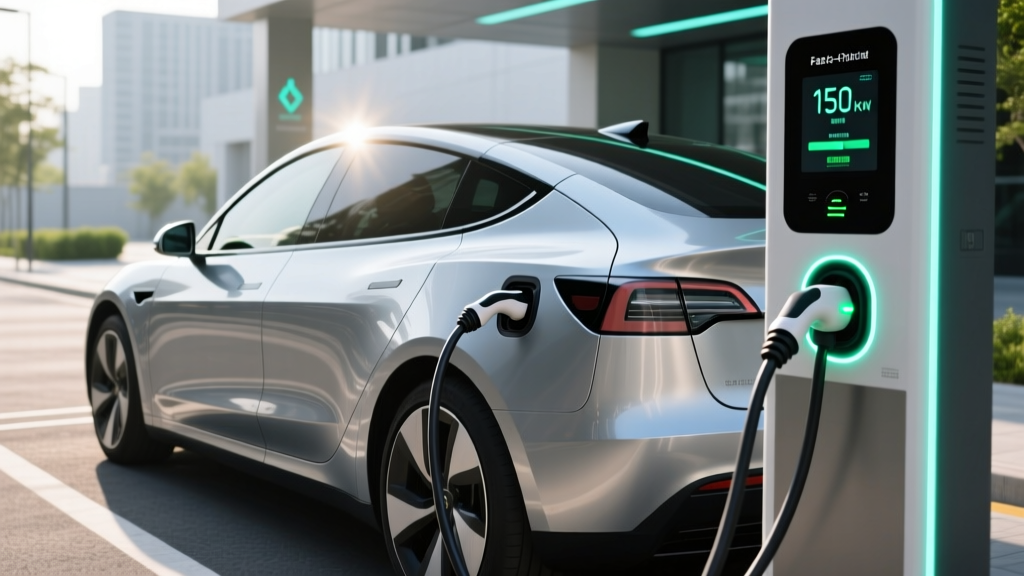
| DC Fast Charging | 200–900V DC | 50–400+ kW | 150–1,200+ miles/hr (peak) | Road trips, highway corridors, rapid top-ups |
A few real-world notes: DC fast charging speeds peak only between roughly 10% and 50% state of charge (SoC). Above 80%, the charge curve tapers sharply to protect battery health — a 250 kW peak rarely averages more than 120–150 kW across a full 10–80% session. Cold batteries also accept charge more slowly; preconditioning (warming the pack via the vehicle's navigation system before arriving at a charger) can cut 10–80% times by 20–30% in winter.
Home Charger Installation: Electrical Requirements, Costs, and Panel Gotchas
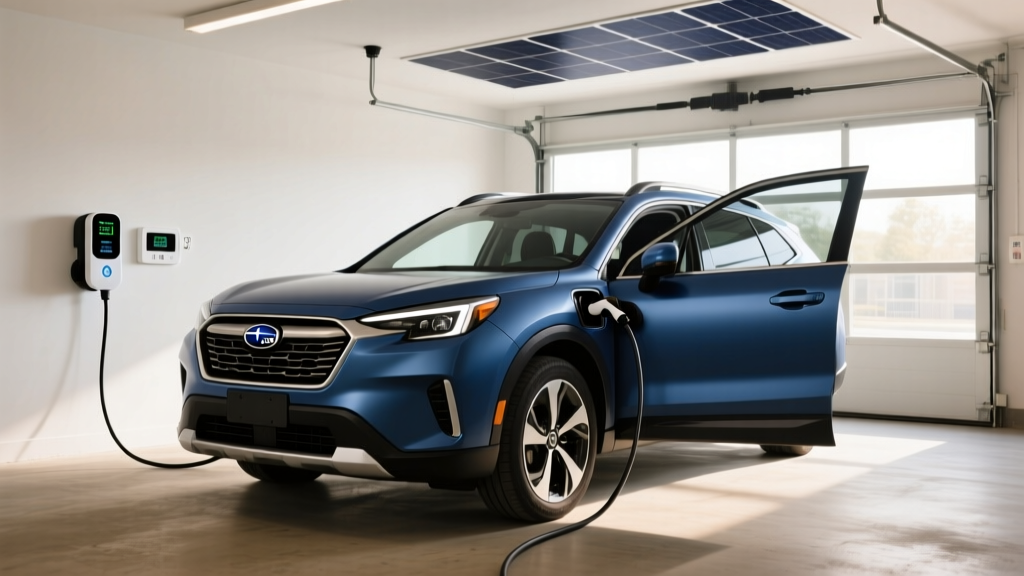
Most EV owners install a Level 2 charger at home — it's the backbone of convenient ownership. But the sticker price of the charger itself is often the smallest line item. Here's what the full picture looks like in 2026.
Electrical Requirements
A typical home Level 2 setup runs on a 240V dedicated circuit, similar to a dryer or oven outlet. Common configurations:
- 40-amp circuit → 32A continuous draw → 7.7 kW (most common residential setup)
- 50-amp circuit → 40A continuous draw → 9.6 kW
- 60-amp circuit → 48A continuous draw → 11.5 kW (needed for larger-battery EVs like the Ford F-150 Lightning or Chevy Silverado EV)
The National Electrical Code (NEC) requires that continuous loads not exceed 80% of the circuit breaker rating — hence a 40A circuit delivers only 32A of continuous power.
Panel Upgrade Reality Check
If your home has a 100-amp electrical panel (common in homes built before the 1990s), adding a 40–60A EV circuit may max out your panel's capacity. A panel upgrade to 200A typically costs $1,500–$3,500, and in some cases, older homes with knob-and-tube wiring or insufficient service drops may need a full service upgrade pushing $4,000–$5,000. Always have a licensed electrician perform a load calculation before committing to equipment.
| Line Item | Low-End Cost | High-End Cost | Notes |
|---|---|---|---|
| Level 2 Charger (Equipment) | $300 | $750 | Smart Wi-Fi chargers; basic models from $200 |
| Electrician Labor (standard install) | $500 | $1,500 | Depends on run length from panel to garage |
| Permit & Inspection | $50 | $250 | Required in most jurisdictions; varies by municipality |
| Electrical Panel Upgrade (if needed) | $1,500 | $3,500 | 100A → 200A upgrade; not always required |
| Total (no panel upgrade) | $850 | $2,500 | Most homes with 200A panels fall here |
| Total (with panel upgrade) | $2,350 | $6,000 | Older homes or high-load setups |
The federal Residential Clean Energy Credit (25C) no longer covers EV charger equipment for most taxpayers after 2023, but some states and utilities still offer rebates of $200–$500. Check your local utility and the Alternative Fuels Data Center for current programs in your area.
Connector Compatibility: NACS, CCS, CHAdeMO, and Adapter Needs in 2026
The connector landscape has shifted dramatically. As of 2025–2026, the North American Charging Standard (NACS) — originally developed by Tesla — has become the dominant connector for new EVs sold in North America. Here's where things stand:
| Connector | Brands Using It (New Vehicles) | Public Network Availability | Adapter Needed? |
|---|---|---|---|
| NACS (Tesla) | Tesla, Ford, GM, Rivian, Volvo, Polestar, Hyundai, Kia (2025+ models) | Tesla Supercharger (17,000+ stalls), growing Electrify America, EVgo | CCS-to-NACS adapter for older CCS vehicles at Superchargers |
| CCS1 (Combo) | VW, BMW, Mercedes, Stellantis, legacy 2022–2024 models from Ford/GM/Hyundai | Electrify America, EVgo, ChargePoint DC stations | NACS-to-CCS adapter available for Tesla Supercharger access |
| CHAdeMO | Nissan Leaf (legacy), Mitsubishi Outlander PHEV | Declining; still at some Electrify America and regional stations | No adapter widely available; network access shrinking |
For home Level 2 charging, all non-Tesla EVs use the J1772 connector, and Tesla vehicles come with a J1772 adapter. Most home chargers ship with J1772 or NACS plugs — make sure you match your vehicle's inlet.
Cost to Charge: $/kWh Scenarios and the Godzilla V8 Comparison
Now for the fun part. Let's compare what it costs to "refuel" an EV at home versus fueling a vehicle running a 7.3 Godzilla supercharged crate engine — the kind of build that might see 10–12 mpg in real-world driving when you're exercising that supercharger.
| Scenario | Energy/Fuel Cost | Efficiency | Cost Per Mile |
|---|---|---|---|
| Home Level 2 (off-peak, $0.13/kWh) | $0.13/kWh | 3.5 mi/kWh (avg EV, e.g., Hyundai Ioniq 5) | $0.037/mile |
| Home Level 2 (peak, $0.25/kWh) | $0.25/kWh | 3.5 mi/kWh | $0.071/mile |
| Public DC Fast (avg $0.48/kWh) | $0.48/kWh | 3.5 mi/kWh | $0.137/mile |
| Tesla Supercharger (avg $0.30/kWh) | $0.30/kWh | 3.5 mi/kWh | $0.086/mile |
| 7.3 Godzilla Supercharged (premium $4.25/gal, 11 mpg) | $4.25/gallon | 11 mpg | $0.386/mile |
| 7.3 Godzilla Supercharged (premium $4.25/gal, 8 mpg aggressive) | $4.25/gallon | 8 mpg | $0.531/mile |
The math is stark. At 12,000 miles per year, home-charging an EV at off-peak rates costs roughly $444 annually. Fueling a supercharged 7.3 Godzilla at 11 mpg with premium fuel runs approximately $4,636 per year — over 10 times more. Even at public DC fast charging rates, the EV costs around $1,644/year — still less than half the V8's fuel bill.
Of course, nobody buys a supercharged 7.3 Godzilla crate engine for fuel economy. That engine — Ford Performance's legendary 7.3L pushrod V8, which in supercharged form can produce 700+ hp — is a passion purchase for restomods, trucks, and track builds. But if you're a two-car household considering making one of them electric, the EV's fuel savings on daily commuting can help justify the weekend V8's appetite.
Charging Time Examples: What to Expect With Common Battery Sizes
Charge time depends on battery capacity (measured in kWh) and charger power (measured in kW). Here's how long common EV batteries take to charge from 10% to 80% at various speeds:
- Tesla Model 3 Standard Range (60 kWh, NMC/LFP): 10–80% on a 250 kW Supercharger in ~22 minutes; on a 7.7 kW home Level 2 in ~5.5 hours
- Hyundai Ioniq 5 (77.4 kWh, NMC): 10–80% on a 350 kW DC charger in ~18 minutes (peak 240 kW sustained); home Level 2 (11.5 kW) in ~4.8 hours
- Ford F-150 Lightning Extended Range (131 kWh, NMC): 10–80% on a 150 kW DC charger in ~55 minutes; home Level 2 (7.7 kW) in ~11 hours — this is where a 48A/11.5 kW home charger matters
- Chevy Equinox EV (85 kWh, NMC): 10–80% on a 150 kW DC charger in ~35 minutes; home Level 2 (7.7 kW) in ~7 hours
For most commuters driving 30–50 miles per day, a 7.7 kW home charger replenishes daily use in 2–3 hours — far more than enough overnight. The critical spec for road-trippers is DC fast-charging speed, where the Ioniq 5's 800V architecture and 240 kW peak rate remain among the fastest in its price class.
Equipment Picks: 2026 Home Charger Recommendations
ChargePoint Home Flex (NACS or J1772)
- Power Output: Up to 12 kW (50A circuit) or 9.6 kW (40A circuit)
- Connector: Available in NACS or J1772; NACS version charges Teslas natively
- Cable Length: 23 feet
- Smart Features: Wi-Fi, Alexa, scheduled charging, energy tracking via app
- Price: ~$550–$650
- Best For: Most households; flexible amperage via DIP switches
Emporia Vue Smart EV Charger
- Power Output: Up to 11.5 kW (48A, 60A circuit)
- Connector: J1772 (NACS adapter included)
- Cable Length: 24 feet
- Smart Features: Solar integration, whole-home energy monitoring, load management
- Price: ~$350–$450
- Best For: Budget-conscious buyers with solar panels or energy-monitoring needs
Tesla Wall Connector (NACS)
- Power Output: Up to 11.5 kW (48A, 60A circuit)
- Connector: NACS native; J1772 adapter available separately
- Cable Length: 24 feet
- Smart Features: Wi-Fi, power sharing (daisy-chain two units on one circuit), OTA updates
- Price: ~$475
- Best For: Tesla owners and NACS-equipped Ford/GM/Rivian vehicles
Grizzl-E Smart (J1772)
- Power Output: Up to 10 kW (40A, 50A circuit)
- Connector: J1772
- Cable Length: 24 feet
- Smart Features: OCPP-compatible, adjustable amperage, extreme cold-rated (-40°F)
- Price: ~$400–$500
- Best For: Cold-climate owners; rugged outdoor installations
Safety, Code, and Installation Best Practices
EV chargers draw sustained high current for hours — this is fundamentally different from intermittent loads like a microwave. Here are the non-negotiable safety considerations:
- Dedicated circuit: Your EV charger must have its own dedicated breaker — never share a circuit with other appliances.
- GFCI protection: The 2020 NEC and later require GFCI (ground fault circuit interrupter) protection for all 240V EV outlets. Hardwired chargers typically have built-in GFCI; plug-in units via a NEMA 14-50 outlet require a GFCI breaker, which adds $50–$150 to the install.
- Outdoor rating: If your charger is mounted outside, it must carry a NEMA 4 or IP65 rating for weather resistance. All chargers listed above meet this standard.
- Permit and inspection: Most jurisdictions require an electrical permit and post-installation inspection. Skipping this can void home insurance coverage in the event of a fire.
- Hardwired vs. plug-in: Hardwired installations (no plug, direct wire to charger) allow up to 48A/11.5 kW and avoid the GFCI breaker requirement in many jurisdictions. NEMA 14-50 plug-in installations offer portability but cap at 40A/9.6 kW and need the GFCI breaker.
Frequently Asked Questions
How much does it cost to install a home EV charger?
A standard Level 2 home charger installation runs $850–$2,500 when no panel upgrade is needed (equipment + electrician + permit). If your home requires a 200A panel upgrade, total costs rise to $2,350–$6,000. The charger unit itself typically costs $300–$750.
How fast will each charging level add range?
Level 1 (120V) adds 3–5 miles of range per hour — adequate only for PHEVs or very low-mileage drivers. Level 2 (240V) adds 12–75 miles per hour depending on amperage, and handles daily needs for virtually all EV owners. DC fast charging adds 150–1,200+ miles per hour at peak rates, but sessions taper significantly above 80% SoC.
Which connector/charger is compatible with my EV?
For 2026 model-year vehicles: Tesla, Ford, GM, Rivian, Volvo, Polestar, and newer Hyundai/Kia models use the NACS connector. Older CCS-equipped vehicles (2022–2024 models from many brands) use CCS1. The Nissan Leaf uses CHAdeMO. For home Level 2 charging, all non-Tesla EVs use J1772, and Teslas include a J1772 adapter. Check your vehicle's charge port before ordering a charger.
How much does charging cost per mile vs gas?
Home-charging an EV at $0.13/kWh costs roughly $0.037/mile. Public DC fast charging at $0.48/kWh costs about $0.14/mile. By comparison, a 7.3 Godzilla supercharged crate engine getting 11 mpg on $4.25/gallon premium fuel costs $0.39/mile — and drops to $0.53/mile under aggressive driving at 8 mpg. Even the most expensive public EV charging is significantly cheaper per mile than fueling a high-output supercharged V8.
What electrical upgrades might I need?
The most common upgrade is a panel replacement from 100A to 200A service ($1,500–$3,500), needed in older homes where existing loads already consume most of the panel's capacity. You may also need a new conduit run if the charger is far from the panel (long wire runs add $5–$15 per foot in materials and labor). Some utilities require a load-management device that throttles charger power when household demand peaks — this avoids a panel upgrade entirely but slightly reduces charging speed.