Why Compare EV Charging to a 2016 Land Rover Range Rover Supercharged?
The 2016 Land Rover Range Rover Supercharged remains a benchmark luxury SUV — a 5.0L supercharged V8 producing 510 horsepower, towing up to 7,716 lbs, and delivering a combined EPA fuel economy of roughly 16 MPG. For owners of this vehicle considering an electric replacement, or for EV shoppers cross-shopping the used luxury SUV market, understanding the real economics of EV charging versus premium gasoline is essential. This guide breaks down every charging level, home installation requirement, connector type, and per-mile cost — with direct comparisons to what you'd spend fueling the Range Rover Supercharged.
Charging Levels Explained: Speeds in kW and Miles Per Hour
Every EV owner interacts with three charging tiers. Here's exactly what each delivers, measured in both kW and real-world range added per hour of charging:
| Level | Voltage | Power (kW) | Miles of Range/Hour | Typical Use |
|---|---|---|---|---|
| Level 1 | 120V AC | 1.2–1.9 kW | 3–5 mi/hr | Overnight trickle, PHEVs, emergency |
| Level 2 | 240V AC | 7.2–19.2 kW | 20–60 mi/hr | Home daily charging, workplace, hotels |
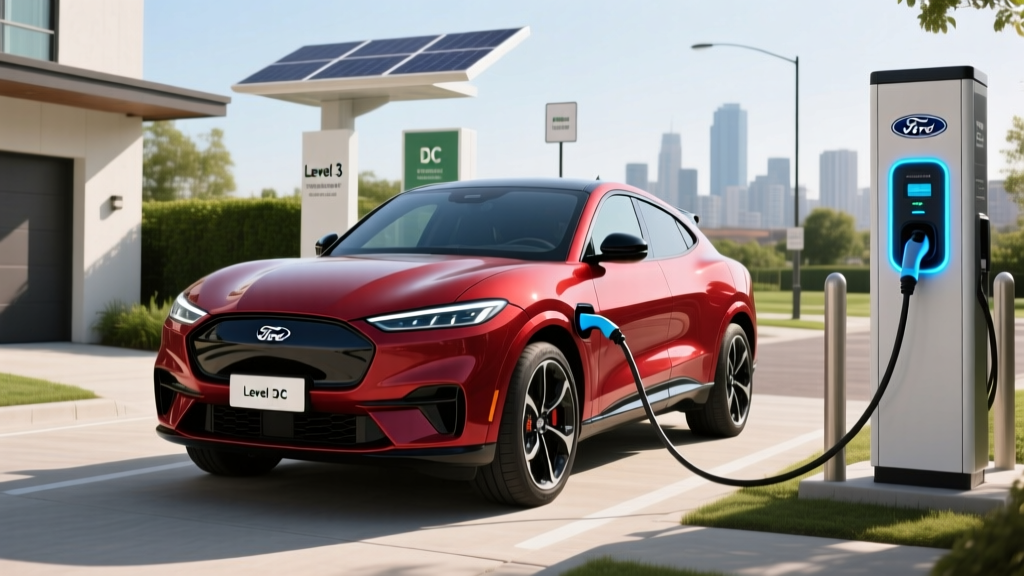
| DC Fast Charge | 400–800V DC | 50–350 kW | 150–1,200+ mi/hr | Road trips, highway corridors |
Real-world charging time examples (10–80% SoC):
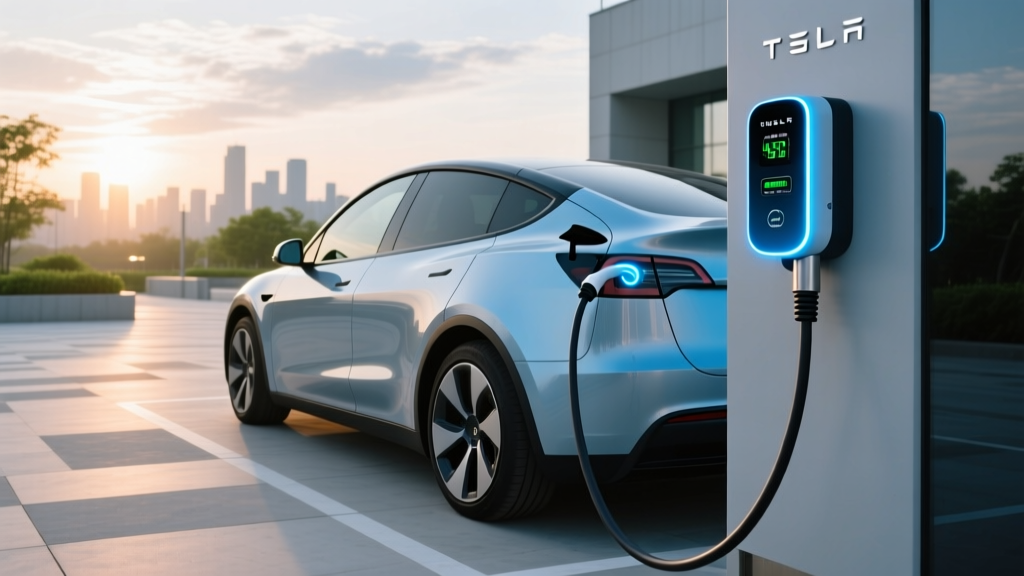
- 75 kWh battery (e.g., Tesla Model Y): ~8 hours on Level 2 (11.5 kW); ~22 minutes on a 250 kW DC fast charger (peak rate, with taper above 80%)
- 100 kWh battery (e.g., Ford F-150 Lightning Extended Range): ~10.5 hours on Level 2; ~30 minutes on a 150 kW DCFC; ~19 minutes on a 350 kW charger if the vehicle supports 800V architecture
- 40 kWh battery (e.g., base Nissan Leaf or small EV): ~4.5 hours on Level 2; ~25 minutes on 50 kW CHAdeMO DCFC
Home EV Charger Installation: Electrical Requirements and Costs
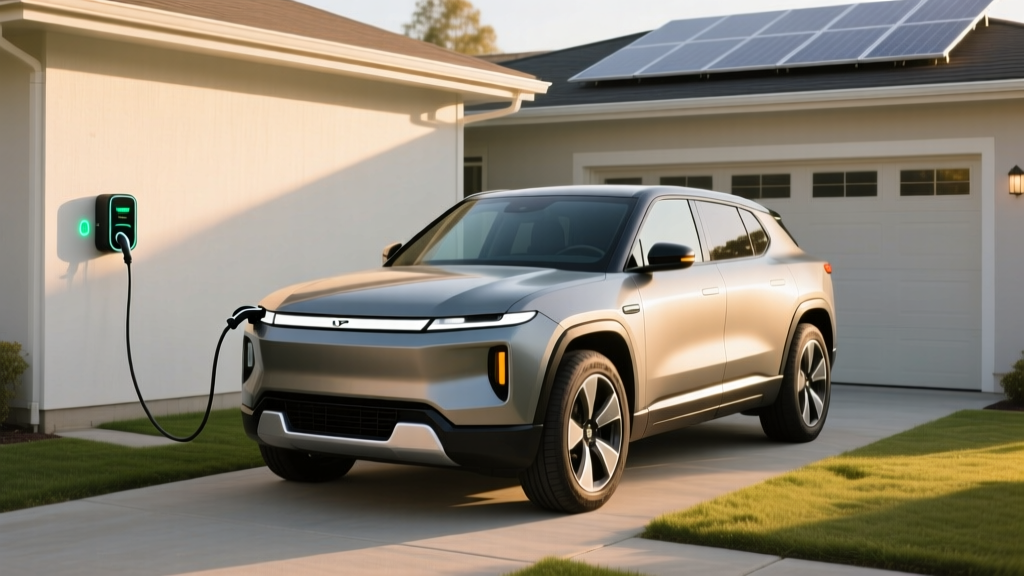
Installing a Level 2 home charger is the single most impactful upgrade for EV ownership. Here's what the electrical work actually entails.
Electrical Specifications
- Circuit requirement: Dedicated 240V circuit, typically 40A to 60A (breaker sized at 125% of continuous load per NEC — a 40A charger needs a 50A breaker)
- Wire gauge: 6 AWG copper for 50A circuits; 4 AWG for 60A (varies by run length and local code)
- Hardwired vs. plug: NEMA 14-50 outlet (50A) allows portability; hardwired units support up to 60A+ and eliminate GFCI nuisance trips common with receptacles
- Panel capacity: Your main service panel must have spare capacity — typically 200A service is recommended for homes adding a 40A+ EV circuit alongside existing loads
Do You Need a Panel Upgrade?
Homes with 100A service — common in builds before the 1990s — often cannot support a 40A EV circuit without a panel upgrade to 200A. A panel upgrade costs $1,500–$3,500 depending on your utility and jurisdiction. Even some 200A panels are at capacity if you're running electric heat, a dryer, an oven, and AC simultaneously. A licensed electrician will perform a load calculation (NEC Article 220) to determine if your panel can handle the additional draw.
| Component | Low Estimate | High Estimate | Notes |
|---|---|---|---|
| Level 2 Charger (Equipment) | $350 | $750 | Smart Wi-Fi chargers, 32A–48A |
| Electrician Labor | $500 | $2,000 | Depends on panel proximity, wall/fishing complexity |
| Electrical Permit | $50 | $300 | Varies by municipality |
| Panel Upgrade (if needed) | $1,500 | $3,500 | 100A → 200A service upgrade |
| Total (no panel upgrade) | $900 | $3,050 | Typical scenario for modern homes |
| Total (with panel upgrade) | $2,400 | $6,550 | Older homes or maxed-out panels |
Some utilities and states offer rebates of $250–$1,000 for Level 2 equipment or installation. The federal Residential Clean Energy Credit (IRS Form 5695) may cover 30% of charger equipment and installation costs up to $1,000 through 2032 — check current-year eligibility with a tax professional.
Connector Compatibility: NACS, CCS1, and CHAdeMO
The North American charging connector landscape has consolidated significantly since 2024, when Ford, GM, Rivian, and most other automakers adopted the Tesla-designed NACS (North American Charging Standard, SAE J3400). Here's the current state:
| Connector | Type | Compatible Brands | Adapter Needed? |
|---|---|---|---|
| NACS (J3400) | AC + DC | Tesla, Ford, GM, Rivian, Hyundai/Kia (2025+), Volvo, Polestar, Fisker, Mercedes (2025+) | No — native port on new models; CCS→NACS adapters available for older vehicles |
| CCS1 | AC + DC | VW, BMW, older Ford/GM (pre-2025), Stellantis, Honda, Subaru, Lucid (pre-2025) | NACS→CCS adapter needed for Tesla Supercharger access |
| CHAdeMO | DC only | Nissan Leaf (legacy), Mitsubishi Outlander PHEV (legacy) | Limited new infrastructure; CHAdeMO stations declining |
Adapter guidance: If you own a CCS1-equipped EV and want access to the Tesla Supercharger network (17,000+ stalls in North America), you'll need a CCS-to-NACS adapter ($150–$250 from Tesla or third-party suppliers). Most 2025+ EVs ship with native NACS ports, making this a concern primarily for 2020–2024 model-year vehicles.
Cost to Charge an EV vs. Fueling the 2016 Range Rover Supercharged
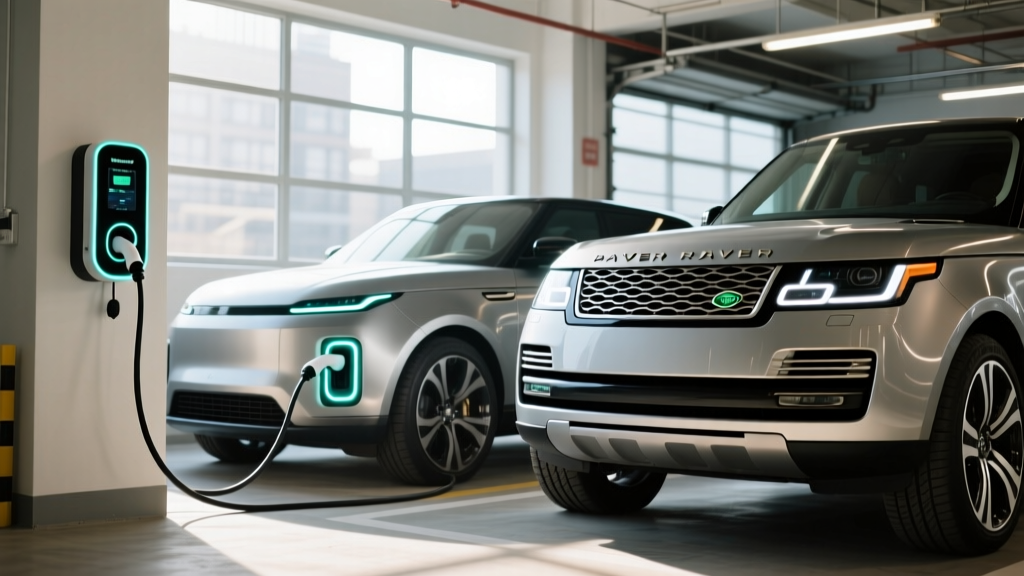
This is where the economics become stark. The 2016 Land Rover Range Rover Supercharged has a 27.7-gallon fuel tank and requires premium gasoline (91+ octane). At $4.50/gallon (2026 national premium average), a full fill-up costs approximately $124.65 and delivers roughly 443 miles of combined-range driving (16 MPG × 27.7 gal).
| Scenario | Cost per kWh | Vehicle Efficiency | Cost Per Mile | Annual Cost (12,000 mi) |
|---|---|---|---|---|
| Home Level 2 (off-peak utility rate) | $0.13/kWh | 3.0 mi/kWh (100 MPGe) | $0.043/mi | $520 |
| Home Level 2 (standard rate) | $0.18/kWh | 3.0 mi/kWh | $0.060/mi | $720 |
| Public Level 2 (ChargePoint, etc.) | $0.30/kWh | 3.0 mi/kWh | $0.100/mi | $1,200 |
| DC Fast Charge (Electrify America) | $0.48/kWh | 3.0 mi/kWh | $0.160/mi | $1,920 |
| 2016 Range Rover SC (premium gas) | $4.50/gal | 16 MPG | $0.281/mi | $3,375 |
Even charging exclusively on DC fast chargers — the most expensive scenario — an EV costs roughly 43% less per mile than fueling the Range Rover Supercharged on premium gasoline. Home charging at off-peak rates delivers savings of 85% per mile.
Over five years and 60,000 miles, the fuel cost differential is enormous:
- Range Rover Supercharged fuel cost: ~$16,875
- EV home charging cost (off-peak): ~$2,600
- Five-year savings: ~$14,275
Recommended Home Level 2 Chargers: Equipment Picks
Not all Level 2 chargers are equal. Here are top picks with exact specifications, based on reliability data, smart features, and value:
ChargePoint Home Flex
- Power: Up to 12 kW (50A, configurable 16A–50A)
- Connector: NACS or J1772 (select at purchase)
- Cable: 23 ft
- Smart features: Wi-Fi, app scheduling, Alexa, energy tracking
- Price: ~$549
- Best for: Flexible amperage, works on 40A or 50A circuits
Tesla Wall Connector
- Power: Up to 11.5 kW (48A)
- Connector: NACS (native); J1772 adapter included
- Cable: 24 ft
- Smart features: Wi-Fi, OTA updates, load sharing (pair two units on one circuit)
- Price: ~$475
- Best for: Tesla owners and NACS-equipped EVs
Emporia Vue Level 2
- Power: Up to 11.5 kW (48A)
- Connector: NACS or J1772
- Cable: 24 ft
- Smart features: Wi-Fi, whole-home energy monitoring integration, solar-aware scheduling
- Price: ~$399
- Best for: Budget-conscious buyers wanting smart features
Grizzl-E Smart
- Power: Up to 10 kW (40A)
- Connector: J1772 (NACS adapter available)
- Cable: 24 ft
- Smart features: OCPP-compatible, app control, extreme cold rated (-40°F)
- Price: ~$449
- Best for: Cold-climate durability, Canadian-built
Safety, Code, and Installation Best Practices
EV charging involves sustained high-current draw — unlike a dryer or oven that cycles on and off, an EV charger may pull maximum current for 6–10 hours continuously. This demands strict code compliance:
- Dedicated circuit: NEC 625.40 requires a dedicated branch circuit for EV supply equipment — no sharing with other outlets or appliances
- GFCI protection: NEC 2020+ requires GFCI on 240V receptacles used for EV charging (Article 625.54). Hardwired units are exempt from this requirement and avoid nuisance trips that plague NEMA 14-50 outlets
- Outdoor rating: If installing outdoors, the charger must carry a NEMA 4 or NEMA 4X rating (weatherproof). All units listed above meet this standard
- UL listing: Only use UL-listed (or ETL-listed) chargers. Non-listed imports from online marketplaces may lack overcurrent and thermal protection — a fire risk
- Permit and inspection: Most jurisdictions require an electrical permit for new 240V circuits. The inspection ensures proper wire gauge, breaker sizing, and grounding — don't skip this step
Always hire a licensed electrician familiar with NEC Article 625 (Electric Vehicle Charging System Equipment). Per the National Fire Protection Association, improper EV charger installations have been linked to thermal events — professional installation protects your home and your insurance coverage.
Frequently Asked Questions
How much does it cost to install a home EV charger?
A typical Level 2 home installation runs $900–$3,050 when no panel upgrade is needed, covering the charger unit ($350–$750), electrician labor ($500–$2,000), and permit fees ($50–$300). If your home needs a 100A-to-200A panel upgrade, add $1,500–$3,500. Homes with short conduit runs from the panel to the garage will be at the low end; detached garages or finished walls requiring extensive fishing push costs higher.
How fast will each charging level add range?
Level 1 (120V) adds 3–5 miles of range per hour — adequate for PHEVs with small batteries but impractical for full EVs. Level 2 (240V) adds 20–60 miles per hour depending on amperage (a 48A/11.5 kW charger adds roughly 35–45 miles/hour for most EVs). DC fast charging adds 150–1,200+ miles per hour at peak rate, though the charge curve tapers significantly above 80% SoC.
Which connector/charger is compatible with my EV?
For 2025–2026 model-year EVs, most brands now use NACS (Tesla's connector, now SAE J3400). If your EV has a CCS1 port (common on 2020–2024 models from VW, BMW, and pre-transition Ford/GM), you'll need a CCS-to-NACS adapter (~$150–$250) to access Tesla Superchargers. CHAdeMO is legacy-only — Nissan and Mitsubishi are the last holdouts. Check your vehicle's charge port or consult the manufacturer's spec page to confirm.
How much does charging cost per mile vs. gas?
Home charging at $0.13/kWh costs approximately $0.043/mile for an EV averaging 3 miles per kWh (100 MPGe). The 2016 Range Rover Supercharged at 16 MPG on $4.50 premium gasoline costs $0.281/mile — roughly 6.5× more per mile. Even public DC fast charging at $0.48/kWh ($0.16/mile) undercuts the Range Rover by 43%. According to fueleconomy.gov, the average EV achieves 97–120 MPGe combined, translating to $0.04–$0.06/mile on residential electricity rates.
What electrical upgrades might I need?
The most common upgrade is a panel capacity increase from 100A to 200A service ($1,500–$3,500). Even with 200A service, your electrician may recommend a load management device (e.g., Emporia VUE with automatic load shedding or a Tesla Wall Connector with load-sharing) if your panel is near capacity. Homes built after 2000 with 200A service and gas appliances typically have ample headroom for a 40A EV circuit without upgrades. The electrician's load calculation (per NEC Article 220) determines this definitively.