If you're cross-shopping a modern battery-electric vehicle against a luxury performance sedan like the 2015 Jaguar XJ Supercharged—with its 5.0-liter V8 producing 470 hp and an EPA-rated 15 MPG city / 23 MPG highway—the financial math has shifted dramatically. The XJ Supercharged was a flagship cruiser in its day, but at roughly 18 MPG combined, it drinks premium fuel at a rate that makes EV ownership economics look compelling. This guide breaks down exactly what it costs to charge an EV at home and on the road, what electrical work you'll need, and how those numbers stack up against fueling a supercharged Jaguar.
Why Compare EV Charging to the 2015 Jaguar XJ Supercharged?
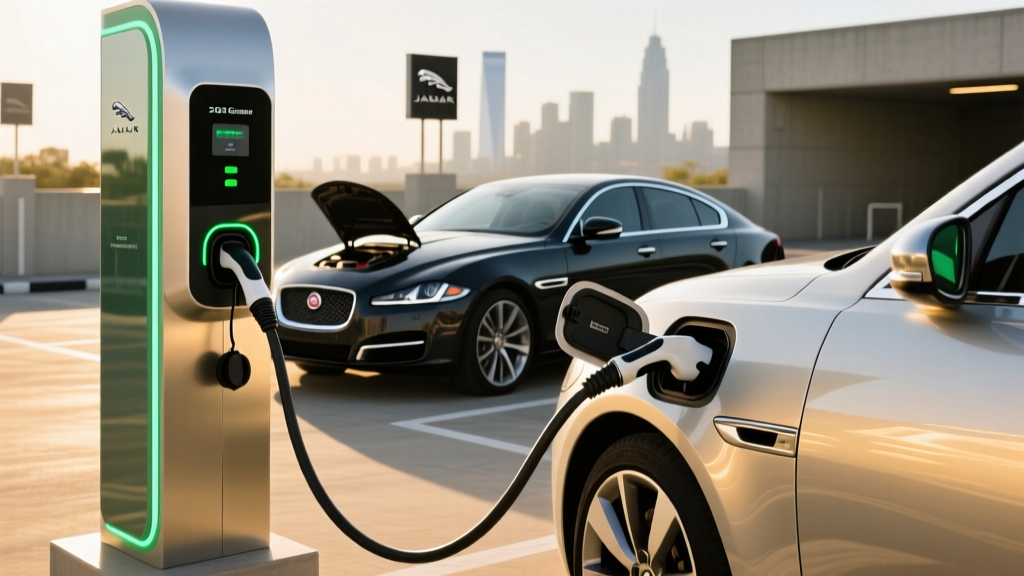
The 2015 Jaguar XJ Supercharged (X351 generation) represents a specific buyer: someone who values luxury, performance, and presence. Its 510-hp variant (XJ Supercharged) or 470-hp base supercharged V8 delivers effortless highway passing, but the fuel bill tells a different story. According to fueleconomy.gov, the 2015 XJ Supercharged averages 18 MPG combined on premium unleaded. At $4.50 per gallon for premium, that's roughly $0.25 per mile in fuel alone.
A modern EV like the 2026 BMW i5 eDrive40 (EPA 295 miles, 84.3 kWh battery, 335 hp) or the Tesla Model S Long Range (EPA 402 miles) can deliver similar or better performance while cutting per-mile energy cost to $0.04–$0.13 depending on how you charge. But realizing those savings requires understanding the charging ecosystem—levels, speeds, connectors, and home infrastructure.
Charging Levels Explained: Speeds in kW and Miles Per Hour
EV charging is categorized into three levels. The critical distinction is between kW (kilowatts), which measures the rate of power delivery—like water pressure from a hose—and kWh (kilowatt-hours), which measures total energy stored in the battery—like the size of the tank. Never confuse the two.
| Level | Voltage / Amperage | Power (kW) | Miles of Range Added Per Hour | Typical Use Case |
|---|---|---|---|---|
| Level 1 | 120V / 12–16A | 1.4–1.9 kW | 3–5 miles | Overnight trickle; emergency top-off |
| Level 2 | 240V / 32–48A | 7.7–11.5 kW | 25–44 miles | Daily home charging; workplace |
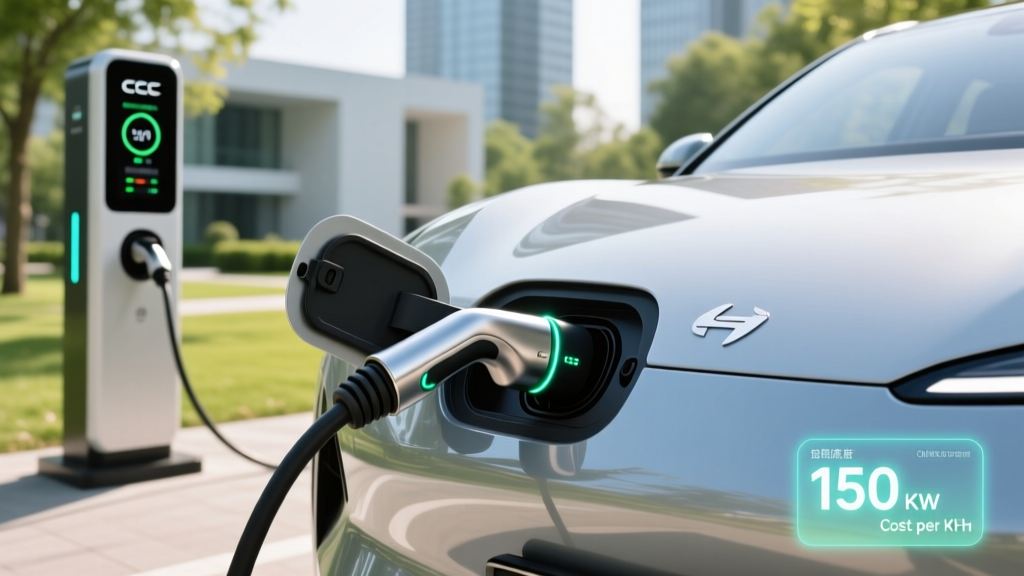
| DC Fast Charging | 400V–800V DC | 50–350 kW | 150–1,200+ miles/hr (peak) | Road trips; rapid top-ups |
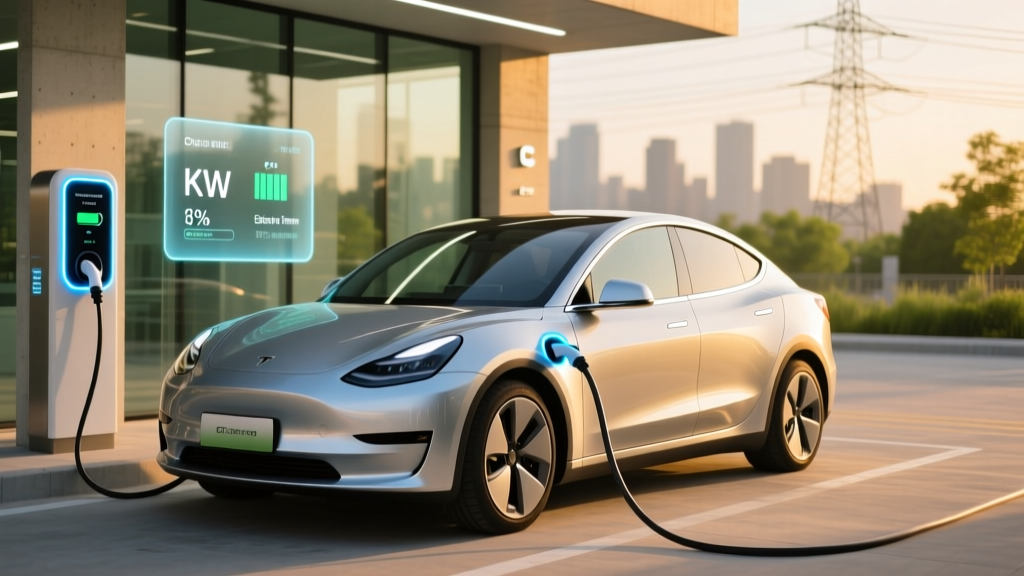
Real-world context: A Level 2 charger at 11.5 kW will fully replenish a 75 kWh battery (like the Tesla Model Y Long Range) in roughly 7–8 hours from empty—perfect for overnight. A 250 kW DC fast charger can take that same battery from 10–80% in approximately 20–25 minutes, though peak speed is only sustained up to roughly 50–60% State of Charge (SoC), after which the charge curve tapers to protect the cells.
Home EV Charger Installation: Electrical Requirements and Costs
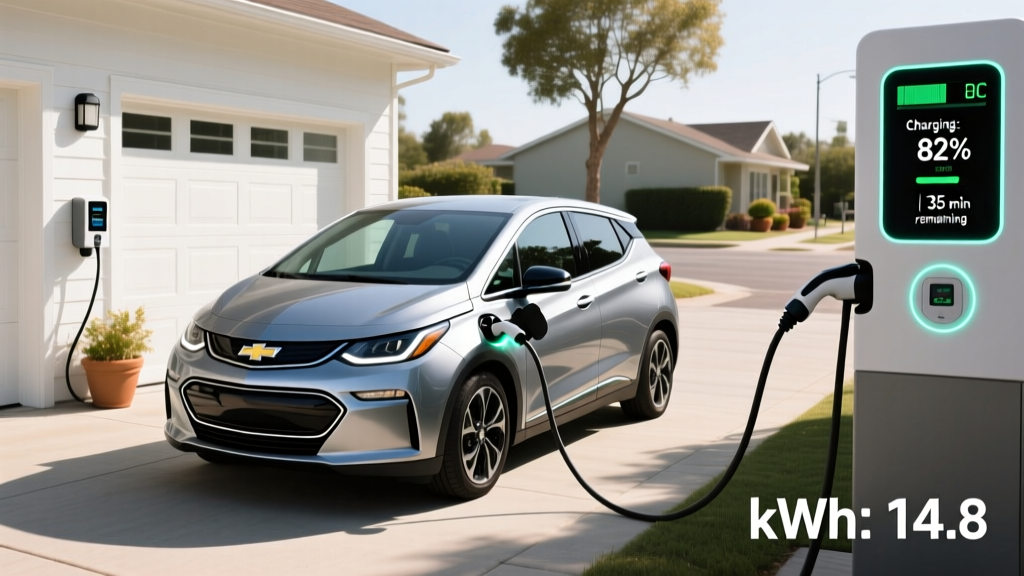
Installing a Level 2 home charger is the single most impactful upgrade an EV owner can make. Here's what's involved electrically.
Electrical Requirements
- Circuit: A dedicated 240V circuit, typically 40A or 50A (supporting 32A or 40A continuous draw, respectively, per NEC 80% rule)
- Wire gauge: 6 AWG copper for 50A circuits; 8 AWG for 40A
- Breaker: Double-pole breaker in your main panel
- Outlet vs. hardwired: NEMA 14-50 outlet offers portability; hardwired units allow higher amperage and eliminate GFCI nuisance trips
Panel Upgrade Considerations
This is where older homes—particularly those built before 1990 with 100A or 125A service—can hit a wall. A licensed electrician will perform a load calculation per NEC Article 220 to determine if your panel has spare capacity. If your panel is already near capacity (common with electric ranges, dryers, and HVAC), you may need a service upgrade to 200A, which adds significant cost.
| Cost Component | Simple Install (Panel Has Capacity) | Complex Install (Panel Upgrade Needed) |
|---|---|---|
| Level 2 Charger Equipment | $400–$700 | $400–$700 |
| Electrician Labor (2–6 hrs) | $400–$1,200 | $800–$2,000 |
| Permit & Inspection | $50–$200 | $150–$400 |
| Panel Upgrade (if needed) | $0 | $1,500–$4,000 |
| Conduit / Wiring (long runs) | $100–$400 | $200–$800 |
| Total Estimated Range | $950–$2,500 | $3,050–$7,900 |
Pro tip: If you're already paying for an electrician, consider installing a 60A circuit with a hardwired 48A charger—even if your current EV only accepts 32A. Future vehicles may accept higher AC rates, and the incremental wire cost is minimal compared to a second service call.
Connector Compatibility: NACS, CCS1, CHAdeMO, and Adapters
As of 2026, the North American connector landscape has consolidated significantly. Tesla's North American Charging Standard (NACS) has been adopted by Ford, GM, Rivian, Hyundai/Kia, BMW, and most major automakers for new vehicles. CCS1 (Combined Charging System) remains on many 2021–2024 models, and CHAdeMO is effectively limited to the Nissan Leaf.
| Connector | Primary Vehicles (2026) | DC Fast Network Access | Adapter Availability |
|---|---|---|---|
| NACS (Tesla standard) | Tesla all models, Ford F-150 Lightning, GM Ultium vehicles, Hyundai Ioniq 5 (2025+), Rivian | Tesla Supercharger (20,000+ stalls), Electrify America, EVgo | CCS-to-NACS adapters from Tesla, Lectron, A2Z (~$150–$250) |
| CCS1 | 2022–2024 Hyundai/Kia, VW ID.4, BMW i4/iX (pre-2025), Porsche Taycan, older Ford Mach-E | Electrify America, EVgo, ChargePoint | NACS-to-CCS adapters available for Supercharger access |
| CHAdeMO | Nissan Leaf (discontinued after 2025 MY) | Limited and declining network | No practical adapter to NACS/CCS for DC charging |
Home Level 2 charging uses the J1772 connector for all non-Tesla EVs. Tesla provides a J1772 adapter with every vehicle. Universal Level 2 chargers ship with J1772 or NACS plugs—choose based on your vehicle's inlet.
Charging Cost Per Mile vs. the 2015 Jaguar XJ Supercharged
Let's run the numbers that matter: what does it actually cost to drive one mile?
| Scenario | Energy / Fuel Cost | Efficiency | Cost Per Mile | Annual Cost (12,000 mi) |
|---|---|---|---|---|
| 2015 Jaguar XJ Supercharged | Premium gas @ $4.50/gal | 18 MPG combined | $0.250 | $3,000 |
| EV: Home charging (off-peak utility rate) | $0.12/kWh | 3.5 mi/kWh (28.5 kWh/100mi) | $0.034 | $411 |
| EV: Home charging (standard rate) | $0.18/kWh | 3.5 mi/kWh | $0.051 | $617 |
| EV: Public Level 2 (network pricing) | $0.35/kWh | 3.5 mi/kWh | $0.100 | $1,200 |
| EV: DC Fast Charging (road trips) | $0.48/kWh | 3.5 mi/kWh | $0.137 | $1,644 |
Even in the worst-case scenario—charging exclusively at DC fast chargers at highway pricing—an EV costs roughly $0.14/mile in energy versus the XJ Supercharged's $0.25/mile. For a driver who can charge at home on off-peak utility rates, the annual energy savings exceed $2,500.
Cold-weather caveat: EV efficiency drops 15–30% in sub-freezing temperatures due to battery heating demands and increased cabin heating load. A vehicle rated at 3.5 mi/kWh in mild weather may deliver 2.5–3.0 mi/kWh in a northern winter. The XJ Supercharged, by contrast, sees minimal MPG variation in cold weather (though premium fuel costs may rise seasonally).
Charging Time Examples: What to Expect with Common Battery Sizes
Charge time depends on battery capacity (kWh), the charger's power output (kW), and the vehicle's onboard charger limit for AC or its charge-curve profile for DC. Here are representative examples:
- 60 kWh battery (e.g., base Tesla Model 3 RWD): Level 2 at 11.5 kW → ~5.5 hours 0–100%. DC fast at 170 kW peak → 10–80% in ~22 minutes.
- 82 kWh battery (e.g., VW ID.4 Pro S): Level 2 at 11.5 kW → ~7.5 hours 0–100%. DC fast at 175 kW peak → 10–80% in ~28 minutes.
- 100 kWh battery (e.g., Tesla Model S, Lucid Air): Level 2 at 11.5 kW → ~9 hours 0–100%. DC fast at 250 kW peak → 10–80% in ~25 minutes (Model S); Lucid Air at 300 kW → 10–80% in ~20 minutes.
Charge curve reality check: Advertised peak DC charge rates (e.g., "250 kW") are sustained only at low State of Charge, typically 10–40%. Above 60% SoC, the rate tapers significantly. Above 80%, charging slows dramatically to protect battery longevity—this is why DC fast charging guides recommend charging only to 80% on road trips and topping off at your destination.
Level 2 Home Charger Equipment Recommendations (2026)
Based on reliability, feature sets, and value, here are our top picks for home Level 2 charging:
ChargePoint Home Flex (Best Overall)
- Power: Up to 11.5 kW (48A) on a 60A circuit; configurable down to 16A
- Connector: J1772 (NACS version available)
- Cable length: 23 feet
- Smart features: Wi-Fi, Alexa integration, scheduled charging, energy tracking via app
- Price: ~$550–$650
- Best for: Most EV owners wanting app control and flexible amperage
Tesla Wall Connector (Best for NACS Vehicles)
- Power: Up to 11.5 kW (48A) on a 60A circuit
- Connector: NACS native (J1772 adapter included)
- Cable length: 24 feet
- Smart features: Wi-Fi, over-the-air updates, power sharing between two units on one circuit, Tesla app integration
- Price: ~$475
- Best for: Tesla owners and the growing NACS ecosystem
Emporia Vue EV Charger (Best Budget Smart Charger)
- Power: Up to 11.5 kW (48A) on a 60A circuit
- Connector: J1772
- Cable length: 24 feet
- Smart features: Wi-Fi, energy monitoring, solar integration, scheduling via app
- Price: ~$350–$400
- Best for: Budget-conscious buyers who still want smart scheduling
Grizzl-E Smart (Best for Cold Climates & Durability)
- Power: Up to 10 kW (40A) on a 50A circuit
- Connector: J1772 or NACS
- Cable length: 24 feet
- Smart features: OCPP-compatible, basic app, extreme cold rated (-40°C)
- Price: ~$450–$550
- Best for: Outdoor installations in harsh climates; Canadian-built durability
Safety, Electrical Code, and Permit Requirements
EV charging installations must comply with the National Electrical Code (NEC) Article 625 and local amendments. Key requirements:
- Dedicated circuit: Your EV charger must have its own breaker—no sharing with other appliances.
- GFCI protection: NEC 2020 and later require GFCI protection for outlet-based EV chargers (NEMA 14-50). Hardwired installations are exempt from this specific GFCI requirement, which is one reason many electricians recommend hardwiring.
- Outdoor rating: If mounted outside, the charger must carry a NEMA 3R or NEMA 4 rating. All recommended units above meet this standard.
- Permit and inspection: Most jurisdictions require an electrical permit ($50–$200) and a post-installation inspection. Skipping this step can void homeowner's insurance coverage for electrical fires and create liability issues during home sale.
- Utility notification: Some utilities require notification before adding an EV load, and may offer time-of-use (TOU) rate plans that reward off-peak charging with lower per-kWh pricing.
Frequently Asked Questions
How much does it cost to install a home EV charger?
A straightforward Level 2 installation on an existing 200A panel with nearby conduit runs typically costs $950–$2,500 including equipment, electrician labor, and permit. If your home requires a panel upgrade from 100A to 200A service, expect $3,000–$7,900 total. Always get at least two quotes from licensed electricians and verify they pull permits.
How fast will each charging level add range?
Level 1 (120V standard outlet) adds 3–5 miles of range per hour—adequate only for plug-in hybrids with small batteries or as emergency trickle charging. Level 2 (240V dedicated circuit) adds 25–44 miles per hour, easily replenishing a full day's driving overnight. DC fast charging at 150–350 kW can add 150–1,200 miles per hour at peak, though sustained rates taper above 60% SoC; expect a 10–80% session in 18–30 minutes depending on the vehicle and charger.
Which connector/charger is compatible with my EV?
For 2026 model-year vehicles, check whether your EV uses NACS (Tesla, Ford, GM, Rivian, new Hyundai/Kia) or CCS1 (2022–2024 legacy models). For home Level 2 charging, all non-Tesla EVs use J1772; Tesla includes a J1772 adapter. If you own a CCS1 vehicle and want Tesla Supercharger access, a CCS-to-NACS adapter ($150–$250) from Tesla or Lectron enables compatibility at V4 Supercharger stalls.
How much does charging cost per mile vs. gas?
Home charging on a standard utility rate of $0.12–$0.18/kWh costs approximately $0.03–$0.05 per mile for a typical EV. Public DC fast charging at $0.35–$0.48/kWh costs $0.10–$0.14 per mile. The 2015 Jaguar XJ Supercharged at 18 MPG combined on $4.50 premium fuel costs approximately $0.25 per mile. Even exclusive DC fast charging costs roughly half the Jaguar's fuel expense per mile.
What electrical upgrades might I need?
The most common upgrade is a panel capacity increase from 100A or 125A to 200A service, which costs $1,500–$4,000 depending on utility connection complexity. You may also need a new conduit run if the charger location is far from the panel (add $5–$15 per linear foot for wire and conduit). Some utilities offer rebates of $250–$500 for panel upgrades paired with EV charger installation—check with your local provider. Homes with 200A or larger service and spare breaker slots typically need no panel upgrade.
Is Level 1 charging enough for daily driving?
For most EV owners, no. Level 1 at 1.4 kW adds roughly 4 miles per hour, meaning a 12-hour overnight session yields about 48 miles—adequate for short commutes but insufficient for drivers covering 50+ miles daily or those who deplete their battery on road trips. Plug-in hybrid owners with 25–40 miles of electric range, however, often find Level 1 sufficient for nightly replenishment.
The 2015 Jaguar XJ Supercharged remains a compelling luxury sedan on the used market, but its fuel economics—$3,000+ annually for an average driver—make a strong case for electrification. With home Level 2 charging installed for $1,000–$2,500 in most homes, a modern EV delivers comparable performance at a fraction of the per-mile energy cost. The key is understanding your electrical capacity, choosing the right charger, and leveraging off-peak utility rates to maximize savings.